Search results for: “What Dog Food Made In Usa”

  • Most Frequently Asked Dog Food Questions

    Most Frequently Asked Dog Food Questions

    If you’re looking for answers to the most frequently asked dog food questions you’re in the right place. Our editors have collected and collated data from hundreds of thousands of dog food and dog feeding questions to provide the most relevant answers to the most common dog food questions.

    You may be somewhat overwhelmed with the amount of dog food terminology and various phrases relating to dog food (such as: cold pressed food, complete food, dry, raw, dog gut health etc). Fortunately, our friends over at K9 Magazine have put together the definitive dog food glossary to help.

    Answers to the most frequently asked dog food questions

    The following questions, if you click on their link, contain answers from our own hand-picked, quality assessed curated sources for the best, most reputable and reliable dog nutrition information.

    So if you’ve ever wondered what the most frequently asked dog food questions were and wanted to get the answers to any, here you go:

    1. Which Dog Food Is Best
    2. What Dog Food Is Best
    3. What Dog Foods Are Best
    4. What Food Dog Cannot Eat
    5. What Food Dog Can’t Eat
    6. What Dog Food To Avoid
    7. What Dog Food Brand Is Best
    8. What Dog Food Is Grain Free
    9. What Dog Food Is Best For Puppies
    10. What Dog Food
    11. How Dog Food Is Made
    12. How Much Dog Food Per Day
    13. What Dog Food Is Killing Dogs
    14. What Dog Food Kills Dogs
    15. Can Dog Food Go Bad
    16. What Dog Food Do Vets Recommend
    17. Can Dog Food Cause Seizures
    18. What Dog Food Should I Feed My Dog
    19. What Dog Food Has Been Recalled 2019
    20. What Dog Food Is Linked To Heart Disease
    21. What Dog Food Are Recalled
    22. What Dog Food Brands Are Safe
    23. What Dog Food Causes Heart Disease
    24. What Dog Food Is Best For Yorkies
    25. What Dog Food Is High In Fiber
    26. What Dog Food Is On Recall
    27. What Dog Food Recall
    28. What Dog Food Was Recalled
    29. Will Dog Food Hurt Cats
    30. How Much Dog Food For Puppies
    31. What Dog Food Is Good For Allergies
    32. Can Dog Food Go Stale
    33. What Dog Food Do Dogs Like Best
    34. What Dog Food Has Been Recalled
    35. What Dog Food Has Never Been Recalled
    36. What Dog Food Is High In Protein
    37. What Dog Food Is On Recall 2019
    38. What Dog Food Jingle Did Jed Write
    39. What Dog Food Has The Most Protein
    40. What Dog Food Is Not Grain Free
    41. What Dog Food Tastes The Best
    42. What’s The Best Dog Food On The Market
    43. Can Dog Food Cause Urinary Incontinence
    44. Can Dog Food Cause Uti
    45. Does Trader Joe’s Sell Dog Food
    46. What Dog Food Brands To Avoid
    47. What Dog Food Helps With Shedding
    48. When Does Dog Food Expire
    49. What Dog Food Causes Cancer
    50. What Dog Food Is Low In Protein
    51. What Dog Food Made Of
    52. What Dog Foods Are Linked To Heart Disease
    53. What Dog Food To Buy
    54. What Dog Food To Feed My Dog
    55. What Dog Food Will Help Gain Weight
    56. What Dry Dog Food Do Vets Recommend
    57. Will Dog Food Hurt My Cat
    58. What Are Dog Food
    59. What Dog Food Company Did Jed Sign With
    60. What Dog Food Do Veterinarians Recommend
    61. What Dog Food Is On The Recall List
    62. What Dog Food Is Recommended By Vets
    63. What Dog Food Should I Feed My Puppy
    64. What’s The Healthiest Dog Food On The Market
    65. Where Is Dog Food In Walmart
    66. Which Dog Food
    67. Which Dog Food Brands To Avoid
    68. Who Eukanuba Dog Food
    69. How Much Dog Food Calculator
    70. What Are Dog Food Toppers
    71. What Dog Food Compared To Blue Buffalo
    72. What Dog Food Has High Fiber
    73. What Dog Food Has No By Products
    74. What Dog Food Has No Chicken In It
    75. What Dog Food Is Aafco Approved
    76. What Dog Food Is Best For French Bulldogs
    77. What Dog Food Makes Dogs Gain Weight
    78. What Dog Food Not To Feed Your Dog
    79. What Dog Food Should I Feed My Dog Quiz
    80. What Dog Food Should I Feed My Pitbull
    81. What Dog Food Was Killing Dogs
    82. What Wet Dog Food Do Vets Recommend
    83. When Was Dog Food Made
    84. Which Dog Food Is Best For Puppies
    85. Why Dog Food Is Bad
    86. Will Dog Food Make A Cat Sick
    87. What Are Dog Food Made Of
    88. What Dog Food Brand Is Killing Dogs
    89. What Dog Food Brands Are Made In China
    90. What Dog Food Brands Are Made In Usa
    91. What Dog Food Brands Does Purina Own
    92. What Dog Food Brands Use Horse Meat
    93. What Dog Food Can Cause Seizures
    94. What Dog Food Can Hedgehogs Eat
    95. What Dog Food Can Humans Eat
    96. What Dog Food Can Puppies Eat
    97. What Dog Food Comes From China
    98. What Dog Food Compared To Science Diet
    99. What Dog Food Does Dr Jeff Recommend
    100. What Dog Food Does The Queen Use
    101. What Dog Food Do Vets Recommend Uk
    102. What Dog Food For Dogs With Allergies
    103. What Dog Food For Sensitive Stomach
    104. What Dog Food Has No Corn
    105. What Dog Food Has No Ingredients From China
    106. What Dog Food Has No Peas Or Lentils
    107. What Dog Food Has No Red Dye
    108. What Dog Food Is Best For Hedgehogs
    109. What Dog Food Is Best For Yeast Infections
    110. What Dog Food Is Easy To Digest
    111. What Dog Food Is High In Fibre
    112. What Dog Food Is High In Zinc
    113. What Dog Food Is Killing Dogs 2020
    114. What Dog Food Is Low In Copper
    115. What Dog Food Is Low In Fat
    116. What Dog Food Is Low In Sodium
    117. What Dog Food Makes Dogs Poop Less
    118. What Dog Food Produces Less Poop
    119. What Dog Food Produces The Least Amount Of Poop
    120. What Dog Food Should I Feed My German Shepherd
    121. What Dog Food Should I Get
    122. What Dog Food To Feed My Puppy
    123. What Dog Food To Gain Weight
    124. What Dog Food Uk
    125. What Dog Food Veterinarians Recommend
    126. What Dog Food Vets Recommend
    127. What Dog Food Will Help With Gas
    128. What Food Dog Should Eat
    129. What Is Raw Dog Food Uk
    130. When Changing Dog Food
    131. When Switching Dog Food
    132. Where Dog Food Is Made
    133. Which Dog Food Guide
    134. Which Dog Food Is Best In India
    135. Which Dog Food Reviews
    136. Which Dog Food Uk
    137. Which Dog Food Was Recalled
    138. Who Made Dog Food
    139. Why Dog Food
    140. Why Dog Food Grain Free
    141. Are Dog Food Bad
    142. Are Dog Food Healthy
    143. How Dog Food Making
    144. How Dog Foods
    145. How Much Dog Food For German Shepherd
    146. How Transition Dog Food
    147. What Are Dog Food Allergies
    148. What Are Dog Food Allergy Symptoms
    149. What Are Dog Food Good For
    150. What Can Dog Food Is Good
    151. What Can Dog Food Is The Best
    152. What Does Dog Food Need
    153. What Dog Food Allergies
    154. What Dog Food Are Bad
    155. What Dog Food Brands Are Bad
    156. What Dog Food Brands Do Vets Recommend
    157. What Dog Food Can Ferrets Eat
    158. What Dog Food Can French Bulldogs Eat
    159. What Dog Food Can I Bring Into The Us
    160. What Dog Food Can Rats Eat
    161. What Dog Food Compared To Royal Canin
    162. What Dog Food Compared To Taste Of The Wild
    163. What Dog Food Contains Fibre
    164. What Dog Food Contains Vitamin B
    165. What Dog Food Contains Xylitol
    166. What Dog Food Does Aldi Sell
    167. What Dog Food Does Morrisons Sell
    168. What Dog Food Does Morrisons Stock
    169. What Dog Food Does Tesco Sell
    170. What Dog Food Dogs Like Best
    171. What Dog Food Do You Feed Puppies
    172. What Dog Food Eat
    173. What Dog Food For Chihuahua
    174. What Dog Food For German Shepherd
    175. What Dog Food For Jack Russell
    176. What Dog Food For Kidney Disease
    177. What Dog Food For Kidneys
    178. What Dog Food For My Dog
    179. What Dog Food For My Puppy
    180. What Dog Food For Older Dogs
    181. What Dog Food For Pitbulls
    182. What Dog Food For Puppies
    183. What Dog Food For Yeast Infection
    184. What Dog Food For Yorkies
    185. What Dog Food Gets 5 Stars
    186. What Dog Food Gives Dogs Cancer
    187. What Dog Food Gives Dogs Gas
    188. What Dog Food Gives Dogs Heart Disease
    189. What Dog Food Good For Dogs
    190. What Dog Food Has No Preservatives
    191. What Dog Food Has No Recalls
    192. What Dog Food Has The Highest Meat Content
    193. What Dog Food Has Yeast In It
    194. What Dog Food Is Anti Yeast
    195. What Dog Food Is Best For Yorkie Puppies
    196. What Dog Food Is Comparable To Zignature
    197. What Dog Food Is Easily Digested
    198. What Dog Food Is Like Blue Buffalo
    199. What Dog Food Is Like Science Diet
    200. What Dog Food Is Low In Phosphorus
    201. What Dog Food Is Most Nutritious
    202. What Dog Food Is Non Gmo
    203. What Dog Food Is Organic
    204. What Dog Food Is Similar To Wainwrights
    205. What Dog Food Is Similar To Zignature
    206. What Dog Food Is Vegan
    207. What Dog Food Is Yeast Free
    208. What Dog Food Killed 2019
    209. What Dog Food Label
    210. What Dog Food Made In China
    211. What Dog Food Made In Usa
    212. What Dog Food Made Out Of
    213. What Dog Food Makes Dogs Fart Less
    214. What Dog Food Makes Dogs Fat
    215. What Dog Food Makes Dogs Live Longer
    216. What Dog Food Never Had A Recall
    217. What Dog Food On Recall
    218. What Dog Food Prevents Bladder Stones
    219. What Dog Food Prevents Gas
    220. What Dog Food Prevents Shedding
    221. What Dog Food Put Weight On Dogs
    222. What Dog Food Raw
    223. What Dog Food Reduces Gas
    224. What Dog Food Reduces Shedding
    225. What Dog Food Reduces Stool
    226. What Dog Foods Have Xylitol
    227. What Dog Food Should I Feed My French Bulldog
    228. What Dog Foods Linked To Heart Disease
    229. What Dog Food Stops Farting
    230. What Dog Food Taste Like
    231. What Dog Food Taste Like Human Food
    232. What Dog Food Tastes Like
    233. What Dog Food To Feed English Bulldogs
    234. What Dog Food To Feed Puppy
    235. What Dog Food To Stay Away From
    236. What Dog Food Uses Horse Meat
    237. What Dog Food Will A Picky Dog Eat
    238. What Dog Food Will Harden Stool
    239. What Dog Food Will Help With Shedding
    240. What Dog Food With Grain Is Best
    241. What Food Dog Like To Eat
    242. What Is A Dog Food Jingle
    243. What Is Dog Food Jelly
    244. What Is Dog Food Kibble
    245. What Is Dog Food Like
    246. What Is Dog Food Name
    247. What Will Dog Food Do To A Cat
    248. When Dog Food Was Recalled
    249. When Senior Dog Food
    250. When To Dog Food
    251. Where Donate Dog Food
    252. Where Is Dog Food From
    253. Where Is Dog Food In Target
    254. Which Dog Food Are Vegan
    255. Which Dog Food Guide Uk
    256. Which Dog Food Is Kosher For Passover
    257. Which Dog Food Less Poop
    258. Which Dog Food Platinum
    259. Which Food Dog Like Most
    260. Who Is Dog Food Advisor
    261. Who Was Dog Food
    262. Why Dog Food Ingredients
    263. Why Dog Food Is Bad For Cats
    264. Why Dog Food Is Good
    265. Why Dog Food Is Grain
    266. Why Dog Food Pedigree
    267. Will Dog Food Harm My Cat
    268. Will Dog Food Hurt A Baby
    269. Will Dog Food Hurt A Rabbit
    270. Will Dog Food Hurt My Toddler
    271. What’s The Best Dog Food Uk
    272. Which Dog Food Reviews Uk
    273. Which Dog Food Guide
    274. Which Dog Food Is Best In India
    275. Which Dog Food Reviews
    276. Which Dog Food Uk
    277. Which Dog Food Was Recalled
    278. Who Made Dog Food
    279. Why Dog Food
    280. Why Dog Food Grain Free
    281. Are Dog Food Bad
    282. Are Dog Food Healthy
    283. How Dog Food Making
    284. How Dog Foods
    285. How Much Dog Food For German Shepherd
    286. How Transition Dog Food
    287. What Are Dog Food Allergies
    288. What Are Dog Food Allergy Symptoms
    289. What Are Dog Food Good For
    290. What Can Dog Food Is Good
    291. What Can Dog Food Is The Best
    292. What Does Dog Food Need
    293. What Dog Food Allergies
    294. What Dog Food Are Bad
    295. What Dog Food Brands Are Bad
    296. What Dog Food Brands Do Vets Recommend
    297. What Dog Food Can Ferrets Eat
    298. What Dog Food Can French Bulldogs Eat
    299. What Dog Food Can I Bring Into The Us
    300. What Dog Food Can Rats Eat
    301. What Dog Food Compared To Royal Canin
    302. What Dog Food Compared To Taste Of The Wild
    303. What Dog Food Contains Fibre
    304. What Dog Food Contains Vitamin B
    305. What Dog Food Contains Xylitol
    306. What Dog Food Does Aldi Sell
    307. What Dog Food Does Morrisons Sell
    308. What Dog Food Does Morrisons Stock
    309. What Dog Food Does Tesco Sell
    310. What Dog Food Dogs Like Best
    311. What Dog Food Do You Feed Puppies
    312. What Dog Food Eat
    313. What Dog Food For Chihuahua
    314. What Dog Food For German Shepherd
    315. What Dog Food For Jack Russell
    316. What Dog Food For Kidney Disease
    317. What Dog Food For Kidneys
    318. What Dog Food For My Dog
    319. What Dog Food For My Puppy
    320. What Dog Food For Older Dogs
    321. What Dog Food For Pitbulls
    322. What Dog Food For Puppies
    323. What Dog Food For Yeast Infection
    324. What Dog Food For Yorkies
    325. What Dog Food Gets 5 Stars
    326. What Dog Food Gives Dogs Cancer
    327. What Dog Food Gives Dogs Gas
    328. What Dog Food Gives Dogs Heart Disease
    329. What Dog Food Good For Dogs
    330. What Dog Food Has No Preservatives
    331. What Dog Food Has No Recalls
    332. What Dog Food Has The Highest Meat Content
    333. What Dog Food Has Yeast In It
    334. What Dog Food Is Anti Yeast
    335. What Dog Food Is Best For Yorkie Puppies
    336. What Dog Food Is Comparable To Zignature
    337. What Dog Food Is Easily Digested
    338. What Dog Food Is Like Blue Buffalo
    339. What Dog Food Is Like Science Diet
    340. What Dog Food Is Low In Phosphorus
    341. What Dog Food Is Most Nutritious
    342. What Dog Food Is Non Gmo
    343. What Dog Food Is Organic
    344. What Dog Food Is Similar To Wainwrights
    345. What Dog Food Is Similar To Zignature
    346. What Dog Food Is Vegan
    347. What Dog Food Is Yeast Free
    348. What Dog Food Killed 2019
    349. What Dog Food Label
    350. What Dog Food Made In China
    351. What Dog Food Made In Usa
    352. What Dog Food Made Out Of
    353. What Dog Food Makes Dogs Fart Less
    354. What Dog Food Makes Dogs Fat
    355. What Dog Food Makes Dogs Live Longer
    356. What Dog Food Never Had A Recall
    357. What Dog Food On Recall
    358. What Dog Food Prevents Bladder Stones
    359. What Dog Food Prevents Gas
    360. What Dog Food Prevents Shedding
    361. What Dog Food Put Weight On Dogs
    362. What Dog Food Raw
    363. What Dog Food Reduces Gas
    364. What Dog Food Reduces Shedding
    365. What Dog Food Reduces Stool
    366. What Dog Foods Have Xylitol
    367. What Dog Food Should I Feed My French Bulldog
    368. What Dog Foods Linked To Heart Disease
    369. What Dog Food Stops Farting
    370. What Dog Food Taste Like
    371. What Dog Food Taste Like Human Food
    372. What Dog Food Tastes Like
    373. What Dog Food To Feed English Bulldogs
    374. What Dog Food To Feed Puppy
    375. What Dog Food To Stay Away From
    376. What Dog Food Uses Horse Meat
    377. What Dog Food Will A Picky Dog Eat
    378. What Dog Food Will Harden Stool
    379. What Dog Food Will Help With Shedding
    380. What Dog Food With Grain Is Best
    381. What Food Dog Like To Eat
    382. What Is A Dog Food Jingle
    383. What Is Dog Food Jelly
    384. What Is Dog Food Kibble
    385. What Is Dog Food Like
    386. What Is Dog Food Name
    387. What Will Dog Food Do To A Cat
    388. When Dog Food Was Recalled
    389. When Senior Dog Food
    390. When To Dog Food
    391. Where Donate Dog Food
    392. Where Is Dog Food From
    393. Where Is Dog Food In Target
    394. Which Dog Food Are Vegan
    395. Which Dog Food Guide Uk
    396. Which Dog Food Is Kosher For Passover
    397. Which Dog Food Less Poop
    398. Which Dog Food Platinum
    399. Which Food Dog Like Most
    400. Who Is Dog Food Advisor
    401. Who Was Dog Food
    402. Why Dog Food Ingredients
    403. Why Dog Food Is Bad For Cats
    404. Why Dog Food Is Good
    405. Why Dog Food Is Grain
    406. Why Dog Food Pedigree
    407. Will Dog Food Harm My Cat
    408. Will Dog Food Hurt A Baby
    409. Will Dog Food Hurt A Rabbit
    410. Will Dog Food Hurt My Toddler
    411. Are Dog Food Bad
    412. Are Dog Food Healthy
    413. How Dog Food Making
    414. How Dog Foods
    415. How Much Dog Food For German Shepherd
    416. How Transition Dog Food
    417. What Are Dog Food Allergies
    418. What Are Dog Food Allergy Symptoms
    419. What Are Dog Food Good For
    420. What Can Dog Food Is Good
    421. What Can Dog Food Is The Best
    422. What Does Dog Food Need
    423. What Dog Food Allergies
    424. What Dog Food Are Bad
    425. What Dog Food Brands Are Bad
    426. What Dog Food Brands Do Vets Recommend
    427. What Dog Food Can Ferrets Eat
    428. What Dog Food Can French Bulldogs Eat
    429. What Dog Food Can I Bring Into The Us
    430. What Dog Food Can Rats Eat
    431. What Dog Food Compared To Royal Canin
    432. What Dog Food Compared To Taste Of The Wild
    433. What Dog Food Contains Fibre
    434. What Dog Food Contains Vitamin B
    435. What Dog Food Contains Xylitol
    436. What Dog Food Does Aldi Sell
    437. What Dog Food Does Morrisons Sell
    438. What Dog Food Does Morrisons Stock
    439. What Dog Food Does Tesco Sell
    440. What Dog Food Dogs Like Best
    441. What Dog Food Do You Feed Puppies
    442. What Dog Food Eat
    443. What Dog Food For Chihuahua
    444. What Dog Food For German Shepherd
    445. What Dog Food For Jack Russell
    446. What Dog Food For Kidney Disease
    447. What Dog Food For Kidneys
    448. What Dog Food For My Dog
    449. What Dog Food For My Puppy
    450. What Dog Food For Older Dogs
    451. What Dog Food For Pitbulls
    452. What Dog Food For Puppies
    453. What Dog Food For Yeast Infection
    454. What Dog Food For Yorkies
    455. What Dog Food Gets 5 Stars
    456. What Dog Food Gives Dogs Cancer
    457. What Dog Food Gives Dogs Gas
    458. What Dog Food Gives Dogs Heart Disease
    459. What Dog Food Good For Dogs
    460. What Dog Food Has No Preservatives
    461. What Dog Food Has No Recalls
    462. What Dog Food Has The Highest Meat Content
    463. What Dog Food Has Yeast In It
    464. What Dog Food Is Anti Yeast
    465. What Dog Food Is Best For Yorkie Puppies
    466. What Dog Food Is Comparable To Zignature
    467. What Dog Food Is Easily Digested
    468. What Dog Food Is Like Blue Buffalo
    469. What Dog Food Is Like Science Diet
    470. What Dog Food Is Low In Phosphorus
    471. What Dog Food Is Most Nutritious
    472. What Dog Food Is Non Gmo
    473. What Dog Food Is Organic
    474. What Dog Food Is Similar To Wainwrights
    475. What Dog Food Is Similar To Zignature
    476. What Dog Food Is Vegan
    477. What Dog Food Is Yeast Free
    478. What Dog Food Killed 2019
    479. What Dog Food Label
    480. What Dog Food Made In China
    481. What Dog Food Made In Usa
    482. What Dog Food Made Out Of
    483. What Dog Food Makes Dogs Fart Less
    484. What Dog Food Makes Dogs Fat
    485. What Dog Food Makes Dogs Live Longer
    486. What Dog Food Never Had A Recall
    487. What Dog Food On Recall
    488. What Dog Food Prevents Bladder Stones
    489. What Dog Food Prevents Gas
    490. What Dog Food Prevents Shedding
    491. What Dog Food Put Weight On Dogs
    492. What Dog Food Raw
    493. What Dog Food Reduces Gas
    494. What Dog Food Reduces Shedding
    495. What Dog Food Reduces Stool
    496. What Dog Foods Have Xylitol
    497. What Dog Food Should I Feed My French Bulldog
    498. What Dog Foods Linked To Heart Disease
    499. What Dog Food Stops Farting
    500. What Dog Food Taste Like
    501. What Dog Food Taste Like Human Food
    502. What Dog Food Tastes Like
    503. What Dog Food To Feed English Bulldogs
    504. What Dog Food To Feed Puppy
    505. What Dog Food To Stay Away From
    506. What Dog Food Uses Horse Meat
    507. What Dog Food Will A Picky Dog Eat
    508. What Dog Food Will Harden Stool
    509. What Dog Food Will Help With Shedding
    510. What Dog Food With Grain Is Best
    511. What Food Dog Like To Eat
    512. What Is A Dog Food Jingle
    513. What Is Dog Food Jelly
    514. What Is Dog Food Kibble
    515. What Is Dog Food Like
    516. What Is Dog Food Name
    517. What Will Dog Food Do To A Cat
    518. When Dog Food Was Recalled
    519. When Senior Dog Food
    520. When To Dog Food
    521. Where Donate Dog Food
    522. Where Is Dog Food From
    523. Where Is Dog Food In Target
    524. Which Dog Food Are Vegan
    525. Which Dog Food Guide Uk
    526. Which Dog Food Is Kosher For Passover
    527. Which Dog Food Less Poop
    528. Which Dog Food Platinum
    529. Which Food Dog Like Most
    530. Who Is Dog Food Advisor
    531. Who Was Dog Food
    532. Why Dog Food Ingredients
    533. Why Dog Food Is Bad For Cats
    534. Why Dog Food Is Good
    535. Why Dog Food Is Grain
    536. Why Dog Food Pedigree
    537. Will Dog Food Harm My Cat
    538. Will Dog Food Hurt A Baby
    539. Will Dog Food Hurt A Rabbit
    540. Will Dog Food Hurt My Toddler
    541. What’s The Best Dog Food Uk
    542. Which Dog Food Reviews Uk
    543. What’s The Best Dog Food Uk
    544. Which Dog Food Reviews Uk

  • Can Dogs Really Be Jealous? (Let’s Look At The Facts)

    Can Dogs Really Be Jealous? (Let’s Look At The Facts)

    Do dogs ever feel jealous?

    According to some new research by scientists, they do.

    On the face of it, a lot of people would agree. But before you spring forth with your tales of dogs ‘acting jealous’, please – hear me out.

    Personally, I don’t believe they do and I’ll explain more about that in a moment. But first let us look at the new research done in the name of science.

    The experiment consisted of taking pairs of dogs and getting them to present a paw for a reward. On giving this “handshake” the dogs received a piece of food.

    One of the dogs was then asked to shake hands, but received no food. The other dog continued to get the food when it was asked to perform the task.

    The dog without the reward quickly stopped doing the task, and showed signs of annoyance or stress when its partner was rewarded.

    To make sure that the experiment was really showing the interaction between the dogs rather than just the frustration of not being rewarded, a similar experiment was conducted where the dogs performed the task without the partner. Here they continued to present the paw for much longer.

    Dr Frederike Range from the department of neurobiology and cognition research at the University of Vienna, says this shows that it was the presence of the rewarded partner which was the greater influence on their behaviour.

    “The only difference is one gets food and the other doesn’t, they are responding to being unequally rewarded.” she said.

    The researchers say this kind of behaviour, where one animal gets frustrated with what is happening with another, has only been observed in primates before.

    Studies with various types of monkeys and chimpanzees show they react not only to seeing their partners receiving rewards when they are not, but also to the type of reward.

    The dog study also looked at whether the type of reward made a difference. Dogs were given either bread or sausage, but seemed to react equally to either. Dr Range says this may be because they have been trained.

    “It’s through the fact they have to work for the reward, this confers it with a higher value,” she said.

    Source Here

    Let’s take a look at this in smaller chunks.

    The dog without the reward quickly stopped doing the task, and showed signs of annoyance or stress when its partner was rewarded.

    Well of course. Surely we wouldn’t expect anything different here? The dog wants the food and it sees the other dog with the food and it gravitates toward the treat. This is quite logical, nothing ground breaking yet.

    To make sure that the experiment was really showing the interaction between the dogs rather than just the frustration of not being rewarded, a similar experiment was conducted where the dogs performed the task without the partner. Here they continued to present the paw for much longer.

    Yes, again this surely to be expected? Here we have a dog with no distraction, no food or other dog in the equation and it makes logical sense that most dogs will perform differently in a situation where no distraction – of any kind – is present. This, again, does not prove jealousy as we understand it.

    Dr Frederike Range from the department of neurobiology and cognition research at the University of Vienna, says this shows that it was the presence of the rewarded partner which was the greater influence on their behaviour.

    Now we’re veering in to some strange territory. Let us imagine this experiment but with some different parameters.

    We work with just one dog, no other dog in the area.

    The dog gives its paw. Then a person will come in to the room and puts some food on the floor near to where the other dog would have been positioned positioned.

    Would the dog now be less interested in giving paw and more interested in food?

    In my opinion, yes. Most likely.

    Now repeat the same scenario but don’t have anyone put food down.

    It’s my supposition that the dog would hold paw for longer.

    No other dog present, no jealousy – merely distraction causing reaction.

    The dog study also looked at whether the type of reward made a difference. Dogs were given either bread or sausage, but seemed to react equally to either. Dr Range says this may be because they have been trained.

    Dogs like different foods. And scientists didn’t know this?

    Take my own dog Mia. She loathes banana. My other dog, Chloe, on the other hand loves fruit. So if I’m eating a banana Mia will sit for a while, realise what I’ve got and then go and lie down. Chloe will stay sitting next to me, watching until I’ve finished. I’m not a scientist but I do know this – it’s……wait for it………

    ……because Chloe likes banana and Mia doesn’t!

    Given that Mia is by far the greedier of my two dogs it proves that dogs clearly have different tastes the same as we do, this is – I would guess – pretty universal. Maybe your dog loves a type of food that my dogs don’t. Maybe your dogs go mad for aniseed whereas my dogs love cheese. Just a sec, wait. Not a good comparison – aniseed and cheese are pretty much universal ‘must eats’ on the canine menu (if your dog likes neither, please let me know – in the name of science).

    So, if I set out to train Mia with bananas as my choice of reward for her, I’d achieve less impressive results – quite simply because Mia doesn’t like banana. She places a higher value on food that she likes, similarly toys and similarly different ways of being touched – Mia doesn’t like to be stroked on the head, Chloe will take a good head stroking for several hours. So we’ve still not established jealousy in canines with this research based on the report as presented on the BBC site.

    Studies with various types of monkeys and chimpanzees show they react not only to seeing their partners receiving rewards when they are not, but also to the type of reward.

    OK. Well I’m not a scientist but I do know that monkeys and chimps are NOT dogs. They can and indeed probably do have emotions much more closely aligned to the emotion we recognise in ourselves as jealousy, similarly they have different social structures and are NOT dogs. So the relevance of this is no more apt than saying: “Well humans have jealousy, why can’t dogs?”

    Why do I not believe dogs share the emotion we recognise in ourselves as jealousy?

    If we think about what jealousy is, if we are logical about what we know about this emotion it is incredibly complex and based on a whole level of social elements.

    There are humans who feel jealousy based on widely different factors – is that an innate personality trait in them or is it nurtured? – we don’t really know.

    We have humans within the autistic spectrum who simply do not and can not feel jealous and others within that same spectrum who can be wildly jealous. It’s true that even scientists themselves still haven’t universally agreed a definition for what jealously is! That’s how complex this particular emotion is. What does it take to be jealous? It takes two people very, very different reasons to be jealous, even people within the same family who share almost identical genetics. Yet put two people in a room and mimic the ‘paw test’ and we’d never get close to seeing universal results proving jealous responses in people – we’re too different and jealousy is an emotion that does not run through us all in an identical fashion. So why should it in dogs?

    I absolutely do not doubt for a single, solitary second that they display behaviour which is very easy for us to compare with the emotion of jealousy that we recognise in ourselves. It could be displayed in acts of resource guarding, it could be manifested by dogs who are particularly greedy, territorial, pack motivated, rank motivated – but jealousy it is not. It is quite possible that I want to get my bosses’ job and sit in his chair, in his office and take home his salary but I am not motivated even in the slightest by jealousy, I simply want to do better for myself. Dogs the same. So a dog going to another dog getting rewarded is absolutely not proof positive – in my view – that we’ve cracked the canine jealousy code, we haven’t even cracked ours yet – and we can SPEAK!

    Anthropomorphism is rife. Most of the time it’s harmless but sometimes it’s nothing more than us finding another way to say: “I don’t understand my dog but I’ll bracket a particular behaviour by benchmarking it against my own”. This is, plainly, crazy. And it can lead to problems.

    It will be better for dogs and better for us if we make an effort to better understand them. But always, always, always start that voyage of discovery with one overriding caveat: Dogs are no more human than we are Zebra. They are dogs. They ARE unique and we love them for it. They are masters at making us think what they want us to think. Their understanding of human body language is an art we’re not even close to mastering. Take this example:

    Person comes home. Dog has wrecked the post (again). There it is, all laid out scattered over the floor.

    Owner opens the door.

    “Huuuuhhh!!!! What have you done???”

    “Oh, look at him. Look at that face. Look how guilty he looks.”

    (wait for it)

    “He know what he’s done!”

    Sound familiar?

    Of course he doesn’t ‘know what he’s done’ and he absolutely may ‘look guilty’ but that aint’ guilt he’s showing, that’s him spotting body language and going to fear/survival mode. He’s pretty much saying: “If you want me to look guilty, if that’s the pigeon-hole you want to put me in right now, so long as it means I don’t come to any harm, I’ll do a better guilty repertoire than Laurence Olivier if it makes you happy babe!”

    And make us happy it most certainly does. We might feel guilt if we do something that causes someone else to feel bad, but that’s because we have an understanding of how our actions can have a future negative effect on the mood of our human counterparts. Our dog, however, he was just bored and he wanted something to do. Then we come home and we’re – clearly – pretty mad at him. He’s not feeling guilty, he’s feeling plain old scared.

    But it makes us happy to think he thinks like us. To quote the chairman of the Kennel Club: “I don’t need no scientists telling me….” that dogs do not, in fact, think like us. They think, surprisingly, like dogs. That’s what makes em’ great!


    So,that’s quite enough about what I think, what do YOU think?

    Can dogs really experience the emotion us humans refer to as jealousy?

    Add your thoughts using the comment form below. I look forward to reading them!

  • New Research Reveals Some Bizarre British Dog Owner Habits

    New Research Reveals Some Bizarre British Dog Owner Habits

    Do nearly 1m British dog owners take a shower with their dogs? Did you know that 27% of dog owners admit to letting their pet lick their plate after they’re finished with it? Or that 33% of owners leave the TV or radio on for their dog when they are left alone?

    The findings come from a study carried out by Mira Showers and reveal that British dog owners have some ‘interesting’ habits!

    Top level findings include:

    • Over 1.6 million dog owners kiss their pet on the lips
    • 2.4 million people would take a day off work to look after their poorly dog
    • Almost 5 million dog owners kiss their pet good night
    • A third of those with a furry family member regularly give them a massage (33%)

    From letting them lick their face to even bathing their dog at the same time as they have a bath, the research reveals more habits of dog owners across the nation (including some eyebrow-raising special privileges):

    British dog owner habits

    Habit/Special Treatment % of dog owners who admit to doing this
    Regularly giving them treats 61%
    Letting them on the sofa 57%
    Speaking to them in funny, unusual or high-pitched voices 46%
    Letting them on their bed 44%
    Feeding them human food 42%
    Getting up earlier than they would if they didn’t have a dog to feed them and walk them 38%
    Kissing them goodbye or goodnight 36%
    Letting them lick their hands 35%
    Leaving music, radio or the TV on for them when they’re alone 33%
    Massaging them 33%
    Confiding in them or telling them personal things 29%
    Leaving the heating on for them if it’s cold 28%
    Letting them lick their face 27%
    Letting them lick their plate or cup after they’ve finished with it 27%
    Letting them in their bed 25%
    Taking time off work to look after their dog if they’re poorly 18%
    Kissing them on the lips 12%
    Letting their dog eat at the dinner table with them 6%
    Showering their dog at the same time as they have a shower 6%
    Bathing their dog at the same time as they have a bath 4%

    Women love to spoil their dogs

    It’s the women among dog owners who spoil their dogs the most with all the above, though more men than women said they’d let their dogs eat dinner at the table with them.

    When it comes to the most spoilt breeds, the likes of Cockapoos (and other Poodle crosses), Lurchers and mixed breeds take the lead, over-indexing on 15 of the above special privileges. Close behind are dogs in the Hound Group, meaning breeds such as BeaglesDachshundsGreyhoundsWhippets and Rhodesian Ridgebacks are allowed to eat dinner at the table with their owners, plus get showered or bathed at the same time as their owners more than any other breed group.

    Button - A Sheepadoodle

    Which cities love to treat their dogs the most?

    Owners in Belfast and Nottingham come out on top with treating their dog to these things; both cities pamper their pet with at least five of these special privileges more than any other UK city.

    Dog owners in Leeds let their dog on their bed more than anywhere else (53%), while owners in Plymouth dramatically over-index on showering with their dog at the same time (15%).

    Matt Herbert-Sandell, Digital Communications Manager at Mira Showers, said:

    “Nationwide, our survey found that an estimated 822,000 dog owners shower with their dog; talk about multitasking! A dual shower is a perfect solution for dog owners who need some extra flexibility and multitasking power to help them groom their dogs at home.

    The fixed rainfall shower head gives the owners a fantastic showering experience for themselves, while the handheld shower head is ideal for manoeuvring around a mucky pup!

    Our survey also found that 2 in 5 owners wish they knew more hacks to make showering their dogs at home much easier, so we enlisted experts to help.”

    The best way to groom dogs at home

    Animal charity, Wood Green, and professional grooming experts at Purplebone, offer these at-home grooming tips:

      • The water temperature should be lukewarm. Being able to comfortably run the water over your forearm is a sign the temperature is exactly right.
      • Avoid getting water down the ear canal, as this can lead to infections. Be mindful of their eyes too, as shampoo can sting, just like it does with humans.
      • Always use a shampoo made specifically for dogs and never human shampoo because natural ph. levels are different and can cause skin problems as a result if the wrong product is used. The team at Purplebone said: “A handheld shower is what we always use in our professional grooming parlours, because you can soak all areas of the dog to apply the shampoo first, then use it to thoroughly remove any excess residue of shampoo and conditioner.”
      • There will always be some dogs that love water, and some that just tolerate it. If you can make it as pleasant as you can through praise and treats, it will be a much more relaxed experience. Ness Croft-Taylor, Veterinary Surgery Manager and qualified dog groomer at Wood Green, said: “It’s beneficial to have a handheld shower to regulate the flow, so if your dog is timid you can introduce the water gradually.”

    Mira Showers monitored six Instagram image hashtags relevant to dogs being groomed at home (including #puppybath, #dogbath, #muckypup, #puppybathtime, #dogbathtime and #doginshower) and assigned them to a panel of dog lovers to identify Instagram’s cutest bath-time dogs, some of which are shown above. Permission to publish these photos beyond embedding them has been granted by the Instagram account holders.

      1. Harvey, Shetland Sheepdog, https://www.instagram.com/p/CIMNp7tHN-k/ (Dorset, UK)
      2. Chai, Toy Poodle, https://www.instagram.com/p/CIJtTFZJtxo/  (London, UK)
      3. Mabel, Cavapoo, https://www.instagram.com/p/CHcTvXJpCwz/ (Essex, UK)
      4. Pacho, Italian Greyhound, https://www.instagram.com/p/CH4-d1gBeVQ/ (Manchester, UK)
      5. Winnie, Miniature Goldendoodle, https://www.instagram.com/p/CHqStDtJgFz/ (North Carolina, USA)
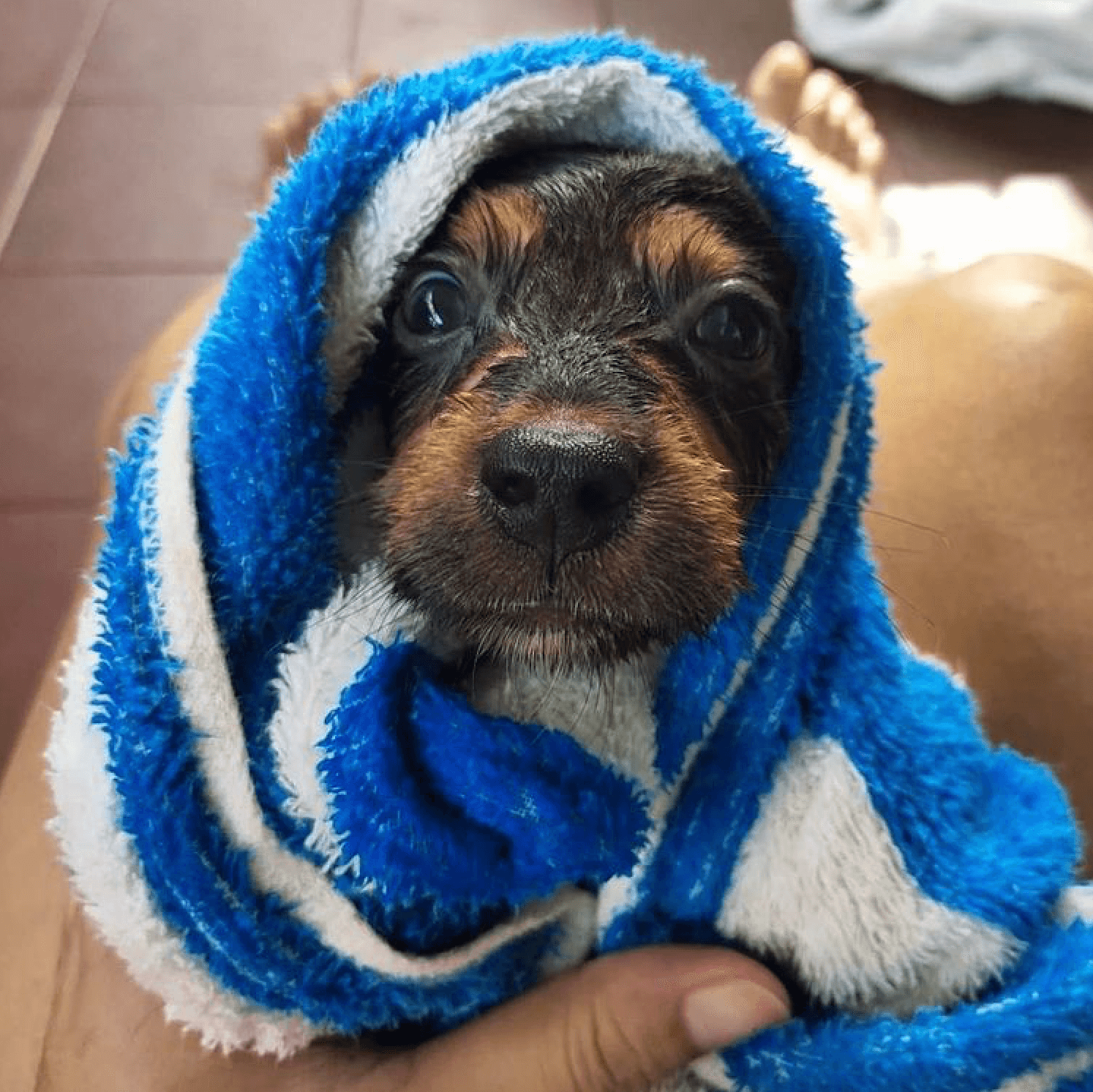
      6. Picasso, Dachshund, https://www.instagram.com/p/CIKs6n8HItL/ (Bangkok, Thailand)
      7. Button, Sheepadoodle, https://www.instagram.com/p/B6-2_2mhN5a/ (Michigan, USA)
      8. Maggie, Cocker Spaniel, https://www.instagram.com/p/CCqWDFRFS0p/?igshid=10xt8ndh48mgu (Northampton, UK)
      9. Coconut, King Charles Cavalier Spaniel, https://www.instagram.com/p/CIIYdvqAFbQ/ (Singapore)
      10. Penny, Miniature Goldendoodle, https://www.instagram.com/p/CHVvR8JpiLN/
      11. Mortimer, Scottish Deerhound, https://www.instagram.com/p/CIJnE-nhHxD/ (Milwaukee, Wisconsin)
      12. Tormi, Jack Russell, https://www.instagram.com/p/CHksfK0DYUM/ (Estonia)

    Related: The top dog ownership trends you need to know about this year

  • False Rabies Rumours in Thailand Result in 1400 Dog Deaths

    False Rabies Rumours in Thailand Result in 1400 Dog Deaths

    At least 1,400 dogs have died as a result of an ongoing rabies outbreak scare in Thailand – a scare that by all verifiable accounts is not real, according to Thailand based charity, Soi Dog Foundation.

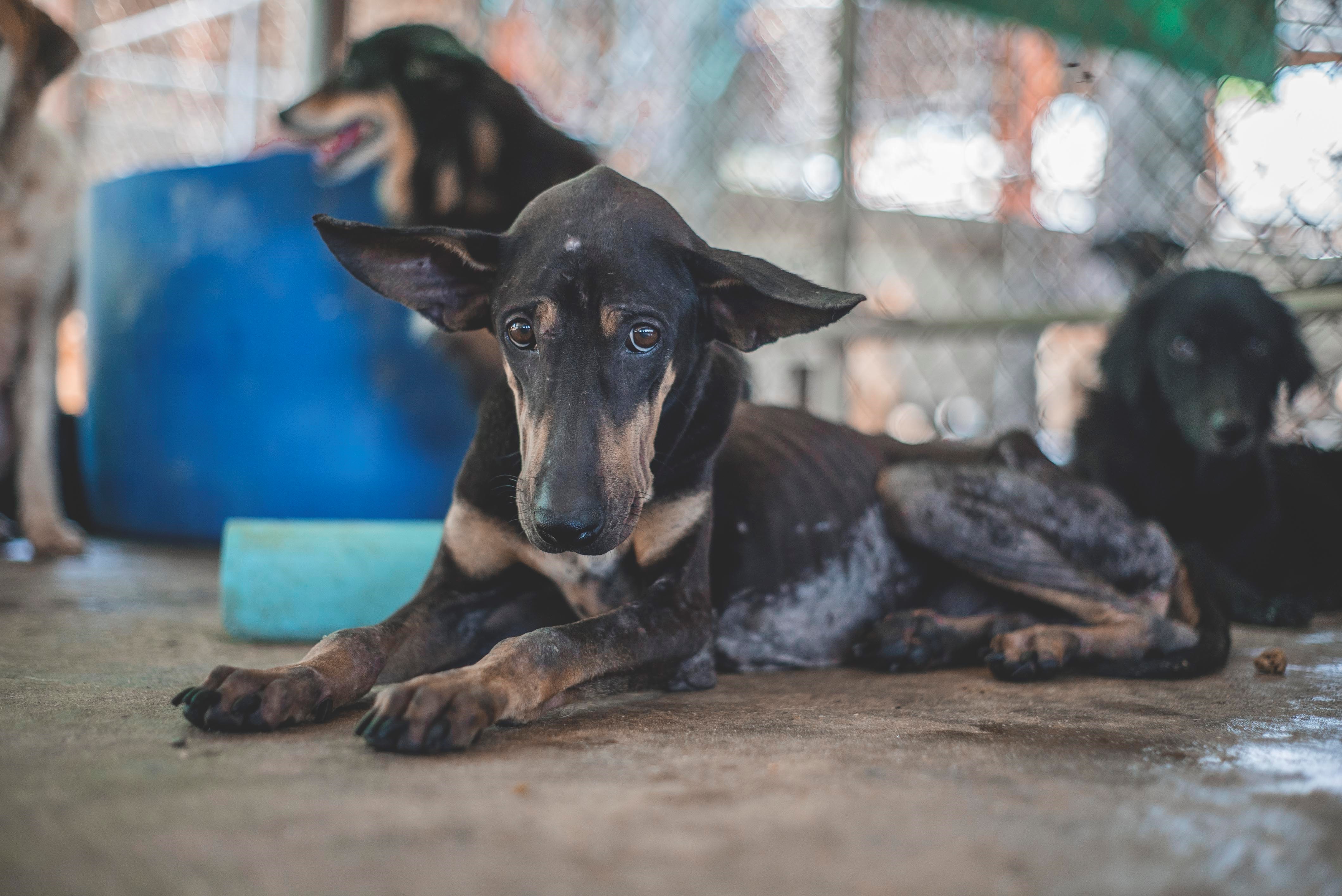
    The animal welfare charity tells us that a couple of weeks ago three thousand dogs were rounded up in Nakhon Phanom province, which borders the Mekong River, and dumped in a government pound. In the crowded conditions, diseases, particularly deadly parvo and distemper, spread like wildfire.

    In such close quarters, fights between dogs and death by starvation of small or sickly dogs, unable to compete for food, added to the toll.

    However for the 1,500 dogs who remain, there is now some hope because an Emergency Reaction Team from the Soi Dog Foundation were given permission to go into the pound to treat the dogs inside.

    The sight that greeted them was grim.

    One member of the emergency medical team described it. “I would like to stay positive, but I can’t,’ he said.

    “The pound is overcrowded and dog fights break out all the time. When it is feeding time, the weaker dogs don’t have the strength to eat. So the stronger dogs take all the food and the weaker ones don’t survive.

    “The dogs are scared, depressed, and traumatised by their experience. It’s hard to stay positive about this place. It’s simply heartbreaking.”

    Upon arrival, the team first sorted the dogs.

    The small dogs, the puppies, and the weak were separated from the large dogs, and as none of the animals are yet sterilised, the males were separated from the females.

    They also did the same with cats that had been rounded up by the local office of the Thai government’s Livestock Department.

    They then vaccinated every animal in the pound – injecting 60 an hour and daubing them afterwards with green dye so that no animal would be vaccinated twice by mistake.

    The animals may survive but they now face spending the rest of their lives in captivity. This is because officials kept no record of where each dog came from, so they cannot be returned to their home territory.

    In any case, those territories have already most likely been taken over by stronger, fitter or more wily dogs who managed to avoid the government dragnet.

    The deaths in the pound are not the only ones to result from official knee-jerk reactions to a public panic over a “rabies outbreak” in Thailand that started in the new year. The panic has resulted in public calls for all eight million street dogs in Thailand to be killed, a “solution” dubbed “Set Zero”.

    In March, 20 dogs in a Buddhist temple in the upper south of the country, including a family of puppies, were poisoned by government officials, causing outrage among animal lovers.

    Poisoning – in Thailand usually using strychnine – results in a horribly painful death for the animals, that spend hours shuddering and spasming in agony, drowning in their own fluids, before death finally comes.

    The officials later claimed that tests had shown that 16 of the 20 poisoned animals had rabies, but the test results were never released, leading to widespread suspicion that they were made up.

    A number of activist groups have come together to bring criminal charges against the officials concerned, under Thailand’s Animal Cruelty Law.

    The Thai Livestock Department has come under fire for not reassuring people that there is, in fact, no rabies outbreak at all, and for its inept and understaffed handling of captured dogs.

    In March, fuel was added to the flames when the department also came under scrutiny over alleged irregularities in its procurement of poor quality canine rabies vaccine.

    An internal investigation came to the conclusion there had been no irregularity, and that inferior-quality vaccine had not been the cause of a spike in rabies deaths at the beginning of the year.

    However, the reports of poor quality vaccine had already spread, resulting in the calls for “Set Zero”. The department has denied having any plans to kill all stray dogs in Thailand.

    Thailand has in fact been effective in reducing human deaths from rabies from hundreds a year in the 1990s to single figures in recent years.

    In 2018, to date, there have been just seven human rabies deaths.

    The Nakhon Phanom emergency is not the first time that Soi Dog has stepped in to save animals, particularly dogs, after the government has proved unable or unwilling to do so.

    In 2010 it sprang into action to successfully contain an outbreak of parvo disease through a massive vaccination programme. In 2011, it rescued thousands of dogs from devastating flooding in Bangkok and in 2016/17 it did the same during floods in the south of Thailand.

    Soi Dog – founded in 2003 by husband and wife John and Gill Dalley from Leeds in the United Kingdom – also played the leading role in stopping the horrific trade in dogs from Thailand to the dog meat restaurants of Vietnam.

    It has launched an appeal for funds to help tackle the fallout from the rabies panic, such as the horror in Nakon Phanom. People may donate through the Soi Dog website at www.soidog.org

  • Can Chocolate Really Kill Dogs? Owner Describes ‘Scene of Carnage’

    Can Chocolate Really Kill Dogs? Owner Describes ‘Scene of Carnage’

    A dog owner has issued a warning after her puppy nearly died from eating a box of liqueur chocolates from under the Christmas tree.

    Suzanna Dixon was Christmas shopping when her inquisitive young pooch, Narla, who was just nine months old at the time, tore open a gift wrapped box of chocolates that had been left under the tree.

    Mother-of-four, Suzanna (32), returned to her home in South Shore, Blackpool, to find a scene of carnage.

    She said: “When I walked through the door my first thought was ‘we’ve been burgled!’ as there was torn up wrapping paper everywhere, but then I saw Narla with the nearly empty box of chocolates.

    “I know human chocolates can be poisonous to dogs so I rang PDSA and they told me to bring her straight down.”

    Vets at Blackpool PDSA Pet Hospital rushed Narla in immediately, and gave her drugs to induce vomiting in a bid to flush her system of the chocolate. She’s also one of thousands of lucky pets to benefit from PDSA’s A&E service which receives funding from players of People’s Postcode Lottery.

    PDSA vet, Terry Ogdin, said: “We estimated that Narla had eaten around 200g of chocolate, which is an extremely dangerous amount for a dog of her size.

    “Thankfully she was brought in very quickly and we were able to treat her before the chocolate had a chance to digest.

    “She was well enough to go home the same day with medications to help absorb any remaining chocolate, and went on to make a full recovery.”

    Chocolate contains a chemical called theobromine, which is toxic to dogs. Signs your pet may have eaten chocolate can include excessive thirst, vomiting, diarrhoea, a tender tummy and restlessness. These can then progress to tremors, an abnormal heart rhythm, raised body temperature and rapid breathing. In flat-faced breeds like Narla, which often struggle with breathing issues, these symptoms can be exacerbated.

    In severe cases, chocolate poisoning in dogs can cause fits and even death. The higher the cocoa content of the chocolate, the more dangerous it is, so dark chocolate poses the biggest risk to pets.

    Suzanna wants to warn other pet owners about the dangers of chocolate to pets.

    She said: “Not only did Narla eat a huge amount of chocolate, but they were also liqueur ones so the alcohol made it even worse.

    “There won’t be any chocolates under the Christmas tree this year and I’d urge others to ensure they don’t leave any chocolate within easy reach.”

    If owners suspect their dog has ingested chocolate, they should call their local vet immediately and let them know the type of chocolate, the quantity and likely time of ingestion.

    PDSA is also warning pet owners about other festive foods that can be toxic to pets, including alcohol, grapes, sultanas, onions and garlic.

    Vets advise owners to store chocolates and other poisonous foods in the same way as medicines when they have pets in their household – safely and securely. And for those who can’t resist giving their four-legged friends a little Christmas treat, a new toy or a nice long walk is a better alternative than treats.

  • French Bulldog Close to Death After Eating This VERY Common Garden Substance

    French Bulldog Close to Death After Eating This VERY Common Garden Substance

    Our dogs are natural wonders of the world. Smart, loyal, affectionate and sometimes prone to acts of self sabotage that requires the intervention of vets to save them from themselves. Bella is one such dog. She needed veterinary attention after eating something that is present in the gardens of many thousands of dog owners all over the UK.

    A young dog has been saved by PDSA vets after wolfing down gravel from her owner’s garden.

    Bella, a one-year-old French bulldog, was rushed into the vet charity’s pet hospital in Croydon after her owner, Victoria Sherrin, noticed she had suddenly gone off her food and was being constantly sick.

    When PDSA vets examined the stricken pet they could feel something in her abdomen and Victoria (37) of Chipstead, Surrey, immediately feared the worst.

    She said: “I took Bella for a check-up because she wasn’t herself at all. She started snapping at us and couldn’t keep anything down.

    “I wondered if she’d eaten something odd or had worms but then the vets said they could feel a mass in her stomach and I just broke down.”

    Victoria feared a life-threatening illness but an X-ray soon revealed the true cause of Bella’s woes. She’d eaten a large collection of gravel stones which were now sitting in her stomach.

    PDSA vet, Laura Heaps, said: “Bella’s condition was very worrying, she was very lethargic and was suffering from diarrhoea and vomiting. We examined her and could feel something in her stomach and to be sure what it was, we x-rayed her.

    “Thankfully, we’d just received a new £10,000 x-ray machine, thanks to funding from players of People’s Postcode Lottery, and the images were very detailed. When we saw the images on the screen we couldn’t believe our eyes!

    “You could clearly see the gravel in her stomach and colon. Luckily because the stones were so small and unlikely to cause a fatal blockage we were able to avoid surgery. Flat-faced breeds such as French bulldogs are a higher anaesthetic risk than other breeds.”

    Bella was given fluids and laxatives to try and flush her system of the gravel stones and was kept in overnight for close observation. Thankfully, she made a good recovery and was allowed home the following day after receiving the all clear.

    There is a name for this type of behaviour where pets eat strange objects – known as pica. Pets, especially puppies and younger dogs, like to use their mouth to investigate objects as well as to eat. Sometimes a pet will swallow an item by mistake, even though they had only meant to investigate it.

    With Bella safely back home, relieved owner Victoria said: “Bella was out of sorts for a couple of days but she was soon was back to her normal self. I can’t thank PDSA enough for the fantastic treatment she received. I’m keeping a close eye on her now to make sure it doesn’t happen again.

    “She’s quite an inquisitive dog and is into everything so I’ve cleared the garden to try and ensure there are no gravel stones she can get her little paws on.”

    PDSA sees many cases of pets eating inappropriate items every year. These can be fatal if they cause a blockage in the intestines. Owners are advised to speak to their vet for advice if they suspect their pet has eaten something it shouldn’t have.

  • Do You Know Which Human Foods Are Bad for Dogs?

    Do You Know Which Human Foods Are Bad for Dogs?

    New research out today has revealed that seven in 10 dog owners have admitted to feeding their dogs leftovers. With almost a quarter admitting to feeding their dogs from their own plates daily, experts are concerned that more dogs could be poisoned by potentially toxic human foods.

    The findings, which have been released by Direct Line Pet Insurance highlight a potentially worrying trend that dog owners don’t always know what impact certain foods could have on their dog’s health.

    For example, three in 10 dog owners have admitted to giving their dogs dairy-based products like cheese and milk.

    Why it’s dangerous? When consumed, dairy products could leave dogs experiencing acute intestinal distress such as gas, diarrhoea or vomiting.

    In the wake of Easter, nearly one in ten owners admitted to still feeding their dogs chocolate which contains theobromine, a toxic component.

    Why it’s dangerous? Chocolate takes dogs much longer to digest allowing the theobromine to build up to toxic levels which in some cases can prove to be fatal.

    While a third of dog owners have also admitted to feeding their dogs bones from joints of meat.

    Why it’s dangerous? Feeding cooked bones can cause injury to dogs as they become brittle and can splinter inside the dog’s digestive track, damaging important internal organs.

    Sarah Page-Jones, Chief Veterinary Officer at PawSquad commented on the pet insurers findings saying, “Owners should think twice the next time they’re thinking of feeding their pets human food, as what seems to be a nice tasty treat could inadvertently poison their pet.”

    In the worst cases of animals digesting human foods, owners could end up paying over a thousand pounds for treatment. The data showed that one in ten owners that had taken their dog for treatment due to eating human food, having paid between £300 to over a £1000.

    Madeline Pike, veterinary nurse at Direct Line Pet Insurance, says: “Responsible pet owners should acknowledge the importance of providing a healthy diet to their dogs. In the case of a dog digesting harmful human food, it is important to have insurance cover to make sure you can treat your pet without being out of pocket.”

    If you are determined to give your dog some human food, there are some options available that are healthy when given in moderation.

    Here are 5 you should know about, according to K9 Magazine.

  • Breed Specific Legislation MUST Go – How Many More Innocent Dogs Need to Die? #EndBSL

    Breed Specific Legislation MUST Go – How Many More Innocent Dogs Need to Die? #EndBSL

    More than 50,000 people have backed the RSPCA’s campaign calling for an end to the controversial legislation which bans four types of dogs being kept in the UK. Four months since the launch, groups, bodies and individuals from around the world have also supported the petition.

    In August, the UK’s largest and oldest animal welfare charity launched its campaign calling for the Government to hold a public inquiry into section 1 of the Dangerous Dogs Act (DDA) which uses breed specific legislation (BSL) to ban pit bull terriers, Japanese tosas, fila Brazilieros, and dogo Argentinos.

    https://i.imgur.com/WmowSHh.jpg

    The campaign – called #EndBSL – sought to raise awareness of the plight of thousands of dogs whose welfare is compromised due to the law and also highlight the ineffectiveness of the legislation at protecting public safety.

    Four months on, the RSPCA’s petition has been signed by more than 52,000 people and the charity’s opposition to BSL has received support from around the world.

    RSPCA dog welfare expert Dr Samantha Gaines – lead author of the charity’s BSL report ‘A Dog’s Dinner’ – said: “Our message is simple: BSL is ineffective in protecting public safety and results in the suffering and euthanasia of many dogs. We believe BSL should be repealed and issues surrounding human safety tackled using education and effective legislative measures that do not unnecessarily compromise dog welfare.

    “Since publishing our report and launching our campaign in August – marking 25 years since the Dangerous Dogs Act was implemented – we’ve received support from around the world, not only from members of the public, dog lovers and people who have experienced the devastating effects of BSL first-hand, but also from other UK and international organisations, charities and bodies.”

    The need to repeal BSL has already been backed by more than 30 organisations around the world, from countries as far-flung as Australia, Japan and USA, including:

    Animal Behaviour and Training Council (ABTC)

    Association of Pet Behaviour Counsellors (APBC)

    British Veterinary Behaviour Association (BVBA)

    British Veterinary Nursing Association (BVNA)

    Deed Not Breed

    DDA Watch

    Dogs Trust

    Dutch Veterinary Behaviour Group

    EU Dog & Cat Alliance

    Eurogroup for Animals

    European Society for Clinical Veterinary Ethology (ESCVE)

    The International Association of Animal Behaviour Consultants (IAABC)

    The Kennel Club

    Massachusetts SPCA (MSPCA)

    People’s Dispensary for Sick Animals (PDSA)

    RSPCA Australia

    SaveABulls

    Renowned experts including Dr Emily Blackwell and Dr Emma Milne are also in support, as well as behaviourists Sarah Fisher – and her actor partner, Anthony Head – and Victoria Stilwell.

    Dr Milne said: “The Dangerous Dogs Act, that came into force in 1991, was and remains one of the most pointless laws we’ve ever had. The fact is that dogs’ behaviour is dictated by so many factors beyond their breed.

    “If we had used the last 20 odd years using the law to make people better dog owners it would have been a much better use of the law.

    “The whole thing has been a mess for far too long and the time has come for the law to be repealed and for the politicians to try and do something constructive to improve the lives of dogs and reduce bite injuries.”

    And Dr Valerie Jonckheer-Sheehy, chair of the Dutch Veterinary Behaviour Group, said: “Breed specific legislation will not resolve dog bite incidents.

    “The focus must be on educating the public on dog behaviour and welfare, and ensuring that dog breeders breed healthy animals who are able to cope with the mental demands that they may be challenged within their day-to-day life.”

    In another positive step, in December, the London Assembly unanimously agreed to support a motion for the Mayor of the city to write to the Secretary for State for Environment, Food & Rural Affairs officially requesting an inquiry into the law.

    “Hopefully, with the support of these wonderful organisations and the backing of tens of thousands of voices, we stand a chance of getting the Government to sit up and listen,” Dr Gaines added.

    “It’s high time we made a change that will not only make the public in the UK safer, but will also ensure dogs are not punished for simply looking a certain way.”

    In November, Becky Hughes discovered the BSL issue for the first time – when one of her two blue Staffordshire bull terriers, 18-month-old Chesney (pictured), was seized by police under Section 1 of the DDA.

    He was taken away and returned a few days later under the interim exemption scheme. Becky, from Chester-le-Street, must now go through the court process to have Chesney exempted permanently.

    She said: “What doesn’t make sense is that Chesney is being punished when he has done nothing wrong.

    “I had no idea about BSL, what it meant, or how common it is? It baffles me. Even the police said Chesney is a lovely, friendly dog but look what the legislation is doing to him? It’s crazy.”

  • European Union Approach to Dog Breeding Trade To Be Discussed

    European Union Approach to Dog Breeding Trade To Be Discussed

    Today (27th September) MEPs, the European Commissioner for Health & Food Safety Vytenis Andriukaitis and key figures from the animal welfare world united at the European Parliament to highlight the important developments to companion welfare in the EU. Organised by the EU Dog & Cat Alliance, key speakers included President of the Intergroup on the Welfare and Conservation of Animals Sirpa Pietikäinen MEPwho also hosted the event.

    https://i.imgur.com/852Tq75.jpg

    The EU Dog & Cat Alliance is calling for an Action Plan to tackle the illegal trade in dogs and cats in the EU. With a worrying number of pets being illegally brought into countries across the EU, often with falsified pet passports and having endured poor travelling and living conditions, the Alliance and its members are calling for changes to be made to improve this worrying situation.

    Says Adrian Burder, EU Dog & Cat Alliance:

    “This illegal trade can only be addressed through a comprehensive approach, involving the European Commission, European Parliament and Member States, including agencies, border and veterinary authorities. The Alliance believes that in order for improvements to be seen steps need to be taken sooner rather than later and the issue addressed in a coordinated way at the root of the problem.”

    Sirpa Pietikäinen MEP, President of the Intergroup on the Welfare and Conservation of Animals said:

    “The European Parliament has arguably been the most supportive of the EU institutions for EU action to protect dogs and cats. We need to treat this illegal trade as a serious trafficking offence and increase the efforts of the EU customs and police co-operation in this field. As a member of this House, I believe that the Parliament will have a crucial role to play in making this happen. I call upon my colleagues in the EP to support this initiative.”

    The illegal trade in dogs and cats in the EU stretches far beyond simply animal welfare concerns, and also has implications for public health, consumer protection and the smooth functioning of the EU internal market, as well as anti-trafficking efforts. Numerous steps will be needed in order to solve this problem. These include consumer education and protection, information sharing between agencies and a common approach to the issue across the EU as whole. All of this has been factored into the proposed EU Action Plan the Alliance members are united in supporting.

    Adrian continues:

    “Today’s event is aimed at highlighting one of the biggest issues affecting companion animals in Europe today. Hundreds of thousands of young dogs and cats in the EU are bred for illegal sale in absolutely terrible conditions, transported long distances in crammed cages, often without food or water, unvaccinated and neglected. This can frequently result in life-long behavioural issues for the pet as well as health problems – both genetic and in terms of communicable diseases. This is why today we have launched a campaign for an EU Action Plan to tackle the illegal trade in dogs and cats and it is hoped that with all of the points from the plan in place an end to the illegal trafficking of cats and dogs could be within our grasp. But first it needs to be escalated and seen as a priority within the EU.”

    Full details of the plan can be found via www.dogandcatwelfare.eu. To follow the campaign on Twitter search #EUpetwelfare.

  • When Someone is About to Die, They Want Their Dog to be Close

    When Someone is About to Die, They Want Their Dog to be Close

    Many people consider their pets as part of the family. When a person is diagnosed with a life-threatening illness, the challenges and stress from the illness become the priority, and a pet may be overlooked. A program called Pet Peace of Mind is helping families alleviate the stress of caring for a pet while dealing with an end of life situation.

    "I know of countless numbers of older adults – widows and widowers, veterans, those living with chronic illnesses and those on hospice care – who have said that their pet is their lifeline," says Dianne McGill, President of Pet Peace of Mind.

    Pet Peace of Mind has helped thousands of people with pet care needs and preserves the bond that exists between hospice patients and their pets through the patient’s end-of-life journey.

    Non-profit hospice programs can apply to become a Pet Peace of Mind program partner. If awarded, the organization is given the education and tools necessary to run a successful program.

    Pet Peace of Mind is the focus of the newest video from the National Hospice and Palliative Care Organization’s public awareness campaign, "Moments of Life: Made Possible by Hospice."

    Cornerstone Hospice patient Donna Sarner – featured in the video – is 68 years-old and lives in a small, rural town in Central Florida. She has late-stage cancer, which causes her a great deal of pain throughout her back, abdomen and legs, and limits her ability to care for her dogs, cats, and various other animals around her property.

    The Pet Peace of Mind volunteers at Cornerstone Hospice are helping Sarner by delivering dog and cat food regularly and transporting her dogs to the veterinarian for vaccinations and medication.

    "Along with caring for the dogs, our program arranged to have the stray cats she feeds spayed, neutered, and vaccinated," says Kristine Murtz, volunteer services manager and Pet Peace of Mind program coordinator at Cornerstone Hospice.

    Sarner is adamant about keeping at least one of her four dogs by her side, and grateful that the Pet Peace of Mind volunteers are committed to making that happen. "She understands that it may not be realistic to have the three large dogs with her until the end, and we are already looking for loving homes for them," says Murtz.

    The "Moments of Life" public awareness campaign, launched by the National Hospice and Palliative Care Organization, features stories from hospices and palliative care programs across the United States of patients and families experiencing hospice and palliative care first hand.

    https://youtu.be/5LQ_m2aZXKQ

  • Too Many Sausages Nearly Fatal For This Lucky Dog

    Too Many Sausages Nearly Fatal For This Lucky Dog

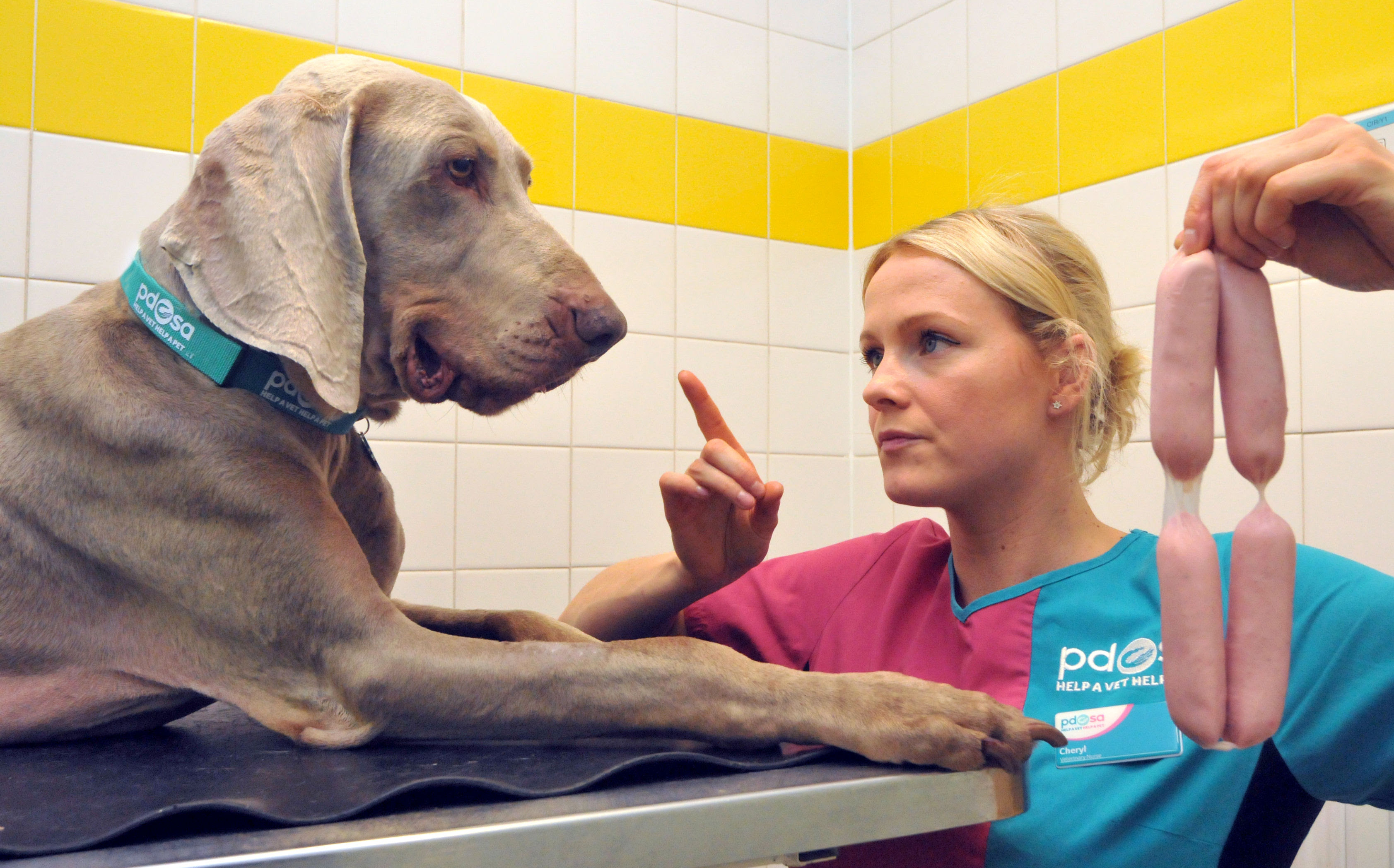
    A dog was given life-saving surgery by vet charity PDSA after a sausage binge caused a potentially fatal stomach condition.

    Seven-year-old Weimaraner Jake wolfed down the tasty treats whole (perhaps he’d heard it’s British Sausage Week!) but began feeling ‘offal’ soon after.

    Worried owner Lucy, from Gateshead, said: “Jake is a big, energetic dog with a huge appetite – he will eat anything although he particularly loves sausages, which he’s allowed as a treat now and then. One day I noticed he was unusually quiet, then he was sick and had diarrhoea. His chest and stomach became massively swollen – he was like a puffer fish. So I called PDSA straight away for advice.”

    Lucy was advised it was an emergency and to bring him straight in. Vets at Gateshead PDSA Pet Hospital confirmed Jake was suffering from a potentially deadly condition called Gastric Dilation, which happens when the stomach twists causing a dangerous build up of gasses. Without treatment, it can be fatal within hours.

    Jake needed emergency surgery. After a few tense hours, the family were relieved to hear the operation had been a success: “I was convinced we were going to lose him, so to hear he had pulled through was amazing – although I knew he wasn’t out of the woods yet,” said Lucy.

    “The vets found four whole sausages in his stomach, which they think was the likely cause of his problem. We knew he loved sausages but had no idea he was literally swallowing them whole! We’ll definitely be cutting his food into smaller pieces from now on, to help him eat more slowly. It’s fantastic that PDSA is here to help, I’m very grateful for everything they’ve done for Jake – they saved his life.”

    Jake went home the next day and, after plenty of rest, he thankfully made a full recovery following his bangers binge.

    PDSA Vet Nurse Cheryl Nash explained: “Jake’s condition was incredibly serious – just another few hours and its likely he wouldn’t have made it. Gastric dilation, also known as a twisted stomach, can occur when dogs eat so fast that they take in air with their food, particularly if they exercise vigorously straight afterwards.

    “Deep-chested dogs, such as Weimaraners and Great Danes, are more at risk of the condition. If you have a deep-chested breed, or your dog has a tendency to wolf down food in seconds, there are bowls specially designed to help slow them down a bit at meal times.”

    Gateshead Pet Hospital is one of 51 PDSA Pet Hospitals across the UK treating the sick and injured pets of people in need. The charity performs more than 10,000 treatments every single day and helping more than 470,000 pets every year. The charitable veterinary service is funded entirely by generous public support, as PDSA receives no Government or National Lottery funding for this. For more information visit www.pdsa.org.uk

  • Did My Dog’s Food Nearly Kill my Best Friend?

    Did My Dog’s Food Nearly Kill my Best Friend?

    On a Sunday evening in July 2009, I was using my computer and my 5 year old Samoyed Bundy came in shaking his head (he had left my room approximately 15 mins earlier). I thought he was bringing me the ball because he wanted to play. He was also pawing at his mouth, so I thought he must have something stuck in his mouth. I had a look but couldn’t see anything. I knew something was seriously wrong so I jumped in the car and raced to the nearest 24 hour vet as fast as I could with Bundy in the back, still acting strangely with his head.

    Luckily, the roads were empty and there was no one waiting at the vet. As we were led into the examination room, Bundy collapsed on the floor and was trembling all over. I then had to go back to the waiting room while they attended to him in the back. After a wait, I was led to the back where Bundy was in a cage and flailing about uncontrollably, which was very distressing for both him and me. I understand the vet gave him a shot of pentobarbital to knock him out. After another wait, I eventually went home but, obviously, I couldn’t sleep.

    The next day, when I visited him, he was lying on a bed with lots of tubes and machines attached. He was unconscious but his paws and face were still twitching. It was tearing me apart to see him like that but I stayed for a few hours and held his paw, because I didn’t think he was going to make it. I don’t think the vets were very optimistic either because he was developing asperatic pneumonia.

    I visited him every day and stayed for a few hours but I realised that the nurses have other animals to look after and duties to perform so I didn’t want to get in their way by staying longer. The vets and nurses that treated him gave him the best of care and I’m very grateful.

    He remained unconscious for 3 or 4 days which, I’m told, is not usual but not unheard of either. The vets there treated him with a cocktail of drugs to try to control his twitching. They recommended sending him to a specialist centre so, after about 5 days, I drove him in the back of my car. He was still unconscious so a vet nurse sat with him, assisting with the oxygen.

    The vets at the specialist centre ran a multitude of generalised tests including MRI and spinal taps but the results were inconclusive. After a day or so, he started to come around, semi conscious, but still twitching. The next day I visited, he was finally awake and when he saw me he started to whine with all the energy his weak body could muster, he could barely move but he still wanted to lick me and it became very emotional for both of us. Within a week, he got more responsive and stronger every day and was then allowed home.

    As Bundy is 5 years old, epileptic fits were a possibility but I’m told that they do not last for 3+ days and the MRI brain scan had ruled out a brain tumour.

    The vets that treated him thought it was likely he had come into contact with a toxin that acted on his nervous system. I wracked my brains as to what that could be as I wanted answers. The day of the episode, we went for a walk (on lead) at about 5 pm then he was shut inside the house and had his food about 6pm. There was no access to the garden and there are no chemicals around the house.

    The previous day, I had put a new tick collar on him and noticed a very strong smell coming from it. I assumed that this must be the cause of Bundy’s condition somehow so I didn’t put another back on him.

    When he was back home, I was feeding him brand new packets of his usual dry dog food that he likes and has had for years but, before the first episode, I had bought a different brand of food just for a change and added this to his usual food in a container, one that he had never had before (not sure if I can say the brand name, for legal reasons, but possibly the biggest and most popular brand in the world and the name is something to do with a dog’s heritage). Anyway, after a few weeks of feeding him brand new usual food strait out of the packet, I went back to adding some of his previous food on top. Within that week, he had a serious case of diahorreoa but I thought that could just be down to the drugs he was on.

    A few days later (coincidentally, again on a Sunday night and about 2 hours later in the evening than the first episode), I noticed Bundy looking at me strangely and his legs were shaking. I immediately knew what was wrong and I drove him down to the specialist centre where he was again in intensive care for a week or so.

    He came home very weak but, today, over six months later he is fit and healthy apart from his legs sometimes shaking when he stands. Obviously, there appears to be some residual nerve damage.

    The vets at the specialist centre ran more tests the second time but still nothing was remarkable.

    The four different vets that treated him between the two veterinary clinics and both episodes suspected intoxication by organophosphates, metaldehyde, (slug bait) or mycotoxins.

    It was after this second occurrence that I realised that this new brand of dog food was the only common factor in both these cases. Perhaps it was contaminated?

    I contacted the company that makes the dog food and arranged for an approximate 1kg sample to be sent off (but unfortunately I didn’t have the bag and batch code). The sample I sent did have small amounts of Bundy’s usual dog food mixed in (other brand). I sent it like this because this new food was added on top of his old food in a container and I wanted to know if they would even notice or just throw it away but, surprisingly, they did notice. I think, because of this, they did not run any tests.

    A guy qualified in veterinary science, and who works for the dog food company, dealing with complaints of this nature, sent me a letter saying he had contacted my vet and discussed the causes of ‘tremorgens’ (a group of mycotoxins). These have been associated with Blue cheese, walnuts and compost as well as others and it was unlikely that their product was responsible.

    Fortunately, Bundy has not been fed or been near those stated substances.

    When I leave the house Bundy stays inside and he is always walked on a lead, he only goes into the garden if I go into the garden and the last time I saw a slug was about 10 years ago so he has very little chance of ever coming across something I don’t know about.

    After a few weeks, I contacted the company’s vet again for the results of the test. I understand the tests didn’t show up anything abnormal. I wasn’t surprised at the company’s response because no company is ever going to test their own product and say something is wrong with it. He suggested that it was just one of those unexplained things, which I would have believed for the first episode but it is too coincidental for the second.

    I got a bit annoyed with this guy because the way he dismissed my reasoning seemed arrogant.

    He said that because they hadn’t had any other complaints, there was obviously nothing wrong with the batch and he also said that was the end of the matter and there was nothing else they would do.

    Not being content with this dismissal or his arrogant and patronising attitude, I contacted a more senior person at the company and spoke to a technical director and arranged for another sample to be tested (I only had a handful left). He said it would be sent to Singapore, would take about 6 weeks and would cost a bit of money.

    While I was waiting for these tests to be performed, I decided to conduct my own research into probable causes (something I should have done earlier) and discovered a few scientific papers freely available on the internet about Mycotoxins affecting dogs.

    Roughly speaking, Mycotoxins are a group of toxins that form as a result of mould on numerous organic sources and can be deadly and cause a number of different conditions to both humans and animals. They can be found in both cereals and dry dog food, a fact which was omitted from the letter I was sent.

    Either the veterinary guy dealing with my complaint has limited knowledge of these potential killers (for someone in his position, this seems very remiss) or he was fully aware of the potential problems but decided to keep quiet so as not to open a can of worms.

    I did provide an email link to all of the papers (listed below) but it would appear that neither of the people I have been in contact with has read them, as they have subsequently provided no comment.

    A number of the cases reported in the papers show clinical symptoms which are nearly identical to Bundy’s condition and, when biological samples from the dogs were analysed, Roquefortine and Penitrem A were detected and suspected as the probable cause.

    A few weeks later, I received in the post the results of the sample testing (it had been sent to a lab in Victoria, not Singapore). Only four tests were performed: two types of mycotoxin, namely Aflatoxin B1 and Patulin, and also lead and permethrin.

    I consider this test to be irrelevant and inconclusive due to the fact the very small sample size was statistically insignificant and they failed to test for any of the mycotoxins that are linked to tremors in dogs.(apparently there are over 30 known)

    The dog food company’s sole defence was based around the fact that they apparently hadn’t received complaints of a similar nature and that their quality control is of a very high standard, and perhaps it was the other brand of dog food that caused it?

    Addressing this statement, my research has indicated that detection and confirmation of mycotoxin poisoning has been grossly under diagnosed and, as far as I am aware, the specialist centre that treated Bundy did not test for this possibility. (I’m not even sure there is a commercial laboratory in Australia that tests for most of the different types).

    In my case, it was only after the second episode that I realised that this brand of dog food was the only common factor that was likely to be responsible and it is possible that many dogs that have a single episode of unexplained acute toxicoses unfortunately die or have to be euthanized due to excessive trauma, poor prognosis and/or lack of financial resources so a confirmed diagnosis and connection to the dog food is not made and hence it is not reported back to the company.

    While I’m confident that their quality control is of a high standard, it is unlikely that it is one hundred percent reliable and variations in the materials and process can be expected in any product.

    After doing further research I discovered a Uni in the USA (Iowa State) that specialises in veterinary medicine and also test for the two mycotoxins I’m interested in, namely Roquefortine and Penitrem A.

    I spoke to a Professor of toxicology from the department and he believed that mycotoxins are not well understood and not commercially tested for because of lack of demand. I provided him with bundy’s Vet case notes and his story and he confirmed that it did indeed fit with mycotoxin poisoning.

    I sent a 1kg sample of Bundy’s original food to be tested at my own expense, the test came back negative so I can be fairly confident that it wasn’t the other brand to blame which I believed was the case anyway because of the timing. THIS IS WHAT THE COMPANY SHOULD HAVE TESTED FOR!

    This whole incident has caused me a great deal of stress, and some days I couldn’t eat or sleep properly.

    I feel that the company didn’t take my claims seriously and underestimated two important factors:

    1. When I think I am right, I don’t give in.
    2. I won’t let anyone hurt my dog and get away with it.

    I spent most of my college fund on Bundy’s vet bills and, as he means everything in the world to me, I will do whatever it takes to protect and look after him.

    I am convinced that this brand is responsible and I want them to reimburse my vet bills and make it up to Bundy somehow but I realise that posting this statement and contacting the media in other ways will effectively put an end to any chances of financial restitution. However, I will take some comfort in the hope that this might provide an explanation and quicker diagnosis to future apparent toxic poisonings.

    I also feel I have been very fair and patient with the company in question and gave them every opportunity to do the right thing but, at every stage, they have seemed intent on absolving themselves from any responsibility. I can only conclude that from the irrelevant sample tests that either the company is grossly incompetent or they deliberately tried to mislead me.

    If my dog had died as a result of this, I would probably be standing outside the company’s headquarters with a placard saying that their food was responsible for poisoning my dog.

    My advice would be that, if your dog exhibits any acute tremors or seizure symptoms, like Bundy had, then get the vet to check for Mycotoxins (though this might be difficult in some countries) and to keep the dog food bags for future evidence if need be.

    As Bundy is a Samoyed and they are not common here, perhaps he could be more genetically pre-disposed to toxins that other breeds?

    If anyone has had a similar experience or can offer a different explanation, I would welcome a response.

    UPDATE: 12th Feb. 2010

    I decided to contact consumer affairs and they passed me onto the Pet Food Industry Association of Australia (P.F.I.A .A) and spoke to the executive manager. I provided him with Bundy’s history and my concerns and he contacted the company and said he was satisfied with their response.

    It was only after I explored their website that I read their Statement of Purpose

    #1 “To promote the prepared pet food industry in general and the interests of the members of the association.”

    So this guy had a conflict of interest to do anything about it as I understand the association is funded by its members.

    A few days later I contacted the company again and put a few questions to the guy I spoke to many times before (manager, veterinary services).

    I asked him, how many people have to complain about a product before they admit responsibility.

    Unsurprisingly he failed to specifically answer. He just reiterated what he said many times before, that no one else has complained of this problem so it is not their responsibility. Imagine if you went to the doctor with an ailment and they said, “Well no one else has complained of this so nothing I can do.”

    I also asked why he failed to test for Tremorgenic Mycotoxins in the samples I provided. His response was that they only had a small sample and they wanted to test for as wide range as possible? (a wide range of the toxins that don’t cause tremors?)

    When I pointed out that I had spoken to and expert and had the other brand properly tested for tremorgenic mycotoxins he didn’t want to know and said it was irrelevant and rudely concluded our conversation.

    Thanks to other forum members I can see that in other countries they have had serious problems with contamination of their dog food products with salmonella and melamine. Anyone would have to be crazy to feed their dog this companies products.

    To me it is obvious that the dog food is responsible and the company has done nothing to prove otherwise.

    Craig W. 2009.

    References;

    Bennett, J.W, & Klich, M. (2003) Mycotoxins. Viewed 19th Dec 2009 http://www.ncbi.nlm.nih.gov/pmc/articles/PMC164220/

    Bough, M, (2006) Toxicology Brief: “Tremorgenic Mycotoxicosis in Dogs”. Viewed 19th Dec 2009 http://www.compendiumvet.com/ME2/Audiences/dirmod.asp?sid=F0E2AE6B0B7E437588DFCF8A9FCA8CAC&nm=CE+Programs&type=Publishing&mod=Publications%3A%3AArticle&mid=8F3A7027421841978F18BE895F87F791&tier=4&id=60963CBCF74D4156BBFCA2595B06714C&AudID=43A035C1ADDF4F5F823E087E3BEE4975

    Eriksen et al, (2009) Poisoning of dogs with tremorgenic Penicillium toxins. Viewed 19th Dec 2009 http://informahealthcare.com/doi/abs/10.3109/13693780903225821

    Hocking, A.D, Holds, K, Tobin, N.F, (1988) Intoxication by tremorgenic mycotoxin (penitrem A) in a dog. Viewed 19th December 2009 http://www.ncbi.nlm.nih.gov/pubmed/3401148?itool=EntrezSystem2.PEntrez.Pubmed.Pubmed_ResultsPanel.Pubmed_RVDocSum&ordinalpos=10

    Lowes, N.R, Smith, R.A, Beck, B.E (1992) Roquefortine in the stomach contents of dogs suspected of strychnine poisoning in Alberta. Viewed 19th December 2009 http://www.ncbi.nlm.nih.gov/pmc/articles/PMC1481371/pdf/canvetj00057-0057.pdf

    Schell, M.M, (2000), Tremorgenic mycotoxin intoxication. Viewed 19th Dec 2009 http://www2.aspca.org/site/DocServer/toxbrief_0400.pdf?docID=113

    Virginia Maryland Veterinary Notes (2005), Veterinary Teaching Hospital, Virginia-Maryland Regional College of Veterinary Medicine, Viewed 19th Dec 2009 http://www.vetmed.vt.edu/engagement/ext/pub/VetNotes_115.pdf

    Walter,S.L, (2002), Acute penitrem A and roquefortine poisoning in a dog. Viewed 19th Dec 2009 http://www.ncbi.nlm.nih.gov/pmc/articles/PMC339273/?referer=www.clickfind.com.au

  • Is Meat Diet Good For Dogs?

    Is Meat Diet Good For Dogs?

    Meet Bluey, he was an Australian cattle dog, born June 7, 1910, who worked among sheep and cattle for 20 years, and survived until Nov. 14, 1939, when he was put down. He had lived for 29 years, five months and seven days. His secret to extraordinary longevity?

    Well, according to his owner Bluey lived on a diet of…wait for it….Kangaroos and Emus. He was the world’s oldest dog, a record that has never been beaten.

    If we were to take this discussion in a fairly linear direction a + b = c. Dogs who live on a diet of Kangaroos and Emus live until a grand old age.

    Dog_Bluey

    Of course, life (and death) is not so simple. Nor would it be so easy to get a regular supply of Kangaroo and Emu meat, but that’s by the by, the principle of Blue’s diet was meat is good.

    Are you weighing up the possibility of feeding your dog on a raw diet? Read this: Raw dog food pros and cons.

    Dogs like Bluey might be the exception in terms of the type of meat that makes up the largest proportion of their daily diet, but dogs around the world tend to live on meat and enjoy doing so. Cartoonists have been depicting dogs chasing a string of butcher’s sausages for generations.

    So why is it that according to the Butcher’s Healthy Happy Hound report that only 14% of dogs are being given a solus meaty dog food diet on a daily basis, while twice as many owners (29%) say they actually think their dog prefers it?

    Fit as a Butcher's dog

    Let’s tackle some of the more common questions, starting with the big one: Is a meat diet good for dogs?

    A: Most definitely, and there is no upper limit to the amount of protein a dog should eat.

    Although dogs have evolved over the years to take up firm positioning as one of the family, dogs are essentially at their core still carnivores and have the same dietary requirements as their ancestors.

    To ensure they get the right nutrients a dog’s diet must contain the right amount of protein, fat, vitamins and minerals.

    A wild dog would typically eat up to 90% meat with small amounts of fish and eggs, in addition to 10% of grasses, berries, nuts and vegetation.

    Is a meat diet good for dogs

    There are three factors that determine protein quality:

    1) Protein source – animal protein or plant & cereal protein
    2) Amino acid content – amino acids are the building blocks of protein, these blocks determine the quality of the protein
    3) Digestibility of the protein content

    Animal proteins are more ‘complete proteins’ because they contain all the essential amino acids required whereas plant and cereal proteins lack one or more of the essential amino acids and are therefore considered ‘incomplete’. Animal proteins are also more digestible than plant and cereal proteins, hence animal proteins have a higher bio-availability.

    It is important that all essential amino acids are present, if an essential amino acid is missing or there is not the correct level/amount, then protein metabolism stops. Protein is vital for cell maintenance and growth and for dogs can also provide most of their energy requirements.

    Food such as Butcher’s complete foods are developed to meet all nutritional requirements a dog needs in a highly palatable meaty recipe.

    A high quality complete diet will give dogs all the essential vitamins and minerals to the need to keep them happy and healthy, lean and fit with everything they need to maintain a healthy, active lifestyle.

    Brought To You By Fit & Fun Dog Month 2013

    Fit & Fun Dog Month sponsored by Butchers Lean & Tasty

    ‘Keep as Fit as a Butcher’s Dog’

    You may now be thinking: will my dog’s miss out on other things, like carbohydrates if they eat a solely meat based diet?

    By choosing a good quality complete meat based diet your dog will be getting all they need.

    Remember, our dogs bodies are made for meat.

    Dogs have a short digestive tract not suitable to digesting a high carbohydrate diet and their mouths have sharp teeth and strong jaws designed for ripping and shredding not grinding grains and vegetation.

    Meat is packed full of the goodness needed to ensure their coats stay healthy, eyes bright and that they have enough energy to go about their day, their strong acidic stomach will help break the meat down ensuring they get all they need.

    Dogs naturally need meat as part of a balanced diet – if you were to give your dog a choice, what would they choose?

    That isn’t to say your dog won’t enjoy the occasional treat and that given the chance to scavenge and serve themselves as if the home were their own self-service buffet they would allow the opportunity to pass.

    Dogs in the wild were hunters and scavengers which explains why they think food left out in our homes seems fair game to them. Not only will our dogs consume everything that drops on the floor, given the chance they will rifle through dustbins, and given the opportunity take it straight from a plate. After all, if you have ever fed your pet from the dinner table they will forever believe that they are entitled to it at any mealtime.

    But too many treats outside of their diet can lead to body condition and weight problems and potentially even cause medical issues.

    The advantages of choosing a naturally meaty dog food diet are many. Health and longevity are increased and the diet can be tailored to individual needs.

    Maybe old Bluey really was on to something, eh?

    Butcher’s Lean & Tasty meaty complete meals with 30% less fat is a more natural dog food, as are all of the Butcher’s products, because they contain no artificial colours, flavours or preservatives.

    Butchers-Lean-and-Tasty-dog-food-pack

    Visit the Butcher’s Pet Care website and use the tool to find the right food for your dog – butcherspetcare.co.uk

  • Why Do Dogs Kill People?

    Why Do Dogs Kill People?

    As always, there is a lot of discussion about how we can introduce laws to tackle the problem of dangerous dogs. It’s a heated debate often grounded in media hype, misguided prejudices and emotion, writes K9 Magazine’s editor Ryan O’Meara.

    Rather than make kneejerk decisions on what we THINK we might know about serious and fatal dog attacks we should be prepared to focus on what we DO actually know. Agreed?

    What we know should ALWAYS be the basis for what we do, rather than taking action based on what we THINK we know, particularly when it comes to legislation that has enormous consequences for decades to come.

    Here’s why.

    What we *think* we know is that there are certain ‘types’ of dog owners who have certain *types* of dogs that are the source of the UK’s dangerous dogs problem.

    Hoodies? Status dogs? Weapon dogs? Street gangs? Drug dealers?

    Well, that’s what some – ill informed, misguided types – *think* we know. Are they a problem? Absolutely. But we can categorise them a lot easier if we just accept this – a bad dog owner is a bad dog owner not because of who they are, what they look like or what they do for a living, but because of how they treat, train and use their dogs. Nothing else.

    If a dog is trained to protect a drug dealer, he’s a guard dog. So if all dogs that have been encouraged to guard their owners/families are now to be categorised as ‘weapon’ dogs then we have a lot of weapon dogs in the UK.

    Here’s an idea. If someone is a drug dealer, they’re a criminal. Get them off the streets. If someone is out terrorising members of the public or fellow criminals with a ‘weapon’ dog, here’s an idea – they’re ALREADY breaking the law. Get them off the streets.

    So, what DO we know?

    Take a look:

    Cadey-Lee Deacon: Killed at her grandparent’s home by two dogs (Rottweilers) when the dog’s owner was not present. The death took place at the home where the dog’s lived. The family home.

    Ellie Lawrenson: Killed at her grandmother’s home while under the supervision of her grandmother. The dog’s (Pit Bull) owner was not present at the time of the attack. The attack took place at the place where the dog lived. The family home.

    Archie-Lee Hirst: Killed at his grandparent’s home while under the supervision of someone who was not the dog’s (Rottweiler) owner. The attack took place at the dog’s home, the family home, in the yard outside but the dog’s owner was not present at the time of the fatal attack.

    Jaden Mack: Killed at his grandmother’s home whilst his grandmother (the dog’s owner) fell asleep, giving the dogs (Staffordshire Bull Terrier and Jack Russell Terrier) unrestricted access to the child who himself had been left on a table. The fatal attack took place at the dog’s (family) home whilst, in the same building, the dog’s owner was not physically present at the time of the attack (as she was sleeping).

    John Paul Massey was killed by his uncle’s dog (Pit Bull) whilst in the care of his grandmother. The attack took place at the family home, the place where the dog lived. The dog’s owner was not present at the time of the attack.

    18-month old Zumer Ahmed girl lost her life to a dog (American Bulldog) that belonged to her Uncle. The dog’s owner was not present at the time of the attack which took place in the family home where the dog lived.

    On 26th of March 2013, 14-year old Jade Anderson lost her life. She was found deceased following an attack by what is thought to be four dogs. The dogs owner was not present at the time of the attack.

    There are more cases like this, not just in the UK.

    Breeds involved:

    Rottweiler (x2 in Cadey Lee Deacon’s case, 1 in Archie Lee Hirst)

    Pit Bull – Ellie Lawrenson / John Paul Massey

    Staffordshire Bull Terrier and Jack Russell Terrier – Jaden Mack

    Staffordshire Bull Terrier and Bull Mastiff – Jade Anderson

    American Bulldog

    So, 7 fatal dog attacks and 7 remarkably similar circumstances – attacks ALL happened at the location where the dog lived (dog’s family home) and in ALL cases the owner of the dog was NOT present at the time of the attack taking place.

    These are the facts.

    It’s not ‘status dogs’ or ‘hoodies’ or any one particular breed of dog that is responsible for killing people. It’s a lack of awareness about how dogs behave, think and react in particular circumstances. Family dogs in family homes are responsible for these 7 fatal dog attacks.

    I’ll briefly touch on something from personal experience.

    I have two dogs. One of those dogs gets very stressed (and I use the word advisedly) when either myself or my wife leaves the house, even for a short time. If we both leave, she settles down quickly and understands the routine involved, but if ONE of us leaves, she gets agitated, runs from room to room, stares out of the windows, paws at the doors and gets herself in to a generally unhappy state. No amount of consoling or attempts to distract her will do the trick until the family is all back together as one unit. Interestingly, my other dog does not do this. She is calm and balanced and doesn’t seem to care when people come and go, whether it’s me or my wife.

    All dogs have their own individual personalities.

    Forget breed traits for a moment (and please don’t think for a second that I am ignoring the importance of genetics and breeding in what makes a particular dog tick) and think about this: regardless of who the dog’s parents and grandparents happen to be, their individual personality is shaped by a hugely diverse spectrum of other, environmental factors.

    My Labrador and my Rottweiler have been given very, very (almost identical) upbringings – yet one of my dogs gets incredibly agitated when either myself or my wife leaves the home and the other doesn’t care. One of my dogs is particularly fond of meeting children, one is indifferent to them. One of my dogs welcomes people who visit my home wearing a uniform with a wagging tail, the other wants to send them packing.

    If you were to ask me whether I thought it’d be OK for me (or my wife) to go out and leave my dogs in the care of someone who wasn’t their owner whilst children would be present, I’d say no. Conclusively no. No. No. Not happening. No.

    I’m NOT being wise after the event. I’m not being a smart Alec.

    Do I ‘trust’ my dogs?

    No! Of course I don’t. They’re dogs. I especially don’t ‘trust’ my dogs if I’m not even there. Placing trust in one’s dog to not eat a sausage during a training exercise is fine. Trusting a dog to behave EXACTLY how you think it’ll behave when you’re not there, isn’t. There’s no real upside to such a bet. The upside, if there is one, is; nothing bad happens. The potential downside…doesn’t bear thinking about.

    Think about this; have you ever been to someone’s home where there’s a dog and the dog’s owner is not there? The person who feeds the dog, trains the dog, can CONTROL the dog is away and the dog’s been left with someone who, whilst they may know the dog, doesn’t really have the same connection with it as the owner? I have. And it can be quite an interesting experience. A dog that spends a few hours ‘acting up’ or being naughty/aggressive/unruly/unpleasant to be around suddenly turns in to soppy, obedient puppy the minute they’re reunited with their master.

    I’ll relate a true story about the most dangerous dog I’ve ever encountered.

    My (now) wife worked at a quarantine kennels for a while. I worked at kennels in the next county as a dog trainer. We were both experienced working in kennels and, as anyone who’s worked in kennels will know, you get to see ALL elements of canine behaviour. Dogs are placed in a different setting and their owners removed from the environment and it’s then that you get to see which dogs are happy to be without their owners but perhaps get upset at being in a strange, funny smelling, noisy environment.

    You get to see which dogs just pine and pine for their missing friends. You get to see which dogs have been well trained and, despite not being happy, will still comply with commands even from a stranger. You get to see which dogs are perfectly friendly but have clearly never been taught a basic command in their lives. You get to see which dogs absolutely LOVE being in such a dog-filled environment and don’t seem to give two hoots about their owners not being there. You get to see other people’s dogs behaving in all manners of ways.

    In all of this, I can safely say the type of BREED happens to be utterly, utterly irrelevant in relation to how the dog reacts to this environment. No two Dobermans act the same, no two German Shepherds react the same way and you’ll find you’re just as likely to get a bite from a Labrador or a Border Collie as you are from a Rottweiler or a Bull breed.

    The most dangerous dog I EVER encountered was, as it happens, a Border Collie.

    My (now) wife called me to let me know that a dog had come in the quarantine kennels but he was actually a boarder rather than a quarantined dog.

    She told me the dog was launching itself at kennel staff from his kennel and that nobody had been able to get close to entering his kennel. (Bear in mind, these are experienced kennel staff, used to working with many different dogs in a quarantine environment).

    I was asked whether I could come over and take a look at the dog and see if I could get in to his kennel and calm him down and get him to be a bit happier and a little less bitey.

    A Border Collie? I thought. How bad can it be?

    Jumping at the chance to act the hero, I drove over and went to see the dog.

    Firstly, this was the largest Border Collie I’ve ever seen. He was (intact male) easily bigger than the Rottweiler I currently own. He was big and he was very, very (VERY) hostile.

    Just walking up to his kennel, he flung himself to the front, made himself big and gave a display that could not be mistaken for anything other than extreme territorial aggression.

    He was in a confined space and he wanted everyone to know that, if you entered it, he’d be willing to bite. Not just nip and retreat, bite, bite and bite some more. To say he meant business would be an understatement.

    I spent a lot of time trying all manner of approaches. I tried the friendly approach. The food through the kennel approach. The pick a ball up and see if that interested him approach. The submissive approach. The assertive approach. The downright hostile approach. I tried everything I knew – and I have worked with a number of rehabilitation case dogs who were very aggressive – but absolutely nothing worked. This was a dog that would not be subdued, at all.

    I admitted I couldn’t really help in terms of getting close with the dog and advised that, for the duration of his short stay at the kennels, the staff would be best advised to use the built in, sliding kennel partition so as to ensure the dog was never allowed to come in to contact with a person.

    I’ve worked with more than 2,000 dogs and would like to think I have a reasonably fair ability at calling a dog’s personality. I’ll confidently go on record and say that I believe this dog had the capacity to kill. He REALLY meant business.

    But here’s where the story reaches its point.

    When that dog’s owner came to collect him, he turned in to the soppiest, most playful, friendly dog you could ever wish to meet. He just melted. His tail wagged, his ears set back, his hostile “I’ll kill you if you so much as come within an inch of my kennel” personality just dissolved. As fast as that. The SECOND his owner came for him, he changed.

    Was he a dangerous dog?

    Well, I think I already called that. He WAS the most dangerous dog I ever met. Ever. UNTIL his owner turned up, whereupon he instantly became a different dog. His personality changed like the flick of a switch.

    Did he have the capacity to attack and seriously injure (possibly kill) someone? I have absolutely NO doubt that he did. But again, there’s a caveat – he became a snarling, hostile dog when his owner was not there and he found himself confronted by people he didn’t know. WHEN his owner was there, he’d lie on his back to have his belly tickled by all. What a nice dog, you’d think. But a more accurate way of putting it would be; what a nice, friendly dog (when his owner’s around), what a completely unhinged, dangerous creature (when his owner wasn’t about).

    We’ve lost 6 children in under 5 years to dog attack in the UK. We must all agree, that’s 6 too many.

    In ALL cases, circumstance was far, far more pertinent than the ‘type’ of owner or even the ‘type’ of dog.

    What is missing is education and awareness. A distinct lack of understanding as to the risks associated with unattended dogs, children and an owner not present.

    Whilst we have constant debates about so-called ‘status dogs’ and trying to define a breed as being dangerous based entirely on what that breed happens to look like or who its parents were, we can – tragically – expect more of the same. More deaths, more ignorance – and that’s ignorance condoned by the Government.

    As a nation, we must surely accept that we would ALL be better off if dog owners were more dog aware.

    Not *some* owners. Not certain *types* of owners or owners of certain *types* of dogs, all dog owners. If all dog owners knew more about dogs and what makes dogs dogs, we’d benefit. All of us. Dog owner or not.

    What we have here is a people problem, not a dog problem. People who are not fully aware of how dogs brains work.

    Dogs CAN grow up with children and be an exceptionally positive influence on youngsters, but a simple lack of awareness about what circumstances can lead to tragedies as a result of dogs doing what dogs are capable of doing is what’s costing youngsters their very existence on this planet and it is wrong. Wrong, wrong, wrong.

    Our current law doesn’t work.

    The question is, will the Government be intelligent enough to recognise that fiddling around the edges of a bad law will not provide the answers we need? That focussing on ‘types’ of owners or dogs won’t prevent deaths? Or that the problem of ‘killer’ dogs is by no means confined to the mean streets of the UK, but – in fact – is most likely to manifest itself in a family home with a family dog, being cared for by grandma whilst the dog owner happens to be somewhere else.

    This isn’t what we *think* might be true. This is what we KNOW to be true.

    It’s time for the Government to come clean on the DEFRA consultation and acknowledge what the RSPCA have confirmed; that they’ve already made their mind up regarding key aspects of dangerous dogs legislation.

    No breed bans.
    No BSL.
    No BS!

    Education is the answer.

  • Do Dogs Get Jealous?

    Do Dogs Get Jealous?

    According to some new research by scientists, they do. Dogs do get jealous? Really?

    Personally, I don’t believe they do and I’ll explain more about that in a moment. But first let us look at the new research done in the name of science.

    The experiment consisted of taking pairs of dogs and getting them to present a paw for a reward. On giving this “handshake” the dogs received a piece of food.

    One of the dogs was then asked to shake hands, but received no food. The other dog continued to get the food when it was asked to perform the task.

    The dog without the reward quickly stopped doing the task, and showed signs of annoyance or stress when its partner was rewarded.

    To make sure that the experiment was really showing the interaction between the dogs rather than just the frustration of not being rewarded, a similar experiment was conducted where the dogs performed the task without the partner. Here they continued to present the paw for much longer.

    Dr Frederike Range from the department of neurobiology and cognition research at the University of Vienna, says this shows that it was the presence of the rewarded partner which was the greater influence on their behaviour.

    “The only difference is one gets food and the other doesn’t, they are responding to being unequally rewarded.” she said.

    The researchers say this kind of behaviour, where one animal gets frustrated with what is happening with another, has only been observed in primates before.

    Studies with various types of monkeys and chimpanzees show they react not only to seeing their partners receiving rewards when they are not, but also to the type of reward.

    The dog study also looked at whether the type of reward made a difference. Dogs were given either bread or sausage, but seemed to react equally to either. Dr Range says this may be because they have been trained.

    “It’s through the fact they have to work for the reward, this confers it with a higher value,” she said.

    Source Here

    Let’s take a look at this in smaller chunks.

    The dog without the reward quickly stopped doing the task, and showed signs of annoyance or stress when its partner was rewarded.

    Well of course. Surely we wouldn’t expect anything different here? The dog wants the food and it sees the other dog with the food and it gravitates toward the treat. This is quite logical, nothing ground breaking yet.

    To make sure that the experiment was really showing the interaction between the dogs rather than just the frustration of not being rewarded, a similar experiment was conducted where the dogs performed the task without the partner. Here they continued to present the paw for much longer.

    Yes, again this surely to be expected? Here we have a dog with no distraction, no food or other dog in the equation and it makes logical sense that most dogs will perform differently in a situation where no distraction – of any kind – is present. This, again, does not prove jealousy as we understand it.

    Dr Frederike Range from the department of neurobiology and cognition research at the University of Vienna, says this shows that it was the presence of the rewarded partner which was the greater influence on their behaviour.

    Now we’re veering in to some strange territory. Let us imagine this experiment but with some different parameters.

    We work with just one dog, no other dog in the area.

    The dog gives its paw. Then a person will come in to the room and puts some food on the floor near to where the other dog would have been positioned positioned.

    Would the dog now be less interested in giving paw and more interested in food?

    In my opinion, yes. Most likely.

    Now repeat the same scenario but don’t have anyone put food down.

    It’s my supposition that the dog would hold paw for longer.

    No other dog present, no jealousy – merely distraction causing reaction.

    The dog study also looked at whether the type of reward made a difference. Dogs were given either bread or sausage, but seemed to react equally to either. Dr Range says this may be because they have been trained.

    Dogs like different foods. And scientists didn’t know this?

    Take my own dog Mia. She loathes banana. My other dog, Chloe, on the other hand loves fruit. So if I’m eating a banana Mia will sit for a while, realise what I’ve got and then go and lie down. Chloe will stay sitting next to me, watching until I’ve finished. I’m not a scientist but I do know this – it’s……wait for it………

    ……because Chloe likes banana and Mia doesn’t!

    Given that Mia is by far the greedier of my two dogs it proves that dogs clearly have different tastes the same as we do, this is – I would guess – pretty universal. Maybe your dog loves a type of food that my dogs don’t. Maybe your dogs go mad for aniseed whereas my dogs love cheese. Just a sec, wait. Not a good comparison – aniseed and cheese are pretty much universal ‘must eats’ on the canine menu (if your dog likes neither, please let me know – in the name of science).

    So, if I set out to train Mia with bananas as my choice of reward for her, I’d achieve less impressive results – quite simply because Mia doesn’t like banana. She places a higher value on food that she likes, similarly toys and similarly different ways of being touched – Mia doesn’t like to be stroked on the head, Chloe will take a good head stroking for several hours. So we’ve still not established jealousy in canines with this research based on the report as presented on the BBC site.

    Studies with various types of monkeys and chimpanzees show they react not only to seeing their partners receiving rewards when they are not, but also to the type of reward.

    OK. Well I’m not a scientist but I do know that monkeys and chimps are NOT dogs. They can and indeed probably do have emotions much more closely aligned to the emotion we recognise in ourselves as jealousy, similarly they have different social structures and are NOT dogs. So the relevance of this is no more apt than saying: “Well humans have jealousy, why can’t dogs?”

    Why do I not believe dogs share the emotion we recognise in ourselves as jealousy?

    If we think about what jealousy is, if we are logical about what we know about this emotion it is incredibly complex and based on a whole level of social elements.

    There are humans who feel jealousy based on widely different factors – is that an innate personality trait in them or is it nurtured? – we don’t really know.

    We have humans within the autistic spectrum who simply do not and can not feel jealous and others within that same spectrum who can be wildly jealous. It’s true that even scientists themselves still haven’t universally agreed a definition for what jealously is! That’s how complex this particular emotion is. What does it take to be jealous? It takes two people very, very different reasons to be jealous, even people within the same family who share almost identical genetics. Yet put two people in a room and mimic the ‘paw test’ and we’d never get close to seeing universal results proving jealous responses in people – we’re too different and jealousy is an emotion that does not run through us all in an identical fashion. So why should it in dogs?

    I absolutely do not doubt for a single, solitary second that they display behaviour which is very easy for us to compare with the emotion of jealousy that we recognise in ourselves. It could be displayed in acts of resource guarding, it could be manifested by dogs who are particularly greedy, territorial, pack motivated, rank motivated – but jealousy it is not. It is quite possible that I want to get my bosses’ job and sit in his chair, in his office and take home his salary but I am not motivated even in the slightest by jealousy, I simply want to do better for myself. Dogs the same. So a dog going to another dog getting rewarded is absolutely not proof positive – in my view – that we’ve cracked the canine jealousy code, we haven’t even cracked ours yet – and we can SPEAK!

    Anthropomorphism is rife. Most of the time it’s harmless but sometimes it’s nothing more than us finding another way to say: “I don’t understand my dog but I’ll bracket a particular behaviour by benchmarking it against my own”. This is, plainly, crazy. And it can lead to problems.

    It will be better for dogs and better for us if we make an effort to better understand them. But always, always, always start that voyage of discovery with one overriding caveat: Dogs are no more human than we are Zebra. They are dogs. They ARE unique and we love them for it. They are masters at making us think what they want us to think. Their understanding of human body language is an art we’re not even close to mastering. Take this example:

    Person comes home. Dog has wrecked the post (again). There it is, all laid out scattered over the floor.

    Owner opens the door.

    “Huuuuhhh!!!! What have you done???”

    “Oh, look at him. Look at that face. Look how guilty he looks.”

    (wait for it)

    “He know what he’s done!”

    Sound familiar?

    Of course he doesn’t ‘know what he’s done’ and he absolutely may ‘look guilty’ but that aint guilt he’s showing, that’s him spotting body langauage and going to fear/survival mode. He’s pretty much saying: “If you want me to look guilty, if that’s the pigeonhole you want to put me in right now, so long as it means I don’t come to any harm, I’ll do a better guilty repertoire than Laurence Olivier if it makes you happy babe!”

    And makes us happy it most certainly does. We might feel guilt for chewing through our family’s latest edition of K9 Magazine (subscribe now) but that’s because we have an understanding of how our actions will have a future negative effect on the mood of our human counterparts. Our dog, however, he was just bored and he wanted something to do. Then we come home and we’re – clearly – pretty mad at him. He’s not feeling guilty, he’s feeling plain old scared. But it makes us happy to think he thinks like us. To quote the chairman of the Kennel Club: “I don’t need no scientists telling me….” that dogs do not, in fact, think like us. They think, surprisingly, like dogs. That’s what makes em’ great!