Search results for: “What Food Dog Cannot Eat”

  • Most Frequently Asked Dog Food Questions

    Most Frequently Asked Dog Food Questions

    If you’re looking for answers to the most frequently asked dog food questions you’re in the right place. Our editors have collected and collated data from hundreds of thousands of dog food and dog feeding questions to provide the most relevant answers to the most common dog food questions.

    You may be somewhat overwhelmed with the amount of dog food terminology and various phrases relating to dog food (such as: cold pressed food, complete food, dry, raw, dog gut health etc). Fortunately, our friends over at K9 Magazine have put together the definitive dog food glossary to help.

    Answers to the most frequently asked dog food questions

    The following questions, if you click on their link, contain answers from our own hand-picked, quality assessed curated sources for the best, most reputable and reliable dog nutrition information.

    So if you’ve ever wondered what the most frequently asked dog food questions were and wanted to get the answers to any, here you go:

    1. Which Dog Food Is Best
    2. What Dog Food Is Best
    3. What Dog Foods Are Best
    4. What Food Dog Cannot Eat
    5. What Food Dog Can’t Eat
    6. What Dog Food To Avoid
    7. What Dog Food Brand Is Best
    8. What Dog Food Is Grain Free
    9. What Dog Food Is Best For Puppies
    10. What Dog Food
    11. How Dog Food Is Made
    12. How Much Dog Food Per Day
    13. What Dog Food Is Killing Dogs
    14. What Dog Food Kills Dogs
    15. Can Dog Food Go Bad
    16. What Dog Food Do Vets Recommend
    17. Can Dog Food Cause Seizures
    18. What Dog Food Should I Feed My Dog
    19. What Dog Food Has Been Recalled 2019
    20. What Dog Food Is Linked To Heart Disease
    21. What Dog Food Are Recalled
    22. What Dog Food Brands Are Safe
    23. What Dog Food Causes Heart Disease
    24. What Dog Food Is Best For Yorkies
    25. What Dog Food Is High In Fiber
    26. What Dog Food Is On Recall
    27. What Dog Food Recall
    28. What Dog Food Was Recalled
    29. Will Dog Food Hurt Cats
    30. How Much Dog Food For Puppies
    31. What Dog Food Is Good For Allergies
    32. Can Dog Food Go Stale
    33. What Dog Food Do Dogs Like Best
    34. What Dog Food Has Been Recalled
    35. What Dog Food Has Never Been Recalled
    36. What Dog Food Is High In Protein
    37. What Dog Food Is On Recall 2019
    38. What Dog Food Jingle Did Jed Write
    39. What Dog Food Has The Most Protein
    40. What Dog Food Is Not Grain Free
    41. What Dog Food Tastes The Best
    42. What’s The Best Dog Food On The Market
    43. Can Dog Food Cause Urinary Incontinence
    44. Can Dog Food Cause Uti
    45. Does Trader Joe’s Sell Dog Food
    46. What Dog Food Brands To Avoid
    47. What Dog Food Helps With Shedding
    48. When Does Dog Food Expire
    49. What Dog Food Causes Cancer
    50. What Dog Food Is Low In Protein
    51. What Dog Food Made Of
    52. What Dog Foods Are Linked To Heart Disease
    53. What Dog Food To Buy
    54. What Dog Food To Feed My Dog
    55. What Dog Food Will Help Gain Weight
    56. What Dry Dog Food Do Vets Recommend
    57. Will Dog Food Hurt My Cat
    58. What Are Dog Food
    59. What Dog Food Company Did Jed Sign With
    60. What Dog Food Do Veterinarians Recommend
    61. What Dog Food Is On The Recall List
    62. What Dog Food Is Recommended By Vets
    63. What Dog Food Should I Feed My Puppy
    64. What’s The Healthiest Dog Food On The Market
    65. Where Is Dog Food In Walmart
    66. Which Dog Food
    67. Which Dog Food Brands To Avoid
    68. Who Eukanuba Dog Food
    69. How Much Dog Food Calculator
    70. What Are Dog Food Toppers
    71. What Dog Food Compared To Blue Buffalo
    72. What Dog Food Has High Fiber
    73. What Dog Food Has No By Products
    74. What Dog Food Has No Chicken In It
    75. What Dog Food Is Aafco Approved
    76. What Dog Food Is Best For French Bulldogs
    77. What Dog Food Makes Dogs Gain Weight
    78. What Dog Food Not To Feed Your Dog
    79. What Dog Food Should I Feed My Dog Quiz
    80. What Dog Food Should I Feed My Pitbull
    81. What Dog Food Was Killing Dogs
    82. What Wet Dog Food Do Vets Recommend
    83. When Was Dog Food Made
    84. Which Dog Food Is Best For Puppies
    85. Why Dog Food Is Bad
    86. Will Dog Food Make A Cat Sick
    87. What Are Dog Food Made Of
    88. What Dog Food Brand Is Killing Dogs
    89. What Dog Food Brands Are Made In China
    90. What Dog Food Brands Are Made In Usa
    91. What Dog Food Brands Does Purina Own
    92. What Dog Food Brands Use Horse Meat
    93. What Dog Food Can Cause Seizures
    94. What Dog Food Can Hedgehogs Eat
    95. What Dog Food Can Humans Eat
    96. What Dog Food Can Puppies Eat
    97. What Dog Food Comes From China
    98. What Dog Food Compared To Science Diet
    99. What Dog Food Does Dr Jeff Recommend
    100. What Dog Food Does The Queen Use
    101. What Dog Food Do Vets Recommend Uk
    102. What Dog Food For Dogs With Allergies
    103. What Dog Food For Sensitive Stomach
    104. What Dog Food Has No Corn
    105. What Dog Food Has No Ingredients From China
    106. What Dog Food Has No Peas Or Lentils
    107. What Dog Food Has No Red Dye
    108. What Dog Food Is Best For Hedgehogs
    109. What Dog Food Is Best For Yeast Infections
    110. What Dog Food Is Easy To Digest
    111. What Dog Food Is High In Fibre
    112. What Dog Food Is High In Zinc
    113. What Dog Food Is Killing Dogs 2020
    114. What Dog Food Is Low In Copper
    115. What Dog Food Is Low In Fat
    116. What Dog Food Is Low In Sodium
    117. What Dog Food Makes Dogs Poop Less
    118. What Dog Food Produces Less Poop
    119. What Dog Food Produces The Least Amount Of Poop
    120. What Dog Food Should I Feed My German Shepherd
    121. What Dog Food Should I Get
    122. What Dog Food To Feed My Puppy
    123. What Dog Food To Gain Weight
    124. What Dog Food Uk
    125. What Dog Food Veterinarians Recommend
    126. What Dog Food Vets Recommend
    127. What Dog Food Will Help With Gas
    128. What Food Dog Should Eat
    129. What Is Raw Dog Food Uk
    130. When Changing Dog Food
    131. When Switching Dog Food
    132. Where Dog Food Is Made
    133. Which Dog Food Guide
    134. Which Dog Food Is Best In India
    135. Which Dog Food Reviews
    136. Which Dog Food Uk
    137. Which Dog Food Was Recalled
    138. Who Made Dog Food
    139. Why Dog Food
    140. Why Dog Food Grain Free
    141. Are Dog Food Bad
    142. Are Dog Food Healthy
    143. How Dog Food Making
    144. How Dog Foods
    145. How Much Dog Food For German Shepherd
    146. How Transition Dog Food
    147. What Are Dog Food Allergies
    148. What Are Dog Food Allergy Symptoms
    149. What Are Dog Food Good For
    150. What Can Dog Food Is Good
    151. What Can Dog Food Is The Best
    152. What Does Dog Food Need
    153. What Dog Food Allergies
    154. What Dog Food Are Bad
    155. What Dog Food Brands Are Bad
    156. What Dog Food Brands Do Vets Recommend
    157. What Dog Food Can Ferrets Eat
    158. What Dog Food Can French Bulldogs Eat
    159. What Dog Food Can I Bring Into The Us
    160. What Dog Food Can Rats Eat
    161. What Dog Food Compared To Royal Canin
    162. What Dog Food Compared To Taste Of The Wild
    163. What Dog Food Contains Fibre
    164. What Dog Food Contains Vitamin B
    165. What Dog Food Contains Xylitol
    166. What Dog Food Does Aldi Sell
    167. What Dog Food Does Morrisons Sell
    168. What Dog Food Does Morrisons Stock
    169. What Dog Food Does Tesco Sell
    170. What Dog Food Dogs Like Best
    171. What Dog Food Do You Feed Puppies
    172. What Dog Food Eat
    173. What Dog Food For Chihuahua
    174. What Dog Food For German Shepherd
    175. What Dog Food For Jack Russell
    176. What Dog Food For Kidney Disease
    177. What Dog Food For Kidneys
    178. What Dog Food For My Dog
    179. What Dog Food For My Puppy
    180. What Dog Food For Older Dogs
    181. What Dog Food For Pitbulls
    182. What Dog Food For Puppies
    183. What Dog Food For Yeast Infection
    184. What Dog Food For Yorkies
    185. What Dog Food Gets 5 Stars
    186. What Dog Food Gives Dogs Cancer
    187. What Dog Food Gives Dogs Gas
    188. What Dog Food Gives Dogs Heart Disease
    189. What Dog Food Good For Dogs
    190. What Dog Food Has No Preservatives
    191. What Dog Food Has No Recalls
    192. What Dog Food Has The Highest Meat Content
    193. What Dog Food Has Yeast In It
    194. What Dog Food Is Anti Yeast
    195. What Dog Food Is Best For Yorkie Puppies
    196. What Dog Food Is Comparable To Zignature
    197. What Dog Food Is Easily Digested
    198. What Dog Food Is Like Blue Buffalo
    199. What Dog Food Is Like Science Diet
    200. What Dog Food Is Low In Phosphorus
    201. What Dog Food Is Most Nutritious
    202. What Dog Food Is Non Gmo
    203. What Dog Food Is Organic
    204. What Dog Food Is Similar To Wainwrights
    205. What Dog Food Is Similar To Zignature
    206. What Dog Food Is Vegan
    207. What Dog Food Is Yeast Free
    208. What Dog Food Killed 2019
    209. What Dog Food Label
    210. What Dog Food Made In China
    211. What Dog Food Made In Usa
    212. What Dog Food Made Out Of
    213. What Dog Food Makes Dogs Fart Less
    214. What Dog Food Makes Dogs Fat
    215. What Dog Food Makes Dogs Live Longer
    216. What Dog Food Never Had A Recall
    217. What Dog Food On Recall
    218. What Dog Food Prevents Bladder Stones
    219. What Dog Food Prevents Gas
    220. What Dog Food Prevents Shedding
    221. What Dog Food Put Weight On Dogs
    222. What Dog Food Raw
    223. What Dog Food Reduces Gas
    224. What Dog Food Reduces Shedding
    225. What Dog Food Reduces Stool
    226. What Dog Foods Have Xylitol
    227. What Dog Food Should I Feed My French Bulldog
    228. What Dog Foods Linked To Heart Disease
    229. What Dog Food Stops Farting
    230. What Dog Food Taste Like
    231. What Dog Food Taste Like Human Food
    232. What Dog Food Tastes Like
    233. What Dog Food To Feed English Bulldogs
    234. What Dog Food To Feed Puppy
    235. What Dog Food To Stay Away From
    236. What Dog Food Uses Horse Meat
    237. What Dog Food Will A Picky Dog Eat
    238. What Dog Food Will Harden Stool
    239. What Dog Food Will Help With Shedding
    240. What Dog Food With Grain Is Best
    241. What Food Dog Like To Eat
    242. What Is A Dog Food Jingle
    243. What Is Dog Food Jelly
    244. What Is Dog Food Kibble
    245. What Is Dog Food Like
    246. What Is Dog Food Name
    247. What Will Dog Food Do To A Cat
    248. When Dog Food Was Recalled
    249. When Senior Dog Food
    250. When To Dog Food
    251. Where Donate Dog Food
    252. Where Is Dog Food From
    253. Where Is Dog Food In Target
    254. Which Dog Food Are Vegan
    255. Which Dog Food Guide Uk
    256. Which Dog Food Is Kosher For Passover
    257. Which Dog Food Less Poop
    258. Which Dog Food Platinum
    259. Which Food Dog Like Most
    260. Who Is Dog Food Advisor
    261. Who Was Dog Food
    262. Why Dog Food Ingredients
    263. Why Dog Food Is Bad For Cats
    264. Why Dog Food Is Good
    265. Why Dog Food Is Grain
    266. Why Dog Food Pedigree
    267. Will Dog Food Harm My Cat
    268. Will Dog Food Hurt A Baby
    269. Will Dog Food Hurt A Rabbit
    270. Will Dog Food Hurt My Toddler
    271. What’s The Best Dog Food Uk
    272. Which Dog Food Reviews Uk
    273. Which Dog Food Guide
    274. Which Dog Food Is Best In India
    275. Which Dog Food Reviews
    276. Which Dog Food Uk
    277. Which Dog Food Was Recalled
    278. Who Made Dog Food
    279. Why Dog Food
    280. Why Dog Food Grain Free
    281. Are Dog Food Bad
    282. Are Dog Food Healthy
    283. How Dog Food Making
    284. How Dog Foods
    285. How Much Dog Food For German Shepherd
    286. How Transition Dog Food
    287. What Are Dog Food Allergies
    288. What Are Dog Food Allergy Symptoms
    289. What Are Dog Food Good For
    290. What Can Dog Food Is Good
    291. What Can Dog Food Is The Best
    292. What Does Dog Food Need
    293. What Dog Food Allergies
    294. What Dog Food Are Bad
    295. What Dog Food Brands Are Bad
    296. What Dog Food Brands Do Vets Recommend
    297. What Dog Food Can Ferrets Eat
    298. What Dog Food Can French Bulldogs Eat
    299. What Dog Food Can I Bring Into The Us
    300. What Dog Food Can Rats Eat
    301. What Dog Food Compared To Royal Canin
    302. What Dog Food Compared To Taste Of The Wild
    303. What Dog Food Contains Fibre
    304. What Dog Food Contains Vitamin B
    305. What Dog Food Contains Xylitol
    306. What Dog Food Does Aldi Sell
    307. What Dog Food Does Morrisons Sell
    308. What Dog Food Does Morrisons Stock
    309. What Dog Food Does Tesco Sell
    310. What Dog Food Dogs Like Best
    311. What Dog Food Do You Feed Puppies
    312. What Dog Food Eat
    313. What Dog Food For Chihuahua
    314. What Dog Food For German Shepherd
    315. What Dog Food For Jack Russell
    316. What Dog Food For Kidney Disease
    317. What Dog Food For Kidneys
    318. What Dog Food For My Dog
    319. What Dog Food For My Puppy
    320. What Dog Food For Older Dogs
    321. What Dog Food For Pitbulls
    322. What Dog Food For Puppies
    323. What Dog Food For Yeast Infection
    324. What Dog Food For Yorkies
    325. What Dog Food Gets 5 Stars
    326. What Dog Food Gives Dogs Cancer
    327. What Dog Food Gives Dogs Gas
    328. What Dog Food Gives Dogs Heart Disease
    329. What Dog Food Good For Dogs
    330. What Dog Food Has No Preservatives
    331. What Dog Food Has No Recalls
    332. What Dog Food Has The Highest Meat Content
    333. What Dog Food Has Yeast In It
    334. What Dog Food Is Anti Yeast
    335. What Dog Food Is Best For Yorkie Puppies
    336. What Dog Food Is Comparable To Zignature
    337. What Dog Food Is Easily Digested
    338. What Dog Food Is Like Blue Buffalo
    339. What Dog Food Is Like Science Diet
    340. What Dog Food Is Low In Phosphorus
    341. What Dog Food Is Most Nutritious
    342. What Dog Food Is Non Gmo
    343. What Dog Food Is Organic
    344. What Dog Food Is Similar To Wainwrights
    345. What Dog Food Is Similar To Zignature
    346. What Dog Food Is Vegan
    347. What Dog Food Is Yeast Free
    348. What Dog Food Killed 2019
    349. What Dog Food Label
    350. What Dog Food Made In China
    351. What Dog Food Made In Usa
    352. What Dog Food Made Out Of
    353. What Dog Food Makes Dogs Fart Less
    354. What Dog Food Makes Dogs Fat
    355. What Dog Food Makes Dogs Live Longer
    356. What Dog Food Never Had A Recall
    357. What Dog Food On Recall
    358. What Dog Food Prevents Bladder Stones
    359. What Dog Food Prevents Gas
    360. What Dog Food Prevents Shedding
    361. What Dog Food Put Weight On Dogs
    362. What Dog Food Raw
    363. What Dog Food Reduces Gas
    364. What Dog Food Reduces Shedding
    365. What Dog Food Reduces Stool
    366. What Dog Foods Have Xylitol
    367. What Dog Food Should I Feed My French Bulldog
    368. What Dog Foods Linked To Heart Disease
    369. What Dog Food Stops Farting
    370. What Dog Food Taste Like
    371. What Dog Food Taste Like Human Food
    372. What Dog Food Tastes Like
    373. What Dog Food To Feed English Bulldogs
    374. What Dog Food To Feed Puppy
    375. What Dog Food To Stay Away From
    376. What Dog Food Uses Horse Meat
    377. What Dog Food Will A Picky Dog Eat
    378. What Dog Food Will Harden Stool
    379. What Dog Food Will Help With Shedding
    380. What Dog Food With Grain Is Best
    381. What Food Dog Like To Eat
    382. What Is A Dog Food Jingle
    383. What Is Dog Food Jelly
    384. What Is Dog Food Kibble
    385. What Is Dog Food Like
    386. What Is Dog Food Name
    387. What Will Dog Food Do To A Cat
    388. When Dog Food Was Recalled
    389. When Senior Dog Food
    390. When To Dog Food
    391. Where Donate Dog Food
    392. Where Is Dog Food From
    393. Where Is Dog Food In Target
    394. Which Dog Food Are Vegan
    395. Which Dog Food Guide Uk
    396. Which Dog Food Is Kosher For Passover
    397. Which Dog Food Less Poop
    398. Which Dog Food Platinum
    399. Which Food Dog Like Most
    400. Who Is Dog Food Advisor
    401. Who Was Dog Food
    402. Why Dog Food Ingredients
    403. Why Dog Food Is Bad For Cats
    404. Why Dog Food Is Good
    405. Why Dog Food Is Grain
    406. Why Dog Food Pedigree
    407. Will Dog Food Harm My Cat
    408. Will Dog Food Hurt A Baby
    409. Will Dog Food Hurt A Rabbit
    410. Will Dog Food Hurt My Toddler
    411. Are Dog Food Bad
    412. Are Dog Food Healthy
    413. How Dog Food Making
    414. How Dog Foods
    415. How Much Dog Food For German Shepherd
    416. How Transition Dog Food
    417. What Are Dog Food Allergies
    418. What Are Dog Food Allergy Symptoms
    419. What Are Dog Food Good For
    420. What Can Dog Food Is Good
    421. What Can Dog Food Is The Best
    422. What Does Dog Food Need
    423. What Dog Food Allergies
    424. What Dog Food Are Bad
    425. What Dog Food Brands Are Bad
    426. What Dog Food Brands Do Vets Recommend
    427. What Dog Food Can Ferrets Eat
    428. What Dog Food Can French Bulldogs Eat
    429. What Dog Food Can I Bring Into The Us
    430. What Dog Food Can Rats Eat
    431. What Dog Food Compared To Royal Canin
    432. What Dog Food Compared To Taste Of The Wild
    433. What Dog Food Contains Fibre
    434. What Dog Food Contains Vitamin B
    435. What Dog Food Contains Xylitol
    436. What Dog Food Does Aldi Sell
    437. What Dog Food Does Morrisons Sell
    438. What Dog Food Does Morrisons Stock
    439. What Dog Food Does Tesco Sell
    440. What Dog Food Dogs Like Best
    441. What Dog Food Do You Feed Puppies
    442. What Dog Food Eat
    443. What Dog Food For Chihuahua
    444. What Dog Food For German Shepherd
    445. What Dog Food For Jack Russell
    446. What Dog Food For Kidney Disease
    447. What Dog Food For Kidneys
    448. What Dog Food For My Dog
    449. What Dog Food For My Puppy
    450. What Dog Food For Older Dogs
    451. What Dog Food For Pitbulls
    452. What Dog Food For Puppies
    453. What Dog Food For Yeast Infection
    454. What Dog Food For Yorkies
    455. What Dog Food Gets 5 Stars
    456. What Dog Food Gives Dogs Cancer
    457. What Dog Food Gives Dogs Gas
    458. What Dog Food Gives Dogs Heart Disease
    459. What Dog Food Good For Dogs
    460. What Dog Food Has No Preservatives
    461. What Dog Food Has No Recalls
    462. What Dog Food Has The Highest Meat Content
    463. What Dog Food Has Yeast In It
    464. What Dog Food Is Anti Yeast
    465. What Dog Food Is Best For Yorkie Puppies
    466. What Dog Food Is Comparable To Zignature
    467. What Dog Food Is Easily Digested
    468. What Dog Food Is Like Blue Buffalo
    469. What Dog Food Is Like Science Diet
    470. What Dog Food Is Low In Phosphorus
    471. What Dog Food Is Most Nutritious
    472. What Dog Food Is Non Gmo
    473. What Dog Food Is Organic
    474. What Dog Food Is Similar To Wainwrights
    475. What Dog Food Is Similar To Zignature
    476. What Dog Food Is Vegan
    477. What Dog Food Is Yeast Free
    478. What Dog Food Killed 2019
    479. What Dog Food Label
    480. What Dog Food Made In China
    481. What Dog Food Made In Usa
    482. What Dog Food Made Out Of
    483. What Dog Food Makes Dogs Fart Less
    484. What Dog Food Makes Dogs Fat
    485. What Dog Food Makes Dogs Live Longer
    486. What Dog Food Never Had A Recall
    487. What Dog Food On Recall
    488. What Dog Food Prevents Bladder Stones
    489. What Dog Food Prevents Gas
    490. What Dog Food Prevents Shedding
    491. What Dog Food Put Weight On Dogs
    492. What Dog Food Raw
    493. What Dog Food Reduces Gas
    494. What Dog Food Reduces Shedding
    495. What Dog Food Reduces Stool
    496. What Dog Foods Have Xylitol
    497. What Dog Food Should I Feed My French Bulldog
    498. What Dog Foods Linked To Heart Disease
    499. What Dog Food Stops Farting
    500. What Dog Food Taste Like
    501. What Dog Food Taste Like Human Food
    502. What Dog Food Tastes Like
    503. What Dog Food To Feed English Bulldogs
    504. What Dog Food To Feed Puppy
    505. What Dog Food To Stay Away From
    506. What Dog Food Uses Horse Meat
    507. What Dog Food Will A Picky Dog Eat
    508. What Dog Food Will Harden Stool
    509. What Dog Food Will Help With Shedding
    510. What Dog Food With Grain Is Best
    511. What Food Dog Like To Eat
    512. What Is A Dog Food Jingle
    513. What Is Dog Food Jelly
    514. What Is Dog Food Kibble
    515. What Is Dog Food Like
    516. What Is Dog Food Name
    517. What Will Dog Food Do To A Cat
    518. When Dog Food Was Recalled
    519. When Senior Dog Food
    520. When To Dog Food
    521. Where Donate Dog Food
    522. Where Is Dog Food From
    523. Where Is Dog Food In Target
    524. Which Dog Food Are Vegan
    525. Which Dog Food Guide Uk
    526. Which Dog Food Is Kosher For Passover
    527. Which Dog Food Less Poop
    528. Which Dog Food Platinum
    529. Which Food Dog Like Most
    530. Who Is Dog Food Advisor
    531. Who Was Dog Food
    532. Why Dog Food Ingredients
    533. Why Dog Food Is Bad For Cats
    534. Why Dog Food Is Good
    535. Why Dog Food Is Grain
    536. Why Dog Food Pedigree
    537. Will Dog Food Harm My Cat
    538. Will Dog Food Hurt A Baby
    539. Will Dog Food Hurt A Rabbit
    540. Will Dog Food Hurt My Toddler
    541. What’s The Best Dog Food Uk
    542. Which Dog Food Reviews Uk
    543. What’s The Best Dog Food Uk
    544. Which Dog Food Reviews Uk

  • Should We Muzzle ALL Dogs In Public?

    Should We Muzzle ALL Dogs In Public?

    Over the past few years we’ve heard a number of alternative ‘dangerous dog’ solutions proposed. Ways and means by which we can prevent dog attacks from occurring. Ideas and suggestions which can help us rid ourselves of the menace of dog attacks.

    One of the most common ideas put forward seems, on the face of it, to be entirely sensible: to muzzle all dogs and keep them confined to a lead at all times in public.

    Well, whilst it may seem sensible – unfortunately, it is not. In fact I speculate that:

    if we want to literally DOUBLE the number of dog attacks, especially the most serious ones, the way to do it would be to muzzle and confine all dogs to leads in public. I shall hereby try and explain the flaws in this ideology.

    Dogs operate in and have personalities which can be linked to something known as ‘drives’. Whilst it is not my intent to make this a ‘technical’ dog behaviour article I shall list the recognised drives below:

    Dog drives explained

    * The Prey drive: these dogs stalk, ‘kill’ their toys, shake objects and are highly stimulated by visual movements. They like to chase.
    * The Pack drive: these dogs are sociable animals who enjoy being touched by people, prone to separation anxiety.
    * The Fight drive: self confident or ‘dominant’ dogs who will guard themselves, their property, their family. Tends to hold strong eye contact even with ‘dominant’ people.
    * The Flight drive: unsure in strange situations, always needs to be aware of a potential route of escape, tends to be submissive and is most prone to ‘fear biting’.

    Dogs may show a tendency to ‘be a high prey drive’ dog or dogs may exhibit high drive behaviour in certain circumstances – for example, a dog which may – by normal personality – operate for most of its life in ‘pack drive’, a friendly dog that loves people for instance, upon encountering its first ever squirrel the dog may instantly switch on to a very high prey drive response.

    So it’s not a simple case of being able to label one dog or breed as a particular candidate to fit one of the drive descriptions. Yes, we can generalise (Bull breed dogs tend to score highly on pack drive, they love people, love being touched, enjoy companionship) but these generalisations are what have gotten us in to trouble in the first place!

    We simply cannot and should not attempt to define a dog’s personality by its breed type or EVEN its past history. For instance, a dog which has – for its entire life – never been nervous or aggressive about ANYTHING, when faced with a certain new situation or circumstance may exhibit high levels of ‘unplanned for’ behaviour.

    Are you scared of elephants?

    I often ask people to imagine in their mind how they feel about elephants.

    How do they feel when they see elephants on TV on a nature documentary. Most people have neutral views about elephants. We don’t live our lives in fear of them and they are not an animal that invades our daily thoughts. We have no ‘planned for’ elephant response behaviour.

    I then ask people to try and imagine how they’d feel if they walked into a room – a room they recognise and have used before, let’s say their boardroom at their place of work – and rather than being confronted by their work colleagues, much to their surprise a fully grown elephant is standing in the room.

    Now imagine how you might feel about elephants in THAT circumstance! Heart rate rised, shock, surprise, nervous tension, wonderment, planning for an escape route, sweaty palms – we have no idea how we’d respond to surprising circumstances, especially ones we’ve never planned for – yet we somehow expect our dogs to react consistently to all circumstances based on how they’ve behaved in the past. This is an error.

    But what’s this got to do with muzzling and lead confinement you ask?

    Well it’s all about the need for owners to be able to do two very, very (very) important things:

    1) Allow their dog to exhibit normal behaviour whilst under proper control
    2) Understand the risks associated with ‘unplanned’ behaviour

    Let’s tackle these two issues.

    Allowing a dog to exhibit normal behaviour means allowing a dog to exercise freely. There are some dogs – in fact most dogs – who absolutely thrive on the freedom to run and shake loose the constraints of a leash or the confinement of the four walls of their home and garden. To many dogs, this is their ‘reason to live’.

    This is their most treasured treat. It also keeps them healthy. If we are to constrain dogs and deny them the ability to exercise freely, a number of things will start to happen and start to happen quickly:

    The dogs will start to become very, very wound up at home. Too much energy, no outlet for it. Anyone who has ever had to spend time in a confined space will realise how tedious that becomes.

    A long haul flight – the ultimate “what it’s like to be a dog” simulator

    Think of a long haul flight for an example. Sitting there, waiting for someone else to provide you with ‘release’, waiting for someone else to feed you, relying on others for your stimulation. Now imagine that your entire life was spent on a long haul flight.

    I project you’ll do one of two things: You’ll either go quietly mad and spend your days asleep in a permanent bout of depression or you’ll go VERY mad and start threatening to to do ‘crazy’ things in order to get your freedom back.

    On a long distance flight someone else controls your stimulation, your environment,  even your meals. Every interaction that punctuates the boredom is treasured. This is, quite commonly, the average life of the dog. We control their environment, their food, their physical and mental stimulation.

    To confine dogs to a permanent life on a long haul flight will cause a lot of problems.

    Dogs will begin to attack more people in their homes. No doubt about it.

    A dog who is ‘wound up’ a dog who has more energy than they are ever permitted to expend will be a problem dog. If we estimate that 2, maybe 3% of all the dogs in the UK are responsible for attacks and injuries caused by dogs as things stand today – by having a blanket ‘no dogs off lead in public’ law, you can comfortably project that we’ll have maybe as high as 20% of dogs who will pose a far greater risk to people.

    Yes, we may reduce dog attacks in public but my word, we will massively increase the number of attacks in the home.

    The net result will be more attacks.

    Dogs need off lead exercise and they need the ability to socialise with other dogs.

    Dogs owners should understand that they have an obligation to keep their dogs under control (and do it! Not just understand it) and they should also recognise that dogs can have very, very different reactions to situations which are ‘unplanned for’.

    Again, think about how you’d react if you met a real life elephant face to face in a place where you were not expecting it.

    People should not assume that dogs can’t have equally extreme reactions to new things.

    The following statements are common amongst dog owners:

    “My dog would never bite someone.”

    “My dog is not a nervous dog.”

    Let’s go back to our elephant. We may be tempted to say:

    “No. I’m not scared of elephants.”

    The more accurate claim should be:

    “In general I’m not scared of elephants, but in certain circumstances I could be terrified of them.”

    Same for dogs. A blanket statement about what a dog will or won’t do, is or isn’t scared or reactive to, is dangerous and almost certainly wrong. In very simple terms, every dog is capable of biting someone. Every dog is capable of being scared. Every dog is capable of reacting in an unpredictable way in certain circumstances.

    Muzzling all dogs will lead to more dog attacks

    Similar to the freedom to run argument. If you take away a dog’s defence mechanisms: either the ability to run away or the ability to ‘fight’ you will instantly place the dog into a state of heightened tension.

    I want you to think about that elephant again folks. Let us say that you have met the elephant in the boardroom and you’ve just managed to calm your nerves, your blood pressure is lower and your starting to feel a bit more comfortable. No doubt you’ll still be very aware of the fact that there is an elephant in the room but you’ve just about managed to compose yourself.

    Firstly, you have the door behind you so if things take a turn for the unexpected you can always leg it! Only, now you can’t. Because what’s going to happen now is you are going to be tethered to the radiator and your hands are going to be tied behind your back. How you feeling now? A little less composed? A little vulnerable? Nervous? Tense?

    This is exactly what we do when we impose on our dogs a mandatory constraint. We can – in one fell swoop – make a non aggressive, non defensive dog INSTANTLY more aggressive and more defensive.

    We can increase the risk of altering the dog’s nature and outlook on life. And again, whilst it is certainly the case that we may (in fact probably would) see a reduction in dog attacks in public, the net result of such a law would be a massive, massive increase in the number of dog attacks occurring in the home.

    Why?

    Because we will be artificially increasing the drive senses in our dogs. We can’t muzzle a dog all day, we can’t tether a dog all day so for those periods of time when they are unmuzzled we will see a dog with an altered personality. Heightened defensiveness, heightened nervousness – we would make some non aggressive dogs aggressive and some aggressive dogs even more aggressive. Times where the dog is feeding would be exceptionally dangerous. The net result would be more dog attacks.

    The solution, whilst simple, is not easy. Dog owners need to better informed on how to manage their animals. They need to be better prepared for the reality that their dogs can and will behave differently in different situations, never assume. They must have better control of their dogs.

    If they can not recall their dog then they simply should not have the dog off a lead until such a time as that training objective has been achieved. Dog owners need to be aware of the fact that their dogs should not invade other people’s space.

    In short: Why muzzling all dogs will lead to more dog attacks
    Dog owners need to take control of their dogs and to improve their ownership standards. Simply applying a band-aid as a ‘solution’ and expecting dog attacks to decline is not only short-sighted, it will have the exact reverse effect. If we want to reduce dog attacks we need better educated dog owners. No dog will be unmuzzled 100% of the time.

    —-
    Well, that’s MY view – compulsory muzzling of all dogs would make the problem worse, but what do YOU think?

    Have your say using the comment form below. I look forward to reading your views!

  • False Rabies Rumours in Thailand Result in 1400 Dog Deaths

    False Rabies Rumours in Thailand Result in 1400 Dog Deaths

    At least 1,400 dogs have died as a result of an ongoing rabies outbreak scare in Thailand – a scare that by all verifiable accounts is not real, according to Thailand based charity, Soi Dog Foundation.

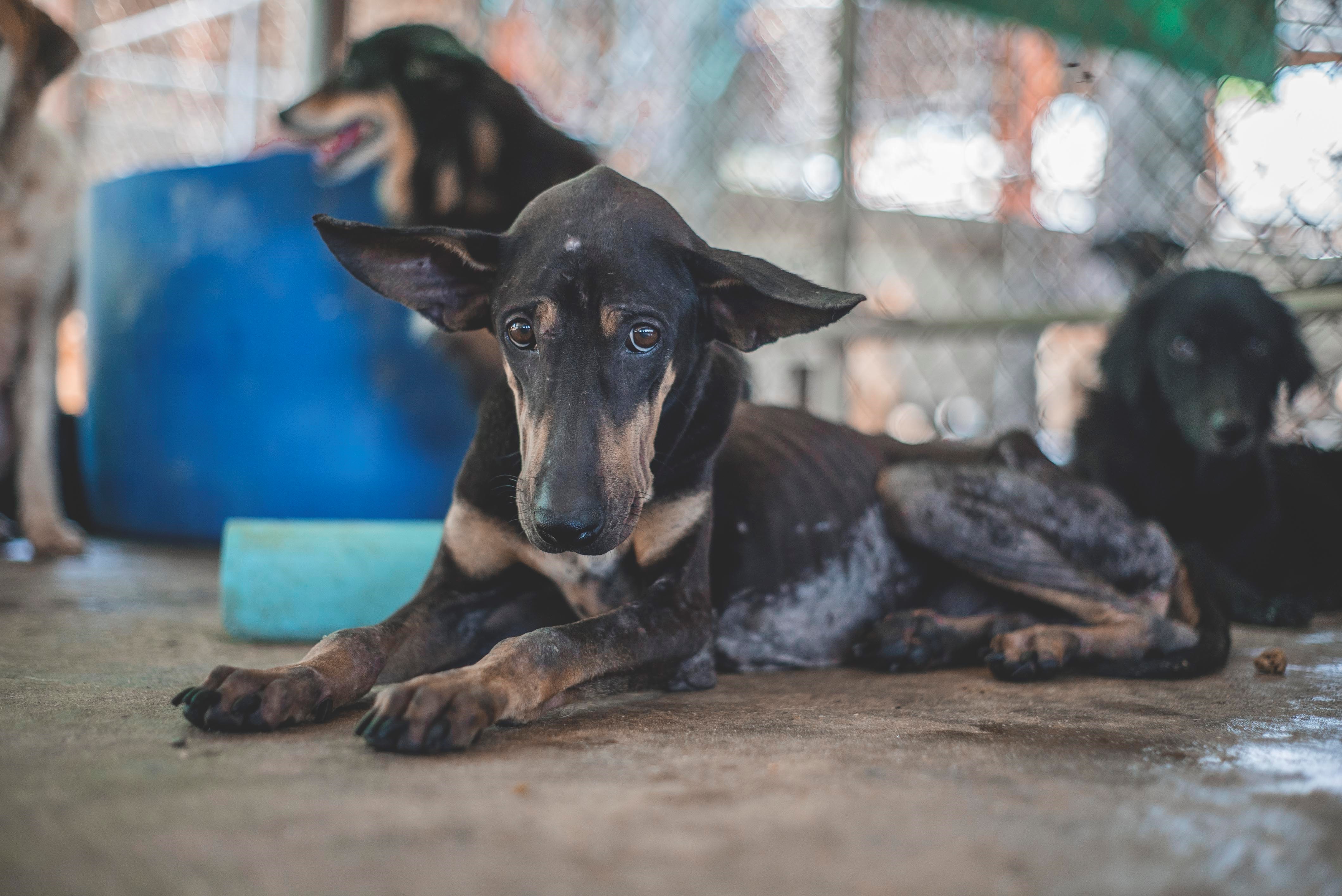
    The animal welfare charity tells us that a couple of weeks ago three thousand dogs were rounded up in Nakhon Phanom province, which borders the Mekong River, and dumped in a government pound. In the crowded conditions, diseases, particularly deadly parvo and distemper, spread like wildfire.

    In such close quarters, fights between dogs and death by starvation of small or sickly dogs, unable to compete for food, added to the toll.

    However for the 1,500 dogs who remain, there is now some hope because an Emergency Reaction Team from the Soi Dog Foundation were given permission to go into the pound to treat the dogs inside.

    The sight that greeted them was grim.

    One member of the emergency medical team described it. “I would like to stay positive, but I can’t,’ he said.

    “The pound is overcrowded and dog fights break out all the time. When it is feeding time, the weaker dogs don’t have the strength to eat. So the stronger dogs take all the food and the weaker ones don’t survive.

    “The dogs are scared, depressed, and traumatised by their experience. It’s hard to stay positive about this place. It’s simply heartbreaking.”

    Upon arrival, the team first sorted the dogs.

    The small dogs, the puppies, and the weak were separated from the large dogs, and as none of the animals are yet sterilised, the males were separated from the females.

    They also did the same with cats that had been rounded up by the local office of the Thai government’s Livestock Department.

    They then vaccinated every animal in the pound – injecting 60 an hour and daubing them afterwards with green dye so that no animal would be vaccinated twice by mistake.

    The animals may survive but they now face spending the rest of their lives in captivity. This is because officials kept no record of where each dog came from, so they cannot be returned to their home territory.

    In any case, those territories have already most likely been taken over by stronger, fitter or more wily dogs who managed to avoid the government dragnet.

    The deaths in the pound are not the only ones to result from official knee-jerk reactions to a public panic over a “rabies outbreak” in Thailand that started in the new year. The panic has resulted in public calls for all eight million street dogs in Thailand to be killed, a “solution” dubbed “Set Zero”.

    In March, 20 dogs in a Buddhist temple in the upper south of the country, including a family of puppies, were poisoned by government officials, causing outrage among animal lovers.

    Poisoning – in Thailand usually using strychnine – results in a horribly painful death for the animals, that spend hours shuddering and spasming in agony, drowning in their own fluids, before death finally comes.

    The officials later claimed that tests had shown that 16 of the 20 poisoned animals had rabies, but the test results were never released, leading to widespread suspicion that they were made up.

    A number of activist groups have come together to bring criminal charges against the officials concerned, under Thailand’s Animal Cruelty Law.

    The Thai Livestock Department has come under fire for not reassuring people that there is, in fact, no rabies outbreak at all, and for its inept and understaffed handling of captured dogs.

    In March, fuel was added to the flames when the department also came under scrutiny over alleged irregularities in its procurement of poor quality canine rabies vaccine.

    An internal investigation came to the conclusion there had been no irregularity, and that inferior-quality vaccine had not been the cause of a spike in rabies deaths at the beginning of the year.

    However, the reports of poor quality vaccine had already spread, resulting in the calls for “Set Zero”. The department has denied having any plans to kill all stray dogs in Thailand.

    Thailand has in fact been effective in reducing human deaths from rabies from hundreds a year in the 1990s to single figures in recent years.

    In 2018, to date, there have been just seven human rabies deaths.

    The Nakhon Phanom emergency is not the first time that Soi Dog has stepped in to save animals, particularly dogs, after the government has proved unable or unwilling to do so.

    In 2010 it sprang into action to successfully contain an outbreak of parvo disease through a massive vaccination programme. In 2011, it rescued thousands of dogs from devastating flooding in Bangkok and in 2016/17 it did the same during floods in the south of Thailand.

    Soi Dog – founded in 2003 by husband and wife John and Gill Dalley from Leeds in the United Kingdom – also played the leading role in stopping the horrific trade in dogs from Thailand to the dog meat restaurants of Vietnam.

    It has launched an appeal for funds to help tackle the fallout from the rabies panic, such as the horror in Nakon Phanom. People may donate through the Soi Dog website at www.soidog.org

  • Puppy Farmers Are Jailed For Leaving Dead & Dying Dogs in a Wheelbarrow

    Puppy Farmers Are Jailed For Leaving Dead & Dying Dogs in a Wheelbarrow

    Two people have been disqualified from keeping dogs for life for a string of animal welfare offences following an RSPCA investigation into the underground puppy trade.

    Inspectors from the animal welfare charity and police found a wheelbarrow of dead and dying dogs at a farm in Bradford after launching an investigation following calls from members of the public who had bought puppies which became ill.

    On Friday (18 November), a man and a woman appeared at Leeds Magistrates’ Court for sentencing in connection with a number of animal welfare offences relating to puppies and dogs seized from the property, in Tyersal Lane, following the warrant in September last year.

    Farm manager John Wilcock (DoB: 09/07/80) of Sticker Lane, Bradford, admitted five offences while Bernadette Nunney (DoB: 04/11/91), of Tyersal Lane, Bradford, pleaded not guilty to six offences. She was found guilty on 20 October following a four-day trial.

    Today, the duo were both sentenced to 20 weeks in prison, suspended for 18 months, and were each disqualified from keeping dogs for life.

    Nunney was also handed a 12 week curfew order, ordered to complete a 15-day rehabilitation activity, and ordered to pay £500 in costs.

    Wilcock was ordered to complete 200 hours of unpaid work and a 20-day rehabilitation activity. He was also ordered to pay £100 in costs.

    When RSPCA officers and police executed the warrant they came across a wheelbarrow of dead collie puppies. As they filmed the heartbreaking scene for evidence they realised that one of the pups – a black and white female, buried beneath the dead bodies of her littermates – was still alive.

    She was rushed to the vets but later died. Post mortems revealed that she and her siblings had died from parvovirus.

    Nunney and Wilcock were accused of causing unnecessary suffering to the seven puppies, as well as a number of other offences [full details below]. They also faced three further allegations of causing unnecessary suffering to a total of 10 dogs, and two offences of failing to meet the needs of 30 dogs.

    RSPCA inspector Emma Ellis, who investigated, said: “What I saw that day will stay with me forever.

    “The sight of the live puppy buried within the pile of dead puppies was heartbreaking. There was nothing we could do to save her. The way those puppies were left to die highlights how these people simply see them as commodities which I find totally unacceptable.

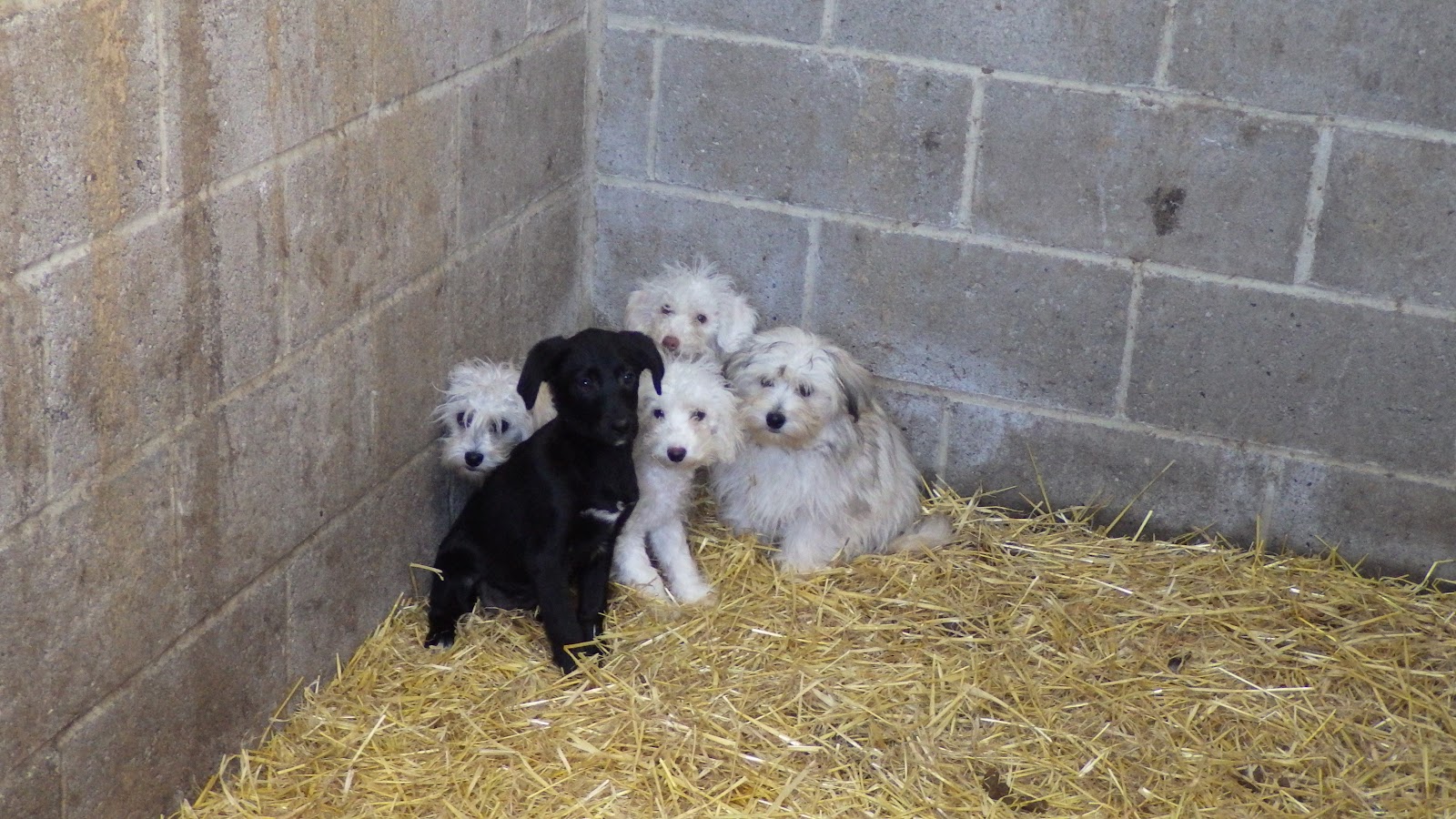
    “Dozens of dogs were being kept at the address in stables and kennel blocks. Many had no food, no water, no bedding, and all of them were living in their own filth.”

    http://i.imgur.com/xPHpupk.jpg

    Inspectors found 43 dogs – including collies, spaniels, bichon frises, Labradors, beagles, Chihuahuas, and some terrier-cross types – most of which were seized by the police and placed into the RSPCA’s care.

    RSPCA special operations unit chief inspector (CI) Ian Briggs, said: “There is a growing demand for certain breeds of dogs – such as chihuahuas, spaniels and bichon frises – and genuine, regulated breeders simply cannot meet demand.

    “Unregulated puppy breeders and dealers are plugging this gap in the market by producing dogs on a commercial scale and putting money and profits ahead of the health, welfare and happiness of the dogs.

    “When our investigations bring us to places such as this farm, we often find dogs living in squalid, sub-standard conditions meaning the unsuspecting public often end up parting with hundreds and hundreds of pounds for puppies who have behavioural issues or health problems throughout their lives. In some of the worst cases, their beloved family pet dies in their arms just days after bringing them home.”

    The case came to court following an investigation by the RSPCA as well as a sting by journalists from BBC’s Watchdog. During their investigation, reporters bought a dog (pictured above) from the Bradford farm which was then rehomed with animal behaviourist Carrie Evans.

    “Gizmo was exceptionally frightened and very poorly,” Carrie said. “He was grossly underweight, had worms, had an intestinal infection, and infected ears.

    “Due to bad breeding, Gizmo has horrendous deformities in his legs and feet, and his feet can sometimes rotate backwards. He also has an undershot jaw.”

    CI Briggs added: “When our investigations bring us to places such as this farm, we often find dogs living in squalid, sub-standard conditions.

    “Unsuspecting members of the public end up parting with hundreds and hundreds of pounds for puppies who have behavioural issues because they’ve not been properly socialised, or health problems, due to poor conditions and no veterinary treatment. In some of the worst cases, their beloved family pet dies in their arms just days after bringing them home.”

    The RSPCA has launched a campaign to tackle the underground market in puppies following a 122% increase in the number of calls the charity’s cruelty line receives on the issue. The Scrap the Puppy Trade campaign is calling on the Government in England to introduce stricter legislation around the breeding and selling of dogs, and also seeks to help the public in how to responsibly buy a puppy.

  • Scrap Breed Specific Legislation & Reform Dangerous Dogs Act – Hard Hitting New Report

    Scrap Breed Specific Legislation & Reform Dangerous Dogs Act – Hard Hitting New Report

    MPs and stars back call for tough penalties and ‘national register’ to tackle offence ‘which is gateway to drug and gun crime’

    Dogs slammed into walls to toughen them up for fighting, cats and dogs used as ‘bait’ to train fighting dogs, dead dogs dumped in the countryside – these are among the disturbing findings of a ground-breaking investigation into dog fighting in the UK today.

    Developed and instigated by the League Against Cruel Sports as part of its campaign to end dog fighting in the UK, Project Bloodline was a six month investigation designed to understand why, when and where dog fighting takes place – and how we can stop it.

    Working collaboratively with 60 partners in a ‘typical’ UK urban area, the League Against Cruel Sports unearthed intelligence which included:

    • Prohibited dogs bred and sold in a clandestine market in order to supply the high demand for status and fighting dogs with Pitbull ‘type’ puppies being sold for £1,000
    • Before a fight has even taken place animals are left severely injured or are even killed having been subjected to brutal training methods including body or head slamming
    • A feral cat colony being kept to supply ‘bait’ for dog fighting
    • A Staffordshire Bull Terrier which had been used for ‘bait’ had its teeth crudely pulled and broken with pliers so that it could not defend itself
    • The bodies of dead dogs, which had been used for fighting, dumped near farmland

    Eduardo Gonçalves, CEO of the League Against Cruel Sports, who will be launching the report of Project Bloodline in Parliament on Tuesday, 24th May, said:

    “If anyone thinks dog fighting is a thing of the past, then sadly they are wrong. Last year we commissioned a ground-breaking academic report which said that a dog fight was taking place every day in the UK. This year we’ve taken to the streets to find out exactly what was happening, and the results are frightening.

    “Dogs are being bred and sold specifically for fighting, pet animals are being used to provide a steady supply of torture victims for cruel training exercises where they are tethered down or used as dangling ‘bait’ for dogs being trained to fight for ‘fun’ – the cruelty behind this underground world is endless and it’s happening right under our noses.

    “We want appropriate penalties to be introduced, and for appropriate action to be taken against perpetrators. Dog fighting is barbaric and we cannot allow it to be part of a modern Britain.”

    Ricky Gervais in response to the League’s findings said:

    “I am deeply saddened to hear that illegal dog fighting is apparently on the rise in the UK. Anyone who likes the spectacle of two terrified animals fighting is a psychopath. Dogs are naturally loyal friends, who have to be abused and mistreated to act in this way. They don’t want to be part of this. They are literally fighting for survival. Please never attend anything like this and if you suspect such a disgusting event may be taking place somewhere, then please report it immediately. This has to stop.”

    A ‘gateway’ crime

    Dog fighting is not purely a matter of animal welfare. Evidence from the UK and abroad points to the activity being a ‘gateway’ crime to serious and organised offences, such as drug and gun crime. In the United States dog fighting is recognised as a Grade A felony by the FBI and the practice of tackling dog fighting to prevent other crimes is well established.

    The League Against Cruel Sports worked closely with Michelle Welch, Virginia’s Assistant Attorney General, who has vast experience of tackling dog fighting in the USA. She said:

    “Dog fighting is a major crime that here in the States is closely linked with a wide range of other law-breaking. Statistics show that more than half of those connected with dog fighting are gang members, and seven out of ten have previously been arrested for felonies and/or drug offences. Where there is dog fighting, there are drugs.

    “Dog fighting is hidden, so the work being done in the UK by the League Against Cruel Sports is exactly what needs to happen. Collaboration between agencies, strong penalties and a greater understanding of the level of this activity is vital. The League Against Cruel Sports should be commended for Project Bloodline as without this kind of work, dog fighting will grow and have an ever-increasing negative impact on individuals, communities, and of course on the dogs.”

    The Way Forward – PUP

    Based on the intelligence and experience gathered from Project Bloodline, the League Against Cruel Sports is calling for the implementation of a national dog fighting action plan which can be rolled out in any area where dog fighting is prevalent.

    Based around three areas of Prevention, Understanding and Prosecution (PUP), recommendations include:

    • The formation of a National Task Force, led by a senior figure in Government, to ensure sufficient collaboration and action takes place to tackle dog fighting across the country.
    • Details of individuals banned from keeping dogs should be held on a national register by statutory agencies, helping to prevent further offences being committed whilst increasing opportunities for enforcement action.
    • Legislation and penalties for offenders must be clarified and strengthened; the League is calling for a minimum three year custodial sentence for convicted dog fighters. Sentencing should reflect the spectrum of offending in relation to dog fighting (from street level dog fighting to organised crime). Rehabilitation programmes should be offered as part of the sentencing mix.
    • The Dangerous Dog Act should be reviewed as a matter of urgency as we believe breed specific legislation is fundamentally flawed.

    Celebrity and political support for campaign

    The League’s campaign to end dog fighting in the UK has been backed by a list of celebrities and cross party MPs including: Ricky Gervais, Amanda Holden, Paul O’Grady, Russell Tovey, Nicky Campbell, Peter Egan, Tony Robinson, Bill Oddie, Dave Spikey, Marc Abraham, Alison Steadman, Ben Fogle, Gemma Atkinson, Carol Royle, Henry Smith MP for Crawley and Co-Chair of the All-Party Group for Animal Welfare, Kelvin Hopkins MP for Luton North, John Pugh MP for Southport, Margaret Ritchie MP for South Down, member of the Commons Environment, Food, and Rural Affairs Committee and Lisa Cameron, MP for East Kilbride, Strathaven and Lesmahagow.

    Commenting on the issue and the League’s campaign, Henry Smith MP, Co-Chair of the All-Party Parliamentary Group for Animal Welfare said:

    “Dog fighting is an abhorrent pastime belonging to the past. Convicted perpetrators need to face appropriate punishments, however currently our courts lack the vital power to impose these – this needs to change if we have any chance of stopping dog fighting for good.

    “I support the League Against Cruel Sports with their campaign to both increase the available custodial sentences to at least three years and their call for a national register of animal abusers.”

    Britain’s Got Talent judge, Amanda Holden said: “I can’t think of many things worse than making two dogs fight each other. Dogs are loving animals, to abuse them like this is horrific.”

    Eduardo Gonçalves concluded:

    “Dog fighting is one of the most serious animal welfare issues in Britain today and it is also a serious issue of crime and community safety. Animal abuse has consistently been shown to be a reliable predictor of some of the most serious and most violent crimes in the community, including child abuse, domestic violence and abuse of the elderly.”

    The League Against Cruel Sports believes there has been a resurgence in dog fighting in urban areas in the UK. A range of different factors have led to this conclusion, including the results of Project Bloodline, increases in UK hospital admissions due to dog bites, increases in the number of muscly dogs on the streets and the apparent growth in the number of stolen dogs, possibly used for bait. Dog fighting might not be easy to see, but we ignore this evidence at our peril.

    “The League will now be stepping up its ongoing investigation into dog fighting in Britain. We will be stepping up engagement with local communities to prevent those at risk from being drawn in. We will be doing further research to help policy-makers and law enforcement agencies better understand the causes, and the potential solutions. We will be partnering with a range of agencies to support the rehabilitation of rescued dogs.”

    The League Against Cruel Sports has started a petition calling for the government to more effectively tackle dog fighting, including increasing sentences for convicted dog fighters. The petition can be signed at www.league.org.uk/dogfighting.

    Anyone with information about dog fighting taking place in their community can confidentially contact the League Against Cruel Sports Animal Crimewatch service on 01483 361108 or at www.league.org.uk/crimewatch.

  • MPs Condemn Asia’s Animal Meat Trade After House of Commons Debate

    MPs Condemn Asia’s Animal Meat Trade After House of Commons Debate

    Last week the backbencher debate in the British House of Commons on Asia’s dog meat trade highlighted the levels of cruelty to dogs involved in the industry, and the extreme human health risks associated with eating dog meat.

    In recent months, a growing number of British celebrities have joined the swathe of animal rights campaigners lobbying governments and calling for an end to the trade. Ricky Gervais, Dame Judi Dench and actor and animal rights campaigner Peter Egan were amongst others who recently spearheaded a campaign and petition organised by Thailand’s Soi Dog Foundation. The petition (here) calls on the Thai government to stop illegal exports of dogs from Thailand to Laos and Vietnam, to satisfy dog meat demand in those countries.

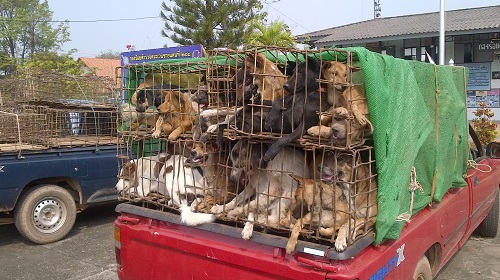
    China remains the largest consumer of dog meat in the Asian region, accounting for around 20 million dogs a year, according to animal rights campaigners. The now infamous Yulin Dog Meat Festival, which takes place very year in the southern province of Guangxi, neighbouring with Vietnam, sees over 10,000 dogs killed and eaten in just 48 hours. Campaigners claim the animals are treated inhumanely, trussed up and packed tightly into small cages, then skinned alive in some cases. There also remains a myth that the more adrenalin running through the dogs body as it is killed, the tastier the meat.

    Vietnam is the second largest consumer of dog meat in the region, with around five million dogs meeting their fate every year in the thousands of primitive slaughterhouses across the country. Demand is so high in fact, there are estimates suggesting that up to 70% of dogs in the food supply chain are stolen family pets. Over the past two years there have been numerous incidents of dog thieves being lynched by angry villagers, and even villagers being killed by the dog thieves.

    During the HoC debate Rob Flello MP told of dogs “housed and transported in disgusting conditions in which they can often barely move, and killed in the most excruciatingly cruel and painful ways”. He added “It is common for the animal to be bludgeoned, hanged or electrocuted, and, in some cases, for the animal to be thrown fully conscious into a drum of boiling water—anything that ensures maximum suffering”.

    Inflicting maximum pain on a dog before it dies creates adrenalin that is thought by some in Asia to tenderise the meat.

    Gavin Robinson MP weighed in by describing the Asian dog meat trade as “international barbarism”.

    Aside from animal welfare issues, the debate also revealed serious human health hazards associated with eating dog meat. Parliamentary Under-Secretary of State for Foreign and Commonwealth Affairs, James Duddridge MP said “So unregulated is the dog meat trade industry, that there is a huge risk to human beings from diseases such as cholera and rabies, with the latter found to be present in slaughterhouses and markets in China, Vietnam and Indonesia”.

    Alex Cunningham MP also referred to statistics stating evidence of a 20-fold increase in the incidence of rabies amongst people who had consumed dog meat across the Asian region.

    Hanna Bardell MP also raised concerns about dog meat entering the UK food chain, asking “Do the Governments of our nations have a role to play in terms of the security of the supply chain and making sure that none of this dog meat enters our food chain and threatens our food supply?”

    The British government however is wary of preaching western ideals to eastern countries. Robert Flello MP added: “I do not believe that it is generally this House’s role to tell societies abroad what they should or should not do based on western sensibilities, but we cannot allow tradition to be used as a smokescreen for practices that are barbaric, cruel, inhumane and disgusting”.

    Steve Reed MP agreed, saying “There is a role to be played in seeking to secure global standards of animal welfare and in working with local campaign groups on the ground in the countries affected to help them strengthen their own cases”.

    As a result of the debate, MP James Duddridge made two commitments on behalf of the government; to write to all British Ambassadors in the countries concerned to review what they are doing in relation to the dog meat trade, and to consider a review of how the government interacts on this issue with the various international organisations (for example, the World Health Organisation), specifically on the area of health.

  • British MPs Condemn Asia’s Dog Meat Trade as “International Barbarism”

    Last week the backbencher debate in the British House of Commons on Asia’s dog meat trade highlighted the levels of cruelty to dogs involved in the industry, and the extreme human health risks associated with eating dog meat, said Soi Dog Foundation.

    Rob Flello MP told of dogs “housed and transported in disgusting conditions in which they can often barely move, and killed in the most excruciatingly cruel and painful ways”. He added “It is common for the animal to be bludgeoned, hanged or electrocuted, and, in some cases, for the animal to be thrown fully conscious into a drum of boiling water—anything that ensures maximum suffering”.

    Inflicting maximum pain on a dog before it dies creates adrenalin that is thought by some in Asia to tenderise the meat.

    Gavin Robinson MP weighed in by describing the Asian dog meat trade as “international barbarism”.

    The scale of the industry is alarming. Around 20 million dogs are killed and eaten each year in China, five million in Vietnam, two million in South Korea, with Indonesia also serving up dog meat dishes. Whilst countries like Thailand and the Philippines have officially banned the sale and consumption of dog meat, the trade still continues underground.

    Aside from animal welfare issues, the debate also revealed serious human health hazards associated with eating dog meat. Parliamentary Under-Secretary of State for Foreign and Commonwealth Affairs, James Duddridge MP said “So unregulated is the dog meat trade industry, that there is a huge risk to human beings from diseases such as cholera and rabies, with the latter found to be present in slaughterhouses and markets in China, Vietnam and Indonesia”.

    Alex Cunningham MP also referred to statistics stating evidence of a 20-fold increase in the incidence of rabies amongst people who had consumed dog meat across the Asian region.

    Hanna Bardell MP also raised concerns about dog meat entering the UK food chain, asking “Do the Governments of our nations have a role to play in terms of the security of the supply chain and making sure that none of this dog meat enters our food chain and threatens our food supply?”

    The British government however is wary of preaching western ideals to eastern countries. Robert Flello MP added: “I do not believe that it is generally this House’s role to tell societies abroad what they should or should not do based on western sensibilities, but we cannot allow tradition to be used as a smokescreen for practices that are barbaric, cruel, inhumane and disgusting”.

    Steve Reed MP agreed, saying “There is a role to be played in seeking to secure global standards of animal welfare and in working with local campaign groups on the ground in the countries affected to help them strengthen their own cases”.

    Conclusion to the Debate

    As a result of the debate, MP James Duddridge made two commitments on behalf of the government; to write to all British Ambassadors in the countries concerned to review what they are doing in relation to the dog meat trade, and to consider a review of how the government interacts on this issue with the various international organisations (for example, the World Health Organisation), specifically on the area of health.

  • The Three Greatest Loves (& Losses) of My Life

    The Three Greatest Loves (& Losses) of My Life

    I should feel lucky to have had three great loves who’ve loved me unconditionally but having just recently lost Chloe at 15 years old my heart feels broken and although it hasn’t yet been two months since she left us, the loss feels greater the more time passes leading me to think about all three of the dogs we’ve loved, lost and forever treasure.

    My first great love, and loss, was Bonnie.

    A quirky Cocker Spaniel, in any and all senses of the word. She was a funny character, I’m not 100% sure anyone, myself included, ever fully knew her. We adopted her at two-years old from a show kennels my cousin worked at. Bred from Crufts winning stock, she decided life in the ring wasn’t for her.

    Bonnie 7

    When I think back I liken her personality to Columbo. A persona that screamed simplicity, but underneath those massive ears and curly mophead lay a cunning mind whirring away.

    I remember once while living in Suffolk playing cricket outside one Summer’s night. We left the door open and Bonnie and Jackson followed pottering around. Mid-way through what was most likely a shocking attempt at playing cricket from myself, I saw Bonnie creeping back inside then coming out and thought no more about it until I saw her repeat the action a few more times. I decided to creep up and investigate when she went back inside one more time. She had opened a hole in the bottom of a 30kg bag of food and was treating it like a self-service buffet.

    Classic Bonnie move. In fact most classic Bonnie moments involve her opening and stealing a ham hock from the fridge, stealing and eating a loaf of bread at nano speed, before getting to older age and being unable to catch a treat dropped from hand height to her but opening her mouth and making that lip smacking sound we all know too well about five second too late.

    My second great love and loss was Jackson.

    He wasn’t my dog, not really, not to begin with anyway. Ryan had him from a puppy but when I first met Ryan in his dog training days, Jackson went everywhere he did. He was four-years old then and Jackson and I became friends, mainly through feeding him Skips crisps initially (at the time I didn’t realise Ryan’s diet mainly consisted of Skips, Supernoodles and orange Club biscuits).

    Jackson has an aura about him derived from his statuesque nature and everyone who met him has a Jackson story. In fact the ‘Nervous Twitch’ mentioned in K9 Magazine’s last Dogosaurus was inspired by him.

    Jackson_In_His_Prime_1996

    He was a kind, protective, funny boy who made me laugh more times than I can count. Jackson battled cancer, and won, before passing suddenly one weekend just over nine-years ago aged 13 years old.

    After he beat the disease we took him on a celebratory pet friendly break to Newton Abbot in Dorset. A weekend of pottering about (him) and falling in water (Chloe, his daughter). One of the funniest moments that weekend came when we were packing up to leave, it’s something we only spotted in the photos afterwards and the sequence of shots has led us to put our own dialogue with voices and accents, of course, to them.

    Jackson and Chloe Holne Chase

    For some reason Jackson took exception to something a dog in the distance said so Chloe peered over to check it out, while his grumpy old man face stayed put.

    The next photo in the sequence was of Chloe running out of the car to check on things, while the third photo showed her back in the car with a satisfied (almost smug-like) look on her face as ‘daddy’s little girl’.

    Chloe really did idolise her dad. She changed personality after he passed and although noticeable at the time, now that Mia has been left by Chloe, she too has changed personality. Chloe is my third love and most recent loss.

    Chloe

    Indulgent this feature may be, I’ve been reading a lot about coping with the loss of a pet recently to try and give my mind some sort of order once again. One thing I cannot find the answer to is if I am alone in the grief feeling so overwhelming and all consuming weeks afterwards. After reading this article by Joe Yonan I was inspired to share.

    At the time we had to say goodbye to Chloe, it was after a year long illness. We were told she had a combination of canine spondylosis and degenerative myelopathy which affected her spine with the effects worsening over time. In fact, looking back she hit all three stages from development to the latter stage pretty much bang on schedule as other dog owners had relayed in their own experiences.

    Throughout the three stages of the disease progressing, Chloe needed more care and to the end was unable to walk or hold herself up late afternoon/early evening in particular so our day was scheduled around Chloe’s needs and what she needed and when. If only she’d been younger to take advantage she would have loved it…

    We tried to manage her rest as well as we could, and sometimes it worked. If she would rest after breakfast she would be fine until lunchtime. She was a stickler for routine paying no attention to the clocks going back, but when they went forward she whole-heartedly agreed. She would start her countdown to tea around 10 to 3 in the afternoon. It used to amuse me and I’d get used to hearing the banging of her tail outside my office door or against my desk. You literally could set your clock to Chloe-time.

    In the latter stage of the disease, her mind was the same but her body was failing her and we knew would only get worse, yet I didn’t truly prepare myself for a time when she wouldn’t be here.

    As the disease progressed, Chloe-time worked against her. She would still want to get up and walk around, but she couldn’t cope with the pacing.

    I am lucky in that working at home wasn’t an issue so for most of Chloe’s life we’ve spend every day with her and I cherish that. Or will do in the weeks or months to come I think with much more ease. Just now I’d do anything to get another 15 years with my special girl.

    DSCF0115

    With Chloe we had three markers on what we would look out for to make sure she was still enjoying life and had quality of life, and when it got to the point that she was no longer able to cope we felt we had no choice but to make a decision to let her go because if we didn’t, it would have just been for ourselves rather than her, and she loved so fully and unconditionally, this was one final thing we could do for her.

    It left us with broken hearts and a hole as big as her heart.

    I think in the first few weeks I threw myself into work. With such a lot to do, I felt I could do more good through National Dog Adoption Month helping more dogs to find new homes and more owners to find their canine soulmate. At night times with the house so much quieter without Chloe’s presence, I just worked some more and Mia, who idolised Chloe as much as Chloe did Jackson really, was lost without her and slept for most of the time.

    As November began, my work load began to slow and I found myself albeit busy during the day, I was running out of excuses.

    I wonder if in the early weeks I distracted myself too much, or if perhaps I was mindful of the decision being the right one for her whereas now, although that’s still the case, the loss is greater because time has passed and what I’m left with now isn’t the Chloe on 29th September who needed us to help her, but the Chloe I remember for 15 years worth of fun, beauty and spirit, her love of all things orange in her younger days, her ability to have her eyes closes in most photos taken, and so much more besides.

    Chloe once shouted at Andrew Castle from her dressing room backstage at GMTV while accompanying Mia (she sat with her back to the camera on a live appearance once also).

    She once trod in and upturned a water bowl on Big Brother’s Little Brother backstage after being given a tour behind set by Dermot O’Leary. She also once attempted to usher someone out of our house because his presence delayed her teatime. I think I’ve said enough of her stickler for routine!

    She had the biggest heart and biggest, most beautiful brown eyes and I will forever miss her. She gave the best cuddles and I miss her presence every moment of every day. I hope she knows just how much she taught us about living life the Chloe way.

    Chloe sound asleep

    If you too have lost a pet, share your special moments below here. I’d love to hear your own canine’s shenanigans and hope the antics of Bonnie, Jackson and Chloe here have amused you.


  • Taking Dogs Abroad – How to Take Your Dog on an Overseas Holiday

    Taking Dogs Abroad – How to Take Your Dog on an Overseas Holiday

    In recent years, pet travel between Britain and other EU countries has opened up a great deal due to the introduction of pet passports, writes Melissa Hathaway. These documents allow properly vaccinated and health checked animals to travel abroad and (crucially) re-enter the UK without pets and owners having to go through the excruciating process of pet quarantine confinement.

    This has allowed loving owners to take their pets with them when going on holiday. However, should you wish to take your beloved canine companion with you on holiday, there remain certain things to consider – the main question being: Do the benefits of taking your pet with you outweigh the problems and distress it may cause? In many cases, the answer is ‘Yes’. Although kennels are often extremely good, and many people can find kind neighbours to look after their pets in the familiarity of their own homes, some dogs find separation from their owners distressing.

    dog beach photo

    This is particularly true of rescue dogs which may have been passed from home to home in the past, and fear that each new separation will be forever. It’s not just the dogs who have separation problems, wither. A 2007 survey suggests that a massive 72% of owners worry about their pets when on holiday, and many are likely to take shorter holidays due to the need to return swiftly for the sake of a dog or a cat. Many people and pets thus clearly cannot relax properly when the human part of the partnership is away on holiday. For these people, pet passports are a boon. However, for those who have dogs with less separation problems, or less prone to personal worry about their dog’s welfare, there may be a few more factors to weigh up when deciding whether or not to take your dog abroad.

    Transportation

    Transportation of animals to faraway locations is a perennial problem. People going on long-haul flights often worry that their animals will become distressed, confined in pet carriers and exposed to all the noise, pressure changes, strange smells and so on which are inherent in an aeroplane flight. Such things are often scary for people, and it is impossible to explain them to animals. Sedation is one option if the journey is not a long one, and most vets will be experienced in such matters and able to provide drugs which will either calm your animal or send them to sleep for the duration. It is well worth noting that animal protection legislation ensures that all European airlines have to treat your pets with the greatest care and respect – although this may not be true of airlines elsewhere in the world, so be sure to research your plane provider’s pet policies before booking a flight. Sea travel is another option, for those who have the time to spare. Some Transatlantic travellers have found an excellent solution to the transportation problem in the form of travel by boat. The British have long been renowned as avid pet-lovers, which perhaps explains why the British Cunard Line is the first in the world to allow animals onto a specially adapted cruise liner. The Queen Mary 2 has a ‘Pets on Deck’ programme, in which cats and dogs can be brought on board ship and treated like honoured guests for the duration of the voyage. The liner treats lucky pets to luxury kennels (with their own ‘butler), an indoor animal play-area, plentiful walks on deck, gourmet pet food, and frequent owner visiting hours. Ideal – if you can afford it!

    Dangers and Diseases

    When the pet passport scheme was first introduced, it was controversial due to the worry that it would allow diseases like rabies to re-establish themselves in the UK. Over the past few decades, the UK authorities have been extremely successful in eradicating dangerous animal-borne diseases from the British Isles. However, they remain at large in many other countries worldwide, raising concerns that the free movement of pets between such countries and the UK would undo the good work of the past few decades and once again see rabies sweep across Britain. However, the authorities were not immune to such concerns. The pet passport scheme ensures that only the most stringently health-checked and vaccinated animals are allowed to travel, and imposes restrictions upon countries were dangerous animal diseases are particularly prevalent. Nonetheless, you may want to have a look at the disease dangers for dogs within the nation you are planning to visit, and either have your dog vaccinated against them or take relevant precautions against them. Some dangers, of course, are not infectious, but no less dangerous for the health of your dog. Particular plants and fungi, deadly to dogs, grow in certain parts of the world. Take note of the kind of poison-hazards you may have to watch out for. Furthermore, be aware that road safety rules are not as stringently enforced in many places as they are in Britain – so it will be a good idea to keep your dog on a tight lead when near main roads!

    Is Your Holiday Pet-Friendly?

    Finally, the accommodation you stay in and the kind of activities you want to participate in are of extreme relevance. Is your hotel or apartment dog-friendly? If you plan to have a beach holiday, are there dog-friendly beaches? If you want to spend your time going round museums, who will look after the dog while you are out? If you’re going on a holiday with plenty of walking through the countryside – then that would naturally be a fantastic experience for your dog, and one on which it would be a shame for him/her to miss out!

    Often Worthwhile

    With all of this in mind, it should be remembered that, with the right consideration and precautions, taking your dog on holiday can be a fantastic experience. You will not be worried about your dog’s welfare at home, your dog will not be pining for you, and you will both get to enjoy all the delights that foreign climes have to offer.

    Photo by kajo0069

  • Help! My Dog Has Canine Osteoarthritis, Should I Change His Diet?

    Help! My Dog Has Canine Osteoarthritis, Should I Change His Diet?

    If your dog has just been diagnosed with osteoarthritis, you may be confused and worried about the effect of his condition on his enjoyment of life. Fortunately there are several things you can do to slow the progression of the disease, and keep him happy and mobile. Lifestyle changes, anti-inflammatory/anti-pain medication and nutritional supplements are the cornerstones of treating osteoarthritis.

    Lifestyle Changes

    The great thing about making lifestyle changes for your dog is that they are within your control. They are not going to be easy to make, but keep in mind that pet dogs are like toddlers in that they are largely a reflection of their parents. Managing your dog’s lifestyle is almost completely your responsibility.

    Here is what you should be focusing on:

    Weight Reduction

    This is a biggie! The target weight for an arthritic dog should be leaner than normal to ease the burden on his joints.

    Aim for a gradual reduction in weight. Numbers are your friend in this: weigh your dog regularly and chart it; initially every two weeks, then every month. Once his target weight is reached, put him on the scales quarterly or semi-annually. Similarly, use a weighing machine or a measuring cup to ensure that his food intake is regulated.

    As your dog gets older, his energy needs will reduce. If you continue to chart his weight, you should have no trouble noticing the weight gain and reacting to it.

    A weight reduction program is a lot easier to write about than to implement. You must ensure that all members of the family realise the importance of the program. Table scraps have to be few and far between; better still, eliminate them completely. Your pet will not be happy during the period that he is losing weight. But, once his weight is stabilised, he will be healthier and happier than before.

    Exercising Your Dog

    Exercise is important for your arthritic pet. Not only will it help him remain at his target weight, but regular mild exercise has been known to improve the health and mobility of the affected joints. It reduces the pain of arthritis and the progression of the disease while maintaining good muscle mass.

    The important part of any exercise program for arthritic dogs is that it is low impact.

    Try to prevent him from jumping; also, avoid asking him to repeatedly climb up and down stairs. Remember that medications could mask his pain, thus allowing him to get more vigorous than is good for him. To prevent such ‘accidents’, it is best to exercise him on a leash.

    Swimming is an excellent exercise for dogs with osteoarthritis. It encourages mobility in the joints, but without painful weight-bearing. Hydrotherapy also builds up muscle mass which helps to support the painful joint.

    Medication and Nutritional Supplements

    As well as help you with a weight loss diet, your veterinarian can prescribe pain relieving medication and suggest nutritional supplements that will make your dog feel better. Glucosamine and chondroitin are safe and effective at relieving joint pain and can be used in conjunction with prescription treatments. It’s very important that you give the correct dose of medications in the correct schedule as some drugs can have side effects. You may also want to consider other natural therapies such as acupuncture or laser treatment, which may help ease arthritic pain.

    Supleneo flex is a nutritional joint supplement, which is suitable for all breeds, sizes and ages of dog and contains the key ingredients that can improve joint health, such as glucosamine.

    In addition, Supleneo flex’s natural liver flavour means dogs love the taste, making it’s easy and fun to give them their supplement every day. It is low calorie, so you can give it to your dog, instead of a treat without worrying about weight gain.

    For further information go to www.freedomtomove.co.uk

    Conclusion

    Canine osteoarthritis is not life-threatening, but it is progressive and can make your dog extremely uncomfortable.  With your help and support, there is no reason why he cannot enjoy a happy and fun-filled life.

    [note color=”#fddda5″]For further information about canine arthritis and canine arthritis treatment, including an on-line symptom checker please go to www.freedomtomove.co.uk[/su_note]

  • Dog Attacks -Why Blaming Breeds is Missing The Point

    Dog Attacks -Why Blaming Breeds is Missing The Point

    Dog bites are, in the main, avoidable and a better understanding of dog body language can help us get somewhere near to understanding the reasons and motivations for dog bites and serious dog attacks.

    Before we begin though, let’s ask – and try to answer – the question of whether dog bites are a breed specific problem.

    Dog Bites: A Breed Specific Problem?

    Across dog walking hot spots you will find a mixture of breeds, shapes, and sizes, often allowed to roam around off their leads in the open spaces.

    It can be very intimidating when a big, strong, dog approaches you and after a rise in the number of attacks by the popular pet, many people are calling for new measures to make sure that dogs are kept on leads. But are dogs being given a bad reputation unfairly?

    I myself am terrified if a large dog comes up to me as I walk my Collie cross on open fields near my home. However this never used to be the case.

    Around four years ago my family bought home a young male Weimaraner from the local dog’s home. At first everything was fine but after a few weeks things turned nasty. He went on to bite three members of the family, including me, meaning that we sadly had to send him back to the dog’s home.

    It was especially heartbreaking, as 99% of the time he was a normal, loving dog. Something seemed to snap in his mind, he’d have five minutes of savageness then return to being nice and look up at you with his soppy sad eyes. In my opinion this could only be put down to how he was brought up. The same as if a human was treated badly it could have effects later on in their lives and on their mental state.

    Despite how much I loved him and felt sorry for him it is the reason why I would never be able to trust a big, strong dog again. Just in case. I still hold the scars from his attack, and know that to have a dog’s jaw clenched around you is one of the most terrifying things that I have ever experienced.

    The argument for keeping dog’s on a lead is simple. A dog can turn nasty at any time, and recent reports of family pets turning on children is a clear example of this. When I am out walking my dog not only am I in fear for myself but also for my dog, as she is small, not big built, and would not stand a chance if attacked by a big dog, an increasingly likely event in today’s society in which many dogs are bread to attack.

    One breed in particular that has developed a bad reputation is the Staffordshire Bull Terrier. At all the local dogs homes inside almost every kennel is a dog of this breed or a Staffordshire Bull Terrier cross, with the amount of Rottweilers not far behind.

    Voluntary group and registered charity, Animal Lifeline, based in Stoke-on-Trent, Staffordshire has saved over 10,000 dogs since it was founded over thirty years ago. The group never puts a dog down and always has at least 100 dogs in its kennels waiting to be re-homed.

    Nick Fletcher from the centre explains why he thinks so many of these breeds get brought in: “We get all types of dogs in though there is a higher proportion of Staffies than there used to be. This is because the Staffy has become a fashion accessory for many young people, mainly young men. They then find that either the dog isn’t as fierce as they thought, and want to get rid of it, or their circumstances change, particularly if they have a partner. Young couples often have a dog until they have a baby, then they want to dump the dog. Also, many couples split up after a while and return to parents or go into rented accommodation, where they cannot keep a dog.”

    It seems that like with a lot of things in today’s world looks are more important than the dog’s behaviour.

    Nick added: “People often select a dog because of its looks, so smaller prettier dogs are always the first to be homed. Lovely dogs with nice temperaments are often ignored and remain in kennels for months just because they are plain in appearance.”

    It can be easily seen why these people think they look tough with one of these dogs when they are basically being used as a weapon. Some dogs go on to be re-homed and make loving family pets but others will never find a home ever again because of their vicious mentality from their upbringing.

    Despite their bad reputation, created through the media, Staffordshire Bull Terriers are in fact known as a trustworthy animal and sometimes referred to as the ‘Nanny Dog’ for their great affection towards children. Owners of so called ‘status dogs’ believe the facts and figures used in today’s news stories about dog attacks are unfair as the majority of attacks by smaller breeds go unreported.

    Daniel Berrisford, from Stoke-on-Trent, has owned two Staffordshire Bull Terriers and agrees that the negative press towards the breed is unfair.

    “I think the Staffordshire Bull Terrier is the same as any other dog; it all depends on how you bring them up as to how they turn out. If you bring a Staffy up to fight then they have the mentality to fight, however if you bring a Staffy up as a loving house dog that is what they will become. Both of the Staffies that I have had would not hurt anyone and I believe it is because they were brought up like that. I think that if you bring them up in the right way you will not find a more loyal and loving dog.

    “Some owners only have a Staffy or other strong dogs because they want to bring it up to fight and attack but I think that you could find any breed that has attacked somebody, so for a Staffy to have a particularly bad reputation is ridiculous.

    “Little dogs often come up to larger dogs and go to attack them, even if they are on a lead but because the bigger dog retaliates and can do more damage they get the blame. Smaller dogs should be kept on a lead just the same because they can cause just as much trouble.”

    The truth is that no dog should be branded a vicious breed when the victims of most attacks do not recognise the exact breed so stick to what they know, and certain dogs get the blame, the reason why there are no real statistics for dog attacks in this country.

    It is also difficult to distinguish what actually is an ‘attack’. A recent incident in my area occurred in which the police were involved as a dog had knocked somebody over and ripped a coat. A total accident in which the dog was playing, but accused of a vicious attack just for being a big animal.

    The truth is that however much the media tries to scare people about our favourite furry friends, the increase in ‘attacks’ has not risen that much and that dog attacks and collisions involving children have actually declined by approximately 18% over the last 10 years.

    With a UK dog population of around eight million, it is an issue that cannot be ignored. Measures need to be brought in to deal with the irresponsible owners who are giving all dogs a bad name, and to protect the public from them so that we can feel safe around the nation’s most popular pet again.

    K9 Magazine editor Ryan O’Meara outlines his thesis for our misunderstanding of canine behaviour, body language and intentions as a primary motivating factor in our failure to spot the warning signs of dog aggression.

    Understanding Canine Aggression

    In this report, you will learn about:

    Understanding errors of interpretation
    Understanding motives for aggressive behaviour
    Understanding how to minimise risk

    Summary:
    Misinterpretation of canine signals, body language and emotions due to anthropomorphic tendencies.

    Why do humans feel the need to attribute human qualities to animals in order to better understand or accept them?

    What emotions do dogs have? What we happen to presume about what dogs think is, by definition, open to interpretation and in reality unless dogs learn to talk we shall never actually know what dogs think, although we can, will and should speculate. Dogs dream, we therefore conclude they have ‘imagination’ what they dream about, we do not know. As much as we may not like to admit it, we understand dogs a lot less than we realise.

    Can dogs have a social conscience? If not they can’t possibly understand or display emotions such as guilt, shame, jealousy etc – all of which are traits often attributed to dogs in an increasingly anthropomorphic society which is conditioned to believe everything from gloved Disney mice to the socially conscious tales of Lassie. It’s little wonder we grew up with such a distorted view of animal emotions, motives and drives.

    It is my finding, having studied many dogs of different breeds in different environments that, whilst dogs are exceptionally responsive to our own emotions and body language, their own emotional spectrum is significantly different. This can be best addressed by asking the simple question; Does my dog really love me?

    Does My Dog Love Me?

    Considering how complex it is for us to understand such a powerful and misunderstood concept in humans, who have the power of speech and the written word to explain themselves, it is surprising how many of us assume that our dogs love us, love being with us and show loyalty to us for reasons equitable to those of a fellow human.

    The most probable answer is dogs do not ‘love us’ in the sense that we love them. They are hard-wired to appease us, to fit in with us and to display behaviours which suit us and our needs – it is the fact that we love them for this which often mistranslates as them performing these behaviours because they love us back.

    It is my view that canine emotions are expressed in basic forms. They may display many variations of these basic emotions. A dog can be fearful – and this can often be misinterpreted as guilt or shame. A dog may be fearful of losing rank, status or a tried and tested route to food – and this can often me misinterpreted as jealousy or envy of other dogs or people – it is still a demonstration of a variant of basic fear behaviour.

    It is us who attribute our social values and emotional structure to dogs in order to try and make them easier to understand. It is the dog’s unique ability to allow us to believe this that has to be part responsible for their successful relationship with man. The dog will be, whatever we want him to be. This is an error in translation.

    After all, if we were truly looking for a companion animal whose emotions were closely linked to our own, surely we would have domesticated the apes and we would now be talking about man’s best friend as a small, domesticated monkey. After all they have many of the same skills that dogs have, they are superior in intelligence, dexterity and trainability.

    Could it be that the reason dogs have slotted their paws so firmly under the table of man is because we can attribute any emotion they display as we please? If we say it, we can believe it to be true – with a dog – but with an ape, perhaps it is the fact that they ARE so much like us that it is harder for us to enjoy such a mutually fulfilling relationship with them?

    The dog, for want of a better description, will be anything we want him to be. They will play the role of court jester or funeral mourner, if they think it’s what we want. Perhaps it is this for reason alone that they have become the most successful socially domesticated animals on the planet. It is also possibly the reason why the more we think we know about them, the more we are kidding ourselves.

    The dog is, in my opinion, a still largely misunderstood animal. We control their environment, their diet, their stimulation, their entire lives – it’s little wonder they feel compelled to ‘love’ us.

    The perception problem: Dogs see our world from a different perspective. We can look at the same object or experience the same situations but our and their perception of both can be entirely different. There are various reasons for this. To understand what it is to see the world through the eyes of a dog we need to first accept the physical differences.

    They spend their lives between putting their nose to the ground and their eyes gazing upwards. For a dog, life is not conducted at eye level (like us) it is a story happening underfoot and events happen from way on high above. This very fact alone gives us a sense of different the world appears to a dog.

    We fail to acknowledge such a fundamental difference in perspective at our own peril. Understanding and accepting this literal matter of fact helps us to try and see things from the dog’s perspective. In the world of the dog, people are most often regarded as friends or are observed as neutral, non threatening animals. However, not all dogs share this view of all people and it is an extremely serious error for any person to assume it.

    Motives for aggression in dogs can vary and are dependent on a number of key factors.

    Genetics / breeding
    Social development in key life-stages
    Environmental factors
    Behavioural conditioning / reinforcement
    Perspective problems / misjudging situations
    Misdirection of drives

    A dog’s genetic make-up and breeding is a factor too often overlooked in instances where the less ‘extreme’ purpose bred dogs are concerned. A relative novice is inclined toward understanding that a Siberian Husky will not make an ideal pet for an owner who leads a largely urban lifestyle with little or no opportunity to provide regular opportunities for mental and physical stimulation.

    However where the edges begin to blur are with breeds (or cross breeds where breeding is unknown) which can often present an image which entices novice owners toward them without properly understanding the very specific lifestyle requirements the dog is likely to demand.

    It is the case in my experience that there are many dogs produced by people who do not have sufficient skills, experience or desire to fully comprehend the importance of identifying the suitability of the people they are supplying dogs to. Similarly, many dogs are bred with little or no attention paid to the quality of temperament within their breeding stock. Hence there is a perpetual problem – in select numbers – where unsuitable breeders supply unsuitable dogs to unsuitable new owners. Addressing this issue within the structure of existing UK legislation is not possible.

    Coming back to the central theme of under-prepared dog owners, failure to place significant emphasis or attention on the key life-stage development of dogs is a monumental failing.

    A Dog’s Key Life-Stage Phases:

    Aged between 6 and 16 weeks (extremely important)
    Aged between 16 weeks and 6 months (important)
    Aged between 6 months and 14 months (VITAL!)

    The average day of the average dog is spent waiting for stimulation or events which can break up the monotony of the dog’s normal routine. In some dogs, attempts to stimulate themselves or indeed relieve boredom can manifest in displays of destruction or even aggression. An owner’s failure to properly recognise the signs of problem behaviour, especially displays of aggression – even as a puppy – can encourage the dog to condition itself to responding to certain environmental events with aggression. Small, relatively unimportant events can spark an extreme response in a dog where inappropriate behaviour is left unchecked.

    Aggressive behaviours can be the result of misdirected drives.

    Example Scenario:
    A young dog – for the purpose of this example we shall say a West Highland Terrier – develops a habit of getting excited at 4.00pm each week day when the school children walk by on their way home.

    His initial response is curiosity as a result of what he sees an exciting visual stimulus in his otherwise relatively stimulation-free day. On some occasions the children notice the attention the dog is giving them and they tease him. His response is to bark and jump up at the front door.

    Over time this conditioned behaviour worsens. Each day he starts to bark, jump and claw at the door as soon as he sees any children in school uniform walking past. His owner’s response to this behaviour is to shout at him as and when he starts barking and jumping up at the door. His owner doesn’t re-direct the behaviour or address it in any other way other than to occasionally shout. Eventually the inevitable happens and the dog manages to escape through the front door when a visitor is leaving the house. He runs out in to the street and bites the first school child he reaches. His owner insists he has never done anything like this before (failing to recognise he had never had the chance before).

    This scenario above is a simple example of how behaviour left unchecked can result in an actual attack. The dog has displayed a clear misdirection of an intense prey drive which was initially piqued as a result of an unstimulated lifestyle and escalated as a result of both the uncontrollable element of the children who teased him but exacerbated by his owner’s shouting in response to his barking, which the dog reads as either a reward for his behaviour or sees it as his owner ‘joining in’ with his behaviour.

    The problem is confounded as the dog’s owner has failed to grasp the dog’s perspective of what is happening at 4.00pm each day – whilst his owner sees the behaviour as the dog just letting off some steam for 5 minutes per day, the dog’s perspective of the situation is far more serious – he is seeing the school children is prey items which should be pursued vigorously. The dog’s owner has not recognised the ‘value’ placed on the school children by the dog.

    The example scenario shows a failure to provide the dog with sufficient daily stimulation, a fundamental misinterpretation of the dog’s emotions (believing him to be ‘letting off steam’), a perspective problem (not recognising how the dog is viewing the school children) and a failure to re-direct a very prominent prey drive behaviour, resulting in a completely avoidable dog attack.

    Aggressive behaviour should always, without any exception, be referred to professionals starting with an assessment by a veterinarian to check that there is no medical issue causing the dog’s behaviour.

    The key to educating the public about aggressive behaviours in dogs is to impress on dog owners the need for the following:

    Initially be aware of how to identify a responsible, high quality dog breeder or rescue shelter
    Learn to understand canine emotions and body language. Avoid anthropomorphic errors.
    Be aware of the importance of critical key-life stages in the dog’s development
    Understand and implement bite inhibition techniques early and maintain them
    Provide sufficient stimulation and recognise the role environmental conditioning plays
    Understand canine drives and redirect undesirable behaviour as soon as it manifests

    In simple terms:

    Learn to understand the dog, don’t assume. Provide exercise and stimulation appropriate to the breed and the dog’s individual personality. Learn to recognise misdirected drive. In even simpler terms: dog bites and dog aggression are not breed specific, they are dog (and owner) specific. Dogs are the product of their genetics, upbringing and environment. Irresponsible supply of dogs is a major contributory factor as is the continuing failure to properly understand how dogs think, why they behave as they do and, more crucially, a failure to spot early warning signs of aggression or, more unforgivably, a failure to take appropriate action as and when a dog does show signs of aggression. Risk assessment is often poor in cases of serious dog attacks on children. Owners often misplace trust in their pets when they have no good reason to, particularly if a dog has never been exposed to certain scenarios in the past (e.g. young children visiting the home of a dog who is not used to them).

    Dog bites and dog attacks can be largely avoided. Breed bans have been a monumental failure to address the problem of serious and fatal attacks and serve as an ongoing reminder that it’s not just dog owners who misunderstand the primary causes of dog bites, legislators are as guilty of this and that, quite frankly, is unacceptable. If we really want to understand and reduce dog bites, we have to do more to better understand our dogs, properly train them and put ourselves in a position to understand and mitigate risk factors.

    © Ryan O’Meara. All rights reserved.
    You may re-distribute this white paper
    provided all credits and attributions are maintained.

  • Feeding Older Dogs

    Feeding older dogs doesn’t have to mean drastic changes. Obesity is possibly the most common health related problem to affect dogs as they get older. An overweight dog is an unhappy dog and subsequent health problems can drastically reduce a dog’s life and render his later years void of any real quality. The key is to be aware of nutritional requirement changes when feeding older dogs, adjust slowly and gradually and keep on top of your older dog’s specific feeding requirements on a regular basis.

    Feeding Older Dogs: Nutritional Requirements

    All dogs relish a tasty treat and they are an excellent way to reward good behaviour, but if overused your dog could end up suffering from obesity before you even realise you are spoiling him. It is important to pay close attention to your dog’s diet for many reasons, but particularly if your dog is overweight. A balanced diet is essential to keeping a dog fit and healthy.

    Feeding Older Dogs

    Modern prepared foods contain an adequate supply of essential nutrients without too many calories, as do many home mixed diets. Complete, dry dog food is popular today, as it is an easy to prepare meal which contains a good supply of all the right nutrients. Commercial canned foods, whether mixed or on their own, are a good source of nutrition and are easy to prepare and store. Some dog owners favour a nutritional supplement to add to the dog’s meal, rice is a good source of carbohydrates and is easily mixed with other foods.

    Feeding Older Dogs: Be Treat Aware

    Certain treats make a nutritious supplement to a meal and also serve as a good reward for him, but dog biscuits alone to not offer adequate nutrition to be served as meal on their own.

    The majority of young, healthy and active dogs are at a low risk of becoming overweight as most of their calorific intake is used during play but as they get older and their metabolic rates slow in conjunction with a decline in expended energy, the chances of calories leading to a piling on of the pounds grows higher every day.

    If you have ever taken your dog off the lead in a large forest or field you will have noticed that they will always do more miles than you because they run off and come back as you are walking and thus for every mile you walk, they will normally RUN four!

    This is one of the reasons that young, active dogs stay healthy whether their diet is perfect or not. But there will come a point in the dog’s life when he or she is unable to do as much exercise so it is important to control the diet accordingly.

    Scroll down for some expert nutritional advice in our Q&A with Suzie from  Pawtions.co.uk about the benefits of portion control

    feeding older dogs

    Monitor Lifestyle Changes in Your Older Dog

    During the more active years, it is still important to take care of your dog’s diet to ensure that they are receiving a good balance of protein and other valuable nutrients. Your vet will be able to advise you on this matter should any uncertainty arise.

    You may not notice it at first, but should your dog become obese there are certain tell tale signs apart from the obvious physical weight gain. A diminished level of activity not conducive to their age is always a cause for concern, but a likely cause is that he or she has put on a little weight.

    Another symptom is laboured breathing. If your dog struggles for breath after an activity which he or she could once perform effortlessly then perhaps it is time to get the scales out.

    Avoiding Weight Gain in Older Dogs

    As a dog owner it is often difficult to notice if your dog is putting on weight because you see them every day. Paying close attention to other elements of their physical state may enlighten you to any weight problems.

    As the majority of dogs become less and less active in their later years it is often difficult for them to loose weight through increased exercise, so it is up to you as an owner to monitor and control what your dog eats. Prevention, as is so often the case, is better than cure, especially when it comes to a more senior dog and weight control.

    A good way of monitoring weight is by simply reducing portion size. It is often the case that a regular portion of dry or complete dog food offers more than enough nutrition and therefore it is quite possible to reduce the meal sizes without affecting the nutritional intake of the dog. In this day in age, with the science behind many commercial pet foods, you may be able to find the perfect, balanced diet your breed of dog needs, relating to their age, on your supermarket or pet shop shelf.

    Target Weight When Feeding Older Dogs

    You should have a target weight in mind and plan thoroughly to ensure your dog does not err over or above it to any great degree. Your vet should be able to advise what your dog’s ideal target weight is – don’t go on breed averages – one Labrador could be as many as 10lbs heavier than another yet still be perfectly fine weight wise.

    If your dog has put on a few too many pounds as they have gotten older, a diet is needed. Unlike us, a dog is unable to steal biscuits or cakes in the middle of the night so they are not reliant on their own will-power to lose weight, they are reliant on YOU ensuring they don’t become dangerously obese, so don’t give in to his pleas for a chocolate digestive every time you go to the kitchen!

    As a dog owner it is important for you to be disciplined. Your dog will probably not notice the reduced size of his meals. But you will, so ensure you don’t sneak him a treat unless you have reduced a similar amount of calories from his main meal – it’s a balancing act of which you have complete control and your dog is relying on you to get right.

    Older dogs have special needs in many areas and diet is one of the most important.

    Don’t let your dog’s later years in life be ruined by health problems that can easily be avoided when it comes to weight, too many calories or general nutritional mismatch between your dog’s age and their specific daily nutritional requirements. If you feed a natural diet, monitor the volumes. If you feed a commercial pet food, make sure you have the most suitable one for your dog’s age, weight, breed and activity level. When it comes to feeding older dogs, the science is all there, you just need to follow it.

    Expert Advice from Suzie, Pawtions Veterinary Nurse and Nutritionist

    feeding older dogs

    Why is portion control so important for dogs?

    At Pawtions we believe that portion control is very important to maintain a healthy life for each and every dog. When faced with the massive choice of dog foods available to us, it is very easy to become confused when trying to work out how much food our dog actually requires. Feeding guidelines are often very generalised and can’t take into consideration your dog’s age, breed, level of exercise, or whether your dog has been neutered.

    We often over-indulge our dogs out of love, but a quick treat a little too often or a bowl of leftovers from your own meals may lead to dietary problems or your dog becoming overweight. This can also upset the careful balance of nutrients provided by the dog food. By feeding a portion size which has been recommended for your individual animal – such as that provided by Pawtions – you know that you are providing enough nutrients, vitamins and minerals to meet your dog’s unique needs.

    In their PAW report of the last year the PDSA assessed the weight and general health of nearly 30,000 dogs across the UK. They discovered that 35% of UK dogs are overweight. This is a very alarming figure, especially when we consider ourselves a nation of dog lovers. An overweight dog cannot possibly enjoy life to the full, is likely to encounter more health problems, which may sadly lead to an early grave.

    What are your key priorities when choosing the perfect plan for dogs from Pawtions?

    We understand that all dogs are unique, so we make sure we have all the information we need to really help us to understand each dog better.

    By asking the owner relevant questions about their dog, our veterinary nutritionist can work out the portion size for each and every dog individually. This takes the confusion away from the owner when trying to work out how much food their dog actually needs. It also means continuity in the household when the job of feeding pets is shared by several people.

    In order to provide customers with a recommended feeding plan, we ask them to provide us with vital pieces of information including:
    • age
    • breed
    • weight
    • sex
    • whether your dog is neutered
    • daily exercise
    • physique
    • any special dietary requirements
    • your preferred flavour

    It’s very important that the information customers provide is as accurate as possible and also kept up to date. We recommend that owners regularly weigh their dogs so that we can change their portion size should their nutritional requirements change.

    However, the Pawtions perfect plan isn’t just about the food! We also include treats, poop bags, flea and wormer treatment (just when they’re needed) and free gifts to provide a complete care package.

    Do you think age and breed make a difference in selecting the right diet for your dog?

    Yes, definitely! By telling us your dog’s breed we are able to check whether this falls into the recognised weight bracket. If the dog’s weight doesn’t fall within this bracket, we discuss this further with the owner, as all dogs are unique, and breed standards can very significantly.

    We understand that small dogs may prefer a smaller kibble, and larger breeds a larger one. Also, different breeds are classed as puppies and senior dogs at different ages. Therefore knowing the breed allows us to decide when to recommend a change from a puppy diet to a maintenance one, or a maintenance diet to a senior one.

    Puppies require very different levels of nutrients to adult dogs, so must be fed a diet that meets their specific needs. They also need more regular feeding, and we take this into consideration when calculating portion size.

    However, as dogs age, their energy levels decrease, reducing their calorific need. Their nutritional requirements also change with the aging process and we believe the diet should change to support this.

    What 5 top tips would you give dog owners who might be thinking about changing diet to a more portion controlled diet?

    When thinking about changing your dog’s diet to a recommended Pawtions plan you should consider the following points:

    1) If your dog has serious medical problems, we strongly advise you contact your vet before
    you make any change of diet.

    2) Provide us with as much information as possible so that we can recommend the right Pawtions plan for your dog.

    3) It’s really important to make sure you gradually introduce a new food. The best way is to start adding a small amount to the current food. Slowly increase the proportion of new food to current food over the period of a week until a complete change is achieved.

    4) We encourage you to weigh your dog regularly so that we can make any alterations to the diet as necessary.

    5) If you have any questions regarding your dog’s health or diet, we encourage owners to ask, it could be important. We are here to help.

    Lastly, tell us a little about Pawtions. Where did your inspiration to start the company and healthy menu for dogs come from?

    The idea for Pawtions stemmed from our founder’s own frustrations with looking after and feeding Bella, his cocker spaniel. First he would have to drive to a supermarket or pet store and carry a big heavy bag back to the car. Then, once home he would have to find somewhere to store it. He found there was a tendency to be over-generous when the bag was first opened and the food fresh, whilst towards the end of the bag the food often become dried out and crumbly, losing its appeal. He also found that he would run out of food, treats and poop bags at the most inconvenient times.

    But the biggest problem came with the inconvenience of deciding how much to feed, due to the vague feeding guidelines, and then weighing out the correct amount every day!

    At Pawtions we know what it means to be lucky enough to own a dog and we want to encourage people to be more aware of their dog’s nutritional needs. Through our complete care package we hope to promote responsible dog ownership. The package includes wormer and flea treatment throughout the year, so you’ll never forget when treatments are due, free tasty treats, and free poop bags. Now and again we’ll also pop in a surprise toys as a little present for your best friend. All this is delivered to your door every 4 weeks.

    To find out more about Pawtions and investigate a plan for your dog, visit www.pawtions.co.uk today!

    Resources: Older Dogs

    http://www.youtube.com/watch?v=HimMjk-1rg4

  • Skin Problems in Dogs

    Skin problems in dogs are often serious and can lead to distress and even premature death. Identifying the signs and symptoms of canine skin problems as well as early treatment options can make a huge difference to your dog’s happiness and health, according to Iain Booth, a veterinary surgeon and founder of the on-line pet medication website VetUK.

    He explains that thousands of cats, dogs and other small furry pets suffer from minor to acute skin problems without their owners being aware of their suffering.

    “Just like humans, the skin of our pets is an organ – and it is vital to protect our furry friends from infections, caustic substances, dehydration and the harm of ultra violet light,” said Iain.

    Dog Skin Irritation

    “Not only does a skin irritation impact your pet’s health, but it can also severely change his or her personality as the itching and discomfort associated with a skin problem can make your pet stressed, moody and reluctant to be stroked.”

    Skin Problems in Dogs: Causes & Treatments

    One of the key triggers to skin problems in dogs across a wide range of pets is the reaction to biting parasites, such as fleas and mites. Because of their delicate immune systems, hamsters, rabbits and smaller dogs and cats cannot take very strong treatments, however there are a number of specialist treatments for the smaller pet.

    These include products which contain the active ingredient Ivermectin, a substance known to kill parasites that cause infestation both inside the body (endoparasites) as well as those living outside the body, on the skin (ectoparasites). Ivermectin is used in many species for the control of mites, roundworms and lice.

    Allergens: A Common Cause of Dog Skin Problems

    Skin problems are more prevalent in dogs due to the many allergens that them. Iain recommends using specially formulated foods designed to help reduce the itch/scratch cycle caused by many types of allergic skin disease. In cases of food allergy switching to the new diet exclusively can eliminate the allergic response in eight weeks.

    “Some of the signs to look for in your pet for a skin problem include reddened flaky itchy skin, overall poor coat quality, a smelly coat, gnawing, scratching and biting of the skin and possibly diarrhoea in certain cases.

    “It is highly recommended that you see your vet for a thorough clinical work up to determine the cause of your pet’s skin irritation and then implement a treatment process, which is likely to available cost effectively online at sites such as VetUK,” concludes Iain.

    Don’t let skin problems be the cause of misery for your dog. Speak to your vet and always ensure your dog is being provided with proper and appropriate nutrition.

    [sws_yellow_box box_size=”551″] Highly Recommended: Are you looking for dog shampoo for itchy skin? Perfectpetskin.co.uk has the solution! [/sws_yellow_box] [sws_red_box box_size=”550″]

    Pet Head Feeling Flaky Dry/Sensitive Skin Shampoo @ £9.99

    Buy It Now

    [/sws_red_box] [sws_red_box box_size=”550″]

    Pet Head Life’s An Itch Soothing Shampoo @ £9.99

    Buy It Now

    [/sws_red_box]
  • Reasons Why Dogs Eat Their Own Sick

    Dogs are noted for their hearty appetites. Dog owners have seen how the dog eats things that are repulsive to humans. Dogs would not pass up the chance to feast on the contents of the trash can in spite of the fact that they are regularly provided nutritious food. Dogs also have the disconcerting habit of eating their own and other dog’s poop. Dogs have the disgusting habit of drinking from toilet bowls. Humans most loved pets have the unaccountable predilection for vomit as well.

    Dogs have been the most loyal companions of man. It is quite surprising therefore that in spite of the long years of association, some behaviors shown by the dog cannot be understood by man. Humans consider spoiled food, feces and vomit as gross but dogs would consider these items as gourmet food.

    Studies conducted on canine behavior have failed to come up with the exact reason for the dog’s repulsive eating habits. It was speculated that eating vomit is an ingrained habit that was passed on to present day dogs by their ancestors. This habit is done for the purpose of concealment. Dogs in the wild have to hide from their predators thus feces and vomitus which are dead giveaway of the dog’s presence are eaten. In this case the habit to eat feces and vomit is done for self preservation.

    Wolves are the ancestors of modern day dogs. It is the custom of wolves to hunt together and to help in caring for the pups. After feeding on the hunted animal, dogs would return to the den and regurgitate the eaten food to feed the young. For a dog vomit is regurgitated food. Even after domestication, this habit would still kick in from time to time.

    Dogs, as mentioned are voracious eaters. Dogs would find the smell of the partially digested food in the vomit very appetizing. Dogs eat repulsive smelling rotten food thus it is more understandable if they devour the still warm vomit.

    Eating vomit is not really a dangerous habit of the dog. As long is the vomit does not have toxic substances, it would not really harm the dog. An owner may not be too concerned with the disgusting habit of the pet. Dogs are very affectionate pets thus a dog parent that receives sloppy kisses from the pet may want to prevent the dog from eating vomit. Stopping the dog from vomiting can be a challenge given the indiscriminate eating habit of the pet but an owner can prevent the pet from eating the vomit by cleaning the mess as soon as it is created by the dog.

    Learn more about why dogs eat vomit and first aid for dogs at Sarah’s Dogs.

  • Can Dogs Eat Grapes?

    Can Dogs Eat Grapes?

    Are Grapes Safe For Dogs to Eat?

    The wrath of grapes was, unfortunately, all too familiar for many dogs and cats in 2008 as a US based pet insurance firm released data showing how many toxic claims it had dealt with last year. For many dog owners, they are unaware of which foods can prove toxic to dogs until it’s too late.

    VPI pet health insurance analyzed the more than 400 claims it received last year for toxic plant ingestions to find which plants and plant products proved most likely to poison pets. Raisins and grapes topped the list, followed by mushrooms and marijuana. In 2008, the average amount claimed for plant poisoning was $427 (approx £300).

    Grapes Eaten by Dogs Top Vet Claims

    1. Raisins/Grapes
    2. Mushrooms
    3. Marijuana
    4. Lily
    5. Walnuts
    6. Onion
    7. Sago Palm
    8. Macadamia Nuts
    9. Azalea
    10. Hydrangea

    “Almost all plant poisonings in pets can be prevented, but prevention depends on knowledge, thus it is important for pet owners to become familiar with which items can be toxic if ingested,” said Dr. Carol McConnell, vice president and chief veterinary medical officer for VPI.

    “Prevention is a simple matter of keeping these hazards out of a pet’s environment. To avoid plant poisonings, try not to give a dog table scraps that contain raisins, onions or nuts, and make sure that a new pet is introduced to a backyard free of sago palms, wild mushrooms or other toxic plants.”

    Pet owners have good reason to take the threat of grape/raisin ingestion seriously. Even in low doses, ingestion can place pets at risk for acute renal failure. Symptoms include anorexia, lethargy, depression, vomiting, diarrhea and abdominal pain.

    The exact cause is unknown, but some experts think that there may be a toxic component in the skin of the grape/raisin. Treatment by a licensed veterinarian may include inducing vomiting and/or administration of intravenous fluids. Immediate treatment is essential.

    The mushrooms most responsible for poisoning pets are the common “backyard” variety. These often grow in grassy places, especially after a heavy rain, and contain toxic components that disrupt the functioning of the digestive tract and liver. If ingested, mushrooms can cause salivation, dehydration, vomiting, diarrhea, and liver failure.

    The best way to prevent an accidental ingestion is to regularly scan a yard, or any other grassy area a pet may occupy, and pull wild mushrooms up when they appear.

    Most mushroom ingestion claims were submitted in late summer and fall. In fact, half of the plant poisoning claims received in October were due to mushroom ingestion. In addition to the top 10 plant poisonings, VPI received claims for ingestion of the following plants or plant products: delphinium, crocus bulbs, hemlock, rhododendrons, gladiolus, tea tree oil, poison ivy, nightshade, tobacco, poinsettia, oleander, brunfelsia, hibiscus, almonds, scarlet pimpernel, potpourri and kalanchoe. Nearly all claims for lily ingestion were submitted for felines.

    While not a plant or plant product, fertilizer is another garden variety toxin often ingested by pets. The strong smell of fertilizer can motivate dogs to taste or eat it. Unfortunately, some fertilizers contain organophosphate pesticides which impair the nervous system. In 2008, VPI received 60 claims for organophosphate poisoning. Pet owners can avoid accidents involving fertilizer by not using pesticide-containing fertilizers in an area frequented by pets. As with plant poisonings, prevention of fertilizer poisoning is primarily a matter of observation and knowledge of a pet’s environment.

    Grapes are favourite fruits of humans but these innocuous looking fruits can kill a dog. No one really knows why dogs should not be allowed to eat these red, green and black sweet fruits. Studies conducted on grape toxicity have verified that it was not caused by fertilizers or pesticides. Although the toxin in grapes is unknown, a twelve month study period has verified that grapes have indeed caused renal failure. Dogs affected by grape toxicity will be in pain due to inability to pass urine thus dogs that do not respond well to treatment are oftentimes put to sleep.

    Question: Can My Dog Eat Grapes?


    Humans love grapes fresh fruits or as raisins as apart from being delicious grapes are rich sources of vitamins. Grapes are good source of antioxidants. Free radicals commonly known as oxidants are the cells “developed” from humans unhealthy living . Alcohol, pollution, unhealthy foods, too much sun are the allies of oxidants. These oxidants are the reasons why people suffer from various health conditions like cancer, heart diseases, arthritis and many other health concerns.

    Grapes are good sources of antioxidants that prevent the oxidants from causing more harm to the healthy cells of the body. Now many people are aware of this fact but nevertheless, grapes are consumed in large quantities. Because of the low calorie content, people conscious about their figures would chose to snack on grapes as the fruit will not add inches to the waistline.

    The potential fatal effect of grapes to dogs is a recently discovered fact. Before pet owner were warned about the harmful effects of grapes to canines, this fruit as well as raisins were used as treats when training dogs. Scientists and pet owners are puzzled as the toxicity of grapes do not affect all dogs. Dogs that eat bunches of grapes will go scot free while some dogs that ingest a few will start to vomit and show other signs of toxicity. The toxicity of chocolates is dose dependent, this is not so with grapes.

    A dog that was affected by the toxic contents of grapes would start to show a change in behavior. The dog will be hyperactive and then it will be depressed and become lethargic. The dog may vomit and have diarrhea. Immediate treatment is necessary to save the life of the pet thus it must be rushed to the vet stat. Because the kidneys can no longer perform its function of filtering toxins, the dog will suffer from renal failure that can result to the death of the dog

    Sarah’s Dogs has more answers to why dogs cannot eat grapes as well as information about first aid for dogs.

    Worth a look…

    Dog flea advice and tips.

    Cushing’s disease in dogs (free report)