Blog

  • Would You Know What to do if Your Dog Was Choking to Death?

    Would You Know What to do if Your Dog Was Choking to Death?

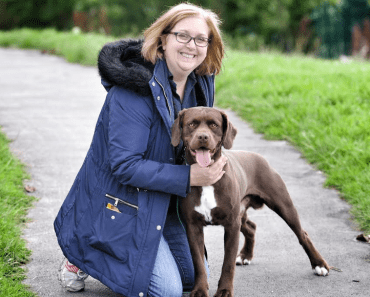
    A pet owner saved her puppy’s life after he almost choked to death on a plastic toy – using first aid skills she had learned on a charity course just a week before.

    Janice Latreche, from Oldham, says her Springer Spaniel crossbreed Milton is alive today thanks to the training she received during a pet first aid course run by vet charity PDSA.

    The 48-year-old was at home when her beloved puppy began choking and gasping for breath.

    She said: “Milton had somehow got hold of one of my grandson’s action figure toys and was choking on it.

    “I could see that he was struggling to breathe but I didn’t panic and remembered the skills I had learned on the PDSA course. I tried to see if I could pull the toy out from his mouth but I couldn’t, so I used a technique which is like an animal equivalent of the Heimlich manoeuvre – and it just popped out.”

    As soon as the toy became dislodged Milton was able to breathe and Janice calmed him down before taking him to her vet for a check-up.

    Kylie Jones, PDSA vet nurse who taught Janice, said Milton’s case proved why it was important for people to learn basic pet first aid skills:

    “Life-threatening emergencies can occur at any time and require speedy action, so it’s important to know what to do in a situation like this. Many people have a basic understanding of first aid for humans but when it comes to pets, a lot of people wouldn’t know what to do.

    “Knowing how to respond in an emergency, and being prepared, can make the difference between life and death.

    “That’s why we want to pass on this vital information to pet owners and we’re really grateful to players of People’s Postcode Lottery, as they’re funding a series of Pet First Aid courses across the UK this year.”

    Janice, who works as a community engagement officer for housing association New Charter Homes, said: “If I hadn’t done the course I don’t think Milton would have made it as I wouldn’t have known what to do. I’m so grateful to PDSA for everything I’ve learned and I think a pet first aid course is something every pet owner should consider doing.”

    PDSA vets say it’s important to be prepared in an emergency and are advising pet owners to keep a ‘pet friendly’ first aid kit at home that can also be used while travelling. Pet owners should also keep their vets’ phone number in their phone contacts to help save valuable time in the event of an emergency.

    Kylie added: “Learning CPR for pets can also be beneficial. Speak to your vet for advice on attending a veterinary-led first aid course, to learn how to deliver CPR and other techniques.”

    For further advice visit www.pdsa.org.uk/firstaid

  • New Study Reveals ‘At-Risk’ Breeds for Bladder Issues

    New Study Reveals ‘At-Risk’ Breeds for Bladder Issues

    A new study by the VetCompass™ Programme at the Royal Veterinary College (RVC) has revealed that certain breeds of bitches are more predisposed to urinary incontinence after, analysing a population of 100,397 female dogs who attended 119 veterinary clinics across England.

    It is often a distressing condition for both owners and their pets and the condition needs to be managed effectively to avoid welfare problems for affected females, such as urinary tract infections and skin scalding from urine leakage.

    However, until now, there has been little reliable information on the breeds affected to draw similarities between for clinical recommendations.

    The study concluded:

    • High-risk breeds include the Irish Setter, Dobermann, Bearded Collie, Rough Collie and Dalmatian
    • Bitches weighing above average for their breed had 1.31 times the odds of urinary incontinence compared with bitches weighing below average
    • Urinary incontinence affects 3.14% of bitches overall but affects over 15% of bitches in some high-risk breeds
    • Older bitches were also predisposed, with bitches aged between 9 and 12 years old having 3.86 times the odds compared to younger bitches
    • Neutered bitches had 2.23 times the odds compared with entire bitches

    The study also gave evidence on the welfare impact of urinary incontinence. Almost half of cases (45.6%) received medical therapy for the condition. In addition, of the bitches that died during the study period, urinary incontinence was recorded as either contributory or the main reason for death in 16.7% of these deaths.

    RVC veterinary epidemiologist and VetCompass researcher Dr Dan O’Neill said: “This urinary incontinence study has uncovered dramatic breed predispositions that have previously been hidden to vets and owners.

    “Overall, about 3% of bitches were affected but this rose to over 30% in the Irish Setter and over 20% in the Dobermann with many other breeds also predisposed. Vets can now use these results to alert owners to typical clinical signs in order to ensure earlier treatment and better outcomes.”


  • Dog Owners Returning from Europe With Pets Warned to Remain Vigilant Over Eye Worm Infection

    Dog Owners Returning from Europe With Pets Warned to Remain Vigilant Over Eye Worm Infection

    As pet travel becomes easier, more dog owners have taken to visiting their favourite European sites with their dogs by their sides, however experts are warning this could also make the transmission of diseases and parasites much easier.

    The parasite currently causing concern is the Thelazia callipaeda and is the most common cause of an eye worm infestation in dogs, cats and humans, which can cause blindness.

    The parasite has been described by vets as a ‘significant threat to the UK canine population’, with three cases recently being confirmed in the UK after the dogs returned from Europe.

    https://i.imgur.com/q9p1dmY.jpg

    Not all dogs display symptoms, of which the most common are conjunctivitis, pain and discomfort and excessive tears, but those who think their dog may have symptoms and have recently returned from holidaying overseas should seek immediate veterinary treatment.

    It is currently regularly found in popular holiday spots with Brits, including Italy, France, Switzerland, Germany, Spain, Portugal, Croatia and Greece.


  • WATCH: Bubble Therapy in Dogs Is a Very Real Thing – but There’s a Serious Message Behind

    WATCH: Bubble Therapy in Dogs Is a Very Real Thing – but There’s a Serious Message Behind

    Meet Bernard. He’s a two year old Rottweiler who was rescued last year by a nurse who happened to see him attempting to be sold by two men late one night in London. She could see he was clearly distressed and had chains around his head so she bravely approached and got them to hand him to her.

    She then found him a rescue space in Somerset and they discovered he has a condition called Hydrocephalus (also known as water on the brain). He was most likely born with it but the abuse he suffered is likely to have worsened it.

    As well as getting the young dog to learn to trust people again, to help him recover his rescue also devised a physio and rehabilitation program for him to help him with skills, such as coordination which includes bubble therapy!


    Angela Curtis of Rottie Friends Rescue, who has been caring for Bernard told K9 Magazine, “Despite everything, Bernard has adapted quickly and loves to play and being with people he knows. He is fully mobile and loves to run. He is wonky but wonderful.”

    https://i.imgur.com/gxJLMvi.jpg

    Veterinary surgeon at MedicAnimal.com, Andrew Bucher explained, “Hydrocephalus is a condition that typically affects puppies and is usually congenital, for example, it is present before or at birth. Hydrocephalus in puppies can be quite variable in its prognosis but the fact that Bernard is not on medicines, making steady and continued progress with a set routine, good diet and physio is all very positive.

    “Bernard definitely needs an understanding pet parent but the signs do look encouraging for him to lead a happy and good quality of life with the correct support. One never knows the future of course but Bernard should be given the opportunity to find out.”

    Dog adoption site, dogsblog.com co-founder Kim O’Meara said, “We would dearly love to help Bernard find the right new home and soon so he can begin his life in the way we hope all dogs should – surrounded by the right environment, lots of love and happiness. No dog should have to go through what he has, but a better future is around the corner.”

    You can read more about Bernard and contact his rescue direct here: www.dogsblog.com/bernard-12


  • What Do You Know About Raised Dog Bowls?

    When you own a dog of a particular size you need to get acquainted with the subject of raised dog bowls – particularly if your dog is preparing to enter their senior years because it could save them a lot of discomfort in their later years.

    Why?

    1. Raised dog bowls help to elevate your dog’s eating position, meaning they have less of a distance to stoop to eat and less pressure is put on them (specifically their neck) as they bend to eat. The less strain that’s put on them in their younger years, the less pain they will potentially suffer if arthritis sets in. It’s a small step to take to try to ease your dog’s discomfort as they age.
    2. Elevated or raised dog bowls come in different styles, shapes and sizes. Some are wall mounted, some are stainless steel and easy to wash, others are plastic or you just buy the dog bowl stand and match with your own bowls. Some come in different designs and colours, meaning you can tone to match or compliment your decor.
    3. Although we’ve touched on the benefit of the raised dog bowl for medium to larger dog breeds, in fact the same benefits apply to all dog breeds. The less distance any dog has to stoop to eat and the easier you make it for them to eat closer to their natural height, the better.

    It’s all about creating a happy, healthy future for your dog. That’s why we decided to look into the concept of these bowls – let us know if you have and how you got on!


  • Remember When This Dog ATE The Entire Alphabet?

    Remember When This Dog ATE The Entire Alphabet?

    Back in May 2009, Jack was a happy, normal six-month old golden Labrador. Only Jack decided late one night that he was going to eat the  entire alphabet.


    Jack’s ill advised downing of a multiple fridge magnets in a midnight snack-attack resulted in his being rushed to PDSA’s Plymouth PetAid hospital the day after he’d been in for a castration operation.

    Jack’s owner, Emma Keers, said: “After Jack’s surgery, he was sleepy after the anaesthetic so I put him in the kitchen to recover overnight. The next morning I noticed the whole alphabet was missing from the fridge though Jack wasn’t showing any signs of being ill. He can be quite greedy though and I suspected straight away that something was up so took him back to PDSA where x-rays showed he’d eaten something he shouldn’t have!”

    The senior veterinary surgeon, Robert Newcombe, at Plymouth PetAid hospital, said: “We had to operate straight away with both a gastrotomy where we opened up his tummy and an enterotomy to remove more pieces of fridge magnets that had made their way to his intestine. The letters were well chewed and not easy to identify and as well as finding around 30 pieces of chewed plastic, he had eaten some white rubbery cloth!”

    Jack stayed in for a couple of days to recover and within a week was back to his normal self. Emma said he now sleeps in the utility room well away from the fridge though she admitted she’s not buying any more fridge magnets!

  • Do You Know The Origin of These Famous Dog Quotes & Sayings?

    Do You Know The Origin of These Famous Dog Quotes & Sayings?

    The dog has been with us long enough to have gathered a nice collection of quotes, sayings and philosophical mutterings. You may have heard someone say something about dogs that you’ve had heard many times before but didn’t know exactly what the term or phrase meant. Well, let’s see if K9 Magazine can help.

    Some of the common phrases you’re likely to have heard are much older than you might expect. Some of them date back to the ancient Greeks and Romans…and beyond.

    https://i.imgur.com/0yCCa8N.jpg

    Many of the phrases that are still used today are not used in the same manner as they once were.

    “The Dog Days of Summer”

    This phrase originated from the ancient Greeks and Romans and is often referred to as “die caniculares”, “Days of the Dog” or simply “Dog Days”. The phrase is used to refer to the extreme heat and miserable conditions that arrive with it each year. This time period was considered to be an evil period by many people.  Although it is no longer true, it was once thought that the heat was from Sirius, the Dog Star.

    “Raining Cats and Dogs”

    This phrase has no definitive origination however there are many different suggestions as to how the phrase came to be. The most widely accepted version supposedly originated in 17th century England. During this time period there were strong rains and downpours that drowned large amounts of dogs and cats leaving their bodies to float down the flooded areas. Due to the severity of the drownings, it often looked as though it really was “Raining Cats and Dogs”.

    “Three Dog Night”

    This phrase originated from the original Australian inhabitants. During cold nights these people would lie down into a hole to sleep. They would have their dingo to sleep on them for warmth. On very cold nights they would sleep with three dingos for the added warmth.

    “The Hair of the Dog that Bit You”

    This phrase is used today as a metaphor. If you have a hangover you would “Have a bit of the hair of the dog that bit you”. Or in simple terms, have a bit of alcohol to cure your hangover. Originally the phrase was used when someone was bitten by a dog and some of the hair from the dog was placed inside the open wound.

    “Hangdog Expression”

    This phrase is used when someone is expressing their feeling to an extent that you think is excessive. Similar to that of a dog pouting or sulking after being forbidden to do something.

    “The Tail Wagging the Dog”

    This phrase refers to something that is of no importance, or very little importance, being used to make a scene or cover something of higher importance in a way of diverting attention for the main issue at hand.

    Dog Quotes

    There is no psychiatrist in the world like a puppy licking your face. ~Ben Williams

    The great pleasure of a dog is that you may make a fool of yourself with him and not only will he not scold you, but he will make a fool of himself too. ~Samuel Butler, Notebooks, 1912

    From the dog’s point of view, his master is an elongated and abnormally cunning dog. ~Mabel Louise Robinson

    Dogs are miracles with paws. ~Attributed to Susan Ariel Rainbow Kennedy

    Man is a dog’s idea of what God should be. ~Holbrook Jackson

    The dog is the only animal that has seen his god. ~Author Unknown

    Dogs’ lives are too short. Their only fault, really. ~Agnes Sligh Turnbull

    My little dog – a heartbeat at my feet. ~Edith Wharton

    We long for an affection altogether ignorant of our faults. Heaven has accorded this to us in the uncritical canine attachment. ~George Eliot

    I think dogs are the most amazing creatures; they give unconditional love. For me they are the role model for being alive. ~Gilda Radner

    I think we are drawn to dogs because they are the uninhibited creatures we might be if we weren’t certain we knew better. They fight for honor at the first challenge, make love with no moral restraint, and they do not for all their marvelous instincts appear to know about death. Being such wonderfully uncomplicated beings, they need us to do their worrying. ~George Bird Evans, Troubles with Bird Dogs

    Our dogs will love and admire the meanest of us, and feed our colossal vanity with their uncritical homage. ~Agnes Repplier

    One reason a dog can be such a comfort when you’re feeling blue is that he doesn’t try to find out why. ~Author Unknown

    Scratch a dog and you’ll find a permanent job. ~Franklin P. Jones

    I talk to him when I’m lonesome like; and I’m sure he understands. When he looks at me so attentively, and gently licks my hands; then he rubs his nose on my tailored clothes, but I never say naught thereat. For the good Lord knows I can buy more clothes, but never a friend like that. ~W. Dayton Wedgefarth

    When a dog barks at the moon, then it is religion; but when he barks at strangers, it is patriotism! ~David Starr Jordan

    Properly trained, a man can be dog’s best friend. ~Corey Ford

    If you think dogs can’t count, try putting three dog biscuits in your pocket and then giving Fido only two of them. ~Phil Pastoret

    Want to Become Immortal?

    Now’s your chance.

    There’s a comment form below. Why not use it to submit your own words of infinite wisdom relating to dogs.

  • Why is Breed Specific Legislation Wrong?

    Why is Breed Specific Legislation Wrong?

    Dog experts from two of the country’s leading animal welfare charities highlighted to members of the London Assembly public safety and dog welfare concerns around part of the current dangerous dogs legislation.

    Battersea Dogs & Cats Home and the RSPCA briefed members of the Assembly at City Hall on Thursday (14 September) to highlight the flaws in Breed Specific Legislation, the 26-year-old legislation which prohibits owning four types of dog in the UK.

    The RSPCA launched its #EndBSL campaign in August 2016 – to mark the 25th anniversary of Section 1 of the Dangerous Dogs Act – calling for an urgent parliamentary inquiry into Breed Specific Legislation.


    Two happy, well-adjusted family dogs. In the UK, one of these dogs would be illegal.

    Dr Samantha Gaines – dog welfare expert and lead author of the RSPCA’s ‘A Dog’s Dinner’ report – told London Assembly members that the law was not working, why it is ineffective at protecting public safety and how it seriously compromises dog welfare.

    “In the 26 years since BSL was introduced hospital admissions for dog bites have increased and prohibited types of dogs continue to be seized from our streets,” Dr Gaines, pictured, explained.

    “Public safety is not protected by targeting certain types of dogs. The welfare of thousands of dogs has been affected by this law and countless dogs have been euthanased because of how they look.”

    “The opportunity to brief members of the London Assembly means that they have the evidence they need to see that this law is completely ineffective at safeguarding the public, and are armed with the information as to how it unfairly affects dogs.

    “We are hoping that with this knowledge they can influence change which will positively impact on the lives of thousands of family pets.”

    https://i.imgur.com/g3Hcq0C.jpg

    Trevor Cooper, dog law expert, representing Battersea Dogs & Cats Home, and also pictured, said “This part of the Dangerous Dogs Act 1991 isn’t fit for purpose. The intention of Breed Specific Legislation was to weed out potentially dangerous dogs before they have a chance to be dangerous. Yet the impact has been to condemn many innocent dogs for no reason at all other than looking the wrong shape. The legislation was relaxed in 1997 and amended further in 2015 but it remains an unfair law that particularly affects rescues as they are unable to re-home certain types of dog even if they pose no danger to anyone.”

    In December, the RSPCA welcomed a motion unanimously agreed by members of the London Assembly to request a formal review into the Dangerous Dogs Act 1991.

    The London Assembly agreed a motion calling on the Mayor of London to write to the Secretary of State for Environment, Food and Rural Affairs to request a formal review of the act, brought in 25 years ago. However, the Mayor is yet to support it.

    Now, the RSPCA is hoping that the Assembly will again approach the Mayor to support it to improve welfare for London and the UK’s dogs.

    The charity – the oldest and largest animal welfare organisation in the country – has taken a stand against the part of the Act which prohibits owning four types of dog – pit bull terrier, Japanese tosa, dogo Argentino and fila Brasileiro.

    David Bowles, assistant director of external affairs at the RSPCA, said: “This legislation is outdated and flawed and urgently needs reviewing, repealing and replacing with something which ensures the public can be protected from dangerous dogs while also protecting innocent dogs from being punished simply for looking a certain way.

    “Currently, breed specific legislation means that a well-adjusted, well-behaved, much-loved family pet which has never shown any signs of aggression can be torn from his home and everything he knows and could face being put to sleep simply for looking a certain way.

    “The RSPCA is calling on the Government to launch a public inquiry into breed specific legislation. Ultimately, we’d like to see this part of the Dangerous Dogs Act repealed and replaced with legislation which deals with dogs on an individual case-by-case basis and does not penalise dogs simply for the way the look.”

    Almost 85,000 people have signed the RSPCA’s petition and the campaign has gained the support of organisations and charities both nationally and internationally, as well as being backed by world-renowned actor and pit bull terrier lover Sir Patrick Stewart.

  • Prince William Visits Dog Rescue to Find out How Dogs Are Helping People with Mental Health Problems

    Prince William Visits Dog Rescue to Find out How Dogs Are Helping People with Mental Health Problems

    Prince William has visited a dog rescue in Merseyside to learn how dogs in rescue are helping people with mental health problems.

    Paul Dunne, the founder of Merseyside Dogs Home who met with Prince William told us that his rescue isn’t just there to help dogs in the community, they want to help people too.

    Dunne discussed their work with the Prince, who has been vocal in raising awareness to debunk the stigmas around mental health alongside his brother.

    “As a new charity we did not want to be just another dogs home, obviously our first charitable objective is about saving the lives of lost dogs but our second and third objectives are about people.

    “On average, it takes just thirty-four days to nurture a dog back to physical and mental health. The Prince was interested in the parallels this has with people and how people with mental health help themselves to grow in confidence and ability by helping dogs in need.”

    https://i.imgur.com/mi6fESY.jpg

    Rehabilitating a dog involves physical recuperation, then mentally, giving them the nutrients they need for a good diet, providing enrichment activities and guiding them back to full health so they re-join society as companion pets.

    People join to explore the dogs journey, helping them, whilst at the same time taking a journey of self-discovery themselves. The development of both dogs and humans reaching their full potential is our core philosophy at the home, under the Paws for Life Programme.

    This programme is both unique and cutting edge, especially with the homeless, those with poor mental health and many fragmented from society. We work with many people who have complex needs. The work is receiving national recognition, especially the meeting to discuss the Paws for Life projects with his Royal Highness the Duke of Cambridge.

    Locally the Dogs Home works with Merseycare Life Rooms and The Whitechapel Centre. A number of courses are accredited and in big demand, both by far the most popular course with the organisations.

    Tina Meany who helps to deliver the course says “learners are fabulous, they soak up the information about the dogs needs and then begin to apply the same principles to their own life style, one of the most talked about subjects is the emotional state of a dog, we use a traffic light scheme developed by David Campbell, a dog in the green zone is relaxed and happy to learn. In the amber zone starts to become stressed affecting its ability to learn and cope. In the red zone the dog cannot cope at all, becoming over whelmed with the environment and experiences.”

    Students are taught how to work with dogs in the red zone, working through the amber zone and into a happy place into the green zone. Many participants on the course point out to us that this is occurring in their own life, we then can apply many of the principles. For instance, the importance of nutrition and good diet in recovery.

    The home does not just work with the homeless and people struggling with mental health it also undertakes activities with children, through its Bark and read programme, even providing assistance dogs to help children with disabilities.

    Paul says, “At the home we believe every dog should reach its full potential and use the work of Stanley Coren: The Intelligence of Dogs, in identify different types of intelligence and then working with that dog to reach its full potential, be it obedience, instinctive or adaptive inelegance.”

    During the past year the home has helped 564 companion dogs to be adopted as pets, had twenty one PAT dogs at 200 events engaging with 1,000 individuals, Bark and read to three hundred and fifty children. Had 48 people develop new skills and training.

    It is hoped that the Duke of Cambridge’s visit will help promote more activities in the region where dogs can help people recover and live a healthy lifestyle.

  • Dogs Are Being Poisoned & This is What You Need to Know About it

    Dogs Are Being Poisoned & This is What You Need to Know About it

    The RSPCA is urging pet owners to be aware of the signs and symptoms of poisoning in dogs as the number of incidents reported to the charity has leapt by more than 70%.

    The animal welfare charity – the largest and oldest in the UK – has seen an alarming increase in the number of calls to its 24-hour emergency hotline to report suspected poisonings in dogs.

    “Thankfully, confirmed cases of deliberate poisonings among cats and dogs are relatively rare but there are a number of foods and products we have around the house which can be lethal to our pets,” RSPCA welfare expert Alice Potter said.

    “Every year we receive a number of worrying reports by members of the public claiming people have left out meat laced with paracetamol in parks and that pets have been deliberately poisoned with antifreeze.”

    As of 2017 (1 January – 31 August), the charity has already received 244 reports.

    In the four years from 2012 to 2016, the charity’s helpline has seen an increase of 73% in the number of reports about these types of incidents.

    “Reports of deliberate poisonings are extremely concerning but pets can also end up suffering from poisoning accidentally as many everyday substances and human foods can be extremely dangerous for our four-legged friends,” Alice added.

    “Different substances can affect animals in different ways. Some symptoms can take days to appear so we’d advise anyone who is concerned that their pet may have been poisoned to contact their vet as soon as possible.

    “Pet owners should be very careful and keep a close eye on what their pet may be eating or is able to get access to. And we’d also ask people to be careful when using substances to ensure that animals are not affected – slug pellets and antifreeze for example – and that substances are securely stored and properly disposed of, rather than dumping them on a roadside or in a park.”

    A typical household has a variety of substances and foods which are capable of causing serious harm to our pets. Some of the most common poisons include: alcohol, antifreeze, aspirin, carbon monoxide, chocolate, drugs and medicines, fertilisers, grapes and raisins/sultanas, insecticides, lead (mainly from paints or old car batteries), metaldehyde (slug bait), mushrooms and toadstools, onions, other plants (such as lilies), rat and other vermin poisons, weedkillers and xylitol (a sweetener used in chewing gum and baking).

    Signs that your pet could have been poisoned vary and can include any of the following:

    • depression
    • lack of appetite
    • vomiting and diarrhea
    • breathing difficulties and bad breath
    • twitching
    • seizures.

    Different substances can affect animals in different ways. Some symptoms can take days to appear.

    Deliberately poisoning an animal could mean a six-month prison sentence and/or an unlimited fine, if prosecuted of an offence under the Animal Welfare Act.

    For information on how to detect poisoning go to www.rspca.org.uk/poisoning.

  • Dog Narrowly Escapes Death After Deadly Game of ‘Fetch’

    Dog Narrowly Escapes Death After Deadly Game of ‘Fetch’

    A young Staffordshire bull terrier dodged death after an 11-inch stick became lodged in her throat when a game of fetch went disastrously wrong.

    PDSA vets say it was a miracle the stick avoided major arteries as it pierced through one-year-old Brandy’s mouth, travelled through her throat and ended up in her chest.

    Owner Sophia-Jayne Lye, said Brandy was playing with her daughter Soe, 22, at their home in Shooters Hill, London, when she suddenly heard screaming.

    She said: “I was inside when I heard Soe screaming. I rushed out and saw Brandy lying there with a huge stick coming out of her chest. It was unbelievable. Luckily she was still breathing but I knew we needed to get her help urgently.”

    They took Brandy to PDSA’s Thamesmead Pet Hospital, where vets rushed the stricken dog in for surgery to remove the stick.

    PDSA Pet Hospital Lead, Laura Davey, said it was one of the worst stick injuries she’s ever seen:

    “When we saw Brandy’s injury, we couldn’t believe she was still alive. It was a huge stick and it had travelled right through her mouth and throat and into her chest, narrowly missing her lungs.”

    http://i.imgur.com/Qg87h4p.png

    Owner Sophia-Jayne said the family endured a tense wait while Brandy spent nearly four hours under anaesthetic having surgery.

    She added: “I thought initially she wouldn’t make it. The prognosis wasn’t good and the vets told us to expect the worst.

    “But amazingly, Brandy made it through surgery and PDSA did a fantastic job as she has now made a full recovery! We’re immensely grateful and I can’t thank them enough for everything they’ve done.”

    The stick had travelled between two major arteries, missing them by a matter of millimetres. During the lengthy operation, the vet team had to use many litres of saline to flush the wound clean and flush tiny dangerous splinters from the site.

    PDSA vets say the incident underlines how dangerous throwing sticks for dogs can be. On average, the vet charity sees stick-related injuries on a weekly basis, across its 48 pet hospitals. Injuries include wounds to the mouth and throat, choking and intestinal blockages.

    Laura added: “The most serious injuries tend to occur when a dog runs into a stick that has become lodged in the ground after being thrown, and the dog becomes impaled.

    “We don’t want people to stop exercising their pets or even playing fetch, but we want pet owners to use safer alternatives to sticks, such as a dog-safe ball or rubber safe-stick.

    “Brandy was incredibly lucky; if the stick had hit an artery it would have been fatal. She was also fortunate to benefit from our lifesaving A&E service, which has received fantastic support from players of People’s Postcode Lottery. We were able to remove the stick and she went on to make a full recovery. Sadly, not all dogs with injuries like this get such a happy ending.”

  • Daniel McCreedy Punched, Kicked, Choked & Poured Beer on Dog in Front of Pub Regulars But is NOT Jailed

    Daniel McCreedy Punched, Kicked, Choked & Poured Beer on Dog in Front of Pub Regulars But is NOT Jailed

    A 33-year-old man has been banned from owning or having contact with animals after he viciously beat a dog in front of shocked pub-goers and the attack was caught on CCTV.

    Daniel McCreedy, 33, from Brighton, has been given a 12-month Community Rehabilitation Order and been banned from owning or having any contact with any animal until further notice.

    In a 20-minute long video, shown to the court, McCreedy was seen repeatedly punching and kicking the poor dog, choking him and dragging him across the floor by his collar and at one point he even poured some of his pint of beer over the poor animal.

    http://i.imgur.com/j0mzaop.png

    He was sentenced today after admitting causing unnecessary suffering to a dog in his care by subjecting him to a prolonged period of abuse which was caught on camera by a pub’s CCTV. He was also given a curfew order restricting him to his home address from 8pm to 8am every day, effective for the next 8 weeks, and will have to pay £300 in costs and £85 in court surcharges.

    McCreedy (DOB 11/05/1984) of Campbell Road, Brighton, appeared before Hastings Magistrates’ Court on Friday 11 August where he pleaded guilty to causing unnecessary suffering to a cross breed dog called Babe, (also known as Tyson) by subjecting him unreasonable physical violence, contrary to the Animal Welfare Act on 13 April this year at the Royal Oak public house in Lewes.

    The incident was reported in April when the shocked staff of the Royal Oak public house were told there was a man in their beer garden abusing a dog. The owners asked the man to immediately leave the pub, but it was only later when viewing the CCTV footage they realised the extent of the abuse.

    The shocked pub staff posted a short segment of the footage on the internet in a bid to identify the man and reported it to the police and RSPCA. A number of people came forward to positively identify McCreedy as the man responsible in the footage.

    Babe, did not belong to McCreedy, but he had been looking after him. Once his owner was traced the dog was examined by the RSPCA and a vet and fortunately did not have any significant injuries as a result of the abuse. Babe now remains in the care of his owner, who was horrified to discover what had happened to his dog.

    RSPCA Inspector Tony Woodley, who led the investigation said: “Watching this video is just heart-breaking and stomach churning. This dog is completely subordinate and this prolonged period of abuse is totally unwarranted and frankly disturbing.

    “The poor dog is just absolutely terrified and also confused, one minute McCreedy is hitting him repeatedly in the head, the next minute he is cuddling the dog in a bid to pretend he is a caring animal owner. It is just horrific to see and a vet who watched this said that in their opinion there is no doubt this dog was caused pain and suffering during this sustained attack.

    “It is perhaps lucky that the poor dog did not suffer any lasting physical injuries as a result of this attack, but he would clearly have been severely traumatised by McCreedy’s actions.

    “I would like to thank everyone who has helped to bring this case to court including the witnesses who gave statements and of course the landlady who provided us with the CCTV which quickly led to McCreedy’s identification.”

    This investigation was originally a joint investigation between Sussex Police and the RSPCA but was handed over to the RSPCA due to the charity’s expertise and knowledge of animal welfare investigations.

  • Hurricane Harvey: Do Not Tether Dogs Outside, Says Police Chief Who Fears Pets Will Drown

    Hurricane Harvey: Do Not Tether Dogs Outside, Says Police Chief Who Fears Pets Will Drown

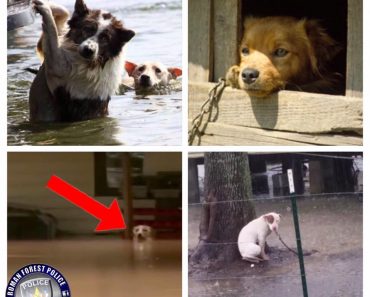
    A police chief in Montgomery County is urging dog owners not to leave pets tied up outside and has confirmed anyone who does will be arrested after witnessing a dog drown who couldn’t escape flooding last year.

    Speaking via Facebook, Roman Forest Police Department’s Chief Stephen Carlisle told residents what he had seen last year and how the dog’s distressed stayed with him saying, “I promise you that I will hold anyone accountable that unlawfully restrains their dog. Dogs are your family members too.”


    Photo Credit: Facebook.com/RomanForestPD

    Dog lovers have taken to the post to share their situations and plans. One dog lover has even offered to take others pets in if they cannot cope.

    The concerned chief also shared the following advice for those currently battling the hurricane in his jurisdiction, reminding them of the law and responsibilities to pets.

    HEALTH AND SAFETY CODE, TITLE 10. HEALTH AND SAFETY OF ANIMALS, CHAPTER 821. TREATMENT AND DISPOSITION OF ANIMALS, SUBCHAPTER A. TREATMENT OF ANIMALS, Sec. 821.077. UNLAWFUL RESTRAINT OF DOG.

    (a) An owner may not leave a dog outside and unattended by use of a restraint that unreasonably limits the dog’s movement:
    (1) between the hours of 10 p.m. and 6 a.m.;
    (2) within 500 feet of the premises of a school; or
    (3) in the case of extreme weather conditions, including conditions in which:
    (A) the actual or effective outdoor temperature is below 32 degrees Fahrenheit;
    (B) a heat advisory has been issued by a local or state authority or jurisdiction; or
    (C) a hurricane, tropical storm, or tornado warning has been issued for the jurisdiction by the National Weather Service.
    (b) In this section, a restraint unreasonably limits a dog’s movement if the restraint:
    (1) uses a collar that is pinch-type, prong-type, or choke-type or that is not properly fitted to the dog;
    (2) is a length shorter than the greater of:
    (A) five times the length of the dog, as measured from the tip of the dog’s nose to the base of the dog’s tail; or
    (B) 10 feet;
    (3) is in an unsafe condition; or
    (4) causes injury to the dog.
    Added by Acts 2007, 80th Leg., R.S., Ch. 674 (H.B. 1411), Sec. 1, eff. September 1, 2007.


  • More Pet Owners Than Ever Claiming on Pet Insurance Policies With £1.8 Million Paid Out Every Day

    More Pet Owners Than Ever Claiming on Pet Insurance Policies With £1.8 Million Paid Out Every Day

    Around 3.9 million dogs and cats are insured in the UK and industry body, Association of British Insurers (ABI) is reporting that 2016 was a record-breaking year with more pet owners than ever claiming on insurance policies, resulting in £706 million in claims being paid out during the year.

    This is the equivalent of £1.8 million per day, with each claim averaging £768 (an increase of 5% year on year).

    New analysis by Direct Line Pet Insurance has given further insight behind the statistics revealing the top five most common conditions dog owners claimed for in 2016.

    Tumours, warts and cysts topped the list with 10,000 pet owners claiming the cost of treatment back. Musculoskeletal disorders, such as sprains and arthritis were the second most commonly filed claims.

    Some believe the increase in claims and costs per claim can be connected to the advancements in technologies for treatments, but with the cost per treatment rising at an average of 5% comparing 2015 to 2016, it can leave pet owners caught short if they are not expecting the bill and don’t have pet insurance to cover.

    Speaking about their findings, Prit Powar, head of Pet Insurance at Direct Line said: “It is comforting to think that vets can now do more to help our pets make a speedier recovery, although it is no secret that vet bills are on the increase. The data from 2016 highlights the true costs to treat certain conditions, however, the final total average cost is not confined to just one year.

    “In some cases, treatment might be needed again for re-occurring issues, taking dogs way over a year to return to full health. Consequently, this means by the end of the treatment, the total cost can be very expensive and in some cases over £7,000. It is more important than ever that owners insure their pets so they can receive the best possible treatment and get the care they deserve.”

  • Can You Help? London Animal Rescue Appeals After Ambulance Stolen

    Can You Help? London Animal Rescue Appeals After Ambulance Stolen

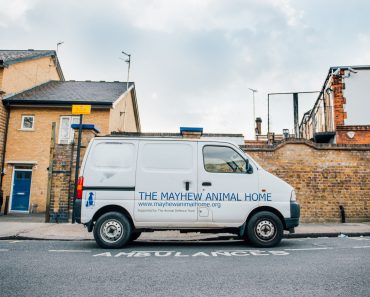
    Mayhew, one of the UK’s oldest animal charity’s, is appealing for help after its animal ambulance was stolen on 8th July in Hampstead, London.

    Without the ambulance, the organisation is struggling to help as many injured animals in need. The charity now feels their chances for a safe return of the ambulance, which is vital to their work for transporting hundreds of sick and injured animals, is slim and so are appealing for help.

    Mayhew would like their new ambulance to be bigger, safer and completely electric for environmental reasons and also to help the organisation save money as a result of being exempt from various road taxes and London’s congestion charges.


    Mayhew CEO, Caroline Yates, said: “Our Mayhew ambulances have been on the road helping thousands of animals since 1925. They are vital to our work and having one of them stolen is having a huge impact on the number of animals we’re able to rescue. We desperately need to raise enough funds for a replacement, so anything anyone could donate would be very much appreciated.”

    If you can help, visit the charity’s JustGiving Page –https://www.justgiving.com/campaigns/charity/mahome/van