Author: Jasmine Kleine

  • 8 Million Chinese Citizens Vote Online to Support Legislative Proposal against Cruel Dog and Cat Meat

    8 Million Chinese Citizens Vote Online to Support Legislative Proposal against Cruel Dog and Cat Meat

    In one of the strongest showings ever within China against the dog and cat meat trade, more than 8 million Chinese citizens have voted online in support of a legislative proposal to ban the grisly industry. That is currently the highest number of votes for any proposal open to the public via the Chinese government’s official website.

    Although this year’s annual legislative session has ended, Humane Society International (HSI) welcomes what is a defining moment in the fight against the barbaric slaughter of dogs and cats, and will work with partners to assure it’s on next year’s agenda.

    Submitted by National People’s Congress Deputy Zheng Xiaohe, the proposal comes ahead of China’s Yulin dog meat festival that takes place on and around June 21. The event, which receives global media coverage every year, is condemned both inside China and around the world for the inhumane killing and eating of an estimated 10,000 dogs and countless cats.


    Caring for rescued dogs [source: TACN]

    Peter Li, HSI’s China policy specialist, said: “It is very encouraging that a ban on China’s dog and cat meat trade has been proposed and that it has received such significant public support from inside China itself. The National People’s Congress can no longer ignore the wishes of so many millions of its citizens to end the cruel and largely illegal dog meat trade – and in particular shut down the dog meat festival in Yulin. While it’s off the table for this year, HSI, with the strength of its Chinese activist partners, will make sure the proposal is on the agenda in 2017. In the meantime, we continue our fight against such massive cruelty.”


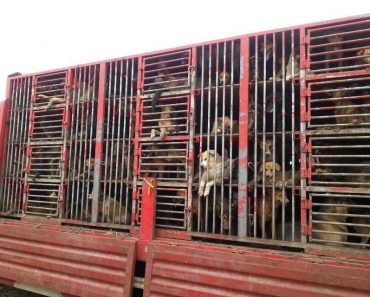
    Dog meat trade truck [source: TACN]

    HSI campaigns globally to end the dog meat trade that claims the lives of up to 10 million dogs annually in China, and around 30 million across Asia – including in South Korea, Thailand and the Philippines. Together with its Chinese partner network, HSI has been in Yulin during the festival period for the past few years, documenting the scene and working to end the slaughter.

    Last year, HSI witnessed first-hand thousands of dogs packed onto trucks entering the town and then beaten with metal poles before being killed during early morning hours in illegal slaughterhouses without license to operate. The majority of the animals are stolen pets grabbed from the streets, still wearing their collars as they are stuffed into cages, loaded on to trucks and driven for days to reach Yulin.

    The Yulin festival has no cultural significance; it was concocted by dog meat traders as recently as 2010 as a way to boost their flagging business. Although dog meat can be found in China today, it is not widely eaten, nor is it part of mainstream culinary practice.

    Concerned global citizens can show their support for ending the dog meat trade in China by signing HSI’s global petition at hsi.org/helpstopyulin that will be presented to the Chinese authorities in early June.

    Read more about the life of a dog in China in K9 Magazine with the help of Grace Han from Together for Animals in China here: http://www.k9magazine.com/a-view-from-china-whats-a-dogs-life-worth/
  • Man Builds Garden Fence to Keep Dog Contained – Watch What Happens Next

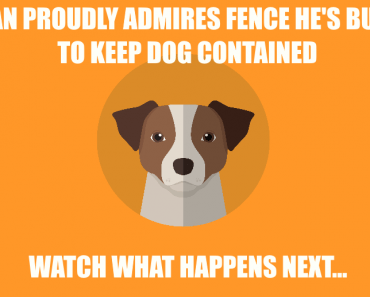
    Man Builds Garden Fence to Keep Dog Contained – Watch What Happens Next

    Dogs are sometimes ingenious but often they have the knack for pointing out the blatantly obvious. This is one such dog.

    Observe what happens as this man proudly admires his newly built fence, created with the sole purpose of keeping his dog contained.

    Let’s face, you already know what’s going to happen here, don’t you?

  • Conference Will Tackle Human Behaviour Change in Animal Welfare

    Conference Will Tackle Human Behaviour Change in Animal Welfare

    Animal Welfare: The Human Element

    This international conference will be the first in a field that is rapidly becoming recognized as a key component in animal welfare work. Modern practice is moving away from the traditional approach of focusing on service provision and raising awareness, towards human-centered approaches that generate lasting change.

    https://www.totaldogmagazine.com/wp-content/uploads/2015/08/NOthf49.jpg

    The conference will include unique and inspirational talks from key speakers and submitted presentations and case studies selected from peer-reviewed abstracts. Abstract submissions are invited across all issues of animal welfare on any species – the focus on the human element is likely to be transferable across issues.

    The aims of the conference are:

    · To highlight the importance of human behaviour change (HBC) in animal welfare work.

    · To educate on core elements of HBC theory through key presentations from leading experts.

    · To facilitate sharing of information and experiences of HBC for animal welfare.

    · To encourage embedding of HBC in inter-sectoral collaboration, innovation and policy.

    · To explore novel methods for the monitoring and evaluation of HBC approaches and provide evidence-based information illustrating its value.

    For more information about the elements of human behaviour change see http://www.hbcanimalwelfare.com/conference-info.html

    19–21st September 2016, Dorking Halls, Dorking, UK

  • British Vets Support Compulsory Registration For Anyone Who Breeds a Dog

    British Vets Support Compulsory Registration For Anyone Who Breeds a Dog

    Leading veterinary organisations the British Veterinary Association (BVA), the British Small Animal Veterinary Association (BSAVA) and the British Veterinary Zoological Society (BVZS) have submitted a joint response to Defra’s landmark consultation on animal establishment licensing in the UK to ensure the veterinary profession’s voice and view is heard.

    The 12 week consultation, which closed on Saturday (11 March), is the biggest review the Government has ever undertaken on animal establishment licensing and takes into consideration a range of animal welfare issues.

    In their joint response, BVA, BSAVA and BVZS agree that much of the current animal licensing legislation is out of date and needs to be revised to take account of the changes that have occurred since it was originally introduced (Pet Animals Act 1951, Animal Boarding Establishments Act 1963), while supporting the proposal to bring existing licensing schemes under the Animal Welfare Act in order to ensure that the focus of inspection is on animal welfare and the five welfare needs.

    One key recommendation in BVA, BSAVA and BVZS’s consultation response is that anyone breeding from a dog should be required to register, preferably online, with their local authority – in line with the Data Protection Act 1998. This would mean that the local authority has a list of contact details for all dog breeders in their area, aiding enforcement bodies and ensuring that dog breeders were aware of the legal requirements. The veterinary organisations continued that, if possible, there should be a publicly available national list of dog breeders to provide intelligence for enforcers and allow the public to check the list. Then, should the threshold of three or more litters per year be met, this would trigger a dog breeding licensing inspection.

    BVA President Sean Wensley said:

    “Animal welfare is always the top priority for vets, and we believe that starts right at the beginning of a pet’s life. If people are regularly breeding puppies then it is necessary and right that measures are in place to protect the health and welfare of the mother and her puppies. Anyone breeding from a dog should be required to register with their local authority and quote their registration number in any advert for puppy sales.

    “This is not about targeting individual dog owners, but about best breeding practices and, moreover, the health and welfare of animals across the UK, which is why we are proposing that the licence and inspection criteria applies to the establishment rather than individuals.”

    BVA, BSAVA and BVZS also noted that this review is an appropriate opportunity for Defra to consider whether any other activities or animal establishments should be licensed in order to ensure that they meet appropriate animal welfare standards, from animal rescue and rehoming centres to falconry displays and dog training businesses.

    In the consultation response, BVA, BSAVA and BVZS acknowledge that while there is a need for change there is no point in introducing new legislation if it is not properly enforced, and this will need appropriate resources to be made available especially given the current resource constraints of Defra and local authorities.

  • Dismay Over Crufts’ Cavalier Best of Breed Winner’s Early Breeding Career

    Dismay Over Crufts’ Cavalier Best of Breed Winner’s Early Breeding Career

    Cavalier Crufts best of breed winner makes mockery of KC’s “healthy, happy dogs” say canine health campaigners.

    Canine health campaigners have expressed their disappointment and Cavalier online forums are buzzing with disbelieving and angry comments as it emerged that the Crufts Best of Breed title winner fathered a litter of puppies at nine months old. This flies in the face of breeding protocols for Cavaliers, a breed beset by inherited health issues.

    “Because there is no simple DNA test for Mitral Valve Disease (MVD) and Syringomyelia (SM), the two most serious inherited conditions suffered by Cavaliers, it is absolutely crucial that dogs are not bred before 2.5 years and that they continue to be tested throughout their life,” says long-time campaigner Margaret Carter, whose online petition asking the Kennel Club to make testing for MVD and SM mandatory has amassed over 25,000 signatures.

    You’re My Sunshine Vom Kaninchengarten, a Blenheim Cavalier, is less than two years old and has heart and eye tests recorded after he fathered a litter. “For years the majority of Cavalier breeders have ignored MVD and SM breeding protocols even though these were established nearly two decades ago. This Crufts win not only exemplifies why the Kennel Club needs to get tough but it also makes a mockery of its claim that Crufts is ‘Celebrating healthy, happy dogs’,” adds Carter.

    All of the current top five Cavalier Club “best stud dogs” all produced litters before their second birthday. “The fact that the Best of Breed Cavalier was, according to official online records, used for breeding while still a puppy himself underlines why the breed remains under such tremendous and devastating genetic health pressure,” claims Karlin Lillington, owner of the forum CavalierTalk.com and co-founder of Rupert’s Fund, which has raised over £30,000 for health research and breeder MRI scans.

    “For a top show exhibitor to breed a Cavalier so young that it would still compete in puppy show classes, and only heart test months later – when it is still too young to be meaningful in a progressive disease – indicates that clubs remain unable or are unwilling to motivate breeders to breed for health. Therefore, testing should be made mandatory for litter registration.”

    Donna Farrand’s Cavalier, Freddie, underwent decompression surgery last year to help improve his SM symptoms. Freddie’s father sired a litter at just over a year old and continues to be used for breeding. “I was furious to see the owner of his sire judging one of the Cavalier rings yesterday. What kind of message does this send out and what kind of example does this set to other breeders?” she asks.

    On some online forums, breeding at a young age has been defended but Lena Gillstedt, a Cavalier breeder and biologist from Sweden where testing for Cavaliers is compulsory, says this is nonsense: “If males needed to be proven at nine months to know what to do, the breed would be extinct in Sweden because here no Cavalier can be bred until it is at least 24 months. But here the breed is actually thriving.”

    Canine health campaigner Carol Fowler, founder of the Dog Breeding Reform Group, says: “A Cavalier Breed Clubs’ heart scheme was agreed almost 20 years ago. If only all breeders had followed its recommendations, including that no dog under 2.5 years should be bred, we would have seen a marked improvement in early onset MVD by now. However, success in the show ring, glory for the owner and the resulting stud fees are seemingly more important.”

    See the petition at https://www.change.org/p/the-uk-kennel-club-stop-registerin-g-cavalier-king-charles-spaniel-puppies-unless-their-parents-are-mri-scanned-and-heart-tested

  • Cesar Millan Controversy: National Geographic Issues Statement

    Cesar Millan Controversy: National Geographic Issues Statement

    National Geographic, the TV company behind Cesar Millan shows such as The Dog Whisperer and Cesar 911 has issued a statement following the fall-out from a controversial episode in which a pig appeared to be injured and in distress after being chased by a dog under Cesar’s watch.

    Statement from a Nat Geo WILD representative:

    Cesar Millan has dedicated his life to helping dogs and to showing how even the most difficult “problem dog” can be rescued and rehabilitated. In a recent episode of the Nat Geo WILD series Cesar 911, Cesar works with an aggressive French bulldog/terrier mix named Simon, who has a history of attacking other animals, including his owner’s pet pot-bellied pigs. A short clip from the episode was shared online and showed Simon chasing a pig and nipping its ear, causing the ear to bleed. The clip caused some concern for viewers who did not see or understand the full context of the encounter.

    Cesar has created a safe and controlled environment at his Dog Psychology Center (DPC) in California in which to rehabilitate some of the most extreme—or “red zone”—cases of dog aggression, such as Simon’s. It is important to clarify that Cesar took precautions, such as putting Simon on a long lead to assess his behavior, before making initial corrections and removing the leash. The pig that was nipped by Simon was tended to immediately afterward, healed quickly and showed no lasting signs of distress. As the additional clip reveals, Cesar and his animal pack effectively helped Simon to overcome his aggressive behavior toward other animals; as a result, Simon did not have to be separated from his owner or euthanized.

    Cesar Millan is and will continue to fully cooperate with authorities in ‎any investigation. He is confident that the investigation will show there was no wrong doing.

  • WATCH: Stray Dog Finds New Home but Refuses to Eat Alone & Does Something Ingenious

    WATCH: Stray Dog Finds New Home but Refuses to Eat Alone & Does Something Ingenious

    The word genius is bandied around quite a lot, but what this dog does to avoid eating alone after finding his new forever home is quite brilliant.

    View post on imgur.com

  • Look Closely…Have You Seen it Yet?

    Look Closely…Have You Seen it Yet?

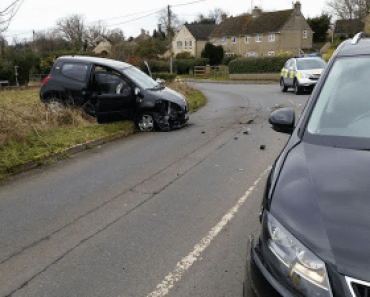
    Accident investigators, can you study the scene of this prang and offer any insights in to what might have happened?

  • Cesar Millan Cruelty Controversy – TV Dog Trainer Reportedly Under Police Investigation

    Cesar Millan Cruelty Controversy – TV Dog Trainer Reportedly Under Police Investigation

    Controversial TV dog trainer Cesar Millan is being investigated for possible animal cruelty according to celebrity news network TMZ.

    Millan, who’s National Geographic ‘Dog Whisperer’ show is watched around the world, is no stranger to high profile controversies. His style and reliance on pack-order theory has been regularly criticised by many dog training professionals and members of the public.

    The animal cruelty investigation comes in the wake of an episode of his show which saw a dog chasing one of Millan’s own pigs.

    TMZ’s report says:

    L.A. County Animal Control tells us their major case unit, along with the sheriff, are currently at Millan’s dog training center in Santa Clarita, CA after numerous complaints flooded in when Millan’s show, “Cesar 911,” showcased a dog attacking and injuring a pig during a training session.

    We’re told officials want to question Millan about the pig’s current location and well-being.

    We’re told after investigators have questioned Cesar and employees … they’ll present their findings to the D.A.

    Cops are on scene … but so far have not made contact with Cesar.

    The program segment was met with outrage by many on social media and a petition has been launched asking for National Geographic to take action as a result of Millan using another animal as bait in a live dog training scenario.

    Video can be seen here:

    https://www.youtube.com/watch?v=B0Soxw58eiQ

    It seems surprising that both Millan and National Geographic thought it would be OK to allow this segment to air as it very clearly shows a frightened animal in a distressing situation where neither owner, nor Millan had any control. It is an error of judgement by all parties concerned and does little to assure the public and welfare campaigners who have long claimed Cesar Millan’s methods to be ineffective or downright dangerous if copied by the millions of people who view his shows, especially given the fact that the dog’s owners had openly stated he had previously killed a pig.

    A 24-hour notice has been issued, requiring Cesar Millan to contact the investigators, according to NBC news in America. They want to know what has happened to the pig since the episode was filmed.

    As the video shows, the incident happened inside a fenced area where Millan said he was ‘conditioning Simon (the dog) to become accustomed to the pigs’ company’.

    Unfortunately this ended with Simon chasing the pig which appeared to be restrained by one of Millan’s assistants. Simon proceeded to bite the pig and leave the area around its ear bloodied.

    “Simon ripped the ear off the pig,” said Simon’s owner, Sandy. “It was a bloodbath.”

    Meanwhile, Millan chased the pig around the yard, repeating, “I got this.”

    Article updated 11/03/16 (Statement from a Nat Geo WILD representative:)

    Cesar Millan has dedicated his life to helping dogs and to showing how even the most difficult “problem dog” can be rescued and rehabilitated. In a recent episode of the Nat Geo WILD series Cesar 911, Cesar works with an aggressive French bulldog/terrier mix named Simon, who has a history of attacking other animals, including his owner’s pet pot-bellied pigs. A short clip from the episode was shared online and showed Simon chasing a pig and nipping its ear, causing the ear to bleed. The clip caused some concern for viewers who did not see or understand the full context of the encounter.

    Cesar has created a safe and controlled environment at his Dog Psychology Center (DPC) in California in which to rehabilitate some of the most extreme—or “red zone”—cases of dog aggression, such as Simon’s. It is important to clarify that Cesar took precautions, such as putting Simon on a long lead to assess his behavior, before making initial corrections and removing the leash. The pig that was nipped by Simon was tended to immediately afterward, healed quickly and showed no lasting signs of distress. As the additional clip reveals, Cesar and his animal pack effectively helped Simon to overcome his aggressive behavior toward other animals; as a result, Simon did not have to be separated from his owner or euthanized.

    Cesar Millan is and will continue to fully cooperate with authorities in ‎any investigation. He is confident that the investigation will show there was no wrong doing.

  • Shocking Photo Reveals Harrowing Reality of Puppy Farms (Warning: Distressing Image)

    Shocking Photo Reveals Harrowing Reality of Puppy Farms (Warning: Distressing Image)

    Harrowing photos of the bodies of tiny puppies littering a verge by the side of a road have been released by the RSPCA.

    The pictures (below) show the bodies of nine pups strewn among the undergrowth and alongside the rubbish on a verge in Hertfordshire.

    A member of the public spotted the bodies dumped in a ditch in Hogg End Lane, St Albans (pictured left), on Saturday 27 February.

    The pups – thought to be a mix of terriers and collie-types – are believed to be between six and eight-weeks-old.

    RSPCA animal collection officer Kate Wright responded to the call and went to the location. She said: “We had reports of collapsed puppies in a ditch and I rushed over to the site and there they were. There had been no effort to cover them up.

    “They were obviously already dead, and had been dead for a day or two.

    “They were all covered in sawdust and some looked skinny. The little pads on their paws were red raw like they’d been living in urine. They absolutely stank.

    “I had a look around the area and, in the same ditch, I found decomposed corpses, bones and fur. I realised the horror that this ditch is obviously used on a regular basis – it was heartbreaking.

    “I found the remains of at least three other dogs as well as more bones. There were different stages of decomposed bodies and most of them were very old.

    “It was grim, really awful. It really upset me. It makes you wonder what kind of life they had before.”

    RSPCA canine focus officer Rachel Smith, who is investigating, added: “I’d say this lane is used regularly for dumping the bodies of dead dogs. We’ve had a steady influx of calls over recent months.”

    ACO Wright added: “There was nothing to suggest how these puppies had died. My immediate thought was that they had come from some sort of puppy farm.”

    In January, the RSPCA was called to the area after the bodies of puppies were found inside a suitcase which was taken away by police. And remains were also found at the site last autumn.

    The distressing photos come as the RSPCA campaigns for the introduction of new legislation to better protect dogs and puppies being bred for sale.

    The animal welfare charity launched the Scrap the Puppy Trade campaign in England, in October, in response to an 88% increase in the number of calls about the puppy trade over three years.

    The campaign aims to educate the public on sourcing puppies responsibly, and is also calling on Westminster government to introduce laws to combat puppy dealers. We are calling for mandatory licensing for anyone selling puppies in England to try to hit the puppy trade as a whole.

    Inspector Smith advised members of the public to be vigilant if buying a puppy: “My advice for the consumer would be that if something doesn’t seem right, don’t buy the puppy. Walk away and contact us or the local authority immediately.

    “We are working alongside other agencies such as the police and Trading Standards to try to tackle this abhorrent trade in innocent lives – but it’s everyone’s responsibility to help us uncover these unscrupulous breeders and to help us bring a halt to this illegal and unregulated industry.

    “The reality is that if we don’t work together to fight the trade, more sick puppies will not receive the care they need and could end up dumped in this manner.

    “These breeders and dealers don’t care about the welfare of these dogs, they only care about the money.”

  • What Do Dogs Like Most About Being a Dog?

    What Do Dogs Like Most About Being a Dog?

    Running, eating, and sleeping  are some of the activities that make our pet dogs the happiest, according to an RSPCA survey.

    The animal welfare charity spoke to hundreds of pet owners to find out what makes their dog happy.

    90% of dog owners revealed that their canine companion loves nothing more than exploring and investigating, 81% said that their pet enjoys going for a walk off-lead, and 82% said that their pet enjoyed going for a run.

    The survey results also revealed that 91% of dog owners said eating was their pet’s favourite pastime, and 90% of dog owners agreed that their pet loved sleeping.

    And a whopping 94% of people said it was important that their dog is healthy and happy, and able to exercise, run and play freely.

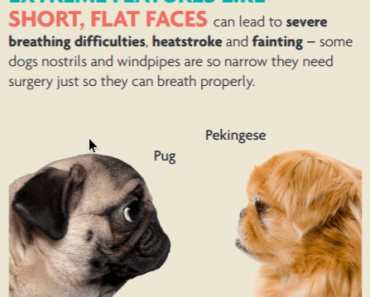
    However, for some dogs, the way they’re bred to look can make activities like running or playing practically impossible. For example, dogs with short, flat faces (brachycephalic) – like Pekingese and pugs – are more likely to suffer from respiratory disorders which can make it difficult for them to breathe when they exercise.

    One survey found that 88% of brachycephalic dogs experienced severe exercise intolerance and prolonged recovery time after physical exercise, and 56% suffered from a variety of sleep problems.

    Another study found that extreme brachycephalic dogs died at a significantly younger age (8.7 years) in comparison to other dogs without short, flat faces (12.7 years). It also found that extreme brachycephalic dogs overall were 3.5 times more likely to have at least one upper respiratory tract disorder compared to the dogs who were less flat-faced.

    Brachycephalic Obstructive Airway Syndrome and narrowed nostrils are two of the three most prevalent conditions reported in French bulldogs, another breed which has been selectively bred to have short flat faces.

    RSPCA canine welfare expert Lisa Richards said: “We remain concerned that many dogs are still suffering because they’re bred and judged primarily for how they look rather than with health, welfare and temperament in mind.

    “Many dogs have been bred to emphasise certain physical features, some of which have become so extreme that they can cause pain and suffering, make dogs prone to particular disorders, or even prevent them from behaving normally and from enjoying the activities we know dogs love.

    “The RSPCA believes there is still much to be done to protect the future health of dogs and that all those who breed dogs should prioritise health, welfare and temperament over appearance when choosing which animals to breed.”

    Katy Price, a pug owner from Norfolk, said: “I must admit, I chose a pug partly because I think they have such wonderful characters, but also because I found their looks appealing and cute.

    “But, during the first few years of having Olive (pictured above), I started to become concerned that she was struggling to breathe.

    “I voiced my concerns with a vet about her snuffly noises and tiny nostrils, but I was told she would probably change as she grew. She didn’t.

    “Olive snores very loudly. She also used to take a while to calm down after walks, more so than any of my friends’ dogs. She would regularly ‘reverse sneeze’, and also belch and burp after eating – things I now know can be secondary to breathing problems.

    http://i.imgur.com/Q8U0oI6.jpg

    “I think I was somewhat ‘breed blind’ to her problems, thinking that her breathing was that way because she was a pug, and that is what pugs sound like.

    “I was unaware at that time that these dogs could have surgery to help them (pictured right). If only I knew what I know now! I did eventually get Olive referred, though I wish I had done it sooner.”

    Olive’s larynx – the hollow muscular organ forming an air passage to the lungs – had collapsed. Symptoms of her condition included snoring, noisy breathing, coughing, reverse sneezing and nasal congestion. Vets opened up her nostrils and shortened her soft palate. They also removed her laryngeal saccules.

    Many pugs also suffer with eye problems including entropion (a condition in which the eyelids fold inwards), pigmentary keratitis (a build up of dark scar tissue on the eye), and corneal ulcers – in fact, a recent study found that brachycephalic dogs were 20 times more likely to be affected by corneal ulcers than non-brachycephalic dogs. These were sadly other conditions for which Olive had to have surgery. All of her procedures have cost her insurance company around £4,000.

    “She will always be at risk of further airway problems, but she is now much more comfortable,” added Katy. “It’s not just pugs who suffer from these conditions – French bulldogs and bulldogs (pictured right) are prone to them, too.

    “Emotionally, this has been a rollercoaster of worry. Olive is a stoic little dog, but I hated putting her through all the procedures. She didn’t ask to be born this way.

    “Sadly, because of how I have seen Olive suffer, I would advise against buying a pug. But, if you feel you have to get one, why not rescue one? But be sure to get good insurance!

    “Pugs are delightful little dogs but they can, and do, suffer a lot due to the way they look. Get to know the breed before committing. Do not just follow the latest trend of cute accessory dogs. The breed is high maintenance and could cost you a fortune both emotionally and financially.”

  • EU Adopts Important Animal Health Law

    EU Adopts Important Animal Health Law

    Dogs Trust, the UK’s largest dog welfare charity and chair of The EU Dog & Cat Alliance, has announced its delight at the European Parliament’s adoption of the Animal Health Law, a policy they describe as an important development in the European Union’s legislative landscape, streamlining almost 40 legal acts related to animal health into a single law and regulating transmissible animal diseases.

    The charity says:

    The EU Dog & Cat Alliance is a leading European expert on companion animal welfare, encompassing over 55 organisations from over 20 member states, and has been working with EU policymakers since 2014 on issues relating to animal welfare.

    Simona Lipstaite, European Policy Advisor at Dogs Trust, comments:

    “This new legislation represents a huge potential step forward for companion animal welfare as it creates a legal framework for the introduction of compulsory identification and registration systems of pet animals across Member States. We are encouraged by the Commission’s recent statement that it intends to start preparatory work on a delegated act to this end.

    Compulsory microchipping is already in place in Northern Ireland and comes into effect in England, Scotland and Wales in April, and Dogs Trust looks forward to translating its experience and expertise in this area to the European level. As the Animal Health Law has now been formally adopted and there are no more legal barriers, it is time to take this next important step in promoting animal health and welfare, public health and consumer protection.

    The new Regulation will also require all professional pet keepers and sellers in the EU to be registered, improving standards across Member States. Although the Regulation does not contain provisions which specifically regulate animal welfare, we believe that this is nonetheless an area that must be addressed on an EU level in the future, and we urge the Commission to prepare a new animal welfare strategy as the next step in ensuring that the EU remains a global leader in animal welfare standards.”

    What is Animal Health Law?

    The new regulation establishes a single regulatory framework for animal health which integrates, streamlines and simplifies the existing legislation. Intended as a framework, the regulation itself only lays down general principles and basic rules.

    Detailed provisions are to be established later by delegated or implementing acts (taking over the elements of existing legislation which currently function well). This should allow the flexibility to react to new situations.

    The new law would also place stronger focus on prevention and be better aligned to international standards, particularly the OIE. The scope of the regulation would cover transmissible animal diseases and all categories of animals: terrestrial and aquatic, kept animals of all types (farm and pet animals, animals kept for research purposes, for leisure etc.) and also to some extent wild animals (where there is a risk of transmitting a disease to other animals or to humans).*

    *Source: European Parliament Animal Health Law: Rules on transmissible animal diseases. February 2016.

  • Can Dogs Get a Smoker’s Cough? Yes! Read Rooney’s Story

    Can Dogs Get a Smoker’s Cough? Yes! Read Rooney’s Story

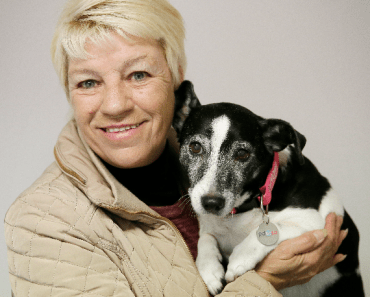
    Rooney the dog, from London, who developed a ‘smokers’ cough’ is now almost completely cured – less than 12 months after his owner kicked the habit.

    Vets at PDSA’s Bow Pet Hospital warned Kathleen Dove last summer that her smoking was potentially contributing to a persistent cough her beloved Jack Russell terrier cross Rooney (11) was suffering from.

    The 68-year-old, who had smoked up to 20 cigarettes a day from the age of 15, immediately quit and says it has made a huge difference to Rooney’s health.

    She said: “I always tried not to smoke around him but the vets told me that my habit could still have been affecting him and making his cough worse.

    “I took their advice on board and decided to quit straight away. I haven’t looked back since and I’m so glad I did it because the difference in Rooney is amazing. His cough is almost non-existent now and he seems much better.”

    Kathleen says she hasn’t noticed much difference to her own health since quitting, and that Rooney was the main reason she quit.

    She said: “I’ve had him since he was a puppy and he was named after the footballer Wayne Rooney because he was such a star player and my dog used to love playing with a football.

    “As I’ve got older I’ve gradually reduced how many cigarettes I had a day but I didn’t realise that my habit could have been affecting his health.

    “I would urge anyone who smokes and has a pet to consider quitting for their sake. At the very least it’s important to go outside to smoke to limit the amount of fumes they have to breathe in.”

    Ahead of National No Smoking Day tomorrow (Wednesday, March 9), PDSA warned pet owners that smoking around their pets could be harming their four-legged friends’ health and cutting short their lives.

    Second-hand smoke has long been linked to potentially fatal diseases in humans, including lung cancer and heart disease. However, the vet charity says the impact of passive smoking on pets may be less recognised but is just as serious.

    PDSA vet Vicki Larkham-Jones said: “Prolonged exposure to smoking can cause chronic breathing difficulties or cancer in pets as well as people. Thanks to funding from players of People’s Postcode Lottery we’re spending more time with clients, like Kathleen, who smoke and encouraging them to think about their four-legged friend’s health, as well as their own, before they light up.

    “If people feel they can’t stop smoking or don’t wish to, then we would urge them to consider going outside to smoke.

    Then their pet isn’t forced to breathe in the harmful toxins.”

    For more information about PDSA or to access free online pet health advice visit www.pdsa.org.uk

  • Kennel Club Under Fire on the Eve of Crufts 2016

    Kennel Club Under Fire on the Eve of Crufts 2016

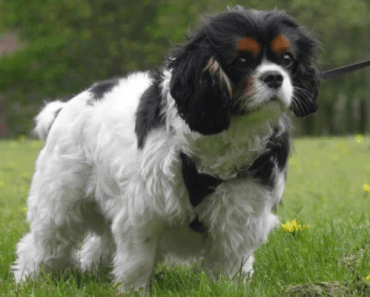
    The Kennel Club (KC) is facing pressure from pet owners on the eve of its prestigious dog show Crufts as 25,000, including a host of celebrities, sign an online petition asking it to tackle a health crisis affecting Cavalier King Charles Spaniels. They may be one of Britain’s best-loved breeds but these adorable dogs also suffer from shocking hereditary health problems.

    Supporters of the petition, including Craig Revel Horwood, Deborah Meadon, Binky Felstead and the RSPCA, want the KC to make testing mandatory for the two most serious conditions: a heart disease called MVD and SM, a distressing neurological disorder caused by dogs being bred with skulls too small for their brains.

    “The KC’s breed health survey, published last month, reveals Cavaliers are dying 17 months earlier than a decade ago,” says Margaret Carter, who started the petition. “Research proves that breeding from dogs tested clear increases the chances of healthy puppies yet the KC refuses to take proper action. Families are seeing their loved pets living in pain and dying young. Many have written to the Prime Minister in the hope the KC can be shamed into living up to its claim ‘to promote in every way the general improvement in dogs’.”

    TV vet Emma Milne adds: “When will the KC stop seeing pound signs and start seeing sense. The UK is way behind much of Europe where other countries have seen dramatic improvements in disease prevalence in Cavaliers through robust testing.”

    The BBC ditched its coverage of Crufts after the 2008 documentary Pedigree Dogs Exposed revealed top show Cavaliers with inherited disease being used for breeding against veterinary advice. Despite promises of action from the KC, campaigners say little has been done to improve the lot of Cavaliers in the years since and that many successful show breeders continue to set a bad example by ignoring breeding guidelines.

    Mother-of-three Charlotte Mackaness signed the petition on behalf of her Cavalier, Beebee, who started yelping in pain from SM when around six months old. Now three, she takes a cocktail of powerful painkillers every day. “Beebee came from a breeder who has won Crufts’ best of breed titles many times and who came recommended by the breed club. Sadly, my family has learnt that looks and money seem to count more than these dogs’ health.”

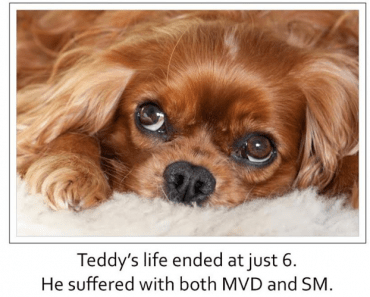
    According to long-time owner Nicki Hughes: “The KC and breed clubs would like people to think it’s just backyard breeders and puppy farmers that don’t health test. I lost my beloved Teddy at six. He had MVD and SM. His breeder? An international judge. There is an official CM/SM screening programme but breeders have boycotted it.”

    Strictly judge Craig Revel Horwood and his partner Damon Scott own two Cavaliers with health issues. “It’s wrong that there is such a high probability that a Cavalier with inherit a terrible disease,” says Damon, who provided the voice over for a Cavalier version of the 80s hit The Final Countdown. It has had 54,000 views on Facebook alone and stars the couple’s Cavalier, Sophie, who has heart disease. “Giving a voice to these dogs was really important to us. This message and their plight needs to be heard. I find it unbelievable that the Kennel Club won’t do the right thing,” he says.

    View The Final Countdown movie at [youtube http://youtube.com/w/?v=tL2NhnhOcNM]

    See the petition at

    Numerous famous faces are backing the campaign, including Tony Parsons, Linda Robson, Fern Britten, TV vet Mark Evans and many others:

    “Please can I ask you to sign and retweet this petition to save dogs’ lives”, Pixie Lott urged her Twitter followers.

    “We need to make sure all Cavaliers are health tested before breeding,” believes Craig Revel Horwood

    “We should be breeding for health, not creating problems for our loved pets,” says Deborah Meadon, who has been a staunch supporter of the Cavalier health campaign.

  • These Dogs Nervously Passing Cats Will Make You Smile

    These Dogs Nervously Passing Cats Will Make You Smile

    How would you do it, if you were a dog? Run passed as quickly as you can, or take it slowly one step at a time so as not to startle your furry counterpart?