K9 Magazine’s latest issue, 87, hit the web today but those of you who like reality TV will have had a sneak preview of it’s cover earlier this week on the latest episode of the Real Housewives of Cheshire!
Packed full of adventures, celebrities, reviews, health and training advice and much much more with K9 Magazine’s unique twist, you won’t want to miss this issue…
Dog owners are being warned by experts that turning the dial on the central heating up to combat the colder weather outdoors could trigger a flea outbreak indoors as the parasite enjoys its warmer surroundings.
New research carried out by animal health firm, Bayer Animal Health, on behalf of its ‘Home Invaders’ campaign, has revealed that a third of pet owners are unaware that switching on the heating in the autumn and winter months can present an ideal breeding ground for fleas and where a flea infestation occurs, warm conditions can lead to flea pupae hatching in the home.
Parasitologist Ian Wright from the European Scientific Counsel Companion Animal Parasites (ESCCAP) UK and Ireland says: “As long as the humidity remains over 75 per cent and temperatures don’t exceed 30°C then for fleas, the warmer the better. Fleas can complete their life cycle in less than 3 weeks at 29 °C so the warmer the house is, the faster they will reproduce up to that point. It should also be said, that fleas can still breed at 17 °C, just at a slower rate.”
According to the research, more than a third of pet owners turn up their heating in the autumn and winter months to between 21°C and 25°C, providing an optimum temperature for fleas to breed in. The study also revealed that one in 10 pet owners have noticed fleas on their pet and in the house during autumn and winter months, indicating they are not seeking preventative treatment at this key time of year.
It is estimated that 95 per cent of the flea population in a home can be found within carpets and soft furnishings, which is perhaps no surprise when almost half of owners admit sharing a bed with their pet and three quarters allow their cats to sleep on their sofa.
Furthermore, 27 per cent of pet owners seek parasite treatment advice online before going to their vet and 10 per cent only ever treat their pets when they see fleas. Worryingly, half of pet owners were completely unaware their pet had fleas until they were shown by a vet. Pet owners are reminded that while the web is a useful resource for gaining background information discussing an effective parasite protection plan with your local vet, will allow you to tailor the requirements for you and your pet.
Paul Manktelow, Veterinary Surgeon, founder of Vital Pet Health and co-presenter of the Home Invaders documentary, says: “There is a high probability your dog or cat will have had fleas or worms at some point in their life but depending on the degree of the infestation you may not have realised how many live hidden away in your home. It is important to speak to your vet about receiving the right preventative treatment to stop these infestations.”
Richard Wall, Professor of Zoology at Bristol University, says: “Only 1-5 per cent of the flea population is actually represented by the adults on the pet and is really just the tip of the iceberg. The remaining 95 per cent is hidden in the environment. They may be found in a wide variety of locations within the domestic environment, including wooden flooring and car upholstery.”
Vicky McAlister, Senior Product Manager at Bayer Animal Health, comments: “In order to keep pets and families healthy it’s of vital importance to not only kill the existing parasites, but also prevent the parasite lifecycle from continuing. The best way to prevent fleas and worms from spreading is to use an all year round protection plan.”
You can help spread the word and find out if your pet and family could be at risk, by following the conversation at www.facebook.com/jungleforpets or by following‘JungleForPets’ on Twitter. You can also watch the Home Invaders documentary atwww.itsajungle.co.uk.
Whoever you are – wherever you are, YOU can help improve the lives of animals around the world. Don’t miss this special opportunity to help make animal welfare issues front page news.
How many selfies do you take every week? We’re asking you to take ONE extra photo to help raise global awareness of World Animal Day – that’s all. Even if you aren’t participating in an event, you can still play an important role by sharing your #worldanimalday selfie poster with World Animal Day Headquarters and with your friends on social media to help bring animal welfare issues into the spotlight.
Help create a Global Wave in celebration of World Animal Day!
1. Print a Happy World Animal Day Hashtag Selfie poster for the Global Wave 2015 – with or without a pledge.
2. Take a selfie with it – the more creative the better so it gets more likes and shares.
3. Email it to us: info@worldanimalday.org.uk – for publication on the website, social media and share it with your contacts.
4. Share this email with your friends, family, and colleagues.
You must be happy to have your photo shared on social media belonging to World Animal Day HQ, Naturewatch Foundation, and other reputable organisations affiliated with us. We look forward to receiving your photos and thank you for snapping a selfie for animals!
Each one of us can make a difference – together we make change happen!
Can you help World Animal Day 2015 with ThunderClap?
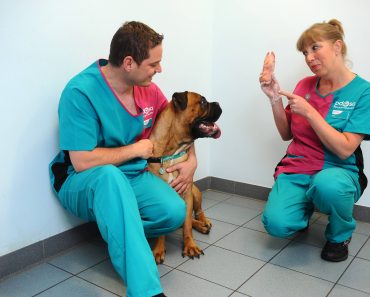
PDSA vets have saved the life of a dog who literally bit off more than she could chew after getting a pig’s trotter stuck in her oesophagus and a pig’s tail in her stomach.
Maggie, a one-year-old Bullmastiff, was rushed to Cardiff PDSA Pet Hospital because she was retching and was in distress, after devouring her piggy treats.
PDSA vets x-rayed Maggie and decided to operate after confirming the extent of the blockage.
PDSA nurse, Karen Jones, said: “Maggie was panting heavily and had a high temperature when she first came in.
“We warned Maggie’s owner of the high risks when operating under general anaesthetic. But it was the only way we could get the pig’s trotter out as it was lodged so far down her oesophagus. We also removed the pig’s tail that was in her stomach, as it may not have passed through Maggie’s digestive system safely.
“Maggie was kept in overnight but made a remarkable recovery and was able to go home the next day with a course of antibiotics.”
Karen added: “We always advise owners not to feed any type of bones to pets and this case highlights the dangers of giving such treats. We’re thankful to funding from players of People’s Postcode Lottery, which is helping us to educate owners on the type of foods and occasional treats it is safe to give.”
Maggie’s owner, Christine Ramsay, said she was horrified about what happened, and is warning others about the dangers of feeding such treats.
“We’ve fed Maggie pigs’ trotters before and she’s been fine, as she normally chews them. But this time she wolfed it down and it got stuck. We were so worried about her, she’s our baby.
“We can’t thank PDSA vets enough, they did an amazing job. We are so relieved that Maggie is back to her mad, happy self.”
When 80-year old Texan, Eugene Bostick, retired he had no plans to spend his days taking in abandoned dogs but when residents of Fort Worth, or cities nearby, began abandoning dogs near a barn he owns with his brother (located on a dead end street) he found an unexpected calling when he began taking care of the dogs others no longer wanted.
Speaking with The Dodo recently Mr Bostick said: “People sometimes come by and dump dogs out here, leaving them to starve. So, we started feeding them, letting them in, taking them to the vet to get them spayed and neutered. We made a place for them to live.”
Tiffany Johnson, who says Mr Bostick is the coolest guy eventually built up the courage to ask him to take a photograph of his custom made train which she then shared on Facebook and we’re so pleased she did.
Speaking to The Dodo about why he built the train, Eugene said: “One day I was out and I seen this guy with a tractor who attached these carts to pull rocks. I thought, ‘Dang, that would do for a dog train,’” said Mr Bostick. “I’m a pretty good welder, so I took these plastic barrels with holes cut in them, and put wheels under them and tied them together.”
We salute you Eugene. The world needs people like you.
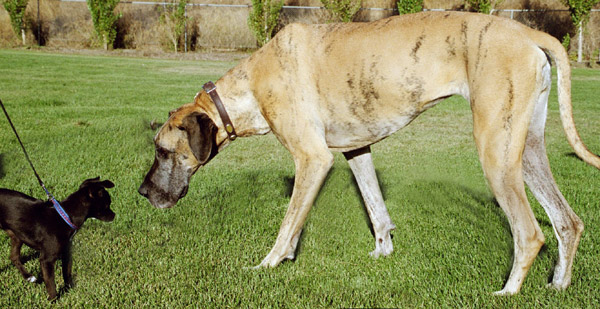
It’s a sad statistical fact that larger breed dogs have shorter lifespans than smaller species. This is most likely due to the fact that their bigger bodies partake in more exercise and are put under more stress than a smaller dog, leading to increased wear and tear on organs, muscles, joints and coronary system.
While a smaller dog is generally expected to live up to and sometimes beyond 14 years, larger breeds are considered senior citizens in the canine world as early as their sixth year, with the majority living to between 8 and 12 years old. As such, it’s important for owners of larger breeds to take extra care of their larger dogs to help ensure they reach their genetic potential, achieving optimal health span and a long life span.
Breed size and lifespan
There are a number of reasons why larger dogs don’t reach the older ages that their smaller friends tend to achieve. Amongst others, these reasons include:
Increased stress. The added exercise and strain that large breeds undertake puts greater stress on their bodies.
Common joint issues. Larger breeds are more susceptible to joint issues such as hip dysplasia and arthritis, which can result in less exercise and thus obesity.
What can you do to enhance your big breed’s life and healthspan?
Fortunately, if you follow a few simple rules you can almost negate entirely the negative side-effects that a larger body weight entails in dogs. These guidelines will provide you with a basic structure for ensuring your large breed lives just as long as his canine brethren.
1) Nutrition, nutrition, nutrition
During 10 years of learning Eukanuba recently found that almost 90% of a group of 39 Labradors Retrievers fed Eukanuba, together with receiving appropriate care (regular exercise, socialisation, veterinary care), lived beyond the breed´s typical 12 years life span.
In addition to this almost a third (28%) of the dogs achieved exceptional longevity by living beyond an incredible 15.6 years.* Utah is one of those dogs who lived to an incredible 17 years and 11 months.
Meanwhile, the Kennel Club guidelines highlight a need to focus on bone density and joint comfort in big breeds, and that necessitates a diet containing calcium levels tailored to your dog’s age and breed. You’ll also want to ensure that your big dog’s diet includes kibble containing plenty of glucosamine and chondroitin to promote cartilage health. And remember, bone health is best addressed when your pet is still a puppy and the bones are developing.
2) Avoid obesity
As mentioned above, obesity is at epidemic proportions. Two portion controlled meals a day following feeding guidelines – are optimal for maintaining a healthy weight. One of the chief pitfalls to be aware of is overfeeding your large-breed dog, as weight gain puts undue pressure on joints and can lead to problems down the line.
3) Stay active
Make sure your dog gets enough chance to work off those calories by stretching their legs regularly, during a walk of at least thirty minutes a day, (an hour is even better). Keeping a trim and lean dog will do wonders for their long-term health.
4) Provide adequate dental care
Pooches over the age of three years are at risk of developing gum disease, say the American Society for the Prevention of Cruelty to Animals (ASPCA). This can act as a gateway for further dental problems, which can spread throughout the body and seriously curtail their life expectancy. You’ll want to ensure you maintain your pup’s dental health with daily brushing, dental checks at the vets and feeding a Eukanuba diet which contains a special tooth cleaning mineral to help reduce tartar build up by up to 80%* tartar-controlling treats and chews, as well as regular cleanings.
Big breed dogs are lovable, huggable family members—but caring for them properly is a bit different than for a Chihuahua. Make sure you look after their health with care, and you could enjoy many long years with your pup’s companionship.
Okay so it’s debatable whether dogs really understand guilt but the latest video to take the internet by storm features Ettore and his Italian owner, Anthony Federica Granai, showing Ettore begging for forgiveness in the most adorable way.
Take a look and see for yourself.
How does your dog ask for forgiveness? Share your own funny stories by commenting below – we’d love to hear from you!
Whether dogs really understand guilt is in the eye of the beholder really, isn’t it? The latest dog video to take the internet by storm is of Ettore and his owner, Anthony Federica Granai, which sees Ettore begging for forgiveness in the most adorable way.
Take a look and see for yourself.
How does your dog ask for forgiveness? Share your own funny stories by commenting below – we’d love to hear from you!
The harvest mouse (Micromys minutus) is one of the most elusive and smallest mammals in Great Britain and finding their tell-tale signs can be a difficult and time-consuming exercise even for the experts, so it’s no surprise that when experts decided to take a new approach to find out how many there are living here in the UK man’s best friend was called in to help.
Led by PhD researcher Emily Howard-Williams at Moulton College in Northamptonshire, Tui, a flat-coated retriever, will be trained to learn to detect the scent of harvest mice, making tracking their presence in the countryside easier and more efficient, meaning a more accurate picture can be built up of how many harvest mice there are in the UK by the People’s Trust for Endangered Species (PTES).
With the help of Tui, who was bred from working gun dogs, Emily’s team hopes to shed some light on one of the most iconic species of the British countryside.
As Emily explains, “The harvest mouse appears to have undergone significant declines in parts of the countryside, partly in response to the intensification of modern agriculture, but also due to habitat loss. Yet it still remains difficult to ascertain just how many there really are. The funding from PTES will help to train our resident harvest mouse detector dog, enabling us to determine whether using sniffer dogs is the best approach in tracking these creatures!”
With the aid of a trained dog, Emily’s team will be able to survey a site more rapidly, with less margin for error. A similar method is already being successfully used in New Zealand to seek out kiwi birds. Two English setters managed to sniff out 30 birds in just four days.
Nida Al-Fulaij, Grants Manager from PTES concludes, “We all know that dogs have an amazing sense of smell. The UK enlists the help of sniffer dogs at airports, music festivals and in the army, so why not also use them for conservation purposes to find harvest mice. The trained eye may miss a harvest mouse nest, but a trained nose is much more likely to pick up on a familiar scent and alert the handler to the presence of recent harvest mice activity in that area. We are very excited to be funding this project and look forward to seeing what results reveal about harvest mice populations in the UK”.
As part of its Autumn parasite protection initiative, Bayer Animal Health – makers of Advantage and Drontal – has launched ‘Home Invaders’, a national campaign highlighting the parasites that can invade our homes and affect our health., and they want to hear from you!
As part of the campaign Bayer is looking for stories from people who have been affected by toxocariasis, an infection caused by the roundworm parasite. It’s spread from animals to humans via infected dog faeces and can lead to blindness. Children are at risk in particular because they are more likely to come into contact with contaminated soil when they play and put their hands in their mouths.
Comment below leaving your email address hidden behind your username and share your stories. Any pet tales selected by Bayer will receive a £50 John Lewis voucher!
Nobody enjoys a splash of water on their backs more than the gundog breeds – most of the time – but this Golden Retriever takes water love to a whole new level.
Gotta love the dog in the background watching on in awe/shock/horror/amazement?
So how are we going to ever fulfil such a bold statement? How are we going to show you a dog who is going to improve your health right here, right now?
Well first, let’s do the science bit.
According to Mark Stibich, a consultant at Columbia University these are the some of the very real, tangible benefits a human receives when they curl the corners of their mouths upwards. An act commonly referred to as ‘smiling’.
A smile, you see..
1. Makes Us Attractive to Others. There is an automatic attraction to people who smile.
2. Changes Mood. If you try, even when it’s difficult, to smile when you are not feeling good, there is a change it might improve your affect and change the way you are feeling.
3. Contagious. Others will want to be with you. You will be helping others feel good.
4. Relieves Stress. Stress does express itself right in our faces. When we smile, it can help us look better, less tired, less worn down.
5. Boosts Immune System. Smiling can actually stimulate your immune response by helping you relax.
6. Lowers Blood Pressure. When you smile, there is evidence that your blood pressure can decrease.
7. Releases Endorphins and Serotonin. Research has reported that smiling releases endorphins, which are natural pain relievers, along with serotonin, which is also associated with feel good properties.
Duchenne smiles are the only type of smile that creates this positive effects. These smiles engage the muscles in the mouth, cheeks, and eyes and are considered to be genuine smiles.
So – we need to produce for you a dog who is going to to induce a Duchenne smile, right here, right now. Can it be done? You be the judge.
Now if you managed to avoid a full smile watching that dog in action, hats off. You’re a stoic champion.