Author: Jasmine Kleine

  • Now Ear This! What Your Dog’s Ears Can Tell You About How They’re Feeling

    Now Ear This! What Your Dog’s Ears Can Tell You About How They’re Feeling

    Understanding What Dog Ear Movements Mean

    All positions of a dog’s ears should be gauged relative to the way the dog normally carries his ears when he is relaxed. Dogs with severely cropped or very long ears will be harder to read.

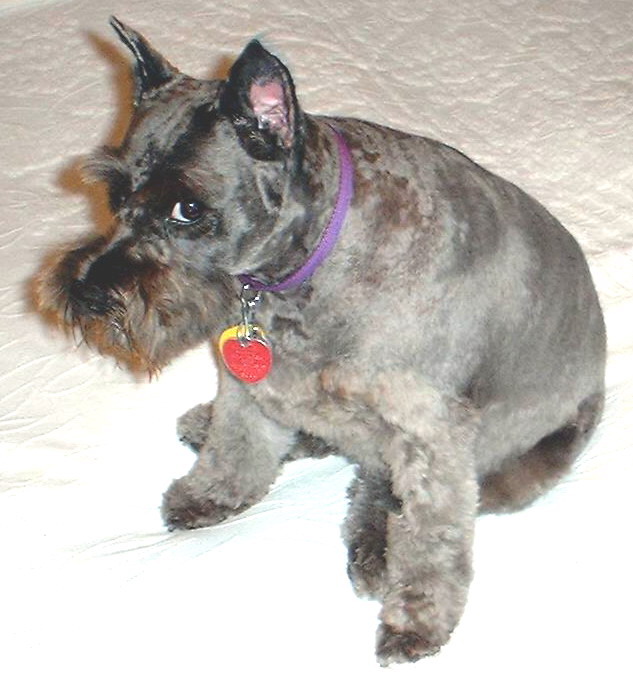
    Ears erect or slightly forward: “What is that?” This is a sign of attention in response to a sound or when studying a new situation. Accompanied by a slightly tilted head and a relaxed or slightly open mouth, the meaning changes to “This is really interesting” or “I do not understand that” and is associated with observation of an event.

     jackrussel.jpg

    However, when accompanied with bared teeth and wrinkled nose, it is an offensive threat by a confident dog.

    Ears pulled back flat against the head: “I am scared” or “I am protecting myself against a possible attack.” This is usually associated with a challenge of some sort.

    Ears pulled slightly back: On a prick-eared dog such as a German Shepherd, the ears take on a slightly splayed, sideways spread in this position. It means “I do not like this” and “I am ready to fight or run.” This is the look of suspicion and may show both aggression and ambivalence.

  • Train Your Dog To Do Any Behaviour

    I’m a professional dog trainer. I’ve had formal education, studied with other accomplished trainers and worked with dogs for nearly thirty years. It’s no secret why I can do things with dogs that seem amazing to the average person.

    But training your dog is about you and your dog, not me. If I can’t give you some useful nugget of knowledge that will cause a change in how you relate to your dog, then I’ve failed both you and your dog. The most important thing I’ve found to teach the average dog owner is a simple universal dog behavior, which will allow you to teach your dog any trick or cure almost any problem behavior.

    Simply keep in mind the simple axiom that “Dogs do not engage in unrewarding behavior”. That’s it. Remember this and you can accomplish anything with a dog. To use this powerful tool, you employ a strategy that I call “shaping”. What this means is that by using the superior intellect of a human over a dog, you shape their environment to create rewarding outcomes for positive actions and unrewarding outcomes for negative actions.

    Let’s take the example of your dog jumping up on you with his muddy paws. This is a negative action. But it can also be very rewarding to a frisky dog that wants to get as close to master’s face as possible, as quickly as possible. Now here’s where much confusion comes in to the dog owner. One book or trainer says to turn your back on the dog, another source says to spray him in the face with a squirt bottle, and another says to knee him in the chest. Who’s right?

    They all are right.

    What they’re telling you is that you want to make jumping unrewarding for your dog. If you consistently squirt, turn your back or do something that is unpleasant and unrewarding your dog will stop jumping up on you. I guarantee it. When he doesn’t jump, you praise him and make the experience of greeting you in a civilized fashion rewarding. The dog will pick the rewarding behavior every time.

    I mentioned that we humans have a superior intellect over dogs. Have fun and use it. If your dog is a ten pound Yorkshire terrier, I’d suggest you use a squirt bottle or turning your back. If your dog is a two hundred pound Rottweiler, then a firm knee to the chest might be more appropriate. Ponder the problem and create a negative and positive outcome for your dog. In this way you have allowed your dog to teach themselves when they invariably choose the rewarding behavior. So please forget about learning some magical technique that must be some secret that only the pros understand. The magic is in not “training” your dog but offering your dog choices that will allow them to train themselves. Try it. You’ll like the results.

  • The Benefits of Using Food in Dog Training

    The Benefits of Using Food in Dog Training

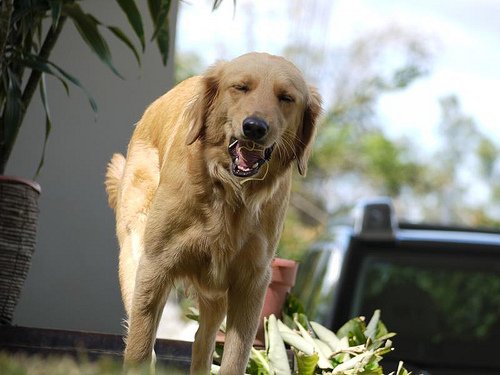
    dogwithtongueout.jpgFor a puppy, feeding is like breathing. Filling a belly does more than merely nourish; it displaces the nervousness caused by the pangs of hunger. The warm glow that comes from a full tummy assures the puppy that he is securely connected to his group. Therefore, we shouldn’t hesitate to use food in training.

    Since eating is so basic with a puppy, it is easy to excite him with a treat. If in his rush to grab the food, he snaps at your hand very hard, do not correct the dog or get mad at him. Just take the time to calm him by giving him a steady flow of food so that he is reassured that he is going to get all the food he wants. As he becomes satiated, his drive to grab the food will start to subside and he’ll be ready to learn how to take the food gently from your hand.

    Food is very effective with adult dogs as well. It clearly indicates to the dog that he has an instinctive advantage in doing what his trainer wants. Also, food can be used to relax an adult dog’s nervous system by washing away social resistance. Remember that although our pet seems domesticated, his instincts are still wild and need to be calmed.

    (more…)

  • How Do I Help My Dog’s Separation Anxiety?

    I hope you can help me. I have an eighteen month old Border Terrier called Lucy. She has been housetrained and was doing fine. But recently she seems to have regressed into a state where she suffers from separation anxiety quite severely.

    I’ve tried training her again to show her that whining and crying won’t have any effect and I’ve also tried giving her a treat before I go out and when I get back, but she appears to be in the same state of distress when I get back as she was in as I left. I can’t think of anything that could have triggered this.

    Do you know of a possible cause and a recommended course of action?

    Christine Duncan, Fife.

    Reply from Christine Emerson

    Hi Christine

    You were right to try and eliminate attention-seeking as the cause but as your efforts made no difference we need to look at other causes. Separation Anxiety is an overused expression. I see many dogs that are agitated when left alone but they are not anxious, just frustrated, bored or have simply never learnt to be patient.

    (more…)

  • My Dog Looks Like a PitBull, What Are My Rights?

    I have a general enquiry about dogs and the law. What is the legal status of ownership if a dog escapes? I’m really concerned about the treatment of Pit Bull type breeds after the dog amnesty (my dog is a Staffy mix) and I’m really concerned that if he ever escaped, god forbid, that he wouldn’t be given back to me as he does have a certain look that could get him confused as a Pit Bull.

    I have him microchipped, registered as a Staffordshire Bull Terrier x English Bull Terrier, although we aren’t really sure about this, and it is not likely he will escape, but I’m concerned that if he ever did, whoever collected him would refuse to give him back. What are my legal rights?

    Many thanks
    Pam Stibson – Wirral


    Reply by Neil Burton of the National Dog Warden’s Association“Dogs are classed as domestic animals as they are owned by a person in much the same way as a person owns a car or other goods. Due to this classification it therefore follows that a dog may be stolen and the person who takes the dog is guilty of theft. Sadly a number of police forces seem to ignore this when dog owners report their dogs as stolen!

    (more…)

  • Dog or Bitch – Should I Get a Male of Female Dog?

    Male Or Female: Which Dog Is Better?

    Which dog makes a better pet, a male dog or a female? The answer to this question depends on what you’re looking for. On one level, if you care about the personality and character of the dog more than anything else, the gender shouldn’t matter. Your decision will be based mainly on how the puppy behaves and acts towards you and other people when you are looking at the litter.

    On another level, if you want to find out whether a male dog or a female dog would generally make an overall better pet, then you’ll have to take in other factors, such as the size, temperament, and level of care.

    Choosing A Female Dog

    Generally speaking, female dogs are relatively smaller in size and warmer in temperaments. There are, however, some male dogs that are just as affectionate as female dogs. Many dog trainers and breeders recommend a female dog to homes with small children. Some believe that there is some type of maternal instinct that exists in female dogs, a quality that makes them amiable and ideal for a household with children.

    Do not let feminine problems such as heat cycles and bleeding steer you away from getting a female dog. If you are worried that she will bleed all over your house when that time comes, consider getting her spayed (read: spaying female dogs), which is the ideal thing to do anyway. Once spayed, rest assured that she will not bleed a single drop. And with regards to behavior, female dogs can be just as challenging as male dogs, sometimes even more so.

    Choosing A Male Dog

    Male dogs are a bit more difficult to care for at times than females. For instance, they are quite good at performing a disappearing act when a nearby female dog is in heat. This can be dangerous to the dog as well as create problems for you. Many male dogs have been injured or even killed when escaping their homes to search for a female in heat. Between moving vehicles and fights with other male dogs, it makes sense to also have male dogs fixed.

    Male dogs are also very territorial over their property, including any of his “stuff” inside the house, his bathroom area, or even a female dog. He tends to get very aggressive when he thinks that his property is being taken over by another dog and is willing to fight to defend it.

    Male dogs also display territorial urination by lifting its leg up as high as possible while urinating. This leg-lifting behavior is not a problem unless it occurs inside the house.

    On the other hand, male dogs have tons of energy and a lot of fun to play with. They are more active and have better endurance than female dogs. This is probably why male dogs are usually chosen for jobs in law enforcement.

  • Positive Dog Training Methods Create Happy Dogs

    Positive Dog Training Methods Create Happy Dogs

    How Dog Training Methods Have Evolved Through the Years

    When you look down at your brand new, small and tender puppy peacefully sleeping in its little bed, it’s hard to think that in just two to three months it may grow to be 40, 50, or even up to 100 pounds depending on the type of breed. And although its behaviors may cute at the moment, like jumping up and putting his front paws on your body, these actions will be far less enjoyable when your dog is all grown up and literally knocking you over.

    It’s always a sound idea to start training your puppy from day one so that he can learn proper manners as he grows into adulthood.

    Puppies that are not trained in this manner end up learning all of the wrong stuff and their owners wonder why they cannot seem to get their dogs to behave as they age.

    Many years ago, when dog training methods used more punishment oriented (using harsh methods to train puppies), dog trainers typically required all puppy trainees to be at least six months old.

    The reason was partly due to the fact that such physical correction protocols used could not be done with dogs that were too small or too young.

    What is ironic about dog training in the dim and distant past is that by the time most puppies are six months old they are big enough and mentally stubborn enough to ignore commands and are altogether tough to train.

    Modern Times, Modern Dog Training Methods

    Over the last 20 years or so, the dog training profession has embraced more friendly and loving training tactics for their puppy clients.  Most trainers now except puppies that are as young as 8 to 10 weeks old. They are typically enrolled in socialization classes and puppy kindergarten.

    Positive training is now used instead of the old-school methods of negative reinforcement. Puppies are taught to walk politely on the leash.

    They learn the basic commands of sit, stay, lie down, and come. In addition to these simple instructions, other useful techniques are learned by puppies such as how to relax, give and take their paw, and polite greeting.

    Modern Dog Owners are More Clued up Today

    Another interesting aspect of raising dogs that has been noted over the last couple of decades is that more and more dog owners have taken it upon themselves to train their puppies. 

    This is partly due to the fact that so many dog training publications and manuals have been written. Modern dog training programs are based more and more on scientific principles and psychological studies of animal behavior and temperament.

    Simple puppy training programs have taught dog owners to utilize techniques such as clicker training and luring.

    Clicker training involves the use of a small mechanism that makes a clicking sound when pressed. When a dog hears the sound it will associate the click with whatever reward you give him.

    This tells the animal that something good is coming and he should repeat whatever behavior or action you have been teaching him.

    Luring training is simply using food such as a dog treat, or even a toy, to induce the dog to display a specific behavior in order to follow the lure in hopes of getting the reward.
  • How to Stop My Puppy Biting & Nipping

    Puppy Training – How To Control Nipping & Biting

    One thing you can count on when bringing home a new puppy is the fact that he will nip and bite at your fingers during the first few days or weeks. This is perfectly normal and there is no reason to get alarmed that you may have purchased an aggressive dog.

    Important: If you’re looking for immediate, expert advice to [keyword id=’biting’]… click here and we’ll show you how to fix the problem today!

    However, like any behavior you wish to change about your dog, you need to take a few steps so that he realizes that nipping is not something you as the “pack leader” want him to continue doing.

    So how do you change this natural biting behavior that a little puppy has? Well the first thing to do is determine his age.

    This is important because puppies under the age of about 15 weeks need to be handled a little differently when it comes to mouthing and nipping than puppies over the age of 15 weeks.

    (more…)

  • How to Stop Puppies from Barking

    Puppy Barking Problems – How To Prevent a Puppy Barking from Attention

    puppy on a leadFor any new dog owner, handling all of the loud barking of a new puppy can be quite an unnerving experience. Most new dog owners are not prepared for the intense amount of barking and yelping that young puppies start doing the minute they arrive in their new home.

    Although it is totally natural, some puppies do not give their owners the luxury of quieting down, especially at night.

    One of the biggest phases that a puppy will go through is the fear of being alone. And I’m not talking about being alone in the sense of you leaving the house. Some puppies will go absolutely nuts even when you only leave the room for a split second. They just can’t bear to be alone because they are used to having their mommy or littermates around non-stop.

    When faced with this situation, what you do? If you run to your puppy to sooth and caress him every time he cries, then you are only feeding the behavior and creating a spoiled dog. On the other hand, if you ignore him and let him bark his brains out, the rest of the family (especially your spouse) will become very annoyed with you for letting the barking go on.

    (more…)

  • 5 Activities to Keep Your Puppy Stimulated

    golden retriever puppyAll of the games and skills discussed below are designed to contribute to both the fun and the positive upbringing of your puppy.

    These energy-producing exercises act as building blocks that make advanced training easier and enhance the bond between owner and puppy.

    Grooming Practice: Starting grooming procedures at an early age teaches the puppy acceptance of hands-on treatment over all parts of his body and emphasizes relaxed “stays.”

    Grooming also assures the owner of dominance as nails are cut and teeth are cleaned, as the puppy learns to be quiet and tolerate-these “house-cleaning” techniques.

    Hide & Seek: Hide and seek is fun for owners and puppies alike and helps teach your puppy how to come.

    (more…)