One of the most important things on any new dog owner’s list is to pick the perfect name for their new dog. Unfortunately, this could seem a lot easier said than done because there are just so many doggone good dog names to choose from! The sky is literally the limit (and, incidentally, “Sky” makes a great dog name too)!
If you find yourself scratching your head, trying to find the right name for your new pooch, you may want to find out what other pet owners are calling their canines. Even if you don’t like these popular top dog names, it’s at least a good place to start.
So how does one go about looking for the most popular dog names? Well, websites like Petfinder.com have databases with hundreds of thousands of registered canines. Since all these animals have names, Petfinder was able to create a list of the most common dog names in America. So, are you curious to know what they are? Drum roll please…
For male dog names, the top 5 most popular choices were Max, Buddy, Jack, Charlie and Rocky. For female dog names, Molly, Bella, Lucy, Sadie and Daisy came out tops.
Of course, similar to baby names, the popularity of these top dog names changes annually. What seems to be in vogue is that more and more dog owners are giving their pooches human names rather than typical dog names like Spot, Fido and Rover.
As you go on to choose the perfect name for your new pooch, let yourself be as creative or conventional as you like. If you’re not phased by your dog being the sixth “Max” in your neighborhood, you may want to pick one of the current most popular dog names. Alternatively, you may like a name that’s more unique or exotic. Whatever you do, just remember that you’re going to be calling your dog’s name out dozens of times each day so it’s important that you like it and that it’s easy to say. Good luck!
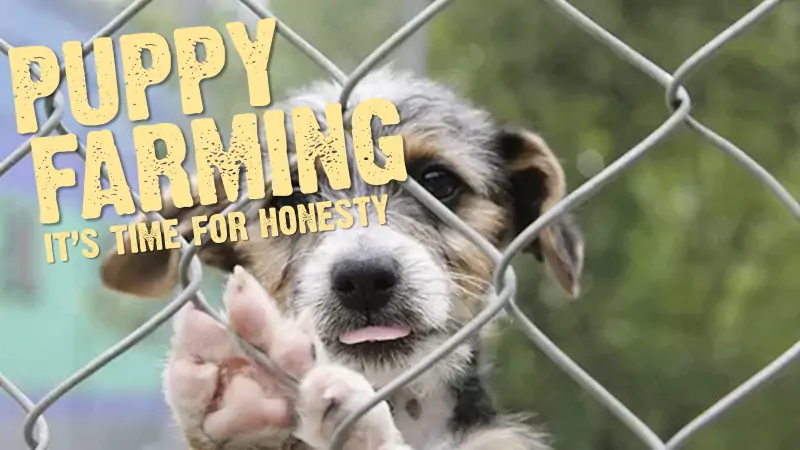
As dog lovers, we must all, surely, feel a massive twang of pity and regret when we think of those puppies who have been bred for profit by breeders who are interested only in how to produce maximum volume of ‘stock’ with scant regard for the welfare, health or temperament of the animals they churn out month by month, year by year.
Puppy farms (or, as they are known outside of the UK – puppy mills) are alive kicking.
But how? Buy why?
Let’s see if we can find out…
I believe the media has been very generous to the people who, it could easily be argued, are REALLY responsible for the growth in puppy farms.
Puppy farmers aren’t the ONLY ones to blame for misery
The people I speak of are those who willingly dig in to their pockets and get their wallets out, to hand over cash to the cynical puppies- for-profits breeders – aka puppy farmers – who couldn’t care less about the fundamental principles of breeding good, healthy, well balanced dogs.
The puppy farmer only exists because people keep giving them money.
In all the coverage given to the puppy farming debate, have we missed the most obvious of points? That if people simply stopped fuelling this trade, we might actually get somewhere?
Don’t get me wrong, I have a huge moral and ethical objection to the people who trade in the suffering and misery of mass produced dogs. We can’t legitimately call ourselves a nation of animal lovers whilst we allow this to happen.
But, the fact is, these puppy farms would be a thing of the past if:
1) People refused to buy puppies from pet stores (and yes, I include the celebrities who buy from famous department stores in that – no GOOD breeder will EVER allow their stock to be ‘retailed’ in a pet store.)
2) People educated themselves on how to acquire a new dog, responsibly, rather than rushing out to buy a puppy from the first litter they see advertised in the free classified ads newspapers or websites.
Seriously, if those two things happened – the puppy farmer is left with no business. No trade. No customers. No money. No motivation to keep producing puppies.
Let’s think about it for a second; if people didn’t purchase from puppy farms and from pet shops, there’d be none.
So why do people do it?
Some of them are misguided, misinformed. OK, I accept that. But even so, in this year, in this day in age with ALL of the wealth of information that exists about how to obtain a dog responsibly, is it REALLY a valid excuse any more? I mean, really?
And for everyone who accidentally, unintentionally winds up putting money in to the pocket of puppy farmers, there’s certainly more folk who do it and who couldn’t really care less either way.
Whilst it is an ongoing disgrace that puppy farms are allowed to thrive and prosper in a country where laws, legislation and enforcement of such establishments have never really been properly crafted to a point where they have been forced out of business, whilst the demand exists – the puppy farmer will thrive.
If puppy farming is to be defeated, the first point of action needs to be in changing the attitude and behaviour of the people who are putting their money in to keep the puppy farms in business – that’s puppy buyers!
Look at this way; if there was ZERO demand for cocaine, would the governments of the world even need to make laws and spend BILLIONS on trying to combat traffickers around the globe? Of course not!
Zero demand for a product or service means the supplier is automatically redundant. They become extinct. It’s the laws of economics, supply and demand.
And let’s establish one thing, for the record, puppies are NOTHING like cocaine. So our failure to combat puppy farmers is interlinked, exclusively, with our failure to convince enough people of the right and wrong ways to acquire a dog ethically and responsibly. There is no chemical ‘high’ to be gained by buying a puppy from a puppy farmer.
How can we change this? How do we push for a culture change?
It’s going to be hard and I feel it’s going to take something big. But I am 100% convinced that even if we were to bring in laws that would legislate against puppy farms, if there is still a 10 or 20% demand from the same sort of people who acquiring their dogs from puppy farmers today, the laws themselves won’t be enough.
The media who carry adverts for puppy farmers, they are guilty as sin.
There are some big name, very profitable media businesses out there profiting from the misery of dogs. Whether they knowingly take adverts from puppy farmers or not, whether the fact that puppy farming in and of itself is NOT illegal (a disgrace in itself), surely there has to be an ethical, honest way to deny puppy farmers the oxygen of publicity? If people and businesses aren’t prepared to step up, how do we ever expect the public to understand that
Just because a litter of puppies is advertised in a ‘legitimate’ publication, it doesn’t mean the puppy has been bred responsibly
Just because a litter of puppies is for sale in a pet shop with a licence, it doesn’t mean the puppy has been bred responsibly
Just because a litter of puppies has been bred by a ‘licenced breeder’ it doesn’t mean the puppy has been bred responsibly
If we really want to tackle the blight of puppy farming, puppies produced in dank, squalid conditions with profit as the only motive, then we – all of us honest, caring dog owners – need to speak up, speak out and repeat the following mantra:
“If you buy from a puppy farm, you’re as guilty as the puppy farmer. If you don’t have the knowledge to avoid a puppy farmed dog, then you’re not yet ready to own a dog.”
What more do we need to do to, once and for all, put an end to the misery of puppies bred for profits?
How To Keep Your Puppy Busy While Learning At The Same Time: Looking for fun games that your puppy can enjoy? Check out these tantalizing activities that you can get a puppy of any age involved in.
Grooming Made Fun
Probably one of the most important things to do is groom and brush your puppy. So what better way to start on the right foot than to make it a pleasant experience? (more…)
Did you know that your dog can live three weeks without food but will die within days without water? Water is necessary for all digestive processes as well as temperature regulation, nutrient absorption, and as a transportation medium, shipping things between organs and out of the body.
How much water your dog needs depends on his physical activities and the type of food he eats. Panting is your dog’s way of sweating. If your dog is sweating, he needs a drink. Dry food also encourages thirst. Because dry food contains only 10 percent moisture, your dog will need about a quart of water for every pound of dry food.
On the other hand, canned food or home-cooked diets contain more water and require less to rinse and wash down. This quality of canned and home-cooked food does not necessarily make them a superior food source, however.
Water is vital for survival. Make sure clean water is always available for your dog. Provide clean water in a stainless steel dish and change it regularly. Keeping it off the ground in a dog bowl stand will also help to keep germs, pet hairs and floor bound dirt away. Each time you fill your dog’s bowl, rinse it to clean off dirt and other nasty particles that don’t belong in a fresh bowl.
There is a significant difference between humans and dogs in their need for carbohydrates and in their ability to digest them. The digestive tract of a human is longer than that of a dog, and the formation of jaws and teeth is entirely different. A dog’s digestion starts in the stomach. Dogs’ teeth – all 42 of them – are built to tear flesh apart. Dogs gulp their food as fast as they can, which then reaches the stomach with no digestion having taken place.
Human digestion starts in the mouth. A human chews food with 32 teeth, which have flat surfaces for grinding and breaking down food. Enzymes contained in the saliva contribute to this breakdown of the food, which is being digested before it reaches the stomach.
Carbohydrates come in two forms, simple and complex. Simple carbohydrates come from grains such as wheat, corn, rice, oats, soy and millet.
They break down into starches and sugar when properly cooked. Complex carbohydrates come in the form of various fibres such as brans, hulls and peanut shells from the outside of plants. A small amount is needed for proper digestion and stool formation. Nutrients are obtained from both sources, but most come from simple carbohydrates.
If carbohydrates are a major part of your dog’s diet, the time and energy needed for digestion increase, the dog performs less well, large amounts of stool are produced, and a protein deficiency disease may develop. Dogs have evolved as meat eaters and although they need some grains, their health and longevity will be better served on a diet containing more animal protein than protein from grains.
Think about the origin of the dog.
It is unrecorded in history that wolves lit fires and cooked grains picked in fields! But there were whole carcasses available that contained everything needed for wolves to survive, including predigested vegetable matter in the intestinal tracts of their prey.
The reason the majority of dry dog foods contain such large amounts of cereal grains is that grains are a cheap source of nutrients. According to the NRC guidelines, “Carbohydrates provide an economical source of energy in the diet of dogs.”
In some cases, some dogs don’t want to eat because of their environment. One of my dogs for example, eats less if he has to stoop for the bowl – a raised dog bowl solved his problem. In other cases, your dog might just know best and by refusing to eat he’s doing all he can to tell you this.
Allergic reactions to grains are common in dogs. The best diet for your dog matches that fed in the breed’s country of origin as the breed developed. Each dog is an individual, and if yours refuses to eat his food, check the grains listed on the package. It could be your dog is allergic to one of the grains in their food which is why they don’t want to eat.
Wolves have acquired a genetic mutation for dark coat colour through mating with domestic dogs, scientists report.
Dark coats could help wolves adapt and survive in new environments, the international team argues.
Light-coloured coats are dominant in wolves living on tundra, but dark coats have become common among wolves living in forested areas of North America.
The findings come from a genetic analysis of wolf populations in Europe and North America.
“We usually think that dogs developed from wolves. The work shows an example where dogs gave something back to wolves,” co-author Greg Barsh, from Stanford University in California, told Science magazine. A trait that was created by humans may now prove to be beneficial for wolves
Read the full story here »
Post from: Dog Magazine dot net – free online dog magazine from K9 Magazine
Could Canine Genetics Aid the Wild Wolf?
A lawyer has slammed the RSPCA siting “witness rehearsal” amongst a number of other accusations about the conduct of the anti animal cruelty organisation.
Solicitor Nigel Weller at Harwich Magistrates Court on Tuesday 11 December 2007 was defending in an RSPCA case. As a result of the District Judge’s concerns about what Mr Weller uncovered, the cruelty trial collapsed.
This was a private prosecution brought by the RSPCA against a lady experiencing her first taste of the legal system as a result of the RSPCA’s activities – was charged with offences of “cruelty” to her cats on the basis that she “failed to provide them with adequate nutrition” and “adequate veterinary care”.
In this case, the RSPCA’s vet had made two similar reports – which is often an indicator that something is not quite right. The first report made no reference to the animals either suffering unnecessarily or that there had been any failure to obtain veterinary treatment or adequate food. Following this report, the veterinary surgeon was given the pro-forma by the RSPCA and a second report followed.
In this second report, the same words in the pro forma appeared and it was asserted by the expert that the defendant had caused unnecessary suffering by failing to provide the animal with appropriate veterinary treatment and with adequate food.
The defence had tried to seek out, and claimed throughout the pre-trial procedure that they were entitled to see, documents provided to the RSPCA’s vet. Documents were finally disclosed as a result of court orders made during the trial. One such document appeared to the court to be a ‘pro-forma’ witness statement handed out by the RSPCA to its expert witnesses. This document purported to give the expert witness guidance as to the format and possible content of her report – indeed parts of the witness’s second report were direct quotes from this RSPCA generic “pro forma”.
The District Judge was very concerned by this matter, and also by the fact that the defence had been forced to cross-examine to uncover it during the hearing in front of him. Wording suggested by the RSPCA to its witness was couched in an extremely negative way. This amounted, the court found, to the rehearsal of a witness and, arguably, to “witness coaching”. Rehearsal and coaching of witnesses is well known to be unlawful in this country – a fact recently emphasised by the Court of Appeal R v Momodou & Limani.
The RSPCA’s document, for example, stated as follows:
“when you are of the opinion that the animals referred by you has suffered, you should qualify your opinion by explaining in layman’s terms who the animal has suffered, e.g. ‘it is my opinion, having taken into account the facts presented to me, the animal referred to as exhibit AB/1 has been caused unnecessary suffering by the person responsible for its care by them failing to provide the animal with veterinary treatment/adequate food’, etc”
It was argued by the defence, and accepted by the court, that even the most honest witness could be subliminally affected by reading such a document. The District Judge expressed his “grave concerns” about what had happened. There was no suggestion made by the defence in this case that the RSPCA’s expert witness had been dishonest, but the court decided that, in the light of the “pro forma” it would no longer be safe to give any weight to the whole of the RSPCA’s veterinary evidence. As a result the RSPCA was forced to offer no evidence – which it did reluctantly and with its usual lack of grace. The lady left Court, with the right result and her good character intact. However, this was only after months of worry about the case.
After the case, Defence Solicitor Nigel Weller said:
“This has been yet another difficult case, in which I have had to persuade the court to allow cross-examination about the way in which the RSPCA has prepared matters for trial. I am used to the RSPCA’s steadfast refusal to disclose obviously relevant documents, which the defence are entitled to have disclosed immediately. Putting to one side the question of ‘rehearsing’ witnesses, it is clear that any document, which a professional witness refers to, or relies upon, must be disclosed to the defence.
“In this case, I made numerous requests to the RSPCA’s Solicitors, but not even the expert witness ‘pro forma’ was disclosed. Indeed, this is a document, which I have never seen before in all of the cases I have done. It appears to be a generic document, which uses language that I recognise from experts in other cases. As recently as 7 December 2007, the RSPCA’s lawyers sent me a letter stating that ‘we have informed the District Judge that the prosecution are not serving any documentation prior to the commencement of the trial as you have requested’.
“Only cross-examination of the RSPCA’s vet uncovered the documents which had been given to her for the purposes of her second report. When it was uncovered, the District Judge rightly made very critical remarks about the ‘pro forma’ and indicated that he would not be prepared to give any weight to the RSPCA’s veterinary evidence.
“I am a specialist lawyer with a good knowledge of the RSPCA and its conduct of private prosecutions in particular. The RSPCA is a charity with no special powers, but it also has no complaints procedure or transparency. The handful of specialist animal welfare lawyers all know of the RSPCA’s conflicts with authorities and the courts. There is the infamous reported case of Attorney-General v RSPCA, where senior RSPCA employees were found by the Court of Appeal to have perverted the course of justice when disciplining an employee for allowing evidence to fall into the hands of defence lawyers, which assisted their clients’ case.
“My client and I cannot do anything to ensure that this awful experience does not happen to anyone else. There is a real danger that when other lawyers, not specialising in animal welfare law, take on cases against the RSPCA and take the RSPCA, and the evidence it presents, at face value. In my view, they should not do so.”
The Companion Animal Welfare Council have produced a report covering a recent workshop discussing the issue of genetic health issues affecting our much loved pets. The report gives some very interesting food for thought on a number of options that may be available to us as we battle to tackle the problems affecting certain dog breeds suffering with genetic health conditions. Well worth a read.
——-
Report of the Companion Animal Welfare Council Workshop held at 14:30 on Thursday 9th October 2008 at 2 Millbank, Westminster.
Summary and conclusions
At present, structured and coordinated approaches to implementation of appropriate breeding strategies for addressing genetic welfare problems in companion animals are limited and the leadership for such coordination is unclear. By default, the approach adopted has been one of developing diagnostic tests and breeding strategies to tackle specific problems.
This is of course extremely important but there needs also to be higher level consideration of whether […]
Death Of The Family Pet: A Proper Goodbye To Your Faithful Friend
As the words of a sad, but sweet, eulogy was echoed over the loudspeaker of a public address system, a spotlight began to slowly illuminate an object in the center of the show ring: a leash, attached to an empty training collar.
The Occasion?
It was graduation night for an obedience training class. As the graduating dogs sat silently by their owners, one spot in a row was obviously vacant. One of the dogs who was to have graduated had been struck and killed by an automobile just the night before.
The trainer continue to explain to those present that “A new sentry was on duty in Heaven… that the greatest animal trainer of all had seen fit to call little Chu Chu to duty elsewhere.” And finally, just before the graduation ceremonies began, a trophy was presented to the owner of the missing graduate. The trophy was inscribed, In Loving Memory, Chu Chu, Always First Place In Our Hearts.
To some people, this may seem like hogwash. Those types of people, however, have never experienced the joy, devotion, dedication, and unswerving loyalty demonstrated by a dog to its owner.
A family dog is willing to give his all, and he expects so little in return. He will laugh when you laugh, and be equally quick to cry with you. The whole world can turn its back on you and, as you sit wondering where you might find a friend in your dark hour of need, you feel the nose of your dog snuggling close. There he is, your friend!
Asking no questions, expecting no answers, desiring only a few moments of your love, a pat on the head, a little praise, is all he ever wants. And if he doesn’t get it, that’s okay, he’ll understand. He’ll still be your friend because you are number one in his life. His world revolves around you. Where you go, he wants to go, always your constant companion.
The Therapeutic Justice Of Pet Cemeteries
Pet cemeteries, which did not exist in the old days, have proved to be the answer to so many pet owner’s prayers. It is impossible to document the feeling of loss when a dog fancier loses his cherished pet. But one thing is certain, each dog owner knows that so much happiness and completeness came to him from his dog, and that to send his remains to the city dump, or to be chemically changed to fertilizer, is completely out of the question.
To offer him a decent burial in payment for the joy and devotion during his lifetime, is fast becoming the most popular answer. Whether it be a modest unmarked grave in the backyard, or a grave site marked with marble, it is only fitting that the one who gave so much be allowed to be remembered with dignity that he so faithfully earned. These are not monuments of sorrow or tragedy, but rather, monuments to the many years of happiness each and every canine brought to his owner.
It’s no secret Halloween’s popularity is growing and is second only to Christmas in the United States for holiday decoration sales. While the appeal to children is obvious, adults have now pushed Halloween to the status of America’s wildest party time.
Family pets are often included in the festive mood or they are ignored, both of which can lead to veterinary medical problems. Estimates from 2006 showed 3.5 million Americans bought some type of Halloween product for their pets according to the American Pet Product Manufacturers Association.
A recent American Kennel Club survey showed only one in 10 dog owners can’t imagine not dressing up their pup. It also showed women like to dress pets up more than men do. At the same time, 78 percent of men felt that dressing up a pet is interesting if not downright cool.
The Washington State Veterinary Medical Association offers these tips for companion animal owners to ensure a safer All Hallows Eve.
— If Halloween demands you spend a lot more time with children, don’t be surprised if your pets get a little more demanding, too. Dogs are especially gregarious pack animals and by nature enjoy their role in the family. They tend to become more confused when they are left out of the group. A few seconds to acknowledge the pet with a pat on the head or some play when arriving home or leaving is sometimes all it takes to keep the “pack” stable and less demanding.
— Some shelters temporarily stop placement services at the end of October to prevent people from saying they will take placement of an animal only to become bored with that black cat after the party is over.
— There are a few scattered reports each year of animals being abused during Halloween. If your pets are all black, all white, or mixed black and white dogs and cats, realize theft or abuse of such pets can occur during the Halloween season. While the incidence of pet theft overall remains low, the likelihood of these uniquely colored critters being taken does tend to rise some.
— Fright Night is how many of us think of Halloween. To pets, it’s a night of confusion and turmoil. The house is frightening both visually and audibly. Strangers come to the door dressed in strange outfits. When children squeal, there is a tendency among dogs to protect or flee. Dog bites to Halloween visitors or unrecognizable family are not uncommon. All pets should be on leashes or contained to prevent running away or fearful biting.
— Candy is everywhere. Resisting the temptation to hand a piece to your pets is difficult. The animals don’t need the sugar load and other ingredients, so if you are a soft touch, consider keeping appropriate pet food treats in your pocket to pass off to the pooch. In addition, most importantly, keep the access to the candy bowl and trick-or-treat bags away from the animals.
— It is never appropriate or healthy to give alcoholic drinks to pets. It’s not funny either.
— Pet costumes can be hilarious if the pet isn’t submissive and fearful by all the fuss. Don’t force things on your pet just for your entertainment. If they don’t mind a costume though, make sure they are as safe from hazards like choking and fire as with a costume you’d put on a 2-year-old child.
— Remember how overheated you got cruising the neighborhood as a child trick-or-treater in costume? Pets can get overheated in costumes, too. Be sure your pet can walk, see, pant, and answer nature’s call in their costume.
— Don’t forget reflective tape on your pet’s collar or costume if you take them out. Make them visible to drivers and running children.
— If the pet costume uses elastic bands or straps to stay in place, they may cut the skin, decrease circulation or cause a strangulation hazard at the neck. Combine creativity with common sense when considering dressing a pet.
— As at any other time of the year, if your pet shows signs of illness or distress, take them to your family veterinarian. If you know Halloween is difficult for your pet and they are frightened, visit or call your veterinarian for advice and a possible prescription that may make this boisterous holiday more humane to your pets.
The WSVMA is a statewide, not-for-profit, professional organization for the benefit of veterinary medicine. The WSVMA has over 1,600 members, representing veterinarians, veterinary students and a broad spectrum of veterinary practice. The Association creates a strong practice community that provides education, representation and the sharing of ideas dedicated to advancing the science and art of veterinary medicine and its relationship to public health and agriculture. Visit the WSVMA Web site, www.wsvma.org, to learn more about the association and veterinary medicine and animal care.
Almost 20 million California households have pets at risk of harm during a disaster.
— Recent disasters and follow-up research have shown that proper
preparation and effective coordination of animal issues enhance the
ability of emergency personnel to protect both human and animal health
and safety.
— Ten to 25 percent of pet owners will fail to evacuate because of their
animals.
— Thirty to 50 percent of pet owners will leave pets behind, even with
advance notice of evacuation. Many will return before it is safe or
“all clear” to rescue pets.
— Farmers and ranchers who depend upon animals for their livelihoods are
often unwilling to leave livestock unsupervised in the event of a
disaster.
— Plan Ahead:
— Pet owners should take steps to arrange for animals’ safety during
evacuation:
— Check with veterinarians for a list of preferred boarding kennels
and facilities.
— Be sure you have enough crates or other items to allow you to
transport all of your pets at the same time.
— Make sure your pets are wearing identification (tags, microchips,
etc.) that include your cell phone number or phone number of a
friend outside the area.
— Ask local animal shelters about emergency shelters or foster care
for pets.
— Identify pet-friendly hotels and motels outside of the immediate
area.
— Ask friends and relatives outside the disaster area to take in
evacuated pets.
— Get Ready:
— Emergency supplies and traveling kits should be kept updated and
handy, including:
— Pet first-aid and guide book
— Two week’s worth of your pet’s medications
— Copies of vaccination and medical records
— Canned (pop-top) or dry food and bottled water
— Feeding dishes
— Litter, disposable litter trays or paper toweling
— Extra leashes and collars
— Photos and descriptions of each pet
— Blanket (for covering and carrying a fearful pet)
— Carrier or sturdy traveling bag for each pet
— Minimize Evacuation Time:
— Store emergency kits and leashes as close to an exit as possible.
— Always bring pets indoors at the first sign or warning of a
disaster or severe storm. Pets can become disoriented and wander
away from home during a crisis.
— Consider your evacuation route and call ahead to make
arrangements for boarding your pet outside of the danger zone at
the first sign of disaster.
— Ensure all pets wear collars and tags with up-to-date
identification. Each pet’s ID tag should contain its name,
telephone number and any urgent medical needs.
— Microchip pet IDs provide a more permanent form of
identification.
The California Veterinary Medical Association has posted information about what to do to care for your pets in the event of a disaster and is gathering real-time information from its members in Southern California regarding the status of at risk pets and animals affected by the Southern California fires and needs to care for these pets.
As the days grow shorter, and the nights grow darker, many people across Scotland look forward to one of the last outdoor celebrations of the year – Bonfire Night. Before revellers get too excited about the festivities and start stocking up on fireworks, the Scottish SPCA would like to issue a warning about the potential harm these celebrations can cause animals. Domestic pets, livestock and wildlife are all at risk from the fear fireworks can create but there are simple steps which can be taken to minimise the problem.
Sharon Comrie, Deputy Head of the Scottish SPCA’s Uniformed Division said: “Around this time of year, the Society receives a large number of calls from concerned members of the public regarding fireworks. These calls range from queries about caring for distressed pets, to reporting crimes against animals.
“The morning after Guy Fawkes Night is also one of the busiest of the year for the Society’s Animal Welfare Centres. We see a large number of dogs and cats being brought into our Animal Welfare Centres and the majority have bolted in fear from their homes and gardens.
“For those planning a fireworks display, the Society suggests the use of quiet fireworks. Light displays are much less likely to frighten animals than the use of loud fireworks, which can go up to 120dB, the same level of noise as that produced by a jet engine.
“This year, remember to be considerate. Please make sure to tell neighbours in advance of any display. We are not trying to be killjoys – fireworks may be a lot of fun for people, but they can be a real cause of terror for animals of all types.
“We would also like to urge members of the public planning to build a bonfire to consider the local wildlife. Small animals such as hedgehogs and mice may crawl into a cosy looking pile of wood and brambles thinking that they have found the ideal place to hibernate. We have heard of far too many sad cases where these animals have been burnt alive.
“Please be vigilant, and if you are having a bonfire, build it as close to the time as possible before setting it alight. Another tip is to surround the pile with chickenwire and sand, which will reveal tracks of any animals that may enter. And always double check for wildlife before finally lighting the bonfire.”
“Pet owners will naturally be concerned about their own animals being distressed by firework displays but there are preventative therapies available. De-sensitisation CD’s can help them become used to the sound of fireworks. DAP (Dog Appeasing Pheromone) diffusers or sprays, if used regularly for at least ten days earlier, can also reduce the likelihood of a pet becoming stressed. They are odour free but discharge a synthetic version of the pheromones mother dogs release in first few days after giving birth. Cat equivalents are now also available and these can be purchased from various veterinary surgeries or pet stores.”
“If you know that fireworks displays generally cause distress it is well worth taking the time to explore these options. This should be a safe and fun time for all the family – pets included.”
What are the signs of “dog bullying” and how can you prevent your dog from being bullied by other dogs?
There are dogs out there that bully other dogs when in a “doggie environment”, such as a dog park, dog daycare, or a beach area designated for dogs and their owners.
Often, bullying takes place in large groups, regardless of the size. Most of these dog bullies are of the large breed and prey on smaller dogs, although there are also smaller breeds with a strong, dominant personality whom bully on other dogs of all sizes.
The next time you take your dog to the daycare, the park, or other places where there are other dogs around, observe how he behaves toward the other dogs and vice versa. Find out if your dog is being bullied by other dogs or if your dog is the one who does the harassing to other dogs.
Dog bullying comes in many shapes and sizes. You can tell that your dog is being harassed by other dogs if he is being surrounded by them, ganging up on him, jumping at his face, and growling at him, often for no legitimate reason. Below are other signs of a dog that is being bullied by other dogs:
1. A dog that is almost always happy around other people and dogs, but nervous and scared around the “bully” dogs.
3. One that is repeatedly mounted.
3. One that is continually being taken away from his toys, water, or certain spots.
4. One that is being attacked, beaten, pinned to the ground, and pushed around.
5. One that is continually being menaced.
6. In worst cases, one that is being bitten or badly hurt.
These acts are not right and should not be tolerated. Repeated display of these behaviours are not only hurtful to your dog in a physical way, but can also be mentally damaging.
It is important to find out what is causing the harassment to occur among these dogs and put an end to the improper behaviour. Some dogs are just real bullies, without any direct reason for acting that way. Keep in mind that in many cases, it only takes one bully to rev up other dogs and follow his behaviour. In this case, separating the dog from the playgroup will solve the problem.
Another reason for dog bullying is improper or lack of supervision from the owner or staff member in the day care. Dogs that aren’t properly watched over tend to get out of control while playing, and that’s when the bullying starts. Therefore, when you take your dog to a day care, make sure that there is enough staff members to supervise all the dogs and that they are being looked after at all times. And lastly, whether it is at the park, the beach, or your neighbor’s house, make sure to keep an eye on your dog at all times.
I have a general enquiry about dogs and the law. What is the legal status of ownership if a dog escapes? I’m really concerned about the treatment of Pit Bull type breeds after the dog amnesty (my dog is a Staffy mix) and I’m really concerned that if he ever escaped, god forbid, that he wouldn’t be given back to me as he does have a certain look that could get him confused as a Pit Bull.
I have him microchipped, registered as a Staffordshire Bull Terrier x English Bull Terrier, although we aren’t really sure about this, and it is not likely he will escape, but I’m concerned that if he ever did, whoever collected him would refuse to give him back. What are my legal rights?
Many thanks
Pam Stibson – Wirral
Reply by Neil Burton of the National Dog Warden’s Association“Dogs are classed as domestic animals as they are owned by a person in much the same way as a person owns a car or other goods. Due to this classification it therefore follows that a dog may be stolen and the person who takes the dog is guilty of theft. Sadly a number of police forces seem to ignore this when dog owners report their dogs as stolen!