When your puppy is small, you should not expect him to be perfect all the time. Neither should you overwhelm him by correcting everything at once. Instead, concentrate on the more serious behavior problems, working with them as they show up. (more…)
Category: Dog Advice
From dog training to canine health, see our latest dog advice articles here
-
3 Basic Tips For Better Handling Of Your Dog
Dog Training has been taught by many different schools of thought. Teaching your dog new tricks and handling obedience training takes both dedication and patience. It also takes a sense of skill and personal awareness of not only your dog’s actions, but your own body language and training practices as well. Below are two tips that any dog trainer can utilize when handling their pets: (more…)
-
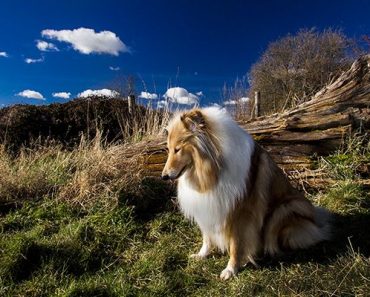
Positive Reinforcement Dog Training
Training dogs using positive reinforcement and reward training has long been recognized as both highly effective for the owner and a positive experience for the dog. Positive reinforcement training is so important that it is the only method used to train dangerous animals like lions and tigers for work in circuses and in the movie and television industry. (more…)
-
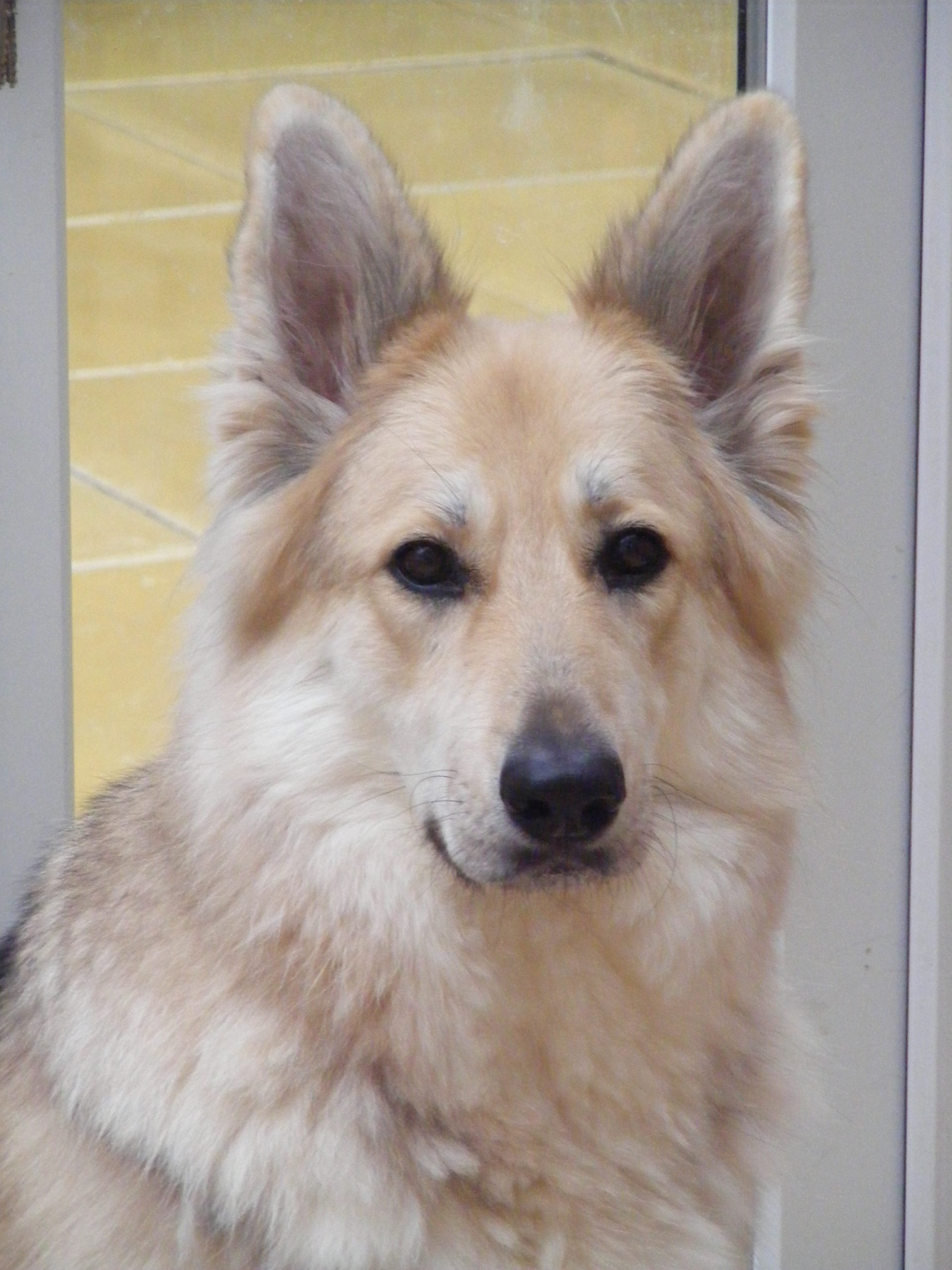
Canine Cancer: How to Spot The Signs
Cancer in pets is more common than you think. It is the number one natural cause of death in geriatric cats and dogs and accounts for nearly 50 percent of pet deaths each year. Some breeds are especially susceptible to cancer.
Although the leading cause of death in older cats and dogs, cancer also is the most treatable disease when compared to life-limiting diseases such as congestive heart failure, renal failure and diabetes. An educated and dedicated veterinary health care team is essential to caring for cancer-stricken pets.
“It is crucial for pet owners to take their pets to the veterinarian twice a year to monitor them for early signs of the disease,” says Dr. Gregory Ogilvie, a California Veterinary Medical Association member, world-renowned oncologist and director of the California Veterinary Specialists (CVS) Angel Care Cancer Center in Carlsbad, California. “Routine blood tests also can help identify problems early.”
Commons signs of cancer for pet owners to watch for include:
— Unexplained bleeding or discharge
— Loss of appetite
— Oral odor
— Abnormal swellings or swollen lymph nodes
— Drooling or difficulty eating or swallowing
— Changes in exercise or stamina level
— Lameness
— A sore that does not heal
— Chronic weight loss
— Change in bowel or bladder habitsThe best treatment for cancer is prevention. Dr. Ogilvie recommends feeding cats and dogs a high-quality, balanced diet with low amounts of simple carbohydrates and high amounts of n-3 polyunsaturated fatty acids. He also advises pet owners to ensure their pets exercise regularly and eliminate pets’ exposure to industrial chemicals and tobacco smoke. Talk to your veterinarian to determine what’s best for your pet.
If your pet is diagnosed with cancer, there is hope. Advances in veterinary medicine and technology offer multiple treatment options, including chemotherapy, radiation and surgical procedures. Above all, enhancing your pet’s health, well-being and quality of life is the ultimate goal.
Canine Cancer Care
-
Pets and Poisons – Download a Free, Potentially Life Saving Guide
Pets and Poisons – Keeping your animals safe
The BVA Animal Welfare Foundation (BVA AWF) in conjunction with the Veterinary Poisons Information Service (VPIS) has announced the launch of an update of its popular Pets and Poisons – Keeping Your Animals Safe leaflet, first produced in 2004.
Based on information compiled by the VPIS, the leaflet provides a valuable and easy reference guide for owners on preventing poisoning in the home, in the garden or in open spaces along with advice on what to do if you think your animal has been poisoned.
Download the leaflet here Pets and Poisons – Free Leaflet
-
Stop Excessive Barking
Dogs do not engage in unrewarding behavior. Dog training is mostly about making bad behaviors unrewarding. If we simply employ this principle, we can stop our dog from barking excessively.
Dogs bark because it is a natural behavior. Barking is used to alert their pack of possible danger and to give warning to others. This natural behavior can go astray when the canine is bored, stressed or for various other reasons. An analogy would be overeating in humans. Eating is obviously a natural behavior. However, if we are bored, stressed or suffer from various maladies we sometimes overeat. Natural behaviors can become unnatural given a toxic environment. This is what occurs with your dog barking excessively.
We therefore have a problem with a cause and a symptom. The cause of your dog’s barking is generally stress or boredom. The symptom is the headache inducing noise known as “excessive barking”.
As your dog’s leader and personal trainer, you would strive to eliminate both the cause and the symptom. Both canine stress and boredom can be alleviated by exercising your dog. A tired dog is a good dog. Exercise both his mind and body. This can be accomplished by walking your dog and obedience training. Different breeds will need different degrees of exercise. If you have a working breed like a Border Collie, you will need large doses of work to drain his energy reserves. Less active dogs will need less work.
Unfortunately, it may take a great deal of time to reverse barking behaviors that have become ingrained. It would accordingly also be appropriate to address the excessive barking behavior directly. To do this would involve retraining your dog that excessive barking is unrewarding.
To retrain your dog not to bark, I’d suggest the following:
· Create an environment where barking is unrewarding and quiet is rewarding.
· Every time your dog barks inappropriately, go to him and command “NO.” Then, immediately, either spray him in the face with water from a clean spray bottle, or, give him a light, two-fingered pop on the nose. If you choose to smack your dog, keep in mind that your goal is not to inflict pain or injure your dog. You are only trying to ensure that his every bark is followed immediately by an unpleasant result. Be careful not to use too much force, and be especially careful dispensing punishment to puppies. The rule then is: Don’t hurt the dog. Just make sure that after each and every bark, he suffers an unpleasant result that is just harsh enough to cause him to want to avoid experiencing it again in the future.
· Make sure that the way you smack the dog or whatever it is that you do to the dog after he barks, is something that he truly finds unpleasant. If he doesn’t mind what you are doing enough to want to avoid experiencing it again in the future, it is not going to work.
· When the dog barks, go to where he is. Do not call him to you.
· Go to him immediately after he barks.
· Go to him every time he barks, for as long as it takes, until he associates barking with unpleasantness.
· Your punishment should be so consistent that the dog comes to perceive it as an automatic and inevitable consequence of barking.
· When the dog is quiet, reward him with your presence and your affectionate praise.
Finally, if your dog is aggressive, consider hiring a professional dog trainer to assist you. Rehabilitating an aggressive dog will often involve employing specialized knowledge and experience.
-
Canine Nutrition – How Important is Water in Your Dog’s Diet?
Your dog’s body is made up of 70{d4f4ff813a06e2c77cbb9c6effe011ebffe2f8986e44983e90e08c54deb62f63} water. He can live even if he loses all the fat and half of the protein in his body. However, he will die if his body loses even just 1/10 of his water.
In order to survive, a full-grown dog requires at the very least, two millilitres (mls) of water for every pound he weighs every single day (keeping in mind that there are 30 millilitres of water per 1 ounce). The two millilitres are just enough for the dog to produce urine in his body. Without enough water necessary for urine production, your dog, any dog, will not be able to live.
When given an unlimited amount of water, your dog will drink much more than the required two millimetres. This is especially true when you always keep a fresh bowl of water. Giving your dog just the least amount of water every day may be enough for him to survive, but not for long. Deficiency in water harms the body and gradually terminates its functions. He will eventually turn weak, get sick, and die. This is a problem for older dogs or dogs in hot conditions, because some won’t consume enough water and will get heat stroke.
Hot conditions and your dog’s water intake
It’s important to know about the type of water your dog needs in hot conditions. For example, in hot weather give your dog cool, not cold water. Another issue is overdrinking, you need to have a balance with giving them enough without allowing them to drink too much and be at risk of health problems.
One way to prevent this is to invest in something like a raised dog bowl where your dog can eat from too. By placing the bowl off the ground you not only help your dog to stoop less and ease any neck issues that may arise in older age, but you change the dynamic for the dog of how they eat and drink, while being able to monitor how much water is available to get the balance right.
The importance of giving your dog more water than the least amount needed is used in several ways:
1. Water is used to help digest and absorb nutrients.
2. It is used to burn fuel, which is turned into energy.
3. Water is responsible for maintaining a normal body temperature.
4. Drinking enough water replaces the fluids that are lost in the body during secretions.
5. Water is also responsible for mixing different types of chemicals in the body as they dissolve and transform into different chemical reactions.
6. Water carries nutrients to the cells and also transfers toxic waste products from the cells to the organs for proper elimination. With the absence of water, these organs will not be able to get rid of toxins from the body.
7. Last but not least, water is needed to regulate the blood’s acid level.
As you can see, water is almost always required for every function that takes place in the dog’s body. And because of its versatility and the degree to which it is used, water is considered to be the most important nutrient that is required on all breeds of dogs.
-
Training Tips for Older Dogs
Your adult dog needs the right amount of balance in his training. These needs include a regular dose of physical exercise, mental exercise, and the need to socialize.

Providing your dog with these needs will keep him happy, healthy, and may even add extra years to his life.
Mental Needs Of Your Adult Dog
The more you teach your dog, regardless of his age, breed, and personality, the better he will become at all levels of his life. Training your dog to perform certain tasks gives him purpose, which in turn greatly improves the quality of his life. Once your dog learns certain skills, he is no longer just your pet. He becomes more of a friend, a companion, a helper, someone to enjoy more wonderful times with.
-
Helping the Hyperactive Dog
Hyperactivity in dogs is a common problem. Generally it is present amongst a cluster of other inappropriate behaviors such as jumping, pulling on the leash and unwarranted barking. In most cases, canine hyperactivity is stress induced.
We must realize that simply living with humans involves a certain degree of stress for most dogs. Many humans do not understand dog communication and do not respect the fact that dogs are of a different species with different needs. To gather an in depth understanding of some of the many communication difficulties that exist between man and canine, you may want to refer to dog whispering , which addresses how dogs communicate. However, for the purpose of correcting hyperactive behavior in your dog, the following remedial methods can often be employed with success.
Use the crate liberally. Keep your dog in his crate during idle time when he is not interacting with you or other family members. Allow your dog to sleep in the same room as you, but have him sleep in his crate. Crates are like doggy tranquilizers. Dogs like the comfort of confined, defined spaces.
-
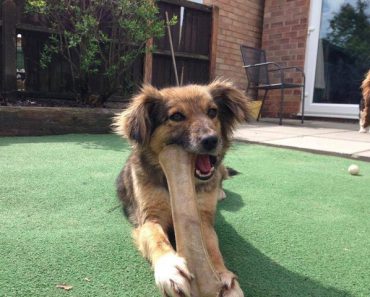
Now Ear This! What Your Dog’s Ears Can Tell You About How They’re Feeling
Understanding What Dog Ear Movements Mean
All positions of a dog’s ears should be gauged relative to the way the dog normally carries his ears when he is relaxed. Dogs with severely cropped or very long ears will be harder to read.
Ears erect or slightly forward: “What is that?” This is a sign of attention in response to a sound or when studying a new situation. Accompanied by a slightly tilted head and a relaxed or slightly open mouth, the meaning changes to “This is really interesting” or “I do not understand that” and is associated with observation of an event.

However, when accompanied with bared teeth and wrinkled nose, it is an offensive threat by a confident dog.
Ears pulled back flat against the head: “I am scared” or “I am protecting myself against a possible attack.” This is usually associated with a challenge of some sort.
Ears pulled slightly back: On a prick-eared dog such as a German Shepherd, the ears take on a slightly splayed, sideways spread in this position. It means “I do not like this” and “I am ready to fight or run.” This is the look of suspicion and may show both aggression and ambivalence.
-
Train Your Dog To Do Any Behaviour
I’m a professional dog trainer. I’ve had formal education, studied with other accomplished trainers and worked with dogs for nearly thirty years. It’s no secret why I can do things with dogs that seem amazing to the average person.
But training your dog is about you and your dog, not me. If I can’t give you some useful nugget of knowledge that will cause a change in how you relate to your dog, then I’ve failed both you and your dog. The most important thing I’ve found to teach the average dog owner is a simple universal dog behavior, which will allow you to teach your dog any trick or cure almost any problem behavior.
Simply keep in mind the simple axiom that “Dogs do not engage in unrewarding behavior”. That’s it. Remember this and you can accomplish anything with a dog. To use this powerful tool, you employ a strategy that I call “shaping”. What this means is that by using the superior intellect of a human over a dog, you shape their environment to create rewarding outcomes for positive actions and unrewarding outcomes for negative actions.
Let’s take the example of your dog jumping up on you with his muddy paws. This is a negative action. But it can also be very rewarding to a frisky dog that wants to get as close to master’s face as possible, as quickly as possible. Now here’s where much confusion comes in to the dog owner. One book or trainer says to turn your back on the dog, another source says to spray him in the face with a squirt bottle, and another says to knee him in the chest. Who’s right?
They all are right.
What they’re telling you is that you want to make jumping unrewarding for your dog. If you consistently squirt, turn your back or do something that is unpleasant and unrewarding your dog will stop jumping up on you. I guarantee it. When he doesn’t jump, you praise him and make the experience of greeting you in a civilized fashion rewarding. The dog will pick the rewarding behavior every time.
I mentioned that we humans have a superior intellect over dogs. Have fun and use it. If your dog is a ten pound Yorkshire terrier, I’d suggest you use a squirt bottle or turning your back. If your dog is a two hundred pound Rottweiler, then a firm knee to the chest might be more appropriate. Ponder the problem and create a negative and positive outcome for your dog. In this way you have allowed your dog to teach themselves when they invariably choose the rewarding behavior. So please forget about learning some magical technique that must be some secret that only the pros understand. The magic is in not “training” your dog but offering your dog choices that will allow them to train themselves. Try it. You’ll like the results.
-
The Benefits of Using Food in Dog Training
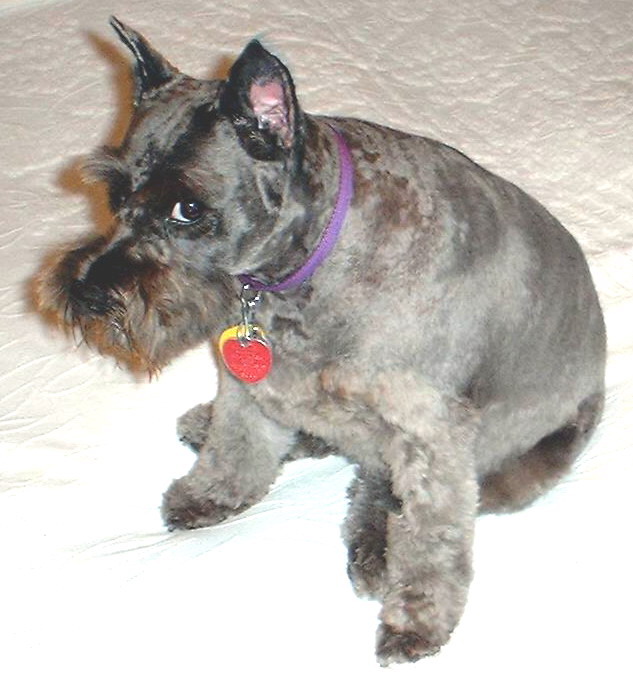
 For a puppy, feeding is like breathing. Filling a belly does more than merely nourish; it displaces the nervousness caused by the pangs of hunger. The warm glow that comes from a full tummy assures the puppy that he is securely connected to his group. Therefore, we shouldn’t hesitate to use food in training.
Since eating is so basic with a puppy, it is easy to excite him with a treat. If in his rush to grab the food, he snaps at your hand very hard, do not correct the dog or get mad at him. Just take the time to calm him by giving him a steady flow of food so that he is reassured that he is going to get all the food he wants. As he becomes satiated, his drive to grab the food will start to subside and he’ll be ready to learn how to take the food gently from your hand.
Food is very effective with adult dogs as well. It clearly indicates to the dog that he has an instinctive advantage in doing what his trainer wants. Also, food can be used to relax an adult dog’s nervous system by washing away social resistance. Remember that although our pet seems domesticated, his instincts are still wild and need to be calmed.
-
How Do I Help My Dog’s Separation Anxiety?
I hope you can help me. I have an eighteen month old Border Terrier called Lucy. She has been housetrained and was doing fine. But recently she seems to have regressed into a state where she suffers from separation anxiety quite severely.
I’ve tried training her again to show her that whining and crying won’t have any effect and I’ve also tried giving her a treat before I go out and when I get back, but she appears to be in the same state of distress when I get back as she was in as I left. I can’t think of anything that could have triggered this.
Do you know of a possible cause and a recommended course of action?
Christine Duncan, Fife.
Reply from Christine Emerson
Hi Christine
You were right to try and eliminate attention-seeking as the cause but as your efforts made no difference we need to look at other causes. Separation Anxiety is an overused expression. I see many dogs that are agitated when left alone but they are not anxious, just frustrated, bored or have simply never learnt to be patient.
-
Dog or Bitch – Should I Get a Male of Female Dog?
Male Or Female: Which Dog Is Better?
Which dog makes a better pet, a male dog or a female? The answer to this question depends on what you’re looking for. On one level, if you care about the personality and character of the dog more than anything else, the gender shouldn’t matter. Your decision will be based mainly on how the puppy behaves and acts towards you and other people when you are looking at the litter.
On another level, if you want to find out whether a male dog or a female dog would generally make an overall better pet, then you’ll have to take in other factors, such as the size, temperament, and level of care.
Choosing A Female Dog
Generally speaking, female dogs are relatively smaller in size and warmer in temperaments. There are, however, some male dogs that are just as affectionate as female dogs. Many dog trainers and breeders recommend a female dog to homes with small children. Some believe that there is some type of maternal instinct that exists in female dogs, a quality that makes them amiable and ideal for a household with children.
Do not let feminine problems such as heat cycles and bleeding steer you away from getting a female dog. If you are worried that she will bleed all over your house when that time comes, consider getting her spayed (read: spaying female dogs), which is the ideal thing to do anyway. Once spayed, rest assured that she will not bleed a single drop. And with regards to behavior, female dogs can be just as challenging as male dogs, sometimes even more so.
Choosing A Male Dog
Male dogs are a bit more difficult to care for at times than females. For instance, they are quite good at performing a disappearing act when a nearby female dog is in heat. This can be dangerous to the dog as well as create problems for you. Many male dogs have been injured or even killed when escaping their homes to search for a female in heat. Between moving vehicles and fights with other male dogs, it makes sense to also have male dogs fixed.
Male dogs are also very territorial over their property, including any of his “stuff” inside the house, his bathroom area, or even a female dog. He tends to get very aggressive when he thinks that his property is being taken over by another dog and is willing to fight to defend it.
Male dogs also display territorial urination by lifting its leg up as high as possible while urinating. This leg-lifting behavior is not a problem unless it occurs inside the house.
On the other hand, male dogs have tons of energy and a lot of fun to play with. They are more active and have better endurance than female dogs. This is probably why male dogs are usually chosen for jobs in law enforcement.
-
Positive Dog Training Methods Create Happy Dogs
How Dog Training Methods Have Evolved Through the Years
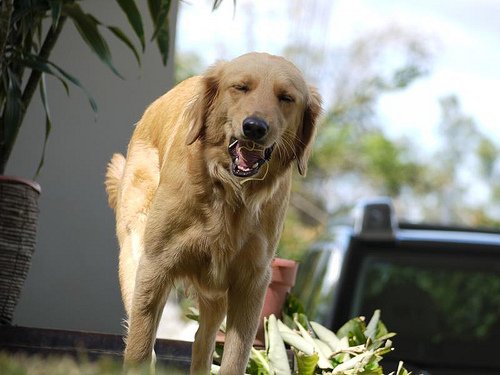
When you look down at your brand new, small and tender puppy peacefully sleeping in its little bed, it’s hard to think that in just two to three months it may grow to be 40, 50, or even up to 100 pounds depending on the type of breed. And although its behaviors may cute at the moment, like jumping up and putting his front paws on your body, these actions will be far less enjoyable when your dog is all grown up and literally knocking you over.
It’s always a sound idea to start training your puppy from day one so that he can learn proper manners as he grows into adulthood.
Puppies that are not trained in this manner end up learning all of the wrong stuff and their owners wonder why they cannot seem to get their dogs to behave as they age.
Many years ago, when dog training methods used more punishment oriented (using harsh methods to train puppies), dog trainers typically required all puppy trainees to be at least six months old.
The reason was partly due to the fact that such physical correction protocols used could not be done with dogs that were too small or too young.
What is ironic about dog training in the dim and distant past is that by the time most puppies are six months old they are big enough and mentally stubborn enough to ignore commands and are altogether tough to train.
Modern Times, Modern Dog Training Methods
Over the last 20 years or so, the dog training profession has embraced more friendly and loving training tactics for their puppy clients. Most trainers now except puppies that are as young as 8 to 10 weeks old. They are typically enrolled in socialization classes and puppy kindergarten.
Positive training is now used instead of the old-school methods of negative reinforcement. Puppies are taught to walk politely on the leash.
They learn the basic commands of sit, stay, lie down, and come. In addition to these simple instructions, other useful techniques are learned by puppies such as how to relax, give and take their paw, and polite greeting.
Modern Dog Owners are More Clued up Today
Another interesting aspect of raising dogs that has been noted over the last couple of decades is that more and more dog owners have taken it upon themselves to train their puppies.
This is partly due to the fact that so many dog training publications and manuals have been written. Modern dog training programs are based more and more on scientific principles and psychological studies of animal behavior and temperament.
Simple puppy training programs have taught dog owners to utilize techniques such as clicker training and luring.
Clicker training involves the use of a small mechanism that makes a clicking sound when pressed. When a dog hears the sound it will associate the click with whatever reward you give him.
This tells the animal that something good is coming and he should repeat whatever behavior or action you have been teaching him.
Luring training is simply using food such as a dog treat, or even a toy, to induce the dog to display a specific behavior in order to follow the lure in hopes of getting the reward.