Category: Dog Advice

From dog training to canine health, see our latest dog advice articles here

  • How To Stop Puppy Chewing

    The sense of taste is well developed even in newborn pups. This has led to the marketing of several commercial substances designed to prevent destructive chewing by pups and mature dogs. If these are used regularly from the age at which conditioned responses are possible (3 weeks), investigative chewing may be minimised or prevented in later life, especially when teething becomes a stimulus for the problem.

    What Age Do Puppies Stop Teething?

    Puppies all vary by breed and individual personality types, but as a general rule puppies stop teething once their adult teeth start to come through. This means you will have a short period in the puppy’s early life when they will seemingly want to chew everything as a result of their teething pains.

    However, because the breeder would have to begin this type of regimen, and because most litters are raised under conditions that do not expose puppies to chewing taboos, correction is usually necessary.

    Almost every owner recognizes that pups need to chew, if only to teethe properly. On the other hand, few appreciate that a dog’s mouth is somewhat similar to the human hand as an investigative tool, or that the healthy development of nervous and muscle tissue depends on hearty chewing exercise. The usual procedure is to give a pup numerous chewables, hoping these will be so attractive that electric cords, rugs, clothing and shoes will be saved from destruction – and the pet spared a possibly serious (or fatal) injury. However, furnishing many different kinds of things to chew may lead the pup to believe that everything is chewable.

    Chewing appears to be an enjoyable experience for nearly all pups and many older dogs. So, the element of fun may also be part of chewing problems. The best approach to destructive chewing involves prevention and then guidance to chewable articles, such as a ball or bone. This helps the pup to discriminate between toys and inappropriate items. Practices that risk creating an orally oriented puppy include: playing tug-of-war, allowing personal belongings (socks, shoes) to be chewed, excessive attention to pup’s mouth during teething, and punishment for chewing taboos.

    Some pups are more oral than others. When this is coupled with an excitable or extremely inhibited nervous type, minor stress produces tension that tends to be released orally (rather than vocally or physically). Some of the causes for excessive tension in pups are: emotional departures and homecomings by the owner, excessive attention to the pup, social isolation, barrier frustration, delay of feeding, and boredom.

    When 2 or more pups live together, chewing may result from competition for articles. Also, pups play games. When these involve articles of some value, the owner often attributes such chewing to spite or revenge. “Sparky’s mad at me for leaving him alone, and he’s getting even.” This is seldom the case. Usually one or more of the aforementioned conditions are involved. As diligently as one might try to be a model puppy owner, it is obvious that few people can avoid all of the causes for chewing.

  • How To Play Hide & Seek With Your Dog

    Canine hide and seek might sound like a bit of a laugh, but it stimulates an integral area of many dogs’ natural instincts such as scent tracking.

    People lost in avalanches are only too glad that the St Bernard that finds them likes a good game of hide and seek, and now you can bond with your dog indoors or out come rain or shine, in this fun, obedience orientated and stimulating activity.

    Step one.

    You’ll need a helper and a treat for this. Ensure that your dog is familiar with the stay command, otherwise this will be a very short game.

    Have your capable assistant ensure that your dog abides by the rules and stays put while you disappear just out of sight with a delicious treat tucked up your sleeve. The great thing about this game is that your dog always gets to win, a bonus for dogs that are a little low on confidence.

    Step Two.

    When you are sure that your dog is aware of your absence, he will probably be bursting to come and get his treat, have your assistant let him go.

    As you hear the sound of paws scrambling across the kitchen floor, begin issuing the command you want to use in the future. ‘Come and get me’ is as good as any.

    Your first hiding place should not be out of sight (in the bin for instance) so he gets the hang of the game sooner rather than later. If you plan to play this game a lot, make sure the treat you use is healthy.

    You will always be found and will always have to issue the treat, so avoid turning your winning hound into a ‘rolly poly’ ball of flab by keeping the meaty treats only for a spectacular performance.

    Step Three.

    When you feel the nudge of an excited nose on your face (or the whip of wagging tail depending on your position) be sure to issue lots of praise and reinforce the fact this is fun for both of you.

    You can extend the game a little at this stage by hiding the prize on your person rather than relinquishing it on sight of your pursuer. A squeaky toy tucked up the trouser leg can result in prolonged hilarity as your dog frantically tries to access it.

    Step Four.

    Return to the beginning of the process, but ensure that you hide further away, and a little more out of sight. Again, you will need the help of your assistant as you are now going to make your dog wait a painstaking two minutes before he is released.

    Issue the command before he is released this time, but ensure your assistant prevents any false starts. See how determined your dog is by hiding under a bundle of blankets. If he merely paws at you, you need to put in more work. You want your dog to be practically dragging these obstacles away from his prize.

    Step five.

    Again return to step one, but have your assistant stay at a distance from your dog, only intervening if the cheating swine tries to get a sneaky peak at you before you are properly inserted into your hiding position.

    Make sure every time you play this you challenge your dog, otherwise it will become like going through the motions for him. But he won’t tell you this as he will want his treat nevertheless. Test his loyalty by breaking a doggy biscuit in half and hiding one piece on his route to finding you and keeping the other piece on your person. If you hear a sequence of ‘gallop, gallop, munch’ sounds, you will know were his priorities lie.

    Step Six.

    Incorporate obstacles into the game by closing doors and encouraging your dog to use his initiative. Also, moving the goal posts will keep your dog engaged.

    When the weather allows, hide outside and leave him to figure it out. Challenge your dog’s obedience by extending the amount of time he has to wait before he is allowed to come and find you.

    Final Step.

    Continue the game for as long as it is fun for both you and your dog, but make it interesting for both of you by introducing new challenges each time you play.

    Remember to praise your dog each and every time he finds you, this will avoid him associating the game with merely receiving a treat. For those of you who believe they have a little dog genius on their hands, try playing this game the other way round.

  • Feeding Human Food To Dogs

    Feeding Human Food To Dogs

    Could feeding dogs table scraps and other human food be harmful?

    You may know….

    9 million people in the UK suffer from joint problems*
    44% of men and **35% of women in the UK are overweight**
    But did you know….

    40% of the UK’s large breed dogs live with joint problems too
    Similar to the human population, up to 50% of the UK’s pets are overweight.
    To a dog, one human biscuit has the same calorie equivalent as a whole packet.

    Feeding Human Food to Dogs

    Britain may be a nation of dog lovers, but new research from Eukanuba shows that over a quarter of dog owners are unaware that common dog sensitivities such as putting on weight or sensitive skin can be helped by a change in diet.

    The research, commissioned by Eukanuba to coincide with the launch of its new Special Care premium food range for dogs with special nutritional requirements, has shown just how much owners love their pets and care about their nutritional wellbeing. However, all admit they still can’t resist slipping them the odd naughty human treat:

    Scraps from a plate – 43%
    Home made gravy for dinner – 23%
    One of your biscuits – 21%
    A homemade meal – 13%
    A bite of your chocolate– 13%

    The findings point towards the emergence of a new ‘mirrored-diet syndrome’, when many owners and pets share the same health sensitivity problems, concerns and predispositions. For example,, 30% of owners admit obesity is a big pet health worry, 28% fear arthritis will also affect their dog, whilst a sensitive stomach can be a problem for both man and beast.

    So what is the answer to preventing these common dispositions from taking hold? Like humans, sensitive or overweight dogs need tailored nutrition to help bolster their immune systems and combat everyday stress and strains.

    “Diet and nutritional needs for man’s best friend have become blurred over time, as owners begin to look upon dogs as part of the family, a positive step for socialisation,  but not so helpful at meal times” says Monica Lundervold, Eukanuba’s Veterinary Consultant.

    “This blurring is a contributing factor as to why more and more dogs are developing the sort of sensitivities and predispositions that affect millions of humans across the world, but unlike humans, the treatment and warning signs are not the same. For example, being able to see a dogs waist and feel its ribs is not a bad sign, as believed by almost 50% of owners surveyed, but the sign a dog is a healthy weight.

    This is why Eukanuba, together with vets, has developed a new range of everyday diets to strengthen a dogs natural defences.  With Eukanuba Special Care, dogs with common sensitivities can begin living their lives to the max, whilst giving owners the peace of mind that they are providing healthy and nourishing food to make their dogs feel great!”

    Eukanuba Special Care’s first success story has already been achieved in a matter of days, proving the fact that natural predispositions needn’t be a problem for any dog, or owner. Eukanuba Sensitive Digestion helped turn Dave, the five year old Victorian Bulldog from a flatulent failure who was banished from the family living room due to his intense odour, into a family favourite in a matter of days. Dave’s owner Mr Highet can’t believe the change:

    “We love Dave to bits, but his sensitive digestion was gassing us all out. We hated having to keep him in a separate room every evening, but we felt we had no choice. Finding a cure seemed impossible, but Eukanuba Special Care has miraculously done the trick and literally brought Dave up smelling of roses in a matter of days. Now the whole family can enjoy evenings together without pegs on our noses!”

  • Food Intolerance In Dogs

    Food intolerance in dogs is an often overlooked factor in a wide variety of health and even behaviour problems in our canine friends. We’re all used to hearing about the link between diet, nutrition and overall health and well-being. Humans have the unique ability to speak up and, of their own volition, go see a medical professional if they feel unwell if something is just not right in their health. Dogs rely on us for everything. The food we put down for them, when they get to see the vet and so it’s down to us to be aware of issues such as food intolerance, allergies and generally ensuring our dog’s diets are complied of the proper nutritional requirements based on their age, breed and lifestyle.

    Here we’ll examine the effects of food intolerance in dogs, helping to give a solid overview of what to look for, symptoms of food intolerance and the steps to take should you suspect your dog may be intolerant to certain food types.

    If asked about food allergies and intolerance, many of us would have a friend or relative who is unable to digest wheat or dairy. In fact it is so uncommon that restaurants and retailers now cater for a wide range of intolerances and allergies, so why are we yet to consider our pets and their intolerances?

    Food Intolerance in Dogs

    Food intolerance and allergies in pets are becoming increasingly common and for one pair of dog owners a blood test led to a vast improvement in health for their much-loved pet.

    Tony and Barbara Bridger from Tring were worried about their Border Terrier Cross, Ebbie.

    For months she had been passing blood and mucus and being generally unwell. Just about everything had been tried until the vet mentioned food allergies.

    Tony said: “You don’t like to see a pet suffer in that way and you don’t know what to do.

    “It would not have occurred to us that it might be a food allergy, in fact we would have scoffed at the thought. Our pet allergic to food? We thought a test wouldn’t show anything.”

    The vet drew some blood and sent it to Yorktest Veterinary Services who carried out extensive diagnostic tests on the sample.

    The laboratory, which has carried out 12,000 tests over the past few years, specialises in finding out whether a food intolerance or an allergy may spark a pet’s problems.

    Signs of an allergy can vary from one animal to another including skin problems such as scratching and hair loss or gastrointestinal problems which includes vomiting. Some pets also show behavioural problems.

    Barbara says: “The vet said we should give the test a go before we begin to accept the symptoms as a condition or weakness.

    “Since we had the results back which highlighted which foods Ebbie was allergic to, she has been a picture of health. It’s been marvellous – well worth doing.

    “We would not have believed it would clear up so quickly. Looking at her now it’s hard to believe just how poorly she was. Her health improved in a week or two.”

    Tony added: “In similar circumstances we would definitely do it again – and we would say to other pet owners they should not hesitate to have the test too.

    “From the poorly state Ebbie was in this was like a miraculous cure.”

    Paula Peacock from Yorktest Veterinary Services, said: “An allergy is a reaction caused by either direct contact such as eating or breathing in an allergen such as food or pollen. If a dog is regularly exposed to an allergen, for example, the same food, the resistance of its immune system will weaken, often resulting in poor health.

    “Once the test results are known, pet owners can then discuss with their vet the type of therapy needed – ranging from dietary changes through to immunotherapy which is a series of vaccinations which help build up a dog’s immune system against pollens and insects.”

    Find out more about dog allergies.

  • How Much Exercise Should You Give An Arthritic Dog?

    How Much Exercise Should You Give An Arthritic Dog?

    Dogs with arthritis will sometimes limp in pain and as dog owners, it’s heartbreaking to watch your dog suffer. As we know, dogs themselves very rarely ‘complain’ and instead are more likely to give you extra licks when you’re trying to comfort them.

    One of the best things you can do for your dog once arthritis has been diagnosed by your vet is to modify their lifestyle and exercise routine. Changing a few small things can have a huge impact on their wellbeing and happiness.

    Exercise for an arthritic dog can help in many ways. Managing weight is the main reason, as dogs that don’t have exercise regularly do tend to put on weight. This is, in turn, increases the weight on the joints and can even cause more pain and swelling. Even if a dog is at the correct weight the constant exercise can help to keep the weight under control and thus reduce any extra pressure on the joints.

    Exercise for an arthritic dog can help to increase flexibility and this strengthens the muscles around the joint and increases the dog’s endurance. So for example, if your dog is just lying in one position, because of the pain, the joints can become stiff and this can increase the arthritic pain. Such regular exercise can also help a dog to sleep better and this, in turn, will lead to rested muscles.

    The same logic applies to everything your dog does – playing, eating, exercising.

    In the case of eating, make it easier for your dog by making the distance they have to stoop and move their neck as short as possible with raised dog bowls.  My older dog, Chloe, had arthritis in her neck and when I changed her bowls to ones which sat off the ground, it made such a difference to the pain she experienced in her neck, especially when the cold weather came.

    When you are exercising an arthritic dog, it is better to go in for more number of short walks every day instead of the one long walk that the dog may be used to in its daily routine. Two 15 minute walks a day are ideal and if the dog feels it needs to rest in between, it should be allowed to do so to recover.

    Rehabilitation specialist and ‘A Walk in the Park’ expert, David Prydie offers his top tips to readers:

    “Exercise is an important part of treating arthritis in dogs. It helps prevent muscle wasting and promotes joint health. Exercise must be tailored for each individual dog in terms of size, age and stage of the disease. Here a few simple tips and stretches that can be done to make the life of an arthritic dog just that bit better.”

    Tips:

    • Warm your dog up with some simple stretches before you go for a walk.
    • After a walk make sure you give your dog a chance to cool down, wait for the dog to stop panting and repeat the simple stretches.
    • Go for more frequent short walks rather than one big one.

    Stretches

    • Using low calorie treats encourage your dog to turn its head round toward its flank in order to encourage spinal movement. Introduce this exercise slowly and do not force your dog to move if it is reluctant to do so. Repeat 5 times on both sides
    • Encourage your dog to take a treat from above its head and then from between its front legs to encourage gentle neck movement. Repeat 5 times.
    • Ask your dog to sit and then stand and then sit again. Reward each time and repeat 5 times.

    Every dog knows its own limitations, so take a cue from the dog. Avoid any climbing or steep roads on your walks. Also consider finding your nearest hydrotherapy pool. Swimming in a warm pool can be fantastic for dogs with joint problems.

    You can also encourage the dog to play games of fetch, hide and seek or even with a football as long as you stop as soon as the dog indicates its discomfort.

  • Natural Remedies for Arthritic Dogs: Do They Actually Work?

    Dog joint diseases are very common and so are dog joint supplements which are given to elderly dogs to help retain their mobility – but do they actually work and at what point in time do you transition from over the counter supplements to veterinary medicines?

    As dogs get older, their joints will begin to weaken and their muscles become more flaccid. To remedy the situation it is very important that you educate yourself about the different dog joint problems.

    Supplements can certainly be given to help ease their arthritis and keep them pain free, but knowing when to transition can be tricky – but throughout the process remember one important fact – you know your dog better than anyone else.

    Remember, not all dogs age at the same rate, so judge your dog based on what you know is normal for them, rather than normal for their age.

    Before giving your dog supplements you need to identify the problem and to do this, you should keep a diary of changes. Monitor everything from how they cope with their normal walks, to how they react to getting up from a lying down position, to walking up stairs, to particular times of the day when they seem to feel more uncomfortable moving around.

    If your dog is overweight, that may have a negative impact on your dog’s mobility, so it’s crucial to understand what the problem is and what could have caused it, to help you give your dog the best care.

    Sometimes preservatives and food colour could induce joint problems in dogs and so it is very important to make sure your older dog’s diet is the best it can be.

    Some supplements which have received good feedback from dog owners include a supplement which includes glucosamine and chondroitin. This component basically is a hygroscopic and attracts water to keep the cartilage more lubricated.

    Marge Chandler, a clinical nutritionist offers her top tips for dog owners concerned about joint care commenting,

    “It’s best to consult your vet for a tailored treatment programme. A mixture of a therapeutic diet with appropriate supplements, weight control, pain medication and a modified exercise plan is the best course of action.

    Weight control is key in dogs with OA but bear in mind that decreasing the number of calories in a regular diet may cause a deficiency in other nutrients, such as protein, vitamins, and minerals.  Nutritional supplements or nutraceuticals such as fish oil omega-3 fatty acids may improve the signs.”

    Essentially, natural remedies for dog arthritis which work for some dogs, may work for others, but unless you understand the root cause of arthritis and discomfort, you can’t be sure that the supplements will do the job and provide the relief you’re hoping for. There are other non-supplement measures you can take though, such as new dog bowls, either ones which sit in holders, are wall mounted or raised dog bowls which sit off the ground – this means your dog will find it easier, and less stressful on joints and their neck specifically, to stoop when eating.

    For small dogs, it can be a simple choice to make because they have less distance to stoop to eat, but if you have a large dog breed, it’s essential. If your dog isn’t yet of middle age, it’s worth installing this one change to help ease them into it.

    Consulting an expert, or taking care to choose the best care program for your dog will give you a great all-round plan of action!

    Watch our video with more top tips from Sarah:

    Article Brought To You By Canine Arthritis Awareness Month


  • Living With An Arthritic Dog: How To Make Your Dog’s Life Easier

    If you have a dog that is hesitant to stand up, slow to respond, or inactive, you would probably think that these are just symptoms of ageing.  However, regardless of the age, your dog may be suffering from canine osteoarthritis.

    Veterinary care for dogs has advanced greatly in recent years which allows us as dog owners to investigate treatments that can help ease the joint pain and give your dog a better quality of life.

    Rehabilitation specialist and ‘A Walk in the Park’ expert, David Prydie, offers his top tips to dog owners who feel their dogs may be suffering from canine osteoarthritis.

    “Once your dog has been diagnosed with OA there are some simple adjustments you can do to make your dog’s life easier.  Dogs, especially those with arthritis, often find laminate or smooth floors difficult to deal with.”

    David continues, “Organise mats or runners so the dog can get around without the fear of slipping or falling.  Use ramps to help your dog when it needs to go up and down steps and or get in and out of cars.  Where appropriate consider the use of harnesses and lifting aids. Consider the use of a coat for your dog in winter, if appropriate.”

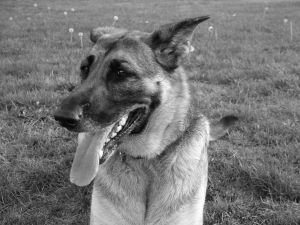
    German Shepherds are prone to joint problems

    Mac, a 9 year old German Shepherd, joined the Whiting family as an 8 week old puppy and for most of his life had been an active and energetic dog.  18 months ago Mac developed a slight limp which failed to clear up and eventually lead Fiona to take Mac to the vet.

    Acutely aware that, as a breed, German Shepherds are prone to hip dysplasia and canine OA, his owner, Fiona’s suspicions were confirmed when the vet diagnosed both ailments. Now on medication Mac’s diet is carefully monitored and he is limited to one short walk a day. Fortunately Fiona has a large garden so Mac is still able to enjoy spending a lot of time outdoors.

    What to do if you think your dog has arthritis

    If you feel your dog may be suffering from arthritis, book an appointment with your vets. It could be that medications are prescribed and help, but an all round plan at home with exercise, hydrotherapy is known to be particularly effective, or new routines around eating (for example, a raised dog bowl holder that sits off the ground could help ease your dog’s arthritis, if their neck is affected).

    After a consultation where your vet will aim to rule out alternative problems which could be causing discomfort, you can then start to plan ahead to give your dog the best quality of life possible.


  • Bringing Your New Puppy Home

    The fun of bringing a new puppy home and introducing him to his new family is a very special experience. He will, of course, become a well-mannered dog, staying quietly at our side, eager to follow our every command. Well, it is a long road from the cuddly puppy to the mature dog, but with some effort and understanding it can be travelled successfully. It all begins with day one in the new home.

    The first few days a puppy is in his new home can be trying for both the puppy and the new owner because both are trying to adjust to a new situation. After all, the puppy finds he has been suddenly taken from his den and litter mates and is expected to immediately accept a new, foreign way of life. However, with patience and a sense of humour on the part of the new owner, the first few days can be accomplished with good feelings on both sides.

    Breeders and behaviourists generally agree that seven weeks of age (forty-nine days) is the ideal age for a puppy to go to his new home, with six to eight weeks being the most desirable age range. The six- to eight-week old puppy still needs a lot of rest and will take morning and afternoon naps. For the first day or two, however, he might be very excited and spend much of the day in motion, checking out his new home. As long as he is not hurting himself or anything else in the environment, let him investigate wherever and whatever takes his fancy.

    If the puppy is eight weeks old when he first comes home, be very patient with him. This is the fear period and sharp noises or harsh treatment will leave him with fear which may take months to overcome. Let him take his time getting acquainted with everything and do not take him to places where he will be subjected to loud and frightening sounds or activities. If possible, trips to the veterinarian should be arranged either before or after the eighth week.

    This Article Has Been Brought To You This Month By

    If the puppy is ten to twelve weeks old when you first bring him home, he will be more rambunctious, especially if he is one of the larger breeds, and he will sleep considerably less during the day. However, he is at an age where you can get his attention quite easily and where he will want to please you and stay close to you.

    Common natural behaviours you will experience include:

    – Howling
    – Nipping / mouthing
    – Crying
    – Soiling indoors
    – Chewing

    Believe it or not, many new owners panic when their pup starts to display one or all of these behaviours. In fact, some owners get so spooked, they convince themselves they have acquired a ‘naughty’ dog and may even return it to the breeder. Relax. All of these things are normal and expected. Puppies play, the mouth, they whine, they howl, they chew. In the early days it’s simply a case of managing and minimising the risks.

    You can cure your puppy biting (www.puppybiting.co.uk).
    You can cure your puppy’s howling (www.dogadvice.co.uk)
    You can housetrain your puppy very easily (www.k9magazine.com)
    You can stop your puppy chewing (www.dogtips.co)

    Enjoy your puppy, don’t stress and be prepared to spend some time digesting high quality advice and information on how to shape their behaviours.

    Don’t forget, you’ll get even more peace of mind by insuring your pup with a reputable provider – so tick that job off as early as possible.

    [sws_yellow_box box_size=”550″]

    Looking for instant advice on how to select the best pet insurance policy? We can help!

    Sainsbury’s Pet Insurance covers up to £7,500 vet’s fees per condition (option 2) – Click here for more information.

    [/sws_yellow_box]

    >> Highly Recommended: Sainsbury’s Pet Insurance – £7,500 Vet’s Fees & Up to 25{d4f4ff813a06e2c77cbb9c6effe011ebffe2f8986e44983e90e08c54deb62f63} online discount.

  • Skin Allergies and Hotspots in Dogs

    Unlike humans, the first sign of discomfort usually shown by an allergic dog is itchy, irritated skin. Skin allergies in dogs can cause some dogs also get a runny nose or eyes, sneeze or even suffer from vomiting and diarrhoea. Uncovering the source of the allergy can be quite frustrating for owners and veterinarians alike.

    About Skin Allergies in Dogs

    Some dogs are allergic to components in their diet. A food allergy can emerge early in life; usually the offenders are beef or soy products. The best way to determine if diet is causing an allergic reaction is to feed hypo-allergenic food for several weeks and see if the signs regress. To be altogether certain of a food allergy, you’d need to challenge the dog with the prior food and see if the signs recur.

    Types of Skin Allergies in Dogs

    Another common allergic condition is known as atopy. Atopy refers to an inhalant allergy or a reaction to environmental components. Molds, plants, dust, even furniture stuffing fall into this category. Signs of atopy may be seasonal. The only practical way to discover what’s bothering this allergic dog is to ask a veterinary dermatologist to conduct an intra dermal skin test, much as is done with human allergy sufferers.

    Then you can try avoiding offensive material, or attempt hyposensitisation. These problems are also best discussed with a qualified dermatologist.

    A few comments about some common dog allergies: many dogs are sensitive to flea collars, flea bites or dyes in plastic food dishes. These things are easily identified and corrected. If a flea collar irritates your dog’s neck, remove it and wash the area thoroughly with a mild shampoo. Switch to another type of product. And if your dog’s red, irritated nose is caused by an allergy to dyed plastic by replacing the plastic dish with metal or glass. If it’s an allergy, the condition should be resolved.

    Hot Spots in Dogs

    One of the most common summertime complaints seen by veterinarians are hot spots – round hairless patches of tender, red, oozing skin which seem to erupt overnight. They are usually found on the rump, although they may appear anywhere on the body. Hot spots are especially prevalent in heavy-coated breeds and in any dog with skin allergies.

    Symptoms of Hotspots in Dogs

    Hot spots probably begin as a focus of irritation caused by a flea bite, impacted anal sacs or other small annoyances. However, the more the dog licks and chews at the spot, the worse it feels, so the more the animal licks and chews. A small problem explodes into a large one. These lesions need to be treated promptly before you have a dog in agony.

    If you are concerned your dog might have fleas, it’s best to investigate so you know how to treat – here’s a guide as to how to tell if your dog has fleas with photos and a video to help.

    Treatment of Hotspots in Dogs

    Treatment of a hot spot begins with clipping away the surrounding hair and cleaning the surface of the wound. The area is then covered with a soothing spray, liquid or ointment. The veterinarian will attempt to find and eliminate the source of the complaint.

    Your dog may need to wear an Elizabethan collar (a plastic contraption similar to a lampshade) around his neck, to prevent it from attacking the area further, until the skin begins to heal. Antibiotics and anti-inflammatory medications may be prescribed as well.

  • 12 Ways To Lower Your Vet Bill

    12 Ways To Lower Your Vet Bill

    Veterinary charges are one of the biggest expenses that dog owners have to deal with.  The problem with vet bills is that you can’t budget for them in the way you can for food or other more fixed outgoings. A large vet bill can come straight out of the blue and hit a dog owner for six ( or six thousand depending on the problem).

    But there are ways that every dog owner can reduce their veterinary expenses, from simple practices that you can do at home to smart money saving exercises that could be worth thousands of pounds. Holly Kernot explores the best ways to reduce that vet bill.

    There are a variety of basic health checks and routines you can adopt in order to ensure your dog stays in optimum health.

    Basic Health Checks.

    Performing a regular health check on your dog will enable you to keep on top of any new or recurring health issues. Potentially serious and costly health problems can be nipped in the bud before they escalate into something all together more sinister, which ensures that your dog will be getting a good level of health care and also, enables you to avoid costly vet bills.

    Become familiar with your dog.

    Become familiar with your dogs, and regularly check their body for any lumps which may have formed. When at the vets, as them to help you identify the signs of a dangerous lump, and what does not constitute as anything to worry about.

    Grooming.

    A healthy dog has a shiny coat, and you can help maintain this by partaking in a regular grooming exercise. Regular grooming gives you the opportunity to familiarise yourself with your dog and to carry out these checks.

    Regular grooming not only removes unwanted hair and reduces the chances of the coat becoming matted, but can also indicate to you the tell tale signs of skin conditions such as dermatitis, which can be costly to treat.

    Dermatitis is often indicated if your dog is scratching himself a lot, or if sores or rough areas appear on the skin. If this is the case, a vet should be consulted immediately.

    Bathing your dog on a regular basis can ensure your dogs coat stays healthy, using specialist dog shampoo to remove unwanted dirt and grime. Trim those nails.

    Dogs nails do need trimming, and vets and grooming parlours do offer this service, but to save money, many owners buy clippers and do it themselves. However, if you exercise your dog regularly, on the pavement, this will keep the nails short anyway.

    Dental Care.

    As your dog is a carnivore, it is vital his teeth are kept in top condition.
    Keep a close eye on your dog’s mouth and conduct basic health checks to ensure there is nothing wrong. For example, smelly breath, red gums which are swollen and teeth that are loose could all be potential indicators of gum disease. Changes in physical behaviour such as a loss of appetite or unusual chewing habits are all causes for concern. [According to Theresa James, of Dog Supplies Advisor.com.]

    Vets do conduct teeth cleaning within the surgery, but to compliment this treatment and to maintain optimum oral health, you could invest in a specialised tooth cleaning kit for dogs, consisting of a toothbrush and toothpaste [poultry flavour available!] [Seek veterinary advice before starting programmes]

    Ear Checks.

    A dog with healthy ears can be identified as having odour free ears free from dirt and grime. If your dog is shaking his head or partaking in a lot of ear scratching, it could indicate there is an infection of some kind, such as haematoma of the ear flap, which is a build up of blood in the ear area, caused often by infection or mites.

    Scratching of the ears can also indicate mites, which should be treated by a vet.

    Eye Checks.

    It is important to look out for changes in your dogs eyes. A clouded eye lens could indicate the presence of a cataract, while a an inflamed membrane covering the lining of the eye lid [and the eye’s white area] could signify conjunctivitis.

    Exercise.

    A good exercise regime is an excellent way to avoid obesity and mobility problems, which can both lead to serious and costly ailments. Ensure that the exercise regime that you provide for your dog is suitable to his situation. Over exercising a young puppy can lead to joint and ligament issues, which can last for a lifetime. Be especially aware when exercising puppies, as they will always be willing to go an extra mile despite what their bodies are telling them.

    All dogs need exercise, so why not go to the park for free! Your dog will love socialising with other dogs, going out with their pack [that’s you] and their favourite games, such as fetch.

    The benefits here are two-fold. You both get a good workout and your dog can behave in a natural way, chasing, hunting and ‘killing’ something [the ball in this case]. Providing your dog with toys does not have to be an expensive hobby, according to student dog trainer Alison. She says: ‘‘Dogs need playing with, but don’t buy expensive toys, an old T. shirt or piece of string can be a good toy.’’

    Having said that, do not over exercise an old dog as this can lead to joint problems which can be expensive to treat, so change your exercise regime so it is delivered in smaller sessions which are manageable for your dog.

    Avoid walking your dog in the height of the day, as the hot tarmac underfoot can be painful on paws!

    Food.

    A balanced and nutritionally rich diet can be the difference between good health and poor health. It is the key to your dog enjoying an optimum quality of life. But good food does not necessarily need to be expensive, all natural diets, for example, can be prepared relatively cheaply if you have the time and inclination. Life stage foods are also an excellent way for an owner to deliver the optimum nutrition to their pet.

    According to Alison: ‘‘It’s a false economy to buy cheap food, it’s full of additives which can lead to dogs chewing and digging in the house [which in turn can be expensive if anything needs to be replaced] and can ultimately lead to behaviour problems.

    She goes on to say: ‘‘Don’t be bamboozled by the food that vets sell, they can be keen to recommend food to owners which is only available from them and can be expensive- ask why they recommend it and check other good foods for ingredients.’’
    Don’t over feed your dog, as this can lead to obesity and further health related problems.

    Insurance.

    Pet insurance can be a real benefit when it comes to the long term savings on veterinary bills. Sainsbury’s Pet Insurance covers up to £7,500 vet’s fees per condition (option 2).  Plus you could get up to 25{d4f4ff813a06e2c77cbb9c6effe011ebffe2f8986e44983e90e08c54deb62f63} online discount and double nectar points on Sainsbury’s shopping for 2 years! Click here for more information.

    Flea and worm treatments.

    It is possible to buy flea and worm treatments online or from other retailers other than the vets. By regularly cleaning your dogs bedding, you can reduce the risk of fleas.

    The RSPCA website asks the following questions to determine if your pets have fleas: ‘‘Is your pet scratching? Can you see tiny brown specs in it’s fur, are there small brown insects scurrying about, do you have unaccounted for insect bites yourself?’’

    Shop around for a vet.

    Most dog owners go on recommendations from other owners as to which vets they use. If you do not know any other dog owners, ring around some local practices and see how much an initial consultation would cost, and what facilities are available at the vets. For example, some have dog grooming sessions and hydrotherapy pools available. The mistake many people make is to simply register with the nearest practice. Vets can charge what they want and there is often a large discrepancy between surgeries’ fees, so make sure you are getting value for money.

    Look out for symptoms.

    Symptoms of diabetes for example, can include your dog being more thirsty than usual, urinating more frequently, having a change in appetite and a loss in weight. If you suspect diabetes, go to your vet immediately.

    While obesity can be recognised if you cannot feel your dogs ribs through his coat, this disease can lead to heart disease and diabetes so prevention is most definitely preferable to cure.

    There are numerous ways you can ensure that you are not paying over the odds for veterinary services. By being diligent and keeping an eye on your dog’s general well being, you can ensure that any visit to the vet is justified. By ensuring that you are getting a good deal from your vet, you’ll never be in the sticky position of having to shell out more than is fair for treatment.

    [sws_yellow_box box_size=”550″] >> Highly Recommended: Sainsbury’s Pet Insurance – £7,500 Vet’s Fees & Up to 25{d4f4ff813a06e2c77cbb9c6effe011ebffe2f8986e44983e90e08c54deb62f63} online discount. [/sws_yellow_box]

  • Why Is Puppy Socialization So Important?

    Puppy socialization is so important, it’s worth saying twice. A failure to properly socialize young puppies is one of the single biggest reasons for bad dog behavior in adult dogs. Behavior such as aggression (dog on dog), disobedience and general bad manners around other dogs, particularly in public. The long term benefits of a high quality puppy socialization plan simply can’t be stressed enough. You can’t wind the clock back after all.

    puppy socialization

    Puppy Socialization Can Start Early

    Proper early socialization of your puppy can have the positive lasting impact over the course of your dog’s life. It really is THAT crucial.

    Socializing your puppy is such a critical part of raising a well adjusted dog. Through early puppy socialization, your young dog can learn to fit into society, learn to live with humans and also with other dogs. This leads to a calm, adaptable dog who isn’t fazed by what they encounter in day to day life.

    If dogs are not correctly socialized, they may develop inappropriate behaviors when exposed to new situations or new dogs and people. This can include being overly aggressive or fearful in unfamiliar circumstances. Puppy socialization can help your pup adjust to the world around them at an early age.

    When Does Puppy Socialization Begin?

    Socializing starts when a puppy is still with its mother and with the breeder. A puppy first learns canine body language and pack structure from around three to four weeks of age, while playing and interacting with its litter mates. It is important that a breeder handles her puppies and plays with them regularly, to give them positive early experiences with people.

    The ideal time to bring your new puppy home is when he is eight weeks old. The period from eight to twelve weeks of age is very important for socialization, as your pup is very open to learning and enjoying new experiences. It is vital to take advantage of this stage of your puppy’s social development.

    Quick puppy socialization tip: It’s a good idea to invite friends and families to your house to visit, bringing with them their well behaved dog. You can also introduce your puppy to calm, well-mannered children. This type of puppy socialization strategy can allow your pup to learn in a relaxed, informal way.

    Puppy Socialization Classes

    Puppy preschool is also very important for your young dog. It allows puppies to meet and interact with other dogs of a similar age and level of development, as well as learning some basic obedience commands.

    This improves the communication skills of your puppy, as well as enhances the bond between dog and owner. It also allows your dog to sniff and explore in a safe and supportive environment.

    Other options for socializing your dog can include going to dog friendly places such as off-leash parks and beaches. It is vital to make sure that your puppy is up to date on its vaccinations, as there may be an increased risk of disease in these places. Also, you need to remember that the other dogs which are there may not necessarily be under complete control.

    There may even be under-socialized dogs who may frighten your puppy and set it back in its learning. It may even be better to keep your puppy away from these areas until he is more mature and better able to cope.

    It takes a lot of work and effort to socialize a puppy well, but it is an investment in his future, and will help him to fit into his world. Doing a good job will lead to a well adjusted and happy companion who can take anything in his stride.

    What’s The Most Important Word to Teach Your New Puppy?

    The most important word you can teach your puppy is his name. Getting him to recognize and respond positively to his name can really help during the socialization process.  Use your pup’s name in a positive context 100{d4f4ff813a06e2c77cbb9c6effe011ebffe2f8986e44983e90e08c54deb62f63} of the time. Don’t scold them using their name, use the word “No!” instead. Their name should evoke a positive response.

    The capacity to learn is born in every puppy, to a greater or lesser degree. Your puppy starts learning the moment he enters your house. (He starts learning about you and soon picks up on all your varying idiosyncrasies – whether you realize you have them or not, mark my words – your puppy will!). His capacity to learn grows as he does and is fully developed at the age of about a year. Although he’ll stop physically growing, he never stops learning and the early puppy socialization steps you take from day one can act as the building blocks to having the most well mannered, well behaved dog over the lifetime of your pet.

    Puppy Socialization Experiences From Owners

    How are other dog owners socializing their puppies?

    A question from a puppy owner on the best methods for deploying a puppy socialization strategy that works, elicited some excellent advice:

    Get the pup as much exposure to as many different things as possible (without scaring it )

    Elsie is just coming up to 16 weeks now.

    As a rough guide, she has been coming out with us (carried until she could go down) from 8 weeks old to shops especially garden centres and pet stores which are great for meeting people and seeing different things. She has met horses, cows, dogs, cats, alpacas, sheep, pigs, ducks, geese, chickens and been exposed to cars, lorries, buses, motor cycles, pedal cycles, boats, chainsaws, tractors, JCBs, pony & trap, carriage and four, . . the list is endless.

    However she is now, at 16 weeks happy and content in more or less any situation she finds herself in.

    She has also learnt to recall (instantly – but I know we will need to keep working on that to keep her focussed as she grows) she sits and waits for her dinner and also will sit when asked now.

    Interesting Puppy Socialization Disease Query:

    What are the risks of puppy infections vs reward for early socialization?

    Today I visited a dog training establishment to observe some puppy socialisation. When I said that it would be another 3 weeks before my puppy was fully protected from her jabs she suggested that, in her opinion, the benefits of early puppy socialisation outweighed the risk of picking up an infection.

    I make an assumption that the puppies attending will all have been inoculated (you don’t spend money for socialisation and training and not do basic health care), but the field is used for lots of dog work. At my vets there is a sign saying puppies that haven’t completed their jabs should not be allowed down on the floor for risk of infection.

    Any comments/feedback appreciated.

    BTW it was really nice to see loads of pups out having fun together…the younger/less sure pups were kept seperate from the older more boisterous one’s.


    A great question. Answered succinctly…

    More dogs are put to sleep due to behavioral problems than all other illnesses put together.

    To me it is a no brainer IF the environment is safe. My dogs come home at 7 weeks go on the ground immediately and do not have their first vaccination for a couple of weeks.

    None have contracted any diseases.

    Puppy Socialization Checklist: To achieve the best early puppy socialization results, be prepared to let your puppy get exposure to many new things, new people, new dogs. Be patient but be focussed on the fact that you can’t rewind the clock. Puppy socialization is absolutely crucial for the long term benefit of you and your dog.


  • Can Valerian Root Help Dogs With Anxiety?

    Can Valerian Root Help Dogs With Anxiety?

    Valerian Root for the treatment of anxiety in dogs is gaining popularity according to published editorials. More and more citations are popping up from dog owners and indeed dog experts who have deployed the herb as part of a balanced treatment plan for dogs who suffer with anxiety issues.

    Dogs and Valerian Root: Overview

    Herbalists describe valerian as a dry, cool, bitter, and pungent herbal remedy. The substances that are in Valerian include alkaloids, volatile oils (including borneol and isovalerianic), and inridoids. Valerian is used for many different ailments, including as an expectorant, tranquilizer, diuretic, lowering blood pressure, antispasmodic, carminative, and as a mild anodyne.

    What Is Valerian Root Used For?

    The root is the commonly used part of the plant in the making of a herbal remedy. It is normally used for relieving nervous tension. It is also known for treating insomnia, anxiety, and strengthening the heart. It is sometimes used for treating ulcers and wounds as well. This herb is normally harvested in the autumn/fall season.

    What Does Valerian Root Do?

    Often sold as a nutritional supplement, Valerian root is commonly used for insomnia and other disorders related to anxiety. It is a natural product. Basically, Valerian root is used as a natural sedative – increasingly as an alternative to drugs.

    Interesting note: Valerian root can be quite pungent and actually smells quite similar to dog ear wax!

    There has been some recorded usage of Valerian root being used in a management program to help dogs with seizures. As with all canine medical issues you should always seek the advice and opinion of a qualified vet before you give your dog any kind of medication, natural or otherwise. Particularly if they are currently on meds as unwanted drug interactions can be very serious indeed.

    Summary: Valerian Root and Dog Anxiety

    Some dog experts have recommended Valerian root for calming a dog during times of high stress and anxiety. What causes anxiety in dogs can vary from animal to animal. Some dogs hate fireworks, some hate being separated from their owners (separation anxiety) – some dogs even hate bath times.

    For those who have successfully used Valerian root in these circumstances, it has proven to be an effective herbal supplement – but it must be noted, it’s not a replacement for sound dog training and positive association behavior modification.

    Looking to buy some Valerian root for your dog? CLICK HERE!

  • Dog Leash Training Guide

    So, you’d like to know how to stop your dog pulling on the lead?

    Glorious summer days. The sounds of birds tweeting. Beautiful scenery all around….all completely overshadowed by the hound from hell dragging you at a pace you didn’t choose, in fact at a pace you can barely keep up with!

    Taking the dog for a walk is supposed to be a joy but with the dog who pulls on the leads, it becomes more of a hand chaffing nightmare!

    Let’s take a look at the steps we can take to learn how to stop a dog pulling on the lead.

    Stop Dog Pulling: Leads, Collars & Getting The Right Equipment

    Canine psychologist Natalka Jacyszyn – author of this report on ‘How to cure lead pulling in dogs‘ recommends using a flat collar and a nylon or rope lead, something that is comfortable for both you and your dog. Do not use an extending lead for training as you will find that you may not have enough control.

    Dog Leash Training

    Getting the equipment right is as crucial as teaching the desirable heel walking position using positive rewards.

    Having a dog that pulls is one thing, but having a dog that’s able to pull due to an owner using incorrect lead and collar set up is only going to make matters much, much worse.

    Dog Leash Training: Using a Clicker to Cure Lead Pulling

    Clickers are a fun and fast way to speed up your puppy’s learning process. Clicker training relies on behavior shaping principles that mark desired behavior.

    With clicker training, timing is everything. You must capture the exact moment your dog is doing something right. Also start thinking in terms of stage-by-stage training. Let’s say I want to teach my dog to make a left circle. I sit with my dog and click when my dog takes one step to the left. That’s stage one. Then I hold out my click for two steps, then three, then a full circle.

    Training this way definitely takes longer than pulling my dog in a circle, but once my dog figures out the sequence, he’s doing a circle with far more zest and enthusiasm than if I tugged him around and around.

    The second secret of clicker training: Don’t attach a spoken command to behavior until your dog has figured out what is making the clicker work. To explain, think of the behavior Sit. Each time your dog sits, click and reward.

    Getting the dog used to the concept of associating the click noise with a positive reward is how you achieve the best response when teaching the dog the desired behaviour to cure lead pulling problems.

    Tip: You do not begin with the clicker on correcting the lead pulling until you have properly established the positive response reaction with the dog by rewarding small, simple behaviours – such as sitting and coming when called.

    The Basics of Training Positive Behavior in Dogs

    Training any new desired dog behaviour follows a simple six-step method. Depending on the dog and other circumstances, a good trainer will vary his training method when he decides that a particular training challenge needs either a little more or less. When you have used the method enough to know it well, you can add your own personal touch as needed.

    The following are six steps for teaching your dog any new behaviour

    1. Get the behaviour.
    2. Mark the behaviour.
    3. Reward the behaviour.
    4. Repeat the behaviour until it happens easily at least 90{d4f4ff813a06e2c77cbb9c6effe011ebffe2f8986e44983e90e08c54deb62f63} of the time.
    5. Add the verbal cue as your dog does the behaviour to associate the word with the appropriate response.
    6. Use the verbal cue to elicit the behaviour.

    You get the behaviour by capturing, shaping, or luring it. You mark the behaviour with the click., or some other reward marker that your dog has already learned means that the reward is coming. Reward the behaviour by following the click with his favorite treat or, in some cases, with a favorite toy or other desirable reward, such as swimming or going outside.

    Repeat the behaviour until your pet is offering it easily before you add the verbal cue, so that he will associate the word with the correct behaviour response. For instance, by saying “Sit” as he does it, you are telling him that the name of the behaviour he is doing is Sit. If you ask him to do it before he’s offering the behaviour easily, you risk teaching him that the word sit means “stand there and look at me,” or worse, “sniff the ground and pull on the leash.”

    After your dog has heard the word at least a half-dozen times during the behaviour, depending on how quickly he seems to learn, then you can say the word first to elicit the behaviour. Be sure that his attention is focused on you so that he actually hears the word, and keep your body position the same as it was when you were getting the behaviour before. If you had been doing the “Sit” while you were standing and you suddenly start asking for it while you are sitting, he won’t understand that it’s the same thing.

    Give him a few seconds to respond. When he sits, click! and reward. If he doesn’t sit, use the minimum amount of assistance necessary (through body language or a lure, not through physical assistance) to get the behaviour, and repeat the exercise. If you find that he will only respond if you help him, start to minimize the amount of help you give until he is sitting for the verbal cue without any help from you.

    Would a Harness Stop Dogs Pulling?

    There are various styles of body harnesses is to choose from, but the majority of them have the basic metal D-ring which clips to the leash and is located on the strap that runs down the dog’s back. They can be used instead of collars which provide a much safer environment when the puppy tries to pull away.

    In this regard, the puppy receives the tension from the leash, instead of his or her neck, which could result in a spinal injury. Puppies are specially prone to running and darting every chance they get, even when on-leash. By removing the pressure from the dog’s airway, body harnesses are a safe and effective alternative to standard neck collars.

    If your dog is unresponsive when using a flat collar and lead – and still continues to pull – using a body harness or halter type set-up would be something to consider.

    The Basic Principles of Correcting Dog Pulling / Any Other Behavior

    Correcting the problem of a pulling dog is founded in two key principles that are universal to all dog training:

    1. Reward the desired behavior (lavishly)
    2. Do not reward the undesired behavior

    Now, you may wonder what it means to ‘not reward undesirable behavior’ but first it’s important to understand that any response can be perceived as a reward by some dogs.

    So if your dog is pulling and you respond by pulling back, for example, he may be treating this as a reward. He most certainly will if this process is just repeated over and over again.

    You need to work in small steps. Teach him to always second guess the direction you are going to walk in and the moment he is by your side, reward him. The moment he steps out too far, change direction and do not reward him.

    Be assertive and deliberate in your walking style. Do not let the dog lead the walk. If he pulls, you stop or go the other way.

    Encourage him to understand that he will be rewarded ONLY for not pulling. The moment you feel ANY tension on the lead, stop and don’t say a word to the dog. This is a non reward. Seek to establish in his mind a positive association with a loose leash and the way he is walking.

    If you have a problem with a dog who pulls on the lead, you can download K9 Magazine’s eBook ‘How to cure lead pulling in dogs ‘.

    Bonus Dog Leash Training Guide: How to Train Your Dog to Walk on a Loose Leash

    One of the biggest problems dog owners experience is out on the walk. The reason for this is due to the psychology of the pack needing a leader and more often than not, the dog thinks that he is it.

    If the dog believes he is the leader then he believes he should be at the front of the pack and this is why you will see owners being pulled by their dogs.

    Assessing the world through the dog’s eyes is paramount to helping him walk to heel. In order to change the dogs mind from pulling, we have to communicate in a gentle language he will understand.

    The dog believing he is the leader believes it is his job to protect the pack and anything that approaches such as other dogs, joggers or cars could be perceived as a threat.

    This creates all sorts of problems as the dog in a human ruled world will react to the threat in three ways: Flight, freeze and fight.

    To help the dog stay calm in a world it does not understand, we have to switch roles and become the leader. When you achieve this, the dog will have no responsibilities and look to you to react at the potential dangers. To reverse roles and teach the dog to heel we have to go back to basics where the walk starts and identify and progress through the stages. As we complete a stage we can then move forward.

    Firstly practice walking up and down the house with food reward encouraging your dog by your side rewarding him on a regular basis when he gets it right. As the dog understands where a good place to be is then you are ready to begin the first stage. The idea behind the stages is to start in a place where the dog feels comfortable with no distractions and build the foundations, as the dog improves you then slowly work up to a place with more distractions.

    The first stage is calling the dog to you to put the lead on. In this scenario the dog may become over excited at the sight of the lead and jump up, run around, nudge or make noise. If the dog does react in an undesirable manner then put the lead down. Putting the lead on when the dog is in this state will only encourage pulling out on the walk. Repeat by picking the lead up again and putting down, until the dog becomes desensitised to the lead and reacts in a calm manner. When the dog is in a calm state you are ready to put the lead on and move to the next stage.

    The second stage is putting the lead on and walking up and down the house once again encouraging your dog to the side you want him to be with food reward. If he gets it wrong we correct the mistake with a method called stop, start change direction. This method involves stopping when the dog drifts in front, encouraging him back to your chosen side, starting again when he is behind you, then changing direction. Repeating this method in the house lays the foundations for a good walk. Keep practicing and get it perfect in the house. If the dog does not listen to you in the house with no distractions, then he definitely will not listen to you outside with all the sights, smells and distractions.

    Teaching a Dog To Walk to Heel

    After teaching the dog to heel in the house you are ready to move to the third stage. The third stage is a place with more smells where the dog still feels safe like a garden, keep practicing stop, start, change direction, lots of praise, lots of food reward. If you haven’t got a garden, then choose a place outside with little distractions. Stay positive and dedicate a big space of time. Do not be in a hurry as the dog will feel if you are stressed. As the dog listens to you here then you are ready to progress to the next stage.

    The next stage is somewhere quiet with a few more distractions like a residential area, keep correcting if the dog pulls by stopping, starting and changing direction (SSCD).

    Reward The Dog When They Don’t Pull The Leash

    When they get it right keep rewarding, avoid all other dogs by crossing the road or walking in another direction, showing the dog that you lead in all areas. Keep away from all other distractions by leading the dog in a different direction. If you head towards a distraction or threat, then do not be surprised if your dog reacts. This means he is not ready so help him feel safe by keeping good distance.

    The more you play a leader role and choose flight from potential threats the more the dog will feel safe in your company and begin to trust your decisions. As the dog heels in this area and successfully follows you away from distractions then you can move on further afield to a busier place. If the dog still has problems here then spend time in this area teaching the dog.

    The next stage could be a busier residential street with more activity e.g. more cars, people and distractions. Walk up and down the street encouraging your dog by your side. If you or your dog feels anxious then go back to a stage where you both felt comfortable and progress again from there.

    When the dog is heeling to your side at this point then pick a busier place like your local village or town. This will be a test as there are many distractions. Once this is completed you are ready for the final stage, which is the park. If your dog pulls as soon as it gets here then walk back and try again. Keep repeating to you can successfully walk through the park on lead.

    Training the dog to heel is a test of wills, so no matter what keep it up and recognise your dog’s state. Staying calm, convincing and consistent and not rushing your dog will help him feel relaxed in a world he does not understand.

    Bonus #2: Puppy Leash Training – Stop Puppy Pulling on Lead

    New dog owners whom are working the basics of leash control should be attaching a leash to a harness. When you are not familiar with the basics of leash control, you don’t want to use a collar as it puts too much stress on your dog’s neck, as well as on your own back. Even a 25 pound puppy has a lot of force when he lunges forward.

    Once your puppy gets older and you have the basics of leash control down, then you can switch to a training collar. Remember, when walking your puppy, try to keep him from getting behind you and to your right side. This will only get you tangled up in his lead.

    Let’s look at the dynamics of a puppy’s pull. A pup’s hind legs act as a powerful engine that propel him forward while his shoulders steer him in the direction he wishes to go. Watch his front legs and where they are reaching – this is the direction he is going.

    Trying to hold your dog back when he pulls has the opposite effect that you wish to achieve. The more you resist his pull, the more his hind legs get revved up as if they are going into higher gear. His body sinks lower to the ground which lowers his center of gravity and the result is that your puppy now has more strength behind the pull. You don’t want to play tug-of-war with your puppy.

    The best action is to take a few steps forward into that weight, leading with your right leg so you can close in on your puppy’s head. When you do this, all that energy from his hind legs is released and flows over to his front legs – this throws his weight forward and his balance off. This action will considerably slow the movement of your puppy. This is a good time to snap the leash directly over your left shoulder and say “Wait.”

    You can also slow your puppy down by sitting lower in your seat as you walk, in other words, lowering your center of gravity. By bringing your weight down, you will physically fatigue your puppy from thrusting forward. You are using your weight to counter pull his movement. Since you weigh more than your puppy, you are using your weight to your advantage.

    Contributors

    Nigel Reed is a dog behaviourist from London. For further details about his work or to set up a consulation, visit www.dogtraininginlondon.co.uk

    Natalka Jacyszyn is a full time canine psychologist.

    Further Reading:

    If you are struggling with a dog pulling on the lead, check out Natalka Jacyszyn’s eBook ‘How to Cure Dog Pulling‘.
  • The Link Between Dog Food & Bad Behavior

    The Link Between Dog Food & Bad Behavior

    For many dog owners struggling with their dog’s behavior, one of the last places they investigate when trying to solve the problem is their dog’s food.

    The link between how dog’s behave and the food they eat is exceptionally close.

    In fact, the exact same is true of us.

    Think about it this way; if you were eating a diet fit for a high level athlete but lead a lifestyle that saw you confined to an office for 12 hours per day, you’d certainly find yourself feeling edgy, energetic and probably very frustrated.

    A key tip when trying to match your dog’s food and nutrition to their particular lifestyle is to learn to understand pet food labels. Knowing exactly what goes in to your dog’s food in terms of protein levels, fat levels and the general volume of calories per serving will open your eyes to whether your dog might be on a diet that is incompatible with their breed, age or specific lifestyle.

    Undesirable dog behavior doesn’t start and end with dog food but it is, without doubt, a huge contributory factor.

    “It is a simple fact that what you put into your dog is reflected in how they look, act and feel. Getting the right balance of nutrients is not entirely simple and depends on a seemingly endless amount of variables such as breed, activity level, age and medical condition. As a responsible dog owner, you owe it to your pet to ensure their diet is perfectly matched to their lifestyle, age and activity level. Many dog owners simply select a food and stick with it, never trying anything different and refusing to change even as the dog”s lifestyle changes.”

    Some useful resources for you to view:

    [redirect url=’http://www.dogtips.co/stop-dog-chasing-cows/’ sec=’3′]
  • Can Dogs Get Crohn’s Disease?

    Can Dogs Get Crohn’s Disease?

    Humans and dogs share many illnesses and ailments. On the question of whether dogs can get Chrons disease – which is condition that affects the bowel – the conclusion is yes.

    Symptoms of Chrons Disease in Dogs

    The symptoms to look out for include regular loose stool, watery diarrhea and a common urgency from the dog in needing to defecate.

    Chrons Disease in Dogs Affects The Intestines

    This stems from inflammation of the bowel and causes food to travel through the digestive tract much faster than in a healthy canine bowel. A condition of the disease is the bowel inflammation stopping water being absorbed properly in the dog’s digestion process.

    Treatment of Chrons Disease in Dogs

    The standard course of treatment should your dog be properly diagnosed as suffering with Chrons is ant-inflammatory medication / steroids.

    Unfortunately, as in humans, Chrons disease in dogs is not curable but can be managed with proper medication and a professional treatment plan. This can also include changes in diet so it’s important to get advice on the best nutrition for a dog with Chrons.

    If you suspect your dog may be suffering with a condition affecting their bowels you should speak to your vet and alert them to the symptoms. It’s always a good idea to keep a diary of events should you notice any changes to your dog’s behavior and / or condition.

    Chrons disease in dogs is rare.