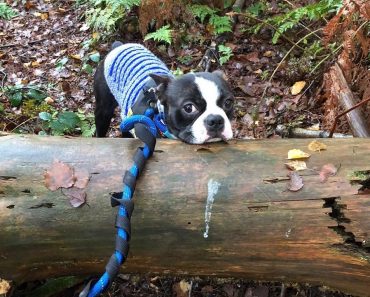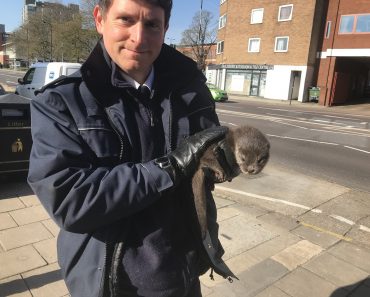
Category: Dog News

The latest dog news from around the world

  • Lockdown Update: RSPCA to Provide Emergency Service During Coronavirus Crisis

    Lockdown Update: RSPCA to Provide Emergency Service During Coronavirus Crisis

    The RSPCA will be providing an emergency-only service to animals through the coronavirus crisis in the wake of the Government’s lockdown.

    The animal charity which has a team of frontline officers, 17 animals centres, four wildlife centres and four animal hospitals across England and Wales, has reassured animal lovers they will still be dealing with emergency cases but are now closed to the public.

    They are advising anyone who is sick or has symptoms of Coronavirus to have “someone else in the household take care of their pets or ask a friend, family member, neighbour etc to help”.

    The move also follows the rise in pet owners opting for online veterinary consultations to get information on non-urgent pet health issues.

    RSPCA Rescue Centres:

    Rehoming and fostering have been paused but will resume as soon as it is safe.

    The organisation says “Staff and volunteers will be focusing on giving love and attention to the hundreds of animals in our care.”

    The 17 centres (including wildlife centres) are:

    South Godstone, Lockwood and Millbrook, Surrey
    Leybourne, Kent
    Gonsal Farm, Shropshire
    Great Ayton, North Yorkshire
    Felledge, County Durham
    Blackberry Farm, Buckinghamshire
    Block Fen, Cambs
    Stapeley Grange, Cheshire
    Southall Cattery, London
    Ashley Heath, Hampshire
    Southridge, Herts
    Gonsal, Farm, Shropshire
    Birmingham
    Bryn-y-Maen, Upper Colwyn Bay
    Newport

    There are over 150 RSPCA branches, registered charities in their own right, which are part of the RSPCA family running vital clinics, rehoming centres and charity shops.

    Centres and shops are now closed to the public and individual branch policies will be outlined on their own social media channels and/or website detailing any emergency services offered.

    RSPCA Hospitals:

    The organisation’s four hospital teams in London, Birmingham and Manchester are still working to help emergency cases of sick and injured animals, prioritising animals rescued by frontline staff, but also providing services to our clients on an appointment only basis.

    RSPCA 24-Hour Rescue Line:

    The animal charity will also be manning its 24-hour rescue line, albeit with fewer hands, so are asking people to call only in the event of an emergency.

    Chief executive, Chris Sherwood, said: “Despite most of the country staying at home there are still animals which need our help and I’m so incredibly thankful for frontline officers helping animals in emergency situations, our hospital workers for providing emergency treatment and our centre staff and volunteers who are giving love and affection to the hundreds of animals in our care.

    “We’ve taken steps to make sure that we are dealing with emergency cases only so we can play our part in stopping the spread of this virus and safeguard our staff and volunteers.

    “We rely on the public’s help and we would ask them to only call our helpline in an emergency and visit our website for all other enquiries.”
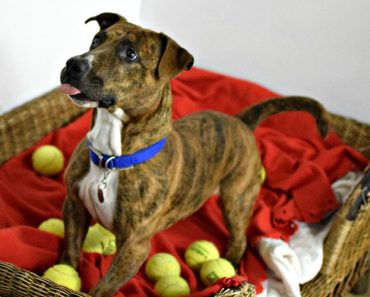
  • Battersea Shares Glimmer of Hope During Coronavirus Crisis

    Battersea Shares Glimmer of Hope During Coronavirus Crisis

    More than 150 Battersea dogs and cats found loving new homes last week as the British public opened their doors and hearts to rescue pets amid this unprecedented health crisis.

    At such a challenging time, Battersea saw a small ray of hope as its staff managed to rehome a great number of animals – more than double the figures for the same week in 2019.

    Last week (Monday 16 – Sunday 22 March), 69 cats and 86 dogs, including Tuplip pictured below, left Battersea for a new life with their owners. During the same week last year, 42 dogs and 29 cats found new homes.

    Battersea’s Head of Operations, Rob Young, said: “We want to thank all these new owners for thinking of rescue pets at such a challenging time.

    “All three of our Battersea centres are now closed to the public, but many of our animals are now in loving homes or out on temporary foster with our staff and volunteers. Battersea are still caring for around 100 animals at our three centres and working hard to ensure each and every dog and cat continues to get the treatment, care, love, play and interaction they need.

    “Those wishing to rehome a dog or cat are welcome to fill out a rehoming application on our website and, as soon as we’re able, we’ll be reopening and working to continue finding new homes for our wonderful animals.”

    Adopting a dog or cat is a big commitment, regardless of the circumstances. Battersea offers ongoing advice and support to everyone who rehomes a pet from us. During these challenging times, we have established a dedicated dog and cat behaviour advice line on 020 3887 8347 (open Mon-Fri 8am-5pm).

  • Dogs May Be Able to Help Prevent the Spread of COVID-19

    Dogs May Be Able to Help Prevent the Spread of COVID-19

    A charity that specialised in training dogs to detect cancer (among other things) is looking into whether dogs can play a role in preventing the spread of Coronavirus.

    The organisation has spent years successfully researching the science behind dogs’ sense of smell and believes that dogs could detect the disease. It has always adopted a rigorous, scientific approach to its work, and produced more than a dozen peer reviewed research papers which support its belief that each disease has its own unique odour.

    Medical Detection Dogs will be working in partnership with the London School of Hygiene and Tropical Medicine (LSHTM) and Durham University, bringing together the team which recently collaborated to successfully prove that dogs can be trained to detect malaria.

    Together they have started preparations to intensively train dogs so they could be ready in 6-8 weeks to help provide a rapid, non-invasive diagnosis towards the tail end of the epidemic, and approached government about how dogs can play a role in the fight against the disease.

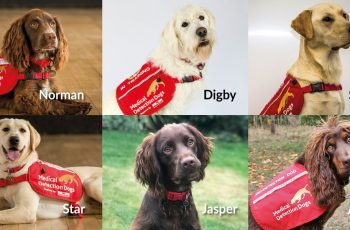
    Meet Norman, Digby, Storm, Star, Jasper and Asher! They are being trained to detect coronavirus and could be able to pick up the scent in 6-8 weeks. They will be trained using be deactivated (dead) virus samples
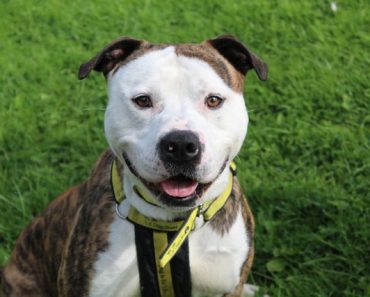
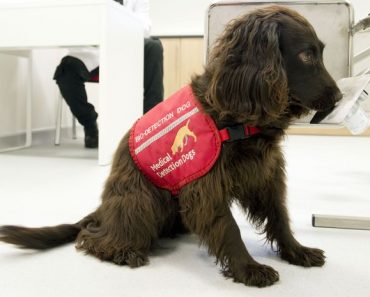
    Dogs searching for COVID-19 would be trained in the same way as those dogs the charity has already trained to detect diseases like cancer, Parkinson’s and bacterial infections – by sniffing samples in the charity’s training room and indicating when they have found it. They are also able to detect subtle changes in temperature of the skin, so could potentially tell if someone has a fever.

    Once trained, dogs could also be used to identify travellers entering the country infected with the virus or be deployed in other public spaces.

    Dr Claire Guest, CEO and Co-Founder of Medical Detection Dogs, says: “In principle, we’re sure that dogs could detect COVID-19. We are now looking into how we can safely catch the odour of the virus from patients and present it to the dogs.

    “The aim is that dogs will be able to screen anyone, including those who are asymptomatic and tell us whether they need to be tested. This would be fast, effective and non-invasive and make sure the limited NHS testing resources are only used where they are really needed.”

    Professor James Logan, Head of Department of Disease Control at The London School of Hygiene & Tropical Medicine, and Director of ARCTEC, said: “Our previous work demonstrated that dogs can detect odours from humans with a malaria infection with extremely high accuracy – above the World Health Organisation standards for a diagnostic.

    “We know that other respiratory diseases like COVID-19, change our body odour so there is a very high chance that dogs will be able to detect it. This new diagnostic tool could revolutionise our response to COVID-19 in the short term, but particularly in the months to come, and could be profoundly impactful.”

    Professor Steve Lindsay at Durham University says: “If the research is successful, we could use COVID-19 detection dogs at airports at the end of the epidemic to rapidly identify people carrying the virus. This would help prevent the re-emergence of the disease after we have brought the present epidemic under control.”.

  • Coronavirus Crisis: Dogs Trust Announces New Measures to Protect Staff & Visitors

    Coronavirus Crisis: Dogs Trust Announces New Measures to Protect Staff & Visitors

    Dogs Trust has announced temporary changes to its activities following Government advice to limit non-essential contact. The measures come as the charity tries to protect the health and wellbeing of its staff and visitors, whilst continuing to carry out the essential work of caring for and rehoming dogs.


    Rubble is currently in the care of Dogs Trust Merseyside

    As of 20th March, Dogs Trust rehoming centres have moved to an appointment-only system for potential adopters and all centres will be closed to walk-in members of the general public until further notice.

    The charity will also run appointments for people who wish to give up their dog for any reason. People who have a current reservation or are due to collect their new family member will not be affected and can contact their local centre by phone of they have any questions.

    The charity is also postponing all non-essential community events and has suspended Dog School training classes for the time being. Those wishing to donate any pre-loved items to the charity are asked not to bring donations to the centres or shops in person, until further notice.

    The charity’s staff will be limiting all unnecessary social interaction, practising frequent hand washing with soap and sanitiser, and visitors will be asked to wash their hands or use hand sanitiser before and during their visit.

    Adam Clowes, Director of Operations at Dogs Trust, said: “The health and wellbeing of our staff and our local communities is of paramount importance to us. We will continue to monitor and follow advice from the Government and are doing what we can to limit non-essential travel and contact.

    “We need to continue our essential work of caring for and rehoming as many dogs as we can in a way that aims to protect everyone involved in the process. That’s why we will be closing our centres to walk-in members of the public from Saturday but continuing to offer people opportunities to adopt a dog by appointment only.

    “If you feel unwell or are experiencing any symptoms, or if you or a family member are self–isolating, we ask that you please don’t attend your appointment but call us so we can work out the next steps for you.

    “Everyone can keep up to date with all of our latest news via our website and social media platforms which we will keep updated regularly.”

  • Can Dogs Sniff Cancer in Other Dogs?

    Can Dogs Sniff Cancer in Other Dogs?

    A study into whether cancer detection dogs can sniff cancer in another dog’s urine sample is being carried out for the first time in the UK by the charity Medical Detection Dogs this month.

    The project will investigate what would be a cheap, rapid and non-invasive diagnostic test for canine bladder cancer by training dogs to detect cancer from the odour of urine samples.

    Four dogs, a mixture of Labradors and Spaniels, are taking part in the trial project with a view to two working full time on it if the project is successful.


    Photo Credit: Twitter/Medical Detection Dogs

    The proof of principle study will investigate this innovative test, which has the potential to make dramatic improvements to the diagnosis and outcome of canine bladder cancer.

    Currently, experts say that Canine Urinary Transitional Cell Carcinoma (TCC) is hard to diagnose because it can look like several other urinary tract disorders when tested for, meaning diagnosis can be tricky. One current possible method of looking for TCC is cystocentesis – when a needle is inserted into the bladder to take a sample of urine – but is best avoided as it can risk spreading the tumour.

    Definitive diagnosis requires taking tissue from the suspicious area so a medical scientist can look at it under a microscope which is invasive. This is not only costly but it delays the results and therefore a dog’s treatment.

    So if this project proves successful, it could be an easier and non-invasive way to diagnose dogs with bladder cancer.

    The idea for the project first came when Medical Detection Dogs CEO and Co-Founder, Claire Guest, took her own cancer detection dog, Daisy, to Vet Oncologist at Davies Veterinary Specialists, Isabelle Desmas-Bazelle, for treatment for cancer.


    Claire and Daisy / Photo Credit: Darcie Judson

    During the meeting, they started to question whether canines could detect cancer in other canines and Daisy was presented with some samples of urine from dogs with and without the disease. She picked out the positive samples quite easily.

    Claire Guest says: “Dogs are renowned for their sense of smell and we know from many years of the dogs’ ability to detect human cancer, that it is a disease that has characteristic odours that they can pick out very successfully.

    “It seems obvious that they could do the same for canine cancer and as the current screening tests are often inaccurate, not to mention very unpleasant for our beloved pets, we are very much looking forward to showing that dogs themselves could be the key to diagnosing this disease early in their four-legged counterparts.

    Isabelle Desmas-Bazelle says: “Current methods of diagnosis can be slow and yield misleading outcomes – for example, a positive result can be because of other non-cancerous conditions such as infection. This means that vets may target infection when in fact the dog could have cancer.”

    If this project is successful, it could also add to Medical Detection Dogs’ understanding of what the profile for cancer smells like and provide more information for their cancer detection dogs to learn from in the future.

  • Suspended Sentences Handed Down to Kent Family Found Guilty of Animal Welfare Offences

    Suspended Sentences Handed Down to Kent Family Found Guilty of Animal Welfare Offences

    Two members of the same Kent family were handed suspended sentences this week for a string of animal welfare offences connected with running a puppy farm and cock fighting.

    John Cook and William Cook, both of Longfield Avenue, Longfield, near Dartford, all appeared at Sevenoaks Magistrates’ Court in January for a four-day trial.

    John and William both faced a number of offences under the Animal Welfare Act. John was accused of causing unnecessary suffering to dogs for failing to provide them with veterinary care and keeping them in unsuitable conditions, and William faced a number of charges related to keeping cockerels to fight.

    John Cook pleaded guilty to a number of offences and William Cook was convicted of offences under the Animal Welfare Act. The pair were sentenced at Medway Magistrates’ Court on Tuesday (25 February).

    John Cook was sentenced to 90 days in prison – suspended for two years – and ordered to complete 160 hours of unpaid work. He was ordered to pay £1,000 in costs, a victim surcharge of £115 and was disqualified from keeping dogs for three years.

    William Cook was given a 120-day prison term – suspended for two years – and ordered to complete 200 hours of unpaid work. He was also ordered to pay £1,000 in costs, a £115 victim surcharge and was disqualified from keeping all animals for three years.

    RSPCA officers executed a warrant at a property in Kent on 31 July 2018 after concerns were raised by members of the public who had bought puppies from the family.

    Eighteen dogs, including spaniels and beagles, were removed along with two cockerels.

    RSPCA inspector Carroll Lamport – from the charity’s Special Operations Unit, which investigates serious and organised animal crime – said: “Many of the dogs being kept at the site had health and welfare problems, including untreated gastrointestinal and dental issues.

    “We also had serious concerns over the conditions they were being kept in. The dogs and puppies were being kept in dirty, wet conditions with no bedding.”

    Officers also seized a number of mobile phones from the site and a suspected cockfighting pit was discovered during the warrant. Analysis of the phones showed the brothers had been involved with fighting and the pit was forensically tested by experts who discovered the blood of at least four different types of cockerels.

    In mitigation, the court gave John Cook credit for his guilty pleas and heard that William Cook was remorseful.

    The judge said that the living conditions of the animals were not appropriate and that issues should have been recognised earlier. He labelled William Cook’s involvement in cockfighting as ‘abhorrent’. He also commended the charity for doing a good job preparing the case.

    John Cook entered a guilty plea to a fraud offence (where he dishonestly made false representation as to the condition and breeding of puppies being sold, contrary to Section 2 of the Fraud Act 2006) in April 2019 and was sentenced to a 12-month prison term – suspended for two years – and was ordered to pay £1,000 in compensation and £1,000 in costs. William Cook entered a not guilty plea and the case was dropped against him.

  • Dog Attacks on Livestock Declines in Scotland, Wales and Northern Ireland – But Rise in England

    Dog Attacks on Livestock Declines in Scotland, Wales and Northern Ireland – But Rise in England

    New research has revealed that dog attacks on livestock have declined over the last 12 months in Scotland, Wales and Northern Ireland, but rose in England and farmers have estimated the cost of life to be in the region of £1.2m.

    Farmers are urging dog owners to keep their pets under control to help save lives, especially during peak lambing season which is fast approaching.

    A survey commissioned by NFU Mutual reveals that 63% of dog owners are letting their pets roam free in the countryside, despite half admitting their dog doesn’t always come back when called and so the insurer is calling for dog owners to ensure their pets are under control at all times when livestock are nearby and to report out-of-control dogs to a local farmer or the police.

    Rebecca Davidson, Rural Affairs Specialist at NFU Mutual, said: “A significant number of dog owners still don’t realise that their much-loved pet is capable of attacking and killing large numbers of lambs and sheep. Even if a dog doesn’t make contact, the distress and exhaustion of the chase can cause sheep to die or miscarry their lambs.

    “Although we are encouraged that 95% of dog owners would put their pet on a lead if a sign warns livestock are nearby, we’re alarmed that more than half are leaving their dogs unsupervised outside their homes when they are out – particularly when one in six admits their dog has escaped from home.”

    With many families expected to visit the countryside during school half-term holidays, NFU Mutual is issuing the following advice:

    • Always keep dogs on the lead when walking in rural areas where livestock are kept
    • Be aware that even small lap dogs can attack and kill farm animals
    • Report attacks by dogs and sightings of dogs roaming the countryside to local farmers or the police
    • Familiarise puppies with farm livestock from a young age to reduce the risk of them attacking sheep or cattle as adult dogs
    • Don’t let dogs loose in gardens adjoining livestock fields – many attacks are caused by dogs which escape and attack sheep grazing nearby

  • This 10-Year-Old Dog Has Just Received an Award for the Best Reason

    This 10-Year-Old Dog Has Just Received an Award for the Best Reason

    A 10-year old Recovery Assistance Dog called Milli, who has been credited with saving her owner’s life and improving her mental health, has just received an award for devotion to her owner.

    Cocker Spaniel Milli has been a loyal companion and source of comfort to her owner, Liz Maitland, from Leicestershire since she was a puppy.


    Photo Credit: Alex Cantrill-Jones / ACJ Media

    Liz, who admits she has had a life-long struggle with her mental health and has attempted suicide in the past, says Milli has been an integral part of her recovery and self-care journey. Milli is always by Liz’s side, keeping her calm and supporting her whenever she feels anxious.

    She said: “Life had become unbearable before Milli came along. I was in a downward spiral and I couldn’t see a way out other than suicide. Every day was a struggle.

    “Dogs have always been a big part of my life and following a particularly difficult period, I was encouraged by my family to look into getting a puppy. I struck up an immediate bond with Milli, she made me feel at ease and I knew I now had someone who would always be there for me. I learned a lot about the benefits of Recovery Assistance Dogs and I decided to train Milli to be one. Her presence keeps me calm and if I ever feel stressed or anxious, she makes me feel safe. Whenever I feel uncomfortable Milli will touch me for reassurance and put space between me and other people.

    “I don’t think I would have survived without Milli. She has given me a reason to live.”

    Liz is also committed to helping other people who have gone through similar experiences in their life. In 2004 Liz set up Recovery Assistance Dogs (RAD), a charity that trains dogs like Milli and highlights the benefits of dog ownership on people’s mental health and wellbeing.


    Photo Credit: Alex Cantrill-Jones / ACJ Media

    As well as their work with RAD, the duo also work with student social workers to teach them about the benefits of recovery assistance dogs, as well as appearing at events to talk about their work.

    Milli was presented with her PDSA Commendation by Philip Shanks, Client Services Manager at a special ceremony at Leicester PDSA Pet Hospital.

    Philip said: “We were all incredibly moved by the unwavering affection and support Milli has shown over the years – she is a worthy recipient of this award.

    “The strong bonds between pets and people are well-documented. As well as providing companionship, our research shows they can play a crucial role in helping improve people’s mental health. Milli has been a constant source of comfort and safety, and I am delighted that their bond has inspired Liz to help other people who need support from companions like Milli.”

    Liz concludes: “I couldn’t be prouder of Milli, she is my best friend and really deserves this award. She has given me the courage and strength to step forward and live a happy life. I hope the PDSA Commendation will mean we can raise awareness of the importance of recovery assistance dogs and the role they play in helping people. We are going to celebrate with friends by heading out to our favourite restaurant.”

  • Warning Over Dog Sickness Bug Spreading the UK

    Warning Over Dog Sickness Bug Spreading the UK

    Dog owners are being asked to remain vigilant as gastroenteritis spreads the UK.

    The dog sickness bug has already been reported by vets in Gloucestershire, Derbyshire, Lancashire and Oxfordshire.

    Gastroenteritis is the inflammation of the stomach and intestines and dogs can catch from bacteria, viruses, such as parvovirus, parasites, medications, or even new food. According to the Blue Cross, underlying health problems such as liver or kidney disease can also cause gastroenteritis and are more likely to affect older dogs and cats.

    The most common signs of gastroenteritis in dogs often involve abdominal discomfort alongside pale gums, loss of appetite, low energy, vomiting and diarrhoea (if bloody this indicates a more aggressive form of gastroenteritis called haemorrhagic gastroenteritis).

    Vomiting and diarrhoea can result in dehydration, which if left untreated can be very serious.

    Dogs usually recover within a few days, but it is especially important to seek advice for very young or elderly dogs quickly. If you spot any of these signs, speak with your vet to share symptoms and put a treatment plan in place.

  • TV’s Louis Theroux and Emily Raymond Team up to Help Vulnerable Pet Owners

    TV’s Louis Theroux and Emily Raymond Team up to Help Vulnerable Pet Owners

    Well-known documentary maker Louis Theroux and actress Emily Raymond have teamed up to help London based animal charity, Mayhew, launch a campaign to illustrate the ‘importance and intimacy of animal companionship, and the harsh realities faced by people hit by a sudden or unforeseen change in circumstance, which threatens their relationship with their pet’ – such as homelessness.

    The duo provided their voices for a video the animal charity will be sharing alongside a series of poems which will appear around London. The celebrities hope they will start a conversation about the importance of the relationship we have with our dogs, in good times and bad.

    Speaking about the campaign, Theroux said, “I was delighted to be asked be the voice of the dog for Mayhew’s campaign. It was a challenge for me as I’ve only ever done voiceover for myself. So this was a leap, taking on the role of someone else, who also happened to be a non-human! But we call relate to the emotions felt by the animals in this beautiful video: the need for comfort, companionship, and quality of life. And the animation and writing in the film capture this perfectly.

    “My fervent hope is that the campaign starts a much needed conversation about the importance of protecting the bond between pets and pet-owners from all walks of life. We all deserve to live a life, shared.”

    Raymond added, “I think that the ground-breaking work Mayhew do in the local community is truly inspiring.

    “Helping homeless and vulnerable people to care for their dogs, and even look after them during periods of absence, is literally a lifeline for people in a crisis situation. They make sure that the human animal bond is nurtured and not broken – without judgement and with deep empathy. Mayhew fully understand the vital relationship between a vulnerable person and their pet, and know that an animal is often the only trusted companion that a person has.

    “It was therefore a privilege to give a voice to the beautiful and moving animation for this latest campaign – highlighting the shared lives that are made possible by the vital help and support that Mayhew provides to those in need.”

  • What Has Wales Done to Address Its Puppy Farming Problem?

    What Has Wales Done to Address Its Puppy Farming Problem?

    Last September a programme aired on BBC Wales exposing the extent of the puppy farming problem in Wales. It shocked many people, but has anything actually happened since then?

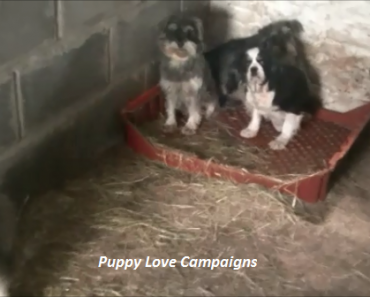
    Well, apparently or certainly publicly, not a lot according to undercover investigators Puppy Love Campaigns, whose evidence and footage initiated the BBC Wales exposé on Welsh licensed puppy farms.

    According to the organisation, they expected an immediate official inquiry into how such “obscene, licensed cruelty had been allowed to go unchecked for such a long period of time”.

    Puppy Love Campaigns say, “We hoped a full report would be published on how and why the dogs were failed on such a mammoth scale; who was responsible and what actions would be taken. None of this has happened.

    “All we are told is those with responsibility are holding meetings – meetings away from public scrutiny. To date, no one has explained how the unseen (until we exposed it with the BBC) tragedy for dogs has been allowed to continue, year after year and under the supposedly watchful eyes of council inspectors and vets.”

    So, Can Anything Be Done to Push This Forward?

    Yes. It’s important to remember that those in government are public officials and you (the public) can make your voices heard.

    Puppy Love Campaigns say, “The public are crying out for answers and so are we. If, like us, you feel this silence is yet another failing on the part of those responsible, we call on you to join us in our request for such an inquiry. This is well overdue.

    “It’s plain that the local authorities must share much of the blame. After all, they are the very people that issue the licences. Licences which are given to grossly unfit-for-purpose premises. But, sadly the blame does not stop there. It goes much higher. Following a series of our investigations with the media which demonstrated severe failings in the system, in 2014 the Welsh Government made all the right noises to quell the resulting public outcry.”

    Why Wales New Legislation Will Fail, According to Experts

    While no inquiry has been initiated and publicly nothing has been made known to concerned individuals, Puppy Love Campaigns say Wales still plans to introduce new legislation but in its current form, it will fail. They explain why.

    “They gave little, or no thought, as to how that legislation would be enforced. For a while, the strategy worked, the public were reassured, but during this time the dogs continued to suffer abuse on a daily basis. Meanwhile the Government proudly publicised the new regulations, claiming they were bringing this cruelty to an end. Sound familiar?

    “Roll on to 2019 and we were forced to expose them yet again. And we will continue to expose everyone who is responsible for this outrage. Our voice will not go unheard until the government shows us they can control the situation which clearly at this moment in time they can’t, or won’t. By dragging their feet and taking very little action even in the face of irrefutable evidence, they are condoning the suffering of animals on their watch. The shame of Wales needs addressing and the time is now, enough is enough! Demand a full inquiry. Do not let them ignore you.”

    If you agree with Puppy Love Campaigns, please contact the first minister Mark Drakeford and Rural Affairs Minister Lesley Griffiths and demand immediate action. 

  • Do You Know About These Winter Hazards Posing Risks to Dogs?

    Winter is upon us and with it comes potential new dangers for dogs, both inside and outside of the home.

    New research from Direct Line Pet Insurance reveals only two-fifths of dog owners are aware of the seasonal issues their dogs may face in winter, although more than half of dog owners admit they are fearful of the hidden dangers lurking underfoot when walking their dog.

    With fewer hours of daylight, dog owners need to be more careful as hidden dangers such as nettles, broken glass, pieces of metal and even fallen fruits, that can be harmful to your dog if eaten, can be discreetly hidden in their path.

    Amongst hidden dangers, the research revealed fireworks and seasonal canine illness cause the most anxiety for dog owners during winter, followed by sniffing pesticides, eating poisonous foods and the risk of frostbite as a result of freezing temperatures were also amongst other worries for dog owners.

    The most common poison dogs will encounter during winter

    Antifreeze poisoning is a common type of poisoning dogs may face this season. It typically happens when liquid drips from a car’s radiator and is licked off the ground and ingested by a pet.

    Direct Line found nearly a quarter of dogs harmed in winter months had been harmed due to antifreeze.

    Throughout winter, dog owners may naturally reduce the time they spend outdoors with their pet because of lighting and colder temperatures, with a third of dog owners admitting they change their habitual walks during winter by the length of time, route and even the time of day they walk their dog.

    Commenting on the survey’s findings, Madeleine Pike, Veterinary Nurse at Direct Line, said: “With shorter days and fewer hours of sunlight in winter, the hazards outside of the home for dogs can be less obvious. Hidden dangers on walks, licking spilt antifreeze and eating fallen fruits can cause severe injury to dogs and can make them very unwell. We encourage owners to be extra cautious of the outdoor risks that can occur this season.

    “Similar threats can be found inside the home. It’s common for visitors to have the tendency to sneakily feed ’treats’ to your pet. Chocolates, nuts and raisins are just some of the foods which are poisonous to dogs and can lead to severe indigestion and distress. With smaller dogs like Chihuahuas, Terriers and Pugs, it could be catastrophic. We urge all dog owners to be aware of what their pet is eating this winter and stick to dog friendly treats.”

    Watch out for these festive dangers inside the home

    Over 1000 claims made throughout last year were made because of pets being poisoned from plants and foods, so it’s important that owners are aware of the potential dangers.

    A fifth of dog owners worry about the harm festive plants can have on their pet indoors. Festive foliage such as mistletoe, poinsettia and holly begin to make an appearance and can irritate dogs’ fur, and if swallowed, can lead to poisoning.

    Direct Line’s tips for protecting pets this winter

    1. After a walk, take a few seconds to look for any wounds, cuts or injuries on your dog

    2. Salt and grit used on roads in winter can irritate a pet’s paws. If you use salt around your home, choose a pet-safe product

    3. If you can, try to walk your dog when it is light or in well-lit areas and parks so that hazards can be more visible

    4. Only treat your pets to dog friendly foods. Be cautious of what friends and family may give your dog as a “treat”

    5. Keep your dog warm with protective blankets. Overnight temperatures can massively drop, and dogs can run the risk of getting hypothermia.

    If owners feel that their dog has eaten something that they shouldn’t or if they have any concerns, Direct Line Pet customers can connect with a vet 24/7 through PawSquad which is provided for free with their pet policy. If in doubt customers should get their pet to the vet immediately.

  • Last Christmas More Than 4000 Animals Were Abandoned

    Last Christmas More Than 4000 Animals Were Abandoned

    Last December more than 4000 animals were abandoned and according to the animal welfare charity, they received more reports about abandoned dogs than any other animal.

    The RSPCA has revealed that the worst affected areas were Greater London and the West Midlands with 428 animals, and 227 animals reported as abandoned respectively.

    Sadly, the charity is already caring for many animals abandoned around the country this festive season.

    The RSPCA is urging people to help them care for the animals spending Christmas in its centres and hospitals, asking for help providing anything from food, medicine, to a warm blanket, treats and toys.

    Dermot Murphy, Chief Inspectorate Officer at the RSPCA, said: “Christmas is a busy time for us, as sadly cruelty and abandonments do not stop over the festive season and our staff work tirelessly to rescue and care for animals in need.

    “Last year, there were 1,684 dogs reported as abandoned in December and 1,678 abandoned in January, and there were more dogs than any other animal being abandoned over the festive period. We understand that people’s circumstances can change which may mean they can no longer cope with their pet but there is never an excuse to abandon any animal like this, as there are other options available to people who are struggling to care for their pets. Dumping a pet leaves the animal extremely scared and vulnerable, especially in the cold winter months.

    “We would urge anyone considering getting a pet to think carefully about whether they have the time, care, patience, and resources to care for that animal for the rest of their life and if you feel you really do, then please consider giving a rescue pet a second chance this new year.”

  • These 6 Dogs Will Have a Great Xmas, but Can You Help Them Have an Even Better One in a Forever Home?

    These 6 Dogs Will Have a Great Xmas, but Can You Help Them Have an Even Better One in a Forever Home?

    Six dogs saved from the dog meat trade in South Korea have arrived safely in the United Kingdom to start their search for new homes and Spaniel mix Maisie, Boston terrier Winston, and Jindo mixes Pumpkin, Oscar, Bella and Molly have already received lots of enquiries from potential adopters.

    Here are some of their first experiences as shared by their foster families.

    Meet Bella

    Meet Maisie

    Meet Molly

    Meet Oscar

    Meet Pumpkin

    Photo Credit: Rachel Riley Photography
    Meet Winston

    Winston and his five friends were languishing on a dog meat farm in Gyeonggi-do province when Humane Society International (HSI) closed the facility saving more than 90 dogs in total.

    The closure was HSI’s 15th dog farm shut down, part of the charity’s pioneering program helping dog farmers who want to leave the increasingly controversial industry.

    There are thousands of dog farms across South Korea supplying live dogs to slaughterhouses, markets and restaurants for human consumption, but the trade has been in decline over the past several years as attitudes and appetites are changing.

    As a result, many dog meat farmers are increasingly eager to exit the trade and approach HSI for help.

    They each sign a legal contract with the charity to relinquish the dogs, destroy all the cages, and never farm dogs or any animal again. The charity provides a small start-up grant to transition farmers to an alternative livelihood such as mushroom growing, water delivery, water parsley farming and other more humane trades.

    Jenn Gilbert, the founder of Chimney Farm Rescue, who are caring for the six dogs says: “As the founder of Chimney Farm we try to help all dogs in need, and the dog meat trade has always played heavily on my heart. So to be asked to help Humane Society International/UK was an honour.

    “The six dogs who arrived – Bella, Winston, Molly, Maisie, Pumpkin and Oscar – are just amazing dogs, and after all they have endured they are settling into UK life amazingly. Out for walks, cuddling up to humans, lying in comfortable beds, just how all dogs should live. All the dogs have a thorough medical and then we can start to look for the best homes possible.”

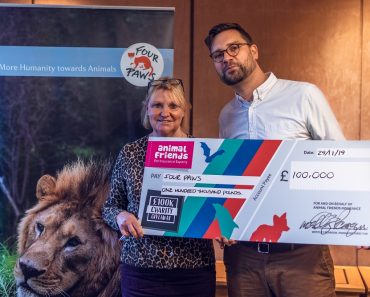
  • FOUR PAWS Win Animal Friends’ 2019 £100k Charity Giveaway!

    FOUR PAWS Win Animal Friends’ 2019 £100k Charity Giveaway!

    The winner of Animal Friends’ 2019 £100K Charity Giveaway has been revealed, and the news will benefit dogs and cats around the world.

    From the end of October, animal lovers cast their vote for their favourite of the three finalists: Bat Conservation Trust, FOUR PAWS and the Whale and Dolphin Conservation on the Animal Friends website and today, FOUR PAWS – an international animal welfare organisation committed to encouraging people to treat animals with respect, compassion and understanding around the world – have been announced as winners of the £100k prize by the pet insurer.

    Brian da Cal, FOUR PAWS UK Country Director commented on his organisation’s win saying, “We are over the moon to have won Animal Friends £100K Charity Giveaway. A huge thank you to our supporters and the general public for voting for FOUR PAWS, without whom this win would not have been possible. As we move towards 2020, this is an amazing boost that’ll help us to rescue even more animals around the world from abuse, exploitation and neglect.”

    The two runners up, Bat Conservation Trust and the Whale and Dolphin Conservation, have also received a donation of £15,000 from the pet insurer for their campaign work.

    Chris Butler-Stroud, CEO from Whale and Dolphin Conservation said, “We’d like to say a huge thank you to everyone who took the time to vote for us, your support is vital to the work we do here at Whale and Dolphin Conservation. We’re thrilled to have received this incredibly generous donation that will go towards keeping whales and dolphins safe and free. We want to extend our thanks to Animal Friends for running this event and their support of so many worthwhile causes.”

    Dr. Joe Nunez-Mino, Director of Communications & Fundraising at the Bat Conservation Trust added, “It has been a huge privilege and great fun to be part of the Animal Friends Charity Giveaway this year. The support our existing supporters showed was really uplifting and the competition engaged new audiences who became more aware of the work we do. The unexpected donation from Animal Friends is a welcome contribution towards achieving our vision of a world rich in wildlife where bats and people thrive together- thank you!”

    Although this was the second year Animal Friends has run its £100k Charity Giveaway, the pet insurance company is not new to charitable giving. Since launching in 1998 with the sole aim of providing pet insurance as a means to help support animal welfare charities, they have proudly donated over £4 million to animal charities in the UK and around the world.

    Wes Pearson, Animal Friends Insurance Managing Director concluded, “To hear what a difference the donations will make to animal welfare across the world is very special. Everyone at Animal Friends is passionate about keeping animals safe in their environments and able to live healthy and happy lives.

    “We are all looking forward to hearing more about how these donations help the three charities in their amazing work.”