Blog

  • “Disturbing & Horrific” Robert Gwynn Had Anal Sex With His Own Dogs But is Not Jailed

    “Disturbing & Horrific” Robert Gwynn Had Anal Sex With His Own Dogs But is Not Jailed

    A Caerphilly man who had anal sex with his two dogs has been handed a suspended prison sentence and banned from keeping animals for a decade in a “landmark” RSPCA prosecution.

    Robert Gwynn (d.o.b 04/11/1957), formerly of Merchant Street, Pontlottyn, Caerphilly, pleaded guilty to two offences at Newport Crown Court yesterday (Wednesday 23 May) – one under Section 69 of the Sexual Offences Act 2003 and the other under Section 9 of the Animal Welfare Act 2006.

    RSPCA inspector calls case “disturbing” and “horrific”, after swabs from the anuses of two dogs found the presence of human DNA.

    The man was spotted performing an act of anal penetration on a dog with his penis.

    RSPCA Cymru has said it can prove “exceptionally difficult” to gather evidence in such cases. Both dogs, named Taff and Ben, were removed from Gwynn’s care and swabs taken from each dog’s anus.

    https://i.imgur.com/3LRng2o.png

    Shockingly, the swabs were found to contain traces of human DNA and dog DNA was also found to be evident on Gwynn’s penis. A vet examined the trauma caused to the dogs, with bruising to the anus found in both cases.

    Izzi Hignell, RSPCA inspector, said: “This was a disgusting and horrific case to investigate, with this man admitting to have forcibly had anal intercourse with two Bedlington Terriers.

    “These poor dogs have been subject to such a disturbing act, which would undoubtedly have proven a truly horrendous ordeal for both animals involved.

    “Gaining evidence in cases of this nature can be exceptionally difficult. This man was seen penetrating one of the dogs in the anus.

    “DNA results were integral to this prosecution. Swabs taken from the dog’s anuses were both found to contain human DNA, while the man had dog DNA on his penis. This was a truly shocking and gruesome discovery proving the sexual offence this landmark case relates to.

    “This was a clear, deliberate case of sexual abuse. Fortunately, the dogs have recovered from this shameful treatment and remain in RSPCA care.

    “People across Wales will be horrified that any individual would think it acceptable to commit a sexual act of any nature on their dogs. I am sickened that activity of this nature has taken place in Caerphilly.”

    Taff and Ben are currently at RSPCA Newport Animal Centre and will be soon be made available for rehoming in a few weeks time.

    Gwynn was given a three month prison sentence, suspended for two years. He was ordered to pay £500 costs, a £115 victim surcharge and was banned from keeping all animals for 10 years, while a deprivation order was made on the dogs involved.

    If anyone has any animal welfare concerns, they can contact the RSPCA on 0300 1234 999.”

  • Prison Sentence For Vet Who Helped Puppy Farm Gang Make £2.5m

    Prison Sentence For Vet Who Helped Puppy Farm Gang Make £2.5m

    A gang of fraudsters – who it is estimated made at least £2.5m selling sick and dying puppies to unsuspecting members of the public – have been disqualified from keeping dogs for life as some of the gang members were also jailed this week.

    It comes following a three-year investigation by the RSPCA into puppy dealing in London and Berkshire. The animal welfare charity launched ‘Operation Adder’ following complaints from a number of people who had bought puppies which had fallen ill and, in some cases, tragically died.

    Simon O’Donnell (DoB: 23/08/87) and Margaret McDonagh (DoB: 25/09/90), previously of Bradenham Road, Hayes; Edward Stokes (DoB: 10/12/82), previously of Rosedale Avenue, Hayes, and later of Tenaplas Drive, Upper Basildon in Berkshire; Thomas Stokes (DoB: 16/05/92), previously of Coldharbour Lane, Hayes; Thomas O’Donnell (DoB: 27/01/89) and Mary McDonagh (DoB: 15/09/89), previously of Bedwell Gardens, Hayes, all appeared at Isleworth Crown Court today (Tuesday 22 May) to be sentenced for their part operating a network of puppy sellers across London.

    https://i.imgur.com/axrttu9.png

    A vet who conspired with the gang, falsifying vaccination cards to help them sell the pups, is also due to be sentenced having previously been found guilty by a jury of conspiracy to commit fraud.

    RSPCA officers estimated the network of dealers were selling puppies for an average of £500 each – making at least £2,548,500 by selling 5,097 puppies during a five-year period – although investigators suspect there were many more.

    https://i.imgur.com/W5s0OOr.png

    The gang were most active between 2014 and 2016 – before being raided by police and RSPCA investigators – and forensic examinations of mobile phones used to sell the puppies, show they were making around £800,000 a year during these busy years.

    RSPCA officers joined teams from the Metropolitan Police as they executed warrants at four addresses on 27 May 2016 in Bedwell Gardens, Bradenham Road, Coldharbour Lane, and Rosedale Avenue, all in Hayes, west London. A further warrant was executed by Thames Valley Police at a property in Tenaplas Drive, Upper Basildon, on 1 February 2017.

    Bedwell Puppy Farm from Dog News on Vimeo.

    During the first warrants, a total of 46 dogs and puppies were found being kept in plastic sheds, outbuildings and garages, or running loose in gardens and yards at the four Hayes addresses, all of which were seized and placed into RSPCA care. The dead bodies of four Yorkshire terrier puppies were found wrapped in black bin bags scattered around the garden at the property in Coldharbour Lane – thought to be from the same litter. Despite veterinary treatment, four puppies later died from parvovirus. Three of the bitches, who were pregnant when they were seized, went on to have a total of 16 puppies, although one was stillborn.

    Nine dogs were later seized from the Berkshire address and taken into RSPCA care.

    RSPCA inspector Kirsty Withnall, who led the investigation to uncover their plot, said: “Four of the gang members are siblings and, together with their partners, launched this network of puppy sellers and dealers in west London, with Edward and Mary Teresa Stokes later continuing to sell dogs from their new address in Reading, Berkshire, while Thomas Stokes went on to sell again from another property in Feltham.

    “This was an complex and sophisticated network of organised fraud and cruelty to dogs. This was a complicated and multi-faceted, high volume conspiracy whereby the gang has misrepresented commercial, puppy-farmed dogs imported from abroad as family-bred pets to con members of the public out of money.

    “Puppies were illegally imported from southern Ireland before being transported to the defendants’ homes where they were kept in plastic sheds, outbuildings and garages. They were advertised online and sold for between £350 and £650 each.

    “The gang were generally dealing with fashionable breeds and designer crossbreeds such as Yorkies, cavapoos and Labradoodles.”

    Officers took statements from 83 victims in total, all of whom had bought puppies from the gang at different addresses, having responded to adverts posted online – 25 puppies sadly died or had to be put to sleep due to severe health problems.

    “Buyers have had to cover expensive veterinary bills or, tragically, lost their pet as a result of poor breeding, inappropriate transport and inadequate care,” inspector Withnall added.

    “We also discovered that the sellers were using lots of different names and aliases as well as changing phone numbers.

    “Prospective buyers were led to believe that the puppy they wished to purchase had been born and raised in a loving family home, the mother dog being a family pet. They were provided with paperwork relating to pedigree parentage, health documentation and vaccination certificates, much of which was falsified and did not or could not be shown to relate to the puppy in question.

    “When visiting, buyers were usually met by a man, often there were children and a woman present, giving the impression of the ‘family home’ that the puppies were claimed to have been part of. They were also shown bitches claimed to be the mothers but we now know these were stooge dogs bought in to lull buyers into a false sense of security.”

    Six of the gang members admitted fraud and animal welfare offences and were sentenced today (22 May).

    Simon O’Donnell was sentenced to three years in prison and was disqualified from keeping dogs for life. He was also ordered to pay £170 victim surcharge.

    Thomas Stokes was also jailed for three years and disqualified from keeping dogs for life. He was also ordered to pay a £170 victim surcharge.

    Thomas O’Donnell was handed a two-year jail term suspended for two years and was ordered to complete 100 hours of unpaid work and a rehabilitation activity. He was also disqualified from keeping dogs for life and ordered to pay £115 victim surcharge.

    Margaret McDonagh was given an 18-month community order and rehabilitation activity. She was also ordered to pay £85 victim surcharge and given an order which prohibits her from keeping dogs until an application to the court to lift it.

    Mary McDonagh was given a 12-month community order. She was also ordered to pay £85 victim surcharge and given an order which prohibits her from keeping dogs until an application to the court to lift it.

    A vet – who conspired with the gang – was also sentenced today having been found guilty by a jury following a four-week trial earlier this year.

    Daniel Doherty (DoB: 28/07/68) of Wood Lane, Iver Heath, operated two My Vets surgeries in Uxbridge, west London, where he conspired with the gang to commit fraud. Evidence showed that 4,689 puppies were taken to MyVet 24/7 by the gang between 23 March 2011 and 10 May 2017 for their first vaccinations, with the vet pocketing at least £75,000.

    He was sentenced to 12 months in prison, suspended for 12 months, and was ordered to complete 80 hours of unpaid work and pay £140 victim surcharge.

    Another member of the gang was sentenced at a previous hearing at Isleworth Crown Court on 7 September 2017 having pleaded guilty to one offence of failing to meet the needs of dogs. She was sentenced to a 12-month conditional discharge, disqualified from keeping dogs for five years, and ordered to pay £250 in costs.

    And the final member of the gang admitted a similar offence and received a restraining order disqualifying her from keeping dogs for five years.

    Edward Stokes, who also appeared at court this week, will appear back at court on 14 June for sentencing after his case was adjourned.

    These investigations also sparked an additional investigation into a man who was selling dogs from a property in Edmonton. When police executed a warrant at the property in February 2017, four dogs were removed.

    In November last year, he was jailed for two years and eight months and disqualified from keeping dogs for life after admitting five offences of fraud by false representation and one offence of failing to meet the needs of dogs. A woman was cautioned and received a court order prohibiting her for keeping dogs for three years, for failing to meet the needs of dogs.

    All of the dogs that were seized as part of the investigations went into foster homes and were later signed over to the RSPCA to be rehomed.

  • Warning: Is Your Dog at Risk of Getting You Hacked?

    Warning: Is Your Dog at Risk of Getting You Hacked?

    Pet tracking apps could be leaving owners vulnerable to hacking, according to an internet security firm.

    New findings released by Kaspersky Lab researchers have revealed that seven popular pet tracking apps have security issues which could allow unauthorised access to your network and the sensitive information stored on it – and more worryingly, these vulnerabilities could lead to more pet thefts if they aren’t fixed.

    Trackers are typically used by pet owners to monitor the safety of their pet and track where they visit when unsupervised, with GPS coordinates sent back to the owner’s app as regularly as every minute.

    The possibility of someone else intercepting those coordinates to understand where your pet is at any given moment, or your regular movements such as daily walks, means there is the potential for criminals to gain enough information about your pet’s movements to kidnap it.

    In 2016, Direct Line reported that 1,774 dog thefts were reported to police in the UK but additional research by the pet insurer found that 1.5 million adults claimed to have had a dog stolen from their care over the past five years, and according to organisations set up to help people who have had pets stolen, the problem is very much on the rise with more pets than ever being targeted by criminals.

    The trade in cats and dogs is worth €1.3 billion annually in the EU and stolen ‘designer dogs’ can fetch up to £1000 when sold online.

    Prit Powar, Head of Pet Insurance at Direct Line said, “Having your dog stolen is one of the most distressing things a pet owner can face, particularly as animals are often considered to be members of the family. There is no excuse for the theft of an animal but some of the reasons behind dog theft include using the animal for dog fighting, breeding or selling on.

    “The rise in popularity of ‘designer’ dog breeds among celebrities and the ‘fashion’ for certain types of dogs means people are willing to pay thousands for an animal, which unfortunately makes them prime targets for thieves. Pedigree owners need to be especially vigilant.”


    London dog owner, Matt Rayner favours a home-based pet camera instead of a GPS tracker to keep his Pug, Buffy safe

    David Mole from Kaspersky Lab concluded saying, “There are numerous opportunities for criminals to send false coordinates to the server, or accurately pinpoint people’s pets to kidnap them, due to vulnerabilities in apps and trackers.

    “These trackers have not yet been used to kidnap dogs, but the information that is transmitted could be susceptible to being accessed by criminals who want to obtain valuable data such as passwords.”

  • Petition to Make Pet Theft a Crime Reaches 80,000, but Still Needs Your Signature to Trigger Debate

    Petition to Make Pet Theft a Crime Reaches 80,000, but Still Needs Your Signature to Trigger Debate

    A petition to reclassify the theft of a pet as a crime in its own right has now reached over 80,000 signatures and is well on its way to reaching its target of 100,000 signatures by 8th August, at which time a parliamentary debate will be triggered.

    Dr Daniel Allen, an Animal Geography tutor at Keele University created the petition in February. After researching the problem, Dr Allen was appalled by the rising numbers of dog thefts and the lack of accurate police statistics.

    Dr Allen says, “People do not steal dogs to love them, they use them, they abuse them, and they treat them like disposable objects. Dog theft is a gateway to wider animal cruelty, including puppy farming and dog fighting, and should be connected to wider concerns about dog welfare. Pet theft is a cruel and devastating crime, made all the more painful when the law refers to family pets as ‘personal items’. Dogs are family – the law needs to reflect that”

    With the law as it stands, there is no deterrent to reduce pet theft which has increased by nearly 24% over the past three years but prior to the Theft Act 1968 dog stealing was a crime with a custodial punishment.

    Arnot Wilson of the Dog Union and member of the Stolen & Missing Pets Alliance, who are supporting Dr Allen, says “It is unbelievable that in the Theft Act 1968, a dog, a sentient being, is considered chattel but cars and bicycles are separately classified. Reclassification will bring with it much needed accurate police records”

    Prof John Cooper, QC who has been campaigning for better animal welfare laws for over 25 years, is now providing legal backing to SAMPA, believes legislation to protect dogs will not be a difficult exercise nor need to take up much parliamentary time, adding, “no legislation in any area stops the crime but if we have harsher penalties in place, it will send a strong message to deter people.”

    The petition has the backing of British MPs, as well as celebrities including Ricky Gervais, Miranda Hart, Deborah Meaden and Peter Egan.

    The dog theft epidemic must be stopped, but that can only happen if the government takes this emotional crime seriously. To sign the petition: https://petition.parliament.uk/petitions/212174

  • Did You Know Companies Were Carrying Out Experiments on Abandoned Dogs?

    Did You Know Companies Were Carrying Out Experiments on Abandoned Dogs?

    In Ontario, Canada, a political party has included a policy in their latest manifesto to call for a ban of “the use of lost or abandoned pets in research”.

    According to Canadian animal welfare organisations, the Green Party of Ontario is the first political party to call for this using its platform.

    Ainslie Willock, Campaign Manager, No Pets In Research said, “We thank Mike Schreiner [leader of the political party] for taking a position on this issue and we call upon the Liberals, NDP and Progressive Conservatives to commit to the same position.”

    As it stands in the region, under the Animals for Research Act, lost pets have only three ways to get out of the pound – they can be returned home, if the owner/home can be found within the minimum 72 hour holding period, they can be sold as pets, or they can be sold to the operator of a registered research facility in Ontario who has requested the operator of the pound to sell the dogs or cats.

    The interpretation of the latter has been broadened by the government to include humane societies and rescue groups as sources of pets for research, according to Willock, who explained, “Even more troubling, the government allows unknown entities to pick up animals for research in communities without stray animal by-laws.”

    Between 2012 to 2016, over 25,000 pet dogs and cats went to research in Ontario

    Liz White, Director, Animal Alliance of Canada commented on the troubling statistics saying, “Once pet animals have disappeared into the opaque world of animal research, it is almost impossible for families to find out what happened to their beloved companions.”

    “We are making this an election issue,” White continued. “In our 30 second TV spot which you can preview on our website and will start airing on the 23rd of May, we ask Ontarians to ask their candidates to protect their pets from researchers. The Animals for Research Act protects the researchers, not the pets or their families. The Ontario government needs to amend the Animals for Research Act to end this egregious and outdated practice.”

    “The Green Party has taken a stand for our pets,” Willock said. “Now it is time for the other parties to do the same.”

  • Dumped Cockapoo Puppies Suffering With Mange Are On The Mend

    Dumped Cockapoo Puppies Suffering With Mange Are On The Mend

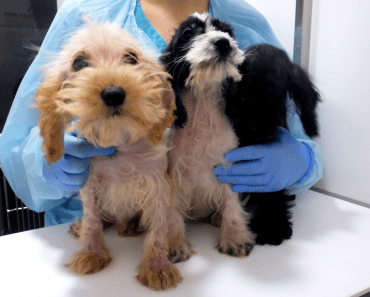
    Three Cockapoo puppies dumped in Wetherby just over a week ago are doing well in RSPCA care. The two females, Olive and Emmy, and male, Gus were found by a member of the public on a bridle track off Deerstone Ridge on Sunday 6 May.

    Luckily, he managed to catch them and put them in his garden until an RSPCA officer could get there.

    RSPCA inspector Kris Walker said: “As well as being very scared, these poor puppies were in a terrible physical state.

    “They were thin and had extensive hair loss and scabby, reddened and sore skin. Tests have revealed they have sarcoptic mange.


    Olive, Emmy and Gus being treated for contagious skin disease sarcoptic mange

    “It seems very likely that they were dumped and that this was the reason why.”

    The puppies were around eight weeks old when they were found, so are around nine weeks old now, which is the age at which breeders would usually look to rehome them.

    “They were taken straight to a vets in Leeds where they were looked after for three days and are now in the care of the great staff at RSPCA Doncaster, Rotherham & District branch animal centre,” said Inspector Walker.

    “It’s an absolute joy to see them already looking so much better, running around and playing with each other, and generally behaving like puppies should.

    “There is a long way to go before they will be ready for adoption, but the animal centre has already taken a number of calls from people interested in giving them a forever home so the future is definitely looking bright for them.”

    Anyone with any information about who they belonged to, or who saw anything they think might help the RSPCA’s investigation, is asked to call the inspector appeal line on 0300 123 8018 and leave a message for Inspector Walker.

    He added: “Sarcoptic mange is a very contagious condition that causes a great deal of suffering to the dogs who get it and I am extremely concerned that the puppies’ mum could also have it, and any other dogs at the location too. If you can help me to find her, please get in touch.”

  • Meet The Dogs Working to Protect Everyone’s Safety at Royal Wedding

    Meet The Dogs Working to Protect Everyone’s Safety at Royal Wedding

    As Britain gets ready for a royal wedding this weekend as Prince Harry gets married to Meghan Markle (19th May, 2018) – let’s meet the team of dogs who are working to ensure the big event passes without a hitch…well, an unwanted hitch at least! There will be absolutely no prizes on offer to guess the breed of dogs leading the sniffer dog task force.

    The Power of The Sniffer

    Dogs experience the world in a very different way than people do. Sure, they have the same five senses, but while we first take in sights and sounds, dogs largely rely on their amazing sense of smell. Dogs can out smell, out hear, and in some situations out see us humans.

    A dog’s nose contains over two billion olfactory receptors compared to our weak-in-comparison forty million. Dogs use smell to take in most of the information that they receive from the world, it’s their first method of identifying the things around them. They smell other dogs, prospective items of food and people. Another dog’s scent can give off a wealth of information about his state of mind, energy level and readiness to mate. Dogs likewise leave their own scents in various places as a sort of calling card for others. To be comfortable in any given environment, a dog needs to thoroughly smell his surroundings.

    Sniffer detection dogs therefore have been harnessed to help humans with a wide variety of difficult tasks, from fire detection to helping in the search to uncover dead bodies.

  • Is Your Dog Scratching? It Could Be Fleas, a Pet Expert Says

    Is Your Dog Scratching? It Could Be Fleas, a Pet Expert Says

    As the weather heats up, pet owners are being reminded to be flea and tick aware.

    Although parasites, such as fleas and ticks, are found all year round, because the hot weather and humidity speed up their life cycle, Spring and Summer can increase the risks of infestation to your dog and your home.

    Here are three top tips to help prevent a flea infestation in the home.

    Wash your dog’s bedding & toys

    If your dog has fleas, the chances are your dog will have shed flea eggs around your home.

    Wash your dog’s bedding and soft toys on a hot wash to get rid of any eggs which may have fallen off your pet and be lurking in their fibres.

    Make sure you keep your pet’s preventative treatment up to date

    Home infestations can occur regardless of how clean your home is. The warm weather creates the perfect condition for fleas to breed and so during the warmer months they thrive.

    This is why if your dog has fleas, it is crucial that you treat both your dog and home with a good flea treatment for dogs. Treating one without the other will pull you into a flea cycle, one which could be hard to navigate out of so make sure you treat your dog for fleas regularly.

    Don’t let crevices and dark corners go untouched

    Fleas love dark places to hide in and if you have wooden or hard floors, your skirting boards could be proving the perfect flea hiding spot.

    Brush and mop all around your hard floors, paying specific attention to corners, crevices and underneath furniture to help eliminate anything lurking in the shadows!

    If your dog does have fleas, don’t be disheartened – if you follow our 3-step guide you can get your dog and home out of the flea cycle.

  • Jessie J, The Vamps, Kaiser Chiefs & Dogs – What More Can You Ask For!

    Jessie J, The Vamps, Kaiser Chiefs & Dogs – What More Can You Ask For!

    This weekend, leading veterinary charity PDSA welcomed thousands of festival-goers and their canine friends to its first ever PetLife festival.

    The family and dog-friendly event offered a jam-packed programme of entertainment and music in the glorious Bank Holiday sunshine with headline acts Kaiser Chiefs, Jessie J and The Vamps taking to the stage after a day of fun dog activities. ​

    The crowds were wowed by displays from the British Transport Police Dogs, ‘Heelwork to Music’ demonstrations and dog agility displays, and visitors got to meet the heroic hounds recognised by PDSA’s world famous Animal Awards programme.

    One of the hero dogs in attendance was courageous Police Dog, Finn, who nearly died two years ago after being stabbed while protecting his handler as they challenged an armed suspect. He received the PDSA Gold Medal, known as the George Cross for animals, live on stage in front of thousands of pet lovers. Now retired, Finn’s celebrity status was confirmed as guests queued to ‘shake the paw’ of this hero hound.

    Four-legged guests could also chill-out by diving into special pools, dine out in style at the Lily’s Kitchen ‘Doggy Diner’ and take advantage of free pet health checks provided by PDSA’s very own vets and nurses.

    Meanwhile, younger ticket holders had the chance to join PAW Patrol pups, Police Dog Chase and Fire Dog Marshall, in the Pup Pup Boogie and Rubble’s Rock ‘n’ Roll activity.

    The musical line-up of the day included The Waterloo Band and Bugles of the Rifle, who kicked things off entertaining the crowd with their uplifting military marching tunes, followed by PDSA’s own choir, Pitch Pawfect. Support acts Sour Kix, Gasoline & Matches, Alex Jayne, and young singer CHARLOTTE, got the crowd going before the headline acts The Vamps, Jessie J and Kaiser Chiefs​, who​ finished the day with a bang.

    PDSA Director General, Jan McLoughlin, said: “The first ever PDSA PetLife Festival took place in the glorious Gloucestershire sunshine last Sunday and we’re thrilled that thousands of guests and their dogs came along to enjoy great music, fun activities and to support PDSA.

    “As well as marking PDSA’s 100th birthday, PetLife has been developed to celebrate and honour the role pets play in our lives and is a great way for us to engage with people about all aspects of pet wellbeing. As the UK’s leading veterinary charity, we have so much expertise to share about keeping pets happy and healthy, so what better way to do this than by bringing pet lovers from far and wide together to a fun-filled, family and dog-friendly festival. It also provided the perfect opportunity to showcase the vital work our vet teams do every single day, treating thousands of sick and injured pets across the UK, to new audiences and future supporters.”

    To see pictures from the event or for more information visit www.petlife.org.uk or follow the festival @PDSAPetLife on Facebook, Twitter and Instagram and use #PetLife18.

    https://www.youtube.com/watch?v=LDO88fsr3sQ

  • Could The UK FINALLY Be Set To Abolish Breed Specific Legislation?

    Could The UK FINALLY Be Set To Abolish Breed Specific Legislation?

    The RSPCA has today welcomed an inquiry by the Environment, Food and Rural Affairs (EFRA) Committee into the current legislation on dangerous dogs.

    The announcement comes almost two years after the RSPCA – the country’s largest and oldest animal welfare charity – launched its high-profile #EndBSL campaign, calling on the UK Government to review Section 1 of the Dangerous Dogs Act (DDA) 1991 which, under Breed Specific Legislation (BSL), prohibits the ownership of four types of dogs: pitbull terrier, fila Brasiliero, dogo Argentino, Japanese tosa.

    Today, EFRA has launched an inquiry into this legislation following considerable debate about the effectiveness of banning dogs based on their breed or type.

    https://i.imgur.com/NYuSvnr.png

    RSPCA dog welfare expert and lead author of the charity’s report – Breed Specific Legislation: A Dog’s Dinner – Dr Samantha Gaines welcomed the move: “We are really pleased that Parliament has listened to the concerns raised by us and dozens of other animal welfare charities and organisations, not only here in the UK but also around the world.

    “Launching this inquiry is an important step towards the ultimate goal of our #EndBSL campaign – to repeal Section 1 of the law and replace it with legislation that not only better protects dog welfare in this country, but also effectively protects public safety.

    “Since this legislation was brought in almost 27 years ago, hospital admissions in England due to dog bites have continued to increase showing that the targeting of certain types of dogs simply isn’t working.

    “Not only is the legislation failing to protectthe public, but it is also failing dogs. Thousands of dogs have been kennelled unnecessarily and huge numbers put to sleep over the years simply for looking a certain way and that’s a serious welfare and ethical issue.”

    Data collected by the RSPCA has shown that of 37 people who have died in the UK in dog-related incidents since 1991, 28 involved breeds/types not prohibited by law*.

    “There is no scientific basis to BSL,” Dr Gaines added. “There’s no robust scientific evidence to suggest the types that are banned pose a heightened risk to the public compared to other types and no research that shows dogs traditionally selected for fighting are inherently aggressive or that their bite style could cause more serious damage than another dog.

    “The simple fact here is that the way a dog looks is not a predictor of whether he or she is a risk or is likely to be aggressive. Aggression is a much more complex behaviour than that and any dog, regardless of its breed or type, has the potential to be dangerous if they are not properly bred, reared or given the right experiences in life.”

    More than 67,000 people have signed the RSPCA’s #EndBSL petition – calling for the launch of an inquiry – and organisations around the world have stood side-by-side with the charity.

    “The Dangerous Dogs Act was brought into force in 1991 following a number of high-profile dog attacks but, since it’s launch, has proven to be ineffective at protecting public safety and unjust for thousands of dogs who have lost their lives just for looking a certain way,” RSPCA public affairs manager, David Bowles, said.

    “Our campaign has had support from organisations around the world and, in many countries, there is now a trend to repeal BSL with a focus on encouraging responsible dog ownership and improving education around dog safety.

    “The RSPCA has long been calling for a legislative framework that uses effective laws and enforcement to tackle dog-related issues regardless of the dog’s breed or type; encourages responsible dog ownership; ensures better education, particularly targeted at children, who are most vulnerable to dog bites; and gains a better understand of why dogs bite so steps can be taken to address the reasons and reduce risk.”

    The RSPCA will now be working on a submission for the Committee’s consultation and will continue to work tirelessly to bring about a change in the law.

  • New Law Needed to Protect Animal Crime Fighters, Says Police Boss

    New Law Needed to Protect Animal Crime Fighters, Says Police Boss

    A police boss is backing demands for a new law to make it an offence to attack four-legged crime fighters.

    North Wales Police and Crime Commissioner Arfon Jones is supporting the campaign for tougher measures to protect service animals, including police dogs and horses.

    Mr Jones spoke out after the proposed Service Animals Offences Bill, which was signed by over 127,000 people who want equal rights for police animals, suffered a setback in the House of Commons when the Ministry of Justice tabled an official objection.

    The campaign was launched by PC Dave Wardell, from Hertfordshire Police, after he was attacked with his police dog Finn when they were chasing a robbery suspect in 2016.

    During the incident, the suspect injured PC Wardell’s hand, and also stabbed Finn in the head and chest as the German Shepherd tried to stop him from getting away.

    While the suspect was charged with actual bodily harm for his injuries to PC Dave Wardell, he was only charged with criminal damage for almost killing Finn, as dogs are considered property in the eyes of the law.

    Criminal damage is currently the only available charge for someone who attacks a police or service animal – even though dogs are often bitten, kicked and strangled while in the line of duty.

    According to Mr Jones, a former police inspector, service animals are the unsung heroes of policing and deserve better legal protection.

    Mr Jones said, “Police dogs and horses play an important role in a whole range of areas like crowd control, drug detection, searching for missing people and catching offenders.

    “It is wrong that these animals are treated as equipment because they are key members of the frontline policing team.

    “They risk harm on a regular basis to keep their handlers and the public safe and legislation should be amended to give them the protection they deserve.”

    Mr Jones has already set up a scheme to keep a check on the welfare of police dogs in North Wales.

    Marie Jones and Clare Vickers, pictured above with Otis and dog handler SGT Howard Watts, have been appointed as volunteer dog welfare visitors, working alongside colleagues in Cheshire.

    They make monthly unannounced visits to view dog training sessions or visit dog handlers and their canine companions out on patrol.

    Their brief is to ensure police dogs are properly cared for, happy and their working conditions are acceptable.

    He added, “It’s important North Wales Police is transparent and the general public has confidence that the dogs are properly cared for and trained well. North Wales Police and Cheshire dog sections work very closely together and share training.

    “I know the dog visitor scheme is working well in Cheshire and I was encouraged to set up the scheme by Sergeant Howard Watts, a North Wales dog handler, who pushed for its introduction.

    “It is important we have independent checks and controls in place to ensure good animal welfare standards are robustly maintained. We must ensure our dogs are happy and well cared for.

    “What we need to do now is to put Finn’s Law on the statute book so we plug this unfair gap in the law.

    “It is only right and proper that service animals are afforded the same level of protection as domestic animals.”

  • Hilarious Dog Upstages TV Presenter When She Crashes Weather Forecast

    A dog named Bella managed to upstage weather presenter Josh Judge when she nonchalantly walked in front of the camera during his weather forecast.

  • Firefighters Save Dog Trapped In House Fire

    Firefighters Save Dog Trapped In House Fire

    Firefighters have been praised by animal lovers around the world after announcing they had saved a dog trapped in a house fire.

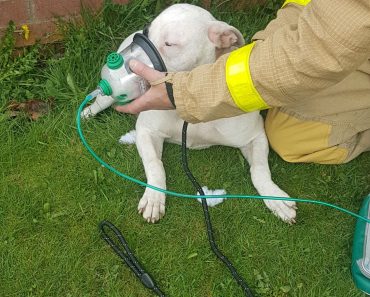
    The young dog named Tammy was in the front room of the property when a fire started from a tumble dryer in the kitchen. After rescuing her, the Merseyside based firefighters gave Tammy extra oxygen outside with a specialist pet oxygen mask to help combat the impact of smoke inhalation on her airways.


    Photo Credit: Twitter.com/MerseyFire

    The masks are becoming more widely available across the UK in an effort to save more pets rescued from house fires.

    Madeline Pike, Head Veterinary Nurse at Direct Line, explains more.

    “Although fire and rescue services only carry oxygen masks for humans as part of their standard equipment, some local services have begun trialling masks designed specifically for animals.

    “Pet oxygen masks come in three sizes and are designed to fit over the snout of an animal in order to deliver more oxygen than human masks can. Effective oxygen therapy administered on the scene can be key if resuscitation is required, but can also begin to instantly treat the initial effects of smoke inhalation.

    “Pets are particularly vulnerable during house fires because their initial instinct is usually to hide rather than flee, which makes them difficult to locate and extends their exposure to harmful smoke. Even a small fire in the home can leave pets vulnerable to illness as a result of smoke inhalation, as their airways are smaller, and more easily damaged than ours as a result.”

    “Smoke inhalation not only causes physical damage to the lining of the airways, but will also induce oxygen deprivation and a reaction to the toxicity of inhaled materials. The extent of the damage may not always be obvious, and depends on the length and degree of exposure as well as what materials were burning at the time.

    “It can take several days for signs and symptoms to appear, so often the damage can be underestimated in the initial hours after a fire when the need for treatment can be at its most critical. It is key that veterinary attention is sought for any animal involved in a house fire at the earliest opportunity, as the full effects of smoke inhalation cannot be determined instantly, and early intervention can save a pet’s life.”

  • How To Train My Dog To Recall Using A Whistle

    By far one of the most common questions dog trainers are asked is how do I teach my dog to come back when called?

    Training a dog to come back when called is a lot simpler for dog and owner if there is no confusion, no emotion and a very clear understanding on the dog’s behalf as to what they are being asked to do. With this in mind, when you train a dog to recall using a whistle dog owners will often see dramatic results as a consequence of the clarity and uncomplicated nature of this most important dog training command. Let’s face it, having a solid recall is potentially a life-saving piece of dog training!

    This video gives a nice, simple step-by-step approach to understanding how to train a dog to recall using a whistle.

    https://dogadvice.co.uk/wp-content/uploads/2018/05/H99lnvr-2.gif

  • False Rabies Rumours in Thailand Result in 1400 Dog Deaths

    False Rabies Rumours in Thailand Result in 1400 Dog Deaths

    At least 1,400 dogs have died as a result of an ongoing rabies outbreak scare in Thailand – a scare that by all verifiable accounts is not real, according to Thailand based charity, Soi Dog Foundation.

    The animal welfare charity tells us that a couple of weeks ago three thousand dogs were rounded up in Nakhon Phanom province, which borders the Mekong River, and dumped in a government pound. In the crowded conditions, diseases, particularly deadly parvo and distemper, spread like wildfire.

    In such close quarters, fights between dogs and death by starvation of small or sickly dogs, unable to compete for food, added to the toll.

    However for the 1,500 dogs who remain, there is now some hope because an Emergency Reaction Team from the Soi Dog Foundation were given permission to go into the pound to treat the dogs inside.

    The sight that greeted them was grim.

    One member of the emergency medical team described it. “I would like to stay positive, but I can’t,’ he said.

    “The pound is overcrowded and dog fights break out all the time. When it is feeding time, the weaker dogs don’t have the strength to eat. So the stronger dogs take all the food and the weaker ones don’t survive.

    “The dogs are scared, depressed, and traumatised by their experience. It’s hard to stay positive about this place. It’s simply heartbreaking.”

    Upon arrival, the team first sorted the dogs.

    The small dogs, the puppies, and the weak were separated from the large dogs, and as none of the animals are yet sterilised, the males were separated from the females.

    They also did the same with cats that had been rounded up by the local office of the Thai government’s Livestock Department.

    They then vaccinated every animal in the pound – injecting 60 an hour and daubing them afterwards with green dye so that no animal would be vaccinated twice by mistake.

    The animals may survive but they now face spending the rest of their lives in captivity. This is because officials kept no record of where each dog came from, so they cannot be returned to their home territory.

    In any case, those territories have already most likely been taken over by stronger, fitter or more wily dogs who managed to avoid the government dragnet.

    The deaths in the pound are not the only ones to result from official knee-jerk reactions to a public panic over a “rabies outbreak” in Thailand that started in the new year. The panic has resulted in public calls for all eight million street dogs in Thailand to be killed, a “solution” dubbed “Set Zero”.

    In March, 20 dogs in a Buddhist temple in the upper south of the country, including a family of puppies, were poisoned by government officials, causing outrage among animal lovers.

    Poisoning – in Thailand usually using strychnine – results in a horribly painful death for the animals, that spend hours shuddering and spasming in agony, drowning in their own fluids, before death finally comes.

    The officials later claimed that tests had shown that 16 of the 20 poisoned animals had rabies, but the test results were never released, leading to widespread suspicion that they were made up.

    A number of activist groups have come together to bring criminal charges against the officials concerned, under Thailand’s Animal Cruelty Law.

    The Thai Livestock Department has come under fire for not reassuring people that there is, in fact, no rabies outbreak at all, and for its inept and understaffed handling of captured dogs.

    In March, fuel was added to the flames when the department also came under scrutiny over alleged irregularities in its procurement of poor quality canine rabies vaccine.

    An internal investigation came to the conclusion there had been no irregularity, and that inferior-quality vaccine had not been the cause of a spike in rabies deaths at the beginning of the year.

    However, the reports of poor quality vaccine had already spread, resulting in the calls for “Set Zero”. The department has denied having any plans to kill all stray dogs in Thailand.

    Thailand has in fact been effective in reducing human deaths from rabies from hundreds a year in the 1990s to single figures in recent years.

    In 2018, to date, there have been just seven human rabies deaths.

    The Nakhon Phanom emergency is not the first time that Soi Dog has stepped in to save animals, particularly dogs, after the government has proved unable or unwilling to do so.

    In 2010 it sprang into action to successfully contain an outbreak of parvo disease through a massive vaccination programme. In 2011, it rescued thousands of dogs from devastating flooding in Bangkok and in 2016/17 it did the same during floods in the south of Thailand.

    Soi Dog – founded in 2003 by husband and wife John and Gill Dalley from Leeds in the United Kingdom – also played the leading role in stopping the horrific trade in dogs from Thailand to the dog meat restaurants of Vietnam.

    It has launched an appeal for funds to help tackle the fallout from the rabies panic, such as the horror in Nakon Phanom. People may donate through the Soi Dog website at www.soidog.org