Are you the one dog owner in the entire world who has never tricked your dog in to thinking you were about to throw something and then holding it back?
If not, you’ll probably appreciate this.

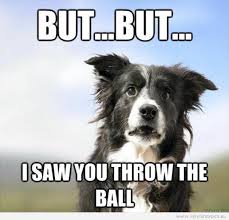
Are you the one dog owner in the entire world who has never tricked your dog in to thinking you were about to throw something and then holding it back?
If not, you’ll probably appreciate this.
Dogs have measurable IQs, like people, suggests new research from the London School of Economics and Political Science (LSE) and the University of Edinburgh.
The research, published in the journal Intelligence, looked at whether dog intelligence is structured in a similar way as in humans. When IQ, or ‘general intelligence’, is tested in people, individuals tend to perform comparably across different types of cognitive tasks – those who do well in one type of task, tend to do well in others.
For the purpose of this research, the team created a proto-type dog ‘IQ test’ which they used to assess the intelligence of 68 working Border Collies and carried out a series of tests including: navigation, tested by timing how long it took the dogs to get food that was behind different types of barriers; assessing whether they could tell the difference between quantities of food and; their ability to follow a human pointing gesture to an object.

Photo Credit: Dr Angela Driscoll/Kinloch Sheepdogs
The researchers found that dogs that did well on one test tended be better at the other tests. Furthermore, dogs that did tests faster were likely to do them more accurately.
The series of tests were conducted in under an hour per dog, which is comparable with the time it takes a person to do an IQ-type test. Again highlighting similarities between man and his best friend.

Speaking of the findings Dr Rosalind Arden, a Research Associate at LSE, said: “Just as people vary in their problem solving abilities, so do dogs, even within one breed. This is significant because in humans there is a small but measureable tendency for people who are brighter to be healthier and live longer. So if, as our research suggests, dog intelligence is structured similarly to ours, studying a species that doesn’t smoke, drink, use recreational drugs and does not have large differences in education and income, may help us understand this link between intelligence and health better.”
She continued, “In addition, dogs are one of the few animals that reproduce many of the key features of dementia, so understanding their cognitive abilities could be valuable in helping us to understand the causes this disorder in humans and possibly test treatments for it.”
New research out today has revealed that half of dog owners who have lost a pet have taken time off work to mourn their loss. A third of those who have taken time off as a result of their dog passing away, took just one day off work to deal with their grief, while an additional 29 per cent took two days off.
The research, which has been released by Direct Line Pet Insurance, highlights the deep rooted emotional attachment people have with their dogs as nearly one in five British dog owners whose pet died took a week or more off work as a result of their grief.

Photo Credit: BPPrice
While some dog owners took the time off work as annual leave, the majority (almost two thirds) were honest with their employers about the reason for their absence. Some owners, however, clearly felt embarrassed about their feelings, with one in eight phoning in sick and one in 10 claiming it was a family bereavement.
The research also highlighted that women were more likely to be honest with their employers about the reason for their time off work, with 64 per cent telling their employer their dog had died compared to just 39 per cent of men. Men were much more likely than women to tell work there had been a family bereavement.
Prit Powar, head of pet insurance at Direct Line, says: “Losing a dog often feels like losing a member of the family and our research shows that dog owners frequently need time at home to deal with their grief. Our policies include a bereavement help-line which helps owners deal with their loss. As a nation of dog lovers, it is important to recognise the emotional impact on someone who has lost a beloved pet and be sympathetic to their loss.”

Actress and well known dog lover Gemma Atkinson has this week launched her fundraising campaign in aid of Lancashire based Bleaksholt Animal Sanctuary.
A vice patron of the animal sanctuary, Gemma is taking part in the Great Manchester 10k run to raise valuable funds to build new kennels and help the sanctuary home the unwanted pets arriving in their care.

Photo Credit: Instagram/gemmalouiseatkinson
Speaking about the run Gemma said: “I used to run for Manchester as a teenager but in the 100m sprint so it’s a completely different fitness requirement to run long distance. Any donations to our just giving page will be hugely appreciated. Even £2 will help buy us some dog or cat food.”
Apparently Gemma has also promised to dress in fancy dress for the event! The sanctuary relies on donations and legacies to offer a safe haven.
Show your support for Gemma and Bleaksholt Animal Sanctuary and donate here: https://www.justgiving.com/BLEAKHOLT-ANIMAL-SANCTUARY
The RSPCA has issued advice to dog owners on the hazards of allowing their pets to be out of control around vulnerable livestock. Their advice is exemplary and whilst they’re far too polite to say it, I will…
If you allow your dog to worry sheep, at any time, you are a horrendously selfish person who is not only endangering the lives of the livestock but also the life of your own dog. DON’T DO IT!

With the traditional lambing season approaching and reports of dog attacks on sheep increasing, the National Sheep Association (NSA) and RSPCA have teamed up to urge dog owners to take extra care.
Every year sheep are killed, maimed and miscarry because of being chased and attacked by dogs. This is a serious animal welfare concern and also caused a great deal of emotional stress and financial cost to sheep farmers around the country.
Phil Stocker, NSA Chief Executive, says: “A growing number of our members continue to tell us of some horrendous attacks they have suffered to their livestock. It is not only the harrowing injuries which out of control dogs have inflicted, but also the losses they have suffered as a result of dogs simply chasing livestock.
“The risk of heavily pregnant ewes aborting is extremely high after suffering the stress of been chased by dogs, not to mention the risk of young lambs becoming separated from their mother at a critical early bonding stage. Lambs will die from starvation or hypothermia when they become separated from their mother and fail to find her again.”
NSA has been collecting evidence of sheep worrying incidents for several years now, with case after case highlighting the damage a pet can inflict when it is left unsupervised.
Tony Woodley, RSPCA Inspector, adds: “No dog owner sets out on a walk to hurt sheep but sadly that is what can happen if the dog is allowed to run loose around livestock. Many dogs, if given the opportunity, will chase or show interest in livestock so even if your pet is normally calm, gentle, obedient and docile, don’t be complacent; they can be still be a danger.
“The aftermath of these attacks can be absolutely horrific – sheep with their ears ripped off, their legs bitten down to the bone and their throats torn open. Dog owners should also remember that they could be prosecuted and their dog could be shot dead if they are caught worrying sheep.”
Both NSA and RSPCA want to reiterate to dog owners that there is there is a very simple way to stop these attacks – keep your dog on a lead around livestock.
Tips for dog owners:
· Watch for signs warning of livestock and keep your dog on a lead around farm animals and in areas you suspect animals may be grazing, or avoid them completely.
· If your dog chases sheep, report it to the farmer even if there is no apparent injury as the stress of worrying by dogs can cause sheep to die and pregnant ewes to miscarry their lambs
· Make sure your dog is wormed regularly and pick up it’s mess to stop diseases spreading to livestock
Tips for farmers:
· Put up signs warning dog owners where livestock are grazing. For free signs* email enquiries.
· Keep fencing in good repair to ensure sheep don’t stray from the area they should be in.
· Always report an incident, however minor, to the police. Lack of reporting makes it difficult to raise awareness of the severity of the problem.
NSA can supply sheep farming members with free hardwearing plastic dog control signs, carrying the NSA and RSPCA logos. As part of the NSA’s involvement in the Farmers Guardian ‘Take The Lead’ Campaign, red laminated signs are also available for non-members.
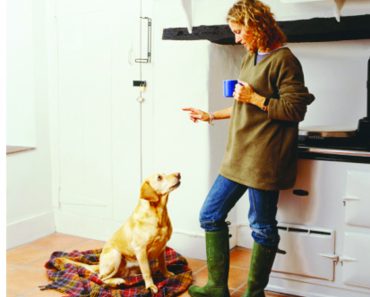
If you’re a pet owner you’re likely to be more satisfied with life, according to a new study revealed by the Society for Personality and Social Psychology Convention in San Diego this weekend (30/31st January).
The study, which was conducted by Katherine Jacobs Bao at Manhattanville College in New York, uncovered that pet owners are more satisfied with life than non-owners.
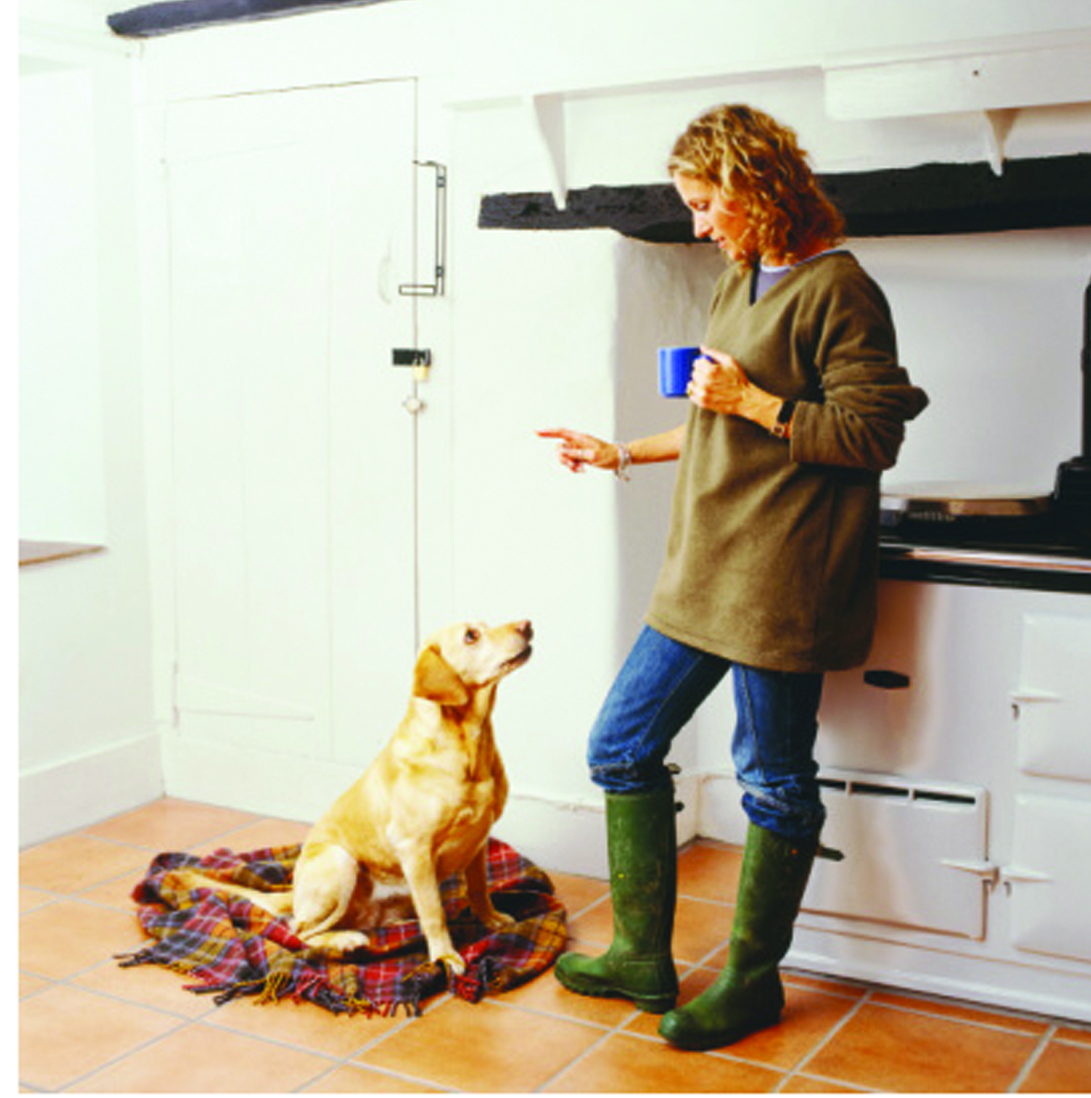
But when comparing dog owners to cat owners said: ‘Dog owners were higher in well-being, more conscientious, less neurotic, and marginally more extroverted and agreeable than cat owners.’
Miaow!
What do you think to the research? Let us know by commenting below!
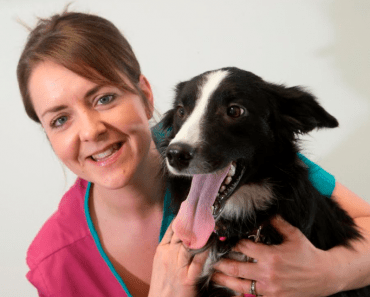
A Border Collie from Leicester has cheated death thanks to PDSA vets who battled against the odds to save her from a deadly condition.
Holly was given just a 10 per cent chance of survival when vets diagnosed her with one of the worst cases of septic peritonitis they have ever seen. Peritonitis is an inflammation of the peritoneum – the thin membrane that lines the abdominal cavity.

In Holly’s case it had developed into infected fluid filling her whole abdominal cavity, covering her vital organs.
The 18-month-old dog underwent three lifesaving operations and spent a week in intensive care at the vet charity’s pet hospital in Braunstone, Leicester.
Her owners, Alan and Jude, from Belgrave, said they were preparing themselves for the worst after PDSA vets gave them a dire prognosis.
Alan said: “Holly had been off her food and just didn’t seem herself. Initially we thought she might have worms or something but then her stomach became swollen and we began worrying it could be more serious.
“We took her to PDSA who examined her and ran some tests which confirmed that she had a very serious infection. They warned us that her chances weren’t good and we had to prepare ourselves for the worst. We were absolutely devastated.”
But following difficult operations which involved draining infected fluid from Holly’s abdomen, and treatment with intravenous antibiotics, she began to rally and showed major improvement over the next few days.
PDSA Senior Vet, Elly Hopkins, said: “Holly’s case was one of the worst cases of peritonitis we’ve ever seen at Leicester Pet Hospital.
“Miraculously, and against the odds, Holly has survived. But sadly many pets don’t survive this condition. Holly was lucky that she’s young and healthy, and it’s great that she’s gone on to make a full recovery.
Alan said the family were hugely grateful to PDSA for the treatment Holly received:
“I honestly don’t know what we would have done without PDSA, they have been amazing.
“Her treatment would have cost over £1,000, which we would never have been able to afford. We can’t thank them enough for saving Holly, it really is a miracle.”
Alan and Jude’s son Tim, was so moved by what happened he launched a fundraising challenge to give up alcohol to raise money for PDSA.
He has already raised over £200 and is being joined in the challenge by Judy and his sister Victoria. To sponsor Tim please visit https://www.justgiving.com/Tim-Gray4

TV presenter and all round animal lover Chris Packham has spoken out about Britain being a ‘dog-ist’ society by restricting dogs access in restaurants and shops.
Speaking ahead of his new BBC show ‘Cats vs Dogs’ the wildlife presenter said his two miniature Poodles are the ‘most important organisms on the planet’ and was surprised at their levels of anxiety when left.
When speaking with the Radio Times he compares the UK to France where dogs are welcomed into restaurants and shops openly saying “When I’m in France, no one gets het up at all, and why would they? The dogs sit under the table. No problem.”

Photo Credit: Graham Racher
However, as we reveal in our next ‘Pet Friendly Europe’ feature within K9 Magazine, France might not be all that dog friendly after all at first glance (outside of restaurants, bars and bakeries). Read Paul Wojnicki’s experiences of visiting France with his Jack Russell, Falco here: http://www.k9magazine.com/one-man-his-dog-discover-how-pet-friendly-france-really-is/
Could this be the most hands on animal charity volunteer in the UK? Ben Wilkes, an ex-police officer from Staffordshire, is a volunteer at the Border Collie Trust GB.
Having spent his time volunteering for 18 years he was invited to become a Trustee in 2000 and made the life-changing decision in 2004 to sell his family home in order to move into the Trust to help provide 24-hour care for the dogs, after the former residents retired from their work with charity. Initially visiting the Trust in 1997 solely to donate blankets for the dogs under its care, Ben felt compelled to pledge his spare time to the charity as soon as he stepped foot inside the centre.
While he works for the charity on a voluntary basis, he is so committed to helping Border Collies in need, that he has even recruited his own wife to the charity’s cause, with the two of them available day and night for all of the charity’s various needs. From dog collection to DIY, Ben turns his hand to the full range of tasks at the centre.

“Sometimes in life you just happen to be in the right place at the right time – and that was the case with me becoming a volunteer at the Border Collie Trust. I’m now such a part of the furniture that people are surprised when they learn I’m a volunteer – they think it’s my career! Rescue work is a very unusual beast in that it can be very unpredictable, but it’s great bringing the police force mentality to the role as it gives me real focus and structure.”
For his considerable passion and hard work, Ben was presented with Petplan’s Animal Charity Volunteer of the Year 2015 award. The accolade celebrates the outstanding work, dedication and commitment of animal charities and not-for-profit organisations across the UK and the charity teams, volunteers and employees that go above and beyond in their mission to improve animal wellbeing.
The pet insurer’s 2016 awards are currently receiving nominations – if you know someone who deserves to be nominated share their story online: www.petplan.co.uk/charityawards
Losing a pet can be like losing a piece of you. I speak from experience have lost my beautiful Labrador, Chloe, a little over a year ago. She wasn’t my first dog to pass, but she’s the most recent and I am still unsure if my age and being older made the loss all the harder to cope with or if it is deeper than that.

We are working with a client on a particular campaign to bring some more dog owners stories about grief, losing pets and circumstances around – such as how you coped and what time off work you took (as well as the reasons you gave) to the forefront of the subject and how your pet shaped your past, or future.
It’s a nice way to make them famous and give them a legacy more can read about, don’t you think?
If you took a week or so off work and have a story to tell, we’d love to hear from you.
Thanks for taking part and sharing.
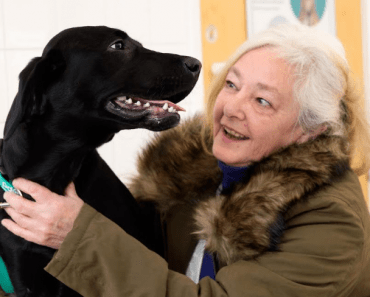
A livewire puppy from Dundee needed the help of vets after she decided to eat something she wasn’t supposed to.

Domino the Labrador has mischievously tried to get her paws on owner Norma McKenzie’s hearing aids several times before. But this time it ended in near-disaster when she managed to pull them out of their hiding place and chew them up before gobbling one down.
Stunned Norma, who requires hearing aids for occasional use, said she returned home to find six-month-old Domino chewing on one of her aids, with no trace of the other one.
The 63-year-old quickly realised what had happened and rushed Domino to PDSA’s Dundee Pet Hospital in Hawkhill, where vets gave the cheeky pup medication to induce vomiting.
Norma said: “The injection did the trick and within five minutes Domino had brought up all the different bits of the hearing aid, along with the battery! We also discovered that she’d swallowed bits from a comb, the jewel from a hairclip and even been munching on prawn crackers!”
PDSA Senior Vet Andy Cage revealed that it‘s common for dogs to swallow strange things, especially when they’re puppies. But he says it’s important to keep potentially harmful objects out of a pet’s reach.
He said: “There is a medical term for pets eating strange objects – pica. Dogs, especially puppies and younger dogs like Domino, use their mouth to investigate objects, as well as to eat. Sometimes when doing this a dog will swallow an object by mistake.
“Thankfully Norma brought Domino straight to the hospital which meant we were able to take action before it caused any serious damage.”
Vets warned that the hearing aid could have caused a tear or fatal blockage in Domino’s digestive system. The battery could also have burned her stomach lining and led to serious, even fatal, complications.
Norma, from Charleston, Dundee, said that the hearing aids weren’t the only objects Domino has taken a fancy to over the past few months:
“The one day I found her with a pair of my glasses and one of the lenses was destroyed. She’s also chewed the side of my coffee table. I heard that putting mustard on it would stop her but she actually enjoyed it and licked it all off!
“I know she’s a puppy and they do like to explore things but I’m now being a lot more careful where I put things, especially when I get my replacement hearing aids.”
PDSA vets say training pets from a young age can help to curb their temptation to chew objects, and they can learn basic commands like ‘drop’ and ‘leave’. For general advice please visit www.pdsa.org.uk
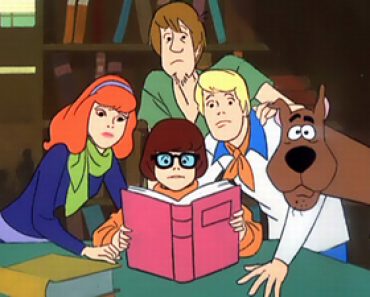
A new poll out today has revealed that Scooby Doo is the UK’s favourite on-screen dog. The longest running cartoon dog on TV, it’s perhaps no surprise he came out ahead of other canine favourites including Family Guy’s Brian Griffin and Santa’s Little Helper, the family dog in The Simpsons.

The poll was carried out by life insurance provider Beagle Street to celebrate the arrival of ‘Jeremy’, the talking dog who stars in its new TV advert and as part of the talking beagle’s debut, dog owners around the country are being offered to chance to make £100 by changing their own pet’s name to ‘Jeremy’.
Ten owners who agree to change their dog’s name using the hashtag #Jeremy on Twitter (www.twitter.com/BeagleStreet) will be sent a £100 cash payment in return for wearing a ‘Jeremy’ labelled collar for the rest of the month.
Dog owners around the country are being offered the chance to make extra money by simply changing their pet’s name to ‘Jeremy’.
Owners who agree to change their dog’s name using the hashtag #Jeremy on Twitter (www.twitter.com/BeagleStreet) will be sent a £100 cash payment in return for wearing a ‘Jeremy’ labelled collar for the rest of the month.

The stunt is being carried out by online life insurance provider Beagle Street in an effort to create a nation of four-legged ‘Jeremys’ after the star of its new TV advert – a talking dog called Jeremy.
The name-changing initiative follows research revealing Max, Jack and Daisy to be the most popular dogs names in the UK. Traditional dog names like Rover, Rex and Buddy were nowhere to be seen with the most popular list dominated by ‘human’ names including Bob, Alfie and Millie.
Speaking about the name change stunt Matthew Gledhill, Managing Director of Beagle Street, said: “There are over 9 million dogs in the UK and each name tag is a potential ad for us so we are very happy to put some pounds back in people’s pockets and make our Jeremy famous. It’s a bit barking but we’re hoping that dog owners up and down the country will help us celebrate his arrival by renaming their own furry friends – and of course there is a handsome reward up for grabs for those that do.”
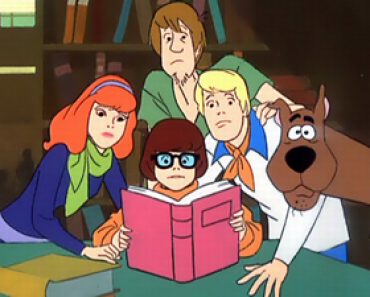
Snoopy may be stealing the headlines as the star of the new ‘Peanuts’ film, but a new poll has revealed that Scooby Doo is the UK’s favourite on-screen dog.
The mystery-solving Great Dane, and the longest running cartoon dog on TV, came out top dog ahead of on-screen favourites Lassie, Snoopy and Beethoven. Others in the top ten include Family Guy’s Brian Griffin and Santa’s Little Helper, the family dog in The Simpsons.
The poll was carried out by life insurance provider Beagle Street to celebrate the arrival of ‘Jeremy’, the talking dog who stars in its new TV advert.
As part of the talking beagle’s debut on TV screens, dog owners around the country are being offered to chance to make £100 by changing their own pet’s name to ‘Jeremy’.
Ten owners who agree to change their dog’s name using the hashtag #Jeremy on Twitter (www.twitter.com/BeagleStreet) will be sent a £100 cash payment in return for wearing a ‘Jeremy’ labelled collar for the rest of the month.