Blog

  • Ricky Gervais Tweet Helped Animal Rescue Raise Three Times as Much Funds to Help Feed Starving Dogs

    British comedian and animal advocate Ricky Gervais has shown his support for many animal welfare campaigns and openly admitted his fans and followers on social media make a real difference sharing his posts, but all the same it’s heartening to read that after a trip to the Emmy’s two social media posts from the man himself have resulted in treble the amount of funds raised to help feed the forgotten and starving animals at the Odai shelter in Romania.

    The fundraising page was set up by K-9 Angels who were alerted of the neglected dogs in the Odai shelter in Romania last week and immediately got to work to raise funds for food, beds, bowls and medical care to help support Paws2rescue on the ground in Romania. It was an amazing team effort and within days a good amount of money raised.

    Ricky Gervais showed his support over social media and shared the K-9 Angels plea to help the dogs of the Odai shelter crisis and his actions dramatically increased the amount of funds raised to help the Odai dogs.

    The Tweet and Facebook post from Ricky Gervais said:

    “OK. That’s The Emmys done. Now back to important stuff. Emergency food & aid for dogs at Odai public shelter, https://www.youcaring.com/the-dogs-of-odai-434412#.VgAqpKXS5_4.twitter… pls RT”

    The tweet received over 600 retweets and took the funds raised from £3,000 to £14,500 which was incredible. Within days the donations had trebled and Ricky, along with the donors, had literally helped to feed 650 dogs. These dogs will need ongoing food sent and as well as sanitiser, beds and medical care.

    K-9 Angels aim to raise a minimum of £30k to purchase food and medical supplies and beds for a whole year.

    As this was a crisis we had to move fast to make sure the first food packages where delivered, said Victoria Eisermann, founder of K-9 Angels, who flew out to Romania to help deliver emergency supplies purchased with the money raised with Ricky Gervais’s help while team K-9 got to work ordering additional supplies. It was all systems go to help the dogs of Odai.

    It was emotional but at the same time uplifting to be able to deliver food to the Odai dogs. Orders have been made for sanitise and beds which will be delivered very soon. Victoria says, “We will continue to raise funds to be able to feed the dogs for a year and hopefully treat some of the dogs medically.”

    Speaking of the power of social media and the cause a spokesperson for K9-Angels said: “A very HUGE THANK YOU to EVERYONE who donated and raised funds to help the Odai dogs and special thanks to Ricky Gervais for sharing our posts which was a MASSIVE help to these dogs! Amazing team work!”

    To help give the dogs of Odai a better future, show your support and donate to the cause. Visit the fundraising page here: https://www.youcaring.com/the-dogs-of-odai-434412

  • Have YOUR Say on Whether Ryanair Should Allow Dogs on Board Flights

    Budget airline Ryanair want to hear from customers about whether dogs should be allowed to fly on board as part of the airline’s “Always Getting Better” initiative which acts on customer feedback.

    Speaking to The Huffington Post UK a representative of the airline said, “This is one of a number of proposals we are looking at under our Always Getting Better programme. “We are open to lots of suggestions and it’s one we are weighing up.”

    airplane photo
    Photo Credit: thejaan

    Comment below with a Yes or No vote on whether you think dogs should be allowed to travel on board Ryanair and have your say. Feel free to include any notes, such as flight length etc and we’ll share your views with the airline.

  • How Does Your Dog React to a Human Barking?

    How Does Your Dog React to a Human Barking?

    This probably wasn’t a question you had in your mind when you woke up this morning but admit it, you want to know now don’t you!

    Lucky for us magician Jose Ahonen and comedian and voice actor Rudi Rok also wanted to know…

  • South Korean Firm Will Clone Your Dog

    South Korea’s Sooam Biotech launched its cloning laboratory in 2006 and hit the news a year later when Missy, the world’s first cloned companion dog, was announced.

    If you’ve got $100,000 going spare, the firm can clone you a dog.

    Digital Trends Reports:

    The technique to clone a dog is surprisingly simple from a theoretical standpoint. DNA from the dog to be cloned is collected from the skin or other live cells. While the cloned DNA is being processed, a donor egg is collected from a female dog and emptied of its DNA by removing the nucleus. The cloned dog’s DNA is injected into the empty egg and fused with the embryonic contents. This embryo is then implanted into a surrogate female dog who carries and delivers the cloned puppy.

    Read more: http://www.digitaltrends.com/cool-tech/dog-cloning-south-korea/

  • Hero Dog Saves Cats Dumped in Crisp Box

    The RSPCA is appealing for information after an unlikely hero came to the rescue of a cat and her kittens which had been dumped in a crisp box in Middlesbrough.

    The terrified trio had been left to die, trapped in a box with no food and water and dumped in bushes in a park under the cover of darkness.

    By an incredible stroke of luck the cats were sniffed out and saved by Vader the dog who was out on a late night walk with her owner Sharon.

    Sharon Smith, who lives near Pallister Park in Middlesbrough, said: “I had been throwing the ball for her, she went into the bushes to get it and I could she was nudging a box and whining. I knew it must be something important because she’d left her ball behind and she’s crazy about her ball.

    “I went over to take a look could see there were some holes in the box and it was moving so I called my son and he came and helped me take Vader and the box home.”

    Sharon was stunned when she opened the taped-up Doritos box and found a tortoiseshell cat and two ginger tabby kittens inside.

    She said: “When I pulled off the tape and opened the box I saw the cat and kittens inside and I was shocked. They were terrified. It was a small box for them, it was just heartbreaking.

    “It’s is disgusting that anyone would dump them like that. It’s absolutely appalling.”

    The mother cat, who is thought to be between one and two-years-old, and her kittens who are thought to be about eight-weeks-old, were taken to the vets to be checked over and are now in RSPCA care.

    RSPCA Inspector Emma Stainthorpe said: “The box was very small for the three of them, there was no food or water and the bottom of it was soiled with urine.

    “The mother cat was not microchipped so we do not know who her owner is. She is friendly so it would appear she’s been handled and was someone’s pet. It’s really important that people get their cats neutered if they do not want kittens.

    “Vader is such a lovely little dog, without her these little kittens may not have survived. She really is the hero of the hour.”

    Vader,a five-year-old white Staffordshire Bull Terrier named after the Star Wars villain Darth Vader, is being spoiled rotten as a reward for finding the dumped cats.

    Proud owner Sharon added: “I wouldn’t have looked in the box unless Vader had brought my attention to it. I thought it was just rubbish.

    “I don’t know what would have happened to those poor kittens if Vader hadn’t found the box, I dread to think.

    “Thank goodness for Vader, she really is a hero. I’ve given her three new tennis balls as a treat for finding the kittens as she was so focused on the box she lost her ball.”

    Anyone with information about who abandoned the kittens late on Tuesday 22 September can contact the RSPCA appeal line on 0300 123 8018 and leave a message for Inspector Emma Stainthorpe.

  • Help World Animal Day 2015 by Doing any of These Things

    Help World Animal Day 2015 by Doing any of These Things

    Whoever you are – wherever you are, YOU can help improve the lives of animals around the world. Don’t miss this special opportunity to help make animal welfare issues front page news.

    How many selfies do you take every week? We’re asking you to take ONE extra photo to help raise global awareness of World Animal Day – that’s all. Even if you aren’t participating in an event, you can still play an important role by sharing your #worldanimalday selfie poster with World Animal Day Headquarters and with your friends on social media to help bring animal welfare issues into the spotlight.

    Help create a Global Wave in celebration of World Animal Day!

    1. Print a Happy World Animal Day Hashtag Selfie poster for the Global Wave 2015 – with or without a pledge.

    2. Take a selfie with it – the more creative the better so it gets more likes and shares.

    3. Email it to us: info@worldanimalday.org.uk – for publication on the website, social media and share it with your contacts.

    4. Share this email with your friends, family, and colleagues.

    You must be happy to have your photo shared on social media belonging to World Animal Day HQ, Naturewatch Foundation, and other reputable organisations affiliated with us. We look forward to receiving your photos and thank you for snapping a selfie for animals!

    Each one of us can make a difference – together we make change happen!

    Can you help World Animal Day 2015 with ThunderClap?

    http://cts.vresp.com/c/?NaturewatchFoundatio/6731fb22ad/16c0461899/02731545f9

    The World Animal Day 2015 Official Music Video

  • Would Your Dog Like to Win Some of Pet Munchies New Salmon Treats?

    Would Your Dog Like to Win Some of Pet Munchies New Salmon Treats?

    We bet the answer is yes!

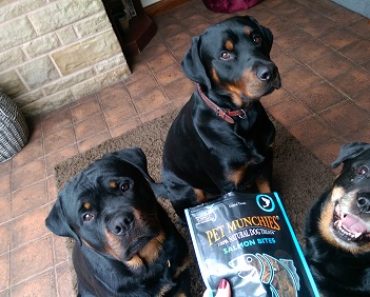
    To celebrate the arrival of Pet Munchies NEW super healthy range of 100% Natural Wild Gourmet Salmon Treats, K9 Magazine’s very own Christopher, Danny and of course, Mia, put them to the test before we launched a special giveaway offering 7 lucky readers the chance to win three packs for your own dogs to enjoy.

    Pet Munchies treats are made from quality, human grade real salmon.

    Salmon is ranked in the top ten of WHFoods due to the high level of the “ANTI OXIDANT Selenium”, making for a healthier skin and a shinier healthier coat and decreasing the risk of joint inflammation.

    A rich source of vitamins and minerals including Omega 3 and 6 fatty acids, it’s often recommended by vets as it is easily digestible and ideal for dogs with allergies as it is naturally hypoallergenic.

    Packed full of natural goodness for your dog and sealed with dogs approval. In our case, they were most certainly also opened with dogs approval!

    Christopher (with a Mia cameo)…

    Danny…

    Mia (with Danny keeping a close eye on things)…

    Enter our giveaway today here on Freepetstuff.co.uk and give your dog the chance to go to sleep dreaming of Pet Munchies, like Christopher did.

    Good luck 🙂

  • Dog Nearly Dies After Choking on Pig Treat

    Dog Nearly Dies After Choking on Pig Treat

    PDSA vets have saved the life of a dog who literally bit off more than she could chew after getting a pig’s trotter stuck in her oesophagus and a pig’s tail in her stomach.

    Maggie, a one-year-old Bullmastiff, was rushed to Cardiff PDSA Pet Hospital because she was retching and was in distress, after devouring her piggy treats.

    PDSA vets x-rayed Maggie and decided to operate after confirming the extent of the blockage.

    PDSA nurse, Karen Jones, said: “Maggie was panting heavily and had a high temperature when she first came in.

    “We warned Maggie’s owner of the high risks when operating under general anaesthetic. But it was the only way we could get the pig’s trotter out as it was lodged so far down her oesophagus. We also removed the pig’s tail that was in her stomach, as it may not have passed through Maggie’s digestive system safely.

    “Maggie was kept in overnight but made a remarkable recovery and was able to go home the next day with a course of antibiotics.”

    Karen added: “We always advise owners not to feed any type of bones to pets and this case highlights the dangers of giving such treats. We’re thankful to funding from players of People’s Postcode Lottery, which is helping us to educate owners on the type of foods and occasional treats it is safe to give.”

    Maggie’s owner, Christine Ramsay, said she was horrified about what happened, and is warning others about the dangers of feeding such treats.

    “We’ve fed Maggie pigs’ trotters before and she’s been fine, as she normally chews them. But this time she wolfed it down and it got stuck. We were so worried about her, she’s our baby.

    “We can’t thank PDSA vets enough, they did an amazing job. We are so relieved that Maggie is back to her mad, happy self.”

  • Meet Our New Hero – An 80 Year Old Texan Who Build a Train for His Rescue Dogs

    Meet Our New Hero – An 80 Year Old Texan Who Build a Train for His Rescue Dogs

    When 80-year old Texan, Eugene Bostick, retired he had no plans to spend his days taking in abandoned dogs but when residents of Fort Worth, or cities nearby, began abandoning dogs near a barn he owns with his brother (located on a dead end street) he found an unexpected calling when he began taking care of the dogs others no longer wanted.

    Speaking with The Dodo recently Mr Bostick said: “People sometimes come by and dump dogs out here, leaving them to starve. So, we started feeding them, letting them in, taking them to the vet to get them spayed and neutered. We made a place for them to live.”

    Tiffany Johnson, who says Mr Bostick is the coolest guy eventually built up the courage to ask him to take a photograph of his custom made train which she then shared on Facebook and we’re so pleased she did.

    Speaking to The Dodo about why he built the train, Eugene said: “One day I was out and I seen this guy with a tractor who attached these carts to pull rocks. I thought, ‘Dang, that would do for a dog train,’” said Mr Bostick. “I’m a pretty good welder, so I took these plastic barrels with holes cut in them, and put wheels under them and tied them together.”

    We salute you Eugene. The world needs people like you.

  • How to Maintain Longevity in Big Breeds

    How to Maintain Longevity in Big Breeds

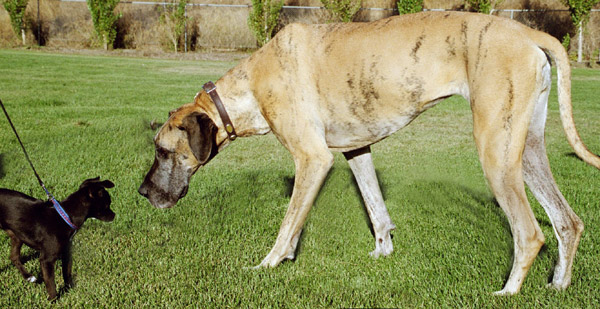
    It’s a sad statistical fact that larger breed dogs have shorter lifespans than smaller species. This is most likely due to the fact that their bigger bodies partake in more exercise and are put under more stress than a smaller dog, leading to increased wear and tear on organs, muscles, joints and coronary system.

    While a smaller dog is generally expected to live up to and sometimes beyond 14 years, larger breeds are considered senior citizens in the canine world as early as their sixth year, with the majority living to between 8 and 12 years old. As such, it’s important for owners of larger breeds to take extra care of their larger dogs to help ensure they reach their genetic potential, achieving optimal health span and a long life span.

    Big_and_little_dog

    Breed size and lifespan

    There are a number of reasons why larger dogs don’t reach the older ages that their smaller friends tend to achieve. Amongst others, these reasons include:

    Over-eating. The tendency to feed up bigger dogs can be more prevalent than with smaller ones, leading to obesity. In fact, a study of 23,000 dogs from private veterinarians across Kansas from the Mark Morris Institute found that more than a quarter of the test subjects were overweight. Such obesity is a catalyst for life-threatening diseases and ailments.

    Increased stress. The added exercise and strain that large breeds undertake puts greater stress on their bodies.

    Common joint issues. Larger breeds are more susceptible to joint issues such as hip dysplasia and arthritis, which can result in less exercise and thus obesity.

    What can you do to enhance your big breed’s life and healthspan?

    Fortunately, if you follow a few simple rules you can almost negate entirely the negative side-effects that a larger body weight entails in dogs. These guidelines will provide you with a basic structure for ensuring your large breed lives just as long as his canine brethren.

    1) Nutrition, nutrition, nutrition

    During 10 years of learning Eukanuba recently found that almost 90% of a group of 39 Labradors Retrievers fed Eukanuba, together with receiving appropriate care (regular exercise, socialisation, veterinary care), lived beyond the breed´s typical 12 years life span.

    In addition to this almost a third (28%) of the dogs achieved exceptional longevity by living beyond an incredible 15.6 years.* Utah is one of those dogs who lived to an incredible 17 years and 11 months.

    Meanwhile, the Kennel Club guidelines highlight a need to focus on bone density and joint comfort in big breeds, and that necessitates a diet containing calcium levels tailored to your dog’s age and breed. You’ll also want to ensure that your big dog’s diet includes kibble containing plenty of glucosamine and chondroitin to promote cartilage health. And remember, bone health is best addressed when your pet is still a puppy and the bones are developing.

    2) Avoid obesity

    As mentioned above, obesity is at epidemic proportions. Two portion controlled meals a day following feeding guidelines – are optimal for maintaining a healthy weight. One of the chief pitfalls to be aware of is overfeeding your large-breed dog, as weight gain puts undue pressure on joints and can lead to problems down the line.

    3) Stay active

    Make sure your dog gets enough chance to work off those calories by stretching their legs regularly, during a walk of at least thirty minutes a day, (an hour is even better). Keeping a trim and lean dog will do wonders for their long-term health.

    4) Provide adequate dental care

    Pooches over the age of three years are at risk of developing gum disease, say the American Society for the Prevention of Cruelty to Animals (ASPCA). This can act as a gateway for further dental problems, which can spread throughout the body and seriously curtail their life expectancy. You’ll want to ensure you maintain your pup’s dental health with daily brushing, dental checks at the vets and feeding a Eukanuba diet which contains a special tooth cleaning mineral to help reduce tartar build up by up to 80%* tartar-controlling treats and chews, as well as regular cleanings.

    Big breed dogs are lovable, huggable family members—but caring for them properly is a bit different than for a Chihuahua. Make sure you look after their health with care, and you could enjoy many long years with your pup’s companionship.

  • Sniffer Dog Trained to Count Harvest Mouse Population

    A flat-coated Retriever named Tui has been enlisted to detect the scent of harvest mice by tracking their presence in the countryside easier and more efficiently, meaning a more accurate picture can be built up of how many harvest mice there are in the UK.

    One of the most elusive and smallest mammals in Great Britain, finding the harvest mouse is often difficult and time-consuming, even for experts.

    Led by PhD researcher Emily Howard-Williams at Moulton College in Northamptonshire, Tui, will be trained to learn how to identify the tiny creature to shed some light on one of the most iconic species of the British countryside.

    As Emily explains, “The harvest mouse appears to have undergone significant declines in parts of the countryside, partly in response to the intensification of modern agriculture, but also due to habitat loss. Yet it still remains difficult to ascertain just how many there really are. The funding from by the People’s Trust for Endangered Species  (PTES) will help to train our resident harvest mouse detector dog, enabling us to determine whether using sniffer dogs is the best approach in tracking these creatures!”

    With the aid of a trained dog, Emily’s team will be able to survey a site more rapidly, with less margin for error. A similar method is already being successfully used in New Zealand to seek out kiwi birds. Two English setters managed to sniff out 30 birds in just four days.

    Nida Al-Fulaij, Grants Manager from PTES concludes, “We all know that dogs have an amazing sense of smell. The UK enlists the help of sniffer dogs at airports, music festivals and in the army, so why not also use them for conservation purposes to find harvest mice. The trained eye may miss a harvest mouse nest, but a trained nose is much more likely to pick up on a familiar scent and alert the handler to the presence of recent harvest mice activity in that area. We are very excited to be funding this project and look forward to seeing what results reveal about harvest mice populations in the UK”.

  • This Video Showing a Dog Begging for Forgiveness is the Cutest Thing You’ll See Today!

    This Video Showing a Dog Begging for Forgiveness is the Cutest Thing You’ll See Today!

    Okay so it’s debatable whether dogs really understand guilt but the latest video to take the internet by storm features Ettore and his Italian owner, Anthony Federica Granai, showing Ettore begging for forgiveness in the most adorable way.

    Take a look and see for yourself.

    How does your dog ask for forgiveness? Share your own funny stories by commenting below – we’d love to hear from you!

  • How Does Your Dog Ask for Forgiveness?

    Whether dogs really understand guilt is in the eye of the beholder really, isn’t it? The latest dog video to take the internet by storm is of Ettore and his owner, Anthony Federica Granai, which sees Ettore begging for forgiveness in the most adorable way.

    Take a look and see for yourself.

    How does your dog ask for forgiveness? Share your own funny stories by commenting below – we’d love to hear from you!

    Photo by oexenhave

  • Sniffer Dog Trained to Find Harvest Mouse in New Approach to Conservation

    The harvest mouse (Micromys minutus) is one of the most elusive and smallest mammals in Great Britain and finding their tell-tale signs can be a difficult and time-consuming exercise even for the experts, so it’s no surprise that when experts decided to take a new approach to find out how many there are living here in the UK man’s best friend was called in to help.

    Led by PhD researcher Emily Howard-Williams at Moulton College in Northamptonshire, Tui, a flat-coated retriever, will be trained to learn to detect the scent of harvest mice, making tracking their presence in the countryside easier and more efficient, meaning a more accurate picture can be built up of how many harvest mice there are in the UK by the People’s Trust for Endangered Species (PTES).

    With the help of Tui, who was bred from working gun dogs, Emily’s team hopes to shed some light on one of the most iconic species of the British countryside.

    Tui - Flat-Coated Retriever Sniffer Dog (web)

    As Emily explains, “The harvest mouse appears to have undergone significant declines in parts of the countryside, partly in response to the intensification of modern agriculture, but also due to habitat loss. Yet it still remains difficult to ascertain just how many there really are. The funding from PTES will help to train our resident harvest mouse detector dog, enabling us to determine whether using sniffer dogs is the best approach in tracking these creatures!”

    Emily Howard-Williams & Tui the sniffer dog (web)

    With the aid of a trained dog, Emily’s team will be able to survey a site more rapidly, with less margin for error. A similar method is already being successfully used in New Zealand to seek out kiwi birds. Two English setters managed to sniff out 30 birds in just four days.

    Nida Al-Fulaij, Grants Manager from PTES concludes, “We all know that dogs have an amazing sense of smell. The UK enlists the help of sniffer dogs at airports, music festivals and in the army, so why not also use them for conservation purposes to find harvest mice. The trained eye may miss a harvest mouse nest, but a trained nose is much more likely to pick up on a familiar scent and alert the handler to the presence of recent harvest mice activity in that area. We are very excited to be funding this project and look forward to seeing what results reveal about harvest mice populations in the UK”.

  • 5 Tricks to Convince People You’re a Professional Dog Trainer

    5 Tricks to Convince People You’re a Professional Dog Trainer

    5. At all times wear a whistle around your neck. Shopping. Weddings. Funerals. Always wear a whistle around your neck and have a leash hanging from your back pocket. If anyone is confused and asks you why you are wearing a personal safety alarm, tell them: “No. I’m a professional dog trainer. Now, sit!”

    4. Never, ever, ever, EVER agree with another dog trainer about ANYTHING, EVER! If you’re committed to convincing people that you really are a pro dog trainer you will fail immediately if you agree with other dog trainers about a single, solitary thing. Particularly dog training methods, techniques and philosophies. You are a pro dog trainer. You, and only you, know what methods are the ‘best’. All other dog trainers are only there to be disagreed with. However, if you ever find yourself in the unfortunate position of being in a room where there are three professional dog trainers you must simply work with one of the other dog trainers to agree that the third dog trainer is wrong about everything. That’s the only time you can agree.

    3. Seen a dog trainer on TV? Any dog trainer? Well, they’re wrong. About everything. Got it? They’re wrong and you should make absolutely sure everyone knows that YOU know they’re wrong.

    2. Heard about someone else’s dog training qualifications? Discredit them. Immediately. Doesn’t matter where they got them, how hard they worked for them or who issued the qualifications, they’re no good. You have a choice of three responses – a) “That’s a bogus qualification from a discredited teaching establishment.”

    b) “That qualification is outdated and anyone can pass an online course that takes just three minutes.”

    c) “I don’t believe in qualifications. I’m a university of life professor. In fact, dog trainers that are qualified are probably dangerous and will definitely try and make your dog join some sort of cult.”.

    1. There have been thousands of books written about dog training over the past hundred years. Millions and millions of words committed to print on the topic. Guess what? All wrong. Every last one of them. If you meet an ‘ordinary’ dog owner and they tell you what book(s) they’ve read, scoff. Scoff loudly. Doesn’t matter if you’ve heard of the book or its author, that book is wrong, its advice is dangerous, the author is (probably) a drunken fraud who has been discredited by the Internet. If anyone ask you what books you would recommend, the answer is obvious. Your own books. If you haven’t written a dog training book yet then get it done. Come on. You’ve been pretending to be a professional dog trainer since you started reading this article. That’s plenty of time to get a book written on the subject. Get on with it!