Blog

  • What Is Tuks Law?

    What Is Tuks Law?

    A petition has launched in the name of a rescue dog named Tuk in a bid to create a new law that would mean vets would be legally required to scan for rescue back up contact details on microchips and confirm the person presenting the animal is registered on the microchip prior to euthanising a healthy or treatable animal.

    In the case of Tuk, this appears not to have happened when he was taken to a veterinary practice and as such, he was put to sleep without his back up rescue being contacted.

    What Tuks Law Is Calling For

    The petition has been started to make it law that no healthy animal can be destroyed by a vet without first scanning the pet’s microchip to confirm the person requesting euthanasia has the authority to do so and that the dual registration contact detail (i.e. an animal rescue and owner) on the microchip is contacted and honoured.

    This is relevant because typically animal rescues microchip pets in their care at the time of carrying out essential healthcare treatments, such as vaccinating and spaying/neutering. This usually occurs before new owners have been found for the pet and so the details registered for microchips belong to the rescue.

    Once animals are rehomed, rescues remain a presence in their life, offering rescue back up to new owners for the duration of the pet’s life. They are on hand for advice and should owners no longer be able to cope or care for the pet, the rescue’s contract typically stipulates the pet returns to their care where they will find alternative care. This is to prevent the pet from being sold on by owners, as appears to have been the case for Tuk (without his back up rescue’s knowledge).

    Tuks Law would also request that vets seek alternative options in non-life threatening/non-emergency situations.

    On behalf of the petition, a spokesperson said: “We recently met with Zac Goldsmith from DEFRA to discuss our concerns and we are also awaiting the revised response from the government regarding the petition as the petition committee agreed with us that the original response was not addressing the main points of concern.

    “We have also recently met with Niall Cornell the president of the RCVS who disappointedly was not aware that rescue organisations dual register their contact details on microchips or offer rescue back up in times of vulnerability.”

    Read more about the petition here.

  • Animal Rescues in England Can Begin Rehoming Again (Here’s a Blueprint from the RSPCA)

    Animal Rescues in England Can Begin Rehoming Again (Here’s a Blueprint from the RSPCA)

    New UK Government approved guidelines allowing safe rehoming and fostering means animal charities can start finding homes for animals in England, the RSPCA says.

    Frontline teams from charities, including the RSPCA, have continued to rescue animals throughout the crisis but they have been unable to find them new homes, meaning that thousands have remained in its care.

    Now Defra has approved guidelines, put together by the Canine and Feline Sector Group, to allow animal welfare charities in England to rehome safely during the pandemic.


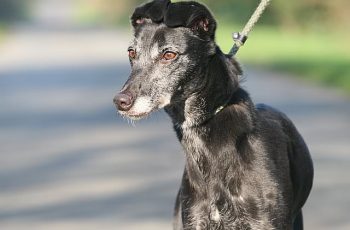
    Polly is in the care of Greyhound Gap and looking for a new home

    The RSPCA will start finding homes for the animals in its care using a new safe process in line with Defra-approved guidance for England, which includes:

    – Completing adoption/inquiry forms online

    – All adopters or fosterers must live within about an hour’s drive of the centre where the animal is being cared for

    – All discussions will take place via phone or video call

    – Adopters and fosterers will get to ‘virtually meet’ their potential pet with videos sent to show them their behaviour and give them a deeper understanding of their pet’s personality

    – Home visits will be done virtually, through photos or video walk-through the home

    -All pets will be transported to their new homes and handovers will observe social distancing

    The RSPCA says its animal centres will remain closed to the public until further notice. Full guidance from the Canine and Feline Sectory Group is available here and recommended reading for relevant animal rescues.

    The UK’s largest dog adoption website, dogsblog.com, is trialling a video initiative to help rescues looking to begin using video regularly as part of its adoption process.

    If you are a rescue looking to start using video or looking to adopt a dog and willing to take part in the trial, please contact dogsblog.com by emailing here to take part.

  • Shenzen Bans Consumption of Dogs, Cats & Wildlife, Which Cities Will Follow?

    Shenzen Bans Consumption of Dogs, Cats & Wildlife, Which Cities Will Follow?

    China’s city of Shenzhen has just passed a ground-breaking law to ban the consumption and production of dog and cat meat, the first city in China to do so. The ban has been welcomed by long-time anti-dog meat trade campaigners Humane Society International as a watershed moment in efforts to ban the trade across China.

    The food safety legislation (Shenzhen Special Economic Region Regulation on a Comprehensive Ban on the Consumption of Wild Animals) proposed in February by Shenzhen legislators, comes into effect on 1st May.

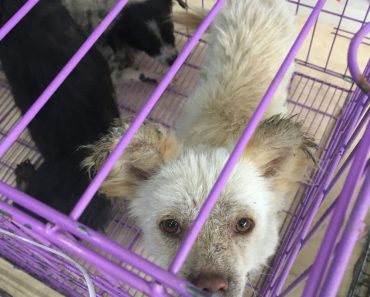
    A dog rescued from a Yulin slaughterhouse, pictured at a rescue shelter in North China / Photo Credit: HSI

    Unlike the temporary ban on wildlife markets and consumption passed by the national government, Shenzhen’s ban is a permanent prohibition on the consumption, breeding, and sale of wildlife such as snakes, lizards, and other wild animals for human consumption, with heavy fines of up 150,000 yuan.

    Although advanced in response to the coronavirus outbreak, an unrelated ban on the consumption of “pet” animals was also included in acknowledgement of their status as companion animals. In announcing the ban, a spokesperson for the Shenzhen government said “… dogs and cats as pets have established a much closer relationship with humans than all other animals, and banning the consumption of dogs and cats and other pets is a common practice in developed countries and in Hong Kong and Taiwan. This ban also responds to the demand and spirit of human civilization.”

    To further underpin that, the law clarifies those species permitted to be consumed (pig, cattle, sheep, rabbit, chicken etc, with dogs and cats noticeably absent). Therefore from May 1, the sale of cats and dogs for human consumption will now be banned in restaurants and stores throughout Shenzhen, and sale of live cats and dogs for consumption will be banned in markets.

    Dr Peter Li, China policy specialist for animal protection charity Humane Society International, welcomed the news, saying: “With Shenzhen taking the historic decision to become mainland China’s first city to ban dog and cat meat consumption, this really could be a watershed moment in efforts to end this brutal trade that kills an estimated 10 million dogs and 4 million cats in China every year.

    The majority of these companion animals are stolen from people’s back yards or snatched from the streets, and are spirited away on the backs of trucks to be beaten to death in slaughterhouses and restaurants across China.

    Shenzhen is China’s fifth largest city so although the dog meat trade is fairly small there compared with the rest of the province, its true significance is that it could inspire a domino effect with other cities following suit. Most people in China don’t eat dog or cat meat, and there is considerable opposition to the trade particularly among younger Chinese.

    Although World Health Organisation advice is clear that dogs and cats pose no known coronavirus threat whatsoever, it’s no surprise that attention is turning to this trade at this time because it undoubtedly poses a huge human health risk for other diseases such as rabies, as well as causing immense animal suffering.”

    Dr Teresa M. Telecky, vice president of the wildlife department for Humane Society International, said: “Shenzhen is the first city in the world to take the lessons learned from this pandemic seriously and make the changes needed to avoid another pandemic. People around the world are suffering the impact of this pandemic because of one thing: the wildlife trade. Shenzhen’s bold steps to stop this trade and wildlife consumption is a model for governments around the world to emulate. We urge all governments to follow suit by banning wildlife trade, transport and consumption for any purpose.”

    UPDATE APRIL 2020

    The city of Zhuhai in Guangdong province has become the second city in mainland China to ban the consumption of dog and cat meat, and of wildlife.

    Zhuhai’s ban comes after China’s Ministry of Agriculture and Rural Affairs publicly stated that dogs are companion animals and not “livestock”. The Standing Committee of the People’s Congress of Zhuhai Municipality stated that lawmakers must adhere to China’s livestock “white list” of animals for human consumption.

    Other cities in mainland China are believed to be considering bans.

  • What Happens to My Dog if I Get Sick With Coronavirus?

    The RSPCA is encouraging dog owners to plan for their pet’s care in the event of a healthcare emergency.

    The animal welfare charity is asking owners to fill in an emergency pet care form and display this visibly in their home to ensure that should the worst happen there will be someone there to care for their pet.

    Dr Samantha Gaines, head of the companion animals department at the RSPCA, said: “Although no one wants to think about the worst happening, in these strange and challenging times it’s important to consider what would happen to our pets if we become ill, are hospitalised, or pass away.

    https://i.imgur.com/m7kKOeM.png

    “The RSPCA is urging pet owners to take steps to set up a care plan for their pet in the event that they can no longer care for them. Think about who would look after your pets and have a chat with your family, friends and neighbours to make sure they are happy to take on this responsibility. They will also need to know where to find guidance on Coronavirus and pets so that they can keep themselves and your pet safe.”

    In order to make it easy for people to display these details, the RSPCA has put together an animal care form for pet owners to fill in and display on their fridge, as well as a notice to place in your front window to let people know that pets are inside.

    The charity hopes this will provide peace of mind that your pet will be looked after if you can no longer do so.

    Samantha added: “We know that this is a really concerning time for people and understandably pet owners may be worried about what might happen to their pet if they were to become very poorly. This is why displaying your pet care plan with the contact details of the next of kin will provide vital information about them and ensure that your pets get the care they need.”

    To download and print* your pet care form, visit: https://www.rspca.org.uk/coronavirus

    If you are worried about your pet’s health but you don’t think it’s an emergency or urgent vet care problem, you could consider an online veterinary consultation via an app.

  • Lockdown Update: RSPCA to Provide Emergency Service During Coronavirus Crisis

    Lockdown Update: RSPCA to Provide Emergency Service During Coronavirus Crisis

    The RSPCA will be providing an emergency-only service to animals through the coronavirus crisis in the wake of the Government’s lockdown.

    The animal charity which has a team of frontline officers, 17 animals centres, four wildlife centres and four animal hospitals across England and Wales, has reassured animal lovers they will still be dealing with emergency cases but are now closed to the public.

    They are advising anyone who is sick or has symptoms of Coronavirus to have “someone else in the household take care of their pets or ask a friend, family member, neighbour etc to help”.

    The move also follows the rise in pet owners opting for online veterinary consultations to get information on non-urgent pet health issues.

    RSPCA Rescue Centres:

    Rehoming and fostering have been paused but will resume as soon as it is safe.

    The organisation says “Staff and volunteers will be focusing on giving love and attention to the hundreds of animals in our care.”

    The 17 centres (including wildlife centres) are:

    South Godstone, Lockwood and Millbrook, Surrey
    Leybourne, Kent
    Gonsal Farm, Shropshire
    Great Ayton, North Yorkshire
    Felledge, County Durham
    Blackberry Farm, Buckinghamshire
    Block Fen, Cambs
    Stapeley Grange, Cheshire
    Southall Cattery, London
    Ashley Heath, Hampshire
    Southridge, Herts
    Gonsal, Farm, Shropshire
    Birmingham
    Bryn-y-Maen, Upper Colwyn Bay
    Newport

    There are over 150 RSPCA branches, registered charities in their own right, which are part of the RSPCA family running vital clinics, rehoming centres and charity shops.

    Centres and shops are now closed to the public and individual branch policies will be outlined on their own social media channels and/or website detailing any emergency services offered.

    RSPCA Hospitals:

    The organisation’s four hospital teams in London, Birmingham and Manchester are still working to help emergency cases of sick and injured animals, prioritising animals rescued by frontline staff, but also providing services to our clients on an appointment only basis.

    RSPCA 24-Hour Rescue Line:

    The animal charity will also be manning its 24-hour rescue line, albeit with fewer hands, so are asking people to call only in the event of an emergency.

    Chief executive, Chris Sherwood, said: “Despite most of the country staying at home there are still animals which need our help and I’m so incredibly thankful for frontline officers helping animals in emergency situations, our hospital workers for providing emergency treatment and our centre staff and volunteers who are giving love and affection to the hundreds of animals in our care.

    “We’ve taken steps to make sure that we are dealing with emergency cases only so we can play our part in stopping the spread of this virus and safeguard our staff and volunteers.

    “We rely on the public’s help and we would ask them to only call our helpline in an emergency and visit our website for all other enquiries.”

  • 15 Life-Threatening Emergencies That Require Urgent Vet Care

    Emergency vet care advice during the coronavirus / covid-19 UK lockdown.

    The UK government’s coronavirus measures have given millions of animal lovers more time than ever with their pets — and more concerns than ever about what might happen if they become ill.

    While veterinary practices across the country are allowed to stay open under the current lockdown restrictions, face-to-face contact has been reduced and guidance from the veterinary surgeons’ regulatory body, the RCVS, has restricted veterinary care to emergency treatment only.

    All veterinary clinics, hospitals and practices have now switched to fulfilling urgent prescriptions and providing emergency pet services only.

    But what is an emergency? Here are some of the conditions that emergency vets deem to be potentially life-threatening. These have been compiled by leading emergency vet, Dave Leicester, Head of Clinical Intelligence at Vets Now.


    1. Breathing difficulties

    Signs of breathing problems may be obvious, such as choking, gasping and pawing at the throat. Or, they may be more subtle such as breathing through the mouth, panting at rest or increased noise when breathing. Objects stuck in the airway, allergic reactions to stings, infections and injuries are all possible causes. Breathing problems can be immediately life-threatening in pets, so help should be sought immediately. Find out more about breathing difficulties in dogs and cats in our advice in-depth advice articles.

    2. Open wound injuries

    Heavy bleeding should always be considered an emergency and any bleeding that is a constant flow (especially if pulsing) or doesn’t stop in a few minutes also needs to be seen by a vet urgently. If you are able to safely do so, you can apply firm pressure on the wound, and raise it above the level of the patient’s heart, to slow the bleeding before getting to the vet.

    3. Traumatic injuries

    If your pet has been injured in a fall, from a window for example, or been hit by a car, they may have suffered serious internal injuries that aren’t immediately obvious. Many animals suffering from chest trauma may seem fine initially but can die later from severe bruising to the lungs. So do seek urgent veterinary help and advice.

    4. Bloating in dogs

    Bloating can be a sign of something called gastric dilation and volvulus, GDV, which is also known as torsion. It is a medical and surgical emergency which can be rapidly fatal if left untreated, but the good news is the survival rate of dogs who undergo emergency surgery after being diagnosed is as high as 80%. If you see your dog retching unproductively, or only producing froth, or developing a swollen abdomen, get help immediately.Find out more about bloat in dogs here.

    5. Failing to urinate

    This can happen to any animal but is most common in male cats. If your pet can’t urinate it can lead to kidney failure, bladder rupture and death from internal poisoning. Signs can be confused with constipation, so if you see your male cat constantly straining in the litter tray you should get urgent veterinary advice.

    6. Seizing and fitting

    Prolonged or frequent seizures can be deadly but regardless of whether your pet has had one fit or several, you should contact your vet or your nearest Vets Now urgently.

    7. Poisoning

    If you know your dog has eaten something poisonous – or even suspect it – call for help. Although many poisons can be counteracted with prompt action, waiting for symptoms to appear makes this harder and the chances of success drop rapidly.

    8. Eye injuries

    Although damage, infection or injury to the eyes is unlikely to be life-threatening, they can threaten your pet’s sight and have a profound impact on their lives, not to mention cause them pain and discomfort. Eye problems can progress very rapidly, so do not delay getting attention.

    9. Repeated vomiting

    It’s quite normal for animals – dogs in particular – to be sick every now and again, so this isn’t necessarily an emergency. But if your pet is repeatedly sick, is generally unwell, can’t keep water down, is vomiting blood, or also has diarrhoea, then you should get them checked just in case.

    10. Birthing difficulties

    Most dogs and cats give birth without any problem quite happily on their own. However, as a rule of thumb, female dogs shouldn’t go more than two hours between puppies, bleed a lot, or strain hard for more than 20 minutes without producing anything. It’s similar for female cats, although if they are straining non-productively for 20 minutes, consider it an emergency.

    11. Severe pain and anxiety

    If your pet is showing signs of severe pain or anxiety, they may well be warning you of serious unseen internal problems. So, trust your pet’s warning signs and contact your vet.

    12. Heatstroke

    Heatstroke occurs when a pet can no longer regulate their own body temperature and keep it at a normal level. It is the result of overheating, for example when pets are left in a hot car or conservatory. Organ damage can happen very quickly as a result of heatstroke and sadly it can be fatal. But cooling them down too fast can actually make your pet worse, so always urgently seek your vet’s advice.

    13. Near-drowning

    If you pet has been pulled from water, make sure she’s checked by a vet as soon as possible. Animals, like humans, can suffer from secondary drowning where lung damage can cause them to die minutes, or even hours, after being brought from the water.

    14. Inability to weight bear or move limbs

    Although broken bones or paralysis may not be life-threatening on their own, your pet may be in pain and there may be other injuries that need checked out. Pets with such difficulties may need urgent treatment.

    15. Collapse

    Acute collapse in dogs may see your pet lose consciousness or they may remain conscious but seem anxious, confused or have a “glassy-eyed” appearance. If you pet collapses, even if they recover spontaneously, you should seek help from a vet straight away.
  • Battersea Shares Glimmer of Hope During Coronavirus Crisis

    Battersea Shares Glimmer of Hope During Coronavirus Crisis

    More than 150 Battersea dogs and cats found loving new homes last week as the British public opened their doors and hearts to rescue pets amid this unprecedented health crisis.

    At such a challenging time, Battersea saw a small ray of hope as its staff managed to rehome a great number of animals – more than double the figures for the same week in 2019.

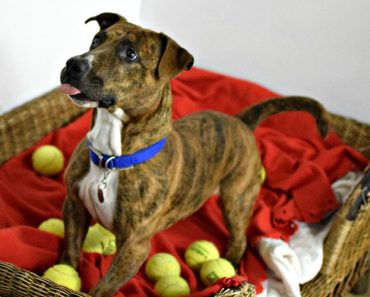
    Last week (Monday 16 – Sunday 22 March), 69 cats and 86 dogs, including Tuplip pictured below, left Battersea for a new life with their owners. During the same week last year, 42 dogs and 29 cats found new homes.

    Battersea’s Head of Operations, Rob Young, said: “We want to thank all these new owners for thinking of rescue pets at such a challenging time.

    “All three of our Battersea centres are now closed to the public, but many of our animals are now in loving homes or out on temporary foster with our staff and volunteers. Battersea are still caring for around 100 animals at our three centres and working hard to ensure each and every dog and cat continues to get the treatment, care, love, play and interaction they need.

    “Those wishing to rehome a dog or cat are welcome to fill out a rehoming application on our website and, as soon as we’re able, we’ll be reopening and working to continue finding new homes for our wonderful animals.”

    Adopting a dog or cat is a big commitment, regardless of the circumstances. Battersea offers ongoing advice and support to everyone who rehomes a pet from us. During these challenging times, we have established a dedicated dog and cat behaviour advice line on 020 3887 8347 (open Mon-Fri 8am-5pm).

  • Dogs May Be Able to Help Prevent the Spread of COVID-19

    Dogs May Be Able to Help Prevent the Spread of COVID-19

    A charity that specialised in training dogs to detect cancer (among other things) is looking into whether dogs can play a role in preventing the spread of Coronavirus.

    The organisation has spent years successfully researching the science behind dogs’ sense of smell and believes that dogs could detect the disease. It has always adopted a rigorous, scientific approach to its work, and produced more than a dozen peer reviewed research papers which support its belief that each disease has its own unique odour.

    Medical Detection Dogs will be working in partnership with the London School of Hygiene and Tropical Medicine (LSHTM) and Durham University, bringing together the team which recently collaborated to successfully prove that dogs can be trained to detect malaria.

    Together they have started preparations to intensively train dogs so they could be ready in 6-8 weeks to help provide a rapid, non-invasive diagnosis towards the tail end of the epidemic, and approached government about how dogs can play a role in the fight against the disease.

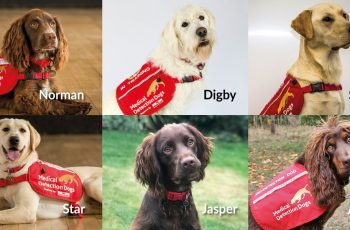
    Meet Norman, Digby, Storm, Star, Jasper and Asher! They are being trained to detect coronavirus and could be able to pick up the scent in 6-8 weeks. They will be trained using be deactivated (dead) virus samples
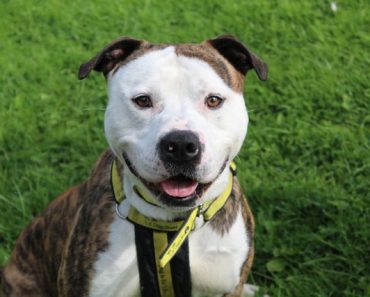
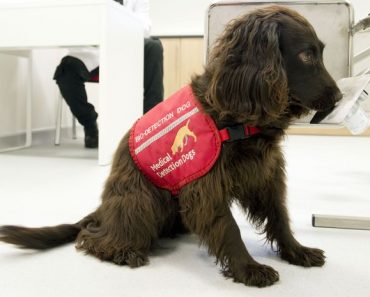
    Dogs searching for COVID-19 would be trained in the same way as those dogs the charity has already trained to detect diseases like cancer, Parkinson’s and bacterial infections – by sniffing samples in the charity’s training room and indicating when they have found it. They are also able to detect subtle changes in temperature of the skin, so could potentially tell if someone has a fever.

    Once trained, dogs could also be used to identify travellers entering the country infected with the virus or be deployed in other public spaces.

    Dr Claire Guest, CEO and Co-Founder of Medical Detection Dogs, says: “In principle, we’re sure that dogs could detect COVID-19. We are now looking into how we can safely catch the odour of the virus from patients and present it to the dogs.

    “The aim is that dogs will be able to screen anyone, including those who are asymptomatic and tell us whether they need to be tested. This would be fast, effective and non-invasive and make sure the limited NHS testing resources are only used where they are really needed.”

    Professor James Logan, Head of Department of Disease Control at The London School of Hygiene & Tropical Medicine, and Director of ARCTEC, said: “Our previous work demonstrated that dogs can detect odours from humans with a malaria infection with extremely high accuracy – above the World Health Organisation standards for a diagnostic.

    “We know that other respiratory diseases like COVID-19, change our body odour so there is a very high chance that dogs will be able to detect it. This new diagnostic tool could revolutionise our response to COVID-19 in the short term, but particularly in the months to come, and could be profoundly impactful.”

    Professor Steve Lindsay at Durham University says: “If the research is successful, we could use COVID-19 detection dogs at airports at the end of the epidemic to rapidly identify people carrying the virus. This would help prevent the re-emergence of the disease after we have brought the present epidemic under control.”.

  • Coronavirus Crisis: Dogs Trust Announces New Measures to Protect Staff & Visitors

    Coronavirus Crisis: Dogs Trust Announces New Measures to Protect Staff & Visitors

    Dogs Trust has announced temporary changes to its activities following Government advice to limit non-essential contact. The measures come as the charity tries to protect the health and wellbeing of its staff and visitors, whilst continuing to carry out the essential work of caring for and rehoming dogs.


    Rubble is currently in the care of Dogs Trust Merseyside

    As of 20th March, Dogs Trust rehoming centres have moved to an appointment-only system for potential adopters and all centres will be closed to walk-in members of the general public until further notice.

    The charity will also run appointments for people who wish to give up their dog for any reason. People who have a current reservation or are due to collect their new family member will not be affected and can contact their local centre by phone of they have any questions.

    The charity is also postponing all non-essential community events and has suspended Dog School training classes for the time being. Those wishing to donate any pre-loved items to the charity are asked not to bring donations to the centres or shops in person, until further notice.

    The charity’s staff will be limiting all unnecessary social interaction, practising frequent hand washing with soap and sanitiser, and visitors will be asked to wash their hands or use hand sanitiser before and during their visit.

    Adam Clowes, Director of Operations at Dogs Trust, said: “The health and wellbeing of our staff and our local communities is of paramount importance to us. We will continue to monitor and follow advice from the Government and are doing what we can to limit non-essential travel and contact.

    “We need to continue our essential work of caring for and rehoming as many dogs as we can in a way that aims to protect everyone involved in the process. That’s why we will be closing our centres to walk-in members of the public from Saturday but continuing to offer people opportunities to adopt a dog by appointment only.

    “If you feel unwell or are experiencing any symptoms, or if you or a family member are self–isolating, we ask that you please don’t attend your appointment but call us so we can work out the next steps for you.

    “Everyone can keep up to date with all of our latest news via our website and social media platforms which we will keep updated regularly.”

  • Can Dogs Sniff Cancer in Other Dogs?

    Can Dogs Sniff Cancer in Other Dogs?

    A study into whether cancer detection dogs can sniff cancer in another dog’s urine sample is being carried out for the first time in the UK by the charity Medical Detection Dogs this month.

    The project will investigate what would be a cheap, rapid and non-invasive diagnostic test for canine bladder cancer by training dogs to detect cancer from the odour of urine samples.

    Four dogs, a mixture of Labradors and Spaniels, are taking part in the trial project with a view to two working full time on it if the project is successful.


    Photo Credit: Twitter/Medical Detection Dogs

    The proof of principle study will investigate this innovative test, which has the potential to make dramatic improvements to the diagnosis and outcome of canine bladder cancer.

    Currently, experts say that Canine Urinary Transitional Cell Carcinoma (TCC) is hard to diagnose because it can look like several other urinary tract disorders when tested for, meaning diagnosis can be tricky. One current possible method of looking for TCC is cystocentesis – when a needle is inserted into the bladder to take a sample of urine – but is best avoided as it can risk spreading the tumour.

    Definitive diagnosis requires taking tissue from the suspicious area so a medical scientist can look at it under a microscope which is invasive. This is not only costly but it delays the results and therefore a dog’s treatment.

    So if this project proves successful, it could be an easier and non-invasive way to diagnose dogs with bladder cancer.

    The idea for the project first came when Medical Detection Dogs CEO and Co-Founder, Claire Guest, took her own cancer detection dog, Daisy, to Vet Oncologist at Davies Veterinary Specialists, Isabelle Desmas-Bazelle, for treatment for cancer.


    Claire and Daisy / Photo Credit: Darcie Judson

    During the meeting, they started to question whether canines could detect cancer in other canines and Daisy was presented with some samples of urine from dogs with and without the disease. She picked out the positive samples quite easily.

    Claire Guest says: “Dogs are renowned for their sense of smell and we know from many years of the dogs’ ability to detect human cancer, that it is a disease that has characteristic odours that they can pick out very successfully.

    “It seems obvious that they could do the same for canine cancer and as the current screening tests are often inaccurate, not to mention very unpleasant for our beloved pets, we are very much looking forward to showing that dogs themselves could be the key to diagnosing this disease early in their four-legged counterparts.

    Isabelle Desmas-Bazelle says: “Current methods of diagnosis can be slow and yield misleading outcomes – for example, a positive result can be because of other non-cancerous conditions such as infection. This means that vets may target infection when in fact the dog could have cancer.”

    If this project is successful, it could also add to Medical Detection Dogs’ understanding of what the profile for cancer smells like and provide more information for their cancer detection dogs to learn from in the future.

  • Suspended Sentences Handed Down to Kent Family Found Guilty of Animal Welfare Offences

    Suspended Sentences Handed Down to Kent Family Found Guilty of Animal Welfare Offences

    Two members of the same Kent family were handed suspended sentences this week for a string of animal welfare offences connected with running a puppy farm and cock fighting.

    John Cook and William Cook, both of Longfield Avenue, Longfield, near Dartford, all appeared at Sevenoaks Magistrates’ Court in January for a four-day trial.

    John and William both faced a number of offences under the Animal Welfare Act. John was accused of causing unnecessary suffering to dogs for failing to provide them with veterinary care and keeping them in unsuitable conditions, and William faced a number of charges related to keeping cockerels to fight.

    John Cook pleaded guilty to a number of offences and William Cook was convicted of offences under the Animal Welfare Act. The pair were sentenced at Medway Magistrates’ Court on Tuesday (25 February).

    John Cook was sentenced to 90 days in prison – suspended for two years – and ordered to complete 160 hours of unpaid work. He was ordered to pay £1,000 in costs, a victim surcharge of £115 and was disqualified from keeping dogs for three years.

    William Cook was given a 120-day prison term – suspended for two years – and ordered to complete 200 hours of unpaid work. He was also ordered to pay £1,000 in costs, a £115 victim surcharge and was disqualified from keeping all animals for three years.

    RSPCA officers executed a warrant at a property in Kent on 31 July 2018 after concerns were raised by members of the public who had bought puppies from the family.

    Eighteen dogs, including spaniels and beagles, were removed along with two cockerels.

    RSPCA inspector Carroll Lamport – from the charity’s Special Operations Unit, which investigates serious and organised animal crime – said: “Many of the dogs being kept at the site had health and welfare problems, including untreated gastrointestinal and dental issues.

    “We also had serious concerns over the conditions they were being kept in. The dogs and puppies were being kept in dirty, wet conditions with no bedding.”

    Officers also seized a number of mobile phones from the site and a suspected cockfighting pit was discovered during the warrant. Analysis of the phones showed the brothers had been involved with fighting and the pit was forensically tested by experts who discovered the blood of at least four different types of cockerels.

    In mitigation, the court gave John Cook credit for his guilty pleas and heard that William Cook was remorseful.

    The judge said that the living conditions of the animals were not appropriate and that issues should have been recognised earlier. He labelled William Cook’s involvement in cockfighting as ‘abhorrent’. He also commended the charity for doing a good job preparing the case.

    John Cook entered a guilty plea to a fraud offence (where he dishonestly made false representation as to the condition and breeding of puppies being sold, contrary to Section 2 of the Fraud Act 2006) in April 2019 and was sentenced to a 12-month prison term – suspended for two years – and was ordered to pay £1,000 in compensation and £1,000 in costs. William Cook entered a not guilty plea and the case was dropped against him.

  • Dog Attacks on Livestock Declines in Scotland, Wales and Northern Ireland – But Rise in England

    Dog Attacks on Livestock Declines in Scotland, Wales and Northern Ireland – But Rise in England

    New research has revealed that dog attacks on livestock have declined over the last 12 months in Scotland, Wales and Northern Ireland, but rose in England and farmers have estimated the cost of life to be in the region of £1.2m.

    Farmers are urging dog owners to keep their pets under control to help save lives, especially during peak lambing season which is fast approaching.

    A survey commissioned by NFU Mutual reveals that 63% of dog owners are letting their pets roam free in the countryside, despite half admitting their dog doesn’t always come back when called and so the insurer is calling for dog owners to ensure their pets are under control at all times when livestock are nearby and to report out-of-control dogs to a local farmer or the police.

    Rebecca Davidson, Rural Affairs Specialist at NFU Mutual, said: “A significant number of dog owners still don’t realise that their much-loved pet is capable of attacking and killing large numbers of lambs and sheep. Even if a dog doesn’t make contact, the distress and exhaustion of the chase can cause sheep to die or miscarry their lambs.

    “Although we are encouraged that 95% of dog owners would put their pet on a lead if a sign warns livestock are nearby, we’re alarmed that more than half are leaving their dogs unsupervised outside their homes when they are out – particularly when one in six admits their dog has escaped from home.”

    With many families expected to visit the countryside during school half-term holidays, NFU Mutual is issuing the following advice:

    • Always keep dogs on the lead when walking in rural areas where livestock are kept
    • Be aware that even small lap dogs can attack and kill farm animals
    • Report attacks by dogs and sightings of dogs roaming the countryside to local farmers or the police
    • Familiarise puppies with farm livestock from a young age to reduce the risk of them attacking sheep or cattle as adult dogs
    • Don’t let dogs loose in gardens adjoining livestock fields – many attacks are caused by dogs which escape and attack sheep grazing nearby

  • This 10-Year-Old Dog Has Just Received an Award for the Best Reason

    This 10-Year-Old Dog Has Just Received an Award for the Best Reason

    A 10-year old Recovery Assistance Dog called Milli, who has been credited with saving her owner’s life and improving her mental health, has just received an award for devotion to her owner.

    Cocker Spaniel Milli has been a loyal companion and source of comfort to her owner, Liz Maitland, from Leicestershire since she was a puppy.


    Photo Credit: Alex Cantrill-Jones / ACJ Media

    Liz, who admits she has had a life-long struggle with her mental health and has attempted suicide in the past, says Milli has been an integral part of her recovery and self-care journey. Milli is always by Liz’s side, keeping her calm and supporting her whenever she feels anxious.

    She said: “Life had become unbearable before Milli came along. I was in a downward spiral and I couldn’t see a way out other than suicide. Every day was a struggle.

    “Dogs have always been a big part of my life and following a particularly difficult period, I was encouraged by my family to look into getting a puppy. I struck up an immediate bond with Milli, she made me feel at ease and I knew I now had someone who would always be there for me. I learned a lot about the benefits of Recovery Assistance Dogs and I decided to train Milli to be one. Her presence keeps me calm and if I ever feel stressed or anxious, she makes me feel safe. Whenever I feel uncomfortable Milli will touch me for reassurance and put space between me and other people.

    “I don’t think I would have survived without Milli. She has given me a reason to live.”

    Liz is also committed to helping other people who have gone through similar experiences in their life. In 2004 Liz set up Recovery Assistance Dogs (RAD), a charity that trains dogs like Milli and highlights the benefits of dog ownership on people’s mental health and wellbeing.


    Photo Credit: Alex Cantrill-Jones / ACJ Media

    As well as their work with RAD, the duo also work with student social workers to teach them about the benefits of recovery assistance dogs, as well as appearing at events to talk about their work.

    Milli was presented with her PDSA Commendation by Philip Shanks, Client Services Manager at a special ceremony at Leicester PDSA Pet Hospital.

    Philip said: “We were all incredibly moved by the unwavering affection and support Milli has shown over the years – she is a worthy recipient of this award.

    “The strong bonds between pets and people are well-documented. As well as providing companionship, our research shows they can play a crucial role in helping improve people’s mental health. Milli has been a constant source of comfort and safety, and I am delighted that their bond has inspired Liz to help other people who need support from companions like Milli.”

    Liz concludes: “I couldn’t be prouder of Milli, she is my best friend and really deserves this award. She has given me the courage and strength to step forward and live a happy life. I hope the PDSA Commendation will mean we can raise awareness of the importance of recovery assistance dogs and the role they play in helping people. We are going to celebrate with friends by heading out to our favourite restaurant.”

  • Dog Dental Care: How to Take Care of Your Dog’s Teeth in 3 Steps

    Dog Dental Care: How to Take Care of Your Dog’s Teeth in 3 Steps

    Did you know that regularly brushing your dog’s teeth as part of a home dog dental care plan could go a long way to helping you keep your dog’s teeth and gums healthy?

    A BBC study recently claimed that tooth brushing is ‘the ‘gold standard’ for oral hygiene in both cats and dogs’.

    Here are three simple steps to take to care for your dog’s teeth and gums (two of which you can do at home!).

    1. Learn how to brush your dog’s teeth

    Believe it or not, taking care of your dog’s mouth is as important as taking care of your own and learning how to brush your dog’s teeth and gums at home isn’t as daunting a task as it sounds for you or your dog – I promise.

    However, the earlier you start, the easier it’ll be to get your dog comfortable with the practice and establish a daily routine.

    I’ve found that it’s actually a great way to get some one-on-one time with your dog because you force yourself to find some quiet time for you and your dog, away from any and all distractions.

    This article on Dogadvice.co.uk is packed with advice on the practicalities of cleaning a dog’s teeth and gums, helping to avoid bad breath and dental disease as part of a good home based dog dental care plan.

    Carole Matthews shares her personal top tips on how to choose the right dog toothbrush for your dog’s breed and age to how to get your dog used to the taste of doggy toothpaste and comfortable with the feeling of a toothbrush roaming around their mouth.

    She says it’s all about taking small steps and making sure your dog’s happy throughout the process.

    Read more here

    2. Seek out toys and treats to help

    The pet market is full of goodies to help keep dogs happy and engaged.

    Dental chews such as Pedigree® DentaStix Twice Weekly™ are scientifically proven to help reduce tartar build-up and help to keep a dog’s teeth and gums healthy and strong.

    Chew toys, such as rope toys, will encourage dogs to use their teeth to play with the toy and can help to remove and reduce tartar build-up too.

    My own dogs need no extra encouragement to have a game of tug-o-war, often starting in one room and ending in another!

    3. Book regular check-ups with your vet

    Our dogs mouths play a key role in virtually everything they do. If they suffer from any form of discomfort in their mouths, whether as a puppy or older dog, it really could make life less enjoyable, impacting on everyday activities.

    The best way to reinforce your efforts at home with toys, chews and brushing your dog’s teeth and gums, is to establish a routine of visiting your vet or vet nurse every six months for a dental check-up.

    This way, if any problems begin to develop, your vet or vet nurse will be able to spot signs quickly.

    This article is sponsored by PEDIGREE® DentaStix Twice Weekly™.

  • Warning Over Dog Sickness Bug Spreading the UK

    Warning Over Dog Sickness Bug Spreading the UK

    Dog owners are being asked to remain vigilant as gastroenteritis spreads the UK.

    The dog sickness bug has already been reported by vets in Gloucestershire, Derbyshire, Lancashire and Oxfordshire.

    Gastroenteritis is the inflammation of the stomach and intestines and dogs can catch from bacteria, viruses, such as parvovirus, parasites, medications, or even new food. According to the Blue Cross, underlying health problems such as liver or kidney disease can also cause gastroenteritis and are more likely to affect older dogs and cats.

    The most common signs of gastroenteritis in dogs often involve abdominal discomfort alongside pale gums, loss of appetite, low energy, vomiting and diarrhoea (if bloody this indicates a more aggressive form of gastroenteritis called haemorrhagic gastroenteritis).

    Vomiting and diarrhoea can result in dehydration, which if left untreated can be very serious.

    Dogs usually recover within a few days, but it is especially important to seek advice for very young or elderly dogs quickly. If you spot any of these signs, speak with your vet to share symptoms and put a treatment plan in place.