If you are having trouble with housetraining your dog, the quickest way to get around the problem and make a diagnosis is to know your pet’s history. Knowing how your dog has been performing at home yields important information to the veterinarian and helps narrow the diagnosis. Here’s how you can help:
1) For urinary accidents, note if your dog is passing water more oftentimes; producing normal, smaller or larger amounts of urine; dribbling while walking; leaking while relaxed or sleeping; or wetting when excited or frightened.
2) For fecal accidents, take a sample to the veterinarian. If your dog defecates in changer’ id=’spin_0′ onclick=’ShowSpinOptions(0)’>front of you, doe she appear to be straining or pooping while he’s walking upright? Look at the stools: Are they loose, runny, firm, hard, blood or mucousy? Are stool volumes less or more often than normal? Is your dog defecating more often?
3) Report any changes you’ve noticed in your dog, such as increased drinking or vomiting; reduced or increased appetite; weight, skin or coat changes; lethargy; panting; anxiety; fear; lameness or difficulty getting up; or reluctance to play or exercise.
4) Think about any changes or new events in your dog’s life that preceded or coincided with his housetraining accidents. A new member in the household? A change in diet, supplements or medications? A horrific event? Be sure to report anything new to your dog’s veterinarian.
err: Do Not Withhold Water
What goes in must come out, so some dog owners might find it alluring to simply reduce the amount of water their dog drinks or withhold water completely at night or while they’re absent.
This could be a very dangerous thing to do. There are medical issues such as kidney problems or urinary tract infections where the dog actually needs to drink more water. Withholding water from a dog with low-grade kidney problems might lead to dangerous kidney failure.
Depriving a healthy or ill dog of water could also lead to new or worse pre-existing problems. That said, there are some young dogs that just love to drink water, so they wet far more often. In those cases, restricting water to some extent is the only way that the dog can be a happy, functional member of the family. Unfortunately, many dogs do not outgrow this.
If you suspect that your dog is lapping up water because it makes him happy to do so, discuss your suspicions with your veterinarian and get a veterinary exam to rule out any conditions that could cause increased thirst.
Whether a dog owner has just brought home a new dog, or they are ready to begin improving the relationship with an older dog, owners have a lot to consider when figuring out just how they will accomplish training their new or old best friend. From tried and true methods, to wacky gimmicks, to systems that just don’t work, there are so many ways to train dogs that owners (and their dogs) often end up so confused that limited to no results are accomplished. The reasons for the failure in any training system can quickly be analyzed to reveal that the failure most probably occurred due to lacking one of the three critical components (for both dog and owner).
When evaluating a dog training method, one of the most important factors is motivation. Motivation most often comes from what psychologists and trainers call positive reinforcement. Simply put, it is what everyone looks forward to about dog training, often taking the form of treats, toys, or praise. Not every dog has the same motives for working, so selecting the correct motivator, or lure is critical for training. Now the limitation to simply using a lure is that it isn’t always alluring…This is where the structure comes in.
Structure comes in the form of showing the dog what to do even if your doing Dog Training in San Diego. A lure can, in many situations, offer enough motivation and structure of what to do but eventually, a dog will probably need some guidance. An example of the need for structure is when a dog bolts for the front door while being trained with a lure to perform a command. Although the dog may have a firm understanding of what a command should mean, the overwhelming influence of the doorbell may override the lure’s ability to motivate the dog to perform. In this case, something must be used to stop the dog from bolting to the door. A leash, physical touch, standing in front of the dog, or simply asking again for a behavior (giving a command) may represent enough structure to keep the dog performing a desired task. Without the structural component, the dog may run to the door, thereby only learning to repeat the mad dash next time. The occasional ‘mad dash’ is what is ruining our consistency…
Consistency is probably the most important factor that can have a positive influence on a dog’s behavior even when your in San Diego Dog Training your new pet. The consistency of ‘doing’ what is right can only be learned from ‘doing’ what is right (practice makes perfect). Expecting the dog to figure out on his/her own what to do in a confusing situation will slowly eat away at the performance of the desired behavior. The proper application of motivation and structure can help the owner keep the consistency, but it is up to the owner to stay consistent.
By using this model for a foundation of training, a dog owner, and dog, can build and maintain a happy and successful relationship. Punishment is not needed in this model, and both owner and dog will confidently understand and uphold their roles in a household. Understand that all components of this model are required to achieve the most success, and your dog will thank you for it!
Your diet plays a critical role in determining your total health. The same is the case with your pet. So , it only appears reasonable if you pay rather more attention while choosing dog food for your pet. These are some straightforward tips and proposals that will help you select the right dog food for your pet.
Checking the ingredient list is the first step in selecting the right dog food. Before you purchase any dog food, ensure that you go through the list of ingredients fastidiously. Check if the product includes any ingredients that would be harmful for your dog’s health. Also, if the product includes meat spinoff, chicken derivative, birds derivative meat and bone meal in the first 5 ingredients, then you need to desist from the product.
Besides ingredients ; another thing to be observed out for is the nutritional value of dog food. It’s essential the product must have adequate quantity of all the essenatial nutrients. In addition to checking the nutritional value; it is suggested that you should always check the share of calories as present in a dog food. If a specific dog food is noted to be running high on the calorie content; it’s better to refrain from buying such dog food.
The dog food needs to be better to the nutritive duty of your dog. This criterion of selection is imperative because different races of dogs have sundry requirements of nourishment. It’s been noted the smaller dogs are more in need of carbohydrates. On the other hand the dogs which are huge in size need more of minerals and vitamins quantity. So first update yourself about the nutritive wants of you dogs. Only then purchase a dog food which is able to meet the required nutritional requirement.
Another important thing in this context is additives. Nearly always dog food which is ready to be loaded in preservatives which may not be good for your pet’s health. While choosing dog food; keep a watch on the preservatives as be loaded in a particular food product. Some of the preservatives that may prove detrimental to the fitness of your pet are BHA, ethoxyquin and BHT. These the chemicals as present in a selected food have the potentiality of triggering in a condition of cancer in the canines. You should generally go in for dog foods which have preservatives in the shape of Vitamin C and Vitamin A.
Look for APHIS paperwork. Dog foods that are warranted by APHIS are a safer bet than the ones that come without certification. APHIS authorized dog foods make use of human grade ingredients. So, with these foods, you can be absolutely guaranteed that they won’t harm your dog. Besides, you may also consult your pet about the food brands that would work fine for your pet.
Choosing dog food with extra care and caution is essential. While the wrong dog food could deter the general fitness of your child, the right food can play a big role in keeping your pet healthy. So, watch out when selecting dog food.
If you have a dog as a family pet I think you’ll confirm that they’ve added so much happiness and love to your life. They are the embodiment of unconditional love and friendship . They really don’t ask for too much, maybe just a kind word, a pat on the head and a game of fetch every once in a while. They are just so happy to be your friend and share their life with you.
So when you consider what they give to you, you know you want to be in support for them when an malady or chance event strikes. But a humongous vet. bill could be devastating . And having to choose between your best friends health and the family budget can be a terrible choice too. That’s why dog health insurance can be one of the best ways to show that you care and are thinking ahead for your best friends wellbeing.
Also advancements in veterinary medicine have provided for so many more alternatives today. In days past many diseases and/or accidents would be considered life ending for many dogs. Now heart conditions, hip problems and other circumstances can be treated. Though at a price that many family budgets can’t afford. That is why finding the best dog insurance at a reasonable price can be the reaction.
Every day checkups and regular handling can also be covered by dog health insurance. Expensive vaccinations and protection procedures, such as teeth and ear cleaning and de-worming can be part of a sensibly priced dog insurance plan. And as you know, if you provide for the regular checkups and treatments, major illnesses can be avoided or lessened.
So what is the best dog insurance for you? It depends on the age of your dog, the breed and your family budget. Pet health insurance can range from $10 to $70 per calendar month. And as you should expect, the $10 per month alternative will just be the bare bones coverage. So think long and hard on what coverage will be sufficient for your dog. Over the life of your loved one the best dog insurance will cover the predictable stuff, but also be there for the unexpected illness or accident. And isn’t that what insurance in general is there for most – the unexpected.
Cancer in pets is more common than you think. It is the number one natural cause of death in geriatric cats and dogs and accounts for nearly 50 percent of pet deaths each year. Some breeds are especially susceptible to cancer.
Although the leading cause of death in older cats and dogs, cancer also is the most treatable disease when compared to life-limiting diseases such as congestive heart failure, renal failure and diabetes. An educated and dedicated veterinary health care team is essential to caring for cancer-stricken pets. (more…)
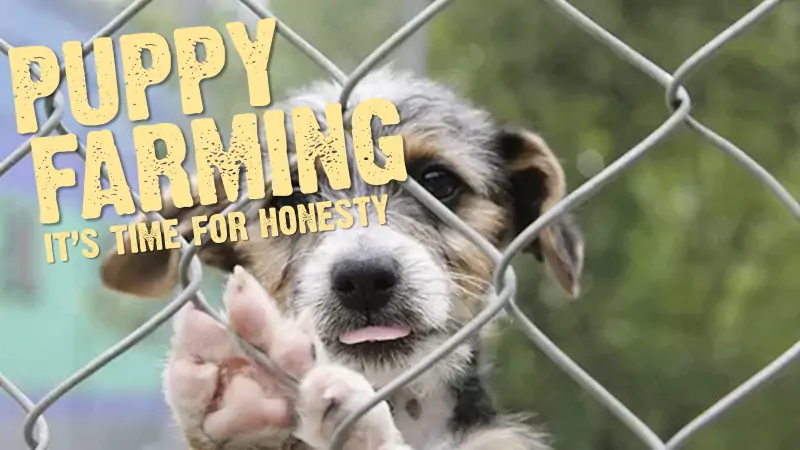
As dog lovers, we must all, surely, feel a massive twang of pity and regret when we think of those puppies who have been bred for profit by breeders who are interested only in how to produce maximum volume of ‘stock’ with scant regard for the welfare, health or temperament of the animals they churn out month by month, year by year.
Puppy farms (or, as they are known outside of the UK – puppy mills) are alive kicking.
But how? Buy why?
Let’s see if we can find out…
I believe the media has been very generous to the people who, it could easily be argued, are REALLY responsible for the growth in puppy farms.
Puppy farmers aren’t the ONLY ones to blame for misery
The people I speak of are those who willingly dig in to their pockets and get their wallets out, to hand over cash to the cynical puppies- for-profits breeders – aka puppy farmers – who couldn’t care less about the fundamental principles of breeding good, healthy, well balanced dogs.
The puppy farmer only exists because people keep giving them money.
In all the coverage given to the puppy farming debate, have we missed the most obvious of points? That if people simply stopped fuelling this trade, we might actually get somewhere?
Don’t get me wrong, I have a huge moral and ethical objection to the people who trade in the suffering and misery of mass produced dogs. We can’t legitimately call ourselves a nation of animal lovers whilst we allow this to happen.
But, the fact is, these puppy farms would be a thing of the past if:
1) People refused to buy puppies from pet stores (and yes, I include the celebrities who buy from famous department stores in that – no GOOD breeder will EVER allow their stock to be ‘retailed’ in a pet store.)
2) People educated themselves on how to acquire a new dog, responsibly, rather than rushing out to buy a puppy from the first litter they see advertised in the free classified ads newspapers or websites.
Seriously, if those two things happened – the puppy farmer is left with no business. No trade. No customers. No money. No motivation to keep producing puppies.
Let’s think about it for a second; if people didn’t purchase from puppy farms and from pet shops, there’d be none.
So why do people do it?
Some of them are misguided, misinformed. OK, I accept that. But even so, in this year, in this day in age with ALL of the wealth of information that exists about how to obtain a dog responsibly, is it REALLY a valid excuse any more? I mean, really?
And for everyone who accidentally, unintentionally winds up putting money in to the pocket of puppy farmers, there’s certainly more folk who do it and who couldn’t really care less either way.
Whilst it is an ongoing disgrace that puppy farms are allowed to thrive and prosper in a country where laws, legislation and enforcement of such establishments have never really been properly crafted to a point where they have been forced out of business, whilst the demand exists – the puppy farmer will thrive.
If puppy farming is to be defeated, the first point of action needs to be in changing the attitude and behaviour of the people who are putting their money in to keep the puppy farms in business – that’s puppy buyers!
Look at this way; if there was ZERO demand for cocaine, would the governments of the world even need to make laws and spend BILLIONS on trying to combat traffickers around the globe? Of course not!
Zero demand for a product or service means the supplier is automatically redundant. They become extinct. It’s the laws of economics, supply and demand.
And let’s establish one thing, for the record, puppies are NOTHING like cocaine. So our failure to combat puppy farmers is interlinked, exclusively, with our failure to convince enough people of the right and wrong ways to acquire a dog ethically and responsibly. There is no chemical ‘high’ to be gained by buying a puppy from a puppy farmer.
How can we change this? How do we push for a culture change?
It’s going to be hard and I feel it’s going to take something big. But I am 100% convinced that even if we were to bring in laws that would legislate against puppy farms, if there is still a 10 or 20% demand from the same sort of people who acquiring their dogs from puppy farmers today, the laws themselves won’t be enough.
The media who carry adverts for puppy farmers, they are guilty as sin.
There are some big name, very profitable media businesses out there profiting from the misery of dogs. Whether they knowingly take adverts from puppy farmers or not, whether the fact that puppy farming in and of itself is NOT illegal (a disgrace in itself), surely there has to be an ethical, honest way to deny puppy farmers the oxygen of publicity? If people and businesses aren’t prepared to step up, how do we ever expect the public to understand that
Just because a litter of puppies is advertised in a ‘legitimate’ publication, it doesn’t mean the puppy has been bred responsibly
Just because a litter of puppies is for sale in a pet shop with a licence, it doesn’t mean the puppy has been bred responsibly
Just because a litter of puppies has been bred by a ‘licenced breeder’ it doesn’t mean the puppy has been bred responsibly
If we really want to tackle the blight of puppy farming, puppies produced in dank, squalid conditions with profit as the only motive, then we – all of us honest, caring dog owners – need to speak up, speak out and repeat the following mantra:
“If you buy from a puppy farm, you’re as guilty as the puppy farmer. If you don’t have the knowledge to avoid a puppy farmed dog, then you’re not yet ready to own a dog.”
What more do we need to do to, once and for all, put an end to the misery of puppies bred for profits?
Owners of older dogs often notice begin to notice a bluish white film start to develop over the eyes of their dog. As dogs age, eye problems – particularly cataracts – are more common. The condition is a thickening of the lenses, which is a function of age. It can become present in dogs of any age but normally happens as the dog enters their senior years and it tends to progress slowly. (more…)
How To Keep Your Puppy Busy While Learning At The Same Time: Looking for fun games that your puppy can enjoy? Check out these tantalizing activities that you can get a puppy of any age involved in.
Grooming Made Fun
Probably one of the most important things to do is groom and brush your puppy. So what better way to start on the right foot than to make it a pleasant experience? (more…)
“I have a two-year-old female Dalmatian. She has never given me any real problems – except one – If the front door is open and I’m not watching, she’s gone like a flash! When she’s in the backyard, she comes to me when I call. When she splits through that front door though, the words ‘come here’ seem alien to her. Any suggestions? I’m afraid she’ll get run over by a car and I don’t want to tie her up.” (more…)
If anyone has had experience with this newly revived (remade) Dutch breed, I’d be interested in hearing it, especially re their temperament.
I’m really wishing I could read Dutch right now, as it says the breed was formed from Friesian “Bykes”. My FIL was Friesan, but I have no idea what a “Byke” is. (OK, just found it. It is a small mole dog.)
“The Markiesje was a well known spaniel in the Netherlands in the 18th century and had the same ancestors as other toy spaniels, the King Charles Spaniel in England and the Epagneul Nain Continental (Papillon and Phalene), except that the Markiesje was somewhat larger and looked more like the larger spaniels.
The dogs that were too small to be used as hunting dogs became women’s lap dogs. These “non-useable” little dogs were often seen in the patrician households. They were black or black with small white markings and were called Dutch spaniels. The same type of dog in red and white was usually called an Italian spaniel. In bed the little dogs served as foot warmers and in the bedroom they kept out the rodents. According to the legend, the breed name, the “Markiesje”, referred to the Marquise de Pompadour, the famous mistress of Louis XIV.
But it could come from the French word “maquer”, which refers to a pointing breed, or from the habit of Spanish ladies to carry them around in baskets. Various French queens reported that these little dogs were their favorite companion dogs. They all had drop ears and only in the 19th century did some toy spaniels develop the semi-erect ears.”
Did you know that your dog can live three weeks without food but will die within days without water? Water is necessary for all digestive processes as well as temperature regulation, nutrient absorption, and as a transportation medium, shipping things between organs and out of the body.
How much water your dog needs depends on his physical activities and the type of food he eats. Panting is your dog’s way of sweating. If your dog is sweating, he needs a drink. Dry food also encourages thirst. Because dry food contains only 10 percent moisture, your dog will need about a quart of water for every pound of dry food.
On the other hand, canned food or home-cooked diets contain more water and require less to rinse and wash down. This quality of canned and home-cooked food does not necessarily make them a superior food source, however.
Water is vital for survival. Make sure clean water is always available for your dog. Provide clean water in a stainless steel dish and change it regularly. Keeping it off the ground in a dog bowl stand will also help to keep germs, pet hairs and floor bound dirt away. Each time you fill your dog’s bowl, rinse it to clean off dirt and other nasty particles that don’t belong in a fresh bowl.
There is a significant difference between humans and dogs in their need for carbohydrates and in their ability to digest them. The digestive tract of a human is longer than that of a dog, and the formation of jaws and teeth is entirely different. A dog’s digestion starts in the stomach. Dogs’ teeth – all 42 of them – are built to tear flesh apart. Dogs gulp their food as fast as they can, which then reaches the stomach with no digestion having taken place.
Human digestion starts in the mouth. A human chews food with 32 teeth, which have flat surfaces for grinding and breaking down food. Enzymes contained in the saliva contribute to this breakdown of the food, which is being digested before it reaches the stomach.
Carbohydrates come in two forms, simple and complex. Simple carbohydrates come from grains such as wheat, corn, rice, oats, soy and millet.
They break down into starches and sugar when properly cooked. Complex carbohydrates come in the form of various fibres such as brans, hulls and peanut shells from the outside of plants. A small amount is needed for proper digestion and stool formation. Nutrients are obtained from both sources, but most come from simple carbohydrates.
If carbohydrates are a major part of your dog’s diet, the time and energy needed for digestion increase, the dog performs less well, large amounts of stool are produced, and a protein deficiency disease may develop. Dogs have evolved as meat eaters and although they need some grains, their health and longevity will be better served on a diet containing more animal protein than protein from grains.
Think about the origin of the dog.
It is unrecorded in history that wolves lit fires and cooked grains picked in fields! But there were whole carcasses available that contained everything needed for wolves to survive, including predigested vegetable matter in the intestinal tracts of their prey.
The reason the majority of dry dog foods contain such large amounts of cereal grains is that grains are a cheap source of nutrients. According to the NRC guidelines, “Carbohydrates provide an economical source of energy in the diet of dogs.”
In some cases, some dogs don’t want to eat because of their environment. One of my dogs for example, eats less if he has to stoop for the bowl – a raised dog bowl solved his problem. In other cases, your dog might just know best and by refusing to eat he’s doing all he can to tell you this.
Allergic reactions to grains are common in dogs. The best diet for your dog matches that fed in the breed’s country of origin as the breed developed. Each dog is an individual, and if yours refuses to eat his food, check the grains listed on the package. It could be your dog is allergic to one of the grains in their food which is why they don’t want to eat.
Every wolf pack has a leader, also referred to as the alpha figure. This wolf, sometimes a male, sometimes a female, controls many aspects of pack life, including, to a degree, defecation and urination rights and spots. Dogs, of course, are directly descended from wolves and now live in human packs. Problems arise when an individual dog, either through his genetic makeup or improper training by his owner, comes to think of himself as the leader of the pack. (more…)
Dogs Do Not Learn By Dominance And Submission: Many people believe that dogs learn by dominance and/or submission. This is an interesting theory that appeals to our sense of logic and the way nature appears to be ordered from the point of view of the human ego. Supposedly, dogs can learn to respect another individual through dominance. This presupposes that they can perceive another being’s point of view. Humans can indeed entertain others’ points of view, yet we know that no one learns to work effectively through the dominance/submissive model. (more…)
When your puppy is small, you should not expect him to be perfect all the time. Neither should you overwhelm him by correcting everything at once. Instead, concentrate on the more serious behavior problems, working with them as they show up. (more…)