
Tag: endbsl

  • Could The UK FINALLY Be Set To Abolish Breed Specific Legislation?

    Could The UK FINALLY Be Set To Abolish Breed Specific Legislation?

    The RSPCA has today welcomed an inquiry by the Environment, Food and Rural Affairs (EFRA) Committee into the current legislation on dangerous dogs.

    The announcement comes almost two years after the RSPCA – the country’s largest and oldest animal welfare charity – launched its high-profile #EndBSL campaign, calling on the UK Government to review Section 1 of the Dangerous Dogs Act (DDA) 1991 which, under Breed Specific Legislation (BSL), prohibits the ownership of four types of dogs: pitbull terrier, fila Brasiliero, dogo Argentino, Japanese tosa.

    Today, EFRA has launched an inquiry into this legislation following considerable debate about the effectiveness of banning dogs based on their breed or type.

    https://i.imgur.com/NYuSvnr.png

    RSPCA dog welfare expert and lead author of the charity’s report – Breed Specific Legislation: A Dog’s Dinner – Dr Samantha Gaines welcomed the move: “We are really pleased that Parliament has listened to the concerns raised by us and dozens of other animal welfare charities and organisations, not only here in the UK but also around the world.

    “Launching this inquiry is an important step towards the ultimate goal of our #EndBSL campaign – to repeal Section 1 of the law and replace it with legislation that not only better protects dog welfare in this country, but also effectively protects public safety.

    “Since this legislation was brought in almost 27 years ago, hospital admissions in England due to dog bites have continued to increase showing that the targeting of certain types of dogs simply isn’t working.

    “Not only is the legislation failing to protectthe public, but it is also failing dogs. Thousands of dogs have been kennelled unnecessarily and huge numbers put to sleep over the years simply for looking a certain way and that’s a serious welfare and ethical issue.”

    Data collected by the RSPCA has shown that of 37 people who have died in the UK in dog-related incidents since 1991, 28 involved breeds/types not prohibited by law*.

    “There is no scientific basis to BSL,” Dr Gaines added. “There’s no robust scientific evidence to suggest the types that are banned pose a heightened risk to the public compared to other types and no research that shows dogs traditionally selected for fighting are inherently aggressive or that their bite style could cause more serious damage than another dog.

    “The simple fact here is that the way a dog looks is not a predictor of whether he or she is a risk or is likely to be aggressive. Aggression is a much more complex behaviour than that and any dog, regardless of its breed or type, has the potential to be dangerous if they are not properly bred, reared or given the right experiences in life.”

    More than 67,000 people have signed the RSPCA’s #EndBSL petition – calling for the launch of an inquiry – and organisations around the world have stood side-by-side with the charity.

    “The Dangerous Dogs Act was brought into force in 1991 following a number of high-profile dog attacks but, since it’s launch, has proven to be ineffective at protecting public safety and unjust for thousands of dogs who have lost their lives just for looking a certain way,” RSPCA public affairs manager, David Bowles, said.

    “Our campaign has had support from organisations around the world and, in many countries, there is now a trend to repeal BSL with a focus on encouraging responsible dog ownership and improving education around dog safety.

    “The RSPCA has long been calling for a legislative framework that uses effective laws and enforcement to tackle dog-related issues regardless of the dog’s breed or type; encourages responsible dog ownership; ensures better education, particularly targeted at children, who are most vulnerable to dog bites; and gains a better understand of why dogs bite so steps can be taken to address the reasons and reduce risk.”

    The RSPCA will now be working on a submission for the Committee’s consultation and will continue to work tirelessly to bring about a change in the law.
  • Breed Specific Legislation – Cruel, Costs The Tax Payer Millions & Protects Nobody

    Breed Specific Legislation – Cruel, Costs The Tax Payer Millions & Protects Nobody

    The RSPCA is releasing a video to mark the 26th anniversary of the Dangerous Dogs Act and controversial breed specific legislation – and one year since the charity launched its high-profile #EndBSL campaign.

    Saturday (12 August) marks 26 years since the Dangerous Dogs Act (DDA) was introduced to the UK, including Section 1 which applies breed specific legislation (BSL) and bans four types of dog – the pit bull terrier, the Fila Brasiliero, the Dogo Argentino and the Japanese Tosa.

    Last year, the RSPCA published a report into BSL and how it has failed to protect public safety since its introduction (hospital admissions due to dog bites has increased year on year) and how it seriously compromises dog welfare. The charity – the UK’s oldest and largest animal welfare organisation – also launched its #EndBSL campaign calling for the Government to review the ineffective legislation and replace it with something that will better protect public safety and improve the welfare for all dogs affected by it.

    RSPCA dog welfare expert and lead author of ‘A Dog’s Dinner’ report, Dr Samantha Gaines, said: “Almost 80,000 people have signed our petition and want to see a review of this ineffective and outdated piece of legislation.

    “Our campaign has also had support from experts and organisations around the world, showing that this is an issue close to the hearts of many people from many corners of the globe.

    “Many believe that, ultimately, the law should be repealed and replaced with something that is fit for purpose – something that better serves to protect the public and which doesn’t punish dogs because of how they look, irrespective of their behaviour or whether they pose any risk to the public.”

    BSL makes it illegal to possess or own any of the four banned types in the UK. Dogs suspected of being of a prohibited type are typically seized from their owners and kennelled so that they can be assessed by a police dog legislation officer. This process can take several days through to weeks.

    If officially identified as being of type, and the dog is not considered to pose a risk to public safety owners can apply to have their pet added to the exemption register which allows them to be lawfully kept but they must both comply with a very strict set of rules including keeping their dog muzzled at all times when out in public.

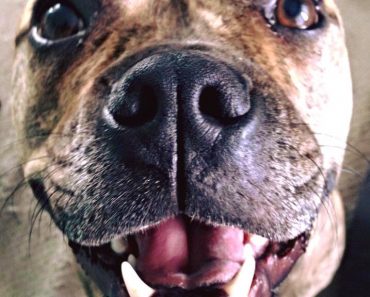
    Kacey (pictured above) was just three-weeks-old when her mother and eight siblings were seized under Section 1 of the DDA. They were held in kennels for more than six months before being assessed.

    All nine puppies were identified as prohibited types but the decision about two of the puppies – including Kacey – was, at a later point, overturned allowing them to be rehomed – the other seven were tragically put to sleep. Mum, Mercedes, was typed and later exempted which meant she could be lawfully kept under the Dangerous Dogs Act.

    Kacey’s owner, Nay Beard from Devon, said: “This is where an already sad story almost defies belief. Nine puppies, the same litter, from the same parents but – for the grace of a couple of centimeters, two of their lives were saved. The others weren’t so lucky.

    “Although Kacey got the chance to live, her incarceration under this cruel and unfair law impacts on her daily.”

    Kacey was terrified of people and the outside world.

    “She was frightened of grass, a breeze, water bowls, even toys. Absolutely anything and everything frightened her, she would back away while shaking uncontrollably,” Nay explained.

    “Little by little, she got there. But even now, almost five years later, she’s still very nervous and anxious.”

    https://i.imgur.com/xCPXpfO.jpg

    Peanut (pictured above) was born at the RSPCA’s Birmingham Animal Centre and soon rehomed by volunteer, Julie Wainwright. But, at nine months old, she was typed under BSL and Julie had to begin the long exemption process.

    Peanut was later exempted but her life is impacted every day by the restrictions placed on her – simply because of the way she looks.

    “Peanut is just like any other dog – she loves playing in the garden, sleeping on the sofa with her canine companion, Anna, and will follow you into the toilet if you don’t shut the door firmly behind you!” Julie said. “However, according to the law, she is dangerous. And therefore, she spends her life being restricted.”

    Julie is still trying to get Peanut used to her muzzle and has to hire a private field so her pet can enjoy running off-lead.

    She added: “I’ve not met one person who has been negative about Peanut when I’m out on a walk. A lot of people ask why she has a muzzle on and when I tell them that it’s because of BSL they always say say the law is ridiculous and what a lovely, lovely dog she is.”

    To sign the RSPCA’s petition or find out more about the #EndBSL campaign, go to www.rspca.org.uk/endbsl.