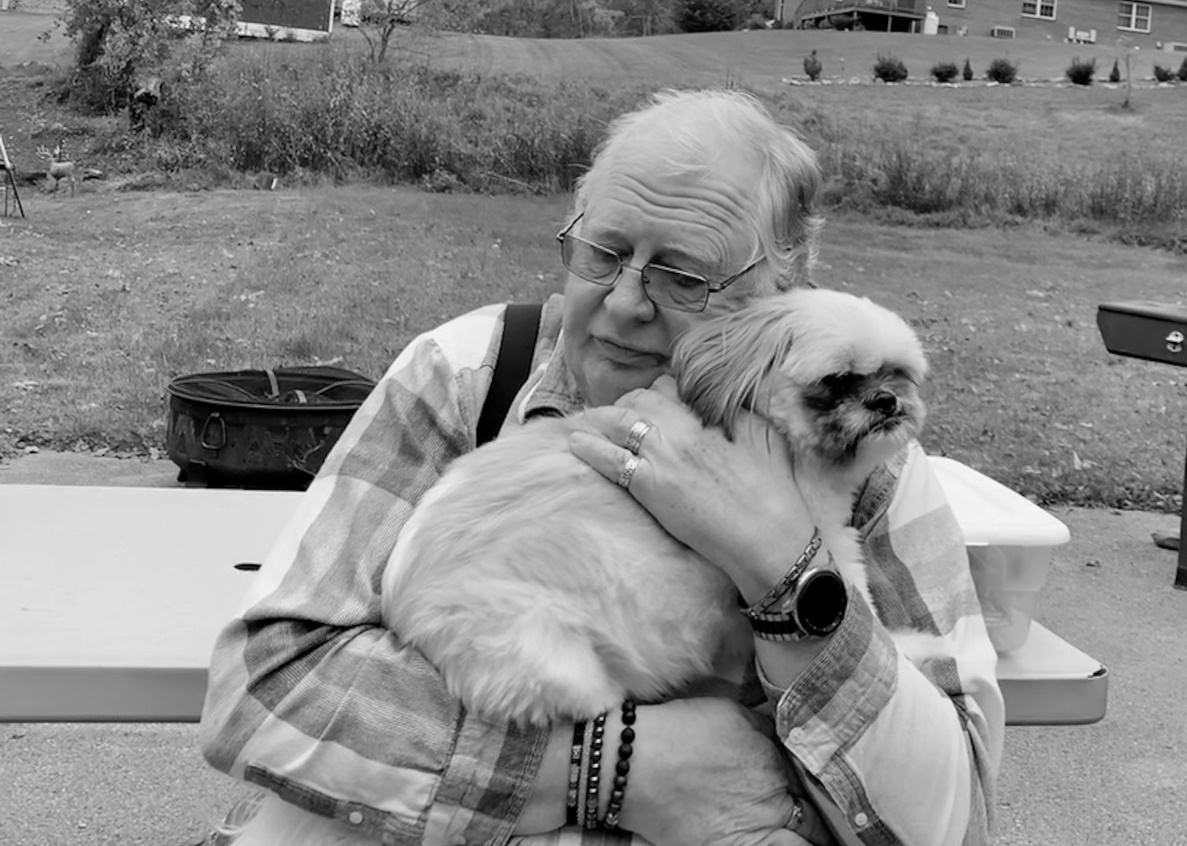
New charity aims to tackle isolation and loneliness in over 55s with help of dogs.
A NEW charity has launched this month in Croydon with the aim of reducing social isolation and loneliness for the over-55s.
CareDogs is a newly-registered charity which pairs people aged 55 and over with suitable canine companions.
The goal is to tackle the growing problem of social isolation within society, while increasing the adoption rate of older dogs from rescue centres and shelters around the capital.
The South London-based charity was originally founded in late 2018 by Delphine Chui, and has since been developing its offer to communities in and around Croydon.
This month marks the official launch of their service, and with it an invitation for potential adopters to register their interest via the charity’s website.
Delphine, who now holds the position of Chair of Trustees, created CareDogs after becoming increasingly aware of the growing problem of loneliness within society, especially among the over 55s.
Take A Look: The many benefits of adopting an older dog
According to Age UK, the number of over-50s experiencing loneliness is set to reach two million by 2025; a 49% increase in 10 years.
Having owned a number of rescue dogs throughout her life, Delphine felt there was a role for them in tackling the issue, something backed up by Blue Cross Charity research, which found that a pet is a great source of comfort, companionship and motivation for their owners, helping us live mentally healthier lives.
Delphine explains: “I’ve experienced first-hand the many ways a canine companion can improve your mental and emotional wellbeing. It’s our goal to bring those benefits to the people in society who need it most.
“CareDogs aims to contribute to a healthier and happier society by working to increase the number of older rescue dog adoptions, and by reducing loneliness and social isolation in older people through companionship and an all-important community support network.”
The volunteer-run charity works in partnership with rescues to facilitate dog adoptions.
CareDogs are now inviting people to either register themselves or someone they know who they think could benefit from the addition of a rescue dog into their life.
For more information, please visit the CareDogs website: www.caredogs.org.uk
Further reading:
- Consider adopting an older dog
- Advice on caring for an older dog
- Campaign to end lonliness
- Ways to keep your older dog entertained
CareDogs Vision & Mission
Our vision: Communities where no older person or senior dog is overlooked or left behind. Let’s end loneliness and social isolation together – with the help of dogs!
The main challenges we seek to solve include the fact that by 2025, the number of over-50s experiencing loneliness is set to reach 2 million, as well as half a million older people going 5-6 days without seeing or speaking to anyone at all. Considering that currently only 36% of over-55s are in the dog adopter demographic, we want to encourage more people to socialise more and exercise more, with their provided volunteer and their new canine companion. (Age UK 2014, Beaumont, Age UK 2015)
Our mission: Solving loneliness and social isolation in older people through dog adoption, a befriending network and local community support by:
- Facilitating dog adoption.
- Offering weekly interaction and exercise with one of our dog walking volunteers.
- Integrating our clients into local community events and a friendly support network.
In short, we aim to encourage intergenerational connections to tackle social isolation among older people, whilst also creating a new demographic of dog owners.
The benefits of dog ownership for older people
- Loneliness and social isolation are issues that many older people experience on a regular basis. According to Age UK, the number of over-50s experiencing loneliness is set to reach two million by 2025, which is a 49% increase in 10 years.
- 17% of older people are in contact with family/friends/neighbours less than once a week, and 11% less than once a month.
- A Blue Cross Charity Research: Tackling mental health, poverty and loneliness through pet ownership (2020) found that a pet is a great source of comfort, companionship and motivation for their owners, helping us live mentally healthier lives.
- According to Age UK, 13% of people aged 55+ only speak to someone 3-4 days a week. CareDogs’ befriending services aim to improve and increase social interactions in the over-55 population in Croydon as a preventative measure to social isolation.
- CareDogs will be giving over-55s volunteering opportunities within our charity, whether they want to be dog walking volunteers or operational volunteers.
- According to Ageing Better, people over 50 who volunteer or help out in their community tend to be happier and are able to develop deeper relationships as a result.