Author: Jasmine Kleine

  • This Dog Changed Her Owner’s Life & Now She’s Been Awarded an Animal OBE

    This Dog Changed Her Owner’s Life & Now She’s Been Awarded an Animal OBE

    A loyal Spaniel has become the fourth dog to receive an animal OBE – the prestigious PDSA Order of Merit – for outstanding devotion to her disabled owner.

    The working Cocker Spaniel, Molly, was honoured by the veterinary charity after being nominated by her twenty-three year old owner Lucy Watts MBE. The award acknowledges the tremendous impact Molly has on Lucy’s life and the unique bond they share.


    Lucy suffers with Ehlers-Danlos Syndrome which, coupled with other health complications, can leave her feeling withdrawn, isolated and unhappy. Lucy’s condition is classed as life-limiting. Prior to Molly’s arrival in her life, she had been struggling to cope with the chronic pain and was bed-bound due to complications.

    Molly joined the Watts household as an eight-week-old puppy and immediately lifted Lucy’s spirits. She said: “Molly helped give me something to focus on. Puppies bring so much joy anyway but Molly was like a ray of light for me. She gave me the motivation to get up and out of bed again.”

    Before Molly, Lucy recalls that she often felt ignored when out in public. Now, taking Molly out gives her greater confidence to interact with people and she feels they see past her wheelchair.

    Molly has now been trained as an assistance dog so she can help Lucy with everyday tasks which would otherwise be impossible and also protects Lucy, warning her if her temperature spikes and when her blood pressure drops, allowing her to lie her wheelchair down to prevent a collapse.

    Lucy continued: “Molly is the best companion I could ask for. She seems to instinctively know if I’m in pain or not. She never tries to jump up for a cuddle if I’m uncomfortable.”

    “I’m absolutely thrilled she has been awarded the PDSA Order of Merit. She was never intended as an assistance dog but her devotion to me and her training has never wavered. I would be lost without her.”

    The confidence Molly gave Lucy led to her working with charities as an Ambassador and Trustee, which included giving speeches and writing blogs. For this work Lucy was awarded an MBE in the 2016 New Year’s Honours.

  • Holy Moly! How on EARTH Did This Puppy Swallow This…and SURVIVE?

    Holy Moly! How on EARTH Did This Puppy Swallow This…and SURVIVE?

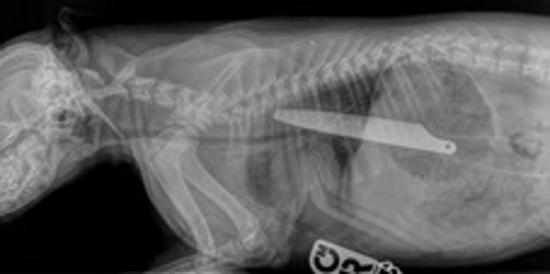
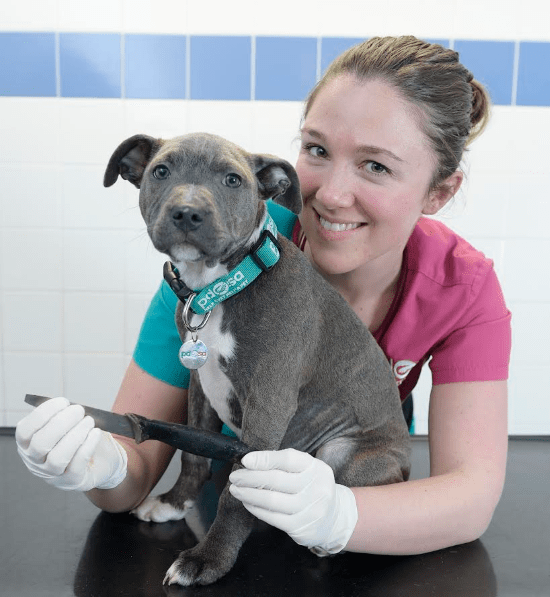
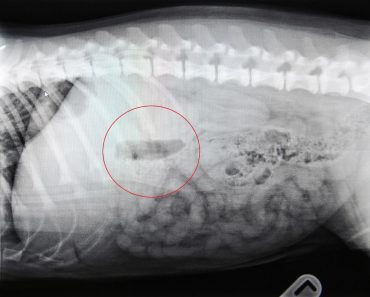
    A 12-week-old Staffordshire Bull Terrier has been saved by emergency surgery thanks to vet charity PDSA, after swallowing something that would ordinarily be absolutely lethal. The lucky puppy has vets to thank that he’s alive today and his swallowing ‘accomplishment’ has resulted in one of the most astonishing x-rays ever seen.

    An eight-inch knife is clearly visible in the tiny puppy’s body.

    Owner Irene Paisley (46), from Glasgow, rushed puppy Macie to PDSA’s emergency out-of-hours vet service after the 12-week-old began choking:

    “Macie was making a squeaking sound – I thought she’d swallowed part of a toy,” says Irene. “Then she was sick, but there was no sign of a toy and she started choking.”

    Having lost her previous Staffie to cancer just two months earlier, Irene feared the worst.

    “I was terrified. Poor Macie was still choking and, by the time we arrived at the vet’s, there was blood coming out of her nose. The loss of our previous dog was still very raw and the thought of losing Macie was devastating.”

    The young puppy was admitted, and x-rays immediately revealed the severity of the situation. The knife handle had passed through Macie’s stomach and into her intestines, while the tip of the knife was still in her gullet. She underwent emergency surgery straight away to remove the knife while Irene, her partner and four children waited at home for news.

    Irene added: “I couldn’t believe it when they said Macie had swallowed a knife. I have no idea where she got hold of it – she could have pinched it out of the dishwasher, but no-one saw what happened. None of us could sleep that night as we knew Macie might not survive.”

    Happily, the operation was a success and the following morning Macie was transferred to the PDSA Pet Hospital in Shamrock Street, where her recovery began.

    PDSA Vet, Emily Ronald, said: “I’ve never seen an x-ray like Macie’s. She was extremely lucky to survive. Her saving grace was that she swallowed the handle-end first – the blade-end would undoubtedly have pierced her organs, likely causing fatal injuries.

    “The morning after surgery, she was bouncing all over the place as if nothing had happened. Macie has been back for frequent check-ups over the past two weeks and we’re pleased she’s recovering and healing well.”

    Expressing her gratitude to PDSA, Irene said: “although she’s only young, Macie is already a big part of the family. She brings us so much joy and happiness, and means the world to the children. Without PDSA, she wouldn’t have recevied her life-saving treatment and wouldn’t be here today.”

    Vet Emily added: “Macie is just one of the lucky pets to benefit from PDSA’s emergency service which has received generous funding from players of People’s Postcode Lottery. Thanks to their support we’re able to provide thousands of life-saving treatments across the UK.”

    As well as using their mouths to eat, dogs also use them to investigate objects. But can sometimes they can swallow an item by mistake. Known as ‘pica’, this behaviour can lead to dogs eating some very bizarre objects. Over the years, PDSA vets have removed everything from tent pegs and golf balls, to radio aerials and rubber ducks during surgery.

  • Anti-BSL Organisation Sends Clear Message to UK Dog Law Makers ‘Have a Heart’

    Anti-BSL Organisation Sends Clear Message to UK Dog Law Makers ‘Have a Heart’

    A leading anti-bsl campaign and lobbying organisation have launched a campaign today asking the Department for Environment, Food & Rural Affairs (DEFRA) to have a #Haveaheart and show ‘Where is the Love?’ for our dogs.

    The non-profit group, Born Innocent, have launched their #Haveaheart campaign and are calling on the public to flood DEFRA with Valentine’s cards, asking them to ‘Have a Heart’ and end breed specific legislation, which has done nothing to reduce dog bites and attacks, and yet every year innocent dogs lose their lives, not because of what they have done, but purely because of how they look and how the act judges ‘type’ dogs.

    Key facts about the Dangerous Dogs Act

    Section 1 of the Dangerous Dogs Act was introduced in 1991 due to a spate of dog bite incidents.

    However, since its introduction, dog bites and attacks have risen and continue to rise.

    Figures for 2016 show that dog bites rose by 5% according to NHS figures (versus a population rise of 0.6%), on top of a rise of 76% in the previous 10 years.

    Experts condemn approach of targeting dogs based on looks

    Critics have long argued that pursuing dogs based on their looks alone does not keep the public safe from dog bites or attacks and that unfairly targeting owners with dogs, who fit the characteristics of a banned breed, do nothing more than penalise, on the whole, innocent family pets and puts both emotional and financial strain on hard working people.

    Peer reviewed scientific research by many leading academics and scientists, such as International Psychologist, Dr Dr Páraic Ó Súilleabháin, has extensively shown that ineffectiveness of the Dangerous Dogs Act 1991 in preventing serious injury, as it lacks any efficacy as a public health measure and bite prevention.

    Indeed, according to a study on the Journal of the American Veterinary Medical Association, in order to prevent one dog-bite hospitalisation in a city or town by a given breed, in excess of 100,000 dogs of the identified breeds would have to be removed completely from the population. Figures would need to be doubled to prevent a second dog-bite hospitalisation, and so on.

    The campaign aims to highlight to the government just how strongly the public disagrees with this piece of legislation and are asking people to send their cards to DEFRA by 14th February 2017.

    Professor John Cooper QC, Patron of Born Innocent, said, “This legislation has failed to protect the public from dog bites. It was a knee jerk reaction by Parliament 25 years ago, to a spate of high profile incidents and it is time to apply mature thought to produce an Act which works both for the dogs, their owners and the public.”

    Born Innocent Board Member, Shaila Bux, added, “over the last year we have been having some helpful meetings with key decision and policy makers, such as The Law Commission and the London Assembly.

    This campaign is part of an overall strategy to repeal breed specific legislation and introduce reforms that
    do not see innocent dogs die or dog owners left with huge legal bills or worse, a criminal record.

    Get involved in the campaign to encourage UK lawmakers to ‘Have a Heart’ by visiting the Born Innocent Facebook page at @borninnocentdda or visit their website at www.borninnocent.co.uk

  • Dog or Cat: Which Animal Do You Most Identify With?

    Dog or Cat: Which Animal Do You Most Identify With?

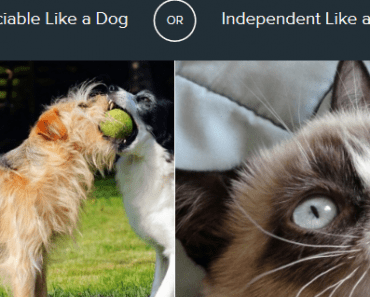
    This isn’t a question about which animal you prefer – that’s easy to answer, it’s dogs right? RIGHT?? This is a question about which animal you, personally, most identify with based on your own personality. So, if push comes to shove, are you sociable, playful and ever willing to please others, like a dog – or – fiercely independent and entirely happy with just yourself for company like a cat?

    You can pick one, which one are you?

  • Did You Know Ticks Are Danger to Dogs Even in Winter?

    Did You Know Ticks Are Danger to Dogs Even in Winter?

    A new study carried out by The University of Salford has found that ticks present a risk all year round, not just warmer months.

    The research, which was sponsored by animal health firm, Merial, launched in 2013 and has found that ticks continued to quest in woodlands throughout the year, even during the coldest months with ticks being detected on dogs throughout the year.

    These findings come hot on the heels of recent analysis of veterinary practice electronic health records which showed the presence of ticks on pets in all weeks between December and March.

    Post graduate student Jessica Hall has been running the study since 2013, which has also involved running Polymerase chain reaction (PCR) for detection of DNA from Lyme disease (Borrelia burdorferi) on the collected ticks, with this data due to be released early next year.

    Lynda Maris, a Product Manager at Merial Animal Health says the study findings send out an important message to vets and pet owners, “It’s been thought for some time that ticks are very inactive or even dormant in winter and don’t present a risk. These findings show that they continue to quest in an attempt to find a host and are often successful. If ticks are attaching and feeding during the winter months, the risk of Lyme disease and babesiosis remains a real possibility. If the appropriate product is selected, the same year-round treatment programme that controls fleas and other parasites, will also treat ticks and thus help reduce the risk of tick-borne diseases.”

  • More Than 50,000 Animal Lovers Back Campaign to #EndBSL in UK

    More than 50,000 people have backed an online campaign calling for an end to the controversial legislation which bans four types of dogs being kept in the UK. Four months since the launch, groups, bodies and individuals from around the world have also supported the RSPCA petition.

    In August, the animal welfare charity launched its campaign calling for the Government to hold a public inquiry into section 1 of the Dangerous Dogs Act (DDA) which uses breed specific legislation (BSL) to ban Pit Bull Terriers, Japanese Tosas, Fila Brazilieros, and Dogo Argentinos.

    The campaign – called #EndBSL – sought to raise awareness of the plight of thousands of dogs whose welfare is compromised due to the law and also highlight the ineffectiveness of the legislation at protecting public safety.

    Four months on, the RSPCA’s petition has been signed by more than 52,000 people and the charity’s opposition to BSL has received support from around the world.

    RSPCA dog welfare expert Dr Samantha Gaines – lead author of the charity’s BSL report which is titled ‘A Dog’s Dinner’ – said: “Our message is simple: BSL is ineffective in protecting public safety and results in the suffering and euthanasia of many dogs. We believe BSL should be repealed and issues surrounding human safety tackled using education and effective legislative measures that do not unnecessarily compromise dog welfare.

    “Since publishing our report and launching our campaign in August – marking 25 years since the Dangerous Dogs Act was implemented – we’ve received support from around the world, not only from members of the public, dog lovers and people who have experienced the devastating effects of BSL first-hand, but also from other UK and international organisations, charities and bodies.”

    The need to repeal BSL has already been backed by more than 30 organisations around the world, from countries as far-flung as Australia, Japan and USA.

    Renowned experts including Dr Emily Blackwell and Dr Emma Milne are also in support, as well as behaviourists Sarah Fisher – and her actor partner, Anthony Head – and Victoria Stilwell.

    Dr Milne said: “The Dangerous Dogs Act, that came into force in 1991, was and remains one of the most pointless laws we’ve ever had. The fact is that dogs’ behaviour is dictated by so many factors beyond their breed.

    “If we had used the last 20 odd years using the law to make people better dog owners it would have been a much better use of the law.

    “The whole thing has been a mess for far too long and the time has come for the law to be repealed and for the politicians to try and do something constructive to improve the lives of dogs and reduce bite injuries.”

    And Dr Valerie Jonckheer-Sheehy, chair of the Dutch Veterinary Behaviour Group, said: “Breed specific legislation will not resolve dog bite incidents.

    “The focus must be on educating the public on dog behaviour and welfare, and ensuring that dog breeders breed healthy animals who are able to cope with the mental demands that they may be challenged within their day-to-day life.”

    In another positive step, in December, the London Assembly unanimously agreed to support a motion for the Mayor of the city to write to the Secretary for State for Environment, Food & Rural Affairs officially requesting an inquiry into the law.

    “Hopefully, with the support of these wonderful organisations and the backing of tens of thousands of voices, we stand a chance of getting the Government to sit up and listen,” Dr Gaines added.

    “It’s high time we made a change that will not only make the public in the UK safer, but will also ensure dogs are not punished for simply looking a certain way.”

    In November, Becky Hughes discovered the BSL issue for the first time – when one of her two blue Staffordshire Bull Terriers, 18-month-old Chesney (pictured above), was seized by police under Section 1 of the DDA.

    He was taken away and returned a few days later under the interim exemption scheme. Becky, from Chester-le-Street, must now go through the court process to have Chesney exempted permanently.

    She said: “What doesn’t make sense is that Chesney is being punished when he has done nothing wrong.

    “I had no idea about BSL, what it meant, or how common it is? It baffles me. Even the police said Chesney is a lovely, friendly dog but look what the legislation is doing to him? It’s crazy.”

  • Breed Specific Legislation MUST Go – How Many More Innocent Dogs Need to Die? #EndBSL

    Breed Specific Legislation MUST Go – How Many More Innocent Dogs Need to Die? #EndBSL

    More than 50,000 people have backed the RSPCA’s campaign calling for an end to the controversial legislation which bans four types of dogs being kept in the UK. Four months since the launch, groups, bodies and individuals from around the world have also supported the petition.

    In August, the UK’s largest and oldest animal welfare charity launched its campaign calling for the Government to hold a public inquiry into section 1 of the Dangerous Dogs Act (DDA) which uses breed specific legislation (BSL) to ban pit bull terriers, Japanese tosas, fila Brazilieros, and dogo Argentinos.

    https://i.imgur.com/WmowSHh.jpg

    The campaign – called #EndBSL – sought to raise awareness of the plight of thousands of dogs whose welfare is compromised due to the law and also highlight the ineffectiveness of the legislation at protecting public safety.

    Four months on, the RSPCA’s petition has been signed by more than 52,000 people and the charity’s opposition to BSL has received support from around the world.

    RSPCA dog welfare expert Dr Samantha Gaines – lead author of the charity’s BSL report ‘A Dog’s Dinner’ – said: “Our message is simple: BSL is ineffective in protecting public safety and results in the suffering and euthanasia of many dogs. We believe BSL should be repealed and issues surrounding human safety tackled using education and effective legislative measures that do not unnecessarily compromise dog welfare.

    “Since publishing our report and launching our campaign in August – marking 25 years since the Dangerous Dogs Act was implemented – we’ve received support from around the world, not only from members of the public, dog lovers and people who have experienced the devastating effects of BSL first-hand, but also from other UK and international organisations, charities and bodies.”

    The need to repeal BSL has already been backed by more than 30 organisations around the world, from countries as far-flung as Australia, Japan and USA, including:

    Animal Behaviour and Training Council (ABTC)

    Association of Pet Behaviour Counsellors (APBC)

    British Veterinary Behaviour Association (BVBA)

    British Veterinary Nursing Association (BVNA)

    Deed Not Breed

    DDA Watch

    Dogs Trust

    Dutch Veterinary Behaviour Group

    EU Dog & Cat Alliance

    Eurogroup for Animals

    European Society for Clinical Veterinary Ethology (ESCVE)

    The International Association of Animal Behaviour Consultants (IAABC)

    The Kennel Club

    Massachusetts SPCA (MSPCA)

    People’s Dispensary for Sick Animals (PDSA)

    RSPCA Australia

    SaveABulls

    Renowned experts including Dr Emily Blackwell and Dr Emma Milne are also in support, as well as behaviourists Sarah Fisher – and her actor partner, Anthony Head – and Victoria Stilwell.

    Dr Milne said: “The Dangerous Dogs Act, that came into force in 1991, was and remains one of the most pointless laws we’ve ever had. The fact is that dogs’ behaviour is dictated by so many factors beyond their breed.

    “If we had used the last 20 odd years using the law to make people better dog owners it would have been a much better use of the law.

    “The whole thing has been a mess for far too long and the time has come for the law to be repealed and for the politicians to try and do something constructive to improve the lives of dogs and reduce bite injuries.”

    And Dr Valerie Jonckheer-Sheehy, chair of the Dutch Veterinary Behaviour Group, said: “Breed specific legislation will not resolve dog bite incidents.

    “The focus must be on educating the public on dog behaviour and welfare, and ensuring that dog breeders breed healthy animals who are able to cope with the mental demands that they may be challenged within their day-to-day life.”

    In another positive step, in December, the London Assembly unanimously agreed to support a motion for the Mayor of the city to write to the Secretary for State for Environment, Food & Rural Affairs officially requesting an inquiry into the law.

    “Hopefully, with the support of these wonderful organisations and the backing of tens of thousands of voices, we stand a chance of getting the Government to sit up and listen,” Dr Gaines added.

    “It’s high time we made a change that will not only make the public in the UK safer, but will also ensure dogs are not punished for simply looking a certain way.”

    In November, Becky Hughes discovered the BSL issue for the first time – when one of her two blue Staffordshire bull terriers, 18-month-old Chesney (pictured), was seized by police under Section 1 of the DDA.

    He was taken away and returned a few days later under the interim exemption scheme. Becky, from Chester-le-Street, must now go through the court process to have Chesney exempted permanently.

    She said: “What doesn’t make sense is that Chesney is being punished when he has done nothing wrong.

    “I had no idea about BSL, what it meant, or how common it is? It baffles me. Even the police said Chesney is a lovely, friendly dog but look what the legislation is doing to him? It’s crazy.”
  • Staffies Top Most Neglected Breed List With More Seized by UK Councils Than Any Other Breed

    Staffies Top Most Neglected Breed List With More Seized by UK Councils Than Any Other Breed

    New research out today has discovered that more Staffordshire Bull Terriers than any other breed are seized by UK councils. They’re also the breed most rehomed by councils, yet also the breed most put to sleep by local authorities.

    Other most common dog breeds taken in by councils this year include Jack Russell Terriers, cross-breeds, Terriers and Lurchers.

    Behind the Staffie as the most rehomed and most put to sleep breed, the cross-breed is also most rehomed and most put to sleep.

    Once seized, whether as a result of being abandoned by their owners or otherwise, councils have a clear policy. They try to locate owners, if owners aren’t found – or don’t wish to take the dog back – they have 7 days to find a new home or find a rescue who can take the dog into their care. If this doesn’t happen, the dog is sadly put to sleep.

    But while these findings, released by Direct Line Pet Insurance, are saddening, do they also highlight a widespread bias in the UK against the Staffie?

    The pet insurer asked dog owners for their thoughts.

    Around 6 in 10 said they felt this happened to the Staffie because of a lack of education about the dog breed and their owners lacked understanding about general dog ownership.

    Prit Powar, head of pet insurance at Direct Line said: “It is a shame Staffies top the list of the most seized breeds again and again. As with any dog, it takes energy, care and attention to train and Staffies are no exception.

    “While it is encouraging to see that the number of dogs being seized is reducing significantly year on year, there is still a long way to go. As a nation of dog lovers, there really shouldn’t be tens of thousands of dogs seized each year. Dog owners have a responsibility to ensure they can care for their pet and if they can’t, should take it to a rehoming centre or animal welfare charity, not let it roam the streets.”

    Here are 5 dogs who were abandoned by their owners who are looking for a new home to start anew in 2017

    Please share their stories & help them find a home to call their own in the New Year.

    This is Boris, he’s a Staffie boy aged approximately 1 1/2-2 years old who was found as a stray before coming in to rescue.

    Resembling a certain Star Wars character, he has a huge personality and a lot of love to give. He thinks you’ll love him, you will.

    Read more about Boris on dogsblog.com

    This is Hester, she’s a 6-year-old Staffie cross who was abandoned on the street by her owners.

    Hester is a very friendly girl and loves showing off the tricks and commands she knows. Her new perfect home would be one where she’s the only dog and ideally in a rural area.

    Read more about Hester on dogsblog.com

    This is Archie, he’s a 3-year-old Bearded Collie cross who came into rescue after being abandoned.

    Poor Archie has clearly had a rough time of it before he came into rescue as he’s recovering from both a wound on his leg and a broken tail. Currently in a foster home, he is recovering well and starting to feel safe. He is ideally looking for a new home with active owners.

    Read more about Archie on dogsblog.com

    This is Burt, he’s a 6 year old Staffie cross boy who was found as a stray before coming into his rescue’s care.

    Sadly while in rescue, Burt has been overlooked and has been waiting since July for a new family to choose him. He is one very very sad lonely boy but has a lot of love to give. Could you change this for him?

    Read more about Burt on dogsblog.com

    This is Peggy, she’s a 7-year-old German Shepherd who came to rescue after being abandoned by her owners and found straying.

    Peggy has worked really hard on her socialisation skills since coming into the breed specific rescue. She really is eager to please and would ideally suit a cat free home with experienced owners who will give her the time to settle into her new home while she learns the ropes.

    Read more about Peggy on dogsblog.com

    Direct Line Pet Insurance urges anyone considering buying a dog for Christmas to seriously consider the implications of owning a dog, both financially and whether the recipient has the means to properly care for it in the long term.

  • If You Watch Only One Dog Video This Week, Let It Be This One!

    We all know how much fun our dogs bring us, but our own dogs aren’t the only ones as the millions of Youtube, Imgur and Instagram views tell us. We love all dogs.

    And so when we discovered this video this week, we had to share it with you…enjoy!

  • Dog Nearly Died at Christmas From Eating This – Stay Vigilant

    Dog Nearly Died at Christmas From Eating This – Stay Vigilant

    Jack Russell-cross Luna narrowly avoided a Christmas catastrophe after wolfing down a family-sized bar of dark chocolate she found in her owner’s bedroom.

    Thankfully, she recovered after emergency treatment at PDSA, but the charity’s vets are warning that thousands of dogs are at risk of serious illness or death from chocolate poisoning.

    In Luna’s case, she helped herself to the goodies but, according to PDSA research, nearly 200,000 dogs* are regularly fed chocolate as a treat. At Christmas, there is more chocolate around as we indulge so the risks only increase. Advent calendars, boxes of chocolates and gifts under the tree mean more inquisitive pets could get their paws on chocolate without owners’ knowledge.

    http://i.imgur.com/BOLrbQy.png

    As well as being toxic, human chocolates are inappropriate for pets due to their high calorie and sugar content, making it bad for their teeth and waistlines.

    PDSA vet Emma Tipton explains: “Our research has found that thousands of dogs are fed human chocolate as a ‘treat’, because some owners don’t realise it’s highly poisonous to pets and can be fatal.”

    PDSA sees hundreds of chocolate poisoning cases every year and the charity’s vets are on standby for an increase over the festive period.

    That’s why PDSA is using Luna’s story to get the message home.

    The six-month-old pet ate around three quarters of a family-sized 200g bar of Bournville chocolate that was hidden in an upstairs bedroom.

    Owner Gillian Garrity (48) from St Helens, Merseyside, said: “Luna was whimpering and pacing up and down before she suddenly became violently sick.

    “My husband spotted the chocolate wrapper and we realised she must have got her paws on it. We know chocolate can be toxic to dogs so he rushed her straight to PDSA.”

    Luna was given emergency treatment by PDSA senior vet Matt Forshaw, from PDSA’s Liverpool Huyton Pet Hospital.

    He said: “Chocolate is poisonous to dogs as it contains a chemical called theobromine, which can cause severe heart problems.

    “To make matters worse, Luna had eaten dark chocolate which contains even higher levels of theobromine. Just a small bar of dark chocolate contains enough of the chemical to kill a small dog like Luna, so she was in grave danger.”

    Luna was given medication to make her sick and prevent further absorption of theobromine. She was kept in overnight and given IV fluids to ensure she was well hydrated before being allowed to go home the following day.

    Vet Matt added: “Luna is just one of the lucky pets to benefit from PDSA’s A&E service which receives funding from players of People’s Postcode Lottery.

    “Thanks to their support we’re also raising awareness of the dangers of human chocolate to pets, and are encouraging owners to avoid feeding such treats and also to keep them out of paws reach.”

    Luna’s owner, Gillian, said they were extremely grateful for the care Luna received.

    She said: “I can’t thank PDSA enough for everything they did. I’d warn anyone with a pet not to leave chocolate lying around as you could end up losing your dog.”

    The effects of chocolate poisoning in dogs usually appear within four hours of eating, and can last as long as 24 hours. Initial signs can include excessive thirst, vomiting, a sore stomach and restlessness. These symptoms can then progress to tremors, an abnormal heart rhythm, raised body temperature and rapid breathing. In severe cases dogs can experience fits and kidney failure, which can be fatal.

    PDSA advises owners to store chocolates and other poisonous foods in the same way as medicines when they have pets in their household – safely and securely. And for those who can’t resist giving their four-legged friends a little Christmas treat, a new toy or a nice long walk is a better alternative than treats.

  • Puppies Dumped in a Bucket & Left on a Doorstep

    Puppies Dumped in a Bucket & Left on a Doorstep

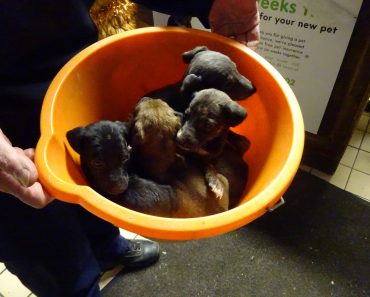
    Six poorly puppies have been dumped in a bucket and left on a doorstep in Chobham Surrey just days before Christmas.

    The five-week-old pups, thought to be lurchers, were abandoned in a bright orange bucket on a doorstep in Halebourne Lane on 14 December.

    The littermates have parvovirus – a potentially deadly virus that is common among puppy farmed dogs – and staff and vets at the RSPCA are working hard to try to save them.

    Now the RSPCA are investigating the case and are asking anyone with information to come forward.

    RSPCA Inspector Rob Jackson said: “Someone knocked on a house door in Chobham before running off, when the house owners opened the door the puppies were on the doorstep in the bucket. It is just unbelievable.

    https://i.imgur.com/Lh4Z05m.jpg

    “To dump an animal at any time of year is heartless but to do it just before Christmas is callous. It is quite possible they were bred to be sold as Christmas presents but were then dumped when they became ill. We may never know – but what is certain is that no animal deserves this kind of treatment.

    “These poor pups are young and still very much dependent on their mum and, of course, human care. They were just left on that doorstep on a cold, wet winter’s day without a second thought.

    “We would urge anyone who knows about what happened to contact us as soon as possible on our hotline 0300 123 4999.”

    The six pups – named after Santa’s reindeer Cupid, Dasher, Blitzen, Rudolf, Prancer and Dancer – are now being cared for by staff at RSPCA Millbrook.

    Centre supervisor, Claire Jones, said: “This family of puppies are Lurcher types and they are all about five to six weeks old and we imagine they are all from the same litter.

    “It is so sad. I cannot even imagine why anyone would do that sort of thing – especially bearing in mind just how ill they are.

    “These puppies needed urgent vet attention – but instead of taking them to a vet the person just left them on a doorstep.

    “It was really cold and had the householder not answered the door or been in we don’t know how long they would’ve stayed there or what would’ve happened to them.

    “At the moment the puppies are all still under vet treatment as they are very poorly. We are doing everything we can for them.”

    The RSPCA has already investigated 1,137 abandonments across the country since the beginning of December.

  • Puppy Bought From Puppy Farmer as Christmas Gift Given up Already, and It’s Not Even Christmas

    Puppy Bought From Puppy Farmer as Christmas Gift Given up Already, and It’s Not Even Christmas

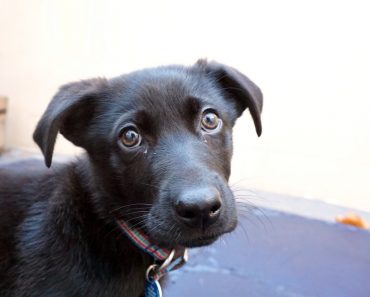
    An eight-week-old Labrador cross puppy has found herself in rescue after being bought as a Christmas gift and unwanted by the recipient. Unwell and unwanted, she was handed into a London animal rescue centre, where she has been nursed back to health.

    The black Labrador cross, named Madison by staff at The Mayhew Animal Home had been sold from an online site to a young man who was looking to purchase a puppy for a family member. But when the young man arranged to see Madison at a flat in Amersham, the door was answered by two men who wanted £295 in cash up-front. The puppy’s mother was not present, she had no other siblings around her at the time, and she was terrified and hiding behind the sofa. The buyer was then taken to an ATM machine by the two men and the puppy was handed over with documentation when they received the money.

    These are all key signs that these men were puppy farmers. 

    Unfortunately after buying Madison, it turned out that the family member didn’t want a puppy and the poor little pooch was later brought into The Mayhew. On closer investigation, The Mayhew discovered the microchip and health papers that were given to the buyer by the sellers were false.

    The Mayhew’s Head of Animal Welfare, Gillian Notton, said: “There are already so many unwanted animals in rescue centres like ours that have come from people who buy pets on a whim, especially around Christmas time, without taking into consideration the responsibilities and needs of the pet. Unfortunately, many people don’t realise that bringing a new animal into their home takes a huge amount of preparation, perseverance and patience.”

    “Absolutely anyone over the age of 16 can walk into a pet shop or buy any animal they want online. There are no checks on the reliability and ability of buyers to look after pets and buyers won’t be aware of the pet’s background. We see a lot of unwanted dogs as they are bred purely to be sold for profit or used as a breeding machine. It is completely irresponsible to buy a puppy online, from pet shops or from illegal breeders, but unfortunately, we see this happen far too often. Purchasing pets in this way fuels the already huge problem of illegal breeding and unwanted animals and animal charities like ours are left to pick up the pieces.”

    The Mayhew’s Head Vet, Dr Ursula Goetz MRCVS, GP Cert (SAS) CVO, said: “Unfortunately we see a lot of puppies like Madison, who have been sold online and from illegal breeders, and with little care taken over their welfare. Many of these puppies are too young to have been removed from their mothers and haven’t been vaccinated or de-wormed.”

    Things to consider before bringing a dog into your home

    1. Can you properly care for them?

    The Animal Welfare Act places a duty of care on people to ensure they provide the five welfare needs of their animal. When buying a pet, you need to know how to look after the pet correctly ensuring that you are able to provide these five needs, including providing a suitable environment, need for a suitable diet, need to be able to exhibit normal behaviour patterns, need to be housed with or apart from other animals, need to be protected from pain, injury, disease, and suffering. Buying from a retailer is less likely to ensure that the buyer or new owner is going to be able to provide these needs.

    2. Can you afford the costs (known and unexpected) associated with owning a pet?

    There are already so many unwanted animals in rescue centres across the country that have been victims of people that buy pets on a whim, especially around Christmas time. Many animals have been given up because of health issues they have when they were first sold and the owner realises they can no longer cope or afford treatment. For example, puppy farming conditions, where many puppies and their parents are born into and living in are horrendous and can cause such suffering. Those that buy from these retailers could be unknowingly supporting these farms by continuously buying and selling on these animals.

    3. Can you trust where they came from?

    Puppy farming is a huge industry and thousands of dogs suffer as a result of it. The only way puppy farmers will stop doing what they do is if people stop buying from them – learn how to spot the signs.

    So know your puppy’s source. From animal rescues, this is simple as you can research them and they will provide any history they know of for the dog.

    But if you do decide to get a puppy from a breeder, try to get recommendations from owners and breed clubs about reputable breeders.

    You should always make sure you see the puppy with its mum and litter, checking that they really are the puppies’ family. Responsible breeders should be happy to give you a full medical history of the animal. Responsible owners and breeders would de-worm their puppy at least once and have them vaccinated before selling them.

  • Are Squeaker Toys Dangerous to Dogs? Read This

    Are Squeaker Toys Dangerous to Dogs? Read This

    Jake Rose, a six-month-old Cocker Spaniel, was rushed to Blackpool’s PDSA pet hospital after the inquisitive puppy accidentally swallowed the squeaker from his favourite toy.

    Owner Joanne Rose, (42) from Warton in Preston, said: “Jake was playing with his favourite soft toy when he ripped it apart and pulled the squeaker out. I did my best to get him to drop it but within seconds he swallowed it whole!

    “In a state of sheer panic I rang PDSA ­and they told me to bring him in straight away.”

    X-rays confirmed that Jake required immediate surgery to remove the squeaker from his stomach.

    Joanne added: “I was completely devastated to find out that my bouncy little pup needed life-saving surgery. Jake is so loving and I was beside myself with worry.”

    PDSA Vet, Terry Ogdin, said: “As a small puppy, Jake was more at risk of complications from swallowing the squeaker than a larger dog, which is why immediate surgery was critical. If left untreated, the squeaker would have passed through into his intestines and may have caused a tear or blockage, which can be fatal.

    https://i.imgur.com/RAglalO.jpg

    “Luckily, Joanne acted quickly and rushed him to PDSA before the squeaker had time to reach the intestines and cause any damage.”

    Jake’s operation took over an hour but he made an amazing recovery and was allowed home the very next day. Joanne spent the next week nursing her beloved puppy around the clock to ensure he made a full recovery. She said: “Thankfully he has recovered really well and we’ve been able to take him back out for short walks on his lead.”

    “PDSA have been absolutely brilliant and we’re so pleased they were able to help Jake so quickly – it stopped the accident from becoming a serious disaster.”

    PDSA Vet, Terry, added: “During the festive period, it’s important to stop and think before giving your pet a toy that might be easily swallowed. To help avoid this from happening, owners should give their pets dog-specific, durable toys that won’t come apart easily. These should be an appropriate size for the dog to prevent swallowing or choking. If toys and chews are starting to look worn, it’s best to discard them straight away.

    “Training pets from a young age and using kind, reward-based methods to teach them basic commands such as ‘drop’ and ‘leave’ can help pets avoid swallowing harmful objects.”

    Joanne wanted to share Jake’s story to support PDSA’s ‘Save a Star’ campaign which is raising funds to support the emergency veterinary care that the charity provides. This Christmas PDSA will treat more than 50,000 sick and injured pets, many in need of emergency, life-saving surgery like Jake. She added: “I want Jake’s story to help raise awareness of the life-saving work PDSA does, saving thousands of sick and injured pets across the UK every day.”

  • South Korea’s Most Infamous Dog Meat Market Shuts Down

    South Korea’s Most Infamous Dog Meat Market Shuts Down

    Victory is being declared by an animal welfare organisation as the news of South Korea’s most infamous dog meat market is shut down amidst research which shows public opposition to the dog meat trade within South Korea is at an all time high with almost half of South Koreans seeking a ban on the practice altogether.


    Dog once saved from a dog meat market in South Korea flying to new home in the USA / Photo Credit: In Defense of Animals

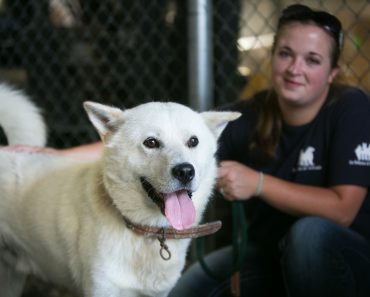
    Animal welfare organisation, In Defense of Animals, has welcomed the news that the Moran Livestock Association, South Korea’s biggest livestock market, and Seongnam City have agreed to stop the slaughter, confinement, and sale of dogs, therefore stopping the trade at its core.

    “The closure of Korea’s most infamous dog meat market at Moran deals a significant blow to the heart of the dog meat trade,” said In Defense of Animals President, Dr Marilyn Kroplick.

    “We thank Seongnam city officials and Mayor, Jae Myung Lee, for taking a humane position. Moran market has run with the blood of hundreds of thousands of dogs for many years, so this is a step in the right direction in our fight to end the horrific dog meat trade. However, we expect the dog butchers to set up their dirty business elsewhere, so In Defense of Animals will remain vigilant and will not rest until we take dog meat off the menu for good.”


    More dogs saved from the dog meat trade in South Korea ready for a life of safety / Photo Credit: In Defense of Animals

    In Defense of Animals has campaigned for many years to close Moran market, which sells (or sold) 80,000 dogs a year, citing blatant violations of animal welfare laws and brutal killings of which dogs, often next to cages packed full of live dogs.

    Although this is a positive step forward in the fight to end the horrific dog meat trade, In Defense of Animals urges caution. The city of Seongnam has committed to support dog meat vendors to venture into other trades, but the dog butchers may take their business elsewhere. In Defense of Animals will not be satisfied until dog meat is ended entirely.


  • Vets Thought This Dog Was Dead But Then Something Amazing Happened

    Vets Thought This Dog Was Dead But Then Something Amazing Happened

    Vets from pet charity PDSA brought a dog ‘back from the dead’ after his heart stopped in an astonishing emergency room drama.

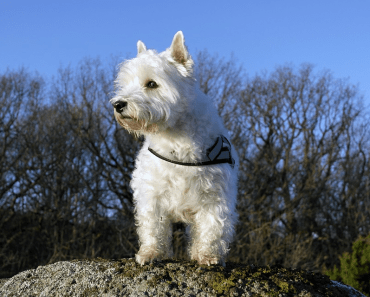
    On the day when West Highland Terrier, Max, was facing major surgery to remove a cancerous tumour he suddenly suffered a cardiac arrest at PDSA’s Kirkdale Pet Hospital in Liverpool. Vets rushed to the 12-year-old pet’s aid and carried out emergency CPR to restart his heart.

    Donald Helliwell, PDSA vet, said: “When Max’s heart stopped, my colleagues came rushing to help. We keep a ‘crash box’ containing emergency drugs and syringes, and used this along with CPR to try and resuscitate him.

    “It felt like ages, but after about five minutes we managed to get his heart beating again and he was stabilised.”

    https://i.imgur.com/bLZwIV6.jpg

    Max’s owner Doris Griffiths (83) was amazed when she heard what had happened to her beloved dog. But she quickly resolved that the vet team should go ahead with the already planned and vital life-saving surgery to remove the cancerous tumour from Max’s ear.

    Doris, from Trentham, The Wirral, said: “Max is my only companion and means everything to me.

    “When the vets told me what had happened I was in shock at first. But I wanted them to go ahead with his operation because he wouldn’t survive without it.

    “The whole time he was under anaesthetic I was on tenterhooks and crying my eyes out.

    “When they told me he had made it through the operation it was like a miracle. I can never thank PDSA enough. The vets basically brought him back from the dead and then also completed the planned surgery for his cancer and I’m so grateful.

    Max is my world and everywhere I go, he goes too. Now he’s home I’ve set up a bed downstairs so I can be close to him while he recovers.”

    Max is now back home making a good recovery and is continuing to receive follow-up checks.

    https://i.imgur.com/AJBoiOl.jpg

    PDSA Vet Donald added: “Cases like this are very rare but you always need to be prepared. Thankfully we were able to save Max and hopefully he and Doris will continue to share many more, happy years together.”

    Doris wanted to share Max’s story to support PDSA’s ‘Save a Star’ campaign which is raising funds to support the emergency veterinary care that the charity provides. This Christmas alone PDSA, the biggest animal charity in the UK today, will treat more than 50,000 sick and injured pets, many in need of life-saving care like Max.

    Doris added: “Pets are such an important part in people’s lives and I want Max’s story to help raise awareness of the work PDSA does in saving the lives of hundreds of thousands of sick and injured pets every year.”