Author: Jasmine Kleine

  • World’s Favourite Skateboarding Dog Passes Away

    World’s Favourite Skateboarding Dog Passes Away

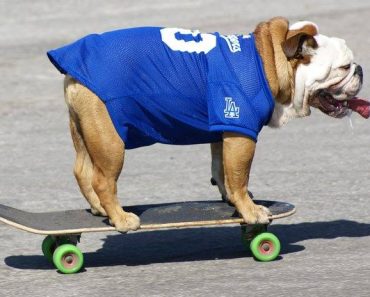
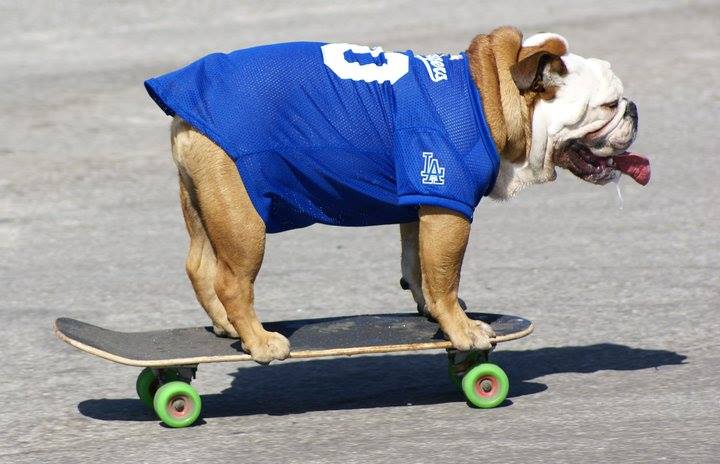
    Tillman, the world’s most watched and beloved Bulldog has passed away. He leaves behind him a legacy of skateboarding dogs and a huge fan base who will miss him.

    Tillman
    Photo Credit: Facebook.com/TillmanSkates

    His owner made the announcement on his official Facebook page saying: “I’m sorry to announce the world lost a true legend… My best bud Tillman passed away last night, of natural causes. We spent 10 years making so many incredible memories skating, surfing and hanging out together. No words can truly describe how much he’ll be missed. Thanks for all the good times, Tilly.”

    Here’s one of our favourite clips of this special dog:

  • New Research Outlines Devastating Health Risks to Number of Popular Dog Breeds

    New Research Outlines Devastating Health Risks to Number of Popular Dog Breeds

    Research shows high risk of breathing problems in dogs with short muzzles

    Findings highlight that snuffling, grunting and snorting in popular breeds isn’t normal or healthy

    Researchers at the Royal Veterinary College (RVC) have recently demonstrated the health risks of breeding dogs with short muzzles. Although short muzzles are an increasingly popular face shape in pet dogs, flattened faces were found to greatly increase the risk of developing a debilitating, lifelong respiratory condition leaving dogs chronically short of breath. Breeds shown to be at high risk include the Pug, French Bulldog and English Bulldog, but findings are relevant to all dogs, including many other breeds and cross-breeds, with shortened muzzles.

    Brachycephalic Obstructive Airway Syndrome (BOAS) is caused by shortening of the bones of the canine muzzle, without an equivalent reduction in the soft tissues held within them, causing the tissue to become ‘crammed’ within the skull. This tissue can block the airway, and is often accompanied by narrowed nostrils, making it difficult for air to pass through the dog’s nose. These blockages can mean dogs struggle to breathe, leaving them unable to exercise, play or eat normally, and in some cases they overheat and collapse. BOAS can even cause early death. Dogs with BOAS often snore even while awake, when the soft tissue noisily vibrates as dogs force air past the blockages.

    The research, which was co-funded by Dogs Trust, the UK’s largest dog welfare charity, and the Universities Federation for Animal Welfare (UFAW), involved two studies including over 850 dogs of over 100 breeds.  The findings were reported in a paper by Drs Rowena Packer, Anke Hendricks, Michael Tivers and Charlotte Burn and published in the journal PLOS ONE yesterday [Wednesday 28th October].  The researchers found that as muzzle length becomes shorter, risk of BOAS becomes ever higher, with over 90% of dogs being affected at the shortest extreme. This quality-of-life limiting disorder was only seen in dogs whose muzzles were less than half the length of the domed part of the skull. Obesity and thicker necks also increased BOAS risk.

    Puppy buyers should be aware of the health consequences of choosing dogs based on appearance. Practical steps to take when buying a dog of a high-risk breed include selecting puppies from parents with longer muzzles and slimmer necks, and ensuring their dog stays at a healthy body weight.

    Flattened facial conformation has long been suspected by vets as risk factor for BOAS and this research showed for the first time that decreasing muzzle length does indeed increase BOAS risk. With this is mind, breeding organisations should actively discourage exaggeration of this high-risk skull shape in both breed standards and the show ring. This could include imposing limits to how short a dogs muzzle can be, in order to improve dog welfare.

    Veterinary Director for the Dogs Trust, Paula Boyden, explains the importance of this research;

    “The increased popularity of Pugs, French and English Bulldogs hasn’t been coupled with an increased awareness about the health issues these breeds can suffer from. Too many people mistakenly believe that the grunting, snuffling and wheezing sounds these breeds often make are endearing breed traits, rather than warnings of a debilitating health condition. Dogs Trust urges owners to be vigilant for the signs their dog might be suffering with BOAS and take their pet to the vet for advice if they have concerns. The condition cannot be cured but can be improved and there may be things that can be done to provide a better a quality of life for affected dogs.

    Although the research demonstrates the need for UK breeders to be aware of the risks of breeding for shorter muzzles, there is an equally pressing need for buyers to be aware of BOAS. There has been a surge in the number of high risk breeds being bred and illegally imported from Eastern Europe in the last few years. Breeders prepared to smuggle these underage puppies into the UK are rarely concerned with good breeding practices so it is essential that buyers wanting a Pug, French Bulldog or English Bulldog puppy look beyond appealing appearances and listen for the audible signs of BOAS.”

    Signs to look out for that your dog might be suffering from BOAS that should be discussed with your vet:
    1.    Frequent or lasting shortness of breath
    2.    Difficulties in exercising [walking, running and playing] as a result of this shortness of breath
    3.    A tendency to overheat
    4.    Respiratory noises such as snorting and snoring, even when awake
    5.    Laboured or exaggerated breathing
    6.    Narrow slit-like nostrils

    If you do have a dog at risk of the condition make sure they maintain a healthy weight because obesity can worsen BOAS.

    UFAW, an independent charity which promotes advances in animal welfare through scientific and educational activities, has an extensive web-based information resource on genetic welfare problems in dogs and other companion animals which can be viewed at www.ufaw.org.uk/geneticwelfareproblems.php

  • Would Your Dog Like To Win Some Treats from Pet Munchies?

    Would Your Dog Like To Win Some Treats from Pet Munchies?

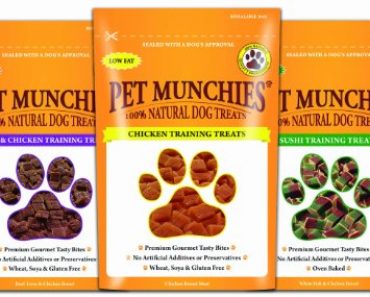
    This month Pet Munchies, makers of premium gourmet dog treats, have teamed up with K9 Magazine to offer 7 lucky readers the chance to win three packs of their popular training treats for your dogs to enjoy…find out how to enter below.

    Made from quality, human grade real meat, Pet Munchies treats are packed full of natural goodness for your dog without artificial additives and are available in three varieties: Chicken, Sushi, Liver & Chicken.

    Gluten free, naturally low in fat and carbohydrates, high in protein and very nutritious – Pet Munchies treats are ‘sealed with a Dogs approval’.

    K9 Magazine’s trio absolutely loved these treats. Mia was particularly taken with the Sushi variety leaving Danny wondering if she would share. The perfect treat to take out to for dog walks or training sessions.

    Find out more about the delicious and nutritious low fat Pet Munchies treat range online at Pet-Munchies.com.

    So delay no longer! Visit FreePetStuff.co.uk today and enter here: http://www.freepetstuff.co.uk/win-pet-munchies-training-treats/

    Good luck!

  • 17-Month Whippet Downs Ecstasy Tablets While Walking With Elderly Owner

    17-Month Whippet Downs Ecstasy Tablets While Walking With Elderly Owner

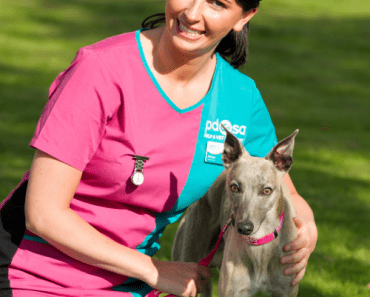
    PDSA vets today warned pet owners to be vigilant after a whippet nearly died from eating Ecstasy tablets while walking with his elderly owner.

    17-month-old Blue, from Bradford, was enjoying a walk with his owner, who wishes to remain anonymous, when he sniffed something out and gobbled up the contents.

    His owner rushed over to investigate and was horrified to discover Blue was eating small blue heart-shaped tablets from a plastic bag. Worried that another dog or even a child may come across them, the owner took Blue and the tablets home.

    Before long, Blue became unsteady on his feet and started foaming at the mouth.

    PDSA was called immediately for advice and Blue was rushed to the charity’s Pet Hospital in Bradford.

    PDSA Head Nurse Miriam Wilson explained: “When Blue arrived, his condition was critical. He’d collapsed and the toxins were causing organ failure. He was admitted and life-saving treatment was started straight away. He was put on an IV drip and received activated charcoal to absorb the toxins. Without the treatment, he would not have survived the night.”

    The PDSA vet team monitored Blue overnight, and thankfully, he went on to make a full recovery and is now back to his lively self.

    The incident was reported to the police, who came and collected the drugs and disposed of them safely.

    PDSA Head Nurse Miriam advises owners to speak to their vet immediately for advice if they suspect their pets have eaten something they shouldn’t: “There are lots of hidden dangers around the home and garden, as well as out in the wider world, that our pets may sniff out. If you think they have swallowed something then get it checked at once.”

  • Slugs & Snails Can be Deadly to Dogs – Lungworm Warning

    Slugs & Snails Can be Deadly to Dogs – Lungworm Warning

    Cases of UK dogs affected by a killer parasite spread by slugs and snails have rocketed by more than 30% in just five years, according to PDSA.

    And the vet charity today warned this could be just the tip of the iceberg as many cases of lungworm go unreported.

    Lungworm can cause weight loss, difficulty breathing, a chronic cough and can even be fatal, warn vets.

    Comparing data for 2009 and 2014, PDSA vets found there had been a 35% increase in confirmed cases of the worm across its 51 UK pet hospitals.

    PDSA Vet Vicki Larkham-Jones said: "There has been a significant increase in the number of confirmed cases of lungworm at our pet hospitals. "In 2009 there were 49 confirmed cases and this had risen to 66 cases in 2014. However, the true figure is likely to be much higher, as not all infected animals can be positively diagnosed.

    The hot spots for cases used to be Wales and southern England, but experts say the problem is now far more widespread.

    Vicki added: "The larvae of the lungworm parasite are carried by slugs and snails. The problem arises when dogs eat these common garden pests when rummaging through undergrowth, eating grass, drinking from puddles or outdoor water bowls, or pick them up from their toys. Thanks to funding support from players of People’s Postcode Lottery we’ll be delivering over 100,000 worming treatments in 12 months. We’re also able to educate more owners about the dangers and the importance of good, preventive healthcare. "

    Foxes can become infected with lungworm, and have been implicated in the spread of the parasite across the country. A recent study by University of Bristol scientists found that in some areas, up to 50% of foxes are infected with lungworm. Frogs can also carry the lungworm larvae, presenting a risk to dogs.

    Case study

    Staffordshire bull terrier Chloe’s lungworm ordeal highlights how serious the parasite can be.

    The beloved five-year-old pet was taken to PDSA’s Bristol Pet Hospital in June by owner Dennis Williams after suffering a severe cough.

    Vets examined her and prescribed lungworm medication as a precaution. However, despite initially responding well to treatment, the symptoms returned.

    Further tests confirmed the presence of the parasite and vets decided to carry out more aggressive treatment.

    PDSA Vet Bekki Pacini said: "It’s good that we saw Chloe when we did, as these infections can be very serious, even fatal. Lungworm can often be difficult to get rid of and despite treatment it can take up to six months in some cases for a dog to recover.

    "Chloe has responded well to treatment, but several months on she is still displaying some symptoms. We’re confident that with continued treatment she will go on to make a full recovery.

    "This case highlights the importance of regularly worming your dog with a product that specifically targets lungworm because this parasite is becoming a more serious problem across the UK."

    Mr Williams, 47, of Withywood, Bristol, said he had never even heard of lungworm prior to his dog becoming infected.

    He said: "Chloe loves playing in the garden and I understand it could have been something as minor as her nuzzling her nose in the grass or playing with a toy where a slug or snail had been for her to contract the lungworm.

    "I’m grateful to PDSA for the treatment they’ve given Chloe and I want to help raise awareness of how serious it can be, because people just don’t know. I’ve owned dogs for 30 odd years and I’d never even heard of it."

  • Quick Tips to Help Your Dog Cope With Fireworks

    Quick Tips to Help Your Dog Cope With Fireworks

    Last year the RSPCA received 364 calls relating to fireworks in October and November – more than in both 2013 (310) and 2012 (326).

    Research shows that up to 45 per cent of dogs may be fearful of fireworks* so to help combat the problem the RSPCA has come up with some advice to help pet owners.

    RSPCA Scientific Officer Lisa Richards said: “As the winter months draw in many of us look forward to going to local bonfire and fireworks festivities.

    scared dog photo
    Photo by alyak “The RSPCA want to make sure the enjoyment is for everyone – as animals may become distressed or confused at what is happening.

    “We would always advise letting your vet know of any signs of stressed or unusual behaviour in your animal so they can give you advice to help your pet in the long-term, but there are also some quick tips to help you and your pet during the fireworks.”

    RSPCA Guidance on Helping Dogs Cope With Fireworks:

    ●     For any pet, whether it be a dog, cat, rabbit or rodent, make sure you provide suitable hiding places with extra bedding where they can feel safe. This is also true for animals that live outside.

    ●     Close all windows and curtains.

    ●     Play music or put on the television to muffle the fireworks, using a Sounds Scary! CD to help dogs learn to be less afraid of loud noises.

    ●     Make sure they’re kept in a safe place during any display.

    ●     Never punish or fuss over them as it can make things worse.

    ●     Make sure your pets are microchipped in case they escape.

    ●     Give your dog their walk earlier in the day.

    ●     Never ever take a dog to a fireworks display – even if they don’t make noise – it’s still highly likely to be a stressful situation for them.

    ●     Pheromone diffusers may  help dogs and cats feel calmer.

  • Want to See What a Rottweiler x Newfoundland Puppy Looks Like (Trust me, you do!)

    Want to See What a Rottweiler x Newfoundland Puppy Looks Like (Trust me, you do!)

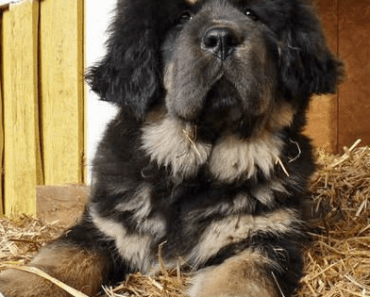
    A big, buffy head.

    Paws as big as saucepans.

    Neck fur that would make Hoth Wamper jealous.

    Say hello to the Rottweiler x Newfoundland – the Rottland….

    ….

    ready for it?

    .

    .

    .

    .

    .

    .

    .

    here goes..


    (totally worth it, right?)

  • England Rugby Player Tom Croft Fills in for Leicestershire Dog Groomer as Part of #BleedforEngland Campaign

    England Rugby Player Tom Croft Fills in for Leicestershire Dog Groomer as Part of #BleedforEngland Campaign

    During the rugby season, top-flight professional rugby players would be unlikely to donate blood themselves due to their strict training and match commitments. So as part of a campaign launched by NHS Blood and Transplant, a dog grooming salon, Grr’s 2 Purr in Market Harborough, is taking part in a series of ‘Blood Substitute’ films for the #BleedForEngland campaign.

    The #BleedForEngland campaign is supported by a number of current and ex-international rugby players and aims to drive sign up of 100,000 new blood donors between 15 August and 31 October 2015.

    The ‘Blood Substitute’ films feature rugby players covering staff shifts to free up an hour of an employees’ time so they can go and give blood – they are their ‘Blood Substitutes’ – inspiring others to sign up and book appointments to #BleedForEngland.

    England player and Leicester Tigers rugby star, Tom Croft, recently stepped in as the salon’s co-owner, Frances Cheshire’s ‘Blood Substitute’. He took over some of her roles such as brushing and washing the dogs while she volunteered to give blood for the first time at the Leicester Donor Centre.


    Jon Latham, Assistant Director at NHS Blood and Transplant, says: “It’s been great to have the support of Tom Croft and past and present rugby players for this campaign. Tom wasn’t able to donate blood this time but we hope Fran, the Grr’s 2 Purr’s co-owner he substituted for, will inspire others to join the #BleedForEngland squad.

    “Become one of the 100,000 people we are aiming to register as donors in the run up to, and during, the world’s biggest rugby tournament. Giving blood is an amazing thing to do. Help us meet the need for new donors. Please go to www.blood.co.uk today, find out if you can donate, register as a donor and book an appointment. Giving blood is simple and easy to do and will only take about an hour of your time. We plan our sessions in line with the amount of blood we need to collect to meet hospital and patient needs so it’s best to book an appointment.”

    NHS Blood and Transplant is calling on 100,000 new volunteers to show their support in a way that really matters; by registering to become a blood donor between 15 August and 31 October 2015. By choosing to book an appointment to donate – and literally #BleedForEngland – these new registrants will contribute to the more than 200,000 new donors needed this year.

  • 7 in 10 Deaf People with Hearing Dogs Refused Access on the UK High Street

    7 in 10 Deaf People with Hearing Dogs Refused Access on the UK High Street

    A recent survey, conducted by national charity Hearing Dogs for Deaf People, has revealed that 70% of deaf people with hearing dogs have been refused access to services.

    The charity has launched a new campaign to raise awareness among businesses of their obligation, under the Equality Act 2010, to allow disabled people with hearing dogs into their premises.

    Feedback showed that business owners have wrongly refused access to deaf people with hearing dogs due to ‘hygiene reasons’ or a concern that the dog may cause a disruption. However, the Chartered Institute of Environmental Health states that risk of an assistance dog posing a hygiene risk or behaving badly in any public space is very minimal.

    Michele Jennings, Chief Executive of Hearing Dogs for Deaf People said: “Hundreds of deaf people in the UK rely on their hearing dog to help them every day, and it’s upsetting and degrading when they are turned away from a business.

    “Not only do hearing dogs carry out a wide range of practical tasks, but they also provide a deaf person with the support and confidence needed to live an independent life.

    “The Equality Act 2010 states that service providers must not treat people with disabilities less favourably if they have an assistance dog, so we want to ensure that all businesses are aware of this.”

    Hearing dogs complete a rigorous 18 month training programme, in which they are trained to toilet on command, lie quietly on the floor in a restaurant or café, and taught not to wander freely around the premises.

    Catherine Broughton, pictured above, aged 74 with hearing dog Beni, is one of the charity’s recipients who has been denied access to a business on a number of occasions. She said:

    “Being denied access with Beni brings a mixture of emotions – from shock, disbelief and panic, through to humiliation and helplessness. It is imperative that the quality of life of disabled people with assistance dogs is protected through inclusion and accessibility.

    “Occasionally, when I have been turned away from a business, I have been forced to appeal to a higher level of management. This usually brings forth a belated apology, but sadly, there are still some places that I cannot bring myself to revisit.”

    Businesses and assistance dog users can be found on the Hearing Dogs website: hearingdogs.org.uk/access

  • Did This Labrador Really Eat a Beehive?

    Did This Labrador Really Eat a Beehive?

    A leading US pet insurance firm has recognised the extraordinary ‘achievement’ of a Labrador retriever from California who, despite having a penchant for eating train tracks and laptop computer parts, outdid herself by consuming an entire beehive PLUS its angry inhabitants.

    Veterinary Pet Insurance Co. (VPI), the nation’s oldest and largest provider of pet health insurance, asked the public to go to the polls and decide which pet with the most unusual health insurance claim.

    Ellie may be a young dog, but she’s already managed to eat everything from wooden toy train tracks to laptop computer keys. So the beehive in the backyard was just another culinary adventure for this insatiable pooch. Unfortunately for Ellie, the recently sprayed beehive was full of pesticides and thousands of dead bees, and that combination sent her to the veterinary hospital later that night. Ellie was treated and sent home with an upset stomach but made a full recovery.

    As the winner, Ellie’s owners, Robert and Sandra Coe, will receive a bronze trophy in the shape of a ham as well as a gift basket full of doggie toys and treats.

    Created to recognize the year’s most unusual pet health insurance claim, the VPI Hambone Award is named in honor of a VPI-insured dog that got stuck in a refrigerator and ate an entire Thanksgiving ham before being found with a licked-clean hambone and a mild case of hypothermia.

    Second Place – Aubie the Border collie (Birmingham, Ala.). A lot of dogs just bark at the mailman, but not Aubie. To get to his letter-carrying "foe," Aubie leaped through a closed living room window, shattering a pane of glass and cutting his left front leg in the process. Fortunately, Aubie’s owner, Sharman Martin, was home at the time and was able to wrap Aubie’s leg in a towel before rushing him to his veterinarian’s office. Two and a half hours and forty stitches later, Aubie was good as new again. "Aubie’s never been enamored with the mailman," Sharman summed up.

    Third Place – Darci the West Highland white terrier (Belleville, Ill.). Darci always lunged at noisy appliances, but owner Barbara Abell never thought she had to worry about her Westie biting one. That all changed the day Darci took a nip at a buzzing chainsaw Barbara’s husband was using. The chainsaw cut two small holes into Darci’s muzzle and required five hours of surgery. The experience taught Barbara not to take anything for granted with a determined pet. "If your puppy is as inquisitive as mine, it just might cost it its nose!" Barbara said.

    Additional nominees for the 2010 VPI Hambone Award included a boxer that chased and caught a moving delivery van by biting into one of its tires, a standard poodle with a taste for dirty diapers, a Jack Russell terrier that wrestled with a predatory lizard while in Australia, a Labrador retriever that ran tongue first into the pointy-end of a stick during a game of fetch, and a California desert tortoise that scalped himself on a branch and his own shell. Like Ellie, all pets considered for the award made full recoveries and received insurance reimbursements for eligible expenses.

  • Did My Dog’s Food Nearly Kill my Best Friend?

    Did My Dog’s Food Nearly Kill my Best Friend?

    On a Sunday evening in July 2009, I was using my computer and my 5 year old Samoyed Bundy came in shaking his head (he had left my room approximately 15 mins earlier). I thought he was bringing me the ball because he wanted to play. He was also pawing at his mouth, so I thought he must have something stuck in his mouth. I had a look but couldn’t see anything. I knew something was seriously wrong so I jumped in the car and raced to the nearest 24 hour vet as fast as I could with Bundy in the back, still acting strangely with his head.

    Luckily, the roads were empty and there was no one waiting at the vet. As we were led into the examination room, Bundy collapsed on the floor and was trembling all over. I then had to go back to the waiting room while they attended to him in the back. After a wait, I was led to the back where Bundy was in a cage and flailing about uncontrollably, which was very distressing for both him and me. I understand the vet gave him a shot of pentobarbital to knock him out. After another wait, I eventually went home but, obviously, I couldn’t sleep.

    The next day, when I visited him, he was lying on a bed with lots of tubes and machines attached. He was unconscious but his paws and face were still twitching. It was tearing me apart to see him like that but I stayed for a few hours and held his paw, because I didn’t think he was going to make it. I don’t think the vets were very optimistic either because he was developing asperatic pneumonia.

    I visited him every day and stayed for a few hours but I realised that the nurses have other animals to look after and duties to perform so I didn’t want to get in their way by staying longer. The vets and nurses that treated him gave him the best of care and I’m very grateful.

    He remained unconscious for 3 or 4 days which, I’m told, is not usual but not unheard of either. The vets there treated him with a cocktail of drugs to try to control his twitching. They recommended sending him to a specialist centre so, after about 5 days, I drove him in the back of my car. He was still unconscious so a vet nurse sat with him, assisting with the oxygen.

    The vets at the specialist centre ran a multitude of generalised tests including MRI and spinal taps but the results were inconclusive. After a day or so, he started to come around, semi conscious, but still twitching. The next day I visited, he was finally awake and when he saw me he started to whine with all the energy his weak body could muster, he could barely move but he still wanted to lick me and it became very emotional for both of us. Within a week, he got more responsive and stronger every day and was then allowed home.

    As Bundy is 5 years old, epileptic fits were a possibility but I’m told that they do not last for 3+ days and the MRI brain scan had ruled out a brain tumour.

    The vets that treated him thought it was likely he had come into contact with a toxin that acted on his nervous system. I wracked my brains as to what that could be as I wanted answers. The day of the episode, we went for a walk (on lead) at about 5 pm then he was shut inside the house and had his food about 6pm. There was no access to the garden and there are no chemicals around the house.

    The previous day, I had put a new tick collar on him and noticed a very strong smell coming from it. I assumed that this must be the cause of Bundy’s condition somehow so I didn’t put another back on him.

    When he was back home, I was feeding him brand new packets of his usual dry dog food that he likes and has had for years but, before the first episode, I had bought a different brand of food just for a change and added this to his usual food in a container, one that he had never had before (not sure if I can say the brand name, for legal reasons, but possibly the biggest and most popular brand in the world and the name is something to do with a dog’s heritage). Anyway, after a few weeks of feeding him brand new usual food strait out of the packet, I went back to adding some of his previous food on top. Within that week, he had a serious case of diahorreoa but I thought that could just be down to the drugs he was on.

    A few days later (coincidentally, again on a Sunday night and about 2 hours later in the evening than the first episode), I noticed Bundy looking at me strangely and his legs were shaking. I immediately knew what was wrong and I drove him down to the specialist centre where he was again in intensive care for a week or so.

    He came home very weak but, today, over six months later he is fit and healthy apart from his legs sometimes shaking when he stands. Obviously, there appears to be some residual nerve damage.

    The vets at the specialist centre ran more tests the second time but still nothing was remarkable.

    The four different vets that treated him between the two veterinary clinics and both episodes suspected intoxication by organophosphates, metaldehyde, (slug bait) or mycotoxins.

    It was after this second occurrence that I realised that this new brand of dog food was the only common factor in both these cases. Perhaps it was contaminated?

    I contacted the company that makes the dog food and arranged for an approximate 1kg sample to be sent off (but unfortunately I didn’t have the bag and batch code). The sample I sent did have small amounts of Bundy’s usual dog food mixed in (other brand). I sent it like this because this new food was added on top of his old food in a container and I wanted to know if they would even notice or just throw it away but, surprisingly, they did notice. I think, because of this, they did not run any tests.

    A guy qualified in veterinary science, and who works for the dog food company, dealing with complaints of this nature, sent me a letter saying he had contacted my vet and discussed the causes of ‘tremorgens’ (a group of mycotoxins). These have been associated with Blue cheese, walnuts and compost as well as others and it was unlikely that their product was responsible.

    Fortunately, Bundy has not been fed or been near those stated substances.

    When I leave the house Bundy stays inside and he is always walked on a lead, he only goes into the garden if I go into the garden and the last time I saw a slug was about 10 years ago so he has very little chance of ever coming across something I don’t know about.

    After a few weeks, I contacted the company’s vet again for the results of the test. I understand the tests didn’t show up anything abnormal. I wasn’t surprised at the company’s response because no company is ever going to test their own product and say something is wrong with it. He suggested that it was just one of those unexplained things, which I would have believed for the first episode but it is too coincidental for the second.

    I got a bit annoyed with this guy because the way he dismissed my reasoning seemed arrogant.

    He said that because they hadn’t had any other complaints, there was obviously nothing wrong with the batch and he also said that was the end of the matter and there was nothing else they would do.

    Not being content with this dismissal or his arrogant and patronising attitude, I contacted a more senior person at the company and spoke to a technical director and arranged for another sample to be tested (I only had a handful left). He said it would be sent to Singapore, would take about 6 weeks and would cost a bit of money.

    While I was waiting for these tests to be performed, I decided to conduct my own research into probable causes (something I should have done earlier) and discovered a few scientific papers freely available on the internet about Mycotoxins affecting dogs.

    Roughly speaking, Mycotoxins are a group of toxins that form as a result of mould on numerous organic sources and can be deadly and cause a number of different conditions to both humans and animals. They can be found in both cereals and dry dog food, a fact which was omitted from the letter I was sent.

    Either the veterinary guy dealing with my complaint has limited knowledge of these potential killers (for someone in his position, this seems very remiss) or he was fully aware of the potential problems but decided to keep quiet so as not to open a can of worms.

    I did provide an email link to all of the papers (listed below) but it would appear that neither of the people I have been in contact with has read them, as they have subsequently provided no comment.

    A number of the cases reported in the papers show clinical symptoms which are nearly identical to Bundy’s condition and, when biological samples from the dogs were analysed, Roquefortine and Penitrem A were detected and suspected as the probable cause.

    A few weeks later, I received in the post the results of the sample testing (it had been sent to a lab in Victoria, not Singapore). Only four tests were performed: two types of mycotoxin, namely Aflatoxin B1 and Patulin, and also lead and permethrin.

    I consider this test to be irrelevant and inconclusive due to the fact the very small sample size was statistically insignificant and they failed to test for any of the mycotoxins that are linked to tremors in dogs.(apparently there are over 30 known)

    The dog food company’s sole defence was based around the fact that they apparently hadn’t received complaints of a similar nature and that their quality control is of a very high standard, and perhaps it was the other brand of dog food that caused it?

    Addressing this statement, my research has indicated that detection and confirmation of mycotoxin poisoning has been grossly under diagnosed and, as far as I am aware, the specialist centre that treated Bundy did not test for this possibility. (I’m not even sure there is a commercial laboratory in Australia that tests for most of the different types).

    In my case, it was only after the second episode that I realised that this brand of dog food was the only common factor that was likely to be responsible and it is possible that many dogs that have a single episode of unexplained acute toxicoses unfortunately die or have to be euthanized due to excessive trauma, poor prognosis and/or lack of financial resources so a confirmed diagnosis and connection to the dog food is not made and hence it is not reported back to the company.

    While I’m confident that their quality control is of a high standard, it is unlikely that it is one hundred percent reliable and variations in the materials and process can be expected in any product.

    After doing further research I discovered a Uni in the USA (Iowa State) that specialises in veterinary medicine and also test for the two mycotoxins I’m interested in, namely Roquefortine and Penitrem A.

    I spoke to a Professor of toxicology from the department and he believed that mycotoxins are not well understood and not commercially tested for because of lack of demand. I provided him with bundy’s Vet case notes and his story and he confirmed that it did indeed fit with mycotoxin poisoning.

    I sent a 1kg sample of Bundy’s original food to be tested at my own expense, the test came back negative so I can be fairly confident that it wasn’t the other brand to blame which I believed was the case anyway because of the timing. THIS IS WHAT THE COMPANY SHOULD HAVE TESTED FOR!

    This whole incident has caused me a great deal of stress, and some days I couldn’t eat or sleep properly.

    I feel that the company didn’t take my claims seriously and underestimated two important factors:

    1. When I think I am right, I don’t give in.
    2. I won’t let anyone hurt my dog and get away with it.

    I spent most of my college fund on Bundy’s vet bills and, as he means everything in the world to me, I will do whatever it takes to protect and look after him.

    I am convinced that this brand is responsible and I want them to reimburse my vet bills and make it up to Bundy somehow but I realise that posting this statement and contacting the media in other ways will effectively put an end to any chances of financial restitution. However, I will take some comfort in the hope that this might provide an explanation and quicker diagnosis to future apparent toxic poisonings.

    I also feel I have been very fair and patient with the company in question and gave them every opportunity to do the right thing but, at every stage, they have seemed intent on absolving themselves from any responsibility. I can only conclude that from the irrelevant sample tests that either the company is grossly incompetent or they deliberately tried to mislead me.

    If my dog had died as a result of this, I would probably be standing outside the company’s headquarters with a placard saying that their food was responsible for poisoning my dog.

    My advice would be that, if your dog exhibits any acute tremors or seizure symptoms, like Bundy had, then get the vet to check for Mycotoxins (though this might be difficult in some countries) and to keep the dog food bags for future evidence if need be.

    As Bundy is a Samoyed and they are not common here, perhaps he could be more genetically pre-disposed to toxins that other breeds?

    If anyone has had a similar experience or can offer a different explanation, I would welcome a response.

    UPDATE: 12th Feb. 2010

    I decided to contact consumer affairs and they passed me onto the Pet Food Industry Association of Australia (P.F.I.A .A) and spoke to the executive manager. I provided him with Bundy’s history and my concerns and he contacted the company and said he was satisfied with their response.

    It was only after I explored their website that I read their Statement of Purpose

    #1 “To promote the prepared pet food industry in general and the interests of the members of the association.”

    So this guy had a conflict of interest to do anything about it as I understand the association is funded by its members.

    A few days later I contacted the company again and put a few questions to the guy I spoke to many times before (manager, veterinary services).

    I asked him, how many people have to complain about a product before they admit responsibility.

    Unsurprisingly he failed to specifically answer. He just reiterated what he said many times before, that no one else has complained of this problem so it is not their responsibility. Imagine if you went to the doctor with an ailment and they said, “Well no one else has complained of this so nothing I can do.”

    I also asked why he failed to test for Tremorgenic Mycotoxins in the samples I provided. His response was that they only had a small sample and they wanted to test for as wide range as possible? (a wide range of the toxins that don’t cause tremors?)

    When I pointed out that I had spoken to and expert and had the other brand properly tested for tremorgenic mycotoxins he didn’t want to know and said it was irrelevant and rudely concluded our conversation.

    Thanks to other forum members I can see that in other countries they have had serious problems with contamination of their dog food products with salmonella and melamine. Anyone would have to be crazy to feed their dog this companies products.

    To me it is obvious that the dog food is responsible and the company has done nothing to prove otherwise.

    Craig W. 2009.

    References;

    Bennett, J.W, & Klich, M. (2003) Mycotoxins. Viewed 19th Dec 2009 http://www.ncbi.nlm.nih.gov/pmc/articles/PMC164220/

    Bough, M, (2006) Toxicology Brief: “Tremorgenic Mycotoxicosis in Dogs”. Viewed 19th Dec 2009 http://www.compendiumvet.com/ME2/Audiences/dirmod.asp?sid=F0E2AE6B0B7E437588DFCF8A9FCA8CAC&nm=CE+Programs&type=Publishing&mod=Publications%3A%3AArticle&mid=8F3A7027421841978F18BE895F87F791&tier=4&id=60963CBCF74D4156BBFCA2595B06714C&AudID=43A035C1ADDF4F5F823E087E3BEE4975

    Eriksen et al, (2009) Poisoning of dogs with tremorgenic Penicillium toxins. Viewed 19th Dec 2009 http://informahealthcare.com/doi/abs/10.3109/13693780903225821

    Hocking, A.D, Holds, K, Tobin, N.F, (1988) Intoxication by tremorgenic mycotoxin (penitrem A) in a dog. Viewed 19th December 2009 http://www.ncbi.nlm.nih.gov/pubmed/3401148?itool=EntrezSystem2.PEntrez.Pubmed.Pubmed_ResultsPanel.Pubmed_RVDocSum&ordinalpos=10

    Lowes, N.R, Smith, R.A, Beck, B.E (1992) Roquefortine in the stomach contents of dogs suspected of strychnine poisoning in Alberta. Viewed 19th December 2009 http://www.ncbi.nlm.nih.gov/pmc/articles/PMC1481371/pdf/canvetj00057-0057.pdf

    Schell, M.M, (2000), Tremorgenic mycotoxin intoxication. Viewed 19th Dec 2009 http://www2.aspca.org/site/DocServer/toxbrief_0400.pdf?docID=113

    Virginia Maryland Veterinary Notes (2005), Veterinary Teaching Hospital, Virginia-Maryland Regional College of Veterinary Medicine, Viewed 19th Dec 2009 http://www.vetmed.vt.edu/engagement/ext/pub/VetNotes_115.pdf

    Walter,S.L, (2002), Acute penitrem A and roquefortine poisoning in a dog. Viewed 19th Dec 2009 http://www.ncbi.nlm.nih.gov/pmc/articles/PMC339273/?referer=www.clickfind.com.au
  • Dog Owners Warned About Acorn Dangers

    Dog Owners Warned About Acorn Dangers

    Heath Veterinary Clinic in Burgess Hill and Hurstpierpoint is warning dog owners of the dangers of acorns. The veterinary clinic has recently had a case of a dog becoming very ill from eating these seemingly innocuous nuts.

    Max, a 4 year old Yellow Labrador, had been happily playing in the woods with acorns and leaves but his owners didn’t realise he had been swallowing the acorns. Late Friday night, they noticed Max becoming lethargic, acting out of character, unable to settle and drooling excessively, so they contacted Heath Vets who advised them to bring Max into the clinic straight away.

    The poorly pooch was examined by Vet, Nicky Chinneck, who was concerned that Max had ingested, or come into contact with, something toxic. She quickly gave him an emetic injection which induces vomiting. Within minutes, Max vomited up a large quantity of acorns.

    It is common for dogs to be exposed to acorns during the autumn and winter months. Acorns contain tannic acid, which is believed to be the toxic component, and can cause damage to the liver and kidneys. Signs of toxic illness can include vomiting, diarrhoea, abdominal pain, a lack of appetite and lethargy. Ingested acorns can also cause an intestinal blockage.

    Max felt very sorry for himself but started to improve quickly. The clinic staff fed him charcoal enhanced food to absorb any remaining remnants of the acorns in his stomach and intestines. Being a Labrador meant he was happy to be eating again, despite everything! Max’s initial blood tests show that his liver and kidneys have not been affected by the toxin but he will have further tests done after a week to check there is no lasting damage.

    Sarah Solomon, Practice Manager at Heath Vets, said:

    “Max’s owners acted quickly so Max should make a full recovery. Whilst it can be difficult to watch your dog’s every move when out walking them, it’s important to try and ensure they don’t eat or play with acorns due to the toxic ingredient. If Max hadn’t been treated so quickly, the outcome may have been very different. Be aware of the symptoms of toxicity and if you are concerned in any way about your pet, contact your vets immediately.”

  • Going Undercover to Bring Down the Puppy Farmers

    Going Undercover to Bring Down the Puppy Farmers

    Undercover RSPCA Special Operations Unit inspector lifts the lid on what it is like to expose callous puppy dealers.

    “As a Special Operations Unit Inspector investigating the puppy trade comes as quite a challenge. The activity of selling puppies in itself is not illegal yet the volume of suffering puppies can be staggering.

    The first thing that becomes very apparent with some of the cases I’ve investigated is that these poor puppies are nothing but a commodity to the dealers.

    “The members of the public buying the dogs are nothing but a target, a cash cow, a means to an end. These dealers have forgotten you and your puppy before you walk out the door. Your story and the health of your puppy means nothing to them. Please do not be fooled into thinking it does.

    “Walking into the dealer’s premises has at times been quite impressive. The level of organisation required to achieve high turnover puppy sales is considerable. We have found large numbers of mobile phones with initials of dog breeds on the back. This system is so the dealers knows when the YT phone rings they need to talk about Yorkshire Terriers or the POM phone rings they talk about Pomeranians.

    “It takes a degree of skill to keep pulling the wool over buyers eyes all day everyday. From answering the phones when buyers respond to the fluffy adverts to arranging the sales with enough time allowed for each person to believe they have had a genuine experience and not bump into the next buyer on their way out.

    “The stories as to why the bitch can’t be viewed are plausible. The ‘pedigree’ papers are high quality glossy brochures with professionally printed embossed certificates.

    “To see such high volumes of very young puppies in the dealers kennels is just heartbreaking. All each puppy wants is to be cuddled, loved and feel safe like it did before being prematurely wrenched away from it’s mother. If only they could tell you of the traumatic journey they have already made in their short lives.

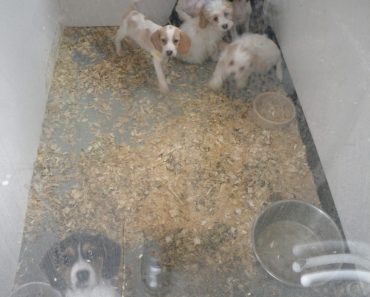
    “The cheapest puppies that make the highest profits come from Eastern Europe and Ireland. The disease risk associated with importing these puppies is very high. Not only to the dogs themselves but to the public of the UK. For example some of these puppies are brought in from Rabies endemic countries. Many carry zoonotic diseases such as Campylobacter and Giardia. Also skin conditions such mange and ringworm.

    “It feels good as an SOU Inspector to know that the RSPCA will now care for and do our very best to find each one a loving new home, but I can’t help but wish there wasn’t such a demand for these puppies in the first place.

    “It’s a bitter pill for an RSPCA inspector to swallow to know that our animal centres are bursting at the seams with unwanted dogs yet these organised criminals are literally bringing these puppies in by the bucket load and making thousands of pounds a week exploiting them and the British public.

    When taking witness statements from the buyers it is obvious that these puppies very quickly become more than just a pet, they became a member of their family.

    “When the puppy becomes ill or dies the buyers are left devastated. One of the most upsetting stories I heard was one of a five-year-old little boy finding his beloved first pet dying in a pool of its own blood only 24 hours after purchase. This little boy’s puppy died at the vets and he suffered night terrors as a result.

    “Not only have the buyers been conned out of hundreds of pounds when buying the puppy but they are often left with huge vets bills to pay, whether the puppy survives or not.

    “These buyers are not foolish. They are ordinary hard working people who genuinely wanted to give a dog a good home.

    “The well written adverts, the fake documentation and the façade of authenticity that these dealers create leads the buyers to believe they are purchasing a well breed, pedigree puppy from a loving UK home. They couldn’t be more wrong.”

    This RSPCA inspector’s identity has been concealed for their own security.

    The RSPCA is now launching the #ScrapThePuppyTrade campaign, calling on the UK government to introduce the ‘Puppy Dealers Act’ in England to stop the unscrupulous trade in puppies. The charity believes huge numbers of sick, under-age and dying puppies – sold to unsuspecting buyers for huge profits, and most likely costing the economy huge sums in untaxed income – are being trafficked into the UK each year.

    Please visit www.rspca.org.uk/scrapthepuppytrade to sign the petition and show your support.

  • Puppies Not as Important as Scrap Metal According to the Law

    Puppies Not as Important as Scrap Metal According to the Law

    RSPCA launches #ScrapThePuppyTrade campaign to bring in laws to protect puppies from callous and cruel puppy dealers.

    The RSPCA has today issued a call for the UK govt to act more decisively in preventing the sick trade of puppy farming. The charity says:

    Puppies are being treated worse than scrap metal, according to the RSPCA which today launched a petition calling on the UK Government to clamp down on people selling sick dogs in England.

    Due to its low cost, low risk and high yield appeal, puppy dealing is an attractive option for people willing to make money at the expense of puppies’ health and welfare and the heartache of families up and down the country.

    puppy photo

    The charity says that more laws exist to regulate the trade in scrap metal than the puppies and has launched a petition calling on the Westminster to introduce the ‘Puppy Dealers Act’ in England and clampdown on puppy dealers in the same way.

    RSPCA chief vet James Yeates said: “Puppy trafficking is big business with dealers getting rich and leaving a trail of dead puppies and heartbroken families in their wake.

    “We believe these poor pups are bought in bulk by dealers looking for the highest profit margin. In many cases the puppies are too young to be away from their mothers and are sick when they are loaded onto vans, before travelling hundreds of miles.

    “In 2013 the government brought in new laws to tackle the criminal scrap metal trade in England. But now it’s puppies who are being traded like scrap with no regard for their welfare, or even if they live or die.

    “It is far too easy to sell puppies and current laws are failing puppies and their parents. The RSPCA wants to see Westminster treat the issue of puppy dealing in England as seriously as they did scrap metal and license anyone who sells a puppy.”

    The RSPCA is calling for mandatory licensing for anyone selling puppies in England to try to hit puppy trade as a whole – from organised illegal trafficking to opportunistic backstreet breeding. This would mean:

    ● Anyone selling a puppy must have a licence.

    ● Strong penalties & fines for anyone caught selling a puppy without a licence.

    ● A national database of puppy sellers (funded by licence fees) to aid enforcement.

    ● All internet and offline advertisers (like Pets4Homes, PreLoved, Friday Ad) must display the licence number of the seller in order to list an advert.

    “While this would not stop illegal trading altogether, it would help to remove the huge layer of unregulated puppy dealing we’re currently battling, it would give local authorities the tools they need to act and improve protections for puppy buyers,” added James.

    In response to a survey* carried out on behalf of the RSPCA in June 2015, more than 2 million (2,040,000) people said they had bought a puppy in the last year. The RSPCA believes that huge numbers of puppies are being trafficked into the country from other EU countries to meet the high demand for pedigree and designer cross-breed puppies in the UK.

    Only 63% of adults who have purchased a puppy within the last year surveyed were able to say they were confident that the person they bought the puppy from bred the puppy.

    This week the RSPCA uncovered the deception by one set of dealers who made around £140,000 a month in undeclared cash duping unsuspecting members of the public and selling them sick and suffering puppies.

    Under different guises this trio lied to buyers, telling them the puppies for sale had been bred in a homely, family environment and were the first litter. The reality was that weekly deliveries of pups arrived via the ferry from the Republic of Ireland and be kept in pods at a ‘holding’ address while advertised on the internet, before being sold from a network of rented residential properties set up to look like family homes.

    Puppies that died were callously dumped in wheelie bins.

    One victim of the deceit was Leanne Lamont from Glasgow (pictured). Her young Pomeranian puppy died in her arms just days after she travelled to England and unknowingly bought him from the underground puppy dealing ring.

    Leanne said: “I found the advert for the puppies online and everything seemed really good. They would only sell to loving homes, they would show outstanding examples of how tiny puppies should be bred and cared for. They seemed perfect.

    “When I arrived at the house I was met by a woman who told me her auntie was the breeder. The house was very clean and everything looked fine. She gave the impression these puppies were coming from a loving family home.”

    However Nacho was seriously ill and just days later took a turn for the worse and started having seizures and Leanne made the difficult decision to put her pet to sleep.

    She said: “He was incredibly ill and I didn’t want him to be in pain any more. I held him in my arms. He was just so tiny. All skin and bones. He was still gorgeous but just so very ill. The vet gave him the injection and he died there in my arms.”

    “They told me Nacho was 12 weeks old when I picked him up but I think he was closer to six weeks old. He was so ill. I just could not believe someone could be so cruel and calculating as those dealers.”

    The RSPCA is now urging people to join help tell Westminster that puppies are more precious than pieces of metal by signing our petition at www.rspca.org.uk/scrapthepuppytrade.

  • Ben Fogle Regrets Not Quitting BBC Crufts Coverage

    Ben Fogle Regrets Not Quitting BBC Crufts Coverage

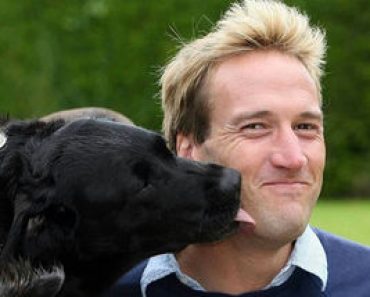
    Ben Fogle, the TV presenter and adventurer has revealed his regrets at not quitting in his role as Crufts TV anchor in protest over the widespread concern over animal welfare problems associated with the event.

    The presenter, son of vet and author Bruce Fogle, says he had reservations about the event but continued to present the show for two years, but that he had supported the BBC in its decision to stop broadcasting Crufts after the furore caused by the documentary Pedigree Dogs Exposed, which brought many serious ethical and welfare concerns in to the mainstream.

    “In retrospect I probably should have stopped it sooner because I also don’t think that dogs should be bred for pure show,” he explained to the Cheltenham Literature Festival.

    “In some ways I regret that I didn’t make that decision myself, I waited for other people at the BBC to make that decision for me.”

    Fogle explained that he had also discussed with his father the ethical connotations of taking the job in the first place.

    “Before I took that job I asked dad what he thought and he highlighted these issues about dogs being bred for aesthetics rather than health,” he said.

    “Dad and I have had many chats about this over the years because I also have my reservations now. ”

    He emphasised that he felt it was a “great decision” for the BBC to abandon its Crufts coverage following the corporations own investigation in to the show’s impact on the health of many pedigree dogs.

    The Cast Away star added: “There are many breeders that really do care about their dogs but there are some of them don’t.

    “There are dogs that literally live in cages going from show to show to show.

    “Those are big American dog winners who literally live in cages and go back and forth across America. ”