Category: Magazine

  • 7 Dogs With Star Quality Looking for New Homes

    7 Dogs With Star Quality Looking for New Homes

    With thousands of dogs being abandoned every day and the problem seeming to never end, we’ve decided to use today’s blog post to highlight seven dogs looking for new homes and pick out each’s star quality/superpower.

    1) Dougal!

    Bio: 1 year old black Patterdale Terrier boy.
    Star quality: He can fit in your bag (or suitcase) which may make you think he’s a handbag dog but anyone who’s ever encountered a Terrier will know they may be small in size but they’ll fill your home with many memories.

    Find out more: http://www.dogsblog.com/dougal-18

    2) Mary!

    Bio: 18 month old Staffordshire Bull Terrier girl.
    Star quality: With ears like this, she’ll be able to tune your satellite TV in 🙂 Seriously, this girl is adorable. Her star quality is that she doesn’t quite know how precious she is and how much the loyalty she can offer is a gift many would benefit from.

    Find out more: http://www.dogsblog.com/mary-26

    3) Meg!

    Bio: 3 month old  Jack Russell cross Bichon Frise.
    Star quality: The ability to melt any heart. Where’s her superhero cape we say!

    Find out more online: http://www.dogsblog.com/meg-64

    4) Bertie!

    Bio: 1 year old Cross-Breed boy.
    Star quality: This boy came into rescue in December. After being rehomed, he found himself back in rescue 3 months later as he bonded with all of the family, including the other family dog, but hadn’t bonded so well with the husband. Such a shame. Let’s hope for third time lucky for this boy and fate may mean his forever home lies around the corner.

    Find out more online: http://www.dogsblog.com/bertie-82

    5) Sandy!

    Bio: 11 year old Cross-Breed.
    Star quality: A bit of an escape artist – to keep you on your toes 🙂 This older girl is looking for a new home where she can benefit from long walks, roast chicken and lots of cuddles.

    Find out more online:  http://www.dogsblog.com/sandy-65

    6) Carlisle!

    Bio: 3 year old Jack Russell Terrier.
    Star quality: Which came first – the dog or the place? Well, the place. But seriously this dog’s star quality is that he has the ability via the medium of ears to direct you left or right, like a sat nav. Be warned – the direction his ears may take may be towards his namesake in Cumbria.

    Find out more online: http://www.dogsblog.com/carlisle

    7) Irina!

    Bio: 2 year old Cross-Breed girl.
    Star quality: Can touch her toes – look, we’re serious. Irina had a terrible start in life and she embodies the resilience and forgiving nature of dogs. Settling into her foster home very quickly, she showed how flexible she could be (flexible, get it!). This gorgeous girl is seeking a loving forever home to call her own.

    Find out more: http://www.dogsblog.com/irina

    You can find hundreds more on dog adoption site, www.dogsblog.com, sponsored by pet insurer the Co-operative Insurance, find your favourite and share far and wide to help them find a loving new home if you can’t offer a new home.

  • Want To Know What Your Dog Gets Up To While You’re Out?

    Want To Know What Your Dog Gets Up To While You’re Out?

    Do you want to know what your beloved pet does behind your back? Channel 5 are looking for animals to take part in ‘The Secret Life of Pets’. Whether your dog is stealing your food, your cat is disappearing all day or your hamster is acting strangely we will find out what is really going on.

    The Secret Life of Pets is an entertaining and informative brand new 8 part TV series for Channel 5. The show looks into the extraordinary and bizarre secret lives of our pets. We discover what our pets really get up to behind those puppy dog eyes, what they are hiding in the garden and how they have learnt to open the fridge door! Using the latest and most innovative filming techniques this series shows us what life is like from a pet’s-eye-view.

    To be in with a chance of getting your pet on TV please can you email me some information about your pet along with a photo of you and your pet, your contact number and address. Apply ASAP by emailing rob.myler@itn.co.uk to avoid disappointment!

    dog home photo

    Photo by MarcooJethro®

  • Dementia in Dogs – What Are The Early Symptoms?

    Dementia in Dogs – What Are The Early Symptoms?

    If you think your elderly dog may be going senile and losing his mind, you may be right.

    Studies have shown that over one third of 11 year old dogs suffer from dementia, or canine cognitive dysfunction. By the time they reach 16 years, they are all showing some signs of this condition, writes Audrey Harvey BVSc(Hons).

    Dogs with dementia typically have memory loss, confusion and disorientation. They stare into space and wander aimlessly around your house. They forget their toilet training, and act like they’ve never had any obedience training at all. Night times can be difficult; they are often wakeful and pace the floor, which keeps you awake too. These symptoms are due to a lack of dopamine in the brain.

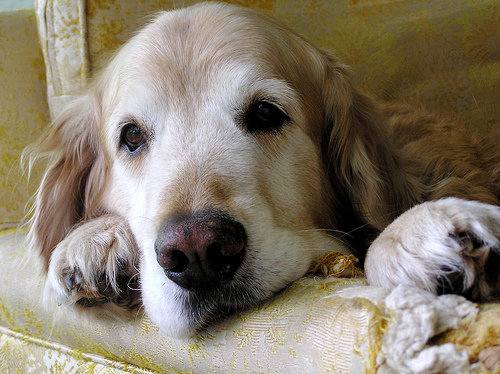
    old dog photo

    The characteristic behaviours associated with dementia in dogs appear slowly and progress gradually, so it’s easy to miss the early stages of this disease in your four legged family member.

    What can be done to make life easier for your old friend?

    Medication

    Drugs such as L-deprenyl can improve your dog’s condition because it makes what dopamine that is left in your dog’s brain last longer. It can take a couple of months to see any response, but over 75% of dogs showed improvement on this treatment. The earlier your dog starts taking this medication, the better his response is likely to be.

    Diet

    Antioxidants and omega fatty acids can improve your dog’s mental abilities, and positive results can be seen within 8 weeks of changing his diet. There are commercial kibbles available from your veterinarian that are specifically designed to treat dementia in dogs.

    Training and Environment

    Even though your dog is getting older, he can still learn new tricks. It’s a good idea to use hand signals as well as verbal commands so that if one of his senses fails, he can still understand what you want him to do. Use food rewards and take into account his reduced mobility when you are training him. This will help to slow the onset of dementia.

    Environmental enrichment includes such things as playdates with other dogs, and daily play time with interactive toys. These too have been shown to improve an elderly dog’s mind.

    With a little bit of effort on your part, your older dog will be better able to cope with the changes in his mental abilities. Old age isn’t an illness and dementia shouldn’t stop you enjoying the company of your canine senior citizen.

    Photo by normanack

  • Why Should I Fundraise for the RSPCA?

    Why Should I Fundraise for the RSPCA?

    It’s a really great feeling to get involved in fundraising and know that you’ve made a difference to a great cause. However, there are so many worthy charities that it can be difficult to choose where to focus your fundraising efforts.

    Here are just some of the reasons why the RSPCA is a great charity to get involved with:

    The RSPCA is independent

    The RSPCA is not funded by the government and so therefore mainly relies on voluntary donations and fundraising. The RSPCA chooses to remain independent as this means that they are free to lobby for changes regarding the welfare of animals without the fear of funding being possibly withdrawn.

    [shock_spots id=”6982″]

    Help stop animal cruelty

    The RSPCA believes that every animal has the right to lead a cruelty free life, and is active in preventing animal cruelty. Over 100,000 complaints of cruelty are investigated by the RSPCA each year, with many animals being rescued, rehabilitated and rehomed. Without voluntary donations the RSPCA would be powerless to rescue animals in desperate need and give them the care and attention that they need.

    Give a pet a home

    The aim of the RSPCA is to find their rescued or abandoned pets a happy new home and donations help to raise awareness of that, as well as awareness of what it takes to be a good, responsible pet owner. Donations are also used to house, feed and care for the hundreds of animals that the RSPCA continues to look after until their forever home is found.

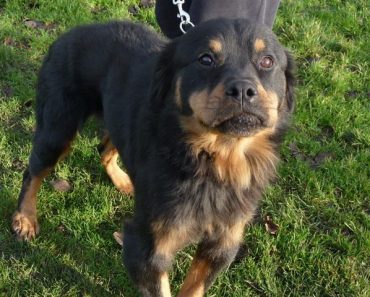
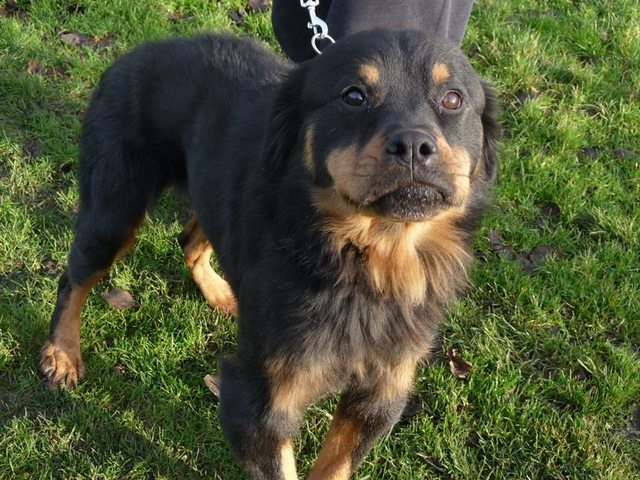
    Emilio

    Emilio is a 3 year old Rottweiler looking for a new home on DogsBlog

    Welfare for ALL animals

    It may surprise you to know that it’s not just pets that the RSPCA strives to protect. The RSPCA believes in welfare for all animals, including pet, farm, wild and research animals. Through continuous goals, missions and campaigns, the RSPCA aims to prevent cruelty, promote kindness and alleviate suffering of all animals – and to do that they need your donations!

    Fundraising is easy

    It’s so easy to get involved and fundraise for the RSPCA – you’ll find everything you need on the website! As well as choosing an animal welfare project to raise money for you’ll also find lots of fundraising ideas as well as a downloadable fundraising toolkit.

    It’s completely up to you whether you’d like to organise your own fundraising event, or you’d like to join one of the RSPCA challenges. Online you’ll find details of the Mount Kilimanjaro trek, a selection of cycling challenges from the 500km Costa Rica coast to coast cycle to the slightly tamer Manchester to Blackpool bike ride, and a ‘Jump in June!’ skydive.

    See the difference

    Whether you raise £10 or £10,000, it’s easy to see the difference that donations make at the RSPCA. Supporters are kept up to date about current appeals on the website and blog – for example, a simple click will show that over £126k has been raised for the emergency seal appeal, as well as detailing how much it costs to feed the seals and what the rest of the money is being used for. You can also see that it costs £10,000 to rehome 20 dogs, or £8,000 to rehome 30 cats, making it easy to understand where the money that is donated to the RSPCA goes.

    If you fancy having fun for a really good cause, the RSPCA is a fantastic charity to focus your efforts on. Simply decide what you want to do, download the fundraising pack and donate!

  • Could Pet Dogs Cause an Epidemic of Infectious Diseases?

    Could Pet Dogs Cause an Epidemic of Infectious Diseases?

    The last thing you worry about when you child is playing with the pet dog is that they are going to contract some sort of deadly infectious disease, but a new study suggests that dogs and cats could be responsible for spreading new emerging infectious diseases, writes Melissa Hathaway.

    Michael Day, Professor of Veterinary Pathology at the University of Bristol, recently published a study online at ‘Emerging Infectious Diseases,’ which concludes that a global monitoring system for infectious diseases in dogs and cats needs to be established.

    dog licking photo

    Is Your Dog Safe?

    First of all, don’t panic and run off to the vet to get your dog checked for every infectious disease under the sun. There is no immediate danger, but the study does highlight an important discrepancy in how pets are monitored for disease. Currently there is a system in place which tracks all infectious disease found in livestock, but there is no such system for household pets. Given the fact that dogs and cats often share the same living space as their owners, the potential for disease spreading is significant. Pets are vaccinated and checked by vets to make sure they are safe, but new emerging infectious diseases could be a future problem. It is well worth investing in pet insurance so that you can get your dog immediate treatment if he or she suddenly becomes sick, but more importantly pets need to be monitored regularly for new infectious diseases, as recommended by Professor Day’s study. However, a globally co-ordinated effort is required if a new system of monitoring is to be successful.

    Worldwide Backing

    Lots of animal associations and health organisations agree with Professor Day’s findings. The World Organisation for Animal Health (OIE), the US Centers for Disease Control and Prevention (CDC), the World Small Animal Veterinary Association (WSAVA), and the World Health Organisation (WHO) have all backed the need for a co-ordinated worldwide disease monitoring system for veterinarians who work at animal practices that treat small companions animals like dogs and cats.

    Creating a global monitoring system will be no easy feat, but if it can be done for humans and livestock then it can be done for pet animals. For example, the WHO keeps track of the influenza virus in humans through 111 centres across 83 different countries. A scheme to monitor companion animal diseases would require significant funding and political support, which could take some time to achieve. However, a monitoring system is in everybody’s best interest, as Professor Day explained, “Control of diseases among dogs and cats is a good way to prevent spread to humans.”

    With the number of pet dogs and cats in households across the world continually growing, a system needs to be put in place sooner than later. The numbers are staggering, as Professor Day explained. “For example there are an estimated eight to ten million dogs living in up to 31 per cent of UK homes and in the USA, 72 million dogs in 37 per cent of homes.”

    Recognising the Benefits of Animal Companions

    The study is by no means trying to shine a bad light on the strong relationship many families have with their pet dog, but simply wants to bring to everyone’s attention the potential threat that they could cause, and suggests that something should be done about it now to avoid the problem. Humans have lived happily with animals for centuries, but now the closeness of relationships between man and dog has grown, as has their proximity.

    Day explained, “In developed countries the relationship between man and dogs and cats has deepened, with these animals now closely sharing the human indoor environment.”

    He went on to say, ‘‘The benefits of pet ownership on human health, well-being and development are unquestionable, but as dogs and cats have moved from the barn, to the house, to the bedroom, the potential for disease spread to humans increases.”

    Small companion animals have much more close human contact than wild animals or livestock, and this significantly raises the possibility that an infectious disease could be passed from pet to owner. Day sees the proliferation of animals being kept as pets as having the potential to be a serious problem in terms of diseases transmission from animals to humans, but he wants to protect the relationship people and society as a whole have with dogs. Hopefully his words of warning will spur governments across the world into action.

    Photo by Tobyotter

  • More Pets Poisoned – What’s Going On Here?

    More Pets Poisoned – What’s Going On Here?

    The number of complaints about animal poisoning reported to the RSPCA has increased by nearly 10% in the space of a year.

    The figures were revealed today as the charity warns owners about accidentally poisoning their pets by giving them harmful treats, such as chocolate, this Easter.

    The RSPCA received 1,154 poisoning complaints last year from concerned members of the public. This was up from 1,055 in 2012.

    cupcakes-dog-stains

    It is a criminal offence under the Animal Welfare Act 2006 to intentionally administer a poison to an animal. However, some people may be giving their pets harmful substances, simply because they don’t realise they could be dangerous.

    The charity’s chief veterinary officer James Yeates said it was worrying to see a rise in complaints of poisoning, but he stressed that many accidental poisonings could be avoided if people are more aware of the dangers around their home.

    He said: “Chocolate poisoning is one of the most commonly reported types of animal poisoning, so Easter is the ideal time to remind people of the hazards around their home that could accidentally poison their pets.

    “Easter eggs are a tasty treat for many of us, but a hefty vet’s bill won’t be quite so easy to swallow if your pet ends up wolfing them down before you.

    “It isn’t just chocolate that is dangerous for animals though. For example, did you know that rhubarb is poisonous to rabbits, or that grapes could kill your ferret?

    “There are so many hidden dangers to animals around the home and we want owners to do their homework and keep their pets safe and healthy.”

    Owners can find out more by visiting the RSPCA’s poisoning advice pages at www.rspca.org.uk/poisoning

  • Easter Goes To The Dogs – Easter Gift Box Review

    Easter Goes To The Dogs – Easter Gift Box Review

    Easter means something to us all – whether you simply look forward to the break or it means more to you, one thing doesn’t change and that’s the way we incorporate our pets into our plans.

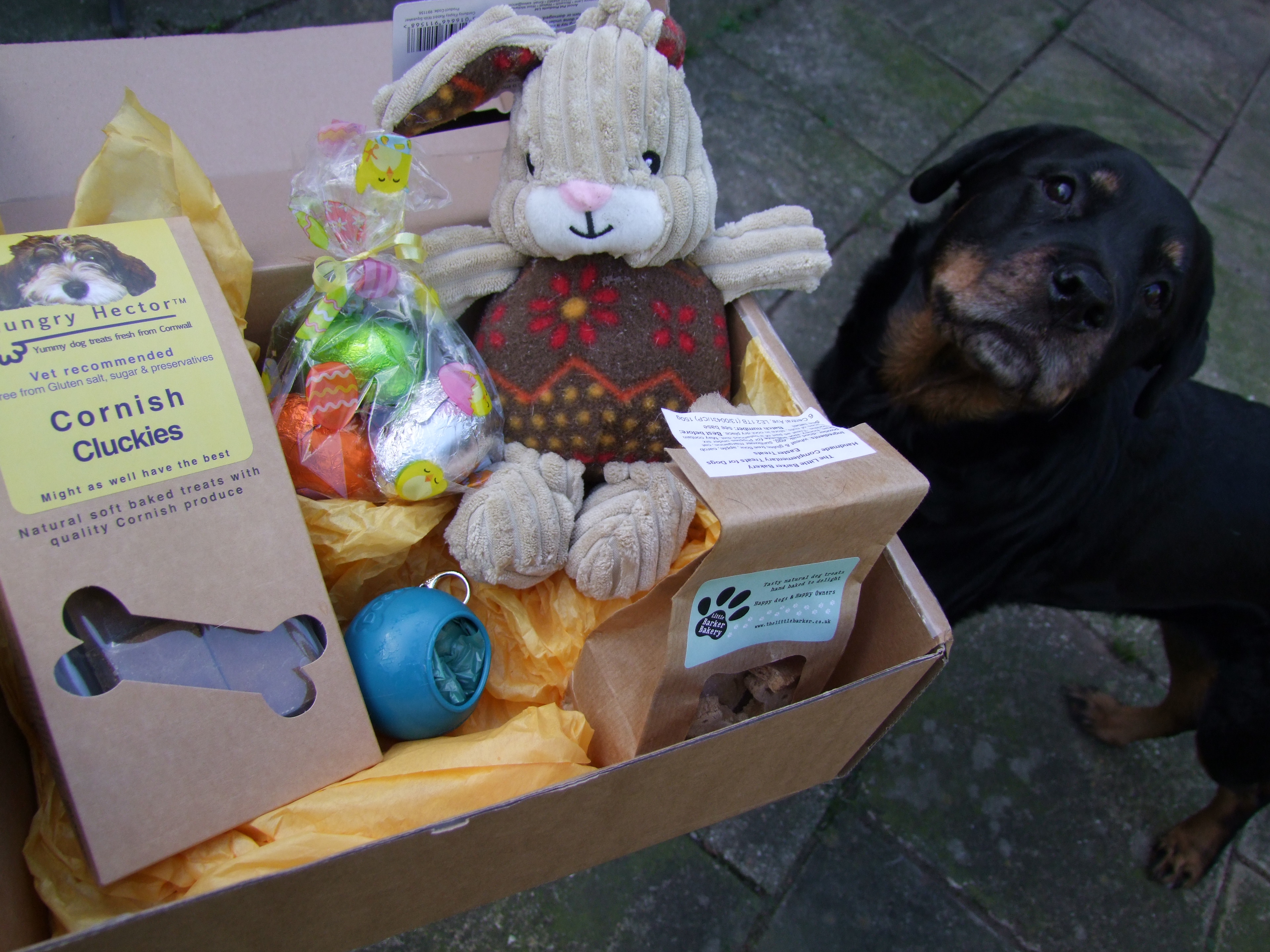
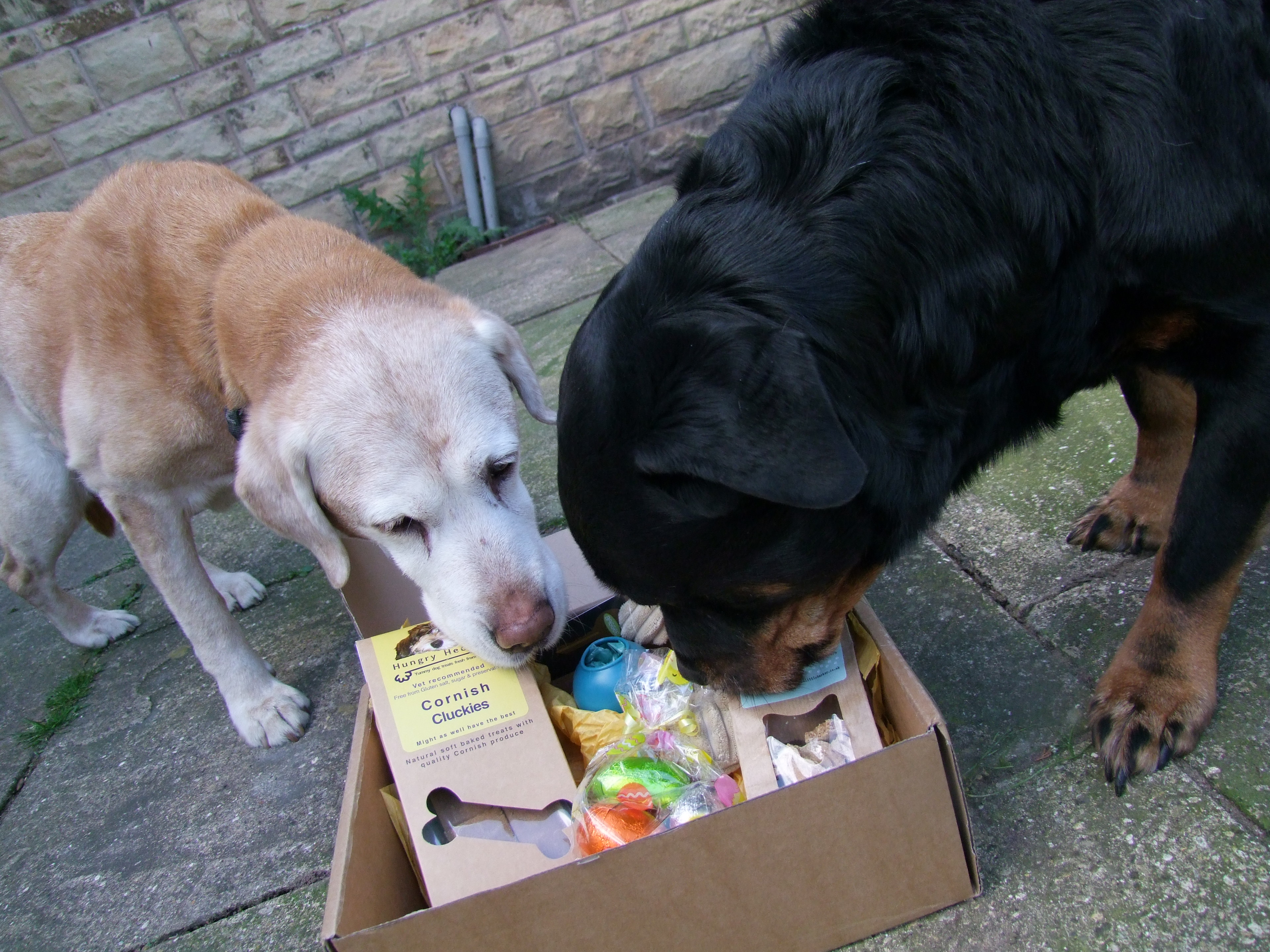
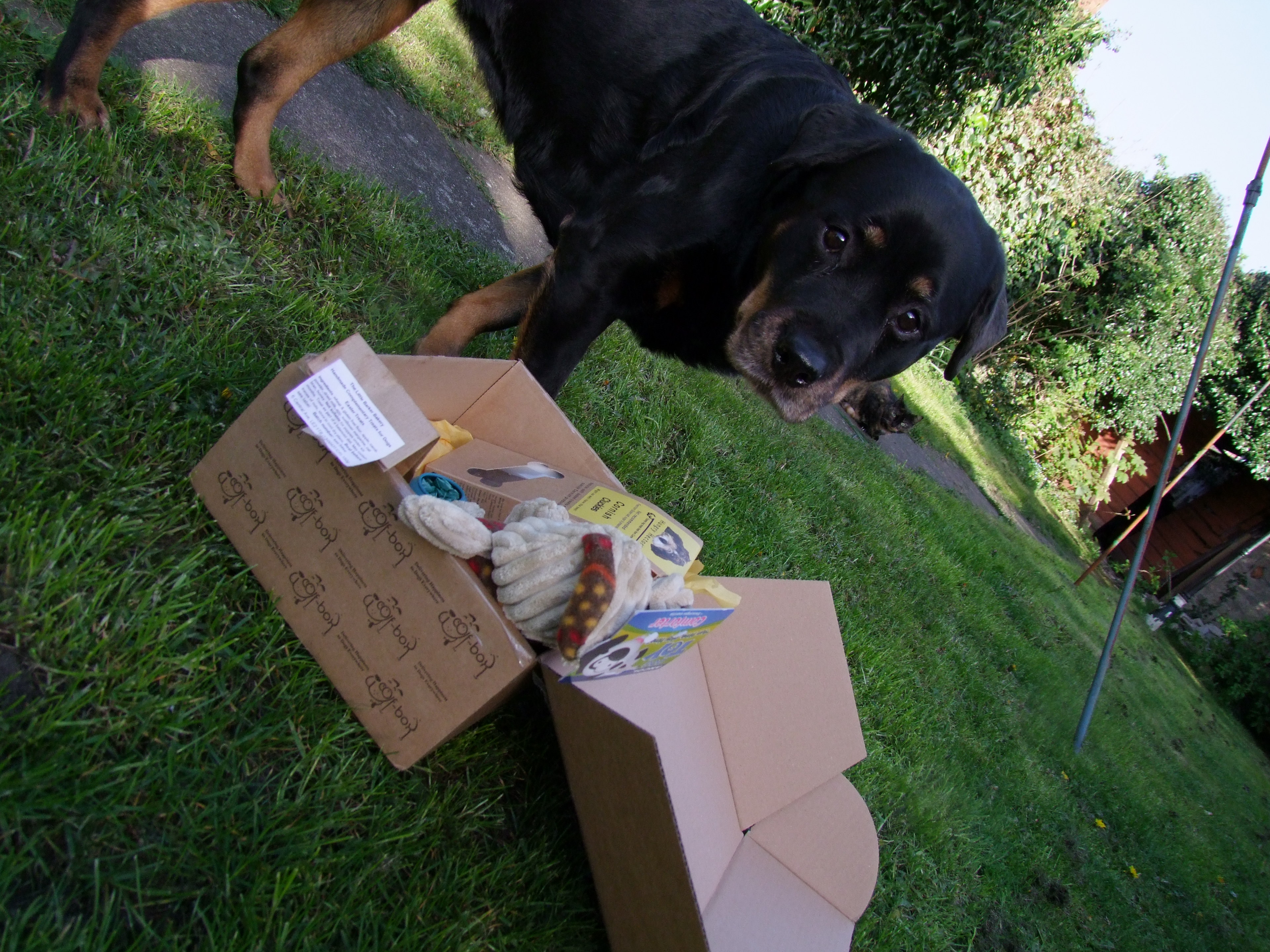
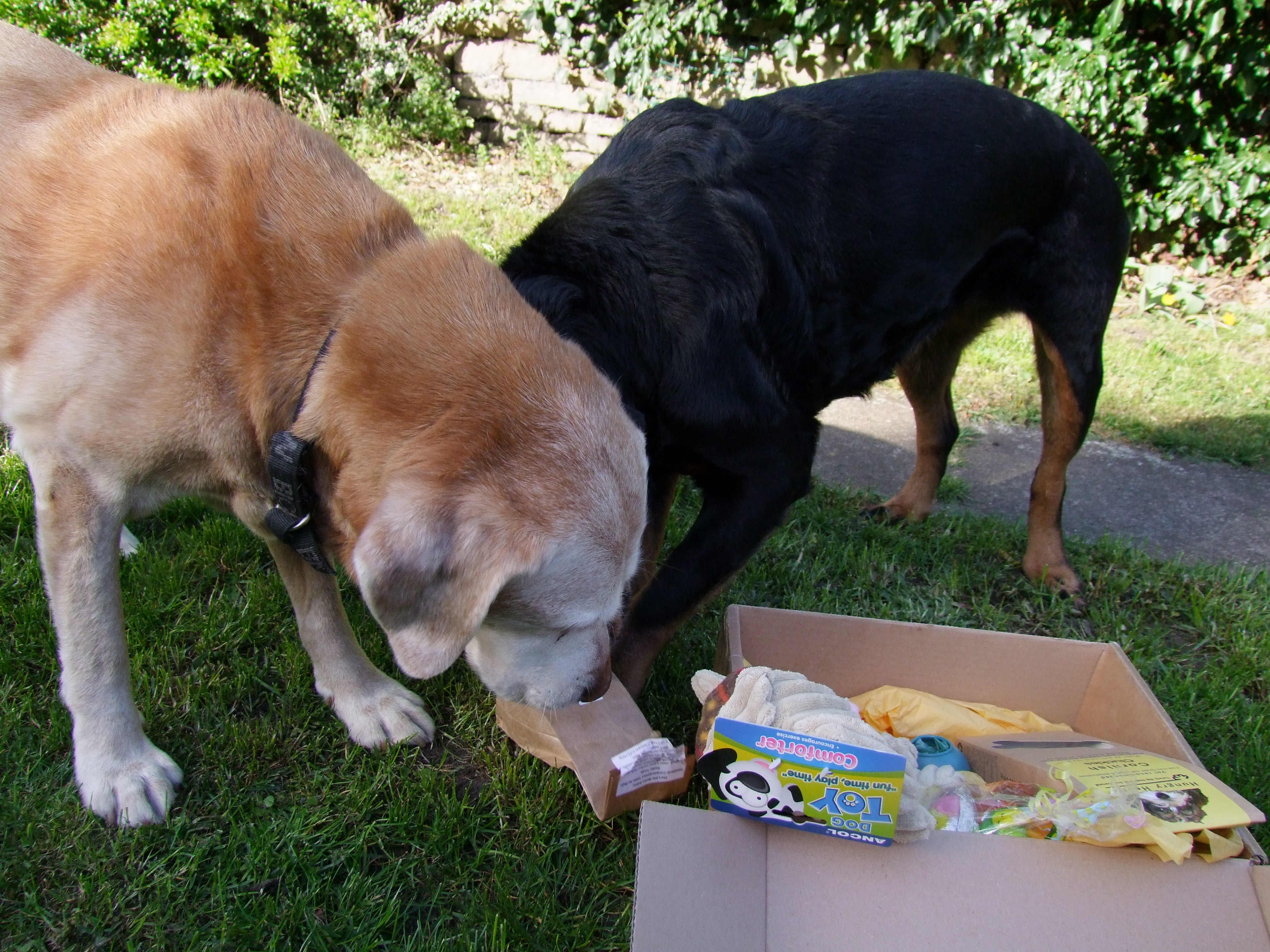
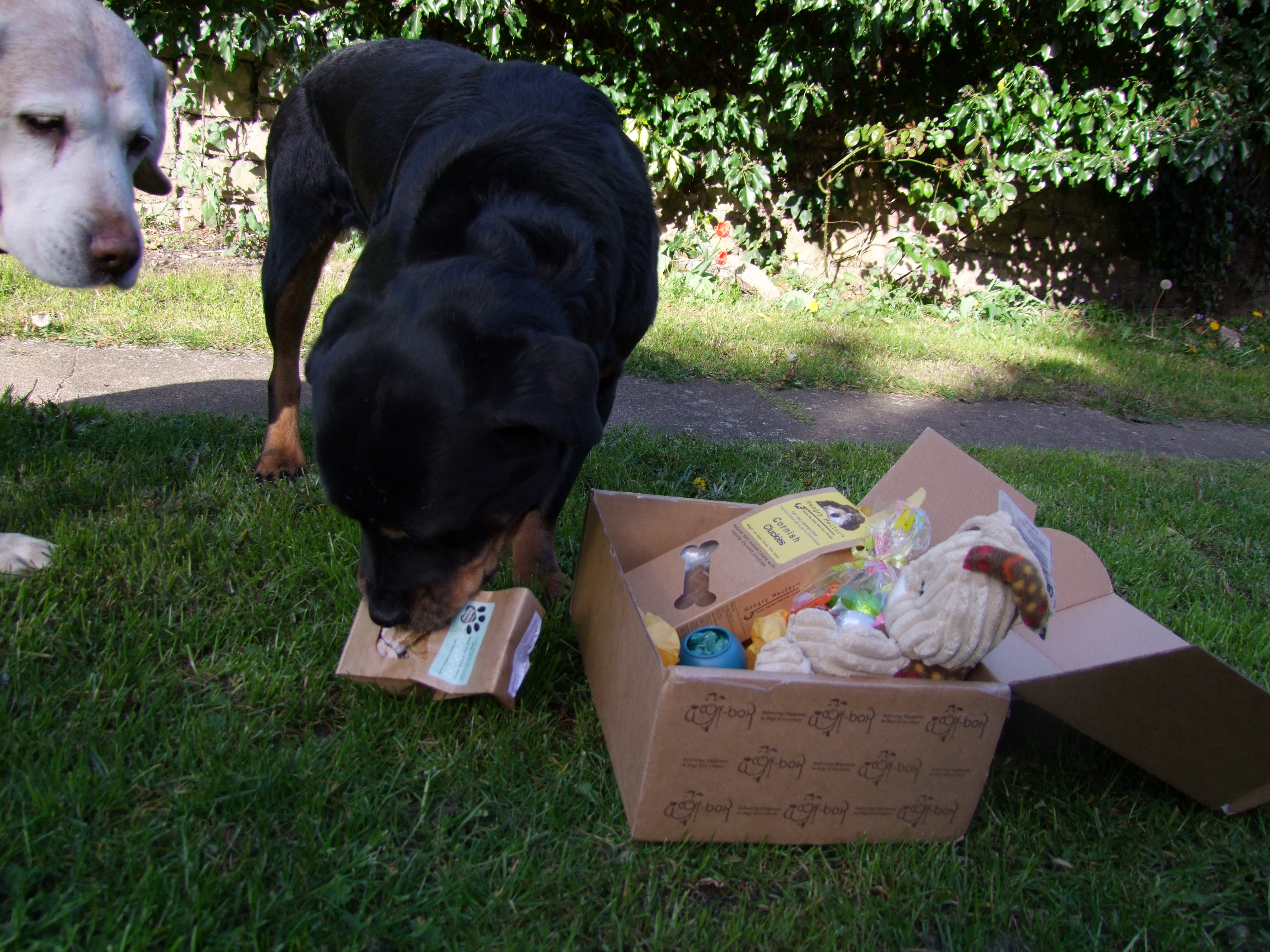
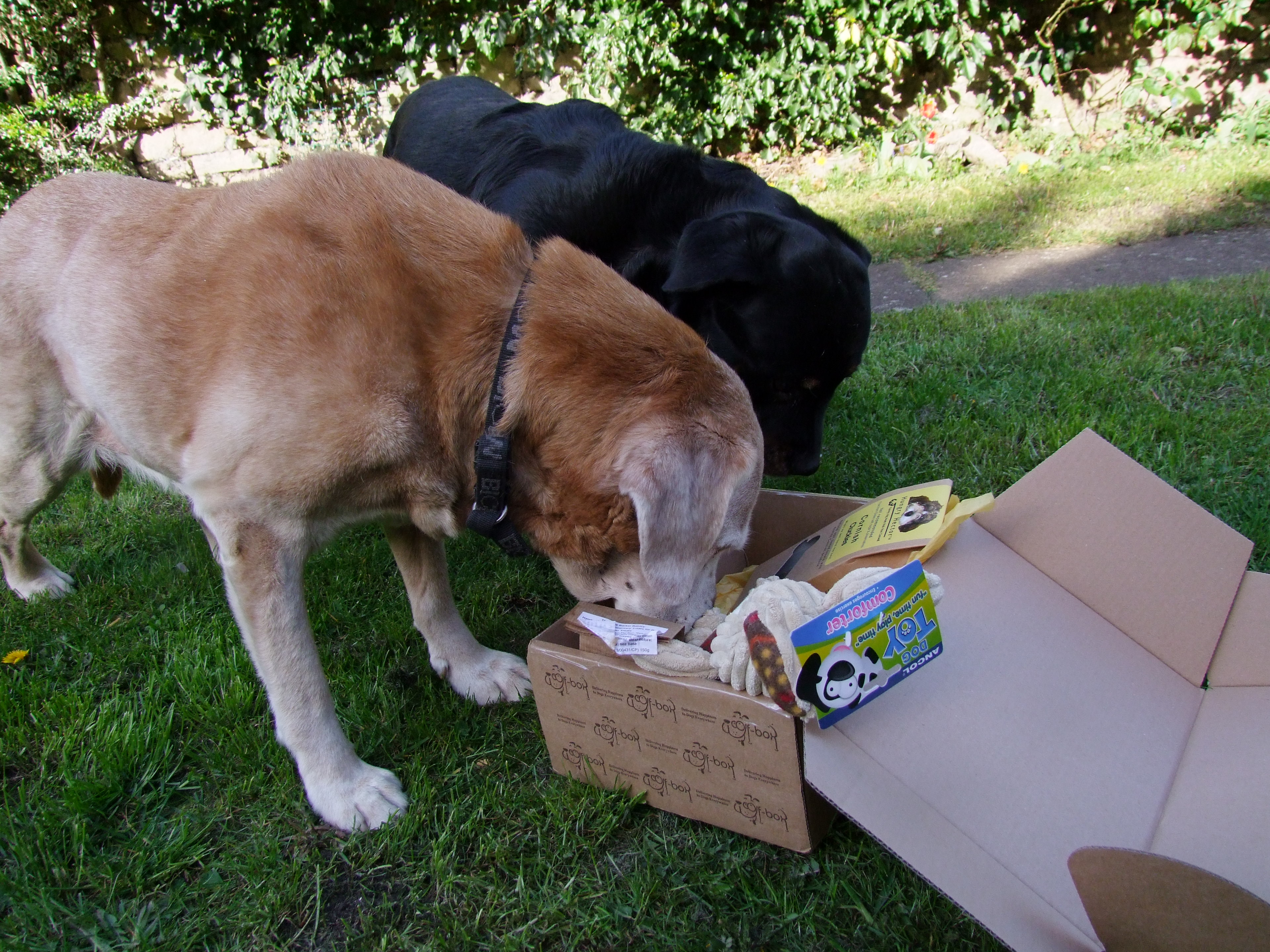
    This year K9 Magazine’s review-some two-some Chloe and Mia are looking forward to Easter with an extra spring in their step thanks to Woof-Box, who kindly sent them one of their Easter themed gift boxes.

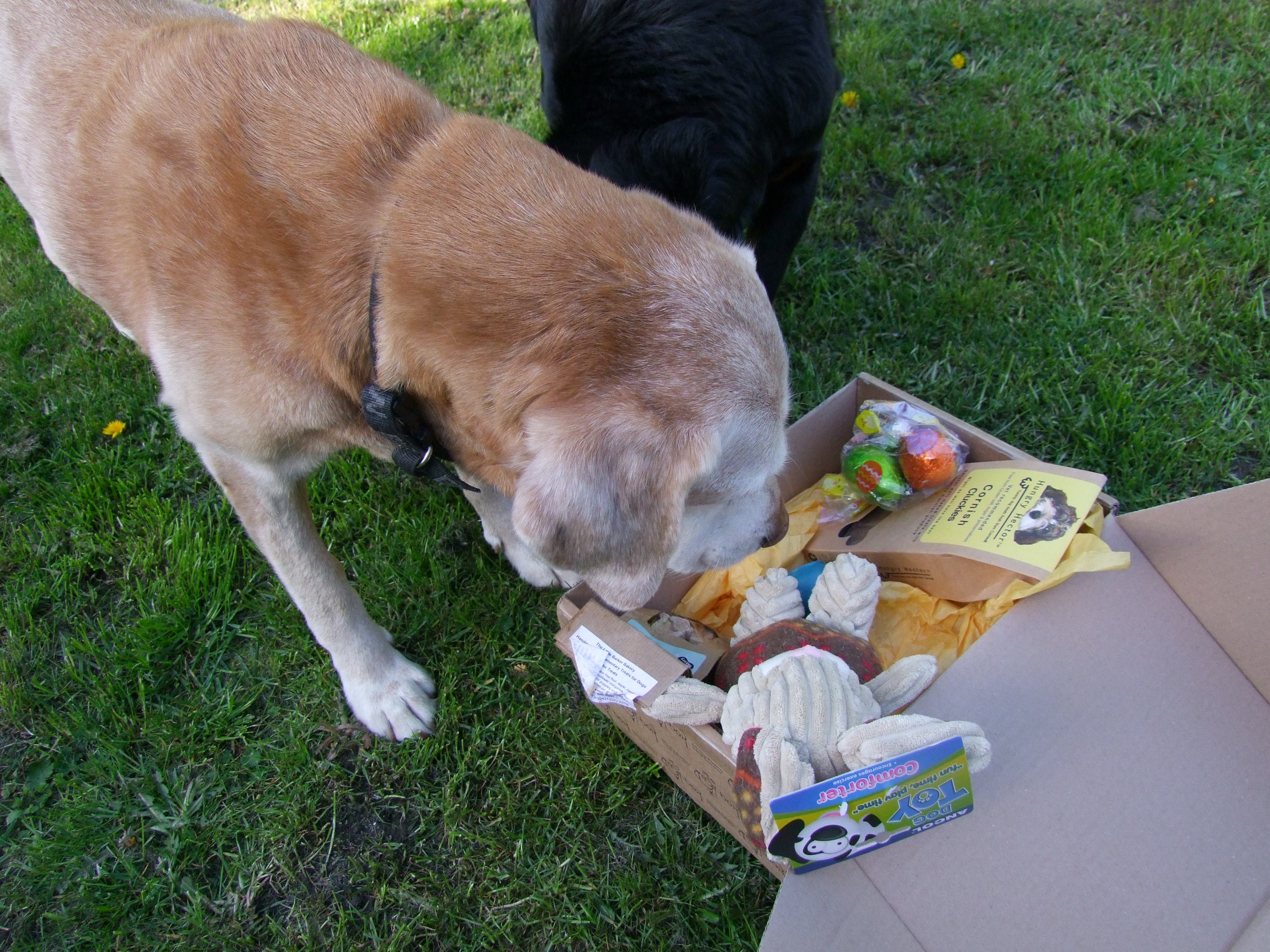
    woof-box easter gift box

    Who are Woof-Box?

    Woof-Box recently launched with the mission objective to deliver happiness to dogs everywhere! Tailored to their owner’s specifications, Woof-Box will create a gift box by handpicking only the healthiest, tastiest snacks, treats and other goodies to the doors of dogs across the UK every month as part of a subscription service.

    Chloe & Mia’s Easter themed Gift Box

    Chloe and Mia both loved the surprise of the gift box and both chose their favourites before we took them for a picnic to enjoy the sunshine.

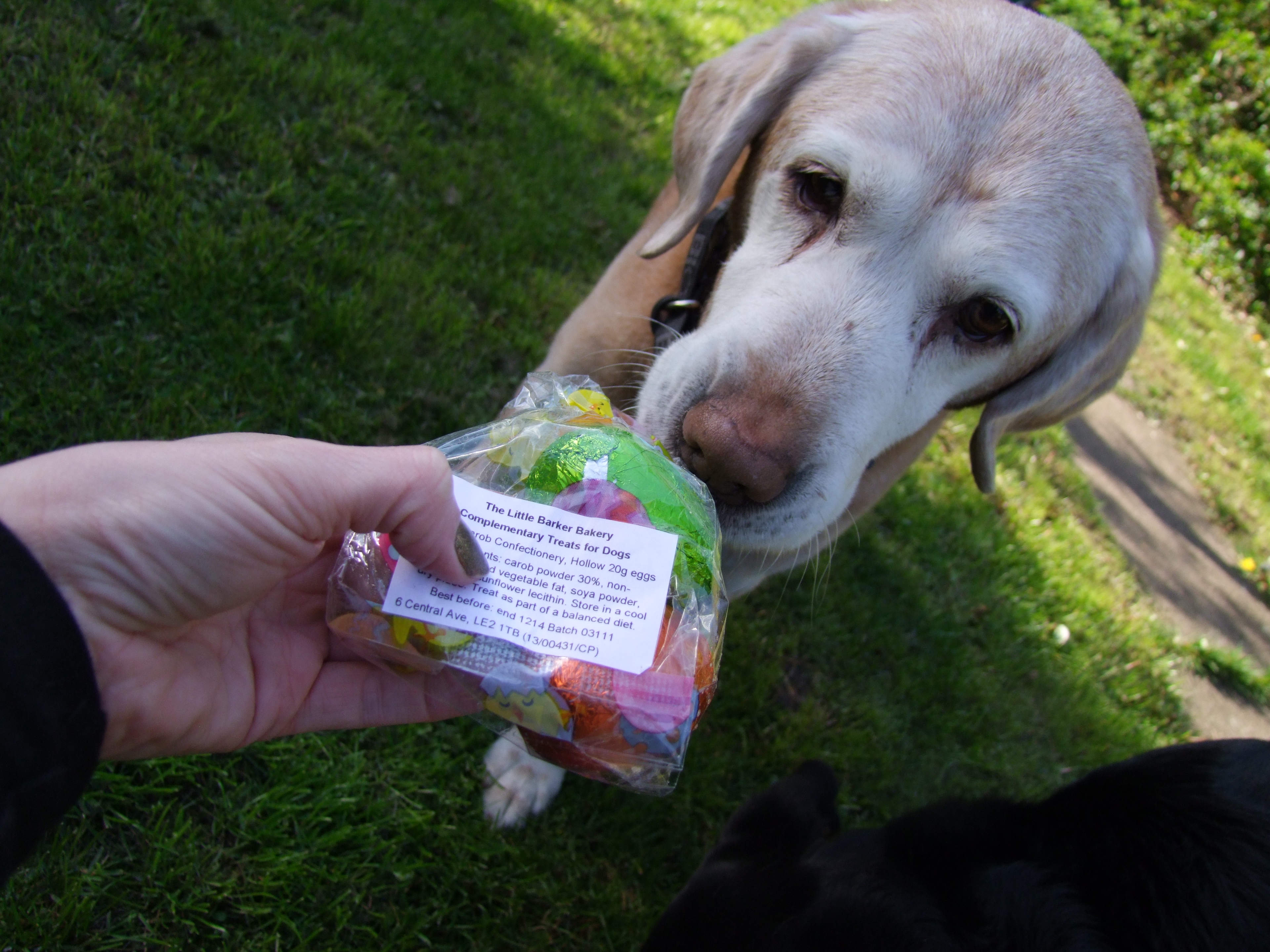
    For Chloe, she took an immediate liking to the Carob Easter Eggs for Dogs.

    Just because dogs can’t eat chocolate they don’t have to miss out. These Easter eggs are made from Carob which is the dog safe alternative to chocolate.

    For Mia, well, it was the Easter themed carob biscuits!

    Each bag contains a mixture of bunny, chick and egg shapes hand baked to delight in carob and apple flavours. Carob is the dog safe alternative to chocolate, it is 100% natural and full of vitamins so whilst you are indulging in a little Easter chocolate your canine companion need not miss out. The apple cookies contain home made apple puree for fibre, oats for their known health benefits and homey which is a natural antiseptic. All of these cookies are made using the finest human grade ingredients with a base of organic wheat and gluten free flour.

    The box also included:

    • An Ancol ‘Easter Bunny’ comforter toy
    • The ‘Doggee’ waste bag dispenser
    • Hungry Hector Cornish Cluckies yummy dog treats

    Chloe and Mia received the box for medium-large size dogs, a tailored version is available for smaller dogs. Delivery is free and prices are from £17.99 per month, depending on your subscription period.

    Tailor your very own gift box, seasonal or otherwise, today at Woof-Box.co.uk and give your dog a monthly surprise they’re sure to love!

  • More Than 1 Million Dogs Fed Crisps & Pizzas – Is It A Wonder Obesity Is On The Rise?

    More Than 1 Million Dogs Fed Crisps & Pizzas – Is It A Wonder Obesity Is On The Rise?

    Research published by pet insurer Direct Line has revealed that even our dogs now gorge on junk food at a time fears of pet obesity are on the rise.

    The study shows that millions of dogs are eating human treats regularly, with a third of pet owners admitting to feeding their dogs snacks like crisps and chocolate – most of which are unhealthy, and some are even potentially toxic.

    Over 1.3 million dogs (15 per cent) are scoffing crisps and almost as many (1.1 million) eating pizza. Dogs are even being fed takeaways, with over a third of a million dogs eating deep fried chicken from KFC (4 per cent) and the same number being fed food from McDonald’s. In fact, over 2.3 million dog owners feed their pets human food instead of their regular food.

    dog eating photo

    Edward Barclay, head of pet insurance at Direct Line, commented: “Fast food takeaways can be extremely dangerous for dogs, who love to rummage through leftover containers in search of a tasty morsel. Direct Line’s own veterinary nurses have seen cases of dogs that have needed urgent medical attention after digesting fried chicken bones, or even whole corn on the cobs, which have resulted in severe digestive problems.”

    Photo by dickuhne

  • New Research Claims British Dog Owners Could Be Killing Pets With Kindness

    New research published by Direct Line Pet Insurance reveals even our dogs now gorge on junk food, giving rise to fears of a pet obesity epidemic.

    The research shows that millions of dogs are scoffing human treats on a regular basis, with a third (33 per cent) of pet owners admitting to feeding their four-legged friend snacks like crisps and chocolate, most of which are unhealthy and some potentially toxic.

    Over 1.3 million dogs (15 per cent) have been fed crisps and almost as many (1.1 million) have enjoyed pizza. Dogs are even being fed takeaways, with over a third of a million animals tucking into deep fried chicken from KFC (4 per cent) and the same number being fed food from McDonald’s. In fact, over 2.3 million (27 per cent) owners feed their dog human food instead of pet food.

    Edward Barclay, head of pet insurance at Direct Line, commented: “Fast food takeaways can be extremely dangerous for dogs, who love to rummage through leftover containers in search of a tasty morsel. Direct Line’s own veterinary nurses have seen cases of dogs that have needed urgent medical attention after digesting fried chicken bones, or even whole corn on the cobs, which have resulted in severe digestive problems.”

    Disturbingly the research also shows six per cent of dog owners have given their pet alcohol. Pet owners are gambling with the health of their animals, as ingesting even small amounts can result in life-threatening toxicity for dogs.

    According to the study, half (50 per cent) of pet owners that smoke do so in the same room as their dog and a quarter (25 per cent) expose their pet to the second hand fumes of more than six cigarettes a day. Pet owners that smoke are allowing their dogs to inhale worrying doses of harmful chemicals, with 13 per cent consuming over 16 cigarettes a day with their pet shut in the same enclosed environment.

    Edward Barclay continued: “Unfortunately, some dog owners are literally killing their pets with kindness. What is a tasty treat for humans can cause fatal reactions in dogs, or contribute to long term health problems. While Timmy in the Famous Five might have licked the plates clean, vets recommend against feeding leftovers such as pizza slices and chips.

    “The anatomy of dogs means they are extremely sensitive to smoke and there is the additional risk of nicotine poisoning if they chew butts or cigarette packets left lying around. Likewise, owners should be careful leaving electronic cigarettes on tables or in the plug, charging. We always want to be around our furry companions but if you’re smoking, it’s better to step outside. Responsible pet owners should recognise the importance of providing a healthy diet and environment for their animals as well as having sufficient pet insurance cover, or funds available, in case their dog needs treatment.”

  • I Cheated When I Was a Dog Trainer, Here’s My Confession

    I Cheated When I Was a Dog Trainer, Here’s My Confession

    I used to train dogs professionally.

    That is, I was paid for providing the service of training dogs. I got money for it. It was my trade. My profession. How I earned my living. How I paid my bills.

    Something has been playing on my mind recently. In fact, it’s been bothering me for years now, so here’s my full and frank confession about some of the things I did.

    I cheated as a dog trainer. Totally. Cheated.

    I would take dogs down to the river. Other people’s dogs. I was supposed to be doing stuff like rigorously teaching them things like how to sit and stay and generally behave themselves. I should have been working on getting the dogs to comply with my every instruction. But, for a LOT of that time I was doing no such thing.

    Here’s what I did.

    I’d go down to the river, all decked out in proper dog training gear. I really looked the part.

    As soon as I was out of sight….OK, here goes. As soon as I was out of sight and got close to the river bank, I’d let the dogs off the lead and I’d lay on my back and (God, this is hard to say)…I’d just, sort of, mess about. I’d do things like throw them a tennis ball. Muck about, engage them in play, I’d be larking, frolicking, capering, the whole gambit of things you get told off for doing at school. I did it all. Oh God, there was so much play. I’d be totally covered in grass, my face would be pretty much covered in mud and dog slobber. Professional? Does THAT sound professional???

    I forgot the principles. Maybe I lost my principles. Maybe I never had any.

    Just look at things I WASN’T doing….

    I forgot to do any alpha rolls on them. Totally forgot. Never did a single one.
    I forgot to keep correcting them when they were messing about.
    I forgot to tell them off when they did something silly.
    I forgot everything I’d seen on TV.

    I know what you must be thinking, I’m more beast than man. I know. I know.

    I was just down there, by the river, doing the whole Huckleberry Finn routine. Dossing about with these dogs. Dogs who I was being PAID to train and turn in to good canine citizens.

    My only redemption is that, if I’m reaching for some sort of justification, I was working my ass off at trying to make friends with these dogs. You know, get them to like me. I totally forgot that I was meant to be dominating them, not being all pally pally with them. I was, I repeat, getting paid for this. And yes, it did cross my mind several times when I was laying by that river and just having the absolute time of my life with all these dogs that I had to pull myself in to check and say out loud: “I’m being paid for this.”. Wow. No rolling them over to make them see I WAS BOSS. No domination. None of it. What a joke I was.

    Somehow, goodness knows how, all those dogs did end up trained. They did end up being very well behaved and I never once had an owner who thought their dog wasn’t 100% improved from their time spent with me. I used to think: “Wow, if only you knew. I spent around 10% of my time with your dog, you know, actually teaching them stuff and the other 90% I was just mucking about with them down by the river. Playing and enjoying their company.”.

    Well, here it is. My confession. I look back and I can’t remember how I taught them to do a single damn thing. I can only remember the unbelievably privileged time I had having unadulterated fun with all those dogs, chasing balls, playing hide and seek and chilling out on a hot, Summer day by the side of the river with a dog by my side watching the natural world play out in front of us. How they ended up so well balanced, so obedient, so confident – well, I can only assume I fluked it.

    I’m much more serious now. If ever I have to train anyone’s dog in the future, I promise. I’ll wear a suit and tie. No messin’. Honest.

  • British Pet Owners Set to Travel This Summer

    British Pet Owners Set to Travel This Summer

    This year Britain’s dog owners are planning to make the most of the Summer months and lighter nights by taking more road trips with their dogs. However according to research released from Confused.com, it comes at a cost.

    New research of dog-lovers across the UK commissioned by Confused.com has shown that we’re paying a high price for being a nation of dog lovers, with doggy days out costing dog owners over £18 million in fuel bills. The UK’s lucky canines can expect to enjoy road trips averaging just over 75 miles a time to be taken to their favourite pet friendly place across the country and costing owners nearly £10 per trip.

    In fact, almost a third (27%) of dog owners surveyed said they are planning to make round trips of up to 101 miles, with 26% to travel more than 201 miles.

    dog in car photo

    Surprisingly, not only is man’s best friend increasing their owner’s yearly costs but they are also affecting the type of car they buy too. A huge 66% of dog owners admitted to changing their vehicles for a more pet friendly mode of transport with reliability for longer distances.

    Forty-nine per cent of dog owners have considered the type of car they are going to buy with regards to the space it offers – and with 29% travelling almost every day with their dog, it is clear why this would be so important. If dog owners are thinking about space for their dogs they must also consider a dog’s safety.

    The vehicle of choice must also offer some form of ventilation and the dog should also be supplied with water on a regular basis. A dog must be able to stand up, sit and lie down in comfort on their doggy day trip and if possible dog owners should feed their dog as far in advance of travel as they can.

    With so many dog owners travelling hundreds of miles with their dogs they must ensure that their dog is looked after, and ensure they are healthy and clearly collared and tagged before they go on their road trips.

    Kate Rose, Head of Pet Insurance at Confused.com, says: “With 1 in 2 households owning a pet and 22% of households now owning a dog, it’s clear we’re still a nation of animal lovers.

    “It’s really encouraging to see dog owners wanting to care for their pets properly, by taking them out on a regular basis and understanding that pets need a vehicle that has room to move.”

    “But it’s also important to be aware of the potential dangers when out and about with your dog on foot. Should your dog cause any incidents on its doggy day out, you as the owner are likely to be liable for the costs of any damage caused.”

    “Purchasing a pet insurance policy that includes third party cover will protect owners should the incident result in any property damage or personal injury, and it will also cover any legal costs that may arise from the incident. Pet insurance is that essential safety net should anything go wrong, so shopping around on a price comparison site will ensure you get the right cover at a great price.”

    Top Tips from K9 Magazine to help British dog owners looking to choose a pet friendly vehicle

    1) Think About How Your Dog Will Enter/Exit The Vehicle – for example, the height of the boot, how the door/s open, type flooring
    2) Enough Rear Space For Your Dog & Any New Additions – for example, could you add to your canine family without needing to upgrade?
    3) Comfort For Travelling (Short & Long Distances)

    Photo by Yuichiro Haga

  • Why Britain Has Turned in to a Nation of Animal Killers

    Why Britain Has Turned in to a Nation of Animal Killers

    The shocking truth concerning the vast numbers of unwanted dogs in Britain today.

    As a national voluntary animal protection group based in the South West of England, South West Animal Protection (SWAP) and countless numbers of rescue organizations, charities and independent rescue workers across the UK, face this grim reality every day.

    The members of the SWAP team regularly compile and distribute emergency email appeals for dogs on death row across the UK. They give their own account of the dire situation:

    The computer goes on, the emails download and already there are four appeals for dogs on death row, fourteen dogs in total, thirteen of which are Staffordshire Bull Terriers commonly referred to as ‘Staffies’. These desperate dogs are only days away from death, often perfectly healthy, friendly, loving little beings who for one reason or another have ended up in a dog pound, abandoned or discarded by their owners. Now in their last few living hours all they can do is await their fate, will they be saved, or will their anxious barks be silenced, their wagging tails be stilled by the harrowing lethal injection?
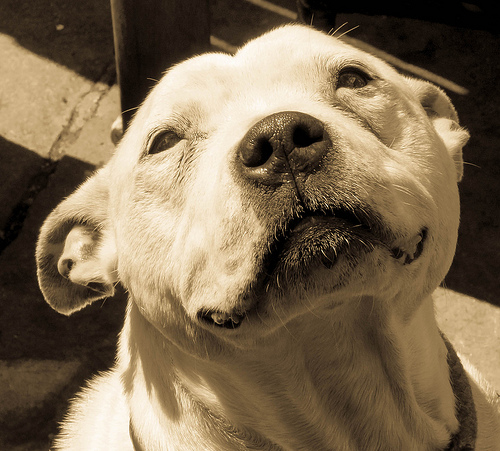
    staffordshire bull photo

    With not a moment to lose, we immediately set to work, piecing together a special email appeal for the first group of dogs. The details of each individual have been listed, now we insert the photos, this is always the most emotionally challenging task, the desperate faces haunt you, their begging, mournful eyes staring back at you from the computer screen almost piercing your heart, each face crying out “please don’t let me die!”

    Eleven of the fourteen dogs are less than three and a half years old, one of these being a six to nine month old pup.

    The appeal will go out across the network to our supporters in the UK, a number of these being rescue centres or independent rescue workers. All we can do now is anxiously await the response.

    The lives of these fourteen dogs are now depending on the efforts of the animal lovers across the country receiving our appeals. There are so many caring hard-working individuals who endeavour to save dogs like these every day, many of these ‘unsung heroes’ have full-time jobs and dedicate the few spare hours they have voluntarily, rescuing and transporting unwanted dogs from pounds to a safe haven, some will even place dogs in private kennels and pay the boarding fees out of their own pockets if this means keeping the dogs alive, often putting themselves in debt.

    Dedicated rescue charities and organizations are working tirelessly on a daily basis to prevent unwanted dogs from being killed. ‘Doris Banham Dog Rescue’ (Registered Charity: 1103372, Website: www.dogsos.co.uk ) is one such amazing charity and was featured in the recent Panorama programme.

    We have put out many appeals over the past three years on behalf of Doris Banham for some of the many thousands of dogs they have painstakingly saved from death row. The team at Doris Banham do incredible work for dogs in dog pounds that face imminent death.

    Paul N Davis, Trustee for Doris Banham describes the work that they do, “In the last 4 years Doris Banham Dog Rescue have saved over 10,000 dogs from being put to sleep in dog council pounds in the UK. These dogs were rehomed direct by their Charity or placed by them into other approved non-destruct rescues who found the dogs the loving homes they deserved. Every dog is awarded full rescue back up by the Charity to give them the best ever chance in life. This includes vaccinations, veterinary treatment, training, neutering, microchipping, homechecks and a safe place to come back to should circumstances change in their new home. 10,000 dogs that would have otherwise died unloved in the past 4 years have now been given a new start in life”.

    Most rescue shelters depend heavily on volunteers, fundraising and donations to enable them to carry out their vital life-saving work and many are struggling to survive in today’s current financial climate, others have already sadly perished. For those rescues that have managed to stay afloat, the workload is excruciating, kennels are constantly full, no sooner than one becomes vacant another unwanted dog will arrive and fill the space.

    The simple, heart-rending truth is there just aren’t enough rescue spaces across the UK to accommodate the countless numbers of unwanted dogs in need and so thousands of healthy and often young dogs are put to sleep every year. The situation is now dire and needs to be addressed.

    Over breeding, irresponsible dog ownership and extortionate vets fees are all to blame.

    Over breeding is by far the most serious problem. We despair at the amount of people who insist on buying dogs from breeders, puppy farms the internet etc. while thousands of unwanted dogs are waiting desperately in rescue kennels for loving homes and thousands more are being euthanized. The slogan “Don’t Breed or Buy While Homeless Dogs Die” is commonly used by animal shelters around the world and it speaks volumes. We urge anyone thinking of taking on a dog to please adopt one from a reputable rescue instead of buying a dog from a breeder, puppy farm etc. If every prospective dog owner was to do this, then the numbers of unwanted dogs in the UK would fall dramatically.

    Spaying and neutering is also an essential means to reducing the numbers of unwanted dogs. All dog owners should have their pet spayed or neutered, this will prevent any accidental litters. Most reputable rescue organizations will spay or neuter before rehoming a dog, however, some smaller charities don’t always have the funds to do this but they will always recommend to the new owner that this is done.

    Dog breeders, be they commercial or independent will of course not consider spaying or neutering as they will continue to breed dogs as a means to make a fast buck, so it is up to the members of the public to refrain from supporting these breeders and adopt a dog from a rescue centre instead.

    Puppy farms and dog breeders across the UK are churning out dogs at an alarming rate. Many of these seedy and often ‘elusive’ establishments keep their dogs in appalling conditions and it is not uncommon for puppies from these places to be found in a poor state of health.

    Breeding bitches are forced to produce litter after litter until they become exhausted and even disfigured in some cases. We have put out appeals for some female dogs that have been used so often for breeding that their delicate teats have become inflamed and enlarged to the point where they are dragging along the ground. It is heart breaking to witness such abuse.

    It is now the responsibility of the government to take serious measures to stop all the over breeding in this country, as this is by far the biggest contributing factor to the escalating problem of so many unwanted dogs. The general public can also help by lobbying the government, writing to David Cameron and their own local MP’s urging them to take the necessary measures to stop the appalling and unforgivable carnage of thousands of dogs in the UK.

    We feel that vets are also partly to blame for people abandoning their dogs. It is inconceivable to think that some people might be willing to give up their dog before giving up their X-box or DVD player, but sadly this is the attitude of some people. Exorbitant vets fees are not helping the situation. If a dog becomes sick then some less committed dog owners are tempted into giving up their pet when faced with the vet’s bill. The current recession has placed the security of the household pet on even shakier ground. How many sick animals are being neglected and left to suffer because
    some penny-pinching individuals are unwilling to pay extortionate prices for treatment? It is the responsibility of the vets to reduce their fees which will encourage owners to keep and look after their animals properly.

    Many dogs end up in rescues, pounds etc due to dog owner’s lack of foresight and lack of commitment. If people were to think more seriously before taking on a dog then this occurrence could be avoided.

    Owning a dog is a huge responsibility and although the rewards of adopting a furry friend are immeasurable, there are several important points to consider before adopting a dog.

    Financially, can you afford to pay for food, vets fees etc? Work and social commitments also need to be taken into consideration, a dog is a pack animal and so should not be left on its own for long periods of time as this would cause distress and anxiety.

    Are you planning to move or change jobs in the near future? If so, then the dog’s needs would have to be considered and your lifestyle adapted to fit in with these needs.

    Too often we hear of cases where couples have split up or moved house and as a result of these changes have decided to get rid of their dog, this is immoral and unacceptable, would these people give up their children under the same circumstances? It is extremely unlikely, so why is it deemed acceptable to give up their dog? Once a dog becomes a member of your family, it should remain so for life. To quote the words of ‘Dogs Trust’, the largest dog welfare charity in the UK “A dog is for life, not just for Christmas”.

    Sadly the ‘Staffie’ is far too often becoming a common resident in dog pounds and rescue centres.

    This friendly, loyal breed has become the victim of many macho would-be ‘hard men’ of today’s society who are often using these dogs as a status symbol, a tool to boost their inflated, ambitious egos, the innocent Staffie, totally oblivious to its owner’s motives. These low-life thugs will disown their dog at the drop of a hat as soon as it is deemed as an inconvenience. Sadly, these unwholesome individuals have created a bad image for the Staffies in the eyes of the general public, this is a tragedy as these special dogs make wonderful, loyal, family pets as any Staffie rescue will tell you.

    The Greyhound is another greatly exploited breed. Tens of thousands of these placid gentle-natured dogs are bred every year to supply the commercial racing industry. Thousands of these dogs are killed at the end of their
    racing career, usually at the tender age of three or four years and countless more are either abandoned on the streets and picked up as strays or end up in rescues, all adding to the extremely overwhelming unwanted dog population.

    There is no end to the amount of suffering that dogs in our society are being forced to endure. These living, breathing, loyal sentient beings have been ultimately betrayed by us. Mahatma Gandhi once said “The greatness of a nation and its moral progress can be judged by the ways its animals are treated”. It would seem Britain is not so ‘Great’ after all, we have become a nation of convenience and throwaway ‘junkies’, self orientated and motivated by greed, this together with a lack of compassion has led to devastating consequences for our so-called ‘best friend’. Britain has become a nation of dog killers!

    Photo by Bev Goodwin

  • Dog Mess Decoration: Beware, This is NO April Fool!

    Dog Mess Decoration: Beware, This is NO April Fool!

    Ever thought of putting Nutella on a pile of dog poop?

    Theresa Ritchie has.

    She is decorating dog mess with strawberries and cream in a bid to make pet owners clean up after their animals.

    She also carries Nutella in her handbag to spread on dog dirt on her way to work.

    Theresa hopes her decorative technique will make lazy dog owners in Peterhead, Scotland aware that someone is watching them.

    Theresa, a member of Pick Up Peterhead, said: “People in Peterhead are regularly stepping on dog mess on the pavements.

    “I wanted to highlight the problem in an amusing way.

    Source

  • This Dog Thinks You’re Hilarious

    This Dog Thinks You’re Hilarious

    Fun-propelled dog thinks you’re one hell of a funny person.

    null

  • Dogs Reacting to Magic Tricks (Very Funny!)

    Dogs Reacting to Magic Tricks (Very Funny!)

    Why do magicians do what they do? To get reactions like this!