Category: Magazine

  • How To Stop Dog Stealing Food?

    How To Stop Dog Stealing Food?

    To eliminate stealing, whether it is overt (taking food from children) or covert (pilfering the thawing dinner steak), it is necessary to initiate a program of at least 4 weeks, during which no food is ever placed within the pup’s reach. It goes without saying that no tidbits should be given during this period.

    Remedies that often fail include lacing some food with pepper or ammonia, saying “No-no” while tempting the pup, and physically punishing the animal when it approaches the family’s food. These fail because they require the presence of some agent other than the food, either the aversive-tasting element or the owner. When these elements are not present, the pup is rarely discouraged from stealing the food. It learns to discriminate between treated and untreated morsels, and to avoid food in the owner’s presence.

    Begging food from the dinner table is one of the easiest things to teach a dog, and also one of the hardest habits to break. Your pet’s training to beg begins when he is a young, adorable puppy. It does not take too many repetitions before he learns that he gets fed from the table by begging. Then he sits by your chair while you are eating and stares at you. Occasionally he’ll get up on his hind legs and paw you, or he’ll nudge your arm and remind you that he is waiting. And he drools, that’s the worst part. He looks as though you never feed him.

    If you don’t have this problem, prevention is quite simple. Don’t start giving your dog food from the table. If you must give your dog table scraps, give them in moderation and in his own dish after you have finished eating or, better yet, with his regular meal. Once you have a dog that begs, it becomes a self-perpetuating problem. Begging is rewarded with food.

    Chances are, if you have this problem, you’ve tried to stop his begging, you’ve yelled at him when he begs, pushed him away, and even gotten really angry, but he just gets more persistent. So you’ve had to give him something to be able to eat in peace. What you have done is to reward his persistence. Each time you have tried holding out longer, but have ultimately given in, you have further trained him that no matter how far away the rainbow looks, there is a pot of gold at the end if he simply waits.

    When you are tired of this behaviour and want to end it, when you get to the point that you can’t stand the drooling, the whining, the pawing and the sad eyes staring at you, then you have to steel yourself for the cure. Using the positive approach, give him the command “Down” and have him do a long “Down” by your chair during dinner. Be prepared for many interruptions initially, while you reinforce his “Down.” Each time he gets up, repeat the command and replace it if necessary so that he remains down during your dinner.

    With a truly persistent begger, your first week of dinners may be quite a trial. Some dogs bark repeatedly and go through all manner of random actions to try to get you to feed them from the table. But once you have begun the training, stick with it. If you give in at any time, no matter how small the tidbit you sneak him, not only have you lost that battle, you may very well have lost the entire war. If you have made up your mind that you don’t want begging, then it’s just a matter of time before you have your dog resigned to the fact that the party is over, at least at the dinner table.

    When your dog is steady enough to do the long “Down” away from your side during dinner, then establish his place where he stays while you eat. He should be put in his place every evening while you are eating, and praised when you release him at the end of the meal. It won’t be too long before you will be eating dinner in the company of a well-trained, well- behaved dog lying quietly in the corner.

    This article is extracted from K9 Magazine’s ‘How To Stop Dog Begging’ – read in full here.
  • The Secret Life of Dogs (Amazing BBC Documentary)

    Humans have an extraordinary relationship with dogs – closer than with any other animal on the planet, man’s best friend has surely earned his title. But what makes the bond between us so special?

    Research into dogs is gaining momentum, and scientists are investigating them like never before. From the latest fossil evidence, to the sequencing of the canine genome, to cognitive experiments, dogs are fast turning into the new chimps as a window into understanding ourselves.

    Where does this relationship come from? In Siberia, a unique breeding experiment reveals the astonishing secret of how dogs evolved from wolves. Swedish scientists demonstrate how the human/dog bond is controlled by a powerful hormone also responsible for bonding mothers to their babies.

    Why are dogs so good at reading our emotions? Horizon meets Betsy, reputedly the world’s most intelligent dog, and compares her incredible abilities to those of children. Man’s best friend has recently gone one step further – helping us identify genes responsible for causing human diseases.

  • Research Highlights Biggest Threats To Pet Welfare

    Research from the Royal Veterinary College, commissioned by the RSPCA, released today has highlighted the most urgent issues that need to be rectified for the improvement of pet dog welfare in Britain. These include owners’ lack of awareness of welfare needs, poor health due to obesity, inherited disease or exaggerated physical features, intensive and unregulated puppy rearing and a lack of appropriate provision for behavioural needs.

    The research published in the journal Animal Welfare surveyed the opinions of stakeholders working in various different capacities with companion dogs in Britain and found that rather than having a ‘good quality of life,’ the majority of those surveyed considered them more likely to have only ‘a life worth living,‘ meaning that there is room for improvement.

    Over 200 stakeholders took part to find out what they perceive to be the welfare concerns that exist for companion dogs – defined as a domesticated pet, living as part of a family unit and not kept primarily for sport or work. These included veterinarians, veterinary nurses, behaviour specialists, welfare scientists, breeders, trainers, pet insurance representatives, members of government advisory bodies, welfare inspectors, dog wardens and charity staff.

    Stakeholder categories had differing views regarding the quality of life of companion dogs in Great Britain. Industry and grooming parlour staff, breeders, exhibitors and judges rated their quality of life the highest, saying that British companion dogs have ‘a good life’, while welfare officers scored it lowest.

    Although all stakeholder groups agreed on the important welfare issues, there were notable differences between these groups on their relative importance.

    Veterinarians and Veterinary Nurses viewed puppy farming as of less importance (though relatively still important) than other groups of stakeholders. In particular, Industry considered puppy farming as highly important and urgent to rectify, perceiving the impact on the individual dog as higher and (together with those working in the Charity sector) scoring its prevalence higher than Veterinary professionals.

    In contrast, Veterinary professionals perceived exaggerated physical features as relatively more important; significantly more so than Government, Industry or Charity sector stakeholders. Veterinary professionals also perceived obesity to be of higher importance than did Industry and Charity sectors.

    Stakeholder differences in perceptions of quality of life and priority welfare issues are likely to relate to differences in practical knowledge and direct experience of these particular concerns, highlighting the importance of consulting a range of stakeholders to build a comprehensive picture of significant threats to canine welfare.

    Views were not all negative. Factors perceived by stakeholders to enhance dog welfare included the quality of veterinary care, exercise, educational resources available for owners, responsible ownership and the work of rescue and welfare organisations.

    Researcher Emma Buckland from the Royal Veterinary College, said: “We have a special relationship with dogs, and the view generally held by society is that dogs should have ‘a good life’; however, on average, stakeholders suggested that companion dogs in Great Britain may have a poorer quality of life, and described over 30 welfare issues that may affect them.”

    “The study sets out future priorities. Addressing the most pressing welfare issues and maximising positive experiences can improve companion dog welfare and quality of life”.

    Recent work estimates the companion dog population to be approximately ten million in the United Kingdom. In the past, surveillance of welfare standards within the companion animal population has received relatively little scientific attention compared with farm and laboratory species.

  • Bad Dog Legislation Failed Tragic Dog Attack Victim Jade Anderson

    Bad Dog Legislation Failed Tragic Dog Attack Victim Jade Anderson

    The National Dog Warden Association like the rest of the United Kingdom was shocked to learn of the death of school girl Jade Anderson and we offer our sincere condolences to the family and friends of Jade.

    The true facts of what happened may never be known and it is wrong to speculate whilst the police investigation is ongoing. What is known however is that the lack of political will and clear direction from governments of various political makeup has resulted in this important issue being kicked into the long grass for a variety of reasons, writes NDWA Chairman Neil Burton.

    It is now plainly clear that legislation must be amended to protect the public wherever they are be it in a public or private place from dogs. The Dangerous Dogs Act 1991 should be amended to include private property to protect workers and the general public who are visiting a private property for a bona fide reason.

    NDWA called for some type of dog licensing scheme with third party insurance liability back in 2009 but this idea was scoffed at by some. NDWA again calls for a dog licence scheme that includes a requirement to have appropriate insurance (which many responsible dog owners already have) as well as a mandatory requirement for a dog owner to show an element of dog knowledge and the ability to control their dog. A scheme such as the Kennel Club Good Citizen Dog Scheme being an example of such proof of competence.

    The issue of dog control should also look at the number of dogs that can be housed at a social housing property as part of a tenants occupancy agreement and the local authority or Registered Social Landlord should enforce the rules.

    Local Authorities and Police Forces need to work more closely on dog related issues and there should be a consistent approach across all council and police areas around the country. The current patchwork approach is a postcode lottery and dependent upon which area the incident occurs and whether the local police or the council deal with the incident.

    The loss of experienced Dog Wardens and their replacement by council officers needs to be addressed by Local Authorities as a matter of urgency. Those councils who are aware of the statutory minimum requirement for a council to collect stray dogs may think they are being clever and saving money by reducing the role of their Dog Warden to a multi-roled job which may have pest control or the issuing of Fixed Penalty Notice as the primary role, this can be a dangerous false economy.

    Unfortunately though this is unlikely to happen due to Dog Warden Services being an easy target for budget savings. Without closer cooperation between councils and police, clear guidelines on who deals with what and the protection of the public through a combination of robust education and enforcement, nothing will ever change.

    The government appears unwilling to deal with dog owners or encroach upon the hearth and home of citizens for fear of being seen as interfering. Somebody needs to advise the government that dogs can be out of control in public and that there is a culture of irresponsible and anti-social dog ownership amongst a minority of dog owners. It ranges from failing to clear up after their dogs through to having dogs that are a danger to other animals and people.

    Tougher dog controls are needed but people need to be aware that whatever legislation is brought in, without appropriate resources or political will to enforce such legislation robustly, there will be no increase in public protection. The government needs to remember that any legislation brought in needs to be made mandatory otherwise it will go the way of Out of Hours Stray Dog Services, something not complied with by many Local Authorities because DEFFRA used the words ‘where practicable’.

    Hopefully Local Authorities will not have to consider that the protection of human life from dogs is only required ‘where practicable’ and will take a managing position to protect the public.

  • Corgi Puppy Gets Surprise in the Mirror

    Corgi Puppy Gets Surprise in the Mirror

    Awww.

    How funny is this Corgi’s response to seeing their own reflection in the mirror?

  • RSPCA Reiterates Serious Concerns About Crufts Dog Show

    RSPCA Reiterates Serious Concerns About Crufts Dog Show

    The RSPCA has welcomed the inclusion of a category for cross-breeds at this year’s Crufts – but insists all dogs should be judged on their health and welfare rather than their appearance.

    Britain’s biggest animal welfare charity is pleased to see the inclusion of Scruffts, alongside the Friends for Life class for rescue dogs, at Crufts 2013. However, it is still only a small step in the right direction with most classes being judged predominantly on the dogs’ physical looks.

    The RSPCA launched the Born To Suffer campaign in 2011 to calls for the Kennel Club’s breed standards to be reviewed by a panel of independent experts, so that they prioritise the health, welfare and temperament of the dogs over their appearance.

    The campaign petition has already received nearly 23,000 signatures from members of the public who share our view.

    RSPCA scientific officer Lisa Richards also welcomed Channel 4’s pledge to highlight the serious issues which continue to affect pedigree dogs – including exaggerated features and hereditary diseases – during its coverage of Crufts this year.

    She said: “Shows like Crufts focus predominantly on appearance when judging. This has a significant impact on the way that dogs are bred and so we want all classes to judge animals according to their heath, temperament and welfare, rather than focussing on how they look.

    “We’re concerned that many pedigree dogs are still suffering because they are bred and judged primarily on breed standards that need reviewing to ensure they address many of the recognised health concerns.

    “Although some progress has been made by the dog world to address these issues, it has not been nearly enough and the problems are far from being solved.

    “We believe that all of those who benefit from dogs have a collective responsibility to work together to ensure that the health and welfare of pedigree dogs is protected.”

    Three major reports were published on dog breeding in the UK in the 18 months following Pedigree Dogs Exposed. The documentary, first broadcast on BBC One more than four years ago, investigated some of the serious health and welfare issues experienced by many pedigree dogs as a result of the way they are bred.

    All three reports concluded that the welfare issues associated with pedigree dog breeding are extremely serious, while the recent EFRA report on dog control and welfare said that too many dogs continue to suffer ill-health due to inbreeding and breeding for exaggerated characteristics, and there is still much to be done to protect the future health of dogs.

  • Dog Charity Alarmed at Lack of Knowledge About Pet Travel Scheme

    Dog Charity Alarmed at Lack of Knowledge About Pet Travel Scheme

    Alarm as survey shows pet owners unaware of pet travel scheme implications

    • Confusion amongst pet owners and vets a year on from changes to the Pet Travel Scheme
    • Puppy smuggling on the rise as buying pets online becomes the norm

    Research commissioned by Dogs Trust, the UK’s largest dog welfare charity, has revealed a concerning lack of awareness from pet owners about the potential health pitfalls of travelling abroad with their pets. Changes were made to the Pet Travel Scheme in January 2012 which has seen a more relaxed approach to allowing pets into the UK from the rest of the world. There has been a 61% increase in people travelling with their pets since 1st January 2012.

    The recent survey * revealed that:

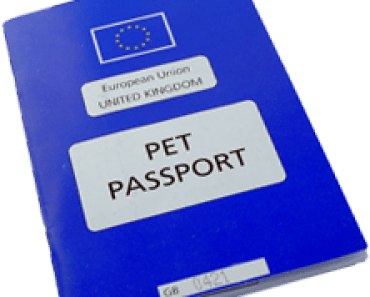
    · Since the changes to the scheme last year, 45% of vets have seen an increase in issuing pet passports to clients

    · Of the 130 responding pet owners who had travelled with their pet in the last year, 11% had a vet’s confirmation that their dog had brought a disease from abroad back to the UK.

    · The majority of these cases were transmitted in areas frequented by sand flies. The disease Leishmania is potentially zoonotic. This means that it can be transmitted from animals to humans.

    · Apart from rabies, there is a low awareness amongst pet owners about travel related diseases.

    · With limited appointment times, only half of the vets surveyed discuss the zoonotic implication or susceptibility to non endemic disease as part of their travel consult.

    · Fake pet passports are dealt with by Trading Standards, not Defra. Many vets are unsure who to report a suspect passport to.

    72% of pet owners would rely on the advice of their vet, most frequently the first port of call, for information about travelling abroad with their pet. In addition, 60% of responding vets had clients who had rescued a dog from abroad in the last year, 49% of these dogs came from Spain. This is a worrying trend due to the widespread prevalence of Leishmania.

    Worryingly, with demand for designer breeds so high and the growing trend of online shopping, there is a marked increase in litters of puppies being smuggled into the UK for sale to unsuspecting potential dog owners. People are not aware of the dangers of buying puppies in this way and should always see the puppy interacting with its mother which is not possible online.

    Dogs Trust recently hosted a seminar: The Pet Travel Scheme and the risk of new diseases entering the UK to review and discuss the facts. The aim is to collectively develop a resource which will hopefully become a central information tool for both vets and pet owners on this issue. In the meantime, information can be found on http://www.bva.co.uk/ or the Defra website: http://www.defra.gov.uk/wildlife-pets/

    Paula Boyden, Veterinary Director at Dogs Trust, says:

    “We were very concerned about the lack of awareness of the implications of changes to the Pet Travel Scheme with the inevitable increase in movement of animals into the UK. We felt that we needed to highlight the risk of disease entering the UK should pet owners and vets not receive the correct information on this issue. Our aim is to have a resource where all pet owners, vets and people working with the movement of animals or animal welfare can go to access reliable and up to date information. We hope that this initiative will reduce the risk of new diseases becoming endemic in the UK.”

  • Pit Bull Locking Jaw Myth Busted (& Other Pit Bull Facts)

    Pit Bull Locking Jaw Myth Busted (& Other Pit Bull Facts)

    Do Pit Bulls have locking jaws?

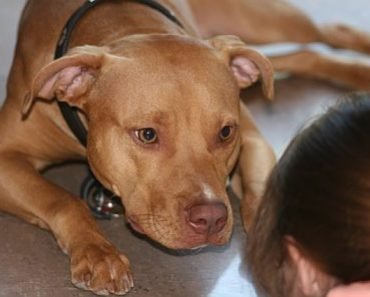
    A) No. Their jaw is anatomically no different to other dogs. There is no ‘locking mechanism’ and they do not have this infamous ability lock their jaws when biting. In fact, the Pit Bull does not even possess the most powerful bite in the domestic dog world.  Here’s some light reading, further dispelling the Pit Bull locking jaw myth:

    Dr. Brisbin, as well as the other experts, testified that pit bulls do not have locking jaws. Based on actual dog dissections and measurement of their skulls, the evidence demonstrated that pit bull jaw muscles and bone structure are the same as other similarly sized dogs. No evidence was presented to demonstrate that a pit bull’s bite is any stronger than other dogs of its size and build. He stated that, contrary to information relied upon and  perpetuated by earlier case law  and law review articles, assertions that a pit bull can bite with a “force of 2,000 pounds per square inch” have absolutely no basis in fact or scientific proof. The testing of dog bite strength has never been done, and would be difficult if not impossible to perform.

    Source.

    In fact, a locking jaw in any dog is considered a cause for veterinary intervention. The notion that certain breeds such as Pit Bulls can perform this function is plain wrong.

    Once celebrated as a great all-American pet, pit bull type dogs started getting a bad rap in the 1980s, largely due to misinformation, which spawned prejudice. Fast forward to today, and pit bulls are now the most abused, most maligned and most abandoned type of dog in the United States, with approximately 1,000,000 put to sleep in shelters yearly.

    Some Facts & Myths About Pit Bulls

    * Pit bulls are just dogs (a type of dog, not a breed).
    * They do not have locking jaws, as covered above.
    * They do not bite differently than other large breeds.
    * They are not more aggressive than other breeds (source: American Temperament Test Society).

    Like all dogs, they feel pain, love, fear and joy. The media has played a large role in spreading erroneous information and creating hysteria about pit bulls: National Pit Bull Awareness Day is a chance to for the media to help set the record straight.

    National Pit Bull Awareness Day is the perfect opportunity to tell a positive story about America’s dog Pit bulls are the most abused, most euthanised, most maligned and most misunderstood type of dog in America and across much of the world today.

    The media has been a big part of this problem—sensationalizing negative pit bull stories, spreading myths and inciting hysteria. Now, you can also be part of the solution. October 22, 2011, is National Pit Bull Awareness Day.

    The organisers (and K9 Magazine is happy to join in) are asking you to take this opportunity to focus on the positive attributes of this all-American dog. Here are some story suggestions:

    Facts About Pit Bulls

    1. Pit bulls are therapy dogs, service dogs, search and rescue dogs and, most famously, loving family pets (including pets to many celebrities). Tell the story of one such everyday hero in your community. We’ll be happy to help provide contacts and leads.

    2. Highlight a National Pit Bull Awareness Day event going on in your community.

    3. Take the opportunity to dispel many of the common myths: Pit bulls do not have locking jaws, do night bite differently than other large breeds, do not “suddenly snap,” are not “bred to fight” (the vast majority are bred as pets, like any other dog), and they do feel pain. Like all prejudicial thinking, judging a dog simply by how it looks only leads to negative actions and reactions.

    Understanding that certain myths created about particular breeds can lead to innocent dogs losing their lives is something that, happily, many thousands of people have been able to grasp since the Worldwide web has been able to educate. However, there are still politicians who need to learn. Hopefully National Pit Bull Awareness day will have a positive impact on the minds of those who are happy to see certain dogs lose their lives having never done a single thing wrong.

    The next time you hear or read someone espousing the ill-informed myth about the Pit Bull’s locking jaw, feel free to send them here 😉

    Or click here to spread this message and tell people the truth about Pit Bulls

  • Dogs Enjoying The Snow [Video]

    How much do your dogs enjoy the snow?

    As much as this?

  • Dog Stars in Rap Video

    Dog Stars in Rap Video

    It’s a rap video starring a dog.

    No need for more words, just watch and enjoy!

  • Dog Dies on Christmas Day From Supermarket Bone

    Dog Dies on Christmas Day From Supermarket Bone

    A heartbroken couple are calling on supermarkets to stop selling dog bones after watching their Miniature Schnauzer suffer an agonising death on Christmas day.

    Anna Carey and James Lancaster thought nothing of it when a friend gave two-year-old Burtie a Bob Martin’s Premium Ham Bone, from Tesco, as a Christmas treat.

    But on Christmas Eve they awoke to find their dog had been sick during the night and was unable to move without great discomfort. An X-Ray at the vets revealed fragments of bone had become lodged in the dog’s stomach and intestines.

    Burtie was given painkillers and anti-nausea injections and the couple were told to take him home and monitor him closely in the hope he would pass the bone naturally.

    Later that night, with Burtie showing no improvement, they took him to Grove Lodge Veterinary Hospital, in Worthing, where he was put on an overnight drip and given more painkillers.

    On Christmas day the couple received a phone call to say the painkillers weren’t working and that Burtie – who turned two on Christmas Eve – was showing signs of depression. Vets were fearful of internal infection and a decision was taken to operate.

    Four hours later Anna and James received a call to say Burtie’s stomach had been ruptured by the bone and that despite the vets’ best efforts there was not enough healthy stomach tissue to keep Burtie alive. A decision was taken to put him to sleep.

    The couple, from Warwick Road, Worthing, had given Burtie bones before, but they were always raw beef bones, which he gnawed over a period of weeks. On this occasion the bone was a cured ham bone, which vets said were more dangerous.

    Mr Lancaster, 35, said: “Burtie was part of the family and we absolutely adored him. He was very cute and was popular with friends and other dog walkers. His loss has come as a great shock, but we are determined some good should come of it. We want people to be aware of the dangers involved in giving your dog a bone – particularly cured or cooked ones – and are calling on supermarkets to stop selling them.”

    Ms Carey, 34, said: “It seems unbelievable, and perverse, that a potentially lethal product can be packaged up as a dog treat and sold to unsuspecting pet owners. These products should be taken off the shelves to prevent more, inevitable, heartache.”

    The couple, who were left with a £2,300 vet bill, are now seeking compensation from Tesco and urging the retail giant to stop stocking the bones.

  • Your Dogs Get In To The Festive Spirit (Video)

    How Much Festive Cheer Does Your Dog Bring You?

    A recent survey by K9 Magazine and UK leading pet insurer, Direct Line has revealed pets bring more Christmas cheer to their owners than partners or friends.

    Take a look at our collection of suitable festive four legged friends enjoying themselves.

  • Dog Abandoned, Blind, Alone – But You MUST Watch

    Dog Abandoned, Blind, Alone – But You MUST Watch

    Learn more about Fiona’s story, updates and find out what you can do to help dogs like her at http://www.hopeforpaws.org/

  • The Most Brilliant Dog Video (& a Little Bit Sad)

    The Most Brilliant Dog Video (& a Little Bit Sad)

    What we have here is one of the most brilliant dog videos ever.

    But it’s twinged with sadness.

    It’s often been said, the only downside to a dog is the speed at which they’re with us one minute, gone the next.

    From puppy to adult in just 40 seconds.

    Incidentally, if you’re interested in learning about puppy development stages – check this out.