Category: Dog Advice

From dog training to canine health, see our latest dog advice articles here

  • Is My Dog Underweight?

    Is My Dog Underweight?

    As pet owners we’re conscious to make sure our dogs are as happy and healthy as they can be, good citizens of the canine world, and do our best to repay them for the unconditional love and fun moments they bring to our lives.

    According to the Butcher’s Pet Care Healthy Happy Hound report, over a third (37%) of dog owners don’t know how much their dog should weigh. By this definition, if an owner doesn’t know how much their dog should weigh, they won’t know how much they should be feeding and we know that the worry that your dog could be underweight, can be just as much of a concern as whether he’s overweight.

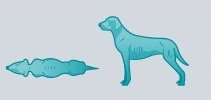
    Let’s look at the PFMA’s Weigh in Wednesday guide to analyse your dog’s weight category.

    Is your dog…

    1. Very Thin

    • Ribs, spine and hip bones are very easily seen (in short haired pets)
    • Obvious loss of muscle bulk
    • No fat can be felt under the skin

    very thin dog graphic

    2. Underweight

    • Ribs, spine and hip bones easily seen
    • Obvious waist and abdominal tuck
    • Very little fat can be felt under the skin

    underweight dog graphic

    3. Ideal Weight

    • Ribs, spine and hip bones easily felt
    • Visible waist with an abdominal tuck
    • A small amount of fat can be felt

    ideal dog weight graphic

    Illustrations courtesy of the Weigh in Wednesday campaign

    The above guide is to help you determine if your dog is in fact underweight and which category they fall into. There is no hard number as to what your dog should weigh based on their breed, but there is an average, healthy weight as indeed there is for humans.

    For example, during his professional boxing career, standing 5 feet and 10 inches tall ‘Iron’ Mike Tyson weighed in at just 6 pounds under 17 stone. According to the NHS BMI calculator, Tyson’s body mass index score rated him 32.99, right at the very extreme end of the obesity scale. In fact, the BMI reading suggests Tyson was not only obese but was at risk of a whole host of other medical problems related to his being grossly over-weight.

    Let’s look again, this time at the other end of the scales.

    ‘Golden Boy’ Oscar de la Hoya, like Tyson was a world champion boxer who also stands at 5 feet and 10 inches tall. De la Hoya weighed in at 9 stone and 2 pounds for his debut professional contest. Almost 8 stone less than Tyson. De la Hoya’s BMI score (18.38), at the time, tells us he’s classed as underweight and at risk of the associated health problems that this entails.

    The reason for the example is to show that what someone ‘should’ weigh, doesn’t always match the reality based on their statistics.

    The same can be said of a dog breed. You may have two dogs, same breed, different shapes. One is classed as a healthy weight, the other not.

    Brought To You By Fit & Fun Dog Month 2013

    Fit & Fun Dog Month sponsored by Butchers Lean & Tasty

    ‘Keep as Fit as a Butcher’s Dog’


    No one knows your dog better than you, you are best placed to determine what’s a healthy weight for your dog and knowing their weight by regularly assessing your dog’s size and weight you can adapt feeding and exercise regimes quickly to ensure your dog remains in top condition. Always seek professional advice if you feel there may be an underlying health issue

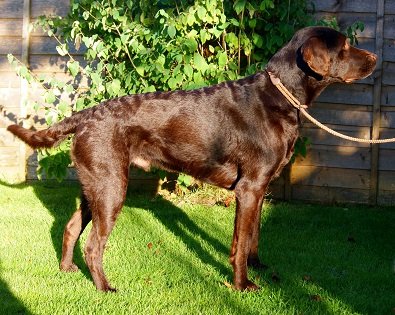
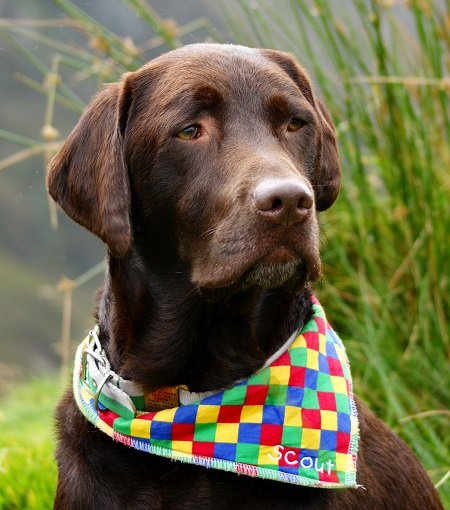
    “Holly Lloyd, owns a 4 year old Labrador called Scout. Holly says, “Scout has always been a lean dog and was fed on a dry food diet but after he developed allergies to dust and storage mites, I had to find an alternative type of food to avoid the possibilities of mites. After trying different brands which didn’t suit him, even though I’d always felt he had a cast iron stomach, I knew I had to find one which had the right amount of ‘good’ ingredients and came across Butcher’s tinned food which had 99% natural ingredients, according to the label.”

    After a short time Holly started to notice a huge difference to Scout’s coat, which had been affected by his allergies and noticed an improvement in Scout’s muscle tone, which he had started to lose as a result of arthritis in his back legs as well as him starting to regain some of the lost weight.

    Is my dog underweight

    Scout, before trialing Butcher’s Lean & Tasty

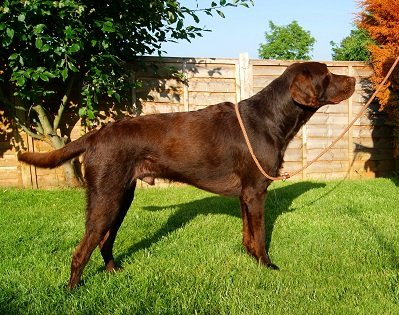
    Three months on a diet of Butcher’s, Scout no longer needs steroids or antihistamines for his allergies, his skin is healthy, his coat is shiny, his joints are no longer showing signs of problems and he is a much healthier weight.

    Scout after trialing Butchers Lean & Tasty

    Scout, after trialing Butcher’s Lean & Tasty

    Holly says, “I knew I needed to find a good, stable food and I’m hugely grateful I did my research before choosing Butcher’s. The label gave me the confidence that it included all of the goodness Scout needed, and luckily he agreed.”

    Scout now

    The diet you feed and the lifestyle your dog leads will determine their weight as much as any genetic factor.

    If your dog isn’t a big eater and that may be the underlying cause of their weight loss, try changing their feeding habits.

    For example, if you typically feed dry food and your dog is the only pet in the home, don’t leave their food down for them to dip into and out of. It may be your dog is relying on the fact the food is constantly available. Try feeding little and often, but always taking the unfinished food away and monitoring how much has been eaten.

    However, the biggest change you can make is by making food more appealing by putting a little meat on top if you feed a dry diet, Butcher’s Tripe recipes for instance, is known as a great appetite trigger, so that your dog gets the food he really enjoys and you can gradually increase the amount over time so that his digestion system can get used to the new food.

    As a wet food, Butcher’s Tripe Mix meaty canned food creates immediate interest from the smell to the texture. Tripe is full of animal protein, it’s a natural dog food and sometimes referred to as ‘catnip for dogs’! This could be ideal for those of you with one or more dog in the home trying to get your dog to eat their whole meal at once.

    Understanding the value of feeding your dog and the right nutritional elements to suit them, as an individual, is one of the biggest determining factors as to how healthy your dog can be, both now and in to their old age.

    Butcher’s Lean & Tasty meaty complete meals with 30% less fat is a more natural dog food, as are all of the Butcher’s products, because they contain no artificial colours, flavours or preservatives.

    Butchers-Lean-and-Tasty-dog-food-pack

    Visit the Butcher’s Pet Care website and use the tool to find the right food for your dog – butcherspetcare.co.uk


  • Do Certain Breeds Require More Exercise Than Others?

    Do Certain Breeds Require More Exercise Than Others?

    Exercise is similar to diet. Ultimately each dog is an individual and will have specific, individual needs independent of their breed and more relative to their age and individual character.

    It goes without saying that breeds such as a Saluki will require a different regime to that of a Bulldog, however, don’t be too caught up with some of the breed myths about exercise requirements for some of the more misunderstood breeds such as Greyhounds and Whippets.

    Exercise – When It Comes To Exercising Your Dog, How Much Is Needed?

    In humans, the importance of exercise has been proven time and again. But what about our canine friends? Is it enough to just feed them properly and give them occasional walks? What are the benefits of exercise to dogs?

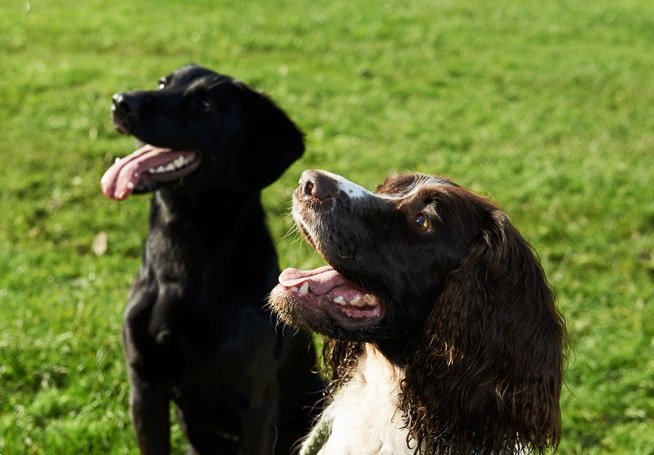
    Dogs sitting

    All dogs need exercise. Studies as well as experience have shown that dogs who are getting adequate exercise are healthier and happier. They are also more social when they are in public places. When dogs are given regular exercise, they are more calm at home and are less restless when left alone. However, just like feeding, choosing the right amount of exercise for your dog should depend on several factors. These factors are age, size, and type of breed.

    Brought To You By Fit & Fun Dog Month 2013

    Fit & Fun Dog Month sponsored by Butchers Lean & Tasty

    ‘Still as Fit as a Butcher’s Dog’

    Age: Puppies require daily exercise for proper muscle development. Their high energy levels need to be released in some form of constructive activity, and giving them their daily exercise is the best way to do it. Not being able to release their pent-up energy can lead to destructive behavior such as chewing or digging. On the other hand, a mature, aging dog needs less exercise because of their lower energy levels.

    Size: Large dogs do not necessarily need more exercise than small dogs. In fact, many large breeds like the Mastiff or Great Dane would rather relax and sit on the porch all day then go out for a 2 mile run. Nevertheless, they also need their daily exercise, perhaps one or two 30 minute walks everyday. On the other hand, many types of small breeds such as the Jack Russell Terrier or Chihuahua still keep on going even after a three-mile walk.

    Type Of Breed: Your dog’s breed is a contributory factor with regard to the amount of exercise required. For instance, dogs that were originally bred to herd such as the Australian Cattle Dog, Border Collie, and German Shepherd need to be exercise daily. Another example of a breed that requires daily exercise are those that were originally bred to hunt (hunting dogs). Examples of these dogs are the Beagle, Chesapeake Bay Retriever, and German Hunt Terrier. And finally,sled dogs such as the Siberian Husky, Samoyed, and Alaskan malamute share the same high level of energy as the herding dogs and hunting dogs.

    Exercise Helps Prevents Obesity

    PDSA Senior Vet, Sean Wensley has the following advice for owners concerned their pet may be gaining too much weight:

    Prevention is better than cure: Some owners are worried about seeking advice for their overweight pet for fear of being judged but preventing obesity is much easier than getting a pet to lose weight. A good diet when a pet is young is essential – fat puppies and kittens are more likely to become fat adult pets due to the number of fat cells they produce while growing.

    Balanced diet: Weight loss requires a combination of the right natural dog food diet and the right amount of exercise.  Many owners feed ‘by eye’ and it’s easy to accidentally overfeed pets, so use scales to weigh out the daily food allowance each morning. Follow packet feeding guidelines or ask your vet about correct amounts.

    Proof It Can Be Done!

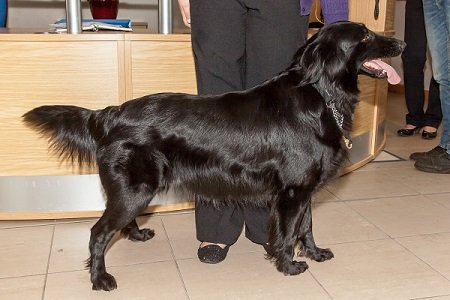
    Lucy, a 4 year old flat coated Retriever has always been an active family dog and enjoyed exercising keeping up with the families’ two horses and two other dogs.

    Despite attempts by Lucy’s owner, Gina, to manage her weight by reducing the amount of dry food given, she still gained weight prompting Gina to look to another diet to help her loose weight, as exercise wasn’t the reason for weight gain.

    Lucy before trialing Butchers Lean & Tasty dog food

    Lucy, before trialing Butcher’s Lean & Tasty

    After a 16 week trial being fed on Butcher’s Lean & Tasty, Lucy lost 5.8kg and regained her glossy coat and waistline!

    Lucy after trialing Butchers Lean & Tasty dog food

    Lucy, after trialing Butcher’s Lean & Tasty

    Regular exercise: Build up activity levels gradually, as a pet shouldn’t go from couch potato to marathon runner overnight. Encouraging play and games is a great way to increase a pet’s activity levels, but every pet is different so ask your vet about how much exercise your pet needs

    Ultimately your individual dog will have specific exercise requirements that apply to them as an individual. Speak with your vet about getting an all round health check where you can also discuss individual activity requirements for your dog, no matter what the breed.

    Butcher’s Lean & Tasty meaty complete meals with 30% less fat is a more natural dog food, as are all of the Butcher’s products, because they contain no artificial colours, flavours or preservatives.

    Butchers-Lean-and-Tasty-dog-food-pack

    Visit the Butcher’s Pet Care website and use the tool to find the right food for your dog – butcherspetcare.co.uk


  • Is My Dog Overweight?

    Is My Dog Overweight?

    Can Your Dog Pinch an Inch or Two?

    Ever met a dog with the innate ability to be self critical? A dog with an acute introspective view of him or herself? No? It’s unlikely our dogs would ever wake up on a Monday morning and question whether they’d overindulged at the weekend and needed to cut the calories in order to get down to their ideal body weight.

    By and large, we are 100% responsible for what our dogs eat. In the wild, dogs use energy to acquire food and, as nature intended it, will essentially burn just about the perfect amount of energy/calories in balance with what they consume. In domestic situations this balance can be lost.

    Twelve million UK pets are being fed too many fatty treats, including takeaways, cheese, crisps and cakes, often on a daily basis, which is fuelling the UK pet obesity epidemic. That is the finding of the biggest national pet health report conducted by leading veterinary charity, PDSA.

    is my dog overweight

    What is even more concerning, according to the animal health and welfare charity, is that 50% of owners say they think treats make their pet happy with just 2% confessing to feeling any guilt about feeding naughty treats. And with just one cube of cheese given to a medium sized dog the equivalent of us eating four shortbread biscuits, half a margherita pizza, or one and a half burgers, we need to consider what we give our pets and the potential for long-term illnesses as a result.

    The PFMA, who recently launched Weigh In Wednesday’s also claim that by keeping pets at their ideal body size, their lifespan can be extended by up to 2 years, which is huge.

    Older dogs are about twice as likely to be overweight as younger dogs. This is most commonly due to owner’s maintaining the same diet for a dog who had greatly reduced their physical output due to slowing down with age. Ask yourself this, can you eat the same food you did when you were a teenager without gaining weight? If you can, you’re one of the lucky few.

    Given the fact we know our dogs are, as a population, getting fatter, the question we should be able to regularly ask and answer is: is MY dog overweight and, if so, what can I do about it?

    Here are four quick ways to make an initial evaluation of your pet’s weight.

    Remember though, regular veterinary or maintenance examinations can give a much better, more accurate view of your pet’s weight and general condition. So many dog owners only visit the vet when their dog is due their annual check-up or is showing signs of illness or injury.

    1. Stand over your dog viewing their back-line from above. You should see a distinct indentation showing a defined waistline. Long haired dogs need to be physically examined by hand, try and feel for definition around the waist.

    2. When viewing your dog from the side, can you make out the shape of the rib cage when your dog breathes in? Again, with a long haired dog, this examination needs to be done by hand. If your dog does not have a discernible waistline from above or the side, they could be overweight, If you require further assurances speak to your vet.

    3. Look at pictures of your pet from when they were in their peak shape. Has their face changed? Is there more signs of excess skin or a rounding of the face (loss of definition)? Many a successful diet has been prompted by looking at unflattering photographs. Use photos to compare your dog’s current shape to how they looked when they were at their best. Remember, we can’t expect to maintain the health and shape from our youth but we can (and should) always seek to ensure our dogs are in the peak shape for their age, breed and life stage (here are some of the most common age-related reasons dogs can gain weight).

    4. Keep a food diary to track what your dog eats on a daily basis, and use this to help you identify the extra 1/2 biscuit here and there contributing to the problem. Download your own food diary here. During your weight loss journey, why not also download your dog his own weight loss certificate to celebrate the moment. Create your own here.

    Proof It Can Be Done!

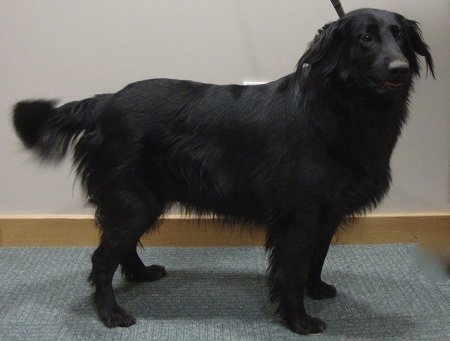
    Mylo is a 7 year old Finnish Laphund who lost 1.7kg in 16 weeks, with a final weight of 17.8kg, the ideal weight for his breed.

    Mylo, before trialing Butcher's Lean & Tasty

    Mylo, before trialing Butcher’s Lean & Tasty

    Mylo is a very active dog, his owner, Simon first noticed him gain weight after being neutered when he became very food driven. Simon who owns other Laphund’s and looks after many dogs for other people told us “It is really easy to miss the signs of your dog being overweight but it isn’t hard to lose that excess weight – Butcher’s Lean & Tasty really does work!” stating that Mylo “is as fit as he has ever been”.

    Mylo, after trialing Butcher's Lean & Tasty

    Mylo, after trialing Butcher’s Lean & Tasty

    Choosing the right natural dog food can be a huge part of your dog’s success, like Mylo’s. Some foods, such as the variety Mylo enjoys, include less calories for a start without missing out on the nutrients your dog needs to live a happy, healthy life.

    Don’t be embarrassed to ask for help, remember that tackling the problem could give you up to two extra years with your dog. That’s got to be worth it, hasn’t it?

    Butcher’s Lean & Tasty meaty complete meals with 30% less fat is a more natural dog food, as are all of the Butcher’s products, because they contain no artificial colours, flavours or preservatives.

    Butchers-Lean-and-Tasty-dog-food-pack

    Visit the Butcher’s Pet Care website and use the tool to find the right food for your dog – butcherspetcare.co.uk

  • Help! My Dog Has Canine Osteoarthritis, Should I Change His Diet?

    Help! My Dog Has Canine Osteoarthritis, Should I Change His Diet?

    If your dog has just been diagnosed with osteoarthritis, you may be confused and worried about the effect of his condition on his enjoyment of life. Fortunately there are several things you can do to slow the progression of the disease, and keep him happy and mobile. Lifestyle changes, anti-inflammatory/anti-pain medication and nutritional supplements are the cornerstones of treating osteoarthritis.

    Lifestyle Changes

    The great thing about making lifestyle changes for your dog is that they are within your control. They are not going to be easy to make, but keep in mind that pet dogs are like toddlers in that they are largely a reflection of their parents. Managing your dog’s lifestyle is almost completely your responsibility.

    Here is what you should be focusing on:

    Weight Reduction

    This is a biggie! The target weight for an arthritic dog should be leaner than normal to ease the burden on his joints.

    Aim for a gradual reduction in weight. Numbers are your friend in this: weigh your dog regularly and chart it; initially every two weeks, then every month. Once his target weight is reached, put him on the scales quarterly or semi-annually. Similarly, use a weighing machine or a measuring cup to ensure that his food intake is regulated.

    As your dog gets older, his energy needs will reduce. If you continue to chart his weight, you should have no trouble noticing the weight gain and reacting to it.

    A weight reduction program is a lot easier to write about than to implement. You must ensure that all members of the family realise the importance of the program. Table scraps have to be few and far between; better still, eliminate them completely. Your pet will not be happy during the period that he is losing weight. But, once his weight is stabilised, he will be healthier and happier than before.

    Exercising Your Dog

    Exercise is important for your arthritic pet. Not only will it help him remain at his target weight, but regular mild exercise has been known to improve the health and mobility of the affected joints. It reduces the pain of arthritis and the progression of the disease while maintaining good muscle mass.

    The important part of any exercise program for arthritic dogs is that it is low impact.

    Try to prevent him from jumping; also, avoid asking him to repeatedly climb up and down stairs. Remember that medications could mask his pain, thus allowing him to get more vigorous than is good for him. To prevent such ‘accidents’, it is best to exercise him on a leash.

    Swimming is an excellent exercise for dogs with osteoarthritis. It encourages mobility in the joints, but without painful weight-bearing. Hydrotherapy also builds up muscle mass which helps to support the painful joint.

    Medication and Nutritional Supplements

    As well as help you with a weight loss diet, your veterinarian can prescribe pain relieving medication and suggest nutritional supplements that will make your dog feel better. Glucosamine and chondroitin are safe and effective at relieving joint pain and can be used in conjunction with prescription treatments. It’s very important that you give the correct dose of medications in the correct schedule as some drugs can have side effects. You may also want to consider other natural therapies such as acupuncture or laser treatment, which may help ease arthritic pain.

    Supleneo flex is a nutritional joint supplement, which is suitable for all breeds, sizes and ages of dog and contains the key ingredients that can improve joint health, such as glucosamine.

    In addition, Supleneo flex’s natural liver flavour means dogs love the taste, making it’s easy and fun to give them their supplement every day. It is low calorie, so you can give it to your dog, instead of a treat without worrying about weight gain.

    For further information go to www.freedomtomove.co.uk

    Conclusion

    Canine osteoarthritis is not life-threatening, but it is progressive and can make your dog extremely uncomfortable.  With your help and support, there is no reason why he cannot enjoy a happy and fun-filled life.

    [note color=”#fddda5″]For further information about canine arthritis and canine arthritis treatment, including an on-line symptom checker please go to www.freedomtomove.co.uk[/su_note]

  • What’s It Like To Be A Guide Dog?

    Guide Dogs Southampton Mobility Team, in association with Dog Cam Sport (http://DogCamSport.co.uk), “Walked My Way” with Alma the guide dog and her owner, Nicky.

    The ActionPro camera was attached to Alma’s harness via a mount and angled to provide a great view of the world from a guide dog’s perspective.

    Nicky and Alma only qualified in August this year so this is their first film star debut!

    Learn more about Guide Dogs http://www.guidedogs.org.uk/guidedogsweek

    https://www.youtube.com/watch?v=vst_RKnaHVo

  • Why Are Dogs Loyal to Humans?

    http://www.youtube.com/watch?v=7zv7UGs8pRg

    http://www.youtube.com/watch?v=sMy9bxReXxw

    The social unit of dogs is the pack. From research on wolf packs that are formed in captivity, the pack has traditionally been thought of as a tightly knit group composed of individuals that have earned a ranking in a linear hierarchy, and within which there is intense loyalty. It is believed that dogs were able to be domesticated by and succeed in contact with human society because of their social nature. According to this traditional belief, dogs generalize their social instincts to include humans, in essence “joining the pack” of their owner/handler.

    However, much of this traditional view is based on findings from grey wolf packs that are formed of unrelated animals in captivity, and thus may not apply to natural wolf packs, natural dog packs, or dogs incorporated into a human household. Research in packs formed in the wild indicates that wolves form a family group, including a breeding pair and their offspring. In these familial packs, the terms “dominance,” and “submission” are less useful than “parent,” and “offspring,” and bring with them a number of misconceptions. While the majority of research to date indicates that domestic dogs conform to a hierarchy around an Alpha-Beta-Omega structure, domestic dogs, like their wild wolf counterparts, also interact in complex hierarchical ways.

    The existence and nature of personality traits in dogs have been studied (15,329 dogs of 164 different breeds) and five consistent and stable “narrow traits” identified, described as playfulness, curiosity/fearlessness, chase-proneness, sociability and aggressiveness.

    Clearly, sociability is the trait that has been selectively bred for many generations so our domestic dogs tend to come ‘hard-wired’ with this predisposition toward loyalty to their human companions.

  • How To Measure Dog Intelligence

    Watch a battle of the brains between three dog breeds.

    Have you ever wanted to know how clever your own dog is?

    Check out this article.

    http://www.youtube.com/watch?v=SSmj5k1SYVw

  • Dog Body Language Introduction

    This is an interesting introduction to the world of dog body language.

    Have your say on the video below.

  • How to Properly Socialise Your Puppy

    How to Properly Socialise Your Puppy

    Do you want to find out how sociable and outgoing your puppy is? Then try this little experiment:

    Put a few toys down in the room. Quickly walk away from your puppy and then observe his reaction:

    *A favourable response would be the puppy running happily after you, regardless of what else might be occurring. This shows that the puppy highly desires the company of people, a trait that is advantageous. This puppy should be easy to train and should learn to focus well on you instead of distractions.*An unfavourable response would have the puppy ignoring you and investigating something else, perhaps a toy on the floor or a sound coming from another room.

    This puppy may not value interaction with humans over his own desire to investigate his surroundings.

    He may not be as easy to train as the puppy that values human interaction above all else.

    A puppy that ignores you in this way may have an unfocused or independent mindset that could be a prelude to dominant behavior.
    Socialising Your New Puppy

    Below are some helpful tips on how to socialise your new dog with existing pets in the household, with your friends, and with other people’s animals.

    Puppy Socialising with Existing Pets:

    Make an initial contact with other dogs outside the home. If you can, take your existing pet (or pets) for a walk and have a friend meet you somewhere with your new dog. Take a long walk so the dogs can get used to each other. Switch dogs on your walk.

    Take all the dogs back to the house. Switch dogs and have a tour of your home, with all dogs still leashed. Let your existing house dogs loose, but keep the new dog tied to you. If the new dog tries to mark the house anywhere, correct him with a sharp jerk and a stern “No!” If any of the existing dogs try to mark, correct them in the same manner. Explain to all, in no uncertain terms, that marking will not be tolerated. In addition, when you feed the dogs be sure to feed the established pets first and stay near the new dog while he eats.

    Most established pets, if already well socialised, will enjoy a newcomer as long as the newcomer is friendly and is introduced in the manner described above. If you find you have brought in a troublemaker, you must remain the Alpha dog. If you are not willing to assume that responsibility, take the dog back.

    Socialising with Your Friends: While puppies always generate warm feelings, adult dogs do not. It is especially important that they make a good impression on your friends and neighbours from the start, especially if you already have other pets. Set rules for your new dog immediately.

    No jumping on friends; keep your dog leashed the entire time friends are at home gatherings for the first few weeks to make sure your dog does not try to jump on them. No barking when the doorbell rings; no running out the door when you open it for guests; make him sit at your side and ask the guests to ignore him until everyone is in and he has a chance to evaluate the new people. Let him approach them for petting if he is calm; if not, wait until you have established the control you need so as not to make a spectacle of yourself and the dog.

    When he can accept guests, make sure he does so with all four feet on the ground. It is easy for a dog to try to explore with his paw as well as his nose. If you are firm and consistent from the first guest on, you not only will eliminate obnoxious behaviour but will instill acceptable behaviour. The end result: Your friends will welcome his addition to your family.
    Socialising with Other People’s Animals:

    The same logic applies here as with your other animals, so use the same type of rules. Take long walks on which you know you will meet friends doing the same with their animals. Contain and restrain your dog from barking at other animals as they approach. If necessary make him sit at your side.

    Always allow thorough sniffing from both animals, as this is their way of saying hi. If at all possible, invite friends and their animals back to your home and allow the dogs to play by themselves. This solves many problems the everyday pet owner may not think about and he will find the dog much more relaxed and easier to handle.

  • Dog Aggression Toward Other Dogs

    Dog Aggression Toward Other Dogs

    In the video above you get the chance to sit in on a dog training consultation as well as observe some hands on, specific techniques used in rehabilitating a dog with aggression toward other dogs.

    Dog on dog aggression is a serious problem.

    Responsible, sensible owners understand and recognise this and they try to seek the help of experts in order to do something about it.

    It’s widely accepted by most modern dog trainers that the most effective way to solve dog aggression toward other dogs is by way of positive reinforcement techniques.

    Again, in the video this is stressed and emphasised.

    What The Experts Say About Dog on Dog Aggression

    Genetics, early socialization or the lack of exposure during the critical period of social development, and traumatic experiences, shape how your dog interacts with other dogs. Play between dogs should be a 2-way street. They should take turns chasing each other–neither dog being a bully or a target.

    Dog/dog aggression can be a dangerous problem for you, your dog, other dogs, and anyone who tries to break up a dog fight.

    Behavior modification techniques that include: desensitization, behavior adjustment therapy (BAT), functional rewards, Feisty Fido and clicker training will help you and your pup have a safe and happy summer together.

    Source: Victoria Stilwell’s Positively website:
    http://positively.com/2011/07/02/dogdog-aggression/

    Effective home management: teaching the dog to allow the humans in the household to make the right decisions for him. If it is not happening in the home, it certainly is not going to happen in the real world, especially if the dog considers it a “dangerous” environment. Foundation behaviors are taught via clicker training, so that after the dog learns to think in the environment, he might perform the desired behaviors. Foundation behaviors include: sit, down, heel, stay, targeting, holding an object, kennel up on audible cue, come and sit front, leave it, come when called, and get behind.

    Create a “thinking” dog: I am convinced that when Ben saw another dog, he reacted involuntarily. Once in this cycle, he could not stop, even when my husband picked him up off of a dog and brought him into another room. Ben still kept reacting as if nothing had changed. In order for a dog to look at his owner for direction, he needs to be able to make that deliberate decision to do so. He needs to be able to think in that environment.

    Source: Karen Pryor (clicker training expert)
    http://www.clickertraining.com/node/64

    Aggression itself is usually defined by canine behaviorists as “the intent to do harm”. Many dogs show “displays of aggression” such as barking, growling, or snapping in the air, which are considered distance-increasing actions, those that intend to get the person or dog to move away from the dog. Some dog-aggressive dogs display aggression that is mainly defensive, and they harm another dog only if they perceive that they have no option. Yet, other dogs may develop dog-aggressive behaviour due to medical reasons, such as hormonal imbalances.

    http://en.wikipedia.org/wiki/Dog_aggression

  • American Bulldog Puppy Training With Clicker

    This is just the sixth session training Pink with a clicker.

    The trainer is Amy Peterson of Norcal’s American Bulldogs.
    www.norcalsbulldogs.com

    Dog clicker training does it work?

    You bet it does!

    Clicker training has been around for a long time now and is highly thought of by some of the world’s most respected dog trainers.

    As seen with the training video of this American Bulldog puppy, clicker training can be used from a very early age and can form the basis for an entire lifetime of training exercises.

  • How to Stop Dog Barking

    Dog barking is one of the more common and anti-social* traits many owners would like to fix.

    This video gives a good, basic overview of the techniques you can use to address the problem.

    *Anti-social in human terms. Dogs barking is, in reality, one of the most overt social behaviours dogs display.

  • 27 Amazing Dog Training Tips to Remember

    All of us dog owners can identify with that moment where our dog does something that, frankly, we really wish they wouldn’t. Millions, no, billions are spent and earned around the world as a result of dog owners who simply want their beloved canine to behave more appropriately. Here we’ve got 27 foundational dog training tips that you should memorise to your internal hard-drive (that’ll be your brain!). Each excellent in its own way, but together – these are 27 rules that any dog owner will benefit from when it comes to having better behaved, happier dog and owner. Enjoy!

    1. Concentrate on what your dog is doing right. Professional dog trainers everywhere tell their students to reward their dogs when they do something right. This “positive training” method is in contrast to training that centres on punishment. Trainers recommend that owners praise and reward their dogs with treats and affection for good behaviour instead of just scolding them for bad behaviour.

    2. Be proactive and keep your dog from behaving badly in the first place. One of the most important tips that a professional dog trainer will tell his or her students is that good behaviour is not just the responsibility of the dog. The owner must make every effort to avoid giving the dog the ability to engage in bad behaviour while they are still learning the ropes. For example, if you notice that your dog likes to chew, it’s important to make sure that everyone in the home puts their shoes behind closed closet doors to remove temptation.

    3. Stop saying NO! One of the biggest mistakes that people make when training their dogs is saying NO without giving the dog an explanation of some type. Dogs, much like children, will become confused with a simple command of NO! Here’s what you should do instead. If your dog is stealing the cat’s food, tell him NO and then gently guide him to his own food dish. Or, if your dog is chewing on a table leg tell him NO and give him rawhide or another toy on which he can chew. Once your dog begins to actually use the new behaviour, reward him with treats, toys and praise.

    4. Learn the difference between boredom and separation anxiety. It is important to determine whether your dog is misbehaving when you leave home because he is bored, or because he is experiencing a case of separation anxiety. Figuring out why your dog is engaging in bad behaviours is usually the quickest way to combat the problem. If boredom seems to be the issue, you can probably keep your dog from destroying your house during alone time by providing him a toy stuffed with treats or something else that will help exercise his mind a little. If separation anxiety is the problem, you will need to learn ways to desensitise your dog to not only your absence, but also your “preparing to leave” routine.

    5. Consider trying clicker training. Clicker training is a relatively new technique in the dog training world and involves the owner using a specific sound to indicate to their dog that a particular behaviour is acceptable or desired. The owner will repeat the “click” and then reward their dog for his or her good behaviour. The positive feedback will encourage the dog to repeat the good behaviour.

    6. Be patient, persistent and consistent. These three behaviours on the part of an owner will develop similar behaviours in a dog. Patience means that you understand that learning new behaviours may take some time and a lot of practice and repetition. Persistence means that you, as the owner, do not give up when training does not seem to be going well. Consistent means that your dog knows what to expect from you. For example, if you always say NO when your dog is misbehaving, they learn to recognise NO as a sign of disapproval. Conversely, if you only give treats for good behaviour, your dog will learn to recognise such positive feedback.

    7. Start early. As soon as you get a dog, you should begin training in some capacity. If you are getting a late start, it may take some time to catch up. The key to remember is that training is often nothing more than reversing bad habits and behaviours. If your dog is young, they haven’t had a chance to develop a significant number of these bad behaviours and training will be simple. With an older dog, you really have to unteach everything the dog knows about behaviour and start to reteach behaviours that you find acceptable.

    8. Be kind and gentle for best results. An owner who constantly punishes his or her dog for bad behaviours is bound to be a lot less successful than an owner who is gentle and kind, rewarding his or her dog for acceptable behaviours. Consider offering your dog plenty of praise, and be gentle when redirecting his attention from a bad behaviour to one that is more acceptable to you.

    9. Have reasonable expectations. For example, if your dog misbehaves at home you are wise to expect that he will misbehave at the dog park or in the yard. Therefore, if your dog is having trouble paying attention to your commands you will want to make sure to keep him on a leash when outside. If your dog jumps on people in the house, expect that he will be rough with other dogs. You can reverse these behaviours through positive training, but you need to realise that bad behaviours will most likely continue regardless of the circumstances until they have been unlearned by your dog.

    10. Always enforce your commands. If you give commands, but do not enforce them, your dog will learn that there is no reason to listen to you. On the other hand, if you back up your commands with reinforcement he will quickly learn that you mean business. For example, if you tell your dog to sit and he ignores you, gently push him into the desired position and praise him. Always praise good behaviour as a means of enforcing your commands.

    11. Use the ONE command rule. Only give your dog each command one time. If you want your dog to sit, tell him SIT! If your dog decides to ignore the command the first time, gently place him into the sit position and then praise him. Do this with every command, so that your dog doesn’t think that your commands are optional. Stick to the ONE command rule, and your dog will quickly learn to take your commands seriously.

    12. Clearly define your commands. If you expect your dog to follow commands, then it is imperative that he understands what it is that you want him to do. For example, if you are trying to teach him to sit you will only confuse him if one time you use the command SIT and the next time SIT DOWN. If he’s confused he’ll most likely just ignore you. And this can lead to a vicious cycle. So, pay attention to the commands you are teaching and don’t confuse your dog by being inconsistent.

    13. Teach your dog to read your tone. Tone is just as important as the actual command that you are giving. Therefore, try to always use a consistent tone when issuing a command. Yelling a command will be less effective than just using a firm and authoritative tone. Pick a tone, and stick with it. Your dog will begin to recognise that tone, and respond to what you are telling him more effectively.

    14. Analyse stubbornness. If you find that your dog is stubborn and does not want to listen to your commands, there may be a simple explanation. Look for signs to see whether you are giving commands that your dog understands, whether your dog knows what to do when they hear a certain command and whether the command is creating an uncomfortable feeling in your dog. Most likely, you need to simply repeat training for a specific command and make your dog feel more comfortable through rewards and praise.

    15. Never use your dog’s name in anger. You should try to reprimand your dog without using his name so that there is no negative association with the name itself. When you praise your dog, call him by name so that the dog responds happily when he is called by name. You may find that simply using the dog’s name will get him to come to you eagerly in just a short period of time.

    16. Earn the respect of your dog. If you hit or scream at your dog, he will quickly lose respect for you. And instead of becoming a loving companion, will become reserved and fearful. Therefore, be sure to avoid training when you are in a bad mood and avoid negative reinforcement whenever possible. Staying upbeat will make your dog more willing to do whatever it is that you expect from him and help the two of your form a good relationship.

    17. Never use a training technique that is not natural and comfortable for you. If you are using a technique that does not come naturally, your dog will sense your hesitation as quickly as he will sense fear or anxiety. This can lead to your dog ignoring any commands given and cause frustration for both of you. Therefore, work to find techniques that you understand and feel comfortable with before starting to train your dog.

    18. Consider an obedience training class. There is no shame in asking for help with training your dog. Some people are simply not equipped to train their dog on their own, either due to a lack of patience, inexperience or not enough knowledge. Investigate different obedience training classes in your area and sit in on a few to determine whether or not they might work for you.

    19. Consider a training club. Some kennel associations offer training clubs to their members and the general public. These groups will often allow member access to professional trainers, and the knowledge of other members. Some breeds are more difficult to train than others, and having this type of resource available may be an excellent asset to your own training program.

    20. Learn about your dog’s breed. Different dog breeds may respond better to different methods of training. Dogs of different sises may also require different types of training. For example, if you have a small terrier who likes to jump it is less dangerous to all involved than if you have a St. Bernard that weighs in at 150 pounds who likes to jump! You will need to concentrate on different areas with different breeds and sises of dogs, and knowing what to expect is half of the battle.

    21. See yourself as the team leader during training. You are not the only one responsible for successful training sessions. If you see yourself and your dog as a team in training, you will be much more successful than if you assume the burden of all responsibility. You need to be aware of everything that goes on during training, because you are the leader. However, realise that your dog must be a willing participant for training to succeed.

    22. Remain calm and relaxed. Your dog will sense fear, anger and anxiety. Therefore, in order to be effective you must stay calm. Issue commands in an authoritative voice and be firm and consistent to keep your dog’s attention. Any behaviour on your part that is out of the ordinary will keep him from staying focused and reduce the effectiveness of your training efforts.

    23. Be consistent. If you aren’t serious about wanting your dog to perform or stop a specific action, then do not issue the command. Otherwise, you are going to teach your dog that you only mean what you say some of the time. This will lead to confusion on your dog’s part and frustration on yours. It’s much easier to only issue commands that you will enforce.

    24. Recognise and respect your dog’s needs. Just like people, you will find that when a dog’s basic needs are not being met he will misbehave more often. Be sure that you are providing quality food, plenty of water, constructive socialisation with people and other pets, adequate shelter and safety and lots of exercise. When these needs are met, teaching your dog the basics will be much easier.

    25. Practice, practice, practice. Practice makes perfect, isn’t that what your mom always said? Well, dog training is no exception! If you’re going to work on training your dog, make sure that you practice consistently for several 5-10 minute intervals throughout the day. Focus on practicing one skill at a time until your dog has mastered it and then move on to something new. Be sure to revisit already learned tricks and behaviours regularly though so they are not forgotten.

    26. Expose your dog, slowly over time, to different situations. It is critical to emphasise to your dog that you expect him to behave consistently regardless of his surroundings. One of the best ways to do this is to socialise with your dog. Introduce him to new people and other animals (dogs, cats, etc.) so that he learns to be social. Take him into unfamiliar surroundings whenever feasible so that he learns that regardless of where he is you are still there and in charge. This will allow you to have more effective control, and will alleviate anxiety caused by unfamiliar people and surroundings that can lead to misbehaviour in the future.

    27. Find out what works. Not every child learns the same way, and not every dog learns the same way. Therefore, you should attempt to use different training techniques until your find one that you are comfortable with, and that works with your particular dog. The general rule to remember is that if a technique isn’t working after a week, you should try something else.
  • Gluten Free Dog Food UK

    Gluten free dog food UK options are more popular today than ever. Following international pet food recalls and a wider awareness of dog allergies related to nutrition (caused by gluten, corn and other stimulants), more and more UK dog owners are seeking gluten free diets for their canine companions.

    Gluten Free Dog Food UK

    Feeding gluten free dog food to your canine friend would naturally lower its predisposition for diseases such as diabetes, celiac disease, allergies, and chronic and degenerative diseases.

    As a gluten free diet is closer to that of what a dog would eat in the wild, the dog is able to process thier food more effectively, bringing about results such as increased energy and activity and decrease in arthritic pain and symptoms related to digestive system complaints.

    One of the more common dog food allergens is wheat or, more specifically, the gluten in wheat. Dogs can have gluten allergies like humans as well. Luckily there are gluten free dog food products on the market that can alleviate this problem. Gluten is a protein that is found in wheat.
    Some people and dogs are allergic to this protein. There is also gluten found in rye and barely so if these ingredients are found in your dog’s dog food then your dog may also present an allergic reaction to those too.

    Even though some firms call their dog food’s ingredients gluten-free if it doesn’t have wheat or grain, you really want one that’s oat, barley, and rye free too. Celiac disease – the inability to digest gluten) is more common in people and animals that formerly thought. Having raised a child with celiac, I have had to learn all about this.

    A few years ago there was a huge pet food recall due to a contaminated form of gluten that contained a compound called melamine, which can be fatal to animals and humans.

    It was a very tragic time as a lot of dogs that ate the infected food ended up dieting. Ever since then, the issue of gluten has become a very popular topic, and the question always arises of how beneficial gluten free dog food actually is. Humans are prone to a type of disease known as celiac disease, which is also less formally known as gluten allergies. What most people don’t know though is that dogs can develop celiac disease just as easily, which is why monitoring gluten intake is a very important aspect of your dog’s health.

    Many dogs may also experience allergic reactions to corn. Symptoms of such reactions may include irritation of the skin, ear infections, bloating, inflammation of the kidneys and liver, head tremors, hair loss, hyperthyroidism and heart diseases. Moles and warts may also develop on the skin and even loss of hearing can occur. Dog foods that do not contain corn are also usually gluten free dog food and are rich in protein. When purchasing dog food, it is important to read the labels and examine the three ingredients that are listed first. These ingredients comprise of 75 per cent of the content of the food and as such are the most important.

    Gluten allergies are not deadly, but they can be very debilatating for your dog, and if it is the case that gluten is the cause of the problem, a high gluten diet will obviously aggravate the situation. Many vets will prescribe a gluten free dog food for your dog, but it is quite possible to make your own using natural, gluten free ingredients.

     Gluten Free Further Reading

    Gluten-Free Diet Fad: Are Celiac Disease Rates Actually Rising?

    What’s Eating You? Maybe It’s What You’re Eating

  • Dog Spaying & Neutering: A Guide

    Dog Spaying & Neutering: A Guide

    Spaying and neutering is a constant hot topic in the canine world. Welfare charities insist that it is the holy grail of population control, whilst breeders would not exist if they believed the same.

    Questions such as, what happens when my dog is spayed? Or, what will my dog be like when he’s been neutered/castrated? All are regulars to the K9 Magazine inbox. So, in this guide we’ll tell you all you need to know about dog spaying and neutering from a surgical and after care perspective.

    The reasons for having a procedure such as spaying or neutering performed on your dog certainly come in all shapes and sizes, but quite often it is treated as a formality, on a par with vaccines and health checks. Many dog owners quite happily get their dog ‘fixed’ as a matter of course, whilst other dog owners harbour fears about the procedure itself.

    Click Here To Read The Rest Of This Article: