Category: Featured

  • Hey, Look – I Created A Totally NEW Designer Dog, Now Give Me Money!

    Hey, Look – I Created A Totally NEW Designer Dog, Now Give Me Money!

    With more and more ‘designer’ or hybrid dogs making the headlines featuring the likes of Puggles, Golden Doodles, Cockerpoos, Pome-Pekes and other elaborately titled canine crosses, it prompted us to wonder, exactly how did we arrive at Afghans, Airedales and Alaskan Malamutes when we started out with the animal known to most as the ‘ultimate dog’ our canine’s cousin, the wolf? What precisely is a dog breed and how on earth does one go about creating one?

    People most commonly use the word breed to describe a type of dog that displays characteristics interrelated to its name. But the concept of breed is far more complex than simply applying a label to a dog which looks a certain way.
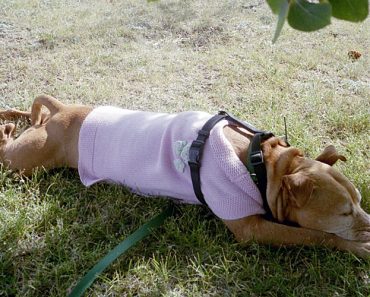
    fashion dog photo

    The ancestry of the dog can be traced back as far as sixty million years. A weasel like creature called the Miatis is thought to have demonstrated the first characteristics of the animal now recognised as Canis lupus familiaris, or plain-old pet dog to you and me. It is thought that this creature evolved into the early wolf.

    All the canine sub-species are scavengers by nature, like the jackal and coyote and this was certainly the case for the wolf. It is though the wolf discovered easy pickings in around the waste dumps established near human settlements and as people began to see certain characteristics in the wolf which they thought would be of great help to their development as a race, attempts were made to domesticate the animal and use a selection of his most desirable character traits to man’s advantage.

    Once wolves and humans became comfortable in each other’s presence, the wolf began to readily accept his subdominant role within the partnership and thus domestication as we know it, began in earnest.

    Certain wolves would display particular character traits such as an instinct for guarding and those individuals who also displayed the physical characteristics to make them a force to be reckoned with would be selected for breeding in order to produce strong, confident offspring capable of protection. This is probably the earliest example of selective breeding of the dogs we know and love today.

    As the selective breeding processes became more widely practised by humans, certain characteristics were developed to aid them. Dogs were bred for three main purposes, to hunt, guard and herd. As these functional breeds of dog were becoming more established, cross breeding was taking place in order to refine certain necessary attributes further.

    A large dog which happened to be particularly quick over long distances may be bred with a smaller example in an attempt to develop nimble, high stamina offspring for use when hunting. Overtly aggressive canines would be bred to be as large as possible to produce effective guards for protection of the human settlements. Naturally instinctive hunters would be bred as large or as small the quarry they’d be expected to hunt. Selective breeding was in full swing.

    This early form of selective breeding is how we eventually arrived at so many different breeds of dog. From the Yorkshire Terrier to the Bull Mastiff, selection by humans as well as the occasional happy accident have been the driving force behind the breeds we know and love today.

    As selective breeding continued, the physical and characteristic traits of the original foundation lines were becoming more and more diluted, although every dog, even today possesses many wolf-like characteristics.

    Certain types of dog breed have evolved to perform certain functions for humans. Although nowadays dogs are more commonly kept as pets, some breeds retain the original characteristics for which they were bred – although it can certainly be argued that, in the western world at least, the main function of the dog is adequately described as: to be somebody’s pal.

    The hound group for example consists of two sections. There are sight hounds and scent hounds. Sight hounds are one of the oldest types of dog still endemic today. He is quiet and graceful, he is bred to spot prey from distance, hunt the prey and kill the prey. Hounds which are commonly kept as pets today include Beagles, Greyhounds and Bassett hounds.

    Terriers evolved from the hound group. Terriers take their name from the Latin ‘to go to ground’, which is what they were bred to do. Terriers were originally used for hunting small quarry such as badgers, rats and rabbits. Like the hounds, Terriers should have a strong thirst for work, a thirst that if not properly quenched can occasionally lead to unruly behaviour.

    The toy group is the only group to have breeds which were bred solely for the purpose of companionship. The Shih Tzu was favoured by Chinese emperors in the late nineteenth century as a companion in the palace and it was bred specifically for such purposes as were other toy group members commonly referred to as ‘lap dogs’.

    The concept of what a breed actually is frequently provokes confusion today, even amongst experts. What constitutes a separate breed if two dogs look the same and were bred for the same purpose? Why are Norwich and Norfolk Terriers classed as separate breeds now when before they were the same? Why do small cosmetic differences such as ear position result in a difference in breed, when something such as major size difference does not? How can purebreds resemble cross-breeds and cross-breeds be passed off as purebreds?

    All of these frequently asked questions strengthen the argument that the concept of what a breed is is commonly misinterpreted.

    A dog breed is probably best described as, “a grouping of descendants categorised using criteria relevant to its behavioural and physical qualities, desirable to those who refined the line of genetic descent”. But how does one create a breed?

    The offspring of a mating between two purebred dogs of different breeds is a cross-breed, a mongrel, a mutt, a dog eligible for Scrufts but not Crufts if you will. Technically speaking, the fact that both parents happen to be established, recognised pedigree breeds makes no difference to the status of the offspring.

    Often described as a first-time cross, the world is seeing a huge increase in demand for ‘designer dogs’ such as the Puggle (Beagle cross Pug, the Cockerpoo (Cocker cross Poodle) and many others with equally fanciful names. The newly elected American president expressed particular interest in one of these ‘breeds’ when he added a Labradoodle to his shortlist. Although he ditched that choice and went instead for a Portuguese Water dog.

    So what’s new? What traits does a Cockerpoo posses that a ‘purebred’ Cocker Spaniel or Poodle lacks?

    If you or I were charged with the task of creating a dog breed, the criteria being a small to medium sized dog with a happy personality, willingness to work and learn but with a non-shedding coat suitable for people who don’t have the time to tramp 10 miles per day in order to keep this creature happy, where would we start?

    We’d more than likely look at the Cocker but we’d fall short on the issue of shedding. We’d examine the qualities of the Poodle but we’d find they come in either small or large packages not small to medium and as a worker, they’d be outperformed by many of their gundog counterparts. If only the working qualities of the Cocker could be bundled with the non-shedding coat aspects of the Poodle and everything would be perfe…..wait, I’ve got it. I see a mating in the offing! Wow, how easy is this going to be. If I mate a Poodle and a Cocker I’ll get the best of both worlds – won’t I?

    Erm, no. Not quite as simple as it seems.

    Deliberate cross breeding is, essentially, selective breeding. There’s a problem though.

    It takes several generations to “breed true.” Compare yourself to your brother, sister or even your cousins. Do you all have the same looks, the same personality, the same motivations or intelligence levels? The chances are, you won’t. I, for example, am much clevererer and more handsomer and generally blessed with more modesty than my sibling. He, however, plays guitar far better than I play drums. We’re of the same parents (we assume) but whilst I am blessed with modesty, good looks and breath that smells like rose petals, my brother plays a mean guitar whereas I, no matter how hard I try, sound as acoustically appealing as a man shouting in to a bucket. Oh well, least I have my breath, looks and modesty and self esteem.

    Each of us has some of the “best” traits of our parents. But they’re invariably coupled with the worse traits or, shall we say, less desirable traits. In some cases we may only inherit the less desirable traits of both parents at the expense of any of their best traits, our own children however may be fortunate to pick up the good traits we missed out on. And so it is with dogs.

    Generation after generation of selective breeding is required before we establish a new breed. Is that a bad thing? Absolutely not.

    No one could argue we should ‘stick’ with what we have in terms of pedigree dogs (BUT THEY DO) and it’s a sure fire certainty that gene pools can bottleneck to the point where new blood is required. Sorry, I should clarify that. It’s a sure fire certainty that gene pools HAVE bottlenecked to the point where new blood is required.

    Should that put you off splashing the cash on a Cockerpoo, a Puggle, a Jackador or a Spoodle? Well. Maybe.

    Unless you’re buying into a dog which is several generations down the line in terms of a selective breeding program, you are effectively purchasing a cross breed. Cross breeds come with many, many advantages as pets but should you be charged £600 or upwards for one?

    Well no. Not in this writer’s (less than) humble opinion. You should not.

    Especially when you consider how many fantastic cross and pedigree breeds are desperate for homes in Britain’s animal shelters, all of whom have the same qualities to offer. How the price of a dog is determined is a matter of some controversy and it certainly confuses me. If a ‘pedigree’ Bulldog has a going rate of £1,200 why shouldn’t any other ‘breed’ be priced according to the ‘market rate’? Another breed that, dare I say, might ‘last a bit longer’ and come with less ‘manufacturing faults’.

    And here we see the start of this ethical minefield. ‘Market rate’. We’re talking about sentient, lifelong companions here – not designer handbags.

    The marketing of dogs is a trend set to continue. It’s human nature to aspire to own something a little different, a little fancy or in short supply. It goes without saying, the commercialised marketing of dogs is a recipe for disaster and THIS is where the problem lies.

    Watch this:

    “Oh what’s that unusual dog you have there?”

    “It’s a Pomapekeapatador” (quite obviously a Pomerianian mixed with Pekignese and a little Patterdale and Labrador thrown in)

    “Incredible, I’ve never heard of them. Where would I go about finding one?”

    “The Internet. But be warned, they’re very rare” (and therefore expensive, desirable and I’ve got one and you haven’t)

    See how this works? The Pomapekepatador is what many generations refer to, rather cruelly, as a Heinz 57 (a bit of everything). A cross breed, a mix, a mongrel, a mutt. And they are as important, as clever, as giving and as worthy as any pedigree breed and there’s more than likely a rescue shelter near you chock-full of them.

    Don’t be fooled, ALL dogs are designer dogs. They all have the same ancestors remember!

    And if you’re really keen on modern, trendy and fashionable then you really need to consider ‘ethical’ as a lifestyle choice. So if you’re inclined toward designer, trendy, ethical dogs – you’ll struggle to do better than www.dogsblog.com – no better designer dog than those on offer (in their thousands) at rescue centres all over the UK. Just because they’re not selling for £1,000 a piece doesn’t make them any less dog.

    Photo by thepeachpeddler

  • What You Think You Know About Pit Bulls is Probably Wrong

    What You Think You Know About Pit Bulls is Probably Wrong

    There can be little argument that the Pit Bull is the world’s most maligned, misrepresented and misunderstand dog.

    There is a hardcore of so-called Pit Bull haters who will all gladly tell you about their ability to ‘just turn at any moment’ or how their ‘locking jaw’ is ‘not like other dogs’.

    Pit Bulls, it’s fair to say, get a bad rap.

    One of the more common myths, one that it is often perpetuated by people who should know better, is that Pit Bulls rescued from those involved in illegal dog fighting can ‘never be rehabilitated’. The standard course of action, certainly in the UK, is to euathanise these dogs. They’ve had a life of misery, being forced to fight, then they are ‘rescued’ and routinely killed. Some rescue, eh?


    image: Best Friends

    The dog you see above is known to her new family as Little Red.

    She’s a Pit Bull.

    For five years of her life she was used as a bait dog in the illegal dog fighting activities of US pro footballer Mike Vick.

    If you don’t know what a bait dog is, it’s a dog who’s sole purpose in life is to help train other dogs to attack. It is, very much, what it sounds like it is. Bait.

    Bait dogs often die or at the very least get seriously injured.

    Little Red now lives a serene life, surrounded by 6 acres of doggie heaven on earth where she lives with her new owner, Susan. She’s been given time to adjust to her new life, she is an adored pet who enjoys her treats and, one would assume, the joy of a life that no longer includes being the brunt of attacks by dogs set on her by a bloodthirsty sicko. Rehabilitation is a luxury not afforded to many victims of illegal dog fighting rings. That’s all the more sad when you see how happy Little Red is.

    Once celebrated as a great all-American pet, pit bull type dogs started getting a bad rap in the 1980s, largely due to misinformation, which spawned prejudice. Fast forward to today, and pit bulls are now the most abused, most maligned and most abandoned type of dog in the United States, with approximately 1,000,000 put to sleep in shelters yearly.

    Some Facts & Myths About Pit Bulls

    * Pit bulls are just dogs (a type of dog, not a breed).
    * They do not have locking jaws.
    * They do not bite differently than other large breeds.
    * They are not more aggressive than other breeds (source: American Temperament Test Society).

    Like all dogs, they feel pain, love, fear and joy. The media has played a large role in spreading erroneous information and creating hysteria about pit bulls: National Pit Bull Awareness Day is a chance to for the media to help set the record straight.

    National Pit Bull Awareness Day is the perfect opportunity to tell a positive story about America’s dog Pit bulls are the most abused, most euthanised, most maligned and most misunderstood type of dog in America and across much of the world today.

    The media has been a big part of this problem—sensationalizing negative pit bull stories, spreading myths and inciting hysteria. Now, you can also be part of the solution. October 22, 2011, is National Pit Bull Awareness Day.

    The organisers (and K9 Magazine is happy to join in) are asking you to take this opportunity to focus on the positive attributes of this all-American dog. Here are some story suggestions:

    Facts About Pit Bulls

    1. Pit bulls are therapy dogs, service dogs, search and rescue dogs and, most famously, loving family pets (including pets to many celebrities). Tell the story of one such everyday hero in your community. We’ll be happy to help provide contacts and leads.

    2. Highlight a National Pit Bull Awareness Day event going on in your community.

    3. Take the opportunity to dispel many of the common myths: Pit bulls do not have locking jaws, do night bite differently than other large breeds, do not “suddenly snap,” are not “bred to fight” (the vast majority are bred as pets, like any other dog), and they do feel pain. Like all prejudicial thinking, judging a dog simply by how it looks only leads to negative actions and reactions.

    Understanding that certain myths created about particular breeds can lead to innocent dogs losing their lives is something that, happily, many thousands of people have been able to grasp since the Worldwide web has been able to educate. However, there are still politicians who need to learn. Hopefully National Pit Bull Awareness day will have a positive impact on the minds of those who are happy to see certain dogs lose their lives having never done a single thing wrong.

  • Labrador Appears as Murder Trial Witness

    Labrador Appears as Murder Trial Witness

    It might be a week on from April Fool’s day but this is one of those stories that leaves you checking the date just to make sure.

    So where did this unusual event take place? You’re probably thinking this highly unusual piece of very important legal testimony occurred in some tiny little principality with its own unique and unorthodox customs and legal protocol?

    Well, it’s France.

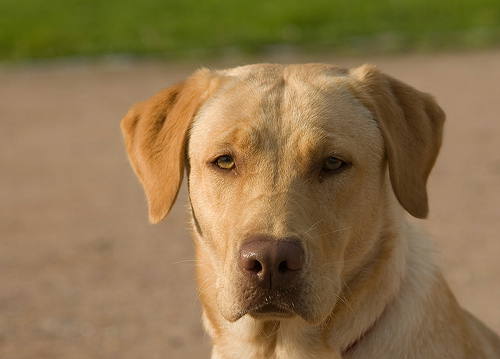
    labrador photo

    According to the reporting:

    The nine-year-old Labrador, called Tango, was placed in the witness stand by a vet during a preliminary hearing of the murder trial in an effort to identify his owner’s murderer.

    He wasn’t alone though.

    Norman, also a Labrador, was also taken to the witness stand as part of a so-called “control group” so as to compare their reactions.

    The suspect’s lawyer Gregoire Lafarge said:

    “So if Tango lifted his right paw, moved his mouth or his tail, is he recognising my client or not?

    “I find it very troubling for the French legal system. If a judge ignores the demands of reason and surrounds himself with experts who are unreasonable, well the system becomes very dangerous.”

    You might be shocked to learn, the canine witness testimony was not deemed to be a success and both dogs have been allowed to stand down.

    Photo by az1172

  • Official: Welsh Dogs Are 81% More Dangerous?

    Official: Welsh Dogs Are 81% More Dangerous?

    It’s time, we thought, to give this excellent analysis of lies, damn lies and dog attack statistics by Alison Green of DDAWatch, another airing from when it was first published a few years ago. Alison poses the question on dog attack and dog bite statistics – ‘Are we being lied to by politicians about dog attack statistics?’

    http://i.imgur.com/AZ5oq.jpg

    But first. What prompts this re-airing of Alison’s dog attack stats analysis is the news that dog attacks in Wales are reportedly up by 81% over the last 10 years.

    Research by Week In Week Out found there were 407 hospital admissions from incidents in 2012/13 alone, with 91 of those aged 14 or under.

    Andy MacNab, a consultant in emergency medicine at Morriston Hospital, Swansea, said they were treating two or three dog bites a week.

    Animal charities want legislation which punishes the dog’s deed, not its breed.

    Although there were amendments to the Dangerous Dogs Act, they want it to go further.

    The RSPCA says owners would have to abide by dog control notices if their pet was a nuisance or out of control.

    But the UK Department for Environment, Food and Rural Affairs (Defra) said the amendments gave more “flexibility”.

    Now, I’m sure you’ll agree, 81% is one hell of a leap. Are we to believe that our domestic dogs, or at least Welsh domestic dogs, are 81% more dangerous and likely to bite us than they were in the past decade? Really?

    Alison Green would suggest otherwise:

    Figures released to Norman Lamb of the Liberal democrats have been splashed all over the media alongside headlines proclaiming a rise in “dog attacks”. Pictures of snarling beasts, most often bull breeds or the current “devil dog” the Rottweiler have been used to help emphasise the point.

    http://upload.wikimedia.org/wikipedia/commons/thumb/2/25/The_Normal_Distribution.svg/350px-The_Normal_Distribution.svg.png

    But wait one second…STOP THE PRESS… the figures do not show a rise in dog attacks. Allow me to explain.

    A few years ago I did an awful thing.

    I was at a barbecue on a lovely summers day with my family and our dogs. My children where playing with the other children and one of my dogs was playing with the resident boxer, the sun was shining and all was right with the world. My dog tired of his game with the boxer, picked up his ball before dropping it in my lap and sitting down looking at me hopefully. I smiled, picked up the ball and threw it for him.

    The minute that ball left my hand I realised what I had done and yelled loudly to recall my dog but it was too late. As I yelled, my dog ran straight into my daughter knocking her flying down on the hard ground. Thankfully my daughter, although bruised and sore for a while, had no broken bones. My dog didn’t know what had happened but had stopped, ball forgotten and gone over to lick at my daughter.  I was mortified and have never taken a ball to another barbecue since!

    Had my daughter been more badly hurt and been admitted to hospital, she would have been included in the recent figures paraded around the media as “dog attacks”.

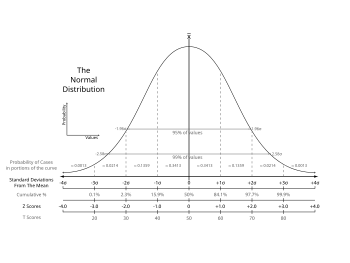
    What the media and Norman Lamb fail to mention in any article I have read, is that the figures do not separate dog bites from dog strikes.  I know of quite a few people who have been admitted to hospital because their dogs greeted them a little too enthusiastically or accidentally knocked into them.

    They will all be logged under the same code meaning “bitten or struck by a dog” yet the two meanings are often very different and certainly don’t scream “dog attack”. Many people have been struck by dogs, many have been bitten by dogs however few have been attacked by dogs. While even one true dog attack is unacceptable the media’s use of these figures to “show” an overwhelming increase in dog attacks is misleading and nothing more than scaremongering.

    The media have also focused on the “rise” in certain areas but do not seem to be aware of the fact that the strategic health authority for treatment restructured at the start of 2006 which, according to Ben Bradshaw when he supplied the figures to Norman lamb as a written answer, means a direct comparison is not possible before and after 2006.

    Hospital workers are also “ a bit bemused” by the figures.  It has recently been reported in one online newspaper that hospital bosses in west mids where surprised at the “findings” of an 80% increase in under 18’s being admitted due to “dog attacks”.

    A spokesman for George eliot hospital in Nuneaton told a reporter for IC Coventry

    Although we don’t have access to detailed statistics, we can say anecdotally that, if anything, the number of people needing treatment for dog bites is falling.

    “We’re a bit bemused by these figures, to be honest. We don’t get anywhere near as many as we used to.”

    The article goes on to state:

    The same sentiment was also expressed by spokesmen for the University Hospital, Coventry, Warwick Hospital, and the Hospital of St Cross, in Rugby.

    Maybe they are “bemused” because the figures are being stated as something they aren’t!

    In recent years it has been pointed out that children 9 and under are more commonly admitted for “bites or strikes” from a dog and this is true. However over the last ten years in England, the number of children 9 and under who have been admitted to hospital for this reason, has actually risen the least of all age groups, by 4.1%. This equals just 39 more admissions when comparing 06-07 with 96-97. Using the same years comparison, the age group of 40-49 year olds show a massive increase of 136%. We rarely hear of large numbers of 40 odd year olds being attacked by dogs so would it be fair to assume we are actually looking at more strikes than bites?

    Dog Attack Stats

    It is not unusual for smaller children to be admitted to hospital more often than adults as a precaution. I completely agree with the reasons for doing so. Children are much more fragile and less able to tell you if there is a problem. If my children bang their heads I turn into the most paranoid mother about, constantly checking on them. Better to be safe than sorry so could this possibly explain the large number of young children being admitted? Children are also more likely to be knocked over by dogs simply walking or running past them.

    There are many reasons that could contribute to any increase and could help explain why certain age groups are showing high numbers. The only thing the figures do not show is a definite increase in dog attacks.

    The dog world does have problems and they are problems that need tackling. We, as dog owners, parents and members of the public, have all been let down time and time again by the law. The Dangerous Dogs Act was meant to protect us 16 years ago. It failed. Now the same people who helped bring in that law, are trying again!

    Dog Bite Facts

    The answer to our problems is simple. We need to look at facts and not create mass hysteria by telling only half of the story.  We need to log dog bites and strikes separately and in more detail. We need to know what the injury is, who, where and why. We need to ensure we all know how to act responsibly and safely around dogs.

    We need a law that holds the owners responsible for their dog’s actions and ensure they are fully equipped to deal with the responsibility that comes with owning any dog BEFORE they obtain one.

    Norman Lamb has got one thing right. He is quoted in several articles as saying

    “No-one knowingly puts their child in danger but it seems that the message is not getting through.”

    So lets make a Dog Ownership Test a legal requirement and force that message home.

    More on dangerous dogs and breed specific legislation – DDA Watch.

  • One In Eight Pet Owners Name Pets After Film Character

    One In Eight Pet Owners Name Pets After Film Character

    New research from Direct Line Pet Insurance has revealed that one in eight (13 per cent) pet owners have named their pet dog after a movie star or character, with Tinker Bell, Simba, Disney and Django amongst some of the most common names inspired by the big screen.

    Hooch from 80’s classic ‘Turner and Hooch’, Lassie and last year’s top dog Scooby Doo, were also popular contenders for the nation’s most loved furry film star.

    Talking as the research was released Edward Barclay, head of pet insurance at Direct Line, commented: “Animals have been stealing our hearts on the big screen for years, with many of the classic films and characters really standing the test of time. Our research shows that many animal lovers have been inspired by Hollywood when naming their pets, from classics like Bonnie or Tinker Bell to more modern names like Django and Lilo.”

    Here are a few clips of some of the most-loved canine films, and their canine characters, stealing the hearts and name-tags of many a dog.

    1. Marley & Me

    2. Homeward Bound

    3. Turner & Hooch

    4. Hotel for Dogs

    5. 101 Dalmatians

    Read more online at: http://www.dognews.co.uk/loved-canine-film-characters-revealed/

  • 7 Funny Dog Memes (and one gif) To Get The Week Started

    7 Funny Dog Memes (and one gif) To Get The Week Started

    Got the Monday morning blues? Whatever day of the week, here’s 7 canine funnies to make you smile.

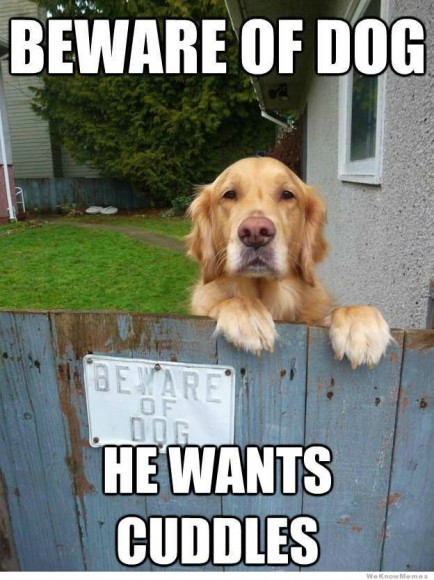
    1. Beware of the dog.

    beware-of-dog-meme

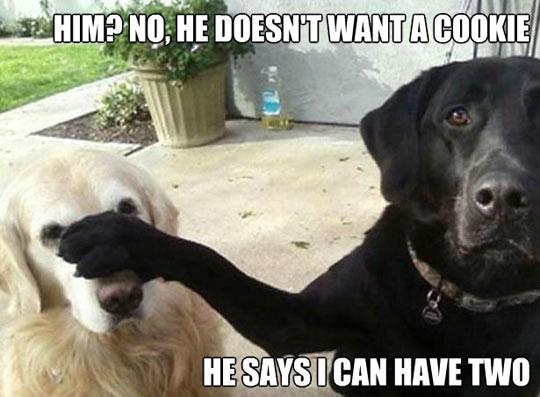
    2. Greedy, or considerate on the waistline. You decide.

    cookie-dog-meme

    3. If dogs ran the internet…

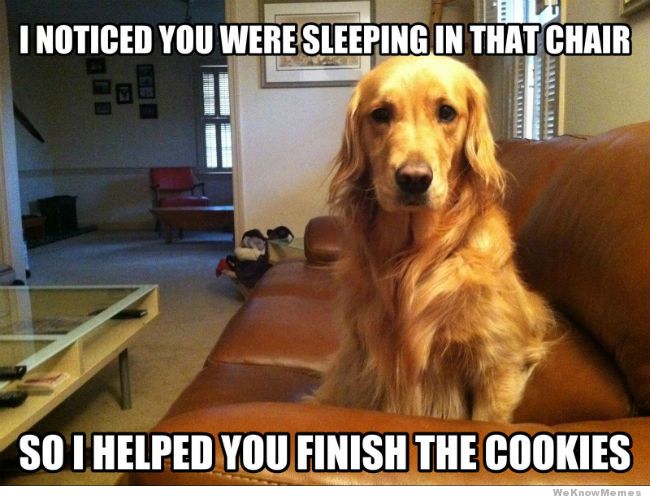
    4. Well, okay. Thanks, I guess.

    helpful-dog-meme

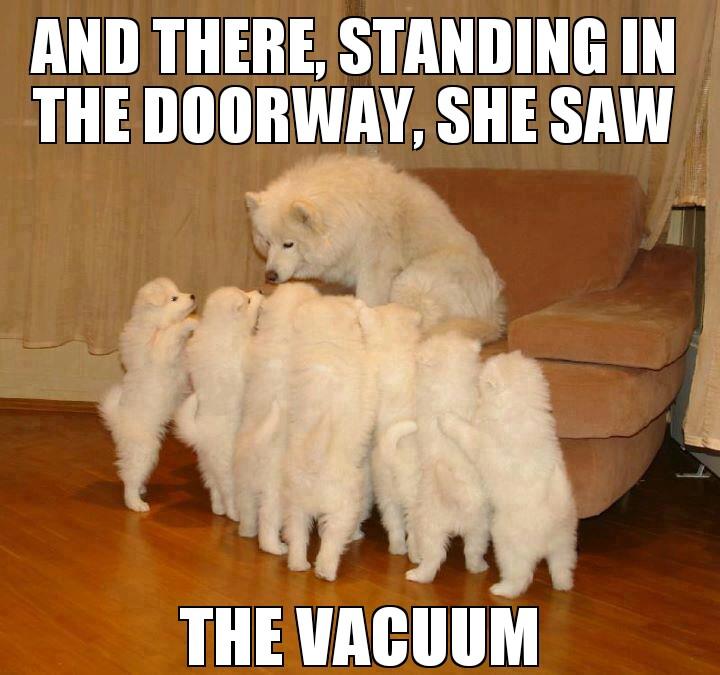
    5. Gather around puppies, it’s story-telling time.

    dog-story-telling-meme

    6. Ever wondered how accurate it was that some dogs look like their owners? Wonder no more.

    dog-dressed-like-dog-meme

    7. Puppy training.

    Monday Bonus Funny Dog Gif…

    Copy cat.

    Have a great week.

  • Women More Likely To Dress Pets Up For Halloween

    Women More Likely To Dress Pets Up For Halloween

    Pets are considered the heart of our family, playing a role so important to us that we know we can rely on their wagging tail to brighten any day.

    Recent research conducted by K9 Magazine publishers, Total Pet Publishing, on behalf of Saga Pet Insurance has discovered that women are more likely to dress their pets up for Halloween, than men and that almost 1 million of us have dressed pets up in years gone by.

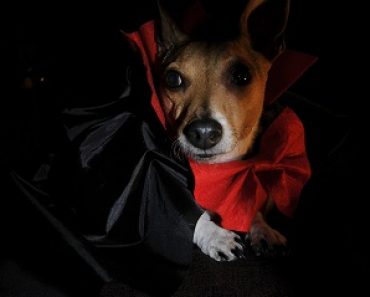
    Montse Maceiras + Memphis AKA Count Jackula

    Meet Memphis, AKA Count Jackula!

    With one in 17 owners spend more than £30 on the perfect spooky outfit, and one in 7 dogs owning more than five scary outfits – we’re posing the question, what are your plans for this year?

    Take a look at our gallery of readers dogs dressed up and ready to join in Halloween fun for inspiration.

    Thanks to all who took the time to tell us your thoughts and send your spooky snaps through!

  • Britain’s Pet Obesity Problem Growing

    Britain’s Pet Obesity Problem Growing

    This time of year, many of us are a few pounds heavier than normal; but what about our pets. Have we over-indulged them as well?

    Britain is the fattest nation in Western Europe, with more than a quarter of the population ranked as obese, according to a recent study by the Organisation for Economic Co-operation and Development (OECD).

    But what about our pets? Are they tipping the scales as well?

    Unfortunately, the answer is yes. An estimated 40% of UK pets are obese, according to The Royal Canin Weight Management Clinic at the University of Liverpool. With the New Year well underway, perhaps it is time to get a grip on the problem.

    Rosie Skinner, Head Vet at Emmview Veterinary Centre, Wokingham, offers timely advice on how you can recognise if your pet is overweight, and steps to ensure a happier, healthier and slimmer dog or cat.

    “Obesity in pets,” says Rosie, “is a serious problem, leading to and exacerbating a number of health issues, including diabetes, heart problems and arthritis. In addition, obesity can decrease your pet’s lifespan and seriously impair its quality of life.

    “To be classed as clinically obese,” says Rosie, “your pet has only got to be 15% over its normal body weight.”

    In most cases, the reason pets carry too much weight is simple: they eat more food than they burn off – exactly the same as for humans.

    It’s a dog’s dinner…

    Rosie points out additional factors that can contribute to a pet’s obesity.

    Breed – certain breeds have a higher risk of becoming obese, including Cocker Spaniels, Labradors, Golden Retrievers, Basset Hounds, Shetland Sheepdogs and Dachshunds.

    Age – the risk of obesity can increase with age. Keep this in mind when feeding your pet, especially when doling out the treats.

    Gender – with the exception of older pets, obesity can be more common in female animals than in males.

    Neutering – there is some connection between obesity and reproductive status; this is because spayed and neutered dogs generally require fewer calories to maintain a healthy weight.

    Pet owner – fortunately, pets can’t stop by McDonalds after a stressful day or break open a tub of ice cream if they’re feeling sad; their food and exercise levels are at owner discretion. As long as the human in the relationship makes the right choices, pets can overcome their obesity issues.

    Keep your eye on the ball

    “It is important to keep an eye on your pet’s weight,” says Rosie, who recommends pet owners regularly check the following:

    – Can you see and feel the outline of your pet’s ribs without excess fat covering them?
    – Can you see and feel your pet’s waist? Is it clearly visible when viewed from above?
    – Is your pet’s belly tucked up when viewed from the side?
    – If you answered no to any of the above, your pet may be overweight.

    “Regular and fun exercise is essential when keeping your pet fit and healthy,” continues Rosie. “There are plenty of ways to exercise animals besides walking. Dogs enjoy running and playing games like fetch, which can make exercising exciting and fun for you and your pet.”

    However, exercise isn’t the only key to losing the pounds; it has been shown that calorie restriction has a greater impact on weight loss than increased exercise.

    Rosie warns, however, that sticks can be dangerous. “We see a lot of casualties where sticks have been swallowed or become stuck in a dog’s throat. It’s best to use a durable plastic bone or ball that’s too big for your dog to swallow”.

    Do cats need exercise too?

    You may think cats need very little exercise, but the opposite is true.

    House cats in particular need regular exercise to break up their routine of eating and napping. Owners should set aside time every day to play with their cats. You can also encourage them to ‘work’ for their food, using toys that release food when pushed and played with.

    Outdoor cats should exercise as well because it’s difficult to tell what they get up to when they’re outside. The best toys are those that inspire cats to chase and pounce, such as fishing rod-type toys and climbing equipment.

    “Making these small changes can help maintain your pet’s proper weight,” says Rosie, “ensuring your best friend and companion lives a happy, healthy life while in your care. You are a big factor in the life and health of your cat or dog.”

    If you are concerned about your pet, make an appointment with your vet to ensure there are no underlying medical problems. You’ll also be able to get sound advice on how you can help your pet to maintain a healthy weight.

  • What’s Inside K9 Magazine Issue 56

    What’s Inside K9 Magazine Issue 56

    Inside this edition of K9 Magazine….

    • How Much Should I Feed My Dog: How Much Is Too Much?
    • Interview With RHONY’s Sonja Morgan
    • K9 Magazine’s Guide To Adopting A Dog
    • K9 Health: Prosthetic Limbs for Dogs – A New Reality
    • K9 Magazine Reveals…Born In The USA: Best Dog Products
    • eBook: The 50 Greatest Dog Books Of All Time
    • K9 Health: How To Give Your Dog A Healthy Smile
    • Talking Point: 7 Ways To Improve Your Dog Walking Experience
    • K9 Behaviour: What You Need To Know About Canine Anxiety
    • Pet Friendly Britain: Tips for Dogs Who Don’t Like Car Travel
    • Talking Point: Coping With The Death Of A Dog….& Lots, Lots More Inside!
    PS. Don’t forget to enter the competitions inside – hundreds of

  • Socialising Your New Dog

    Below are some helpful tips on how to socialise your new dog with existing pets in the household, with your friends, and with other people’s animals.

    Socialising a pup or a new dog is vital if you want the dog to be well mannered, well adjusted and pleasant to be around in the company of other animals and people.

    Socialising with Existing Pets: Make an initial contact with other dogs outside the home. If you can, take your existing pet (or pets) for a walk and have a friend meet you somewhere with your new dog. Take a long walk so the dogs can get used to each other. Switch dogs on your walk.

    Take all the dogs back to the house. Switch dogs and have a tour of your home, with all dogs still leashed. Let your existing house dogs loose, but keep the new dog tied to you. If the new dog tries to mark the house anywhere, correct him with a sharp jerk and a stern “No!” If any of the existing dogs try to mark, correct them in the same manner. Explain to all, in no uncertain terms, that marking will not be tolerated. In addition, when you feed the dogs be sure to feed the established pets first and stay near the new dog while he eats.

    Most established pets, if already well socialised, will enjoy a newcomer as long as the newcomer is friendly and is introduced in the manner described above. If adopting, ask their rescue for their best advice on introducing your new dog since they will have been able to assess your new dog’s actions and reactions in lots of situations before rehoming.

    Socialising with Your Friends: While puppies always generate warm feelings, adult dogs do not. It is especially important that they make a good impression on your friends and neighbours from the start, especially if you already have other pets. Set rules for your new dog immediately.

    No jumping on friends; keep your dog leashed the entire time friends are at home gatherings for the first few weeks to make sure your dog does not try to jump on them. No barking when the doorbell rings; no running out the door when you open it for guests; make him sit at your side and ask the guests to ignore him until everyone is in and he has a chance to evaluate the new people. Let him approach them for petting if he is calm; if not, wait until you have established the control you need so as not to make a spectacle of yourself and the dog.

    When he can accept guests, make sure he does so with all four feet on the ground. It is easy for a dog to try to explore with his paw as well as his nose. If you are firm and consistent from the first guest on, you not only will eliminate obnoxious behaviour but will instil acceptable behaviour. The end result: Your friends will welcome his addition to your family.

    Socialising with Other People’s Animals: The same logic applies here as with your other animals, so use the same type of rules. Take long walks on which you know you will meet friends doing the same with their animals. Contain and restrain your dog from barking at other animals as they approach. If necessary make him sit at your side.

    Always allow thorough sniffing from both animals, as this is their way of saying hi. If at all possible, invite friends and their animals back to your home and allow the dogs to play by themselves. This solves many problems the everyday pet owner may not think about and he will find the dog much more relaxed and easier to handle.

    Worth a read – puppy socialisation checklist

  • How Much Exercise Should You Give An Arthritic Dog?

    How Much Exercise Should You Give An Arthritic Dog?

    Dogs with arthritis will sometimes limp in pain and as dog owners, it’s heartbreaking to watch your dog suffer. As we know, dogs themselves very rarely ‘complain’ and instead are more likely to give you extra licks when you’re trying to comfort them.

    One of the best things you can do for your dog once arthritis has been diagnosed by your vet is to modify their lifestyle and exercise routine. Changing a few small things can have a huge impact on their wellbeing and happiness.

    Exercise for an arthritic dog can help in many ways. Managing weight is the main reason, as dogs that don’t have exercise regularly do tend to put on weight. This is, in turn, increases the weight on the joints and can even cause more pain and swelling. Even if a dog is at the correct weight the constant exercise can help to keep the weight under control and thus reduce any extra pressure on the joints.

    Exercise for an arthritic dog can help to increase flexibility and this strengthens the muscles around the joint and increases the dog’s endurance. So for example, if your dog is just lying in one position, because of the pain, the joints can become stiff and this can increase the arthritic pain. Such regular exercise can also help a dog to sleep better and this, in turn, will lead to rested muscles.

    The same logic applies to everything your dog does – playing, eating, exercising.

    In the case of eating, make it easier for your dog by making the distance they have to stoop and move their neck as short as possible with raised dog bowls.  My older dog, Chloe, had arthritis in her neck and when I changed her bowls to ones which sat off the ground, it made such a difference to the pain she experienced in her neck, especially when the cold weather came.

    When you are exercising an arthritic dog, it is better to go in for more number of short walks every day instead of the one long walk that the dog may be used to in its daily routine. Two 15 minute walks a day are ideal and if the dog feels it needs to rest in between, it should be allowed to do so to recover.

    Rehabilitation specialist and ‘A Walk in the Park’ expert, David Prydie offers his top tips to readers:

    “Exercise is an important part of treating arthritis in dogs. It helps prevent muscle wasting and promotes joint health. Exercise must be tailored for each individual dog in terms of size, age and stage of the disease. Here a few simple tips and stretches that can be done to make the life of an arthritic dog just that bit better.”

    Tips:

    • Warm your dog up with some simple stretches before you go for a walk.
    • After a walk make sure you give your dog a chance to cool down, wait for the dog to stop panting and repeat the simple stretches.
    • Go for more frequent short walks rather than one big one.

    Stretches

    • Using low calorie treats encourage your dog to turn its head round toward its flank in order to encourage spinal movement. Introduce this exercise slowly and do not force your dog to move if it is reluctant to do so. Repeat 5 times on both sides
    • Encourage your dog to take a treat from above its head and then from between its front legs to encourage gentle neck movement. Repeat 5 times.
    • Ask your dog to sit and then stand and then sit again. Reward each time and repeat 5 times.

    Every dog knows its own limitations, so take a cue from the dog. Avoid any climbing or steep roads on your walks. Also consider finding your nearest hydrotherapy pool. Swimming in a warm pool can be fantastic for dogs with joint problems.

    You can also encourage the dog to play games of fetch, hide and seek or even with a football as long as you stop as soon as the dog indicates its discomfort.