Category: International Dog News

  • Amazing Rescue Dog Airlift Changes Lives

    COVID-19 brought the world to its feet and changed lives forever. Animals and many rescue groups that help them were hard hit like Dogs and Cats of Antigua (DACOA), a non-profit group that rehomes rescue dogs overseas to places like the United States, Canada, and Great Britain.

    Antigua’s closed borders meant no flights or passengers to transport their dogs overseas, and the rescue group was left with dogs and puppies anxiously waiting to get to their adoptive homes.

    The group looked on in awe as rescue organizations on other islands chartered private planes costing approximately $35,000USD and upwards. However, for DACOA, the cost was prohibitive.

    Then help came in an unexpected form. Giovanna Pari, a regular visitor to Antigua, a member of Dogs and Cats of Antigua, and an Antiguan dog owner reached out to DACOA. Inspired by the need, she spear-headed the Antiguan Puppy Airlift– Freedom Flight initiative with a personal donation of $5,000CC and started a GoFundMe for the group.

    Shortly after, two more Canadian donors and an Antiguan resident made generous pledges to help. The balance of the money came from adopters, rescue groups, fosters, GoFundMe donations, and DACOA. DACOA spokesperson Brittany Barnes, said,

    “This is epic and we are thrilled! It is the first time Antigua has engaged in such a massive undertaking for dogs”.

    Fifty-eight dogs and puppies flew to Toronto in a chartered cargo jet from the Signature Air Strip this past Thursday, September 3. The dogs arrived in Toronto and were greeted by screams of delight as soon as the cargo door opened.

    Some adopters had driven up to 17 hours to YYZ airport to pick up their new furry family members. One of the Canadian organizers said, “We are genuinely impressed with these dogs’ health, and so was the CFIA vet!” Stories of the joyful reunions have been pouring in and

    these Antiguan rescues are now Canada’s highly desired family pets. Each pet receives numerous applications for adoption and every applicant is thoroughly vetted and screened. Dogs and Cats of Antigua (DACOA) is a foster-based non-profit, registered and operating in St. John’s. Their rescues are fostered, vetted, and then transported to the United States, Canada, and Great Britain to be rehomed.

  • Predicting The Next US President by Dog T-Shirts

    Every election, millions are spent polling Americans to predict the future president but there’s one sure way that’s far less expensive and perhaps more accurate.

    Just look at who man’s best friend is supporting during election time.

    “We’ve been manufacturing popular dog election T-shirts and other gear since 2008 and we’ve been able to accurately predict the next President every time,” said Mirage Pet Products owner Stephanie Davis.

    Owners can get their pooches ready for the political season with doggy ties, toys, T-shirts, bandanas, harnesses, collars, and even dresses supporting either Biden, Trump, the Democrats, or the Republican party. All political dog products are made in the U.S.

    Mirage Pet Products manufactures about 100,000 original products such as dog and cat collars, pet apparel, leashes, toys and all sorts of fun stuff for pets. They sell to stores on every continent except Antarctica.

    The family-owned American business has been operating for six generations.

    “My great-great-grandparents all the way to my kids have worked here. My grandparents started working here as teenagers when it was a belt manufacturing facility. One day a customer came in and asked if they could put crystals in a dog collar like they did for belts,” said Davis.

    When the original owner retired, her grandparents bought the company. Ever since, the company has been growing and she attributes the success to her loyal employees and customers.

    “We treat our staff well. That’s a lesson that I learned from my grandparents. It makes a huge difference in the success or failure of a business. We are as flexible as we can be. We pay them as much as we can. For both our employees and customers, we listen and value their feedback in how the company runs. Most of our best ideas have come from our customers and staff.

    “We enjoy what we do. Most of our revenue comes from small independent businesses. Our core base is the mom and pop shops – we love working with them. It’s rewarding to work with a family to put food on the table and make dreams happen,” said Davis.

    Her business has been affected just like any other business during the pandemic except with a double whammy. They were also recovering from a devastating fire last year when the pandemic hit. So, they really understand the hardships that their partners are going through.

    “We’ve got several different projects in the works to try and help pet stores that are re-opening. A lot of times customers will call saying here’s our situation and we’ll do our best to help them,” said Davis.

    Davies believes her company has a leg up on the competition because they’re small and able to change quickly to customer needs. Being the manufacturer as opposed to a middle-man, allows them to change quickly if someone needs something different or if things need to be improved.

    During these COVID times, a lot of animal charities, pet rescue and animal shelter organizations have lost important funding opportunities. Dinners and live events that were so crucial are not happening because of pandemic gathering restrictions.

  • World Animal Day 2017: A Shared Global Voice for Animals

    Like casting a pebble into a pond, every single World Animal Day event causes a ripple effect leading to many more events being held the following year.

    And this year is no exception! News of World Animal Day and its mission to raise the status of animals continues to spread and reach an ever increasing number of people in all corners of the world.

    Trending on social media in 25 countries and online media articles highlighting this special day, all helped raise awareness of animal welfare issues.

    Celebrities such as Rohit Sharma, Ricky Gervais, Dia Mirza, Eesha Rebba, Carolina Marin, Diana Penty, Kristin Davis, Cesar Milan, Jane Goodall, Simon Cowell, Jean-Claude Van Damme, Evanna Lynch, Michael Monroe, and Bill Bailey, to name but a few, came out in force to speak up for animals.  Countless animal-related organisations and publications also helped tremendously to direct traffic to World Animal Day.

    www.worldanimalday.org.uk/events is proud to showcase some of the hundreds of inspiring events that took place this year to celebrate this special day.  Here is just a snapshot so please visit the website for more:    

    Every year events are held to plant seeds of compassion in the hearts of the younger generation as they are our main hope for a brighter future for the animals.

    Here are just a few – In Lithuania, a class discussion was held aimed at highlighting how important it is to be a responsible animal carer. In Ivory Coast, MAEP organised a children’s drawing contest to raise awareness of the many animal welfare issues in Africa.

    In Serbia a childrens art competition, concert, and awards to recognise the contribution of individuals to improving animal welfare. In Spain, three days were dedicated to celebrating animals with a whole host of fun-filled educational activities for school children.

    In South Africa, Lionsrock Big Cat Sanctuary shared a fun day of educational activities with 50 children. In Turkey, school children had great fun making houses for stray cats in their neighbourhood.

    In India, the JBF Society held two, free anti-rabies vaccination and pet health check clinics.

    In the UK a whole host of events took place including events in schools, a family fun day residents of Southampton were invited to participate in an event to raise awareness of animal issues through a series of fun and educational activities for all the family. A vigil was held at Huntingdon Life Sciences to remember the animals that have suffered behind the closed doors of this testing laboratory.

    Every year in Cochabamba, Bolivia, a wonderful mass is held, to which pets are invited, to remind people of their obligation to care for the country’s animals.

    In Sri Lanka, the Otara Foundation chose to focus on animals that are robbed from their natural habitat and deprived of freedom for man’s commercial benefit. In the USA, ‘Roar for Tony the Tiger’ has become an annual event. Tony has lived all of his seventeen years as a roadside attraction in Louisiana.

    In Egypt, 120 VIPs attended a conference at the Greater Cairo Library with well-respected guests speaking up for the country’s animals.

    In Liberia a massive celebration was held bringing together over 2,000 children, animal carers, stakeholders and community leaders to raise awareness about the plight of the country’s animals.

    In Syria, the Ministry of Education has agreed add images of different Syrian wild animals to the front of biology text books with information about them on the back page.

    In The Gambia a march was organised and attended by government departments, stakeholders, animal welfare oranisations and students. It was followed by speeches and plays by children which demonstrated a real understanding of local animal welfare issues.

    In Yogyakarta, Indonesia, an online campaign was held focusing upon why it’s important to be a responsible pet guardian.

    In Kurdistan, Iraq, KOARP, winners of the 2016 World Animal Day Grant, will be following up training carried out earlier this year, holding a seminar, and gaining media attention for animals.

    Many cities hold marches to draw attention to animal welfare issues.  One such march was held in Medellín, Colombia, calling for the government to ban bullfighting in the country.

    Every year, countless radio and TV interviews are conducted on and around World Animal Day which help to raise awareness on a massive scale.

    A street campaign organised in Pelembang, Sumatra, Indonesia, caught the attention of a nationwide radio show resulting in the organisers being invited to participate in an hour long interview. In Malawi, All Creatures CEO and World Animal Day Ambassador appeared on national TV to discuss animal health issues and highlight the objectives of World Animal Day. In the US, World Animal Day featured in a television talk show, A close-up look at animal welfare issues.

    In Bosnia and Herzegovina activists launched an appeal to government imploring them to honour the fur farming ban that is due to come into force in January 2018. Forty-six World Animal Day Ambassadors have expressed their support for this action. The country’s children say no to fur farming.

    What you have read here is a tiny snapshot of what happened around the world to draw attention to animals in honour of World Animal Day on October 4.

    This powerful movement, that grows each year, is helping to make the world a better place for animals – a world where they are always recognised as sentient beings and full regard is always paid to their welfare.

    We encourage everyone who reads this to Get Involved next year and help raise the status of animals.

  • Police in America Are Killing Family Dogs With Alarming Regularity

    An interesting item in The Huffington Post from Stephen Wells, who asks why are police in the USA killing so many family dogs?

    The author raises a concern about an issue that has seen an increasing number of reports of average, every day family dogs being shot and killed on what is becoming an alarming scale.

    https://i.imgur.com/PxLte2p.jpg

    He says:

    "It’s uniquely terrifying to feel unsafe in your own home. That fear is on the rise for those who share their lives with a dog, as the trend of dogs being shot and killed at home persists. Each year over 10,000 companion dogs are killed by police officers, according to the Department of Justice. It’s a staggering figure. Not only are thousands of family dogs killed needlessly, often while their loving guardians look on powerless, our officers are walking into situations they are not prepared for. It’s a lose-lose situation. These are preventable tragedies, but we have to mobilize now to put the solutions in place before another 10,000 animals are killed."

    But why are they doing it and what can be done to bring down this worrying trend?

    Read his piece here:

    http://www.huffingtonpost.com/stephen-wells/a-national-epidemic-is-th_b_12123618.html

  • Should Vets be More Vocal About Their Client’s Dog Behaviour Knowledge

    He may be a newly minted, fresh-faced veterinarian at an animal hospital that serves the tiniest of towns, but that veterinarian has a voice, and a duty, that can impact the profession, says Dr. Melissa Bain. “As veterinarians, each of us can affect the welfare of our pets, by incorporating behavioural techniques in our practices, and, in turn, helping owners to provide the best care at home.”

    With the importance of animal behaviour growing in private practice, Dr. Bain’s presentation, “Welfare…It’s Not Just for Animals” was a highlight at the American Veterinary Medical Association Convention August 5-9 in San Antonio. Winner of the 2016 Leo Bustad Award in recognition of her work in animal behaviour and the human-animal bond, Dr. Bain is an Associate Professor of Clinical Animal behaviour and Director of Professional Student Clinical Education at the University of California Davis School of Veterinary Medicine.

    “It may be difficult to find a specialist in animal behaviour, someone who understands behaviour modification, medication, training issues and phobias, for instance,” she said. “There aren’t many experts available in this field. However, local veterinarians should be trained to communicate with pet owners to uncover any negative issues that might be occurring and to provide some go-to resources to resolve common issues when he or she cannot refer.”

    Veterinarians must be proactive and ask about potential situations like house soiling or vocalization because the client may not think or forget to inquire about such behaviours. And the longer the behaviours go unattended, the more difficult they are to resolve. Providing a list of qualified trainers in the nearby area can be an indispensible resource to owners.

    Creating proactive veterinarians is a major focus of Dr. Bain’s position at UC Davis. She is devoted to equipping her veterinary students with knowledge beyond the books, to pushing them to address current or potential behavioural dilemmas and spending time up front with owners and asking the right questions—as well as providing the right answers, or at least some alternatives.

    “We need to take a holistic approach in many situations,” she explained. “We can’t say ‘Here’s your dog. Surgery went well…have a great day!’” Veterinarians can inform an owner that their pet needs to spend six weeks in post-operative cage rest, Dr. Bain said, but that advice may be difficult to follow.

    “Veterinarians have to compromise and understand the ideal vs. the reality in most, if not all, situations. We understand that owners have to take a pet out of the cage for bathroom visits, or to enjoy some lap time. We just need to tell them specifically how to do these things safely. . . to educate and guide them.” Suggestions like proper handling, relocating the cage or even sleeping nearby on the floor can go a long way in producing happy people, content pets and shorter recovery times, she said.

    If it were up to her, Dr. Bain would like to see crate training become part of virtually every puppy’s protocol. As for their part, veterinarians as a profession should be incorporating training tips and confinement guidelines into their initial pet visit discussions. “Crate training ahead of time will dramatically improve a dog’s ability to cope with post-surgical confinement,” she said. “If a dog is used to being crated, it will be easier and less stressful on him to be confined for any reason in the future. The owner will have additional peace of mind as well.”

    While it is impossible to remove the stress completely from an office visit or a surgical procedure, a veterinarian can do a much to reduce the amount of stress a pet experiences at the clinic. When it comes to stress levels, pets are much like their owners. “Our alarm may not go off, we miss our morning coffee, and we’re late for work,” explained Dr. Bain. “As we encounter just one more negative thing, our stress now goes from a Level Five to a Level Six. We feel as though we’re just done.”

    To keep anxiety at bay, veterinary staff can create a low-stress atmosphere. Lights can be lowered in the examination rooms or soothing music can be played in the office. “We need to empower veterinarians to do these little things, because these simple things do make a difference,” said Dr. Bain. “Instead of an upset animal’s stress level skyrocketing, it may only go from a ‘one to a two’.”

    “A human’s interaction with a pet is a very important way in which an animal’s life is enriched,” said Dr. Bain. “Some pets prefer to just be petted and handled instead of playing, especially as their physical ability to do so is decreased due to an illness or surgery or just to the natural aging process.”

    When it comes to animal behaviour, there are vital techniques that can make a difference in a pet’s life. All can be taught by a skilled veterinarian and their staff. “Without a doubt, we need to focus on animal welfare and pet behaviour in our practices,” said Dr. Bain. “We just have to remember to seek out and share our knowledge with owners and say, ‘here’s what you need to do…and here’s how you do it.’”

    The AVMA, founded in 1863, is one of the oldest and largest veterinary medical organizations in the world, with more than 88,000 member veterinarians worldwide engaged in a wide variety of professional activities and dedicated to the art and science of veterinary medicine.

  • Wounded Warriors Headed Out on the Water With Their Service Dogs

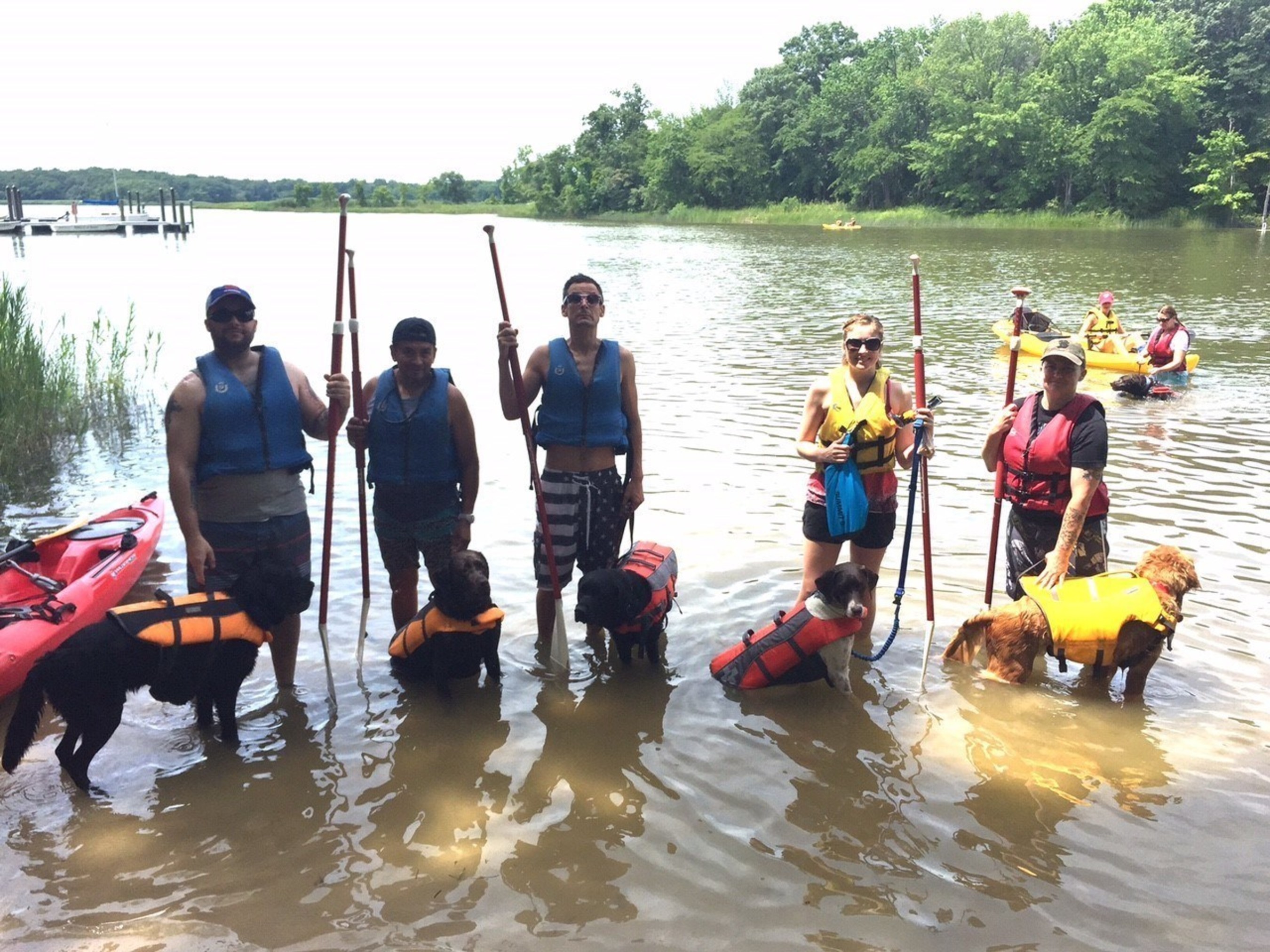
    During a recent Wounded Warrior Project event, a group of wounded veterans took to the waters of Dundee Creek to try stand up paddleboarding for the first time. It was a new experience made more special by the guests the warriors were asked to bring – their service dogs.

    Participants spent the afternoon at Gunpowder Falls State Park for the “SUP Dog” experience. They learned paddleboarding techniques with the help of Ultimate Watersports, strengthened the bonds they shared with their animals, and forged new bonds with fellow warriors.

    Army veteran Michael Carrasquillio said that while he tries to make it to as many WWP program gatherings as he can, he was particularly drawn to this one because he could include his service dog in the fun.

    “It was the first time I had seen something specifically for warriors and their service dogs, and I thought it was such a great idea,” he said. “I don’t always let my dog interact with other dogs, but knowing that we’d be around actual service dogs and warriors, I felt safe.”

    It was a great opportunity for Michael to strengthen the relatively new bond he shares with his service dog – a black lab named Ojai.

    “We have been a team for a little more than three months,” Michael said. “The process to get him was more than two years, but it was well worth the wait.”

    These fun activities support the long-term recovery needs of injured warriors by reintroducing them to the unique bonds experienced during military service. The connections formed during these outings can go a long way in healing wounded veterans.

    “These programs are important for many reasons,” Michael said. “First, it’s great to just get out of the house. Second, it’s important to connect with other warriors. Socializing is a crucial part of the recovery process. There are just tons of good reasons to get involved in WWP programs.”

    WWP staff closely interact with attendees during these program gatherings, advising them of additional services that can assist their recovery. Program donors make it possible for wounded veterans, their caregivers, and their family members to participate in these activities at no cost.

  • BREAKING NEWS: Cross-Border Dog & Cat Rehoming to Be Restricted

    International rehoming of dogs and cats should not be carried out as a standard practice EU Cat & Dog Alliance member organisations have agreed this week. Instead members will work preventatively in the country of origin to minimise the need for rehoming animals abroad, for example through neutering and educational campaigns, to stem the problem.

    Simona Lipstaite, European Policy Advisor for the EU Dog & Cat Alliance and Dogs Trust, comments:

    “International rehoming of dogs and cats is a practice which is not sustainable in the long term as it only provides interim measures rather than addressing the root causes of companion animals living in shelters or being homeless in the country of origin. It also presents the risk of spreading diseases across borders and introducing new diseases into different countries. The main diseases under consideration are rabies, Echinococcus multilocularis, leishmaniosis, babesiosis, dirofilaria and ehrlichiosis and, in the case of cats, retroviruses.”

    International rehoming presents further issues in relation to cats. Being much more territorial than dogs, cats inevitably suffer a huge amount of stress during transport. Cats take a long time to acclimatise to a new environment and some may never recover from the stress of being moved internationally.

    Where international rehoming is unavoidable, members have agreed that there must be full traceability and that the rehoming is solely in the best interests of the animal, and not for monetary gain for the organisation. Member organisations must also do it legally and following proper disease testing procedures.

    So, do you think it’s the right decision? Do you think it will stop the problem of transmitted diseases or stop animals in need finding safety and a secure future in a new home? Comment below and let us know what you think.

  • Woman Who Taped Dog’s Mouth Shut Charged With Cruelty

    Katharine Lemansky thought it would be a good idea to tape her dog’s mouth shut and post the evidence to Facebook. She has now been charged with cruelty.

    The 45-year old will be allowed to keep her chocolate Labrador cross, called Brown, until she appears in court.

    "Taping the dog’s muzzle shut was a terrible decision on Ms Lemansky’s part," said Cary, North Carolina police captain Randall Rhyne.

    "At the same time, it’s important to also note that our animal control officers who physically examined both Brown and her littermate found the dogs to be very well cared for, which is why we did not and could not remove them from the owner."

    Social media users who saw the photo of Brown spread their concern quickly.

    The photo was captioned, "This is what happens when you don’t shut up!!!"

    According to officials, police officers in South Daytona in Florida tracked Ms Lemansky to North Carolina, where she admitted taping up the dog’s mouth.

    She faces a fine and up to 150 days in jail over the charge – called a misdemeanour in America.

  • WATCH: Couple Who Let Dog Film Wedding Didn’t Expect This to Happen!

    My dogs came to my wedding, they had their own bespoke collars and they were a big part of our plans. The venue was entirely chosen on the basis of it being suitable for them to enjoy.

    This couple went a step further and not only was their dog a big part of their day, he was their filmmaker.

    When Josh and Addie Burnette decided to let their dog, Ryder, film their wedding they weren’t sure how it would turn out (who would!) but this heartwarming video tells a story of it’s own.

    We think Ryder has a future in the business! Don’t you?

  • Former Chinese Millionaire Spends Fortune Saving China’s Forgotten Dogs

    Former Chinese millionaire Wang Yang has spent his fortune made in steel to save more than 2,000 of China’s stray dogs.

    News outlet, Sina News revealed that his journey to help abandoned dogs began after his beloved dog went missing in 2012. His search led him to a slaughterhouse where he was granted access to look around and since then, with the memories of what he saw, he felt compelled to help save China’s dogs from the meat trade.


    Photo Credit: Sina

    The 29 year old Changchun animal lover from Gelong town in the Jilin province once amassed a fortune of several millions but is now in debt due to his efforts to provide sanctuary to dogs in need before finding them loving new homes. According to Shanghaiist.com he used his wealth to purchase the then slaughterhouse and convert. His sanctuary is currently home to more than 200 dogs but has been a place of safety for 1000 before now.

    According to the website Mr Yang is worried about the winter ahead saying, “I do not accept monetary donations,” he explained. “I only hope that kind-hearted people will be able to donate a few supplies to help build a home from these 200 dogs.”

  • British MPs Condemn Asia’s Dog Meat Trade as “International Barbarism”

    Last week the backbencher debate in the British House of Commons on Asia’s dog meat trade highlighted the levels of cruelty to dogs involved in the industry, and the extreme human health risks associated with eating dog meat, said Soi Dog Foundation.

    Rob Flello MP told of dogs “housed and transported in disgusting conditions in which they can often barely move, and killed in the most excruciatingly cruel and painful ways”. He added “It is common for the animal to be bludgeoned, hanged or electrocuted, and, in some cases, for the animal to be thrown fully conscious into a drum of boiling water—anything that ensures maximum suffering”.

    Inflicting maximum pain on a dog before it dies creates adrenalin that is thought by some in Asia to tenderise the meat.

    Gavin Robinson MP weighed in by describing the Asian dog meat trade as “international barbarism”.

    The scale of the industry is alarming. Around 20 million dogs are killed and eaten each year in China, five million in Vietnam, two million in South Korea, with Indonesia also serving up dog meat dishes. Whilst countries like Thailand and the Philippines have officially banned the sale and consumption of dog meat, the trade still continues underground.

    Aside from animal welfare issues, the debate also revealed serious human health hazards associated with eating dog meat. Parliamentary Under-Secretary of State for Foreign and Commonwealth Affairs, James Duddridge MP said “So unregulated is the dog meat trade industry, that there is a huge risk to human beings from diseases such as cholera and rabies, with the latter found to be present in slaughterhouses and markets in China, Vietnam and Indonesia”.

    Alex Cunningham MP also referred to statistics stating evidence of a 20-fold increase in the incidence of rabies amongst people who had consumed dog meat across the Asian region.

    Hanna Bardell MP also raised concerns about dog meat entering the UK food chain, asking “Do the Governments of our nations have a role to play in terms of the security of the supply chain and making sure that none of this dog meat enters our food chain and threatens our food supply?”

    The British government however is wary of preaching western ideals to eastern countries. Robert Flello MP added: “I do not believe that it is generally this House’s role to tell societies abroad what they should or should not do based on western sensibilities, but we cannot allow tradition to be used as a smokescreen for practices that are barbaric, cruel, inhumane and disgusting”.

    Steve Reed MP agreed, saying “There is a role to be played in seeking to secure global standards of animal welfare and in working with local campaign groups on the ground in the countries affected to help them strengthen their own cases”.

    Conclusion to the Debate

    As a result of the debate, MP James Duddridge made two commitments on behalf of the government; to write to all British Ambassadors in the countries concerned to review what they are doing in relation to the dog meat trade, and to consider a review of how the government interacts on this issue with the various international organisations (for example, the World Health Organisation), specifically on the area of health.

  • Dog Who Disappeared for 5 Years Reunited with Owner

    A dog who went missing five years ago has been reunited with her owner in Melbourne, Australia, thanks to a
    microchip and the staff at Lort Smith Animal Hospital.

    Rebecca Axiak says she never stopped looking for her dog Disco after she disappeared. She told Mashable, “I
    always had hope that she would return, never really expecting it to actually happen.”


    Photo Credit: Facebook.com/LortSmithHospital

    The Herald Sun who originally reported the story say, “After Disco escaped five years ago, she was found in the street by an elderly couple who presumed she was homeless and gave her to a family member.

    The new owner kept Disco, but while she was in a backyard earlier this year, another dog jumped the fence and severely attacked her.”

    Unable to pay for the surgery, they surrendered her to the hospital, where her microchip was scanned.

  • Bulldog Sets New World Record Skating Through Longest Human Tunnel

    Otto, a three-year old Bulldog from Lima, Peru broke the Guinness World Record yesterday skating through a human tunnel of 30 people.


    Photo credit: Guinness World Records

    See him in action below:

    Otto’s owners, Luciana Viale and Robert Rickards told the Guinness World Record team that they were inspired to get a Bulldog after they saw videos of the world famous skateboarding Bulldog, Tillman, who sadly passed away recently.

  • British Parliament to Discuss Asia’s Dog Meat Trade

    A formal debate in the House of Commons on Thursday November 5th will again bring attention to the dog meat trade in Asia, which sees around 30 million animals a year killed and cooked up in specialist restaurants for seemingly insatiable diners. The debate follows an Early Day Motion on January 28th 2015 which saw an almost unprecedented 142 MP’s sign a demand calling for the end to the dog meat trade in Asia. The motion was led by MP John McDonnell, and sponsored by MPs Peter Bottomley, Jeremy Corbyn, Andrew George, Jim Shannon and David Simpson.

    In recent months, a growing number of British celebrities have joined the swathe of animal rights campaigners lobbying governments and calling for an end to the trade. Ricky Gervais, Dame Judi Dench and actor and animal rights campaigner Peter Egan were amongst others who recently spearheaded a campaign and petition organised by Thailand’s Soi Dog Foundation. The petition (here) calls on the Thai government to stop illegal exports of dogs from Thailand to Laos and Vietnam, to satisfy dog meat demand in those countries.

    China remains the largest consumer of dog meat in the Asian region, accounting for around 20 million dogs a year, according to animal rights campaigners. The now infamous Yulin Dog Meat Festival, which takes place very year in the southern province of Guangxi, neighbouring with Vietnam, sees over 10,000 dogs killed and eaten in just 48 hours. Campaigners claim the animals are treated inhumanely, trussed up and packed tightly into small cages, then skinned alive in some cases. There also remains a myth that the more adrenalin running through the dogs body as it is killed, the tastier the meat.

    Vietnam is the second largest consumer of dog meat in the region, with around five million dogs meeting their fate every year in the thousands of primitive slaughterhouses across the country. Demand is so high in fact, there are estimates suggesting that up to 70% of dogs in the food supply chain are stolen family pets. Over the past two years there have been numerous incidents of dog thieves being lynched by angry villagers, and even villagers being killed by the dog thieves.

    Campaigners see the House of Commons debate as the first step towards the British government taking a firm stance with its Asian counterparts regarding working together to shut the industry down.

  • South Korean Firm Will Clone Your Dog

    South Korea’s Sooam Biotech launched its cloning laboratory in 2006 and hit the news a year later when Missy, the world’s first cloned companion dog, was announced.

    If you’ve got $100,000 going spare, the firm can clone you a dog.

    Digital Trends Reports:

    The technique to clone a dog is surprisingly simple from a theoretical standpoint. DNA from the dog to be cloned is collected from the skin or other live cells. While the cloned DNA is being processed, a donor egg is collected from a female dog and emptied of its DNA by removing the nucleus. The cloned dog’s DNA is injected into the empty egg and fused with the embryonic contents. This embryo is then implanted into a surrogate female dog who carries and delivers the cloned puppy.

    Read more: http://www.digitaltrends.com/cool-tech/dog-cloning-south-korea/