Blog

  • Fire Service Dogs to Receive Award for ‘Outstanding Devotion and Service to Society’

    Fire Service Dogs to Receive Award for ‘Outstanding Devotion and Service to Society’

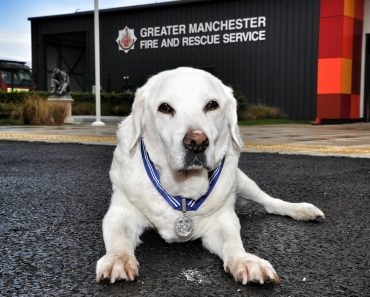
    Two dogs from Greater Manchester Fire and Service are to receive recognition for their years of outstanding devotion with the animal equivalent of the OBE because of their service to society.

    Echo, a 14 year old Labrador, served with Greater Manchester Fire and Rescue Service as a Search and Rescue dog from 2004 to 2013 and Cracker, a 13 year old Labrador Cracker was a Fire Service Investigation Dog with Greater Manchester Fire and Rescue Service between January 2007 and February 2017.

    During his time in service, Echo was deployed as part of the UK Fire Service Overseas Response Team, to assist in the aftermath of an earthquake in Haiti, which completely devastated large parts of the country in January 2010.

    The capital, Port-au-Prince, was buried under tonnes of collapsed buildings and structures.

    In the heat and humidity and accompanied by a UN Police convoy, Echo’s skills were deployed to help speed up the search process. He conducted 46 separate searches over a two week period. Sadly, due to the magnitude of the quake, everyone that Echo found had already died.

    Echo’s handler, Mike Dewer (pictured below together), said, “I can honestly say that Haiti was hell on earth. The city’s infrastructure had been decimated. There were no hospitals – survivors were relying solely on aid from outside the country to help them. For Echo, the smell of death surrounded him. As a puppy, he was taught to search for the living, but as the situation was so bleak and desperate, his searches for survivors were fruitless.

    “He helped us find victims buried deep within collapsed buildings – libraries and shopping centres. I will always remember his whining as he struggled to fathom why he was surrounded by that one scent – a scent that he had been taught to ignore, but under those circumstances, that was impossible.

    “Echo and I shared a tent and I think we were both glad of each other to cuddle up to after each of those gruelling days. Those sights will stay with me forever and I will always be grateful to Echo for the strength and determination he showed while we were deployed.”

    Despite the intensely challenging conditions, Echo worked tirelessly and without hesitation for almost two weeks before he and Mike returned home to the UK.

    Cracker’s time in service was spent helping forensic teams determine the cause of fires to help secure convictions of suspected arsonists. She was trained to detect 20 different types of accelerants, using her powerful sense of smell.

    During her 10-year service, she was involved in a number of high-profile cases, including a double murder and serious assaults. She attended over 650 incidents, resulting in over 200 years of custodial sentences for arson-related crimes.

    On 12 March 2013 a major explosion occurred at a large two-storey detached building on War Office Road, Rochdale. A strong smell of petrol was detected and Cracker was deployed to investigate. After an unproductive ground search, Cracker was instructed to climb what remained of the staircase, to search the upper floor. This meant negotiating a large hole in the floor, as well as making her way through fallen wooden beams and roofing materials.

    Cracker tracked along the skirting board to a place outside where the bathroom had once been and gave a positive indication. As a result of her efforts, the Fire Investigation Team was able to determine that the explosion was a result of an arson attack.

    On 5 March 2014 Cracker attended a ‘halfway house’ property in Ashton, Greater Manchester, where a man had been murdered and his body set on fire. Cracker, dressed in a forensic dog suit to preserve any evidence, undertook a search of the property and, as a result of her efforts, the culprit received a 30-year jail sentence.

    On Cracker’s actions, Mike said, “Cracker – or Lucy to her friends – was a constant source of excellent skill and drive whenever she was deployed to assist with an investigation. She was just as driven and determined on her last day as she was when she first started. An absolute class act. I am thrilled to see her recognised with the PDSA Order of Merit – it is a true honour.”

    As well as attending crime scenes, Cracker also visited schools to help educate young people in fire and home safety.

    Both dogs will receive their animal OBE, the PDSA Order of Merit, at a ceremony next month.
  • Frightened, Abandoned Puppy is Comforted by Teddy Bear

    Frightened, Abandoned Puppy is Comforted by Teddy Bear

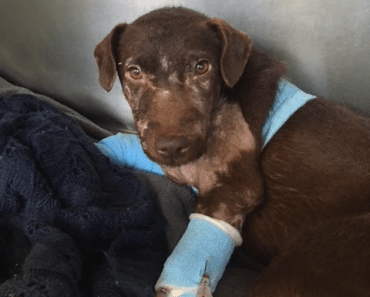
    The RSPCA is investigating after a mother and her three puppies were found abandoned in Rugby within days of each other.

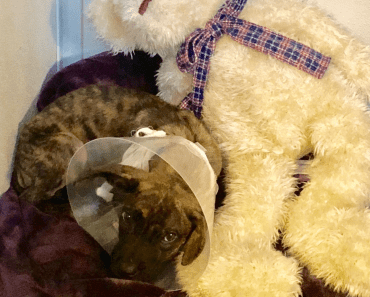
    An emaciated, brindle pup was found dumped in Pinfold Street on Sunday night (19 August) by a member of the public who contacted the dog warden the following day. The pup, nicknamed Penfold, was rushed to a local vet and rescue group Pawprints Dog Rescue were contacted for help.

    RSPCA Inspector Herchy Boal, who is now investigating, said: “Penfold was in a real state when he was found earlier this week. He was in a very bad condition, was extremely skinny and had some nasty bite marks on his ears which were infected.”

    Two days later, a bitch and two pups were also found abandoned nearby. The mother – a shar pei type – was extremely skinny and had pressure sores down her legs. The dog warden and Pawprints were extremely suspicious and contacted the RSPCA to investigate.

    Inspector Boal said: “There was a lot of publicity online and on social media following Penfold’s discovery and I think this may have lead to his – and his mum and sibling’s – owner to panic and abandon the others.

    “The puppies are extremely similar and all three are around eight-weeks-old.”

    All four dogs were collected and taken to the RSPCA’s Newbrook Farm Animal Hospital in Birmingham. They’ve now been moved to the charity’s Coventry, Nuneaton & District Branch*.

    Mum, now called Clara, and her pups – Penfold, Ellie and Leeka – are being cared for by RSPCA staff and volunteers, and are doing well.

    Inspector Boal added: “I find the circumstances that these dogs were found in extremely suspicious and they obviously weren’t receiving the appropriate care in their previous home.

    “I’m keen to find out where these dogs came from and who’s responsible for letting them get into such poor condition and then abandoning them. Anyone with information should call our appeal line on 0300 123 8018 and leave me a message.

  • They Used This Dog For Badger Baiting Then Abandoned Her

    They Used This Dog For Badger Baiting Then Abandoned Her

    Little Snickers, a female Patterdale Terrier, was found abandoned on Church Road in Smallfield, Surrey, on August 8.

    She had horrific injuries to her face, neck and torso which appear to be consistent with those caused by a badger or a dog.

    These injuries are commonly inflicted on dogs who are used in the illegal persecution of wild animals – such as badgers and foxes – often known as badger baiting.

    Warning: The following image shows horrendous injuries:

    Click To View

    Snickers was taken to a nearby vets for emergency treatment, and has now been transferred to the RSPCA Putney Animal Hospital in London where she will undergo further treatment once she is stronger.

    RSPCA London Veterinary Director Caroline Allen said: “Sadly it is going to be a long road to recovery for poor Snickers, she has multiple wounds and some are very deep. Given the degree of infection we can’t think about suturing at the moment, and so at this stage she is on intravenous fluids, pain relief and antibiotics and we will be managing the wounds until we feel we can close them.

    “The wounds have been cleaned and flushed, some are relatively fresh – days rather than longer – but there do also appear to be older scars.

    “We are doing all we can at Putney to give Snickers a chance, but she is very weak and her poor body has already endured so much.”

    RSPCA Inspector Kate Fletcher said: “Snickers is a lovely, friendly young girl who seems grateful for the attention and still wags her tail despite the unimaginable pain and distress she has been experiencing.

    “When poor Snickers was found she was in a horrific state with awful injuries to her face and torso.

    “Having looked at her injuries we do suspect she has been used in badger baiting, where a dog is sent into a badger sett to flush out the badger and attack it for the handler to then dig the badger out the sett and shoot it.

    “Badger baiting inflicts terrible suffering on both badgers and, frequently, the dogs involved. This is obviously an offence under the Badgers Act, Wildlife & Countryside Act, and Animal Welfare Act, so we would be very eager to make attempts to trace the person responsible for this dog.”

    The RSPCA’s Special Operations Unit (SOU) frequently investigates complaints about the deliberate persecution and hunting of wild animals, using dogs.

    The charity has received almost 3,500 complaints about the persecution of wild animals* – including reports linked to badger baiting and badger digging – over the last three years (2015-2017).

    Chief Inspector Will Mitchell said: “Poor Snickers is a prime example of the unimaginable cruelty inflicted not only on the wild animals themselves, but also the dogs involved.

    “We’ve investigated large gangs of men who rampage throughout the countryside with their dogs killing whatever they come across: badgers, foxes, deer and hare.

    “These merciless attacks are happening throughout the UK, both in the depths of the British countryside as well as in the leafy suburbs.

    “Many people are unaware of this dark world that exists – with badger diggers often going out under the cover of darkness or the early hours and avoiding rousing suspicion by DIY treatment for their dogs’ injuries at home – but, unfortunately, it’s something we frequently see.”

    Inspector Fletcher added: “Unfortunately Snickers was not microchipped and so her owner is unknown and I am keen to speak to anyone who may recognise her, or who know who may have owned her. Given the degree of infection she could have been straying or been dumped in the area for some time.

    “I would urge anyone who has any information, no matter how small to please call me in confidence on the RSPCA inspector appeal line on 0300 123 8018.”

    Anyone with information about wildlife crimes such as badger baiting should report their concerns to the RSPCA’s 24-hour cruelty line on 0300 1234 999.

  • See Incredible Transformation of Abused German Shepherd Dog

    See Incredible Transformation of Abused German Shepherd Dog

    A beautiful German Shepherd is looking for a new home with an owner who will spend time grooming her and bathing her beautiful coat.

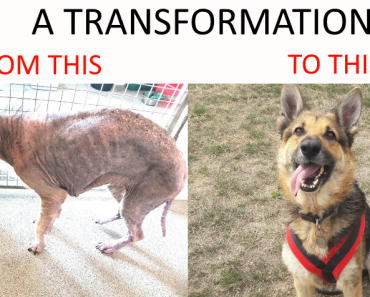
    But six-year-old Sheena hasn’t always had such a healthy set of locks. The poor dog was almost completely bald when she was rescued by RSPCA inspectors in September last year.

    The dog – who should have a thick black and tan coat – had no hair left on her body and just a thin layer of fur around her face.

    RSPCA Inspector Sara Jordan, who responded to complaints from the public about Sheena’s condition, said: “A member of the public grew concerned about Sheena and a second dog – Staffordshire bull terrier Belinda – at a property in Sheffield and contacted us.

    “Both dogs were suffering from extensive fur loss and, when I took them to the vets, we discovered they both had severe flea infestations.

    “Police seized the dogs and placed them into our care while we investigated.”

    Sheena and Belinda, eight, were taken in by the RSPCA’s Sheffield Animal Centre.

    A spokesperson said: “Sheena is an absolute trooper. When she arrived in our care she was totally bald apart from a little hair around her face, and she was underweight and in very poor condition. It was difficult to even see what type of dog she was.

    “After many months of love, medication and TLC she has absolutely flourished and now she’s finally ready for a brand new life.”

    Staff spent months of dedicated time and special medication to nurse Sheena and Belinda back to health and now, the German Shepherd looks like a different dog with a full coat of beautiful thick hair!

    On 7 August, Sheena’s previous owner, Jason Pearce (08/12/69) previously of Scarsdale Street, Dinnington, was presented to Sheffield Magistrates’ Court in custody on warrant. He pleaded guilty to two offences under the Animal Welfare Act and was disqualified from keeping animals for 10 years. He was deprived of both dogs and ordered to pay £120 fine, £200 in costs and a £30 victim surcharge.

    A warrant has been issued for a second defendant – a 47-year-old woman – who is also due before court for the same offences.

    Now the case is over, it means Sheena can find a new home.

    “This fantastic girl has been through so much yet she always brings us so much joy and happiness to everyone she meets with her amazing personality,” a charity spokesperson added.

    “She loves to go exploring with you and is quite food focussed. She is very clever and enjoys learning new skills.”

    Sheena would like a new home where she will be the only dog but where her new owners will help improve her socialisation with other dogs. She would also like a quiet home with older children.

    She’s active so would like somewhere she can stay busy, learn new tricks and go on long walks and lots of adventures.

    For more information about Sheena, visit her online profile on the RSPCA website.

  • Teenager Allowed Dog to Starve to Death Then Dumped Body in a Suitcase at Cemetery

    Teenager Allowed Dog to Starve to Death Then Dumped Body in a Suitcase at Cemetery

    A Leeds man has been jailed for 18 weeks and disqualified from keeping animals for life after being convicted of three offences in relation to the death of a Staffordshire bull terrier called Leo who was found in a suitcase in a cemetery.

    Mason Medford (D.O.B 17.11.99) of Bellbrooke Grove was picked up on warrant this morning (Monday 20 August) and presented to Leeds Magistrates’ Court for sentencing.

    He was due to appear before the court last Tuesday (14 August) but failed to attend and the case was heard in his absence.

    He was found guilty of two counts of causing unnecessary suffering and one of failing to meet the needs of Staffordshire bull terrier Leo under the Animal Welfare Act and a warrant without bail issued.

    Leo was discovered in a suitcase under some shrubs at Harehills Cemetery on Kimberley Road on Wednesday 24 January and the RSPCA called.

    RSPCA inspector Sarah Mason said: “This was a really shocking incident to deal with and I’m glad that the court viewed it so seriously.

    “Leo’s emaciated body had been crammed into a black suitcase, wrapped in a towel.

    “When vets weighed him he was just 11.6kg, he was literally a skeleton of a dog. The collar he had around his neck – which presumably fit at some time – was just hanging off him.

    “The suffering Leo endured before he died must have been enormous.”

    Leo was microchipped to an address in Newport, Gwent – over 200 miles and four and a half hours drive away – but when Inspector Mason called the number registered she was told he had been rehomed six months ago via the internet.

    A press appeal followed to try to establish what had happened to him, the coverage from which resulted in Medford handing himself in to a police station.

    At the hearing last week, the court heard that Medford took the dog on from some friends, who had themselves bought him from someone in York, when they found that Leo and their other dog didn’t get on and that his previous owner wouldn’t take him back. Medford brought him home on 26 November. He told police that the dog had growled at him and acted aggressively so he left him at the house.

    Inspector Mason said: “He literally abandoned this dog to die.

    “He shut him in a room with no food or water and didn’t come back until he was dead.

    “Veterinary evidence found that he had suffered for a minimum of four weeks, eventually suffering multiple organ failure.

    “The house was disgusting, there was faeces and urine everywhere, and splatters of blood. What Leo went through during that time doesn’t bear thinking about.”

  • Will the Government Make Good on Its Commitment to Embed Animal Sentience in Law?

    Will the Government Make Good on Its Commitment to Embed Animal Sentience in Law?

    After making a u-turn and announcing that in a post-Brexit world animals will be recognised as sentient beings with feelings in the UK, the government is being reminded that with only eight months to go before Britain withdraws from the EU and its laws no longer apply, it must make good on its commitment to Britain’s animals.

    This week the government department DEFRA has pledged to introduce tougher sentences for animal cruelty, with those who commit the most serious offences facing up to five years in prison, compared to the current six-month maximum.

    DEFRA has also said they are committed to working with welfare organisations to ensure that animal sentience is properly recognised in legislation after the UK has withdrawn from the EU.

    On the news, RSPCA Head of Public Affairs David Bowles said, “We are pleased that Defra has agreed with the RSPCA that the Bills relating to sentencing for animal cruelty and animal sentience should be separate.

    “We welcome the proposed Bill to increase sentencing for animal cruelty and neglect from six months to five years by amending Section 32 of the Animal Welfare Act, as well as the introduction of a separate sentience Bill.

    “However, as there are less than eight months to go before we leave the EU, we are concerned that time is running out for the Sentience Bill to be introduced and agreed before Brexit.”

    John Fishwick, President of the British Veterinary Association, who speak on behalf of thousands of vets and vet professionals, said, “With time running out the government must ensure that these words are translated into decisive action.

    “Recognising animals as sentient beings sends a strong signal to the global community that the UK continues to be a world leader when it comes to animal welfare. It’s imperative that the government earmarks enough time in an increasingly crowded legislative agenda to bring it into law.”

  • A Friend Asked Pamela Kettlewell to Care For His Dog – She Starved Her to Death

    A Friend Asked Pamela Kettlewell to Care For His Dog – She Starved Her to Death

    A woman from Leeds who allowed a dog she was caring for on behalf of a family friend to starve to death at her home has been jailed for 12 weeks and disqualified from keeping animals for life.

    Pamela Victoria Kettlewell (D.O.B 9.5.77) of Denshaw Grove, Morley appeared before Leeds Magistrates’ Court for sentencing yesterday (Monday 30 July).

    At a hearing on 22 June she admitted, between 30 May and 27 June 2017, causing unnecessary suffering to a female tan and black German shepherd called Roxy by failing to provide adequate nutrition.

    https://i.imgur.com/Gx7MuM0.png

    RSPCA inspector Kris Walker said: “This was a very upsetting case to deal with.

    “Roxy’s owner had been trying to get hold of Kettlewell but she didn’t respond. Eventually he received a text message from her saying that he needed to get over to her house as the dog had ‘gone’ and Kettlewell was going out.

    “He met with her and collected the keys to her house where he found Roxy dead in a crate.

    “I can’t imagine how horrifying it was for him to see her like that.”

    He took Roxy’s body to a vet and the RSPCA was called.

    In interview, Kettlewell said that she fed the dog three times a day but a post-mortem found that she had no underlying medical issues and concluded that she had starved to death.

    “She was absolutely emaciated,” said Inspector Walker.

    Kettlewell was also ordered to pay a £115 victim surcharge.

  • Someone is Poisoning Dogs: Beware if Your Dog Shows Any of These Symptoms

    Someone is Poisoning Dogs: Beware if Your Dog Shows Any of These Symptoms

    Cases of deliberate dog poisoning are thankfully rare. But leaving out meat that has been deliberately poisoned is causing one charity to issue this stark warning to dog owners to be on the look out. Most dog owners are now aware of the human foods that are dangerous to dogs, but avoiding food that has been deliberately tainted is much trickier.

    The RSPCA is urging dog owners to be vigilant after a suspected dog poisoning in the Netherley area of Liverpool.

    On July 13, the animal welfare charity was alerted to reports of a dog who had eaten some meat the owner later believed was laced with poison.

    Dog meat poisoning in Liverpool

    The pet was very poorly and vomited up an orange substance but thankfully has pulled through from the ordeal.

    RSPCA Inspector Helen Smith, who is investigating, said: “At this stage, we do not know if the dog was poisoned, or if this was deliberate or accidental but we are now investigating, and would urge anyone with information to call our inspectorate appeal line on 0300 123 8018. With this in mind, I would also urge owners in the area to be extra vigilant.

    “Pet owners should be very careful and keep a close eye on what their pet may be eating or is able to get access to. We’d also ask people to be careful when using substances to ensure that animals are not affected – slug pellets and antifreeze for example – and that substances are securely stored and properly disposed of, rather than dumping them on a roadside or in a park.”

    A typical household has a variety of substances and foods which are capable of causing serious harm to our pets. Some of the most common poisons include: alcohol, antifreeze, aspirin, carbon monoxide, chocolate, drugs and medicines, fertilisers, grapes and raisins/sultanas, insecticides, lead (mainly from paints or old car batteries), metaldehyde (slug bait), mushrooms and toadstools, onions, other plants (such as lilies), rat and other vermin poisons, weed killers and xylitol (a sweetener used in chewing gum and baking).

    Symptoms of Poisoning in Dogs

    depression

    lack of appetite

    vomiting and diarrhea

    breathing difficulties and bad breath

    twitching

    seizures.

    Different substances can affect animals in different ways. Some symptoms can take days to appear.

    Deliberately poisoning an animal could mean a six-month prison sentence and/or an unlimited fine, if prosecuted of an offence under the Animal Welfare Act.

    Dog owners worried about poisoning should also be aware of foods that are toxic to dogs.

  • Would Your Dog Fall for This Trick?

    Watch these two dogs get fooled by the latest trick taking off on Youtube.

  • Dog Lovers Unite for Coordinated Rallies Calling for Urgent Reform to Dog Law

    Dog Lovers Unite for Coordinated Rallies Calling for Urgent Reform to Dog Law

    A London Rally calling for the repeal of Breed Specific Legislation, introduced to the UK in 1991, has taken place as part of the Global Anti-BSL Protests held each year.

    The London event was organised by DDA Watch Ltd and the city’s event ran alongside other awareness events in Ottawa, Canada, Germany, Ontario, Canada and Cardiff, Wales.

    London’s Westminster peaceful protest took place on 21st July at Old Palace Yard, Westminster, SW1P 3JY.

    DDA Watch said: “BSL is not based on any scientific evidence and is not fit for purpose. Thousands of pets continue to be put to death or deemed ‘dangerous’ based on how they look, the law is not protecting the public, it is not reducing dog bite incidents, it is causing and creating problems and is long overdue for urgent repeal. It is appalling that countless friendly dogs deemed ‘type’ have died and are facing a death sentence as they cannot be rehomed due to the flawed legislation.”

    A government inquiry is currently taking place on the issue of dangerous dogs and Breed Specific Legislation, and the EFRA Committee have heard overwhelming evidence in support of the repeal of BSL, which was hastily introduced 27 years ago, with an emphasis on education and progression to breed neutral legislation.

    The committee has received heart-breaking evidence from organisations that say friendly dogs deemed ‘type’ are dying as they cannot be rehomed due to the severe legislation:

    Over 60,000 people have signed a Blue Cross petition to end BSL and the Blue Cross are supporting a complete repeal of all aspects of breed specific legislation.

    The Dogs Trust does not support BSL and would like to see preventative legislation on dog control which is breed neutral.

    The RSPCA believe BSL should be repealed and told the government inquiry that BSL is ineffective in protecting public safety and results in the suffering and euthanasia of many dogs. More than 67,000 people have signed their petition calling on the Government to finally end BSL.

    The Scottish SPCA seriously recommends abolishing BSL and replacing it with workable legislation that protects the public and responsible dog owners.

    Battersea Dogs and Cats Home believe that BSL should be repealed and their evidence states it has been proven to be ineffective at reducing the number of dog attacks, and it is arbitrary and unfair, and it is not based on scientific fact.

    The British Veterinary Association, the British Small Animal Veterinary Association, Kennel Club and the Communications Union (CWU) have all made it clear that they do not support breed specific legislation,

    Guide Dogs do not support breed-specific legislation and believe the emphasis should be on education and addressing irresponsible dog ownership.

    Wood Green, the Animals Charity, stated that the welfare of many dogs has been compromised as a result of this law with thousands euthanised unnecessarily and the Association of Pet Behaviour Counsellors supports the repeal of BSL due to lack of effectiveness and welfare issues.

    The PDSA opinion is that all organisations need to be aware that it is ‘deed not breed’ that is important in determining the cause of aggressiveness in dogs and that any dog has the potential to be aggressive.

    Steve O’Connell, London Assembly Member and Chair of the London Police and Crime Committee recommend that the EFRA committee explore alternative options to the Dangerous Dogs Act that shift the focus to responsible ownership.

    The evidence is overwhelming; it is time to move on to fair and smarter breed-neutral dog law.

  • Do Dogs Prevent Burglaries? Criminals Say Yes!

    Do Dogs Prevent Burglaries? Criminals Say Yes!

    Burglar deterrents are big business. Burglar alarms, CCTV, home spy cams even remote controlled doorbells that allow you to see people outside your house even when you’re not there.

    But there is one burglar deterrent in particular that beats them all according to ex-burglars.

    Dogs.

    Man’s best friend has been guarding man’s most important stuff for many thousands of years.

    Now the cat’s out of the bag in terms of knowing what burglars themselves consider to be the most daunting opponent when planning a crime.

    When was the last time your heard a burglar alarm and immediately dropped what you were doing to call the police? More often than not, the shrill, incessant droning of a burglar alarm is the result of somebody forgetting to let the cat out, a large insect disturbing the sensor or simply a power cut. Very rarely are intruders apprehended on the presence of an alarm sounding and burglars themselves view alarms as a mere occupational hazard.

    It was in 2001 when Spud, a five-year-old Rottweiler, pounced on 35-year-old career burglar Carl Lazenby as he was hiding in a garden.

    Sheffield Crown Court heard that Lazenby later complained to the Independent Police Complaints Commission after nearly losing his arm.

    He appeared in the dock with his right arm heavily bandaged more than two months after the incident.

    Lazenby’s barrister Peter Hampton said he had lost three tendons in his fingers and would never have the use of his right hand again.

    Lazenby’s sorry story is just one of the reasons why burglar deterrents don’t come much better than the four-legged kind.

    Dogs, as we all know, don’t just use their mouths for biting, they bark too.

    Are Burglars Deterred by Dogs?

    According to the insurance comparison site Confused.com, a burglar’s checklist when evaluating the ‘ideal’ home to burgle would include:

    – A property with no security, no dogs, no sign of anyone in the house and no sign of a high quality alarm system. One burglar said “You need to make sure no lights are on.”

    The Guardian reports that former bank robber Noel “Razor” Smith, who has carried out more than 200 robberies and served a total of 32 years behind bars for commercial burglaries, said: “

    “Most burglars want to be in and out of a house in less than five minutes.”

    As anyone with dogs knows, over-stimulated canines tend to stop you doing most things in five-minutes, let alone making off with the family silverware!

    Dogs alone are not going to 100% stop a burglary, but of all the burglar deterrents available it is they, along with CCTV that will be the most influential in deterring a burglar.

    Do Dogs Prevent Burglaries?

    Having a dog alone is no guarantee against home break-ins. But for a burglar planning a quick raid, if two homes are identical in every way, but one has the clear presence (and sound) of a dog, then it’s the dog-free house that becomes the more attractive target.

    Burglars say dogs are on their list of top tips to homeowners who want to make their homes more secure.

    The insurance firm Churchill asked some ex-cons what would put them off committing a burglary on a particular home:

    Canines were a particular deterrent for burglars with statements such as “get a dog,” and “even a little dog making a noise will put you off.”

    Of course, getting a dog purely as a burglary deterrent isn’t in and of itself a good enough reason to become a dog owner. Dogs are expensive, they require lots of care, companionship and responsibility. We don’t need to tell you that. But if you were thinking of becoming a new dog owner and were weighing up the many, many benefits – need we say any more? Oh, go on then, we will. Dog owners live longer too!

  • Puppy Farmers Who Made £2.5m Have ‘Unduly Lenient’ Prison Sentences Increased

    Puppy Farmers Who Made £2.5m Have ‘Unduly Lenient’ Prison Sentences Increased

    The Court of Appeal has increased the jail sentences of four men who were part of a puppy farming gang who made more than £2.5m selling poorly dogs to unsuspecting members of the public.

    The men were part of a gang of fraudsters who imported puppies from Ireland before advertising them online as ‘home-bred’ and selling them to unsuspecting members of the public. Many of the dogs sadly fell seriously ill and some died shortly after sale.

    Simon O’Donnell (DoB: 23/08/87), previously of Bradenham Road, Hayes; Edward Stokes (DoB: 10/12/82), previously of Rosedale Avenue, Hayes, and later of Tenaplas Drive, Upper Basildon in Berkshire; Thomas Stokes (DoB: 16/05/92), previously of Coldharbour Lane, Hayes; Thomas O’Donnell (DoB: 27/01/89), previously of Bedwell Gardens, Hayes, all appeared at the Court of Appeal, in London, today (Thursday 19 July) after the Attorney General applied to appeal the ‘unduly lenient’ sentences they were given earlier this year when they pleaded guilty to animal welfare and fraud offences.

    Puppy Farmers Prison Sentences

    Simon O’Donnell was originally sentenced to three years in prison and was disqualified from keeping dogs for life. He was also ordered to pay £170 victim surcharge.

    The Court of Appeal increased his sentence to four years in prison. His disqualification remains.

    Thomas Stokes was jailed for three years and disqualified from keeping dogs for life. He was also ordered to pay a £170 victim surcharge.

    His sentence was increased to four years and eight months in prison. His disqualification remains.

    Edward Stokes was given a two-year prison sentence suspended for two years and a lifetime ban on keeping dogs. He was ordered to carry out 200 hours of unpaid work.

    His sentence was also increased to four years and eight months in prison. His disqualification remains.

    Vet Daniel Doherty (DoB: 28/07/68) of Wood Lane, Iver Heath, operated two My Vets surgeries in Uxbridge, west London, where he conspired with the gang to commit fraud by falsifying vaccination cards to help them sell the pups.

    He was originally sentenced to 12 months in prison, suspended for 12 months, and was ordered to complete 80 hours of unpaid work and pay £140 victim surcharge.

    This week, his sentence was increased to three and a half years.

    RSPCA Inspector Kirsty Withnall, who led the investigation dubbed Operation Adder, said: “The Attorney General applied to appeal the sentences that three of the gang members and the vet received as being unduly lenient.

    “The puppy trade causes serious suffering and this case involved many sick and dying puppies and resulted in heartbreak for unsuspecting owners.”

    The animal welfare charity launched an investigation into puppy dealing in London and Berkshire following complaints from a number of people who had bought puppies which had fallen ill and, in some cases, tragically died.

    RSPCA officers estimated the network of dealers were selling puppies for an average of £500 each – making at least £2,548,500 by selling 5,097 puppies during a five-year period – although investigators suspect there were many more.

    Evidence showed that 4,689 puppies were taken to MyVet 24/7 by the gang between 23 March 2011 and 10 May 2017 for their first vaccinations, with the vet pocketing at least £75,000.

    After gathering evidence, RSPCA officers joined teams from the Metropolitan Police as they executed warrants at four addresses on 27 May 2016 in Bedwell Gardens, Bradenham Road, Coldharbour Lane, and Rosedale Avenue, all in Hayes, west London. A further warrant was executed by Thames Valley Police at a property in Tenaplas Drive, Upper Basildon, on 1 February 2017.

    During the first warrants, a total of 46 dogs and puppies were found being kept in plastic sheds, outbuildings and garages, or running loose in gardens and yards at the four Hayes addresses, all of which were seized and placed into RSPCA care. The dead bodies of four Yorkshire terrier puppies were found wrapped in black bin bags scattered around the garden at the property in Coldharbour Lane – thought to be from the same litter. Despite veterinary treatment, four puppies later died from parvovirus. Three of the bitches, who were pregnant when they were seized, went on to have a total of 16 puppies, although one was stillborn.

    Nine dogs were later seized from the Berkshire address and taken into RSPCA care.

    Officers took statements from 83 victims in total, all of whom had bought puppies from the gang at different addresses, having responded to adverts posted online – 25 puppies sadly died or had to be put to sleep due to severe health problems.

    All of the dogs that were seized as part of the investigations went into foster homes and were later signed over to the RSPCA to be rehomed.

  • Solicitor General to Personally Fight For Longer Jail Terms for Puppy Farmers

    Solicitor General to Personally Fight For Longer Jail Terms for Puppy Farmers

    On Thursday, 19 July, the Solicitor General Robert Buckland QC MP will appeal the sentences of a gang of puppy farmers who were convicted earlier this year.

    Simon O’Donnell, Thomas Stokes, Edward Stokes, and Daniel Doherty were part of a puppy-farming conspiracy thought to have raised around £2.5 million. O’Donnell, Thomas Stokes and Edward Stokes were involved in importing farmed puppies from abroad.

    Puppy farming causes misery to thousands of dogs in the UK
    Puppy farming causes misery to thousands of dogs in the UK

    Daniel Doherty, a vet who practised in West London, provided them with misleading welfare documents, including immunisation certificates, which were used to reassure the people who bought the puppies.

    O’Donnell, Doherty, and Thomas Stokes were originally sentenced at Isleworth Crown Court in May, Edward Stokes in June. O’Donnell and Thomas Stokes both received 3 years’ imprisonment.

    Edward Stokes received 2 years’ imprisonment suspended for two years, as well as conditions of 200 hours unpaid work and 15 days rehabilitation activity.

    Doherty received 12 months’ imprisonment suspended for 12 months, as well as a requirement of 80 hours unpaid work.

    The Solicitor will personally argue that their sentences are unduly lenient at the Court of Appeal.

  • Rising Vet Fees Leaves UK Pet Owners £775 Million out of Pocket

    Rising Vet Fees Leaves UK Pet Owners £775 Million out of Pocket

    UK pet owners are spending more than ever on vet fees for their dogs and cats, with new analysis from Direct Line Pet Insurance revealing that the average cost of veterinary treatment for dogs and cats has risen by four per cent over the past year, with the overall cost of medical treatment claims for dogs and cats in the UK totalling £775 million last year, an increase of ten per cent on 2016.

    With more than a million pet insurance claims made during 2017, an average of nearly two every minute, pet owners are advised to look out for early warning signs of illness and injury to ensure their pets are given the best possible care and to reduce the likelihood of increased veterinary bills further down the line.

    Analysis of Direct Line’s Pet Insurance data shows that whereas cats are most likely to be treated for wounds or gastrointestinal disorders, dogs were visiting the vets for treatment for tumours, growths, warts or cysts and musculoskeletal disorders such as lameness, arthritis or ligament damage.

    The most commonly claimed-for ailments for dogs and cats

    Prit Powar, head of pet insurance at Direct Line, commented on their findings saying, “Our analysis reveals the importance of insuring your pet against illness and injury, as owners can be left footing bills running into thousands of pounds.

    “Many conditions can be easily treated so it is important to get your pet checked out as soon as you suspect something is wrong. Comprehensive pet insurance provides the vital peace of mind that a trip to the vet won’t always result in a trip to the bank.”

    Direct Line Pet Insurance customers concerned about their pet’s health can take advantage of free access to the PawSquad app, which allows users to video call or text a vet in any situation including emergencies.

    Sarah Page-Jones, Chief Veterinary Officer at PawSquad, added: “As time goes on, it becomes possible to treat pets more comprehensively and to manage a wider range of conditions, so average veterinary bills continue to rise.

    “Unfortunately, we still see a far lower percentage of cats visiting their vet than dogs, often due to the stress caused to both pet and owner. PawSquad’s instant access, online video and chat service provides a stress-free way for pet owners to obtain veterinary advice from the comfort of their own home.”

  • Staffordshire Bull Terrier Ban: Charity Issues Warning

    Staffordshire Bull Terrier Ban: Charity Issues Warning

    Staffordshire Bull Terriers are one of the UK’s most popular dog breeds and today a petition opposing calls to add the Staffordshire Bull Terrier to the banned breeds list will be debated before Parliament today.

    The debate will take place in the House of Commons, Westminster Hall at 4:30pm, and you can watch the debate live on Parliamentary TV.

    Staffordshire Bull Terrier

    Firmly opposed to banning the much-loved breed, a Battersea Dogs & Cats Home spokesperson said: “Battersea strongly opposes adding Staffordshire Bull Terriers to the list of banned breeds and supports the petition before Parliament today.  We have, and always will, champion Staffies for their loving, gentle and loyal natures. Last year we rehomed 350 Staffies that have become wonderful, life-changing companions and their new owners constantly tell us that these dogs make a wonderful addition to their family.

    “Staffies are a much-maligned breed that don’t deserve a bad reputation. We know that in the right environment, and with the right owners, Staffies can and do make ideal family pets. Thousands of proud owners will tell you that Staffies really are softer than you think. We know these owners, just like us, will be appalled by the slightest suggestion of banning the breed. The fact that over 150,000 people have signed this petition is testament to how many people across the UK love Staffies and have had their lives touched by these great dogs.

    “There are, of course, dangerous dogs in our communities, but Battersea does not believe a dog is dangerous simply because of the way it looks. We support a common-sense approach that says dogs should be judged on what they do, not on what they look like. We, and every other major dog welfare organisation, are opposed to breed-specific legislation – which has failed to protect the public. Dog attacks have continued to rise since four breeds of dogs were banned under the Dangerous Dogs Act 1991, proving that these laws do not work. Adding another breed to the list will not keep the public safe and will lead to thousands more innocent dogs being needlessly put to sleep.”