Dog bites are, in the main, avoidable and a better understanding of dog body language can help us get somewhere near to understanding the reasons and motivations for dog bites and serious dog attacks.
Before we begin though, let’s ask – and try to answer – the question of whether dog bites are a breed specific problem.
Dog Bites: A Breed Specific Problem?
Across dog walking hot spots you will find a mixture of breeds, shapes, and sizes, often allowed to roam around off their leads in the open spaces.
It can be very intimidating when a big, strong, dog approaches you and after a rise in the number of attacks by the popular pet, many people are calling for new measures to make sure that dogs are kept on leads. But are dogs being given a bad reputation unfairly?
I myself am terrified if a large dog comes up to me as I walk my Collie cross on open fields near my home. However this never used to be the case.
Around four years ago my family bought home a young male Weimaraner from the local dog’s home. At first everything was fine but after a few weeks things turned nasty. He went on to bite three members of the family, including me, meaning that we sadly had to send him back to the dog’s home.
It was especially heartbreaking, as 99% of the time he was a normal, loving dog. Something seemed to snap in his mind, he’d have five minutes of savageness then return to being nice and look up at you with his soppy sad eyes. In my opinion this could only be put down to how he was brought up. The same as if a human was treated badly it could have effects later on in their lives and on their mental state.
Despite how much I loved him and felt sorry for him it is the reason why I would never be able to trust a big, strong dog again. Just in case. I still hold the scars from his attack, and know that to have a dog’s jaw clenched around you is one of the most terrifying things that I have ever experienced.
The argument for keeping dog’s on a lead is simple. A dog can turn nasty at any time, and recent reports of family pets turning on children is a clear example of this. When I am out walking my dog not only am I in fear for myself but also for my dog, as she is small, not big built, and would not stand a chance if attacked by a big dog, an increasingly likely event in today’s society in which many dogs are bread to attack.
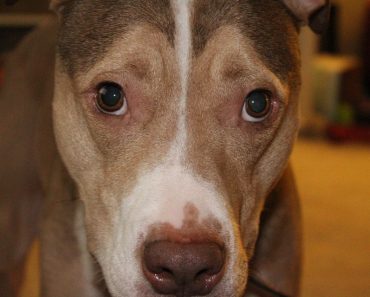
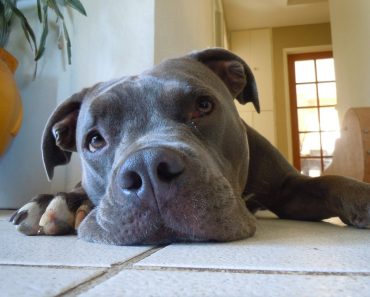
One breed in particular that has developed a bad reputation is the Staffordshire Bull Terrier. At all the local dogs homes inside almost every kennel is a dog of this breed or a Staffordshire Bull Terrier cross, with the amount of Rottweilers not far behind.
Voluntary group and registered charity, Animal Lifeline, based in Stoke-on-Trent, Staffordshire has saved over 10,000 dogs since it was founded over thirty years ago. The group never puts a dog down and always has at least 100 dogs in its kennels waiting to be re-homed.
Nick Fletcher from the centre explains why he thinks so many of these breeds get brought in: “We get all types of dogs in though there is a higher proportion of Staffies than there used to be. This is because the Staffy has become a fashion accessory for many young people, mainly young men. They then find that either the dog isn’t as fierce as they thought, and want to get rid of it, or their circumstances change, particularly if they have a partner. Young couples often have a dog until they have a baby, then they want to dump the dog. Also, many couples split up after a while and return to parents or go into rented accommodation, where they cannot keep a dog.”
It seems that like with a lot of things in today’s world looks are more important than the dog’s behaviour.
Nick added: “People often select a dog because of its looks, so smaller prettier dogs are always the first to be homed. Lovely dogs with nice temperaments are often ignored and remain in kennels for months just because they are plain in appearance.”
It can be easily seen why these people think they look tough with one of these dogs when they are basically being used as a weapon. Some dogs go on to be re-homed and make loving family pets but others will never find a home ever again because of their vicious mentality from their upbringing.
Despite their bad reputation, created through the media, Staffordshire Bull Terriers are in fact known as a trustworthy animal and sometimes referred to as the ‘Nanny Dog’ for their great affection towards children. Owners of so called ‘status dogs’ believe the facts and figures used in today’s news stories about dog attacks are unfair as the majority of attacks by smaller breeds go unreported.
Daniel Berrisford, from Stoke-on-Trent, has owned two Staffordshire Bull Terriers and agrees that the negative press towards the breed is unfair.
“I think the Staffordshire Bull Terrier is the same as any other dog; it all depends on how you bring them up as to how they turn out. If you bring a Staffy up to fight then they have the mentality to fight, however if you bring a Staffy up as a loving house dog that is what they will become. Both of the Staffies that I have had would not hurt anyone and I believe it is because they were brought up like that. I think that if you bring them up in the right way you will not find a more loyal and loving dog.
“Some owners only have a Staffy or other strong dogs because they want to bring it up to fight and attack but I think that you could find any breed that has attacked somebody, so for a Staffy to have a particularly bad reputation is ridiculous.
“Little dogs often come up to larger dogs and go to attack them, even if they are on a lead but because the bigger dog retaliates and can do more damage they get the blame. Smaller dogs should be kept on a lead just the same because they can cause just as much trouble.”
The truth is that no dog should be branded a vicious breed when the victims of most attacks do not recognise the exact breed so stick to what they know, and certain dogs get the blame, the reason why there are no real statistics for dog attacks in this country.
It is also difficult to distinguish what actually is an ‘attack’. A recent incident in my area occurred in which the police were involved as a dog had knocked somebody over and ripped a coat. A total accident in which the dog was playing, but accused of a vicious attack just for being a big animal.
The truth is that however much the media tries to scare people about our favourite furry friends, the increase in ‘attacks’ has not risen that much and that dog attacks and collisions involving children have actually declined by approximately 18% over the last 10 years.
With a UK dog population of around eight million, it is an issue that cannot be ignored. Measures need to be brought in to deal with the irresponsible owners who are giving all dogs a bad name, and to protect the public from them so that we can feel safe around the nation’s most popular pet again.
K9 Magazine editor Ryan O’Meara outlines his thesis for our misunderstanding of canine behaviour, body language and intentions as a primary motivating factor in our failure to spot the warning signs of dog aggression.
Understanding Canine Aggression
In this report, you will learn about:
Understanding errors of interpretation
Understanding motives for aggressive behaviour
Understanding how to minimise risk
Summary:
Misinterpretation of canine signals, body language and emotions due to anthropomorphic tendencies.
Why do humans feel the need to attribute human qualities to animals in order to better understand or accept them?
What emotions do dogs have? What we happen to presume about what dogs think is, by definition, open to interpretation and in reality unless dogs learn to talk we shall never actually know what dogs think, although we can, will and should speculate. Dogs dream, we therefore conclude they have ‘imagination’ what they dream about, we do not know. As much as we may not like to admit it, we understand dogs a lot less than we realise.
Can dogs have a social conscience? If not they can’t possibly understand or display emotions such as guilt, shame, jealousy etc – all of which are traits often attributed to dogs in an increasingly anthropomorphic society which is conditioned to believe everything from gloved Disney mice to the socially conscious tales of Lassie. It’s little wonder we grew up with such a distorted view of animal emotions, motives and drives.
It is my finding, having studied many dogs of different breeds in different environments that, whilst dogs are exceptionally responsive to our own emotions and body language, their own emotional spectrum is significantly different. This can be best addressed by asking the simple question; Does my dog really love me?
Does My Dog Love Me?
Considering how complex it is for us to understand such a powerful and misunderstood concept in humans, who have the power of speech and the written word to explain themselves, it is surprising how many of us assume that our dogs love us, love being with us and show loyalty to us for reasons equitable to those of a fellow human.
The most probable answer is dogs do not ‘love us’ in the sense that we love them. They are hard-wired to appease us, to fit in with us and to display behaviours which suit us and our needs – it is the fact that we love them for this which often mistranslates as them performing these behaviours because they love us back.
It is my view that canine emotions are expressed in basic forms. They may display many variations of these basic emotions. A dog can be fearful – and this can often be misinterpreted as guilt or shame. A dog may be fearful of losing rank, status or a tried and tested route to food – and this can often me misinterpreted as jealousy or envy of other dogs or people – it is still a demonstration of a variant of basic fear behaviour.
It is us who attribute our social values and emotional structure to dogs in order to try and make them easier to understand. It is the dog’s unique ability to allow us to believe this that has to be part responsible for their successful relationship with man. The dog will be, whatever we want him to be. This is an error in translation.
After all, if we were truly looking for a companion animal whose emotions were closely linked to our own, surely we would have domesticated the apes and we would now be talking about man’s best friend as a small, domesticated monkey. After all they have many of the same skills that dogs have, they are superior in intelligence, dexterity and trainability.
Could it be that the reason dogs have slotted their paws so firmly under the table of man is because we can attribute any emotion they display as we please? If we say it, we can believe it to be true – with a dog – but with an ape, perhaps it is the fact that they ARE so much like us that it is harder for us to enjoy such a mutually fulfilling relationship with them?
The dog, for want of a better description, will be anything we want him to be. They will play the role of court jester or funeral mourner, if they think it’s what we want. Perhaps it is this for reason alone that they have become the most successful socially domesticated animals on the planet. It is also possibly the reason why the more we think we know about them, the more we are kidding ourselves.
The dog is, in my opinion, a still largely misunderstood animal. We control their environment, their diet, their stimulation, their entire lives – it’s little wonder they feel compelled to ‘love’ us.
The perception problem: Dogs see our world from a different perspective. We can look at the same object or experience the same situations but our and their perception of both can be entirely different. There are various reasons for this. To understand what it is to see the world through the eyes of a dog we need to first accept the physical differences.
They spend their lives between putting their nose to the ground and their eyes gazing upwards. For a dog, life is not conducted at eye level (like us) it is a story happening underfoot and events happen from way on high above. This very fact alone gives us a sense of different the world appears to a dog.
We fail to acknowledge such a fundamental difference in perspective at our own peril. Understanding and accepting this literal matter of fact helps us to try and see things from the dog’s perspective. In the world of the dog, people are most often regarded as friends or are observed as neutral, non threatening animals. However, not all dogs share this view of all people and it is an extremely serious error for any person to assume it.
Motives for aggression in dogs can vary and are dependent on a number of key factors.
Genetics / breeding
Social development in key life-stages
Environmental factors
Behavioural conditioning / reinforcement
Perspective problems / misjudging situations
Misdirection of drives
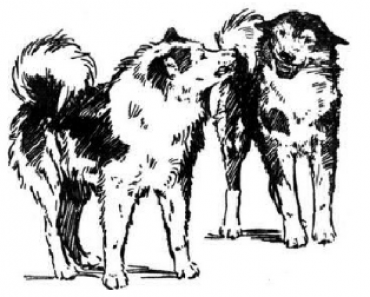
A dog’s genetic make-up and breeding is a factor too often overlooked in instances where the less ‘extreme’ purpose bred dogs are concerned. A relative novice is inclined toward understanding that a Siberian Husky will not make an ideal pet for an owner who leads a largely urban lifestyle with little or no opportunity to provide regular opportunities for mental and physical stimulation.
However where the edges begin to blur are with breeds (or cross breeds where breeding is unknown) which can often present an image which entices novice owners toward them without properly understanding the very specific lifestyle requirements the dog is likely to demand.
It is the case in my experience that there are many dogs produced by people who do not have sufficient skills, experience or desire to fully comprehend the importance of identifying the suitability of the people they are supplying dogs to. Similarly, many dogs are bred with little or no attention paid to the quality of temperament within their breeding stock. Hence there is a perpetual problem – in select numbers – where unsuitable breeders supply unsuitable dogs to unsuitable new owners. Addressing this issue within the structure of existing UK legislation is not possible.
Coming back to the central theme of under-prepared dog owners, failure to place significant emphasis or attention on the key life-stage development of dogs is a monumental failing.
A Dog’s Key Life-Stage Phases:
Aged between 6 and 16 weeks (extremely important)
Aged between 16 weeks and 6 months (important)
Aged between 6 months and 14 months (VITAL!)
The average day of the average dog is spent waiting for stimulation or events which can break up the monotony of the dog’s normal routine. In some dogs, attempts to stimulate themselves or indeed relieve boredom can manifest in displays of destruction or even aggression. An owner’s failure to properly recognise the signs of problem behaviour, especially displays of aggression – even as a puppy – can encourage the dog to condition itself to responding to certain environmental events with aggression. Small, relatively unimportant events can spark an extreme response in a dog where inappropriate behaviour is left unchecked.
Aggressive behaviours can be the result of misdirected drives.
Example Scenario:
A young dog – for the purpose of this example we shall say a West Highland Terrier – develops a habit of getting excited at 4.00pm each week day when the school children walk by on their way home.
His initial response is curiosity as a result of what he sees an exciting visual stimulus in his otherwise relatively stimulation-free day. On some occasions the children notice the attention the dog is giving them and they tease him. His response is to bark and jump up at the front door.
Over time this conditioned behaviour worsens. Each day he starts to bark, jump and claw at the door as soon as he sees any children in school uniform walking past. His owner’s response to this behaviour is to shout at him as and when he starts barking and jumping up at the door. His owner doesn’t re-direct the behaviour or address it in any other way other than to occasionally shout. Eventually the inevitable happens and the dog manages to escape through the front door when a visitor is leaving the house. He runs out in to the street and bites the first school child he reaches. His owner insists he has never done anything like this before (failing to recognise he had never had the chance before).
This scenario above is a simple example of how behaviour left unchecked can result in an actual attack. The dog has displayed a clear misdirection of an intense prey drive which was initially piqued as a result of an unstimulated lifestyle and escalated as a result of both the uncontrollable element of the children who teased him but exacerbated by his owner’s shouting in response to his barking, which the dog reads as either a reward for his behaviour or sees it as his owner ‘joining in’ with his behaviour.
The problem is confounded as the dog’s owner has failed to grasp the dog’s perspective of what is happening at 4.00pm each day – whilst his owner sees the behaviour as the dog just letting off some steam for 5 minutes per day, the dog’s perspective of the situation is far more serious – he is seeing the school children is prey items which should be pursued vigorously. The dog’s owner has not recognised the ‘value’ placed on the school children by the dog.
The example scenario shows a failure to provide the dog with sufficient daily stimulation, a fundamental misinterpretation of the dog’s emotions (believing him to be ‘letting off steam’), a perspective problem (not recognising how the dog is viewing the school children) and a failure to re-direct a very prominent prey drive behaviour, resulting in a completely avoidable dog attack.
Aggressive behaviour should always, without any exception, be referred to professionals starting with an assessment by a veterinarian to check that there is no medical issue causing the dog’s behaviour.
The key to educating the public about aggressive behaviours in dogs is to impress on dog owners the need for the following:
Initially be aware of how to identify a responsible, high quality dog breeder or rescue shelter
Learn to understand canine emotions and body language. Avoid anthropomorphic errors.
Be aware of the importance of critical key-life stages in the dog’s development
Understand and implement bite inhibition techniques early and maintain them
Provide sufficient stimulation and recognise the role environmental conditioning plays
Understand canine drives and redirect undesirable behaviour as soon as it manifests
In simple terms:
Learn to understand the dog, don’t assume. Provide exercise and stimulation appropriate to the breed and the dog’s individual personality. Learn to recognise misdirected drive. In even simpler terms: dog bites and dog aggression are not breed specific, they are dog (and owner) specific. Dogs are the product of their genetics, upbringing and environment. Irresponsible supply of dogs is a major contributory factor as is the continuing failure to properly understand how dogs think, why they behave as they do and, more crucially, a failure to spot early warning signs of aggression or, more unforgivably, a failure to take appropriate action as and when a dog does show signs of aggression. Risk assessment is often poor in cases of serious dog attacks on children. Owners often misplace trust in their pets when they have no good reason to, particularly if a dog has never been exposed to certain scenarios in the past (e.g. young children visiting the home of a dog who is not used to them).
Dog bites and dog attacks can be largely avoided. Breed bans have been a monumental failure to address the problem of serious and fatal attacks and serve as an ongoing reminder that it’s not just dog owners who misunderstand the primary causes of dog bites, legislators are as guilty of this and that, quite frankly, is unacceptable. If we really want to understand and reduce dog bites, we have to do more to better understand our dogs, properly train them and put ourselves in a position to understand and mitigate risk factors.
© Ryan O’Meara. All rights reserved.
You may re-distribute this white paper
provided all credits and attributions are maintained.