Author: Jasmine Kleine

  • Fasting For Dogs

    Q) I have read about the trend for some dog owners to impose a fast on their dogs. Is this healthy and does have any advantages?

    How Fasting Can Clean Your Dog’s System From Years Of Poor Diet

    If you’re one of the millions of dog owners who occasionally allow your pet to indulge in the delightful scraps from your own less than perfect diet such cheap hamburgers, hot dogs, cold cuts, semi moist sugar-preserved dog foods – or any foods containing nitrates, nitrites, aldehydes, and other assorted harmful additives – the particular pancreatic enzymes that are needed to digest the proteins in your dog’s system become depleted quite rapidly. So could your porky pet benefit from a short fast?

    Meats that have been thoroughly cooked rarely contain enough live enzymes to be of any value to the dog’s digestive system.

    Without enough pancreatic enzymes to digest the protein, the food begins to putrefy and can lead to pancreatitis and toxemia. We can give more food but it is not being utilized. If the body can’t use the nutrients, this is tantamount to not having them.

    The body begins to feed upon itself in order to sustain life, and the animal loses weight and muscle tone in spite of the quantity of food provided. In the case of malignant tumors, the body feeds the tumor while starving itself, so the tumor grows to robust proportions while the body shrivels like a dehydrated prune.

    If you suspect ill health in your pet, don’t stuff him with food, hoping that he will regain strength.

    You will actually be further depleting his impaired vitality. Withholding food for a day or so will cause a revitalization of the body, because the body will have a chance to fight the impairment without the continuing added burden of processing food. This applies whether the food is wholesome or second-rate, but even more strongly when it is of poor quality.

    Then the digestive organs are not working in the processing of food, they have an opportunity to apply themselves to the digestion of debris in the body.

    Fasting is nature’s most perfect medicine, since the body works to rid itself of the debris, or harmful toxic matter, first, thereby effecting a most marvelous housecleaning of cells.

    Cells drowning in toxic waste have no room to absorb nutrients. They must first rid themselves of this obstructing waste.

    The process by which the body feeds upon and digests the debris is called autolysis. Some types of tumors or cysts can enjoy resorption into the body through this gradual, natural purification process.

    If you have an older dog, the chances are that through years of dietary indiscretions, his enzymes have become somewhat depleted. Whatever sturdy stock remains can be reinforced by adding pancreatic enzymes to the diet.

    This will serve to bolster the forces of protein, fat, and carbohydrate digestion, and you will be augmenting the metabolization of your animal’s food. Pancreatic enzymes can help turn the tide of sluggish digestion, enabling the digestive process to perform with much increased efficiency.

    This will provide a most harmonious relationship within the digestive tract. The surplus enzymes can now effect a cleansing process by breaking up the toxic debris stored throughout the body.

  • How To Teach Your Dog To Walk To Heel

    Once you have reached the level in training your dog where he is not fooled by distractions or temptation, you are then ready to proceed to the next level of training – how to heel correctly.

    If your dog cannot walk comfortably at your side, there is no way you’re going to teach him anything about being obedient. He must learn to heel properly and focus his full attention to you.

    You will be using a six-foot leather training leash for this phase. During this stage of training, you will teach your dog to walk beside you like a gentleman. He will learn to automatically sit at your side when you stop.

    No Punishment Needed

    The right attitude cannot be achieved if your dog is mistreated or abused. To restrain or choke the dog on a short, tight leash, to hit him in the chest, or to smack his face with the end of the leash while trying to teach him to heel will result, among other things, in a completely negative attitude in the animal.

    Starting Position

    To begin, you will notice that your leash has a loop in one end. Place your right thumb through that loop. With your left hand, grab the leash at the middle section and place it in your right hand. Notice that the dog is on your left side, but that the leash is held in your right hand. This will seem a little awkward at first, but your left hand will be doing other things.

    Do not form the habit of trying to restrain your dog at your side by holding him up close with the left hand on that leash. Remember, you want to train your dog, not restrain him. Forget about everything that you were told or read about restraining a dog tugging at your side in the hope that he will get the idea that this is where you want him to walk. That idea will never occur to him.

    There is an important characteristic of an untrained dog on a leash that will become obvious to you during this stage of training. This dog wants to feel a tight leash! If there’s a slack in the leash, he has no way of calculating its exact length. On a tight leash, he can lunge and pull and go through all kinds of twists and turns, because he has the security of feeling where the other end of the leash is. Therefore, it is very important that you don’t give in to your dog’s wishes by walking him on a tight leash.

    As you begin, position your dog at your left side while keeping the leash short. Leave a belly of reserved slack, with your right hand, look at your dog, say his name, then command “Heel”!

    Begin walking, starting with your left foot. Walk briskly in a straight line, with confidence in your movement. Your dog will lose confidence in you if you wander aimlessly.

    Remembering his experience on the long-line, your dog may walk alongside you fairly comfortably, but the odds are that since there are now only five to six feet connecting the two of you, he will react in one of the two following ways:

    1. He will either rush forward past you in an attempt to keep a tight strain on that leash, or
    2. He will hold back and be hesitant to walk with you at all. After all, this six-foot training leash is new to him.

    If your dog is one that takes off like a marathon runner in a race, either surging ahead or out to the side in an attempt to keep the leash tight, simply open your right hand, release the slack you’ve been holding in reserve, and immediately do a right-about turn and walk in the opposite direction. When your dog is back in the proper heeling position, give him praise and a pat on the head with your free left hand. If you have a small dog, bend over to his level and give him his pat while continuing to walk.

    Each time he surges ahead, release the slack as you do and definite right-about turn. Without slowing your pace, pick up some reserve slack and place it once again in your right hand in preparation for his next heedless charge. Your left hand is free to reach down and give him a pat on a head when, and only when, he is in the proper heeling position. That is, at your left side with his head and neck area about even with your left leg. Each time you place the reserve slack in your right hand, be sure to leave a belly of slack in the leash between you and your dog.

    An Alternative Method For The Introvert

    If your dog has an introvert personality, one that is reluctant to walk with you, you will need a slightly different method. The introvert dog just doesn’t quite understand what’s going on with this new piece of equipment and he’s as reluctant to get involved as a person being taught how to play a new instrument. This type of dog needs a little encouragement and a show of enthusiasm on your part, and don’t let anyone tell you any differently.

    Use your free left hand to pat your leg as you give your dog a little talk of encouragement. Use short, forward snaps on the leash to help inspire your dog to walk with you. Watch closely as he begins to discard his reluctance, praise him enthusiastically and warmly. This shows him three things. First, that you are pleased. Second, that everything is alright. And third, that he has made the right decision.

    Dog Training: Correct Heel Methods (3)

    There are two extremes of personalities in dogs – the introvert and the extrovert. However, there are many degrees in between those two extremes as there are dogs in this planet.

    Regardless of where your dog’s personality lies on that scale, once you have given the command to heel you must start walking and continue walking. Encourage your dog to accompany you if necessary. Correct his heedless rush with absolute right-about turns if necessary. But, you should never, ever give in if your dog decides to not follow your command and just “sit this one out”.

    Dogs learn by associating their actions with a pleasing or displeasing result. Therefore, the dog who tries to take advantage of the new shortened leash by surging and keeping a strain on it comes to a sudden discovery that you still have the situation very much under control. As soon as he can cause the leash to tighten, he will take his eyes off you, only to feel the sudden jolt of your right-about turn.

    By using the reserve slack in your hand properly, your dog will realize that the leash is no different than the long line, except that he must pay even closer attention since the six-foot leash gives him less time to react than the fifteen-foot long-line. He’ll realize how much more pleasing it is to walk at your side so that he can see which way and when you’re going to change direction. Your left hand giving him a pat on the head when he’s in the correct heel position is also more pleasing than the sudden jolt that he gets when not in the proper position.

    On the other hand, your introvert dog, one that stands as if he had feet glued to the cement, suddenly feels the slightly displeasing effect of the short, sharp jerks of the leash. Hearing your enthusiastic tone of voice and seeing your left hand pat your leg invitingly will do wonders to make your pet choose the more promising alternative. The moment he does, he will discover the warm, affectionate praise and pat on the head to be far more enjoyable than the series of sharp jolts he experienced as a result of his initial reluctance to walk with you.

    You may have to spend each of your fifteen-minute training sessions for the next four days in this simple leash introduction so the introvert-type will walk without any reluctance or fear and to stop the extrovert’s heedless rushes by your unannounced change of direction.

    Don’t Be Afraid To Use Too Much Pull

    Let me describe a scene of what an extrovert dog may do when prompted with a distraction. Picture a dog tied to a tree on a twenty-five foot rope lying in loose coils on the ground. He is sleeping comfortably under the tree when a cat walks by past the dog at a distance of about twenty-seven feet.

    The dog wakes up, spots the cat and rushes recklessly to pounce on the poor cat. The dog will be stopped two foot short and very abruptly too. After regaining his composure, he will still strain and tug to try and get the cat. But, unless he’s a total fool, he will not make that reckless rush a second time – not while still tied to a tree. But does he blame the tree? Of course not.

    You are not as firm as a tree, so don’t be worried about hurting your pet. Your objective should be clear. Your dog should walk at your left side, neither lagging behind nor surging ahead.

    Always remember that the leash should be slack. Eventually, you’ll be heeling your dog without the leash and you will realize the importance of that slack. If your dog is used to feeling a tight leash restraining him in the heeling position, he’ll be long gone when you walk him without the leash later on.

    Dog Training: Correct Heel Methods (4)

    When it comes to obedience training, there should be no “half-way action” accepted. In other words, it’s all or nothing from your dog. And a crooked sit must be considered as something less than your dog giving his full potential.

    Not only does it look shabby, but it also prevents the dog from accomplishing his full measure of discipline and character. You can prevent your dog from developing the bad habit of crooked sits simply by using your free left hand while heeling.

    As you prepare to stop during a walk, make sure that your left hand is in a position to place on the dog’s rear in such a way as to prevent him from moving around in front of you after you have come to a complete stop. If your dog succeeds in sitting in a crooked way, hold back the praise until you have straightened his sit. As your left hand drops to his rear, keep your left thumb pointing toward your left leg. This will ensure that you do not accidentally place your dog in a crooked sit.

    You do not have to push down heavily on your dog’s rear. You need to simply press lightly to help guide him into the proper sit position. It is more the right hand pulling the leash upward than the amount of pressure on the dog’s rear that will place him easily and quickly in the proper sitting position. Putting heavy pressure on your dog’s rear may stimulate him to resist, which is an unwanted action.

    In these learning steps, the less resistance you have, the better off it will be, both for you and your dog. Also keep in mind the importance of a positive attitude.

    Recap Of The First 10 Days Of Correct Heel Training

    Your first ten days of obedience training should consist of proper leash introduction, getting your dog to walk confidently and happy. This is achieved without lagging or straining as he walks at your left side in the response to the command “Heel”. The first ten days of obedience training also consists of the introduction of the command “Sit” in which you place the dog in the sitting position each time you stop.

    Once you are confident about placing your dog in the sitting position, which took one full week, you are now ready to bring your dog to a higher level of discipline, intelligence, and response.

    You must decide to never place your pet in the sitting position again. You have spent one full week showing him exactly what sit means, and it only takes four days for the average house dog to learn the average thing. Now, it’s time to show your dog that he must do it for himself and that you will not be leading him by the hand all of the time.

    Dog Training: Correct Heel Methods (5)

    When you feel that you have sufficient control of your dog while walking, usually within four days of his initial orientation to the leash, you are now ready to go to a higher level of control.

    Give your dog the command to heel and begin walking, remembering to start out on your left foot, in a straight line. Make a few right-about turns as necessary to make sure that you have his full attention. Then, as you prepare to come to a stop, shorten your hold on the leash just a bit. As you stop, not after and not before, pull up the leash with your right hand and press gently on the dog’s rear as you say the command “Sit”!

    As soon as he sits, praise him and give him a pat on the head. Remember, dogs learn by associating their actions with a pleasing or displeasing result.

    Next, give the command “Heel” and begin to walk briskly in a straight line. As you prepare to stop, shorten your hold on the leash. When you stop, pull up on the leash, pressing gently on the rear with your free left hand, at the same time giving the command “Sit”.

    Always follow a correct behavioral response by your dog with praise, even if you caused the behavioral response. Even though you are placing your dog in the sitting position, this should still be followed by warm praise.

    This will be the pattern throughout the course. You will show your dog what he needs to do and follow it with praise. After the learning process has taken place within the mind of the dog, then will you correct for disobedience.

    Your training program at this stage should still be limited to fifteen minutes per day and consist only of the commands “Heel” and “Sit”. Give the command to heel, walk about ten feet, do a right turn, then come to a stop, placing the dog in the sitting position while giving the command to sit. Follow each sit-placing with warm praise.

    Dogs with above average intelligence will absorb what you are trying to convey in less than four days and will begin to sit by themselves before you have a chance to place them. However, you must be firm with your decision that, regardless of how fast your dog appears to be catching on, you will continue to place him in the sitting position each time you stop for a period of one week.

    Dog Training: Correct Heel Methods (6)

    Now it’s time to find out if your dog has truly learned how to heel and execute an automatic sit.

    Give him the command “Heel” and make any necessary corrections for poor heeling or lack of attentiveness to bring him up to the proper mental level of awareness. Come to a stop and command “Sit”. Watch your dog do it all by himself. Get down to his level and praise him enthusiastically.

    For the stubborn or uncooperative dog who would rather be helped for the rest of his life, you’ll be surprised to see that he is going to graduate from being spoon-fed whether he wants to or not.

    How do you do this? When you come to a stop and command “Sit”, silently count to three. If your dog is not seated by the time you get to three, place both hands on the leash, making sure that there’s a little slack in it, and jerk straight up! Your dog will immediately sit if you make the correction strongly enough. Don’t forget the praise when you’re done.

    If he still refuses to sit after the initial correction, consider that correction ineffective. An ineffective correction is inhumane because it means that you will have to keep doing it. This is unfair to your pet and will only create resistance. If you simply tighten the collar around his neck by pulling up slowly on the leash, the only thing you can accomplish is constriction of your dog’s breathing, and you have caused your dog’s training collar to turn into a choking chain.

    This is your fault, not his, and he is going to wonder why you have suddenly decided to choke him. So, in all fairness to your dog, make a humane correction by an emphatic and upward jerk of the leash using both hands. Make the correction properly the first time, and chances are you will not have to make it again. Remember to follow the correction with loving praise the moment your dog has responded correctly.

    The heel and sit combinations should be continued for one week, after which time you will notice that it’s no longer necessary for you to command “Sit” every time you stop. Your dog will realize that this is what is expected when he is out on a walk and you suddenly come to a stop.

    At the end of a week, you can begin dropping the command “Sit” since he will be doing it automatically anyway. Be sure, however, that anytime he fails to sit, make the correction immediately, followed by praise.

    Congratulations!

    Now you have the proper tools to teach your dog to walk beside you and to sit automatically at your side each time you stop. Why is this crucial? In addition to getting your dog’s attention, which is necessary in order to take him to more advanced levels of training, it will make all the difference in the world when you take him for a walk down a busy street or a crowded place.

    Should you stop to talk to someone, your dog is trained to sit at your side patiently, rather than jumping on the person you’re talking to or wrapping the leash around your legs and making a nuisance of himself.
  • Can Dogs Have OCD?

    Obsessive compulsive disorder (OCD) is not just exclusive to humans. Dogs too can suffer with compulsive disorders. With some dogs, meals aren’t the only source of oral intake they have. Wool and other fibers, non-digestible plant material, rubber, plastic, wood, and even their own hair are just some of the things a dog may choose to ingest. Called pica – the drive to consume material that is not generally considered food – is what animal behaviourists call a compulsive disorder.

    Compulsive Disorders in Dogs

    In a human, a compulsive disorder may be repetitive, such as frequent hand washing or pulling one’s hair out. In dogs, these disorders can include excessive licking and spinning in circles. Compulsive disorders are competitive, nonfunctional, nonbeneficial behaviors. Although the exact cause of compulsive disorders is unknown, animal behaviourists feel that they are often caused by stress brought on by environmental conflicts such as competition with other pets, changes in the home, constant punishment, or confinement to small areas such as cages or crates.

    Lack of socialisation or too much attention may bring about a compulsive behaviour as well. A nutritional imbalance can also lead to pica. A dog with a compulsive disorder loses control over his ability to initiate and stop these negative, repetitive actions. Often the compulsive behaviours are oral in nature, causing the dog to eat things he shouldn’t.

    Controlling Your Dog’s Compulsive Disorder

    1. The first step in treating a compulsive disorder is to identify the cause and eliminate it. For example, if your dog is crated for a large portion of the day, allow him outside the confined space to help get him on the road to recovery.

    2. Don’t reinforce the behaviour by paying attention to him while he is engaged in it. Providing good quality time on a set schedule is preferable and more effective than petting, stroking, or verbally consoling your dog in the midst of repetitive activity.

    3. Do not reinforce the behaviour by punishing your dog for the compulsive behaviour or for other inappropriate activities. It may make the problem worse.

    4. Spray household objects your dog likes to chew with cayenne pepper, essential oils in citrus, cinnamon, or eucalyptus scents, spray deodorant, or perfume that is not your own.

    5. Spray favourite chewables with a pet repellent to deter your dog from sticking non-food objects in his mouth.

    6. Keep dangerous objects such as yarn or string out of your dog’s reach to prevent him from chewing and swallowing them.

    7. If your dog is chewing his hair, he may have an allergy. Discuss the problem with your veterinarian before embarking on a behaviour modification program.

    8. As a last resort to solve a compulsive eating disorder, discuss drug therapy with your veterinarian. Drugs that increase serotonin levels, like Prozac and some antidepressants, are used for treating compulsive disorders, including compulsive eating.

  • Normal Temperature For Dogs

    Normal Temperature For Dogs

    As responsible dog owners, understanding the normal temperature for dogs is as vital as being able to detect if your dog is showing any other signs of illness or injury. Vets and indeed doctors.

    Normal Temperature For A Dog – A Guide For All Dog Owners

    Let’s get straight to it shall we, the normal resting temperature for a dog is between 101 and 103 degrees Fahrenheit. If your dog is showing the tell tale signs of high temperature / fever – which would include symptoms such as:

    – Panting
    – Heavy breathing
    – Lethargy
    – Exterior heat

    then you must enable the dog to be seen, quickly, by a vet.

    Like humans, any abnormalities when measuring the normal temperature of a dog is one of the first indicators of their current state of health. A rise in the dog’s normal temperature can be an indicator, an early warning sign that something is not right and a failure to address the initial signs of a high temperature can have serious consequences, including shock and damage to internal organs.

    To determine the dog’s temperature a vet will usually use a high quality thermometer via a rectal insertion. Some dogs do not enjoy this and will squirm so help your vet out by holding the dog steady and reassuring them.

    In the initial stages of a high temperature, such as exposure to heat, you can try to cool your dog down by using a damp towel and providing them easy access to cold water. Dehydration is extremely serious and in some cases fatal so treat any signs of high temperature rapidly and engage your vet at the earliest possible opportunity.

    You need to know and remember the normal temperature for a dog in an effort to be able to distinguish for yourself (by using a thermometer) if urgent veterinary intervention is required. It could save your dog’s life.

    – How To Take Your Dog’s Temperature
    – How To Read A Dog’s Pulse
    – How To Collect Stool Samples

    As your dog’s constant companion, you are probably very attuned to fluctuations in his behavior. If you observe that your dog seems more sluggish or less comfortable than normal, take a careful look at him. Does your dog have a runny nose? A cough? Is his appetite normal? Does he have diarrhea? Is he drooling excessively? Is he whining? These are all examples of warning signs that may accompany an illness and you may have to do some minor investigating. Here are some tips:

    How To Take A Dog’s Temperature

    If your dog seems sluggish, has a hot, dry nose, dull eyes, and/or feels warm, he may have a fever. The only reliable way to take your dog’s temperature is with a rectal thermometer. Shake down the thermometer and grease it well with petroleum jelly.

    Not many dogs will stand still while you insert a thermometer into their rectum, so it is best to get someone to help you. If no help is available, make your dog lie down on his side and hold him as best you can, all the while talking to him soothingly. Lift his tail and gently push the thermometer in with a twisting motion. Insert the thermometer from one to three inches, depending on the size of your dog. Hold the thermometer in place for at least two minutes.

    Remove it, wipe it clean, and determine the temperature by the height of the silver column of mercury on the thermometer scale. A temperature of 100.5 degrees to 102 degrees is normal. A temperature above 103 degrees or below 100.0 is cause for concern, and merits a call to your veterinarian. Do not let go of the dog or of the thermometer. You do not want to risk having the thermometer break in the dog’s rectum. If the thermometer does break off, do not attempt to find and extract the broken end. Give the dog one to two teaspoonfuls of mineral oil and call your veterinarian.

    How To Take A Dog’s Pulse

    The most reliable way of taking your dog’s pulse is to locate the femoral artery. Your dog can either be standing or can be lying on his back for this. Put your fingers inside your dog’s groin, where the leg joins the trunk. Feel around until you detect a pulse. Another method is to press against the rib cage over the heart while your dog is standing. You should be able to detect a pulse just below the elbow joint.

    Count how many beats there are in a fifteen-second period, and then multiply that number by four. The normal range is wide – anywhere from 70 to 130 beats per minute. Smaller breeds
    and puppies usually tend toward faster pulse rates, while larger breeds and healthy dogs who get plenty of exercise often have a slower pulse.

    Collecting Urine Samples From Dogs

    For male dogs, use a wide-mouthed jar. When your male dog lifts his leg to urinate during a walk, reach down gently and collect about a quarter cup of urine. For a female dog, place a flat pan under her when she squats to urinate.

    Collecting Stool Samples From Dogs

    Stool samples are used to determine the presence of intestinal parasites. A sample is often requested as part of your dog’s routine examination. Try to collect as fresh a sample as possible and place it in a plastic bag. If you are taking it from outside, avoid soil; organisms on the ground could make their way into your dog’s fecal material, resulting in an inaccurate reading.

  • I Want To Adopt A Dog

    There are many dogs out there that are, for several reasons, left without a home and end up being displaced at a shelter. If you are thinking about helping these homeless dogs but aren’t sure what to do, the best way to improve the lives of shelter dogs is to adopt one.

    I Want To Adopt A Dog

    Giving these dogs a good home is the most important thing that you can do. But if adopting a dog is just not an option right now, there are other things that you can do to better the lives of shelter dogs. Below are several suggestions to keep in mind.

    1. Visit your local shelter and spend some time with the dogs. Donating some of your time to simply hang out and play with these canine residents can make a huge difference to their lives. Most of the time, shelter staff are very busy with their work and they do not have the extra time to interact with the dogs. Shelter employees can always use the help of others to come and play and socialize with their residence. They are more than happy to show you around and figure out what you can do to help out.

    As a volunteer, you can take the dogs for a walk around the block, give them a little pampering by brushing their coats, or just be there and hang out with them. Shelter dogs get very little attention, and a short visit with them does a lot to improve their well-being.

    2. You may volunteer to take these dogs to an obedience class that will better their chances for an adoption.

    3. Take one day of the week to help wash and groom the dogs and then bring them to adoption fairs.

    4. Sponsor a fund raising party and donate the cash to your local rescue organisation. You may also ask for donations of items that you can bring to the shelter. These include blankets, food and treats, collars, leashes, toys, kennels, etc.

    5. You may also volunteer to be a foster parent and keep the rescued dog at your house until he or she finds a permanent home.

    6. Inform people about dog adoption and being a shelter volunteer by placing an ad in your local paper or putting up signs on bulletin boards and at dog parks.

    7. And last but not the least, keep in mind that the best way to prevent shelter overcrowding is to spay or neuter your pets and to spread the word about the benefits of getting these house pets fixed.

    Find out more about dog adoption.

  • How To Lower Your Vet Bill

    How To Lower Your Vet Bill

    12 Easy Ways To Lower Your Vet Bill

    Veterinary charges are one of the biggest expenses that dog owners have to deal with.  The problem with vet bills is that you can’t budget for them in the way you can for food or other more fixed outgoings. A large vet bill can come straight out of the blue and hit a dog owner for six (or six thousand depending on the problem).

    But there are ways that every dog owner can reduce their veterinary expenses, from simple practices that you can do at home to smart money-saving exercises that could be worth thousands of pounds. Holly Kernot explores the best ways to reduce that vet bill.

    There are a variety of basic health checks and routines you can adopt in order to ensure your dog stays in optimum health.

    Basic Health Checks.

    Performing a regular health check on your dog will enable you to keep on top of any new or recurring health issues. Potentially serious and costly health problems can be nipped in the bud before they escalate into something altogether more sinister, which ensures that your dog will be getting a good level of health care and also, enables you to avoid costly vet bills.

    Become familiar with your dog.

    Become familiar with your dogs, and regularly check their body for any lumps which may have formed. When at the vets, as them to help you identify the signs of a dangerous lump, and what does not constitute as anything to worry about.

    Grooming.

    A healthy dog has a shiny coat, and you can help maintain this by partaking in a regular grooming exercise. Regular grooming gives you the opportunity to familiarise yourself with your dog and to carry out these checks.

    Regular grooming not only removes unwanted hair and reduces the chances of the coat becoming matted, but can also indicate to you the telltale signs of skin conditions such as dermatitis, which can be costly to treat.

    Dermatitis is often indicated if your dog is scratching himself a lot and can be as a result of wearing clothes (it may sound strange, but according to vet experts it is a rising problem), or if sores or rough areas appear on the skin. If this is the case, a vet should be consulted immediately.

    Bathing your dog on a regular basis can ensure your dog’s coat stays healthy, using specialist dog shampoo to remove unwanted dirt and grime. Trim those nails.

    Dogs nails do need trimming, and vets and grooming parlours do offer this service, but to save money, many owners buy clippers and do it themselves. However, if you exercise your dog regularly, on the pavement, this will keep the nails short anyway.

    Dental Care.

    As your dog is a carnivore, it is vital his teeth are kept in top condition.

    Keep a close eye on your dog’s mouth and conduct basic health checks to ensure there is nothing wrong. For example, smelly breath, red gums which are swollen and teeth that are loose could all be potential indicators of gum disease. Changes in physical behaviour such as a loss of appetite or unusual chewing habits are all causes for concern. [According to Theresa James, of Dog Supplies Advisor.com.]

    Vets do conduct teeth cleaning within the surgery, but to complement this treatment and to maintain optimum oral health, you could invest in a specialised tooth cleaning kit for dogs, consisting of a toothbrush and toothpaste [poultry flavour available!]

    Ear Checks.

    A dog with healthy ears can be identified as having odour free ears free from dirt and grime. If your dog is shaking his head or partaking in a lot of ear scratching, it could indicate there is an infection of some kind, such as haematoma of the ear flap, which is a build up of blood in the ear area, caused often by infection or mites.

    Scratching of the ears can also indicate mites, which should be treated by a vet.

    Eye Checks.

    It is important to look out for changes in your dog’s eyes. A clouded eye lens could indicate the presence of a cataract, while an inflamed membrane covering the lining of the eyelid [and the eye’s white area] could signify conjunctivitis.

    Exercise.

    A good exercise regime is an excellent way to avoid obesity and mobility problems, which can both lead to serious and costly ailments. Ensure that the exercise regime that you provide for your dog is suitable to his situation. Over-exercising a young puppy can lead to joint and ligament issues, which can last a lifetime. Be especially aware when exercising puppies, as they will always be willing to go an extra mile despite what their bodies are telling them.

    All dogs need exercise, so why not go to the park for free! Your dog will love socialising with other dogs, going out with their pack [that’s you] and their favourite games, such as fetch.

    The benefits here are two-fold. You both get a good workout and your dog can behave in a natural way, chasing, hunting and ‘killing’ something [the ball in this case]. Providing your dog with toys does not have to be an expensive hobby, according to student dog trainer Alison.

    She says: ‘‘Dogs need playing with but don’t buy expensive toys, an old T. shirt or piece of string can be a good toy.’’

    Having said that, do not over exercise an old dog as this can lead to joint problems which can be expensive to treat, so change your exercise regime so it is delivered in smaller sessions which are manageable for your dog.

    Avoid walking your dog in the height of the day, as the hot tarmac underfoot can be painful on paws!

    Dog Food & Nutrition

    A balanced and nutritionally rich diet can be the difference between good health and poor health. It is the key to your dog enjoying an optimum quality of life. But good food does not necessarily need to be expensive, all natural diets, for example, can be prepared relatively cheaply if you have the time and inclination. Life stage foods are also an excellent way for an owner to deliver the optimum nutrition to their pet.

    According to Alison: ‘‘It’s a false economy to buy cheap food, it’s full of additives which can lead to dogs chewing and digging in the house [which in turn can be expensive if anything needs to be replaced] and can ultimately lead to behaviour problems.

    She goes on to say: ‘‘Don’t be bamboozled by the food that vets sell, they can be keen to recommend food to owners which is only available from them and can be expensive- ask why they recommend it and check other good foods for ingredients.’’

    Don’t overfeed your dog, as this can lead to obesity and further health-related problems.

    Pet Insurance.

    Pet insurance can be a real benefit when it comes to the long-term savings on veterinary bills. It’s worth investigating different providers and levels of cover to find one that gives your dog everything he needs while giving you peace of mind.
     
    Flea and Dog Worm Treatments.

    It’s important to know how to tell if your dog has fleas.

    The RSPCA website asks the following questions to determine if your pets have fleas: ‘‘Is your pet scratching? Can you see tiny brown specs in its fur, are there small brown insects scurrying about, do you have unaccounted for insect bites yourself?’’

    Once you know, it is possible to buy flea and worm treatments online or from other retailers other than the vets, so once you have identified if your dog has fleas, it’s relatively straightforward to get your dog back in tip-top shape.

    First things first, you need to buy a good dog flea treatment. This will treat your dog’s skin and kill the fleas and eggs.

    Next, you need to wash and treat everywhere your dog lies to get rid of the eggs which could be burrowed in between the fibres of your carpets, beds and well, anywhere your dog has walks, slept, jumped or run. If you don’t, the chances or reinfection are high. So it may seem like a daunting task to treat your home from top to bottom, but it is worth it – both for you and your family, aswell as your dog.

  • 9 Ways To Help Older Dogs

    9 Ways To Help Older Dogs

    Your dog may live between ten and fifteen years depending in part on the breed, with an average of twelve years longevity. Ageing is a natural process and results in changes in your dog’s metabolism, hormone balance, and sensory perception.


    A dog is considered to be a senior at the age of seven or eight. Your ageing dog will sleep more and experience degeneration of his body systems and internal organs. Expect him, as he gets older, to have less tolerance of extremes in heat or cold, decreased immunity to disease and infection, and a decline in his metabolism. Older dogs may lose their vision
    and hearing. 

    So as you can clearly see, it takes a lot of attention and care when your family pet reaches his golden years. Below are 9 tips that will help you and your dog adjust to old age: 

    1. Because the older dog is generally less active, he requires fewer calories. If you have children in the house, make certain that they understand that your family dog is elderly and requires more careful and sensitive handling. 

    2. As your dog grows older, have your veterinarian run appropriate tests to detect any illness or degenerative condition early so he can be treated. Pay attention to any changes in your dog’s habits, behaviour, or appearance and report them to your veterinarian. 

    3. Learn the symptoms of some of the more common problems that afflict the older dog, such as diabetes, kidney and thyroid problems, and heart conditions. If you notice any symptoms, contact your veterinarian right away. 

    4. Discuss with your veterinarian feeding your geriatric dog a diet formulated specifically for the needs of older animals. 

    5. As your dog ages, look for signs of dental problems. Clean your dog’s teeth regularly and have your veterinarian professionally clean them when necessary. 

    6. Pets become more creatures of habit as they age. If you are planning any environmental changes, do so gradually and pay special attention to your dog’s needs to minimize any stress he experiences. 

    7. When you groom your geriatric dog, look for lumps and bumps under the skin and report them to your veterinarian. 

    8. Engage your older dog in moderate play to promote muscle tone, increase circulation, and aid digestion. 

    9. Have your dog leashed when he is outside to keep him safe and help him live longer.
    https://dogadvice.co.uk/wp-content/uploads/2011/12/dogwithtongueout.jpg

  • Do Dogs Get Jealous?

    Do Dogs Get Jealous?

    According to some new research by scientists, they do. Dogs do get jealous? Really?

    Personally, I don’t believe they do and I’ll explain more about that in a moment. But first let us look at the new research done in the name of science.

    The experiment consisted of taking pairs of dogs and getting them to present a paw for a reward. On giving this “handshake” the dogs received a piece of food.

    One of the dogs was then asked to shake hands, but received no food. The other dog continued to get the food when it was asked to perform the task.

    The dog without the reward quickly stopped doing the task, and showed signs of annoyance or stress when its partner was rewarded.

    To make sure that the experiment was really showing the interaction between the dogs rather than just the frustration of not being rewarded, a similar experiment was conducted where the dogs performed the task without the partner. Here they continued to present the paw for much longer.

    Dr Frederike Range from the department of neurobiology and cognition research at the University of Vienna, says this shows that it was the presence of the rewarded partner which was the greater influence on their behaviour.

    “The only difference is one gets food and the other doesn’t, they are responding to being unequally rewarded.” she said.

    The researchers say this kind of behaviour, where one animal gets frustrated with what is happening with another, has only been observed in primates before.

    Studies with various types of monkeys and chimpanzees show they react not only to seeing their partners receiving rewards when they are not, but also to the type of reward.

    The dog study also looked at whether the type of reward made a difference. Dogs were given either bread or sausage, but seemed to react equally to either. Dr Range says this may be because they have been trained.

    “It’s through the fact they have to work for the reward, this confers it with a higher value,” she said.

    Source Here

    Let’s take a look at this in smaller chunks.

    The dog without the reward quickly stopped doing the task, and showed signs of annoyance or stress when its partner was rewarded.

    Well of course. Surely we wouldn’t expect anything different here? The dog wants the food and it sees the other dog with the food and it gravitates toward the treat. This is quite logical, nothing ground breaking yet.

    To make sure that the experiment was really showing the interaction between the dogs rather than just the frustration of not being rewarded, a similar experiment was conducted where the dogs performed the task without the partner. Here they continued to present the paw for much longer.

    Yes, again this surely to be expected? Here we have a dog with no distraction, no food or other dog in the equation and it makes logical sense that most dogs will perform differently in a situation where no distraction – of any kind – is present. This, again, does not prove jealousy as we understand it.

    Dr Frederike Range from the department of neurobiology and cognition research at the University of Vienna, says this shows that it was the presence of the rewarded partner which was the greater influence on their behaviour.

    Now we’re veering in to some strange territory. Let us imagine this experiment but with some different parameters.

    We work with just one dog, no other dog in the area.

    The dog gives its paw. Then a person will come in to the room and puts some food on the floor near to where the other dog would have been positioned positioned.

    Would the dog now be less interested in giving paw and more interested in food?

    In my opinion, yes. Most likely.

    Now repeat the same scenario but don’t have anyone put food down.

    It’s my supposition that the dog would hold paw for longer.

    No other dog present, no jealousy – merely distraction causing reaction.

    The dog study also looked at whether the type of reward made a difference. Dogs were given either bread or sausage, but seemed to react equally to either. Dr Range says this may be because they have been trained.

    Dogs like different foods. And scientists didn’t know this?

    Take my own dog Mia. She loathes banana. My other dog, Chloe, on the other hand loves fruit. So if I’m eating a banana Mia will sit for a while, realise what I’ve got and then go and lie down. Chloe will stay sitting next to me, watching until I’ve finished. I’m not a scientist but I do know this – it’s……wait for it………

    ……because Chloe likes banana and Mia doesn’t!

    Given that Mia is by far the greedier of my two dogs it proves that dogs clearly have different tastes the same as we do, this is – I would guess – pretty universal. Maybe your dog loves a type of food that my dogs don’t. Maybe your dogs go mad for aniseed whereas my dogs love cheese. Just a sec, wait. Not a good comparison – aniseed and cheese are pretty much universal ‘must eats’ on the canine menu (if your dog likes neither, please let me know – in the name of science).

    So, if I set out to train Mia with bananas as my choice of reward for her, I’d achieve less impressive results – quite simply because Mia doesn’t like banana. She places a higher value on food that she likes, similarly toys and similarly different ways of being touched – Mia doesn’t like to be stroked on the head, Chloe will take a good head stroking for several hours. So we’ve still not established jealousy in canines with this research based on the report as presented on the BBC site.

    Studies with various types of monkeys and chimpanzees show they react not only to seeing their partners receiving rewards when they are not, but also to the type of reward.

    OK. Well I’m not a scientist but I do know that monkeys and chimps are NOT dogs. They can and indeed probably do have emotions much more closely aligned to the emotion we recognise in ourselves as jealousy, similarly they have different social structures and are NOT dogs. So the relevance of this is no more apt than saying: “Well humans have jealousy, why can’t dogs?”

    Why do I not believe dogs share the emotion we recognise in ourselves as jealousy?

    If we think about what jealousy is, if we are logical about what we know about this emotion it is incredibly complex and based on a whole level of social elements.

    There are humans who feel jealousy based on widely different factors – is that an innate personality trait in them or is it nurtured? – we don’t really know.

    We have humans within the autistic spectrum who simply do not and can not feel jealous and others within that same spectrum who can be wildly jealous. It’s true that even scientists themselves still haven’t universally agreed a definition for what jealously is! That’s how complex this particular emotion is. What does it take to be jealous? It takes two people very, very different reasons to be jealous, even people within the same family who share almost identical genetics. Yet put two people in a room and mimic the ‘paw test’ and we’d never get close to seeing universal results proving jealous responses in people – we’re too different and jealousy is an emotion that does not run through us all in an identical fashion. So why should it in dogs?

    I absolutely do not doubt for a single, solitary second that they display behaviour which is very easy for us to compare with the emotion of jealousy that we recognise in ourselves. It could be displayed in acts of resource guarding, it could be manifested by dogs who are particularly greedy, territorial, pack motivated, rank motivated – but jealousy it is not. It is quite possible that I want to get my bosses’ job and sit in his chair, in his office and take home his salary but I am not motivated even in the slightest by jealousy, I simply want to do better for myself. Dogs the same. So a dog going to another dog getting rewarded is absolutely not proof positive – in my view – that we’ve cracked the canine jealousy code, we haven’t even cracked ours yet – and we can SPEAK!

    Anthropomorphism is rife. Most of the time it’s harmless but sometimes it’s nothing more than us finding another way to say: “I don’t understand my dog but I’ll bracket a particular behaviour by benchmarking it against my own”. This is, plainly, crazy. And it can lead to problems.

    It will be better for dogs and better for us if we make an effort to better understand them. But always, always, always start that voyage of discovery with one overriding caveat: Dogs are no more human than we are Zebra. They are dogs. They ARE unique and we love them for it. They are masters at making us think what they want us to think. Their understanding of human body language is an art we’re not even close to mastering. Take this example:

    Person comes home. Dog has wrecked the post (again). There it is, all laid out scattered over the floor.

    Owner opens the door.

    “Huuuuhhh!!!! What have you done???”

    “Oh, look at him. Look at that face. Look how guilty he looks.”

    (wait for it)

    “He know what he’s done!”

    Sound familiar?

    Of course he doesn’t ‘know what he’s done’ and he absolutely may ‘look guilty’ but that aint guilt he’s showing, that’s him spotting body langauage and going to fear/survival mode. He’s pretty much saying: “If you want me to look guilty, if that’s the pigeonhole you want to put me in right now, so long as it means I don’t come to any harm, I’ll do a better guilty repertoire than Laurence Olivier if it makes you happy babe!”

    And makes us happy it most certainly does. We might feel guilt for chewing through our family’s latest edition of K9 Magazine (subscribe now) but that’s because we have an understanding of how our actions will have a future negative effect on the mood of our human counterparts. Our dog, however, he was just bored and he wanted something to do. Then we come home and we’re – clearly – pretty mad at him. He’s not feeling guilty, he’s feeling plain old scared. But it makes us happy to think he thinks like us. To quote the chairman of the Kennel Club: “I don’t need no scientists telling me….” that dogs do not, in fact, think like us. They think, surprisingly, like dogs. That’s what makes em’ great!

  • How To Stop Puppy Chewing

    The sense of taste is well developed even in newborn pups. This has led to the marketing of several commercial substances designed to prevent destructive chewing by pups and mature dogs. If these are used regularly from the age at which conditioned responses are possible (3 weeks), investigative chewing may be minimised or prevented in later life, especially when teething becomes a stimulus for the problem.

    What Age Do Puppies Stop Teething?

    Puppies all vary by breed and individual personality types, but as a general rule puppies stop teething once their adult teeth start to come through. This means you will have a short period in the puppy’s early life when they will seemingly want to chew everything as a result of their teething pains.

    However, because the breeder would have to begin this type of regimen, and because most litters are raised under conditions that do not expose puppies to chewing taboos, correction is usually necessary.

    Almost every owner recognizes that pups need to chew, if only to teethe properly. On the other hand, few appreciate that a dog’s mouth is somewhat similar to the human hand as an investigative tool, or that the healthy development of nervous and muscle tissue depends on hearty chewing exercise. The usual procedure is to give a pup numerous chewables, hoping these will be so attractive that electric cords, rugs, clothing and shoes will be saved from destruction – and the pet spared a possibly serious (or fatal) injury. However, furnishing many different kinds of things to chew may lead the pup to believe that everything is chewable.

    Chewing appears to be an enjoyable experience for nearly all pups and many older dogs. So, the element of fun may also be part of chewing problems. The best approach to destructive chewing involves prevention and then guidance to chewable articles, such as a ball or bone. This helps the pup to discriminate between toys and inappropriate items. Practices that risk creating an orally oriented puppy include: playing tug-of-war, allowing personal belongings (socks, shoes) to be chewed, excessive attention to pup’s mouth during teething, and punishment for chewing taboos.

    Some pups are more oral than others. When this is coupled with an excitable or extremely inhibited nervous type, minor stress produces tension that tends to be released orally (rather than vocally or physically). Some of the causes for excessive tension in pups are: emotional departures and homecomings by the owner, excessive attention to the pup, social isolation, barrier frustration, delay of feeding, and boredom.

    When 2 or more pups live together, chewing may result from competition for articles. Also, pups play games. When these involve articles of some value, the owner often attributes such chewing to spite or revenge. “Sparky’s mad at me for leaving him alone, and he’s getting even.” This is seldom the case. Usually one or more of the aforementioned conditions are involved. As diligently as one might try to be a model puppy owner, it is obvious that few people can avoid all of the causes for chewing.

  • How To Play Hide & Seek With Your Dog

    Canine hide and seek might sound like a bit of a laugh, but it stimulates an integral area of many dogs’ natural instincts such as scent tracking.

    People lost in avalanches are only too glad that the St Bernard that finds them likes a good game of hide and seek, and now you can bond with your dog indoors or out come rain or shine, in this fun, obedience orientated and stimulating activity.

    Step one.

    You’ll need a helper and a treat for this. Ensure that your dog is familiar with the stay command, otherwise this will be a very short game.

    Have your capable assistant ensure that your dog abides by the rules and stays put while you disappear just out of sight with a delicious treat tucked up your sleeve. The great thing about this game is that your dog always gets to win, a bonus for dogs that are a little low on confidence.

    Step Two.

    When you are sure that your dog is aware of your absence, he will probably be bursting to come and get his treat, have your assistant let him go.

    As you hear the sound of paws scrambling across the kitchen floor, begin issuing the command you want to use in the future. ‘Come and get me’ is as good as any.

    Your first hiding place should not be out of sight (in the bin for instance) so he gets the hang of the game sooner rather than later. If you plan to play this game a lot, make sure the treat you use is healthy.

    You will always be found and will always have to issue the treat, so avoid turning your winning hound into a ‘rolly poly’ ball of flab by keeping the meaty treats only for a spectacular performance.

    Step Three.

    When you feel the nudge of an excited nose on your face (or the whip of wagging tail depending on your position) be sure to issue lots of praise and reinforce the fact this is fun for both of you.

    You can extend the game a little at this stage by hiding the prize on your person rather than relinquishing it on sight of your pursuer. A squeaky toy tucked up the trouser leg can result in prolonged hilarity as your dog frantically tries to access it.

    Step Four.

    Return to the beginning of the process, but ensure that you hide further away, and a little more out of sight. Again, you will need the help of your assistant as you are now going to make your dog wait a painstaking two minutes before he is released.

    Issue the command before he is released this time, but ensure your assistant prevents any false starts. See how determined your dog is by hiding under a bundle of blankets. If he merely paws at you, you need to put in more work. You want your dog to be practically dragging these obstacles away from his prize.

    Step five.

    Again return to step one, but have your assistant stay at a distance from your dog, only intervening if the cheating swine tries to get a sneaky peak at you before you are properly inserted into your hiding position.

    Make sure every time you play this you challenge your dog, otherwise it will become like going through the motions for him. But he won’t tell you this as he will want his treat nevertheless. Test his loyalty by breaking a doggy biscuit in half and hiding one piece on his route to finding you and keeping the other piece on your person. If you hear a sequence of ‘gallop, gallop, munch’ sounds, you will know were his priorities lie.

    Step Six.

    Incorporate obstacles into the game by closing doors and encouraging your dog to use his initiative. Also, moving the goal posts will keep your dog engaged.

    When the weather allows, hide outside and leave him to figure it out. Challenge your dog’s obedience by extending the amount of time he has to wait before he is allowed to come and find you.

    Final Step.

    Continue the game for as long as it is fun for both you and your dog, but make it interesting for both of you by introducing new challenges each time you play.

    Remember to praise your dog each and every time he finds you, this will avoid him associating the game with merely receiving a treat. For those of you who believe they have a little dog genius on their hands, try playing this game the other way round.

  • Feeding Human Food To Dogs

    Feeding Human Food To Dogs

    Could feeding dogs table scraps and other human food be harmful?

    You may know….

    9 million people in the UK suffer from joint problems*
    44% of men and **35% of women in the UK are overweight**
    But did you know….

    40% of the UK’s large breed dogs live with joint problems too
    Similar to the human population, up to 50% of the UK’s pets are overweight.
    To a dog, one human biscuit has the same calorie equivalent as a whole packet.

    Feeding Human Food to Dogs

    Britain may be a nation of dog lovers, but new research from Eukanuba shows that over a quarter of dog owners are unaware that common dog sensitivities such as putting on weight or sensitive skin can be helped by a change in diet.

    The research, commissioned by Eukanuba to coincide with the launch of its new Special Care premium food range for dogs with special nutritional requirements, has shown just how much owners love their pets and care about their nutritional wellbeing. However, all admit they still can’t resist slipping them the odd naughty human treat:

    Scraps from a plate – 43%
    Home made gravy for dinner – 23%
    One of your biscuits – 21%
    A homemade meal – 13%
    A bite of your chocolate– 13%

    The findings point towards the emergence of a new ‘mirrored-diet syndrome’, when many owners and pets share the same health sensitivity problems, concerns and predispositions. For example,, 30% of owners admit obesity is a big pet health worry, 28% fear arthritis will also affect their dog, whilst a sensitive stomach can be a problem for both man and beast.

    So what is the answer to preventing these common dispositions from taking hold? Like humans, sensitive or overweight dogs need tailored nutrition to help bolster their immune systems and combat everyday stress and strains.

    “Diet and nutritional needs for man’s best friend have become blurred over time, as owners begin to look upon dogs as part of the family, a positive step for socialisation,  but not so helpful at meal times” says Monica Lundervold, Eukanuba’s Veterinary Consultant.

    “This blurring is a contributing factor as to why more and more dogs are developing the sort of sensitivities and predispositions that affect millions of humans across the world, but unlike humans, the treatment and warning signs are not the same. For example, being able to see a dogs waist and feel its ribs is not a bad sign, as believed by almost 50% of owners surveyed, but the sign a dog is a healthy weight.

    This is why Eukanuba, together with vets, has developed a new range of everyday diets to strengthen a dogs natural defences.  With Eukanuba Special Care, dogs with common sensitivities can begin living their lives to the max, whilst giving owners the peace of mind that they are providing healthy and nourishing food to make their dogs feel great!”

    Eukanuba Special Care’s first success story has already been achieved in a matter of days, proving the fact that natural predispositions needn’t be a problem for any dog, or owner. Eukanuba Sensitive Digestion helped turn Dave, the five year old Victorian Bulldog from a flatulent failure who was banished from the family living room due to his intense odour, into a family favourite in a matter of days. Dave’s owner Mr Highet can’t believe the change:

    “We love Dave to bits, but his sensitive digestion was gassing us all out. We hated having to keep him in a separate room every evening, but we felt we had no choice. Finding a cure seemed impossible, but Eukanuba Special Care has miraculously done the trick and literally brought Dave up smelling of roses in a matter of days. Now the whole family can enjoy evenings together without pegs on our noses!”

  • Food Intolerance In Dogs

    Food intolerance in dogs is an often overlooked factor in a wide variety of health and even behaviour problems in our canine friends. We’re all used to hearing about the link between diet, nutrition and overall health and well-being. Humans have the unique ability to speak up and, of their own volition, go see a medical professional if they feel unwell if something is just not right in their health. Dogs rely on us for everything. The food we put down for them, when they get to see the vet and so it’s down to us to be aware of issues such as food intolerance, allergies and generally ensuring our dog’s diets are complied of the proper nutritional requirements based on their age, breed and lifestyle.

    Here we’ll examine the effects of food intolerance in dogs, helping to give a solid overview of what to look for, symptoms of food intolerance and the steps to take should you suspect your dog may be intolerant to certain food types.

    If asked about food allergies and intolerance, many of us would have a friend or relative who is unable to digest wheat or dairy. In fact it is so uncommon that restaurants and retailers now cater for a wide range of intolerances and allergies, so why are we yet to consider our pets and their intolerances?

    Food Intolerance in Dogs

    Food intolerance and allergies in pets are becoming increasingly common and for one pair of dog owners a blood test led to a vast improvement in health for their much-loved pet.

    Tony and Barbara Bridger from Tring were worried about their Border Terrier Cross, Ebbie.

    For months she had been passing blood and mucus and being generally unwell. Just about everything had been tried until the vet mentioned food allergies.

    Tony said: “You don’t like to see a pet suffer in that way and you don’t know what to do.

    “It would not have occurred to us that it might be a food allergy, in fact we would have scoffed at the thought. Our pet allergic to food? We thought a test wouldn’t show anything.”

    The vet drew some blood and sent it to Yorktest Veterinary Services who carried out extensive diagnostic tests on the sample.

    The laboratory, which has carried out 12,000 tests over the past few years, specialises in finding out whether a food intolerance or an allergy may spark a pet’s problems.

    Signs of an allergy can vary from one animal to another including skin problems such as scratching and hair loss or gastrointestinal problems which includes vomiting. Some pets also show behavioural problems.

    Barbara says: “The vet said we should give the test a go before we begin to accept the symptoms as a condition or weakness.

    “Since we had the results back which highlighted which foods Ebbie was allergic to, she has been a picture of health. It’s been marvellous – well worth doing.

    “We would not have believed it would clear up so quickly. Looking at her now it’s hard to believe just how poorly she was. Her health improved in a week or two.”

    Tony added: “In similar circumstances we would definitely do it again – and we would say to other pet owners they should not hesitate to have the test too.

    “From the poorly state Ebbie was in this was like a miraculous cure.”

    Paula Peacock from Yorktest Veterinary Services, said: “An allergy is a reaction caused by either direct contact such as eating or breathing in an allergen such as food or pollen. If a dog is regularly exposed to an allergen, for example, the same food, the resistance of its immune system will weaken, often resulting in poor health.

    “Once the test results are known, pet owners can then discuss with their vet the type of therapy needed – ranging from dietary changes through to immunotherapy which is a series of vaccinations which help build up a dog’s immune system against pollens and insects.”

    Find out more about dog allergies.

  • How Much Exercise Should You Give An Arthritic Dog?

    How Much Exercise Should You Give An Arthritic Dog?

    Dogs with arthritis will sometimes limp in pain and as dog owners, it’s heartbreaking to watch your dog suffer. As we know, dogs themselves very rarely ‘complain’ and instead are more likely to give you extra licks when you’re trying to comfort them.

    One of the best things you can do for your dog once arthritis has been diagnosed by your vet is to modify their lifestyle and exercise routine. Changing a few small things can have a huge impact on their wellbeing and happiness.

    Exercise for an arthritic dog can help in many ways. Managing weight is the main reason, as dogs that don’t have exercise regularly do tend to put on weight. This is, in turn, increases the weight on the joints and can even cause more pain and swelling. Even if a dog is at the correct weight the constant exercise can help to keep the weight under control and thus reduce any extra pressure on the joints.

    Exercise for an arthritic dog can help to increase flexibility and this strengthens the muscles around the joint and increases the dog’s endurance. So for example, if your dog is just lying in one position, because of the pain, the joints can become stiff and this can increase the arthritic pain. Such regular exercise can also help a dog to sleep better and this, in turn, will lead to rested muscles.

    The same logic applies to everything your dog does – playing, eating, exercising.

    In the case of eating, make it easier for your dog by making the distance they have to stoop and move their neck as short as possible with raised dog bowls.  My older dog, Chloe, had arthritis in her neck and when I changed her bowls to ones which sat off the ground, it made such a difference to the pain she experienced in her neck, especially when the cold weather came.

    When you are exercising an arthritic dog, it is better to go in for more number of short walks every day instead of the one long walk that the dog may be used to in its daily routine. Two 15 minute walks a day are ideal and if the dog feels it needs to rest in between, it should be allowed to do so to recover.

    Rehabilitation specialist and ‘A Walk in the Park’ expert, David Prydie offers his top tips to readers:

    “Exercise is an important part of treating arthritis in dogs. It helps prevent muscle wasting and promotes joint health. Exercise must be tailored for each individual dog in terms of size, age and stage of the disease. Here a few simple tips and stretches that can be done to make the life of an arthritic dog just that bit better.”

    Tips:

    • Warm your dog up with some simple stretches before you go for a walk.
    • After a walk make sure you give your dog a chance to cool down, wait for the dog to stop panting and repeat the simple stretches.
    • Go for more frequent short walks rather than one big one.

    Stretches

    • Using low calorie treats encourage your dog to turn its head round toward its flank in order to encourage spinal movement. Introduce this exercise slowly and do not force your dog to move if it is reluctant to do so. Repeat 5 times on both sides
    • Encourage your dog to take a treat from above its head and then from between its front legs to encourage gentle neck movement. Repeat 5 times.
    • Ask your dog to sit and then stand and then sit again. Reward each time and repeat 5 times.

    Every dog knows its own limitations, so take a cue from the dog. Avoid any climbing or steep roads on your walks. Also consider finding your nearest hydrotherapy pool. Swimming in a warm pool can be fantastic for dogs with joint problems.

    You can also encourage the dog to play games of fetch, hide and seek or even with a football as long as you stop as soon as the dog indicates its discomfort.

  • Natural Remedies for Arthritic Dogs: Do They Actually Work?

    Dog joint diseases are very common and so are dog joint supplements which are given to elderly dogs to help retain their mobility – but do they actually work and at what point in time do you transition from over the counter supplements to veterinary medicines?

    As dogs get older, their joints will begin to weaken and their muscles become more flaccid. To remedy the situation it is very important that you educate yourself about the different dog joint problems.

    Supplements can certainly be given to help ease their arthritis and keep them pain free, but knowing when to transition can be tricky – but throughout the process remember one important fact – you know your dog better than anyone else.

    Remember, not all dogs age at the same rate, so judge your dog based on what you know is normal for them, rather than normal for their age.

    Before giving your dog supplements you need to identify the problem and to do this, you should keep a diary of changes. Monitor everything from how they cope with their normal walks, to how they react to getting up from a lying down position, to walking up stairs, to particular times of the day when they seem to feel more uncomfortable moving around.

    If your dog is overweight, that may have a negative impact on your dog’s mobility, so it’s crucial to understand what the problem is and what could have caused it, to help you give your dog the best care.

    Sometimes preservatives and food colour could induce joint problems in dogs and so it is very important to make sure your older dog’s diet is the best it can be.

    Some supplements which have received good feedback from dog owners include a supplement which includes glucosamine and chondroitin. This component basically is a hygroscopic and attracts water to keep the cartilage more lubricated.

    Marge Chandler, a clinical nutritionist offers her top tips for dog owners concerned about joint care commenting,

    “It’s best to consult your vet for a tailored treatment programme. A mixture of a therapeutic diet with appropriate supplements, weight control, pain medication and a modified exercise plan is the best course of action.

    Weight control is key in dogs with OA but bear in mind that decreasing the number of calories in a regular diet may cause a deficiency in other nutrients, such as protein, vitamins, and minerals.  Nutritional supplements or nutraceuticals such as fish oil omega-3 fatty acids may improve the signs.”

    Essentially, natural remedies for dog arthritis which work for some dogs, may work for others, but unless you understand the root cause of arthritis and discomfort, you can’t be sure that the supplements will do the job and provide the relief you’re hoping for. There are other non-supplement measures you can take though, such as new dog bowls, either ones which sit in holders, are wall mounted or raised dog bowls which sit off the ground – this means your dog will find it easier, and less stressful on joints and their neck specifically, to stoop when eating.

    For small dogs, it can be a simple choice to make because they have less distance to stoop to eat, but if you have a large dog breed, it’s essential. If your dog isn’t yet of middle age, it’s worth installing this one change to help ease them into it.

    Consulting an expert, or taking care to choose the best care program for your dog will give you a great all-round plan of action!

    Watch our video with more top tips from Sarah:

    Article Brought To You By Canine Arthritis Awareness Month


  • Living With An Arthritic Dog: How To Make Your Dog’s Life Easier

    If you have a dog that is hesitant to stand up, slow to respond, or inactive, you would probably think that these are just symptoms of ageing.  However, regardless of the age, your dog may be suffering from canine osteoarthritis.

    Veterinary care for dogs has advanced greatly in recent years which allows us as dog owners to investigate treatments that can help ease the joint pain and give your dog a better quality of life.

    Rehabilitation specialist and ‘A Walk in the Park’ expert, David Prydie, offers his top tips to dog owners who feel their dogs may be suffering from canine osteoarthritis.

    “Once your dog has been diagnosed with OA there are some simple adjustments you can do to make your dog’s life easier.  Dogs, especially those with arthritis, often find laminate or smooth floors difficult to deal with.”

    David continues, “Organise mats or runners so the dog can get around without the fear of slipping or falling.  Use ramps to help your dog when it needs to go up and down steps and or get in and out of cars.  Where appropriate consider the use of harnesses and lifting aids. Consider the use of a coat for your dog in winter, if appropriate.”

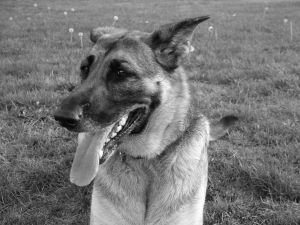
    German Shepherds are prone to joint problems

    Mac, a 9 year old German Shepherd, joined the Whiting family as an 8 week old puppy and for most of his life had been an active and energetic dog.  18 months ago Mac developed a slight limp which failed to clear up and eventually lead Fiona to take Mac to the vet.

    Acutely aware that, as a breed, German Shepherds are prone to hip dysplasia and canine OA, his owner, Fiona’s suspicions were confirmed when the vet diagnosed both ailments. Now on medication Mac’s diet is carefully monitored and he is limited to one short walk a day. Fortunately Fiona has a large garden so Mac is still able to enjoy spending a lot of time outdoors.

    What to do if you think your dog has arthritis

    If you feel your dog may be suffering from arthritis, book an appointment with your vets. It could be that medications are prescribed and help, but an all round plan at home with exercise, hydrotherapy is known to be particularly effective, or new routines around eating (for example, a raised dog bowl holder that sits off the ground could help ease your dog’s arthritis, if their neck is affected).

    After a consultation where your vet will aim to rule out alternative problems which could be causing discomfort, you can then start to plan ahead to give your dog the best quality of life possible.