Author: Dog News

  • Should Vets be More Vocal About Their Client’s Dog Behaviour Knowledge

    He may be a newly minted, fresh-faced veterinarian at an animal hospital that serves the tiniest of towns, but that veterinarian has a voice, and a duty, that can impact the profession, says Dr. Melissa Bain. “As veterinarians, each of us can affect the welfare of our pets, by incorporating behavioural techniques in our practices, and, in turn, helping owners to provide the best care at home.”

    With the importance of animal behaviour growing in private practice, Dr. Bain’s presentation, “Welfare…It’s Not Just for Animals” was a highlight at the American Veterinary Medical Association Convention August 5-9 in San Antonio. Winner of the 2016 Leo Bustad Award in recognition of her work in animal behaviour and the human-animal bond, Dr. Bain is an Associate Professor of Clinical Animal behaviour and Director of Professional Student Clinical Education at the University of California Davis School of Veterinary Medicine.

    “It may be difficult to find a specialist in animal behaviour, someone who understands behaviour modification, medication, training issues and phobias, for instance,” she said. “There aren’t many experts available in this field. However, local veterinarians should be trained to communicate with pet owners to uncover any negative issues that might be occurring and to provide some go-to resources to resolve common issues when he or she cannot refer.”

    Veterinarians must be proactive and ask about potential situations like house soiling or vocalization because the client may not think or forget to inquire about such behaviours. And the longer the behaviours go unattended, the more difficult they are to resolve. Providing a list of qualified trainers in the nearby area can be an indispensible resource to owners.

    Creating proactive veterinarians is a major focus of Dr. Bain’s position at UC Davis. She is devoted to equipping her veterinary students with knowledge beyond the books, to pushing them to address current or potential behavioural dilemmas and spending time up front with owners and asking the right questions—as well as providing the right answers, or at least some alternatives.

    “We need to take a holistic approach in many situations,” she explained. “We can’t say ‘Here’s your dog. Surgery went well…have a great day!’” Veterinarians can inform an owner that their pet needs to spend six weeks in post-operative cage rest, Dr. Bain said, but that advice may be difficult to follow.

    “Veterinarians have to compromise and understand the ideal vs. the reality in most, if not all, situations. We understand that owners have to take a pet out of the cage for bathroom visits, or to enjoy some lap time. We just need to tell them specifically how to do these things safely. . . to educate and guide them.” Suggestions like proper handling, relocating the cage or even sleeping nearby on the floor can go a long way in producing happy people, content pets and shorter recovery times, she said.

    If it were up to her, Dr. Bain would like to see crate training become part of virtually every puppy’s protocol. As for their part, veterinarians as a profession should be incorporating training tips and confinement guidelines into their initial pet visit discussions. “Crate training ahead of time will dramatically improve a dog’s ability to cope with post-surgical confinement,” she said. “If a dog is used to being crated, it will be easier and less stressful on him to be confined for any reason in the future. The owner will have additional peace of mind as well.”

    While it is impossible to remove the stress completely from an office visit or a surgical procedure, a veterinarian can do a much to reduce the amount of stress a pet experiences at the clinic. When it comes to stress levels, pets are much like their owners. “Our alarm may not go off, we miss our morning coffee, and we’re late for work,” explained Dr. Bain. “As we encounter just one more negative thing, our stress now goes from a Level Five to a Level Six. We feel as though we’re just done.”

    To keep anxiety at bay, veterinary staff can create a low-stress atmosphere. Lights can be lowered in the examination rooms or soothing music can be played in the office. “We need to empower veterinarians to do these little things, because these simple things do make a difference,” said Dr. Bain. “Instead of an upset animal’s stress level skyrocketing, it may only go from a ‘one to a two’.”

    “A human’s interaction with a pet is a very important way in which an animal’s life is enriched,” said Dr. Bain. “Some pets prefer to just be petted and handled instead of playing, especially as their physical ability to do so is decreased due to an illness or surgery or just to the natural aging process.”

    When it comes to animal behaviour, there are vital techniques that can make a difference in a pet’s life. All can be taught by a skilled veterinarian and their staff. “Without a doubt, we need to focus on animal welfare and pet behaviour in our practices,” said Dr. Bain. “We just have to remember to seek out and share our knowledge with owners and say, ‘here’s what you need to do…and here’s how you do it.’”

    The AVMA, founded in 1863, is one of the oldest and largest veterinary medical organizations in the world, with more than 88,000 member veterinarians worldwide engaged in a wide variety of professional activities and dedicated to the art and science of veterinary medicine.
  • Wounded Warriors Headed Out on the Water With Their Service Dogs

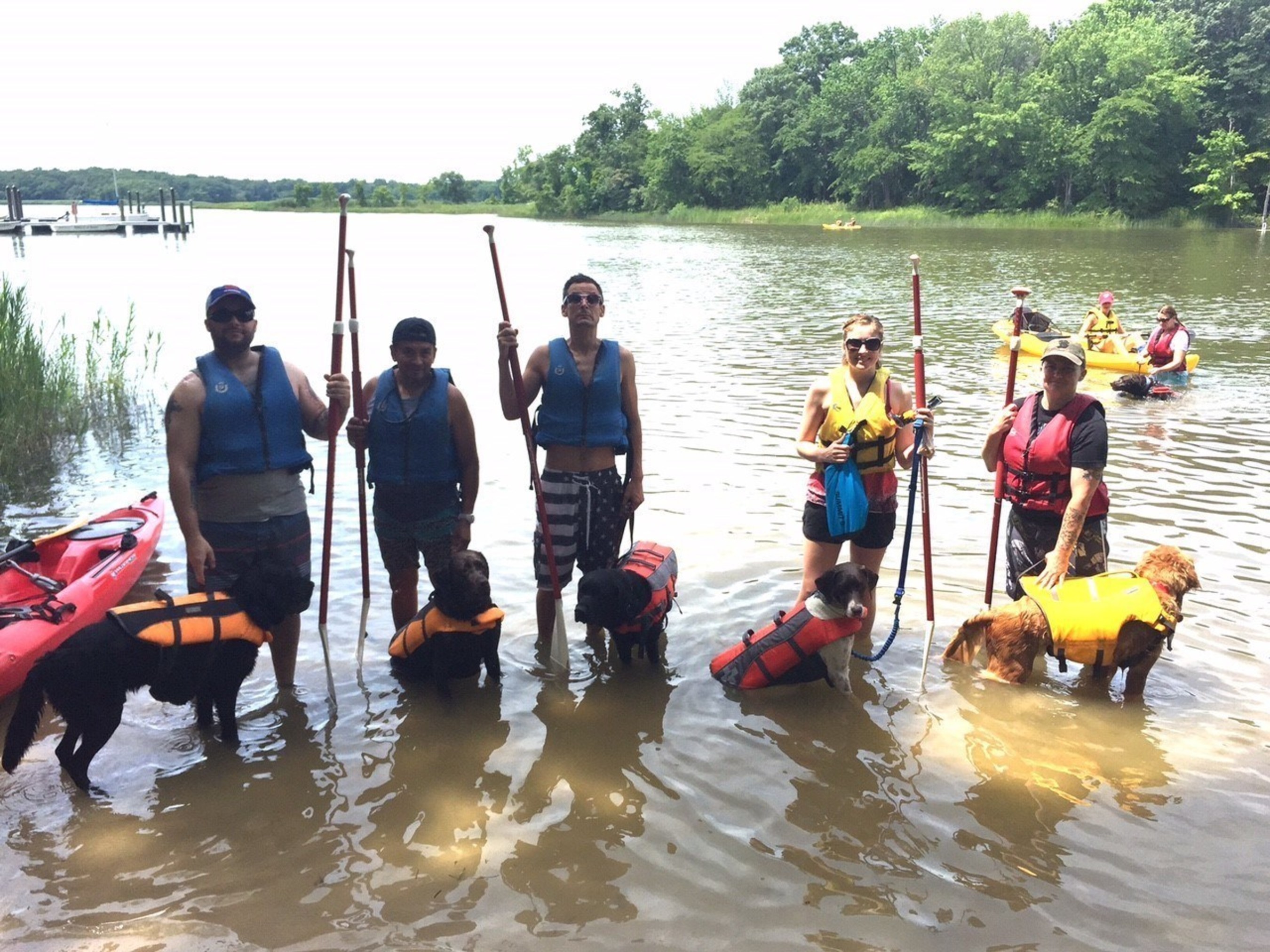
    During a recent Wounded Warrior Project event, a group of wounded veterans took to the waters of Dundee Creek to try stand up paddleboarding for the first time. It was a new experience made more special by the guests the warriors were asked to bring – their service dogs.

    Participants spent the afternoon at Gunpowder Falls State Park for the “SUP Dog” experience. They learned paddleboarding techniques with the help of Ultimate Watersports, strengthened the bonds they shared with their animals, and forged new bonds with fellow warriors.

    Army veteran Michael Carrasquillio said that while he tries to make it to as many WWP program gatherings as he can, he was particularly drawn to this one because he could include his service dog in the fun.

    “It was the first time I had seen something specifically for warriors and their service dogs, and I thought it was such a great idea,” he said. “I don’t always let my dog interact with other dogs, but knowing that we’d be around actual service dogs and warriors, I felt safe.”

    It was a great opportunity for Michael to strengthen the relatively new bond he shares with his service dog – a black lab named Ojai.

    “We have been a team for a little more than three months,” Michael said. “The process to get him was more than two years, but it was well worth the wait.”

    These fun activities support the long-term recovery needs of injured warriors by reintroducing them to the unique bonds experienced during military service. The connections formed during these outings can go a long way in healing wounded veterans.

    “These programs are important for many reasons,” Michael said. “First, it’s great to just get out of the house. Second, it’s important to connect with other warriors. Socializing is a crucial part of the recovery process. There are just tons of good reasons to get involved in WWP programs.”

    WWP staff closely interact with attendees during these program gatherings, advising them of additional services that can assist their recovery. Program donors make it possible for wounded veterans, their caregivers, and their family members to participate in these activities at no cost.

  • Have You Seen Summer? Rescue Dog Stolen in Windsor Great Park

    A rescue dog named Summer has been stolen from her garden in Windsor Great Park, Berkshire.

    The dog, who was in the garden with two other family dogs after eating tea, may have been missing for up to 30 minutes before her collar, found hanging by the fence, where there was a small hole barely big enough for her to get through and looked undisturbed.

    Her owners tell us Summer was born a street dog in Cyprus where she was rescued by a charity before being brought to the UK to find a loving new forever home. She is a friendly, playful girl and bonded quickly with her new family including the two family dogs. She is a striking looking girl, thought to be a Kooikerhondje cross.

    Lauren Haylor, her owner says, “Our garden has been dog proofed for 30 years. Opening the gate, I quickly checked Queens Ann’s Ride, (which backs onto our house) calling her name, although she’s a curious dog she has never ventured out of sight.  But again there was no sign.  We continued searching the area well into the night but had to call off the search when it became to dark.  That night, it devastated us to shut the door and leave her bed outside with the gate open, in the hope she’d come running home in the night. We had a sleepless night checking outside every couple of hours but at 6am she hadn’t returned.

    Our search continued straight away, posters, leaflets, vets, rescue centres, dog walkers, grooming parlours, walks into the woods, but no luck.  We’ve set up a Facebook page with all her photos, information and posters in the hope someone may have some information, sighting or report. Having contacted the council, street clean, local residents, dog walkers and farmers not one person can verify this, so we remain ever hopeful that it wasn’t her. We have even looked at local CCTV to see if we could see her or anything suspicious in the hours that followed her going missing.”

    Lauren continues, “It honestly feels like she vanished into thin air.  But we remain hopeful and optimistic and we will continue searching for her far and wide until we find her. However there is a void in our lives that cannot be filled without Our Beautiful Summer.”

    Her family are desperate for her return and are asking anyone with information to share news or sightings with them. You can find details on their page, Facebook.com/FindOurSummerDog or contact numbers are shown on the poster above. If you can help or share to spread the message, please do.

  • Dog Owners Reveal Favourite Pet Friendly Holiday Hot Spots

    When the pet travel scheme was introduced 15 years ago allowing dogs to travel from country to country without the need for quarantine, it freed pet owners up with the option to consider holidaying further afield spending more time exploring new countries and holiday hot spots with their dog in tow, and it seems more pet owners than ever before are holidaying overseas with their beloved dog as over a third of vets have reported an increase in demand for pet passports over the last 12 months.

    New research released by Direct Line Pet Insurance has discovered that dog owners favourite dog friendly destinations are the French resorts of La Roche and Les Sables, Nantes in Belgium, Antequera, Spain and Lake Lucerne, Switzerland.


    Pictured above, one of dog owners favourite European retreats – Lake Lucerne, Switzerland

    The pet insurer found that almost half of dog owners admitted that their pet always influences their choice of holiday destination with dog friendly accommodation being the highest priority when researching a destination, followed by ensuring good space for their dog to run around and play and somewhere which allows the dog to accompany them into shops, restaurants and attractions.

    Half of dog owners also factor in local access to a vet or animal hospital when choosing where to holiday.

    However, while almost 9 in 10 dog owners know their pet has to be microchipped as part of the pet passport scheme, other rules and regulations aren’t quite as well known, and owners could fall foul of the law if they don’t adhere.

    When travelling and bringing pets back into the UK, dogs and cats must be microchipped and have a pet passport (or third country official veterinary certificate). They must be vaccinated against rabies and dogs must also have a tapeworm treatment when returning from a number of different countries. Your pet must also arrive in the UK no more than five days before or after the owner.


    Photo Credit: Jason Shultz / Pictured above, Beach of les Granges in Les Sables d’Olonne, France where dogs are welcomed on leads

    If owners do not comply with these rules, they risk their pets having to be quarantined when re-entering the UK.

    Prit Powar, head of pet insurance at Direct Line said: “Our pets are such a big part of our lives that it’s not surprising we are willing to tailor our holidays to accommodate taking them away with us. When taking pets abroad, planning in advance is vital.  Owners need to have the right documentation, up to date vaccinations and know that where they are staying is accepting of their pets. Getting a tapeworm treatment in the country you are visiting can often be a particular challenge, especially if you don’t speak the language, so do your research beforehand and make sure you know what facilities are available.”

  • Peaceful Anti-BSL Protest Held at Westminster Marking 25 Years of Unjust Breed Specific Legislation

    A series of anti-breed specific legislation protests and rallies have taken place across the world in a united day of peaceful protest this weekend (15-16 July) marking 25 years of failed, unjust legislation in the UK.

    In the UK, events took place at Westminster London, Cardiff Wales, Belfast Northern Ireland and Herefordshire.

    The Westminster event was organised by DDA Watch Ltd, a campaign group which helps and supports dogs and their families affected by the Dangerous Dogs Act 1991.

    Dog defenders rallied at Westminster with people of all ages travelling in from all over the UK, united to speak out and call for a repeal of a law that targets types of dogs and condemns them as ‘dangerous’ based on their physical appearance. Over two thousand DDA Watch leaflets were distributed in central London and petition signatures gained to help create awareness during the event.

    There were speeches from grass roots workers on the front line, poems and a period of silence to remember all those who have and continue to, suffer and die as a result of the legislation; a tribute was read, flowers and collars were laid and a candle was lit, the ashes of a dog named ‘Paul’ were laid alongside a sheet with the names of some of the canine victims written down – Paul was a recent victim of BSL and much loved, he represented all those lost. Silence fell outside the mighty building of Westminster and tears were shed as heads bowed and remembered.

    Many of the placards and banners held represented a dog tragically lost to BSL – each case highlighting the injustice and loss, held high for all to see, one supporter was dressed as the ‘Grim Reaper’ to represent BSL and stood alongside the campaigners, which included children holding up photographs of dogs lost due to the legislation, a poignant moment in the heart of London just a short distance from where the law was passed and could be repealed.

    Ontario, Quebec, Winnipeg, Victoria, Montreal, Ottawa in Canada and Germany also held protests on the same day as part of a global movement to repeal breed specific laws.

    Sian Morton, a Director of DDA Watch and one of the event speakers said: “Breed specific legislation continues to cost millions of pounds in taxpayers’ money to enforce and does nothing to protect people nor dogs alike, neither does it promote responsible dog ownership. Thousands of pets continue to be put to death or deemed ‘dangerous’ based on their physical appearance, the law makes no sense, is barbaric and is long overdue for repeal, DDA Watch advises dog owners and supports dogs every day of the week who have been ripped apart from their families even though they have never put a paw wrong.”

  • Anti BSL Protest Reaches Westminster

    Anti-breed specific legislation protests and rallies have taken place across the world in a united day of peaceful protest this weekend.

    In the UK, events took place at Westminster London, Cardiff Wales, Belfast Northern Ireland and Herefordshire.

    The Westminster event was organised by DDA Watch Ltd, a campaign group which helps and supports dogs and their families affected by the Dangerous Dogs Act 1991 and this years’ event marked 25 years of failed, unjust legislation in the UK.

    Dog defenders rallied at Westminster with people of all ages travelling in from all over the UK, united to speak out and call for a repeal of a law that targets types of dogs and condemns them as ‘dangerous’ based on their physical appearance. Over two thousand DDA Watch leaflets were distributed in central London and petition signatures gained to help create awareness during the event.

    There were speeches from grass roots workers on the front line, poems and a period of silence to remember all those who have and continue to, suffer and die as a result of the legislation; a tribute was read, flowers and collars were laid and a candle was lit, the ashes of a dog named ‘Paul’ were laid alongside a sheet with the names of some of the canine victims written down – Paul was a recent victim of BSL and much loved, he represented all those lost. Silence fell outside the mighty building of Westminster and tears were shed as heads bowed and remembered.

    Many of the placards and banners held represented a dog tragically lost to BSL – each case highlighting the injustice and loss, held high for all to see, one supporter was dressed as the ‘Grim Reaper’ to represent BSL and stood alongside the campaigners, which included children holding up photographs of dogs lost due to the legislation, a poignant moment in the heart of London just a short distance from where the law was passed and could be repealed.

    Ontario, Quebec, Winnipeg, Victoria, Montreal, Ottawa Canada and Germany also held protests on the same day as part of a global movement to repeal breed specific laws.

    Sian Morton, a Director of DDA Watch and one of the event speakers said: “Breed specific legislation continues to cost millions of pounds in taxpayers’ money to enforce and does nothing to protect people nor dogs alike, neither does it promote responsible dog ownership. Thousands of pets continue to be put to death or deemed ‘dangerous’ based on their physical appearance, the law makes no sense, is barbaric and is long overdue for repeal, DDA Watch advises dog owners and supports dogs every day of the week who have been ripped apart from their families even though they have never put a paw wrong.”

    For details on how to get involved or where to get help from – contact DDA Watch:

    www.ddawatch.co.uk

  • Is a Threat to Your Pet Lurking in Your Sofa at Home?

    As a pet owner, it’s easy to clean what you see on the surface and spend so much time doing it, that you miss the dangers lurking beyond what the naked eye can see.

    New research released by pet healthcare brand Bob Martin has revealed that although 80% of pet owners they spoke with admitted to being houseproud, a large proportion isn’t aware of how to keep fleas at bay and in particular, where the threats to your pet and re-infestation lie in and around the home.

    5185896885_35485e3a4b_dog-spend

    Over a third of people the pet brand spoke with said they have had fleas in their homes, but over a quarter have no idea whether their house or pets have ever had fleas or not. Fleas thrive in warmer weather and while the research revealed that two thirds of those polled believe they would know what do if there was a flea infestation, less than half (42%) treated their home for fleas when their pet had them. In fact, 95 per cent of fleas do not live on animals, but in wood floor crevices, skirting boards, carpets and soft furnishings in the home and they can remain living in the cracks for up to two years.

    Aggie MacKenzie, also known as the ‘Queen of Clean’ and best known for her no-nonsense approach on the TV show ‘How Clean Is Your House?’ has offered her expert advice on how to tackle the threats which lurk beyond.

    Georgina Martin, CEO of Bob Martin said: “With the warmer weather approaching, it’s key that pet owners are aware of the importance of a clean home. Whilst all pets experience fleas at some point in their lives, prevention is the best approach and if your pet does have fleas, you should always treat your home at the same time as your pet.  If you don’t tackle this immediately, it may become a bigger problem, causing a lot of irritation for both the pet and the owner.”


  • Appeal For Information as Tied Up Body of Puppy is Found in Boarded Up Kennel

    An RSPCA inspector has described the moment a dead puppy was found tied up and callously dumped inside a boarded up kennel on a country lane as a ‘horrific discovery’.

    It is thought the cream coloured puppy – believed to be a collie cross – was just four-months-old when he was found dead and tied up inside the wooden kennel and dumped on Fleetwood Road in Wesham, near Preston, on Sunday. (3 July)

    https://i.imgur.com/WQWdiyS.gif

    There was also a blue lead, a bowl of rice, a water bowl, water in a sealed bottle and sawdust inside the wooden 2mx2m kennel when Lancashire Police made the heartbreaking find.

    The RSPCA is now appealing with anyone with information about the puppy to come forward urgently.

    RSPCA inspector Sarah Hayland said: “This is a horrific incident. We do not think the dog had been dead for very long when he was found inside the kennel.

    “We do not know where this dog came from or if he was alive or dead when he was so cruelly dumped inside that kennel.

    “He had been tied up inside with a 2metre long metal chain. The door to the kennel had been intentionally boarded up with planks of wood when it was found in the middle of a country lane by a member of the public.

    “It is just awful. He was underweight when we found him but at the moment we do not know how he died. It is harrowing to think what he might’ve gone through.

    “We would ask that anyone who has any information about where he came from or how he got on to the lane in this state to contact us as soon as possible.”

    Anyone with information should contact the RSPCA Inspectorate Appeal Line on 0300 123 8018.

  • Can You Tell if Your Pet Is Dehydrated? Here’s How You Can Find Out

    With this summer’s sporting bonanza well underway – from the Euros to Wimbledon and the Olympics just around the corner – UK dog owners could have plenty of distractions to take their attention away from their four legged friends.

    Reassuringly, a recent survey of over 1,000 pet owners conducted by pet product expert, PetSafe® brand, has found that our passion for pets comes before our love of sport, but two in 10 pet owners aren’t sure how to tell if their pet is hydrated.

    Wanting to do the ‘right thing’ for their pet over the summer months came across clearly in the study with 9 in 10 dog owners saying their pets come first and exercise, hydration and all important meal times for those who clock watch. However, once the elusive summer sun comes out, there was confusion amongst dog owners about what the ‘right thing’ actually is – particularly when it comes to keeping pooches cool and hydrated.

    While almost all of the pet owners surveyed give their dogs fresh water every day, over half are unsure how much water their pets actually need to keep cool and hydrated.

    Uncertainty crept in over whether pets should be put outside in warm weather – or kept indoors as 17 per cent said pets would be left outside as temperatures creep up to keep them cool.

    Worryingly, 20 per cent admitted they couldn’t tell if their pet was dehydrated and common signs of dehydration were confused.

    A staggering 88 per cent thought panting or sweating was a sign of dehydration, which is a common misconception and 40 per cent also incorrectly thought whining was a sign.

    How to Tell If Your Dog Is Dehydrated

    Symptoms of dehydration include lethargy, sunken eyes, and loss of appetite and depression. Another tell tale symptom is when pets’ gums lose moistness and become dry and sticky.

    A spokesperson for the PetSafe® brand, Angela Critchley said: “It’s really encouraging to see that despite all the distractions taking place in people’s lives our dogs still take top priority.

    “What’s concerning is the lack of knowledge when it comes to pet hydration. Even loosing just 10% of the body’s water can have serious consequences for a dog, so it is vital to ensure owners can pick up the signals quickly to avoid putting their pets at risk.

    “If pets are not adequately hydrated they can not pant or sweat efficiently which means they can’t keep themselves cool and can over heat. The average Labrador weighing around 35kgs will need 2.45 litres of water a day to keep hydrated, that’s several bowls and regular water top ups are needed throughout the day”

    She continues: “Simple measures such as leaving a number of water bowls in different areas in the house can help replenish hydration even if you’re not able to be in the home. If pets are outside it’s critical that they have access to shade and their water is kept in a cool place – remember some doghouses are not good shelter in the summer, as they can trap heat.”


  • 20,000 Paws Took Part in Great Global Greyhound Walk

    On Sunday 19th June lots of sighthound owners let their dogs out to attend the Great Global Greyhound Walk and what an amazing worldwide turn-out there was! There were Greyhounds, Whippets, Salukis, Borzois, Lurchers, Podencos and Galgos alongside family companion dogs. There were 8 week old puppies and 15 year old seniors, together with their loving owners. There were dogs of every colour – brindles, blacks, snowflakes, fawns, blues, white with black markings and black with white markings, all walking in harmony to promote the breed as wonderful family pets.

    There was a Carnival theme to the day but some owners took it one step further with whippet weddings in Brazil, red carpets in Slovenia, rainbow flags in Braintree, carnivals in Colchester and even a little local walk at St Paul’s Cathedral in London. There were walks in parks, along the river banks, through forests, at the beach and even in town centres.

    There was a total of 5021 canine participants from 102 UK walks and 49 globally, so over 20,000 paws enjoyed their day in some spectacular locations and all in the name of finding loving family homes for retired racers once their track days are over.

    This year was the 10th anniversary of Greyhound Walks, which started in Braintree with just 6 dogs and although not a specific fund raising event, many of the walks had collection buckets for local greyhound charities and to fund dogs needing special care.


    For more information about the events and to get involved in future get togethers, visit www.greatglobalgreyhoundwalk.co.uk


  • UK Dog Adoption Site Announces New Pet Insurance Sponsor

    UK dog adoption site dogsblog.com has announced a new sponsorship with Direct Line to help more dogs in need find loving new forever homes. During the sponsorship, the pet insurer also will offer advice to new dog owners through the new advice hub.

    As the UK’s leading dog adoption site working with more than 530 animal rescues to help more dogs find new homes, the site has helped more than 38,700 to find new homes since launching in 2007.


    Ritchie, pictured above, is a 7 year old cross-breed who is on the dog adoption site looking for a new home

    Speaking of the news site co-founder Ryan O’Meara said, “Our goal this year is to continue to help more rescues and more dogs in need, while we help more new dog owners set off on the right path with their new companion, and we’re happy to do that through the support and sponsorship of Direct Line Pet Insurance.”

  • Meet the Dog Owner Who Found Out About Importance of Preventative Care for Her Pets

    Veterinary care can get very expensive and more and more often, pet owners are cutting corners on preventive treatments to try and save money. This, however, can do more harm than good for your pets and tends to lead to more problems (and expense!) down the line.

    An article from the PDSA, published on Pet Gazette, has recently revealed that millions of pets are at risk of serious diseases due to not being vaccinated. As a stat, this is very worrying as a lot of poorly pets could be in a much better position if they had been given preventative care.

    The Healthy Pet Club is a pet loyalty scheme aimed at helping customers save money on preventative care for their pets. From just £9.99 a month, they offer free vaccinations (and many other benefits) to make sure your much loved pets don’t lose their lives to these horrible diseases, when prevention is so easy.

    Read all about how the Healthy Pet Club has helped two Springer Spaniels stay happy and healthy below:

    Dolly is an eight year old English Springer Spaniel, both her and her brother Dave, also a Springer, belong to Lynda Dunn and her husband, Roger. They have had Dolly since she was a puppy, but unfortunately in 2011 she was diagnosed with osteoarthritis. Treating this involved regular injections of Cartrophen along with Cosequin tablets, which would have cost the Dunns a fortune had they not been members of the Healthy Pet Club. They have not only saved money on Dolly’s injections and daily medication, but they have also had the benefit of making further savings on her routine treatment, check-ups and vaccinations including Kennel Cough.

    Dave was rehomed with Mr and Mrs Dunn when he was approximately 4 years old. About 6 weeks after he joined the family, he started to show signs of not being well and he lost a quarter of his body weight. Luckily, Dave had been signed up to the Healthy Pet Club as soon as he was adopted. This was a good thing too as he was eventually diagnosed by their vet with whipworm and successfully treated.

    Lynda explained: “We are now obviously very concerned about the risk of reinfection, and the peace of mind we gain from knowing that we are saving on regular flea and worming treatment and check-ups is priceless. Unfortunately, he has also been diagnosed with osteoarthritis so our medications will be increasing as a result.

    “Being a member of the Healthy Pet Club is so worthwhile, especially if you have a dog or cat with a chronic condition that needs regular medication.

    “Knowing that we are saving on the various treatments and check-ups gives us peace of mind. I can’t even begin to estimate how much we have saved, but needless to say, it’s a lot!”

    To find out more about the Healthy Pet Club, visit: www.thehealthypetclub.co.uk/K91

  • BREAKING NEWS: Cross-Border Dog & Cat Rehoming to Be Restricted

    International rehoming of dogs and cats should not be carried out as a standard practice EU Cat & Dog Alliance member organisations have agreed this week. Instead members will work preventatively in the country of origin to minimise the need for rehoming animals abroad, for example through neutering and educational campaigns, to stem the problem.

    Simona Lipstaite, European Policy Advisor for the EU Dog & Cat Alliance and Dogs Trust, comments:

    “International rehoming of dogs and cats is a practice which is not sustainable in the long term as it only provides interim measures rather than addressing the root causes of companion animals living in shelters or being homeless in the country of origin. It also presents the risk of spreading diseases across borders and introducing new diseases into different countries. The main diseases under consideration are rabies, Echinococcus multilocularis, leishmaniosis, babesiosis, dirofilaria and ehrlichiosis and, in the case of cats, retroviruses.”

    International rehoming presents further issues in relation to cats. Being much more territorial than dogs, cats inevitably suffer a huge amount of stress during transport. Cats take a long time to acclimatise to a new environment and some may never recover from the stress of being moved internationally.

    Where international rehoming is unavoidable, members have agreed that there must be full traceability and that the rehoming is solely in the best interests of the animal, and not for monetary gain for the organisation. Member organisations must also do it legally and following proper disease testing procedures.

    So, do you think it’s the right decision? Do you think it will stop the problem of transmitted diseases or stop animals in need finding safety and a secure future in a new home? Comment below and let us know what you think.

  • Meet the Dogs (& Their Owners) Who Sold up to Travel Around Europe & Wrote a Book About It

    Two years ago the Burton family sold their house, packed up their belongings, bought a motorhome and have been travelling Europe ever since with their two dogs Ozwena who is a beagle and Uluru a fox red Labrador.

    Their adventures were relayed through a three-part series in K9 Magazine and they have now written a book called ‘DUST’ that chronicles the journey that is told partly through Ozwena’s eyes.

    http://i1.wp.com/i.imgur.com/9k4uJLo.png?w=620

    Read on to find out what Ozwena has to say about travelling Europe with her parents.

    What is it like for a dog travelling in a motorhome?

    At first it was a little strange. Moving from a fairly large house to a small motorhome took a bit of adjusting. I have never enjoyed travelling in a car so I’ve been surprised as to how comfortable travelling in a motorhome is. We recently had a hire car and I still detest travelling this way so can only presume the additional size and space in the motorhome, along with slower driving speeds suits me.

    My bed is different as it’s raised off the floor and is now the front seat of the van but I’m used to this now and this is where I call home. I always feel safe in the motorhome and the company from my sister Uluru makes it so much better.

    You must have had quite a lot of preparation to do before your trip. Tell us about it.

    I had to visit my local vet to get a pet passport that allowed me to travel in Europe. At my appointment, the vet gave me an examination that included checking I had a microchip and then scanning me to find my identification number which is now written on my passport. I also had to for me and of course one for Uluru my sister. I also have to wear a scalibor collar as to protect me from leishmaniasis which is a tropical and sub-tropical disease spread through sand flies that can be found in some parts of Europe. More importantly, this also covers me against ticks.

    What did you take with you?

    I took my doggy bag with me and packed my favourite toy, my lead and a blanket that I’ve had since I was a puppy. I also have a collar with my name and number stitched onto it which is important in case I run away which I tend to do quite frequently! Other things that I took are some tweezers in case I do get any ticks so that these can be easily removed. I also have medication for fleas that I have dabbed on my neck every few months. I got fleas once and it was an awful itching experience.

    How did you manage with the differences in foods in Europe?

    My favourite interest is eating and I’m not a fussy eater at all. I dine out on many delicacies and have tasted foods from all around Europe to include octopus, anchovies, polish stew, with my favourite being tapas. I get dried dog biscuits each morning and night (with a spoonful of tinned dog meat) and these are similar to the ones I used to get back home. Most supermarkets in Europe sell the same or similar brands so it’s not a problem.

    Are there any dog laws in Europe?

    There are frustrating dog laws in Spain where dogs are not allowed on any public transport which

    In Italy, I’m allowed onto trains, buses and boats but only if I wear a muzzle, this can be embarrassing

    If you are a dog in Norway then you have to stay on the lead from the 1 st April until the 20th August and this is to protect wildlife as many new animals are born at this time so fair enough really.

    The other places I’ve visited have been very dog friendly.


    Ozwena at Mont Blanc, the highest mountain in the Alps

    Tell me the best bits of travelling in a motorhome.

    Being with my sister Uluru and my parents Paul and Emma 24/7 is the best thing about travelling. And my walks last much longer than they used to and I love having the freedom to go where I like and to explore the endless beaches and woods in Europe. I’m an active dog and as a beagles I like to sniff out places and have found endless scents that take me running and exploring for miles and miles.

    Everyone travelling Europe seems to have a dog with them and this is partly due to the relaxing of quarantine laws which means us dogs can travel which is so much better than staying at home whilst my parents go off and have fun!

    And you’ve wrote a book about your travels, tell us about this?

    I’m a well travelled beagle and have covered over 25,000 kilometres and visited 19 countries. I’ve been as far North as the Arctic Circle and as far south as Morocco. You can read about what I get up to in my book where I was kidnapped in Spain, washed out to sea in Italy and fell from cliffs in Portugal. Travelling Europe really is the best thing that has ever happened to me after realising life is for living before turning to DUST.

    What’s next?

    We are leaving the UK again shortly and heading east to explore that part of Europe. We didn’t get that far the last time so it will be great to go and explore further afield. My parents have researched these countries and they seem to be dog friendly places but I will however let you know how I get on. You can read about my trip by visiting my blog: beagleburton.wordpress.com


    TV presenter Declan Donnelly with a copy of DUST

    If the Burton family adventures have inspired you, you can enter and win your very own copy of ‘DUST’ as told by Ozwena, comment below telling us why you would like to win a copy (keeping your email address hidden behind your username).

    Two UK winners will be chosen at random.

    Good luck!

  • These Dogs Had a Party, Just Look How Happy it Made Them

    What happens when you put dogs and cake together? Well, my fellow dog owners can probably imagine, but these photographs, released by The Big Lunch team to promote their one-day get-together annual event, are guaranteed to make you smile.

    These hilarious dogs were photographed as the ‘London Big Lunchers’ gathered at Tanner Street Park, Bermondsey, with their dogs for a little dog training session to prepare for the big day on Sunday 12th June this year.

    Launched in 2009 by the Eden Project, the aim of The Big Lunch event is to encourage a get-together feeding community spirit and helping to build stronger neighbourhoods with the thinking that by bringing communities together, we can reducing loneliness and isolation.

    Alongside the photographs, The Big Lunch team have looked at the effect having a dog has on making new friends in the community and have revealed that a study of 2,000 people looked at the positive social impacts of owning a dog compared with not having one, and over half (55%) admitted they are more likely to start a conversation with someone if they have a dog.

    While the average dog owner has six chats a week – 312 a year, with people in the community, as a result of their canine companion, results showed dogs make you more approachable than children it seems – with three in 10 people more likely to start a conversation with someone with a dog than someone with children.

    The research also showed the typical dog owner has at least three friends that originated directly from them having their pet.

    The results make a valuable argument for the impact owning a dog can have on a person’s social interactions – (75%) say having a dog reduces feelings of loneliness and more than half (52%) say that having a dog improves relationships in the community and that getting a dog is one of the best ways to make friends with neighbours.

    Oxford University Professor of Psychology, Robin Dunbar, who worked with The Big Lunch as part of the campaign, spoke about the findings: “Research has shown that owning a dog is a good way of combatting loneliness, both because of the company that such a pet can provide, but also because of the way that other people react to dogs and their owners.

    Dunbar continued, “The majority of people (52%) said that having a dog improves relationships in your community, and 71 per cent said that people out on the street are more likely to stop and talk to you if you are walking a dog. This is because when we see someone with a friendly animal, we feel safe with them and feel that they will be happy for us to stop and talk.”

    And sometimes the dogs are even more memorable than the owners – four in ten Brits know the names of certain dogs but do not know their owners by name, results showed.

    Peter Stewart of The Big Lunch added: “While two thirds of us have never shared a meal with our neighbours, we are more likely to strike up conversation with those with dogs. Hosting or joining a Big Lunch on June 12th is a great way to make new friends, share stories, to have fun, whether you have a canine friend or not – it offers a simple way to make lasting relationships and most Big Lunches are also dog-friendly.”

    Find out more about how you can get involved in The Big Lunch event this June online at www.thebiglunch.com 


    Have these dogs inspired you to get a dog? 

    If you’re thinking about bringing a dog into your home, why not consider adopting – visit our sister site, dogsblog.com today.