Category: Health

  • Vet Answers The Most Frequently Asked Dog Health Questions

    Vet Answers The Most Frequently Asked Dog Health Questions

    Over the course of the pandemic, 3.2 million homes across the U.K. welcomed a new pet into their lives.

    And it’s easy to see why; dogs have been found to make us happier and can encourage us to live a healthier lifestyle, but if you’re a dog owner it can be quite concerning to see your best furry friend experiencing shivering, vomiting and/or diarrhea.

    Naturally our curiosity and concern takes us directly to Dr Google to find out what could be causing our pooch to act out of the ordinary.

    Dog food company tails.com has discovered the health issues that dog owners all over the UK have been searching for the most, and have asked their Head Vet, Sean McCormack for his advice on how to ease these symptoms at home (and when to seek the advice of a veterinarian).

    Kennel Cough – searched 15,000 times a month

    Kennel cough is the common name for infectious canine tracheobronchitis which is a highly contagious respiratory disease in the dog world. The disease causes inflammation to the throat and lungs.

    The most common symptom of kennel cough is a dry, hacking cough that sometimes sounds like honking. Other symptoms include watery discharge from the nose and retching. In severe cases, symptoms can progress into pneumonia, fever, lethargy, and a lack of appetite.

    Sean advises that treatment plans vary depending on the severity, your vet will know best on how to treat your pooch.

    In most cases, however, it is suggested that you allow the cough to simply run its course, but make sure you double check this with your veterinarian. Sometimes a course of anti-inflammatories or antibiotics to treat secondary infection may be needed.

    If this is the case, here are some tips from Sean on how to help your pet through the process:

    Keep them isolated from other pets.

    A humidifier or vaporiser can provide some relief. If you do not have either, try allowing your pet in the bathroom while you shower.

    Avoid exposure to cigarette smoke or other irritating fumes.

    If your pet is a puller, try replacing your pet’s collar with a harness for the duration of the cough to keep from causing any further pain.

    Be sure to monitor your pet’s eating and drinking habits, and provide all the support they may need.

    Sean goes on to say ‘if you are worried about your dog catching kennel cough then there is the option for your pooch to be vaccinated, to arrange this simply enquire at your local vets.’

    Ticks On Dogs – searched 8,200 times a month

    One of our biggest fears for our dogs is discovering the presence of ticks. Whilst there’s a common misconception that ticks on dogs are only a problem in the summer months, warmer weather has seen a rise in ticks all year round.

    Through the nature of a tick’s blood sucking tendencies, they can transmit a range of infections and diseases including Babesiosis and Lyme Disease, affecting both dogs and their owners. Ticks are most commonly associated with Lyme Disease, an illness that often lies undetected due to symptoms frequently not appearing after the initial bite for up to several weeks.

    Sean says: ‘the sooner a tick can be removed, the less likely it is that you or your dog can get infected by nasty bacteria.’

    ‘To remove a tick effectively, use a tick removal tool (you can get these easily online). This allows you to twist and lift the tick off of the skin by going underneath its biting mouthparts.

    ‘It’s important to make sure you remove the tick properly and get the head out, as just pulling at the tick can often leave the mouthparts embedded in the skin and risk infection. If you are struggling with removing a tick yourself contact your local vet for help’

    Dog Diarrhoea – searched 5,200 a month

    It’s not unusual for dogs to have stinky or runny poos. In fact, dog diarrhoea is one of the most common problems vets see every year.

    There are many causes for dog or puppy diarrhoea, but here are a few of the most common; sudden change in diet, dietary indiscretion (eating something they shouldn’t), parasites, infections, inflammatory disorders and even quite simply stress, anxiety and over excitement.

    Sean explains: ‘The colour of your dog’s poo can also depend solely on your dog’s diet – reddish, greenish, or dark brown poop can all be normal.’

    ‘If it’s looking black – it could be a sign of internal bleeding, whilst pale yellow or grey poo can be a sign of fat digestion issues in the pancreas or problems in the liver. Seek veterinary help immediately if you notice this in your dog’s stool.’

    ‘You know your dog better than anyone, if you feel like there’s something wrong – or common problems such as constipation or diarrhoea don’t seem to go away after a few days – don’t hesitate to take your dog to the vet, and take a stool sample with you.’

    Dog Fleas – searched 3,000 times a month

    Fleas, no one likes them, even the thought of the pesky little bugs makes your skin crawl. Did you know, more than 95% of fleas don’t live on animals, but in wood floor crevices, carpets and soft furnishings? And they can remain alive in the cracks for up to two years.

    Sean states ‘the most effective flea products are a liquid spot-on medication which is applied to the skin on the back of your dog’s neck, but application errors can be an issue with these treatments, and if it rains or your dog jumps in water the product can wash away before it has a chance to be effective.

    ‘Double check with your veterinarian the best course of action to tackle fleas. It’s equally important to tackle the eggs and larvae in the environment as well as adult fleas on your dog. If you don’t you’ll never get rid of the infestation’

    Also see: How often should I treat my dog for fleas?

    Dog Ear Infection – searched 2,900 times a month

    An ear infection is an irritating and painful overgrowth of bacteria or yeast in the ear canal, usually caused by an underlying condition such as ear mites, a skin problem, or excess earwax.

    The most common symptoms of an ear infection can include; ear scratching, pain, and head shaking. Pay attention to your pooch – a head tilt or loss of balance is a sign your dog’s infection has moved deeper into the ear.

    Sean says ‘when it comes to treatment for an ear infection, always contact your vet, the quicker your dog is treated, the faster their recovery is likely to be.’

    Arthritis In Dogs – searched 2,700 times a month

    Much like humans, arthritis is a very common condition that causes stiff, painful or swollen joints. It can make moving around very difficult and uncomfortable for your pooch.

    Sean says ‘to prevent arthritis in your four legged friend, keep your dog’s joints as healthy as possible by keeping them slim and giving them regular, sensible exercise.’

    ‘Unfortunately arthritis can’t be cured but fortunately, there are several treatment options to slow it’s progression and manage pain. Nutritional supplements or special diets tailored to your dog’s needs containing omega 3 oils, glucosamine and chondroitin can be helpful.

    Treatment may include painkillers, joint supplements, hydrotherapy, and even surgery – all of which will be available from your vet.’

    ’If you suspect arthritis in your dog, the best course of action is to visit a vet as soon as possible’.

    Dog Vomiting – searched 2,500 times a month

    Vomiting is one of the most common symptoms which vets attend to everyday. It can be caused by a variety of things and in most cases, vomiting in dogs improves within 24 hours. But some are more serious and require treatment from a vet.

    Sean advises ‘it’s not always necessary to see your vet the first time your dog throws up, but it’s extremely important to monitor them closely and call your vet for advice if they vomit more than once, seem unwell, or have any other symptoms.’

    ‘Always contact your vet immediately if your dog is repeatedly trying to vomit but not bringing anything up, especially if they have a bloated tummy.

    ’This can be a sign of something more serious that needs to be investigated further. .

    Also see: Why is my dog throwing up in the morning

    Gastroenteritis in Dogs – searched 1,900 times a month

    Gastroenteritis refers to inflammation of the gastrointestinal tract, meaning the stomach and the intestines. It can be caused by infection with bacteria, viruses, parasites, medications, or even new foods. Most dogs with gastroenteritis will have intermittent episodes of vomiting and diarrhea.

    Sean explains ‘symptoms may include foamy yellowish bile vomit, especially after the stomach has been emptied. Some owners may see dry heaving or gagging after their dog eats or drinks.’

    ‘If you think your pet may have Gastroenteritis then seek veterinary help right away, your pooch may need immediate treatment.’

    Also see: Does my dog have IBD?

    Cataracts In Dogs – searched 1,500 times a month

    Most cataracts in dogs are the result of a genetic or hereditary defect. Many dog breeds are predisposed to hereditary cataracts, which may occur as early as at birth or develop later in young or middle-aged dogs.

    A cataract is an abnormal cloudiness of the eye, caused by a change in the lens.

    Sean explains: ‘Cataracts stop light reaching the back of the eye, reduce vision and eventually cause blindness. The most common causes of cataracts are due to old age, diabetes and eye disease.’

    He continues ‘Cataracts are slow growing, so you may not notice them until later on but here are a few symptoms for you to be aware of;

    A cloudiness, or grey tinge in your dog’s eye(s)

    Loss of vision, especially in low light conditions – this can be very tricky to notice because it often develops slowly and most dogs are very good at adapting by using their hearing and sense of smell instead.

    Pain – cataracts aren’t painful, but some of the underlying conditions that cause them are (such as eye injury or glaucoma).’

    ‘Contact your vet if you notice any changes in your dog’s eyes, or if you think they are losing their vision.’

    Ultimately you know your pooch best, if they are acting out of the ordinary and you are concerned it’s always best to contact your vet.

  • Best Calming Products For Dogs: Dog Appeasing Pheromones (Adaptil)

    Best Calming Products For Dogs: Dog Appeasing Pheromones (Adaptil)

    Wondering how dog appeasing pheromone work? Heard of brands such as Adaptil and want to know how the product delivers pheromones to your dog and what dogs would benefit from the dog appeasing pheromone?

    We are delighted to bring you a Q&A session on the dog appeasing pheromone, how it works, whether it works, what its success is like on issues such as calming a dog with anxiety, firework phobias in dogs and helping to reduce stress levels in dogs.

    Read our questions and answer session and learn whether your dog could benefit from pheromone treatment.

    As ever, always consult your vet if you have particular concerns about your dog’s health.

    We are very keen to try and offer advice and solutions to those people who are struggling with canine behaviour problems and believe our partnership with Adaptil and their insight into how to make the best use of the dog appeasing pheromone will bring great rewards to many dog owners.

    Whether you are a new owner about to adopt a dog from a rescue or an existing owner who would like advice on how to de-stress your dog’s life, the dog appeasing pheromone can have a wide variety of positive uses.

    Adaptil – Q&A

    Q) What pheromone is in Adaptil and is this safe to humans?

    A) The pheromones in Adaptil are identical in nature to the canine appeasing pheromones secreted by bitches from 3-5 days after the puppy’s birth. As pheromones are species-specific, canine pheromones will have no effect on humans. The actual concentration of pheromone in the air at any one time is tiny.

    Q) Is Adaptil as affective in adult dogs as it is in puppies?

    Research has clearly shown that the reassuring properties of canine appeasing pheromone persist into adulthood.

    Q) Will Adaptil have any effect on other pets?

    A) Pheromones are species specific and no effect on other pets is to be expected.

    Q) Is Adaptil safe to use if a member of the household is pregnant?

    A) Yes, the Adaptil diffuser is safe to use if you are pregnant.

    Q) My dog is destructive within the house, will Adaptil help?

    A) If your vet or behaviourist believes this behaviour is related to fear or stress there is a good chance Adaptil will help especially if used in conjunction with behavioural modification therapy. In trials destructive behaviour was reduced by 85%. NOTE – destructive dogs may focus their destructive behaviour towards electrical items within the home – be sure the diffuser is placed out of the dog’s reach.

    Q) How long should I use Adaptil?

    A) It depends on the nature and the extent of the problem for which you are using Adaptil The table on the previous page will give you some indication but your veterinary surgeon or behaviour counsellor may adapt the duration of use to your dog’s specific case.

    Q) How can Adaptil help rescue dogs?

    A)

    * Helps the re-homed dog adjust to its new home and family
    * Improves the dogs’ adaptability to a new routine
    * Reduces stress related behaviours when encountering novel environment and unfamiliar people
    * Reduces levels of arousal when training, which helps optimise the dog ability to learn
    * Helps dog stay alone at home

    Q) How to use Adaptil with rescue dogs?

    A) In the case of the diffuser:

    * Place the diffuser in the room were the dog will spend most time
    * Active area from 50 to 70 m2
    * 1 vial last 1 month
    * Precaution of use
    * Keep the socket switch on for the whole duration of use

    In the case of the collar:

    * Use one collar per dog
    * Fasten the collar around the dog’s neck and adjust
    * Cut off the excess portion of the collar
    * One collar lasts for up to 4 weeks
    * Duration of use may be adapted according to individual needs
    * Diffuser and collar should be used for as long as the dog needs help to adapt to its new surroundings
    * Some dogs may require behaviour therapy

    Adaptil Diffuser

    Q) Is the Adaptil diffuser device safe?

    A) The Adaptil diffuser device is made in the EC to comply with British Standard BS 60335. The device is widely used across Europe for plug-in air fresheners, mosquito coils, etc.

    Q) Should you use the diffuser if you suffer from asthma?

    A) In addition to the pheromone content, Adaptil contains a paraffin-type mineral oil of a kind common to other air freshener devices. We are not aware of specific problems for asthma sufferers from such devices, however if you consider yourself to be particularly sensitive, or have had problems when using similar devices in the past, then we advise you to use the device only after consulting your GP.

    Q) Do I need to change the diffuser refill even though the liquid has not completely run out?

    A) Some devices will run for a little longer than the 4 weeks due to differences in location, air turnover, etc so you may get slightly more than 4 weeks. But remember that the device will never empty completely as the last few millilitres of liquid are not sufficiently in contact with the wick.

    Q) The level of liquid in the diffuser appears not to be going down?

    A) Slight variations will occur depending on air turnover. Check that the wick is not broken (should extend from the bottom of the liquid to a level flush with the top of the heated ceramic plate). Check the device is turned on all the time. Finally, try the device in a different electrical socket.

    Q) My dog has eaten the diffuser/swallowed the liquid – what should I do?

    The immediate risk is one of electrocution. The ingestion of the oil within the vial might give rise to diarrhoea as paraffin oils are sometimes administered for their laxative properties. Be aware that small parts could cause a choking hazard. If you suspect your dog has eaten part of the device please consult your vet.

    Q) Can the Adaptil diffuser be used in the same room as a plug-in air freshener and/or a Feliway diffuser?

    A) Yes.

    Q) The diffuser smells of burning is it safe?

    A) The Adaptil diffuser device is made in the EC to comply with British Standard BS 60335. The device is widely used across Europe for plug-in air fresheners, mosquito coils, etc. New diffusers may smell slightly when first switched on, just as an electrical heater might when dust has collected on it. Diffusers in a very dusty environment may smell more persistently. Be sure that a dog or cat has not urinated or sprayed onto the device.

    Q) My dog eats electrical devices, where should the diffuser be plugged?

    A) You should ensure that the device is plugged in where the dog will not be able to reach it.

    Q) Why should I not plug the diffuser in under furniture?

    A) Oil vapour (carrying the pheromones) will rise in a column of warm air above the device. If this rising air is blocked (e.g. under a shelf, table, cabinet, etc) the oil may re-condense and leave a visible mark. Circulation of pheromone will be impaired.

    Q) Should I switch the diffuser off at night?

    A) No, the diffuser should be left on continuously day and night.

    Q) Should I renew the original plug-in unit?

    A) Yes – we recommend changing the plug-in unit on a 6 monthly basis to ensure efficient working of the diffuser. Diffusers used for longer than 6 months begin to accumulate dust and debris which can compromise their diffusing capacity and may also give rise to smells and odours.

    Adaptil Collar

    Q) How does Adaptil collar work?

    A) When the Adaptil is in contact with the dog’s skin, the dog’s body temperature warms the collar and encourages the diffusion of pheromones into the local environment. As a result, it is vital the Adaptil collar is in close contact with the dog’s skin at all times.

    Q) How long does it take for the Adaptil collar to exert an effect on my dog?

    A) As soon as the collar is fitted the pheromones will begin to be released and to exert an effect on your dog.

    Q) Can I use the Adaptil collar together with other collars or bandanas?

    A) Whilst other collars will not impair the effectiveness of the Adaptil collar, it is important to ensure that the Adaptil collar remains in close contact with the skin and is not covered by the other collar or bandana. If the Adaptil collar is covered or if the Adaptil collar is not in continuous contact with the dog’s skin, the release of the pheromone may be compromised and the positive influence on your dog reduced.

    Q) How long will the collar be effective?

    A) The collar will be effective for up to 4 weeks. After this time, and according to your veterinary surgeons recommendation, you may need to renew the collar.

    Q) What happens if my dog eats the collar?

    A) Like some other collars, the Adaptil collar is made of plastic and will act as a foreign body in your dog’s digestive system. Please consult your veterinary surgeon if the dog has eaten a portion of the collar. There are, however, no toxic substances in the collar.

    Q) Can I shampoo my dog while wearing the collar?

    A) It is advised to remove the collar before shampooing or giving a bath to your dog. Do not worry if the collar gets wet during a walk. This will not affect the efficiency. However, the collar will not work whilst wet.

    Q) Can I use the collar intermittently when needed?

    A) It is advised to leave the collar around the dog’s neck at all times for one month once opened. Your dog will benefit by constantly being exposed to the pheromones. If you remove the collar, the pheromones will still be released at a lower rate (even when kept at a low temperature i.e. in the refrigerator) and the efficiency of the collar may be affected. There are other forms of Adaptil which are more suitable for intermittent use such as the Adaptil spray.

    Q) Will other dogs in the house be affected by a Adaptil collar worn on one dog?

    A) No, the pheromone is diffused in the immediate vicinity of the dog wearing the Adaptil collar. However, it is recommended that all dogs in the household wear a Adaptil collar, as the dogs without behaviour problems may become too interested in the dog that needs the collar. Alternatively, a Adaptil diffuser may be plugged in household with multiple dogs.

    Q) How long will it take to see an effect on my dog?

    A) It depends on the nature of the problem for which your veterinary surgeon advised the use of a Adaptil collar.

    Adaptil Spray

    Q) Can I use Adaptil spray directly onto my dog?

    A) No, Adaptil should never be applied directly on to a dog.

    Q) How many pumps of Adaptil spray do I need to use?

    A) Spray 8-10 pumps of Adaptil 15 minutes before letting the dog come in contact with the object sprayed.

    Q) How long will the effect of the spray last?

    A) 2-3 hours, after which you will need to re-spray. Please remember, you must leave the object sprayed to dry for 15 minutes before introducing the dog to the area. If you need to re-spray more than once, you may wish to consider using an alternative formulation such as the Adaptil Collar.

    Q) How many pumps in a Adaptil spray bottle?

    A) 400 sprays; you should be able to use the spray 40-50 times.

    OK, so now you know just about everything there is to know about using a dog appeasing pheromone product like Adaptil, so you might be wondering where to buy one?

    Learn More About Adaptil Products ⇢

  • Do NOT Allow Dogs To Fetch Sticks (Here’s Why)

    Do NOT Allow Dogs To Fetch Sticks (Here’s Why)

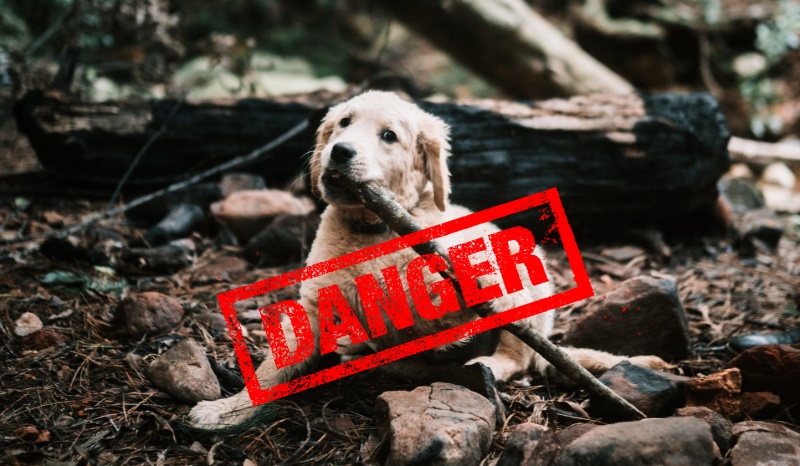
    It isn’t safe to allow dogs to fetch sticks or even play with sticks.

    It is a tragic fact that dogs have died after fetching sticks.

    Stick injuries to dogs can be serious and even fatal. There is no good that can come from throwing a stick for a dog, particularly when there are so many safer, more hygienic alternatives.

    Veterinarians are urging dog owners not to throw sticks to dogs.

    However, this warning was met, in some quarters, by scorn from the ‘health and safety gone mad’ brigade.

    Gordon Lochrie, a vet in Lincolnshire, spoke to The Lincolnshire Echo newspaper, backing up a colleague in Scotland who reiterated the call for owners not to throw sticks for dogs when he recently had to remove a four-inch long splinter wedged deep in a smooth collie’s throat.


    Upsetting image has been blurred

    Mr Lochrie said:

    “…We had a case of a springer spaniel in Gainsborough which chased a stick which impaled itself in the dog’s carotid artery and jugular vein,” Mr Lochrie said.

    “It was dead on arrival here at the surgery in North Street – and the next serious case was luckier.

    “Only about four years ago a collie punctured its tongue and the stick went straight through the mouth just missing the larynx. It recovered after major surgery.

    “Not only does this cause considerable pain and discomfort for the animal, it also can be very costly.

    “You’ve got the cost of the surgery, post-operative care, nursing, and medication.

    “So I’d agreed that a soft toy, small ball or, even better, a larger ball that won’t get lodged in the throat is a much safer alternative.”

    For those who commented on social media and made their views known to various radio phone-in shows that stick throwing was a perfectly harmless, traditional way for owners to play with their dogs and those who opposed it were a bunch of health and safety obsessed kill-joys.

    While it may seem a harmless or ‘traditional’ way of playing with a dog, the risk of serious injury or the death of a dog simply isn’t worth the risk of allowing them to play with sticks.

  • Think Your Dog Is Overweight? You Need To See This

    New study reveals that weight loss in obese dogs is associated with improvement of several health markers.

    • In parallel, another study finds that one third of dog owners do not recognise when their pet is overweight

    • In advance of Pet Obesity Awareness Day, Purina shares insights on some of the studies backed by the Company as a reminder of the role that behavioural science can play in supporting pets and their owners to improve the quality of life for pets.

    A study backed by Purina shows that weight loss in obese dogs is associated with significant improvements of health measures like metabolic status, cardiovascular parameters, life quality and immune-regulation, adding further evidence to the importance of maintaining a healthy weight in pets.

    [bctt tweet=”Weight loss in pets is already known to have benefits including reducing the risk of arthritis, a healthier coat and an improved quality of life, but this research also reveals the positive effect on the immune system” username=”topdogtips”]

    This new evidence comes as pet obesity risks are being exacerbated by global lockdowns. From 2015 to 2018, incidence of obesity and overweight classifications in dogs has grown by 2%, and by 1.3% in cats. This may worsen in global lockdowns due to changes in daily routines for owners and pets that impact on pets’ feeding behaviours and exercising activities.

    In the study, a cohort of 11 obese dogs were put through a six-month weight loss programme. When compared with a control group of dogs of a healthy weight, the obese dogs showed clinical improvements on a number of key indicators related to immune function, such as reduced tumour necrosis factor (TNF)-α and interleukin (IL)-6, known to impair insulin action in metabolic tissues but also favour cancer development in humans.

    Hugues du Plessis, Pet Obesity Prevention Manager, at Purina said: “Preventing pet obesity is a major focus at Purina. We not only want to be providing pet owners with information on the benefits of a healthy pet lifestyle, but we also want to help them achieve it. This is why we are working with partner organisations to understand how behavioural science can be used to support owners, from the recognition of an issue, to the changes that will make a difference. ”

    The importance of educating owners is evidenced in another study, conducted by Purina in collaboration with experts from five universities, that revealed 33% of pet owners could not correctly identify when their pet was overweight.

    Including 3,339 dog owners across five countries – France, Germany, Italy, Russia and the United Kingdom -, in addition to showing that owners often struggle to accurately assess whether their dogs are a healthy weight, this new research also found that owners with healthy weight dogs were more likely to have support from friends for exercising and to understand that owning a dog can have costs. These findings add to the knowledge on the root causes of pet obesity and reinforce the need to keep exploring solutions focused on prevention and treatment.

    In fact, prioritising pet health and providing owners with support from the start of pet ownership is essential, as evidenced in a landmark Purina study that showed maintaining an ideal body weight from puppyhood throughout life can increase the lifespan of the dog by 1.8 years, and significantly delayed the onset of chronic diseases associated with aging, like osteoarthritis.

    As part of Purina’s purpose to ‘create richer lives for pets and the people who love them’, the Company is committed to helping reduce the risk of pet obesity through its continuous work with partners across Europe.

  • This Silent Killer Is a Risk to All Dogs

    This Silent Killer Is a Risk to All Dogs

    If you haven’t ever wondered whether dogs can get carbon monoxide poisoning, you’re not alone. It’s most likely because it’s silent, unlike the various illnesses, ailments or sudden traumas that can affect our dogs, that it isn’t always one of the most immediate concerns at the forefront of our minds.

    But dogs can get carbon monoxide poisoning and, sadly, they can die from it too. Just like humans.

    Worryingly though, research, from a campaign called CO Be Alarmed! has revealed that almost a third of us could be putting our pets at risk from carbon monoxide (CO) poisoning.

    A small investment can prevent tragedy

    The analysis shows that UK pet owners spend on average almost £2,000 a year to keep their pets happy and healthy, yet almost a third (29%) either don’t have a carbon monoxide alarm or don’t know if they have one. A CO alarm can cost as little as £15.

    For dogs who are left home alone for regular periods, the risk of getting carbon monoxide poisoning from a leaky fireplace, a malfunctioning boiler or any other source of gas should cause owners to think how they would feel if they’d just plain forget to get a carbon monoxide alarm.

    Precautions to prevent carbon monoxide poisoning

    Abbie Sampson, CO Be Alarmed! spokesperson said:

    “Carbon monoxide is known as the ‘silent killer’ because you can’t see it, smell it or taste it – and that doesn’t just apply to us, our pets are at risk too.

    “If CO is present in the home, everyone is at risk, and pets and children can be the first to show signs of CO poisoning. As pets are often left in confined spaces for extended periods of time, they can be particularly vulnerable.”

    The new survey found that UK pet owners leave their pets at home alone for an average of three hours every day.

    While nearly all pet owners (98%) believe that their pets are safe at home, nearly a third (28%) worry about the wellbeing of their pet at least once a day and over a third (36%) of UK pet owners have left a social outing early because they wanted to get home to their pet.

    Despite this, nearly a third (29%) either don’t have, or know if they have, an inexpensive life-saving CO alarm. And of those who have an alarm, almost one in ten (8%) have never tested it or simply don’t know when it was last checked.

    Carbon monoxide can be omitted by everyday household objects, like poorly maintained or faulty boilers or gas cookers, so a CO alarm is essential to make sure everyone is protected in the home.

    Around 30 people die each year from carbon monoxide poisoning and another 4,000 are treated in hospital, but the true number is likely to be higher with early symptoms, including headaches, dizziness, nausea and breathlessness, easily mistaken for flu or tiredness.

    Abbie said: “Carbon monoxide poisoning can be fatal but there are some simple, inexpensive steps that can protect everyone in your home. Follow our simple ABC checklist – Do you have an Alarm fitted? Have you tested it and are the Batteries working? Have you had an up to date gas Check? – will help keep you and your pets safe from CO poisoning.”

    To raise awareness of the risk of carbon monoxide poisoning to pets in the home, the CO Be Alarmed! campaign is asking pet owners to post pictures of their pets with their #PawsUp to show they’re safe from CO.

    Symptoms of carbon monoxide poisoning in dogs

    • 1. Lethargy and general malaise
    • 2. Sudden sickness and vomiting
    • 3. Problems with breathing and short breath
    • 4. Fitting and seizures

    You can protect your dog and give yourself and your family greater peace of mind for less than the price of a takeaway meal.

  • MCT Oil Could Help Dogs With Hard to Treat Epilepsy, New Study Reveals

    MCT Oil Could Help Dogs With Hard to Treat Epilepsy, New Study Reveals

    Epilepsy is the most common canine neurological disorder and it is estimated that four in 100 dogs will suffer from the condition and it can affect dogs in different ways.

    Some of the most common dog breeds affected by epilepsy include German Shepherds, Beagles, Golden Retrievers, Border Collies, Cavalier King Charles Spaniels, Dachshunds, Border Terriers, English Springer Spaniels and Labrador Retrievers.

    New research conducted by the Royal Veterinary College (RVC), funded by The American Kennel Club Canine Health Foundation (AKC CHF), has tested the effects of an oil supplement on seizure frequency in dogs with drug-resistant epilepsy, with very encouraging results.

    The RVC say their research shows that small changes to the diets of dogs with hard-to-treat epilepsy has the potential to reduce the number of seizures and improve the quality of life for affected dogs and their owners.

    Epilepsy is the most common long-term neurological condition in dogs and can be very distressing for both dogs and their owners. Current treatments focus on managing the condition and reducing how often seizures occur. However, despite treatment with appropriate anti-seizure medication, approximately one-third of dogs continue to experience frequent seizures. This has significant impacts on their behaviour and cognitive functions and can also make dogs prone to anxiety.

    Helping develop new treatment strategies to reduce epileptic seizures and improve the overall welfare of dogs, a team of researchers, led by veterinarians Professor Holger Volk and Dr Benjamin Andreas Berk, alongside canine behaviour and welfare scientist Dr Rowena Packer, at the RVC, tested the effects of an oil supplement on seizure frequency in dogs with drug-resistant epilepsy.

    Previous research by the RVC had shown that the oil, which contains a specific type of fat known as medium-chain triglycerides, or MCTs, could have beneficial effects when included within a dry kibble diet. During this study, the oil was added as a supplement to a dog’s existing diet to determine if the same benefits could be achieved. The oil was tested in a rigorous clinical trial during which 28 dogs received the MCT oil for three months and a placebo oil for three months. Both owners and investigators were blind to which oil dogs were receiving during each phase.

    Overall, dogs had significantly fewer seizures during the MCT phase compared the placebo phase, and an improved owner-reported quality of life. New therapies are urgently needed to improve the quality of life of affected dogs and their owners and the results of this study offer a promising addition to other methods commonly used to treat canine epilepsy.

    Dr Rowena Packer, BBSRC Research Fellow at the Royal Veterinary College, said:

    “Epilepsy is often a challenging and distressing condition for dog owners to manage, particularly when dogs don’t respond to anti-seizure medications in the way their owner and vet might have expected or hoped. Historically, diet has not been considered a key part of epilepsy management, but along with other recent findings, these results indicate that nutrition likely plays an important role in seizure control.

    “Our novel findings indicate that a relatively small change to the diet of dogs’ with hard-to-treat epilepsy can potentially reduce the number of seizures they have, while also improving their medication side effects and overall quality of life. MCT oil offers a promising addition to the wider epilepsy management tool-kit.”

    Dog epilepsy seizure triggers

    Canine epilepsy seizures are stressful for both the dog and owner and can appear unpredictable and uncontrollable.

    Dr Sarah Finnegan, a PhD student at the RVC studied the behaviour and environment of dogs to identify seizure triggers to help dog owners spot signs that their dog might be about to have a seizure.

    Here are some of the most common triggers and signs dog owners reported before a dog had an epileptic seizure:

    • Nearly two thirds of owners reported pre-seizure changes in their dog (65 per cent), most commonly stating clinginess, excessive energy, and unsettled sleep.

      These signs varied between dogs, with other common changes including clumsiness, excessive panting, becoming withdrawn or quiet, and lacking energy.

    • Nearly half of owners (43 per cent) also reported seizure triggers, which commonly involved stress, food and excitement.

      A wide range of other triggers were reported by owners including loud noises, fireworks, storms, household products (cleaning products and air freshener), and preventative healthcare including flea and worming products and vaccinations.

    • Over half of owners (60%) believed they were able to predict an upcoming seizure in their dog by using a combination of pre-seizure changes and recognising triggers.

      Nearly half of these owners were able to do so 30 minutes or more before the seizure commenced.

    Dr Rowena Packer, BBSRC Research Fellow and research lead in canine epilepsy at the RVC, said:

    “It was fascinating to discover how in-tune many owners of dogs with epilepsy are with subtle changes in their dog’s behaviour before seizures. Many of our findings echo what is seen in human epilepsy patients and add evidence to support the presence of prodromal pre-seizure periods in dogs as well as people. Collecting further objective data to confirm these findings and explore ways to proactively utilise this period for seizure management are of priority for future research.

    “This study also highlights how crucial it is that owners of dogs with epilepsy keep good records, not just of their dog’s seizures, but also of changes in behaviour and exposure to potential triggers, to gain a better picture of patterns in their dog’s seizure activity. The RVC Pet Epilepsy Tracker app allows owners to keep records, that can also be shared electronically with their vet and with RVC for further research.”

  • Can Dogs Take Human Painkillers?

    One of the biggest search terms that brings people to this site is ‘can dogs take human painkillers?’. The actual article that this leads people to is a news item about a company that has developed painkillers for dogs. I wanted to put up this post to definitively answer the specific question that (a lot of) people are asking about whether they can actually give their dog human painkillers.

    Can Dogs Have Human Painkillers?

    The short and very important answer ‘can I give my dog human pain killers?’ is a resounding no!

    No, no and thrice no. Don’t do it, don’t consider it.

    It is absolutely horrendous for any dog lover to see their dog suffering with any kind of pain.

    We know and appreciate that dogs can’t talk and can’t be specific with us about where their pain might be or even how bad it is.

    But, we know our dogs and we do know when they’re in pain so – it would seem – often times owners will turn to the Internet and research whether it would be OK to slip them a paracetamol or other human manufactured pain management drug.

    Sadly, dogs have come to serious harm and death as a result of being given medicine that was not developed with their specific needs in mind. And sometimes the suffering resulting from such (an honest) error can be excruciating for the dog and obviously very, very traumatic for the dog’s owner.

    There is – and I appreciate this might be the boring response – only one responsible response to a dog in pain and that is to call in the professionals. You can, of course, manage your dog’s health on a day to day basis. For example, there are now dog health tracker apps to help dog owners monitor the day to day well-being of their pet.

    Dogs in pain should be seen by a vet who will be able to both identify the underlying cause and prescribe the most effective pain management solution.

    The sooner the dog can be seen and treated, the faster the issue can be brought under control.

    So, no matter how tempting it may be – be warned: giving dogs human pain killers can kill them and can actually cause much, much worse suffering for the animal.

    Breakthrough on Painkillers for Dogs

    A pharmaceutical company focused on pet health has announced it is to market the first canine pain management product delivered in a transmucosal mist form. Abbott (NYSE:ABT) announced today they have partnered with Velcera, Inc to bring to market the product – currently in clinical trials – which combines the proven pain medication meloxicam, a nonsteroidal anti-inflammatory drug (NSAID) with Velcera’s patented Promist technology, and has been globally licensed for pain management in dogs.

    “Abbott Animal Health is dedicated to bringing high quality and innovative treatments to veterinarians and their clients,” said Lynn Bromstedt, divisional vice president, Abbott Animal Health. “This revolutionary pain management product will be a great addition to Abbott’s existing animal health portfolio and could make medication compliance easier for pet owners.”

    Promist technology delivers the active ingredient through a fine mist to the inside cheek or oral cavity of the animal, where it is quickly absorbed through the mucous membranes of the mouth. Studies show the product is bioequivalent with oral liquid formulations, and bioavailability can be as much as ten times that of a tablet formulation, depending on the active ingredient.

    In addition to convenience for pet owners, Promist(TM) technology has several other advantages such as increased dosing confidence, faster absorption than delivery with a tablet or liquid and less concern with food interactions.

    “Being able to partner with a trusted company like Abbott on a product of this nature is a testament to the importance of this technology,” said Dennis Steadman, chief executive officer, Velcera. “This agreement will help bring this new treatment method to market for the benefit of pets and pet owners.”

    The product will expand Abbott Animal Health’s core focus areas, which currently include products in the areas of diabetes, anesthesia, wound care and fluid therapy, in addition to a recently announced partnership for one of the first cancer medicines designed specifically for dogs.

    Under the terms of the agreement, both parties have committed to consider future product developments and registrations using the Promist technology.

    The news of advancements in pain management for dogs is one sure to be warmly welcomed by owners. The issue of what pain medicine can be used on dogs is one of the most popular dog related search terms online. Analytic data suggests many dog owners turn to the web first to ask questions such as ‘can I give paracetamol to my dog?’ and other related terms. If you suspect your dog is in pain it is an absolute must to consult with a vet and never, ever attempt to give a dog human painkillers.

  • 15 Life-Threatening Emergencies That Require Urgent Vet Care

    Emergency vet care advice during the coronavirus / covid-19 UK lockdown.

    The UK government’s coronavirus measures have given millions of animal lovers more time than ever with their pets — and more concerns than ever about what might happen if they become ill.

    While veterinary practices across the country are allowed to stay open under the current lockdown restrictions, face-to-face contact has been reduced and guidance from the veterinary surgeons’ regulatory body, the RCVS, has restricted veterinary care to emergency treatment only.

    All veterinary clinics, hospitals and practices have now switched to fulfilling urgent prescriptions and providing emergency pet services only.

    But what is an emergency? Here are some of the conditions that emergency vets deem to be potentially life-threatening. These have been compiled by leading emergency vet, Dave Leicester, Head of Clinical Intelligence at Vets Now.


    1. Breathing difficulties

    Signs of breathing problems may be obvious, such as choking, gasping and pawing at the throat. Or, they may be more subtle such as breathing through the mouth, panting at rest or increased noise when breathing. Objects stuck in the airway, allergic reactions to stings, infections and injuries are all possible causes. Breathing problems can be immediately life-threatening in pets, so help should be sought immediately. Find out more about breathing difficulties in dogs and cats in our advice in-depth advice articles.

    2. Open wound injuries

    Heavy bleeding should always be considered an emergency and any bleeding that is a constant flow (especially if pulsing) or doesn’t stop in a few minutes also needs to be seen by a vet urgently. If you are able to safely do so, you can apply firm pressure on the wound, and raise it above the level of the patient’s heart, to slow the bleeding before getting to the vet.

    3. Traumatic injuries

    If your pet has been injured in a fall, from a window for example, or been hit by a car, they may have suffered serious internal injuries that aren’t immediately obvious. Many animals suffering from chest trauma may seem fine initially but can die later from severe bruising to the lungs. So do seek urgent veterinary help and advice.

    4. Bloating in dogs

    Bloating can be a sign of something called gastric dilation and volvulus, GDV, which is also known as torsion. It is a medical and surgical emergency which can be rapidly fatal if left untreated, but the good news is the survival rate of dogs who undergo emergency surgery after being diagnosed is as high as 80%. If you see your dog retching unproductively, or only producing froth, or developing a swollen abdomen, get help immediately.Find out more about bloat in dogs here.

    5. Failing to urinate

    This can happen to any animal but is most common in male cats. If your pet can’t urinate it can lead to kidney failure, bladder rupture and death from internal poisoning. Signs can be confused with constipation, so if you see your male cat constantly straining in the litter tray you should get urgent veterinary advice.

    6. Seizing and fitting

    Prolonged or frequent seizures can be deadly but regardless of whether your pet has had one fit or several, you should contact your vet or your nearest Vets Now urgently.

    7. Poisoning

    If you know your dog has eaten something poisonous – or even suspect it – call for help. Although many poisons can be counteracted with prompt action, waiting for symptoms to appear makes this harder and the chances of success drop rapidly.

    8. Eye injuries

    Although damage, infection or injury to the eyes is unlikely to be life-threatening, they can threaten your pet’s sight and have a profound impact on their lives, not to mention cause them pain and discomfort. Eye problems can progress very rapidly, so do not delay getting attention.

    9. Repeated vomiting

    It’s quite normal for animals – dogs in particular – to be sick every now and again, so this isn’t necessarily an emergency. But if your pet is repeatedly sick, is generally unwell, can’t keep water down, is vomiting blood, or also has diarrhoea, then you should get them checked just in case.

    10. Birthing difficulties

    Most dogs and cats give birth without any problem quite happily on their own. However, as a rule of thumb, female dogs shouldn’t go more than two hours between puppies, bleed a lot, or strain hard for more than 20 minutes without producing anything. It’s similar for female cats, although if they are straining non-productively for 20 minutes, consider it an emergency.

    11. Severe pain and anxiety

    If your pet is showing signs of severe pain or anxiety, they may well be warning you of serious unseen internal problems. So, trust your pet’s warning signs and contact your vet.

    12. Heatstroke

    Heatstroke occurs when a pet can no longer regulate their own body temperature and keep it at a normal level. It is the result of overheating, for example when pets are left in a hot car or conservatory. Organ damage can happen very quickly as a result of heatstroke and sadly it can be fatal. But cooling them down too fast can actually make your pet worse, so always urgently seek your vet’s advice.

    13. Near-drowning

    If you pet has been pulled from water, make sure she’s checked by a vet as soon as possible. Animals, like humans, can suffer from secondary drowning where lung damage can cause them to die minutes, or even hours, after being brought from the water.

    14. Inability to weight bear or move limbs

    Although broken bones or paralysis may not be life-threatening on their own, your pet may be in pain and there may be other injuries that need checked out. Pets with such difficulties may need urgent treatment.

    15. Collapse

    Acute collapse in dogs may see your pet lose consciousness or they may remain conscious but seem anxious, confused or have a “glassy-eyed” appearance. If you pet collapses, even if they recover spontaneously, you should seek help from a vet straight away.

  • Dog Dental Care: How to Take Care of Your Dog’s Teeth in 3 Steps

    Dog Dental Care: How to Take Care of Your Dog’s Teeth in 3 Steps

    Did you know that regularly brushing your dog’s teeth as part of a home dog dental care plan could go a long way to helping you keep your dog’s teeth and gums healthy?

    A BBC study recently claimed that tooth brushing is ‘the ‘gold standard’ for oral hygiene in both cats and dogs’.

    Here are three simple steps to take to care for your dog’s teeth and gums (two of which you can do at home!).

    1. Learn how to brush your dog’s teeth

    Believe it or not, taking care of your dog’s mouth is as important as taking care of your own and learning how to brush your dog’s teeth and gums at home isn’t as daunting a task as it sounds for you or your dog – I promise.

    However, the earlier you start, the easier it’ll be to get your dog comfortable with the practice and establish a daily routine.

    I’ve found that it’s actually a great way to get some one-on-one time with your dog because you force yourself to find some quiet time for you and your dog, away from any and all distractions.

    This article on Dogadvice.co.uk is packed with advice on the practicalities of cleaning a dog’s teeth and gums, helping to avoid bad breath and dental disease as part of a good home based dog dental care plan.

    Carole Matthews shares her personal top tips on how to choose the right dog toothbrush for your dog’s breed and age to how to get your dog used to the taste of doggy toothpaste and comfortable with the feeling of a toothbrush roaming around their mouth.

    She says it’s all about taking small steps and making sure your dog’s happy throughout the process.

    Read more here

    2. Seek out toys and treats to help

    The pet market is full of goodies to help keep dogs happy and engaged.

    Dental chews such as Pedigree® DentaStix Twice Weekly™ are scientifically proven to help reduce tartar build-up and help to keep a dog’s teeth and gums healthy and strong.

    Chew toys, such as rope toys, will encourage dogs to use their teeth to play with the toy and can help to remove and reduce tartar build-up too.

    My own dogs need no extra encouragement to have a game of tug-o-war, often starting in one room and ending in another!

    3. Book regular check-ups with your vet

    Our dogs mouths play a key role in virtually everything they do. If they suffer from any form of discomfort in their mouths, whether as a puppy or older dog, it really could make life less enjoyable, impacting on everyday activities.

    The best way to reinforce your efforts at home with toys, chews and brushing your dog’s teeth and gums, is to establish a routine of visiting your vet or vet nurse every six months for a dental check-up.

    This way, if any problems begin to develop, your vet or vet nurse will be able to spot signs quickly.

    This article is sponsored by PEDIGREE® DentaStix Twice Weekly™.

  • Dog Dental Care: How to Clean Dogs Teeth

    Knowing how to clean a dog’s teeth is important not only as part of a dog dental care regime, but it is also a great way to bond with your dog, whatever their age.

    But before we share with you our advice on how to clean your dog’s teeth, let’s answer some of the most common questions about the subject.

    Dog Dental Care Facts

    ‘How many teeth does a dog have?’ – asks Ann Rice.

    Like humans, dogs are born without teeth. But when they are only a few weeks old, a puppy will begin to develop milk teeth.

    By 16 weeks, a puppy will have 28 milk teeth before giving way to their adult teeth at around 6-8 months old.

    Adult dogs have 42 teeth.

    ‘How do I get rid of dog breath?’ – asks Marcia Barrett.

    Acoording to dog groomers, a dog’s diet can play a key role.

    Brushing their teeth and gums to keep them healthy and free from plaque using chew toys and dental chew treats, such as Pedigree® DentaStix Twice Weekly™ is scientifically proven to help reduce tartar build-up and helps to keep your dog’s teeth and gums healthy and strong.

    ‘How often should I clean my dog’s teeth?’ – asks Lynsey Rayner.

    Every day.

    How to Clean Dogs Teeth

    Longtime dog owner Carole Matthews shared her advice with us on how best to clean a dog’s teeth. Here are her four top tips on how to get a dog comfortable with the practice.

    1. Get prepared

    You will need a few essential items to clean your dog’s teeth at home.

    The first is a suitable toothbrush that’s sized to fit their teeth perfectly for maximum benefits.

    If your dog is a toy or miniature breed, a small pet toothbrush is ideal.

    If your dog is a small dog, I find that a child’s toothbrush will work well and for any medium-large breeds, an adult’s toothbrush will be suitable.

    Next, you’ll need a dog toothpaste and luckily, they are mostly quite meaty flavours (my own dogs love the beef flavour). Human toothpaste has chemicals that could be harmful, so a toothpaste made just for dogs will make sure you avoid any unnecessary or harmful chemicals.

    2. Treat it like a training session and start slowly

    Find a quiet spot for you and your dog to sit down together away from any distractions.

    If you can, try to do this at the same time every day so it becomes routine for your dog and you.

    The goal is to get them used to the idea of having their teeth cleaned, so treat the learning process like a training session.

    Keep the sessions short, this may be only a few minutes, don’t worry if that’s the case, just remember to stop while your dog is still relaxed and happy.

    3. Getting your dog used to the toothpaste

    To get your dog used to the toothpaste and brush, first introduce the toothpaste to them by putting a small amount on your finger and allowing them to lick it off. This is why choosing a flavoured toothpaste designed to appeal to dogs works well!

    Next, after your dog has shown they like the taste of the toothpaste, put a little more on your finger and run your finger along a gum on the inside of their mouth.

    You should do this for a few days until your dog is comfortable before introducing the toothpaste on a toothbrush.

    Remember, it’s all about taking small steps to make sure your dog is fully comfortable and happy because brushing their teeth will be a regular activity for you and your dog to enjoy a few moments of bonding time together. I always try to start this practice with my dogs from a young age to get them used to it.

    4. Introducing the toothbrush

    After a few days, introduce the toothbrush and allow your dog to lick the toothpaste from its bristles.

    Once your dog is comfortable with the toothbrush, wet the bristles and add toothpaste, pushing the toothpaste down into the bristles.

    Next, begin by brushing the front teeth slowly in small circular motions. Begin with the left side before moving to the right. Stop regularly to allow your dog to lick the brush and feel like they’re receiving a reward.

    You may need to hold your dog’s muzzle gently to keep their mouth closed (this is to stop them chewing when the brushing begins). If so, this is perfectly normal, just remember to take it in small steps so your dog remains calm and comfortable. It will also help to keep you calm too if you’re nervous when doing for the first time (which is also perfectly normal, I was too).

    Once your dog is happy to let you brush their front teeth and canines (the longest teeth), you can move onto their back teeth, repeating the process as above.

    It may take your dog a couple of weeks to feel entirely comfortable with having their teeth cleaned. Each dog will get comfortable at their own pace. The trick is not to rush and make sure you stop each session when they’re still happy, so you end on a positive note.

    As well as daily cleaning, you can help your dog’s dental care regime by introducing other fun items, such as chew toys or treats, which are designed specifically to help remove plaque from their teeth as they chew.

    I’ve found chew treats work brilliantly for dogs of all ages, so even if your oldest dogs start to chew their toys less because their teeth become more sensitive, something you’ll no doubt have noticed if you’ve ever owned an older pup, a tasty dental treat will usually always tempt them!

    And of course, it’s always worth setting up a regular health check with your vet for a dental check-up once or twice a year.

    This article is sponsored by PEDIGREE® DentaStix Twice Weekly™.

  • Is Human Sunscreen Safe For Dogs?

    If you’ve seen the warnings about the need to protect dogs from the dangers posed by the sun, you may have asked yourself whether human sunscreen is safe to use on dogs.

    Well, the answer is yes. But you need to select the type carefully.

    It’s possible to buy pet safe sunscreen, but if that’s not available to you & your dog is at risk of sun-burn, choose baby sunscreen.

    Do not apply products containing zinc oxide is as that is toxic to dogs.

    Sunscreen & Dogs – You Need To Be Aware of Another Danger

    Summer can be a wonderful for the nation’s pets to enjoy long walks, playtime in the park and lazing in the garden but many owners are not aware of the hazards to animals, particularly in very hot weather. If pets are exposed to too much sun, it can cause heatstroke and can cause a pet’s skin, particularly delicate areas such as the nose or ears, to become sunburnt. Long-term sun exposure can prove fatal, as like people, pets can also develop malignant skin cancer so sunscreen for dogs is a valuable precaution to take.

    Pets can also develop a skin disease called solar dermatitis, caused by exposure to ultraviolet (UV) radiation. It can affect dogs on their nose, trunk or limbs and in cats solar dermatitis normally affects those with white fur or damaged skin that is not protected by enough hair.

    To prevent your cats and dogs getting sunburnt, you need to reduce their exposure to the sun, especially between the hours of 8.00am and 5.00pm. Also ask your vet to recommend a suitable sun block, as they will also be able to identify the areas of your pet’s skin that are most likely to burn or be damaged.

    To help keep your pets healthy and happy during the summer particularly in very hot weather, PDSA has put together some useful tips for owners.

    5 Tips For Protecting Your Dog From Sun Related Dangers

    1. Never leave pets in cars, not even for just a few minutes with windows open as temperatures can soar dangerously high, causing potentially fatal heat-stroke.

    2. Don’t let pets sit out in strong sun, or leave hutches and bird cages in direct sunlight.

    3. Use a suitable pet-safe sunscreen as advised by your vet.

    4. Long-haired pets may need their fur trimming to prevent them from over-heating.

    5. Walk your dog before 8am and after 5pm and only when outside temperatures have cooled as hot road surfaces, pavements and sand can burn a pet’s feet.

    6. Make sure pets have access to plenty of clean, fresh water at all times that is changed regularly throughout the day.

    7. Make sure you regularly treat your pets and home for fleas as they are a particular problem during the summer, particularly in hot weather.

    8. Leftover pet food can quickly go off in hot weather so discard any scraps as soon as possible to avoid flies.

  • Why Won’t My Dog Sleep Through The Night?

    Why Won’t My Dog Sleep Through The Night?

    According to research, dogs sleeping in the bedroom is actually good for you and good for them, but for many owners it’s difficult to cope when a dog won’t sleep through the night.

    Dogs, just like us, need high quality sleep in order to function, be healthy and happy, so a lack of sleep is not good for them.

    If a dog is not sleeping through the night, there are a few issues that could be at play:

    1. Are they needing the toilet? If so, is their an underlying medical issue that needs to be looked at by a vet?

    2. They are being disturbed by a noise in the home, maybe a timed event such as central heating being turned on or off?

    3. Are they experiencing discomfort, if so, what?

    4. Are they – now wait for it – being disturbed by you or another human in the home? Some people are prone to loud snoring or sleep talking / shouting, which could in turn be waking the dog up and causing them to be agitated?

  • Bulky Beagle Sheds The Pounds & Look At Him Now!

    Bulky Beagle Sheds The Pounds & Look At Him Now!

    A formerly heavy hound from Middlesbrough has been named biggest loser in the UK’s largest pet slimming competition after shedding an incredible 34% of his bodyweight in just six months.

    Alfie the Beagle once weighed-in at a whopping 4st 10lbs (30kg), – 67% over his ideal weight (2st 12lb/18kg). His health was at serious risk from his excess pounds, say PDSA vets. But after pounding the streets and cutting back on the excess food, he’s lost a third of his bodyweight and wowed the Pet Fit Club judges. He is now a much healthier 3st 1lb (19.7kg)

    Each year, PDSA helps the country’s fattest pets take on a strict six-month diet and exercise challenge, specially tailored and overseen by the charity’s vets and nurses.  Pet Fit Club helps our four-legged friends slim down, and raises awareness of the serious health and welfare implications of pet obesity.

    Since its launch in 2005 the Pet Fit Club competition has helped 79 dogs, 37 cats and 8 rabbits lose a total 71 stone – equivalent to a grand piano (or 16,000 doughnuts!)

    The winner: Alfie’s tail

    Owner, Emily Simcox (25), adopted Alfie, the bulging Beagle, five years ago. Alfie was already seriously overweight and found it difficult to get around.

    Emily has been trying to help Alfie slim down ever since but back in April, admitted she needed help from PDSA to shake off some bad habits.

    She said: “Taking part in PDSA’s Pet Fit Club is unquestionably the best thing I have ever done. Seeing the transformation in Alfie has been incredible. He’s a completely different dog and we’re over the moon.

    “Before, he was sluggish, tired and looked sad a lot of the time. He couldn’t even walk up the stairs; he’d struggle half way up and then had to stop for a rest before getting to the top. On walks, he would sluggishly walk towards a ball we’d thrown and often wouldn’t bother even trying to bring it back. But since being on the diet his tail hasn’t stopped wagging! He leaps and bounds, and is so full of energy.

    “Before Pet Fit Club, I would continually feed him treats as a way of showing how much I love him. Those eyes are so hard to resist. But we know now that we were drastically affecting his life by doing this and it was no good for him. It was heart-breaking to say no at first. I felt as though I was starving him. But with the help of the PDSA team, we managed to stick with it and learn to say no.”

    Alfie’s diet hasn’t been without its slip-ups, said Emily: “I was making a cheese sandwich and left it on the kitchen counter. I walked back in the room to find Alfie licking his lips, and the cheese sandwich gone!

    “I want other people to realise there’s help out there. You don’t need to be embarrassed about having an overweight pet. I hope others are inspired by Alfie’s story and take their pet to the vets for advice and support. Alfie is proof that change is possible – we’ll never look back!”

    Alfie’s weight-loss has been supervised by PDSA vet nurse Steph Williams, from Middlesbrough PDSA Pet Hospital. She said: “Alfie’s transformation over the last six months has been incredible. He is unrecognisable from the dog that waddled into our hospital for his first weigh-in six months ago. He’s much healthier and will be able to enjoy a much happier life.

    “His owners Emily and Neil have been very dedicated to adjust his lifestyle for the better. They have listened to all the advice and stuck to the diet religiously. It’s helped increase Alfie’s exercise levels and showed what can be done with determination!

    PDSA vet nurse Katy Orton, who helped to judge the competition, added: “It has been great to watch Alfie transform over the past six months. His success is testament to the hard work of his owners and our PDSA veterinary team at Middlesbrough Pet Hospital.

    “Pet obesity is a growing issue that affects millions of UK pets. Up to forty per cent of dogs and cats in the UK are estimated to be overweight or obese. Recognising a healthy body shape is an important first step, so we are encouraging pet owners who are concerned about their pet’s weight to speak to their vet or vet nurse as soon as possible. This expert advice can help owners make the necessary changes to ensure their four-legged friends lead a happier, healthier life.”

    PDSA Pet Fit Club – The Results

    NAME STARTING WEIGHT FINAL WEIGHT TOTAL WEIGHT LOST % WEIGHT LOSS Result
    Alfie

    Beagle

    Middlesbrough

    4st 10lbs (30kg) 3st 1lb

    (19.7kg)

    1st 9lb

    (10.3kg)

    34% Winner
    Lola

    Rabbit

    Derby

    1st 2lbs (7.4kg) 12lb

    (5.6kg)

    4lb

    (1.8kg)

    24%


    Highly Commended!

    Biggest rabbit weight-loss ever

    Pumpkin

    Cat

    Aberdeen

    1st 8lbs (10.2kg) 1st 5lb

    (8.74kg)

    3lb

    (1.46kg)

    14% Top cat
    Barnaby

    Cat

    Derby

    1st 4lbs (8.1kg) 1st 2lb

    (7.45kg)

    2lb

    (0.65)

    8% Runner-up
    Milo

    Cat

    Margate


    1st 12lbs (11.8kg) 1st 11lb

    (11.2kg)

    1lb

    (0.6)

    5% Runner-up
    TOTAL 10st 9lb

    (67.5kg)

      2st 5lb

    14.81kg


    Since its launch in 2005 Pet Fit Club has helped 79 dogs, 37 cats and 8 rabbits lose a total 71 stone – equivalent to a grand piano or 16,000 doughnuts!

  • The 10 Unhealthiest Dog Breeds (Really?)

    The 10 Unhealthiest Dog Breeds (Really?)

    According to a survey carried out by a pet insurance firm, these are the 10 breeds of dogs who cost their owners the most money in vet fees. This is data that, at first glance, presents itself as showing the ’10 least healthy dog breeds’.

    But not is all is necessarily as it seems.

    Let us not forget, there are lies, damn lies and pet insurance surveys! This is isolated data and there are many caveats to consider.

    What this could actually show is, the owners of these breeds of dogs are more likely to have pet insurance. Or the owners of these dogs are more prone to taking their dogs to the vets.

    Or, it could be, that these 10 breeds are indeed more liable to incurring higher veterinary expenses for their owners or these could be the breeds that are out there biting folks on a daily basis, although that does seem pretty, pretty unlikely. And a Poodle is not just a Poodle is it? There are different flavours of Poodle, we all know that 🙂 – so it’s fair to say this list is entirely subjective and no way exhaustive, but it may tempt you to investigate ways to lower your vet bill, that’s for sure.

    Unhealthiest Dog Breeds?

    Take it however which way you please but here are the 10 most unhealthy dog breeds according to a single pet insurer’s data:

    DOG BREEDS Lifespan per breed (Years) Cost of vet bills in the last year Cost of vet bills in a lifespan
    1 English Setter 11.2 £621 £6,955
    2 Great Dane 8.5 £780 £6,630
    3 Poodle 12 £544 £6,528
    4 Rottweiler 9.8 £532 £5,214
    5 Doberman Pinscher 9.8 £481 £4,714
    6 Pointer 13.5 £335 £4,523
    7 Greyhound 13.2 £314 £4,145
    8 Chihuahua 13 £310 £4,030
    9 Beagle 13.3 £302 £4,017
    10 Saint Bernard 8 £492 £3,936
  • Deadly Flesh Eating Disease Nicknamed ‘Canine Black Death’ Has Killed Again

    Deadly Flesh Eating Disease Nicknamed ‘Canine Black Death’ Has Killed Again

    Vets in Warwickshire have confirmed the death of a dog due to the deadly flesh eating disease known as Alabama Rot. The disease is most common in the months between November and February, claiming the lives of many UK dogs each year since it was identified.

    ‘Sadly we have had a confirmed case of CRGV/Alabama Rot in a dog at our practice. The dog has sadly died as a result of this illness.’, The Bilton Veterinary Centre in Rugby, Warwickshire confirmed.

    Alabama Rot, or Cutaneous and renal glomerular vasculopathy (CRGV) to give it its full name, has mysterious origins with vets still unsure what causes it.

    What is known is that it tends to be localised and more likely to be contracted when dogs are walked in muddy, woodland areas.

    Vet Robin Hargreaves said: “Dog owners in these regions will feel understandably anxious about the recent cases but it seems that only a very small proportion of the dogs walked in these areas each day have been affected. Owners should make sure they are aware of the signs and symptoms and contact their vet immediately if they have any concerns. We are keeping our members informed about the ongoing situation.”

    Further Reading on Alabama Rot

    [contentcards url=”https://www.totaldogmagazine.com/deadly-flesh-eating-disease-kills-dogs-heres-how-to-spot-the-symptoms/”] [contentcards url=”http://www.k9magazine.com/what-is-alabama-rot/”]