Blog

  • Why Is My Dog Being Sick?

    Why Is My Dog Being Sick?

    My dog has started vomitting and I’m worried. What should I do?

    A) Firstly, you should always get in touch with your nearest vet and seek immediate professional advice on an issue this serious.

    dog being sick

    When Your Dog Is Vomiting

    The dog vomits with ease, seemingly at will, and often without apparent cause. One thing that almost never causes a dog to vomit is eating too fast. Bolting food is the natural way for a dog.

    Eating too much, however, is another matter. The capacity of a p stomach to hold food is phenomenal. Life Magazine once ran a story about a five-pound puppy that ate a five-pound ham, all but the bone! Such examples, of course, are the ultra-extreme. Adult dogs, on the other hand, can hold only about one and one-half ounces of liquid for each pound the dog weighs. Some dogs may even hold as much as two ounces per pound of body weight, but any quantities above this almost always produce vomiting.

    Vomiting, like diarrhea, is often seen in puppies. Dogs at this age have the exasperating habit of eating such things as dirt, stones, sand, bedding, toys, foil, paper, socks or almost anything else they can get into their mouths. Vomiting also occurs in adults from eating bones, sour food, garbage, carrion or feces. In these cases, vomiting is a sign of gastritis, which is an inflammation of the stomach. Gastritis is rapidly produced by such things as garbage, carrion or caustic chemicals. Most older dogs eventually learn that the foreign materials will make them sick, and stop eating them. The same dogs never seem to realize that garbage, buried bones or sour food may do the same thing – and neither do many owners!

    One of the most serious consequences of vomiting is that, once begun, vomiting can persist, even though the cause no longer exists. The usual course in such cases, if uncorrected, follows a characteristic pattern. The dog has a more or less violent seizure of vomiting that ordinarily eliminates the causative substance or object. The vomiting continues, but in a somewhat less violent nature, giving the appearance that the dog is improving.

    The loss of fluids and electrolytes in the vomiting causes an imbalance and a noticeable thirst develops. Mild depression develops as well as anorexia, and the vomiting begins to become more severe. Thirst is exaggerated, loss of fluids and electrolytes is accelerated and depression becomes marked. The vomiting becomes more and more violent and the continued loss of fluids and electrolytes creates a critical imbalance. If the situation is allowed to continue uninterrupted, the dog eventually dies from electrolyte imbalance and dehydration.

    To help with your dog’s vomiting problem, liquid foods should be fed first. Such things as beef and chicken broth not only supply a few calories, but are excellent tor establishing many of the electrolyte balances that have been disturbed by vomiting. Within 48 hours it is usually possible to finely chop a little hard-boiled egg into the broth. If this does not cause a return of the vomiting, then a little cottage cheese, some vanilla ice cream or a little toast and milk can be offered. Resumption of the regular diet can commence as soon as the bland foods are tolerated for at least 24 hours.

  • Is My Puppy Too Thin?

    Is My Puppy Too Thin?

    As a responsible pet owner, you need to be aware of your dog’s growth progress, from puppyhood to adulthood, to make sure that he stays in the best shape for the rest of his life. One of the things that you should do is to keep a weekly record of his weight until he reaches his 1st birthday. This is important in order to determine whether or not you have to modify his diet.

    is my puppy too thin

    A chubby puppy may look cute and cuddly, but he is at great risk of developing joint problems or a bone disease. On the other hand, a puppy who is not eating his required daily meal may be experiencing an illness by type of food he is eating. If you have a large-breed puppy, he should be at least 2 years old before you can see a dramatic growth in his size.

    Determining The Size/Ideal Weight Of Your Puppy

    Obese puppies lead to obese dogs. The best way to find out if your puppy is overweight or underweight is to feel his ribs. The correct way to do this is to position your puppy on the table. Place one hand on his right shoulder and the other on his left shoulder.

    Next, feel his ribs by applying a gentle press using the palm of your hand. You should be able to feel his ribs with just a little bit of fat and muscle. If you are having difficulty locating his ribs, then your puppy may need to shed some pounds. On the other hand, if you have no trouble finding every single rib in his body, you may have to add a little bit more calorie to his diet.

    Worried Your Puppy Is Too Thin? Check With Your Veterinarian

    If your puppy needs to lose some weight, the best way to handle the situation is to make an appointment with your vet. Your vet will give you specific instructions that you must implement on a day-to-day basis. Your puppy will probably be given a special diet designed specifically for weight loss, one that is going to satisfy his appetite and contain required nutrients that his body needs while helping him lose weight at the same time.  Your vet may also recommend regular exercise to help those extra calories. These include walking, occasional running, and lots of playing.

  • Dog Obesity Warning: Overweight Dogs Die Young

    Dog Obesity Warning: Overweight Dogs Die Young

    Fat pets will die young warns PDSA as it launches biggest ever pet health campaign – Long Live Pets

    The UK’s pet owners are warned today that they are killing their pets with kindness, as new PDSA figures show dog obesity is rising at a dramatic rate!

    Dog Obesity Map

    Leading veterinary charity, PDSA used the first day of Crufts to reveal its dog obesity map. This ties in with the launch of its ‘Long Live Pets’ campaign, the PDSA’s biggest ever pet health initiative, designed to promote a healthy life for all pets and starts by addressing the weighty issue of obesity.

    PDSA has also developed its own version of Body Condition Scoring to help owners learn more about a healthy body shape and to help them identify when their pets are piling on the pounds.

    Sadly, dogs, like humans, are failing to win the battle of the bulge, with many owners putting their animal’s lives in danger by feeding them chocolate*, ready meals and fatty foods. One in three dogs seen by PDSA PetCheck nurses are overweight.

    Dog Obesity Health Problems

    This means that the life ‘pet-spectancy’ of many beloved UK pets will be cut short as a result of this obesity epidemic, warns the charity for pets in need of vets. An overweight Labrador for example, could have its life cut short by as much as two years and is more likely to develop chronic diseases such as arthritis when younger. Overweight pets are more likely to develop conditions such as arthritis, diabetes, heart and kidney problems.

    PDSA Chief Veterinary Surgeon, Richard Hooker, says: “Our Long Live Pets initiative will address key pet health issues, starting with pet obesity. It is our biggest ever pet health campaign, and our objective is to implement a number of pet health care initiatives such as our Pet Fit Club slimming competition and national sponsored dog walk, which will raise awareness and hopefully achieve positive results for obese pets and address the burgeoning waistlines of the UK pet population.

    “As the UK’s leading veterinary charity we provide over 1.8 million treatments to sick and injured pets every year, which means we have a wealth of knowledge and expertise on important pet health issues. As such, we have a duty of care to educate owners about the health and lifestyle needs of their pets to ensure they have the best quality of life possible.”

    PDSA pet health checks of more than 9,000 dogs** during 2006 and 2007 reveal which UK regions are home to the portliest pooches. Nationally, PDSA data also shows a dramatic rise of 9 per cent in the number of overweight dogs seen in 2007 – 30 per cent of dogs health checked in 2007 were considered overweight, compared to only 21 per cent in 2006.

    When applying PDSA’s 30 per cent overweight figure to the entire UK dog population (around 6.5 million) it means that around 1.95 million UK dogs are overweight! And, if each of those pets was carrying just one extra inch around their waist that would make for one gigantic waistline – stretching the length of more than 500 football pitches!

    The PDSA study also shows that hotspots for overweight pets are areas where people are more likely to be obese. PDSA found the number of fat pets in the Midlands stood at 29 per cent in 2007 compared to 19 per cent in 2006. Recent human obesity figures*** showed the Midlands had the largest number of people classed as obese. Meanwhile, the lowest dog obesity figures were in London at 19 per cent. Human obesity is also low in the Southeast. Wales, Scotland and Northern Ireland all score poorly on dog obesity with 30 per cent classed as overweight by PDSA veterinary staff. The overall worst region for dog obesity is the Northwest where 31 per cent of dogs seen are overweight.

    Interestingly, child obesity figures also mirror PDSA’s dog obesity statistics with one in three Year 6 children classed as overweight or obese.****

    Richard Hooker, adds “Kindness can be misplaced and feeding any animal too many treats can have serious health consequences. The research we have done shows that there is a real need for owners to help their overweight pets lose those excess pounds. Controlled portions of pet food and regular exercise are vital to ensure a healthy life for all our pets. In a nutshell, exercise, nutrition and body awareness are key.”

    Case study:
    PDSA pet slimming success story, Scooby, will be the star of Crufts after losing 2.5kg and four inches from her waist while taking part in PDSA Pet Fit Club, a 100 day diet and exercise programme. A table will be laid out with the food Scooby ate before her diet including fish and chips, curry, pizzas and ice cream. Scooby now enjoys a balanced diet and healthy lifestyle and has continued to lose weight in recent weeks.

    At the start of her diet, Scooby was carrying 81% extra weight and 8 inches too many around her waist! If all of the overweight dogs in the UK were carrying Scooby’s extra inches, that would mean 15.6 million excess inches or 246 miles of dangerous flab, nearly twice the length of the M25! And this is probably just the tip of the iceberg as most dogs in the UK are a lot bigger, and wider than Scooby.

    Thanks to her weight-loss, Scooby now has a much improved quality of life and will no doubt live a lot longer than she would had she remained dangerously overweight.
    For more information about PDSA visit www.pdsa.org.uk

    Obesity is one of the most common health related problem to affect dogs, especially older ones. An overweight dog is generally an unhappy dog and subsequent health problems can drastically reduce a dog’s life and render his later years void of any real quality.

    Dog Obesity Kills Silently

    All dogs relish a tasty treat and they are an excellent way to reward good behaviour, but if overused your dog could end up suffering from obesity before you even realise you are spoiling him. It is important to pay close attention to your dog’s diet for many reasons, but particularly if your dog is overweight.

    A balanced diet is essential to keeping a dog fit and healthy.

    Modern prepared foods contain an adequate supply of essential nutrients without too many calories, as do many home mixed diets.

    Complete, dry dog food is popular today, as it is an easy to prepare meal which contains a good supply of all the right nutrients – provided you do your research and select the most appropriate food for your particular dog and their individual lifestyle.

    Commercial canned foods, whether mixed or on their own, are a good source of nutrition and are easy to prepare and store. Some dog owners favour a nutritional supplement to add to the dog’s meal, rice is a good source of carbohydrates and is easily mixed with other foods.

    Certain treats make a nutritious supplement to a meal and also serve as a good reward for him, but dog biscuits alone to not offer adequate nutrition to be served as meal on their own.

    The majority of young, healthy and active dogs are at a low risk of becoming overweight as the majority of their calorific intake is used during play.

    If you have ever taken your dog off his lead in a large forest or field you will have noticed that he will always do more miles than you because he runs off and comes back as you are walking. This is one of the reasons that he is so healthy. But there will come a point in his life when he is unable to do as much exercise so it is important to control his diet accordingly.

    However, during his more active years it is still important to take care of his diet to ensure that he is receiving a good balance of protein and other valuable nutrients. Your vet will be able to advise you on this matter should any uncertainty arise.

    You may not notice it at first, but should your dog become obese there are certain tell tale signs apart from the obvious physical weight gain. A diminished level of activity not conducive to his age is always a cause for concern, but a likely cause is that he has put on a little weight.

    Another symptom is laboured breathing. If your dog struggles for breath after an activity which he once could do effortlessly then perhaps it is time to get the scales out. As a dog owner it is often difficult to notice if your dog is putting on weight because you see him every day. But paying close attention to other elements of his physical state may enlighten you to any weight problems.

    As the majority of dogs become I their later years it is often difficult for them to loose weight through increased exercise, so it is up to you as a dog owner to monitor and control what the dog eats. A good way of doing this is by simply reducing portion size.
    Be careful about overfeeding a dog on treats

    Be careful about overfeeding a dog on treats

    It is often the case that a regular portion of dry or complete dog food offers more than enough nutrition and therefore it is quite possible to reduce the meal sizes without affecting the nutritional intake of the dog. You should have a target weigh in mind and plan thoroughly the weight loss programme so you can monitor his progress. One advantage of a dieting dog is that he will never sneak a biscuit on the sly so you can keep an exact record of what he has eaten.

    As a dog owner it is important for you to be disciplined. Your dog will probably not notice the reduced size of his meals. But you will, so be sure not to sneak him a treat and hope it does not affect him, because it will, and you will be doing him no favours. So no matter how hungry he looks it is imperative that for him to loose weight you must stick religiously to the diet, or there will be absolutely n point in even starting it.

    * Chocolate can poison dogs and other pets, because of the toxic effects of theobromine – a common component of chocolate intended for humans. In dogs the effects of chocolate poisoning appear within 4 to 24 hours of ingestion and can have fatal consequences.

    ** Results are based on over 9,000 dogs given PDSA pet health checks between March and October 2006 and March and October 2007.

    *** Human obesity research by Southampton and Portsmouth Universities on 18,000 adults. http://www.dailymail.co.uk/pages/live/articles/news/news.html?in_article_id=454673&in_page_id=1770

    ****Results from the National Child Measurement Programme launched in 2005

  • BARF Diet For Dogs

    ‘Natural approach to feeding can improve behaviour according to some experts’

    Raw dog food, natural dog food, the BARF diet – all gaining in popular appeal amongst dog owners. In this detailed report Carol O’Herily examines the impact of feeding raw on your dog’s health, behaviour and more.

    To BARF or not to BARF – that’s the bone of contention at the moment in the dog world.

    barf for dogs

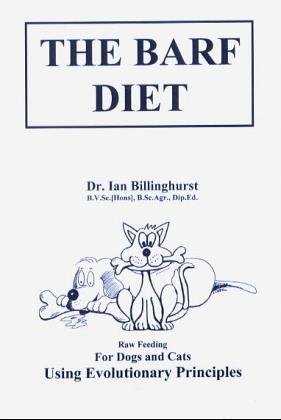
    Australian vet Dr Ian Billinghurst’s book Give Your Dog A Bone, which introduced the BARF (biologically appropriate raw food) diet for dogs, threw the cat among the pigeons when it was first published in l993.

    While we long ago discovered the physical benefits of feeding this species-appropriate diet to our own dogs, we didn’t see it as our place to interfere with or try to convert those people who were happy with the convenience of feeding their dogs a commercially produced product.

    Raw Dog Food: Is it Natural?

    After all, dogs are scavengers and will try to pick up nutrients from pretty well anything that even remotely resembles food – sticks, stones, faeces, wood, grass, garden plants, coal, soap, dog food. It’s when they start on other things like the kitchen walls, skirting boards, carpets, the remote control, the post or the family’s pet rabbit that their owners start to think about calling in professional help for a behavioural problem.

    The catalyst for one dog owner calling us for help was when she came home from work to find that her new dog had dug up her old dog and was blissfully feeding on its rotting corpse in the garden. It took a lot of talking to get the lady to understand that what her dog did, though horrific from the human viewpoint, was perfectly normal and instinctive behaviour for a scavenger short on nutrition.

    Most dog owners try very hard to do the right thing by their pet. They take it to an obedience class and put in a lot of work in an effort to have a well-behaved dog. It can be soul destroying when the dog’s behaviour is great in class but atrocious at home.

    BARF Diet for Dogs

    Frustrated owners often re-home these badly behaved dogs. Some are destroyed because they breached the bounds of human decency by biting somebody. People have come to accept that horses bite. So do cats, hamsters, birds, pigs and rabbits. When a dog bites a person, we kill them rather than try to understand what happened. Dogs and humans are two totally different species trying to live together as friends, but each species has vastly different rules for survival.

    What we have come to understand after dealing with numerous problem dogs is the link between diet and bad behaviour. We’ve found that a lot, if not all, of the dog behavioural problems we treat happen for the most part as a direct result of the desperation and stress suffered by dogs when owners innocently give them a diet which is inappropriate for their species.

    However, it is simplistic to say that all bad behaviour can be cured by diet. This is not a cure all. Dogs need to be treated individually, not only in relation to diet but also according to their environment, pack, breed and history. However, suitable rehabilitation of problem dogs can be achieved very quickly if re-training is combined with sensible feeding.

    Owners are told that their dog will grow out of bad behaviour such as chewing, digging up the garden, jumping up and weeing all over the house. The good news is this is correct. The bad news is that some dogs can also grow into bad behaviour.

    The connection is food. Pups are generally fed multiple meals from a variety of ingredients and they are usually very happy little creatures. Something happens between happy puppyhood and out-of-control adulthood. A once happy puppy can become desperate and very badly behaved if its nutrition diminishes at the same time as its growth speeds up.

    Frequently the onset of bad behaviour can be traced close in time to when the frequent feeding regime was changed. If the feeds are reduced before the pup’s growth slows down, the puppy will instinctively seek to supplement its diet by trying to find edible items either in the house or garden. Unfortunately they don’t have a reference book of edible items, so they try anything and everything within reach.

    These young dogs can become quite loopy in their search for nutritional supplements. One of the symptoms of this desperation is hyperactivity. The owner then tries to do the right thing and take the dog for long walks ‘to use up its energy’. This can actually make matters worse as the dog expends the energy needed for growth.

    CASE HISTORY: We work closely with a small, private shelter called Just for Dogs in Derbyshire. Margaret and Doug Smith who run the shelter followed our suggestion and took on the BARF diet for one of the young dogs at the shelter whose behaviour was so atrocious that people would sidle gingerly past her enclosure when they were viewing dogs. No one in their right mind would want Sasha in their home.

    Because she was housed in a kennel with a cement floor, she was deprived of her ability to forage and supplement her diet. Also, the stress factor associated with kennelling further depleted her of vital nutrients. She consequently became unmanageable in her desperation to supplement and survive. Her behaviour changed dramatically with proper feeding and Sasha is now happily doing much better.

    After this experience, Doug and Margaret gradually adopted the BARF diet for all of the rescue dogs in the shelter. Their feeding and veterinary expenses have markedly reduced and the previously unwanted dogs are being d very quickly. It is easy to re-home a placid, well-behaved dog.

    Most people have been through the pangs of dietary excesses and deficiencies at some stage. You may not consciously recognise it as such but you will probably relate to standing in front of an open refrigerator, wanting to eat something but not knowing quite what you want. Mothers of teenage boys will recognise this behaviour. At times of stress and change such as during the teenage years, pregnancy, lactation, grief, loneliness or excessive exercise, our bodies crave different nutrients.

    Dogs are no different when some nutrient is missing from their diet. They are even more attuned to their body’s needs than we are and develop all sorts of ways to supplement their diet. They don’t stand in front of an open refrigerator, but they do raid food cupboards and feast on table legs, tissues (particularly used ones) and anything else that comes within teeth range.

    Listed below are some common behavioural problems and a brief outline of how the problems link to diet:

    • barking – to call the person who supplies the food (or) ‘stay away from my food supply’
    • chewing – trying items to find out if they supply nutrients
    • destructive behaviour – looking for the elusive “something” to satisfy a dietary deficiency
    • digging – searching for nutrients
    • pulling on the lead – on the hunt
    • inappropriate toileting habits in the adult dog – marking areas in the house where food is regularly eaten
    • food stealing – dogs are opportunists, especially when chronically hungry for appropriate nutrition
    • obsessive behaviour – often relates to the obsessive need to satisfy a craving or an expression of frustration when stopped from foraging to supplement the diet
    • sibling rivalry – the leader gets first go at the food
    • separation anxiety – their only source of food supply (owner) has gone
    • jumping up – to stimulate vomiting which produces food in the animal world

    Any or all of these problems can and do create havoc in the home of dog owners who just want their dogs to behave like the dogs on television.

    People Aggression

    The more desperate the dog, the more desperate the behaviour. If dogs knew that biting whilst living with us in our world would result in them being destroyed they wouldn’t do it, particularly since all their actions are about survival. So why do they do it?

    If you have ever embarked on a weight reduction diet with determination and have been very good for weeks eating all the right things and seeing results, you will know that there comes a time when you would happily rip the arm from someone to get a chocolate bar.

    Inappropriate dieting can produce aggression in the most amiable of people. This can happen also with the sudden withdrawal of previously often-taken substances such as nicotine, alcohol, barbiturates or sugar. Quite a lot of commercially produced dog food contains addictive ingredients, some as innocent as sugar. The rapid fluctuations in blood sugar levels has a lot to do with dogs that have ‘a mad half hour’ either before or after eating.

    Left to their own devices, dogs will forage all day and feed on a large variety of plants, insects, bacteria and animal matter. They will roll themselves in all sorts of smelly muck. They come home and spend hours “cleaning” themselves. They pick up a lot of nutrients this way and can become quite aggressive if owners try to wipe them clean or bath them. It’s not that they don’t want to be bathed, but more that they see your behaviour as robbing them of the vital dietary supplements they have managed to pick up and bring home on their feet and fur.

    CASE HISTORY: Stroller, a fourteen-month-old Blue Roan Cocker Spaniel was booked in for destruction when the owner contacted Bark Busters. He had attacked his owner. In unravelling the story, we found that Stroller had jumped up on the table, snatched a tissue and run under the table guarding his trophy aggressively. What Stroller didn’t know was that the owner’s engagement ring was inside the tissue. She naturally went under the table to retrieve it and Stroller attacked her. She was heartbroken because she thought that Stroller had turned on her.

    He was brought to Bark Busters’ head office farm for rehabilitation. One of the first things we noticed about him was the putrid smell from both ends. This is one of the signs of dietary stress that we look for. We started him on the BARF diet immediately. Over the next four weeks, the smell disappeared and so did his aggressive possessiveness with items. He took naturally to the diet as do most dogs and that, with a combination of training, exercise and manipulation, produced an absolute treasure of a dog that anyone would be proud to own. He doesn’t now need to ‘hunt’ to supplement his diet, as he was doing when he snatched the tissue. It would have been so easy to destroy him for his ‘aggressive’ behaviour.

    Dog or Food Aggression

    Dogs also learn to jealously guard areas where they regularly collect minute dietary supplements. This can lead to what appears to be dog aggression if a dog from another pack approaches what they see as their hunting grounds. They have no idea that the area they’re guarding is a public park.

    Dogs that are regularly fed from a bowl placed always in the same place can become aggressively protective of the bowl since they see it as their only source of food.

    They are particularly driven by food, as are most animals. If you want your dog to be well behaved, study what dogs are meant to eat and feed it to your dog. Don’t just take our word for it. Do your research. There is a huge groundswell of change happening as people become more and more aware of how diet affects behaviour.

    Zoo keepers go to great lengths to supply food which animals in their care instinctively eat in a wild situation – bamboo shoots for the giant pandas, leaves from the eucalyptus tree for koalas, fresh fruit and vegetables for the monkeys. Zoo keepers go to these lengths because they know that this ensures their animals remain happy and healthy.

    We are our dog’s keepers. Why then would we not feed them a diet which is biologically correct for their species? We should try to ‘listen’ to what they’re trying so desperately to us with their ‘bad’ behaviour.

    About The Writer:
    Carol O’Herlihy is a director of Bark Busters UK www.barkbusters.co.uk
    She is an experienced dog trainer and has helped to rehabilitate many dogs with behavioural problems.

  • Vets Cast Doubt On Natural Dog Food

    Vets Cast Doubt On Natural Dog Food

    While natural food is a rising trend among humans, pet owners should be careful before feeding similar types of food to their pets, according to a Kansas State University veterinarian.

    All too often pet owners assume that because certain foods, such as fruits and vegetables, are healthy for them, they are also healthy for their pets, said Susan Nelson, K-State assistant professor of clinical services.

    “Natural and veggie-based pet foods are based more on market demand from owners, not because they are necessarily better for the pet,” she said.

    Natural pet food isn’t necessarily unhealthy for pets, and there are good brands on the market. But cats and dogs have specific nutritional needs that some of these foods may not provide, Nelson said.

    For instance, a natural dog food may provide antioxidants through fruits and vegetables, but it may be deficient in other nutrients the dog needs. If pet owners opt for natural pet food, it’s important to make sure pets still receive a well-balanced diet, she said.

    Before buying any pet food that is labeled natural, owners should make sure it comes from a reputable company. Nelson said the Association of American Feed Control Officials, or AAFCO, sets guidelines for the production, labeling and distribution of pet food and sets minimum standards for the nutritional adequacy of diets.

    To ensure that food contains the proper nutrients a pet needs, pet owners should only buy pet food that has at least one of the two AAFCO nutritional adequacy statements on its label, Nelson said. The association’s standards determine whether a pet food company’s product is complete and balanced for a specific life stage according to one of two criteria: the diet’s formula meets the minimum nutrient requirements established by the association or the diet has undergone association feeding trials.

    Feeding trials, while not perfect, generally give the best assessment on how well the food performs for a specific life stage, Nelson said. Owners should look closely at the feeding statement on the label, as some foods are intended for intermittent feeding or only for specific life stages, and they could be detrimental to a pet if fed long-term.

    Nelson said it is important to differentiate between terms such as natural, organic and holistic. Organic and holistic currently have no specific definitions for pet foods under the Association of American Feed Control Officials guidelines. Organic is defined by the U.S. Department of Agriculture for human food, but the department has no definition of natural foods for humans.

    The feed control association defines natural products as those that don’t contain any chemically synthesized ingredients except vitamins or minerals. The labels for natural products containing any of these ingredients must state: “Natural with added vitamins, minerals and other trace nutrients.” Consumers should be wary of any pet food company that claims to have organic or holistic food because they don’t exist by the association’s definition, Nelson said.

    Consumers should also pay attention to food ingredients. For instance, cats and dogs should not eat onions or garlic. While flaxseed oil can provide fatty acids for dogs, cats can’t use it for this purpose. Any manufacturer that uses these ingredients should be avoided, Nelson said.

    “Most reputable companies have a veterinary nutritionist on hand,” Nelson said. “These companies also conduct nutritional research and have their own internal quality control in place.”

    Because dry pet food needs preservatives, there is often debate about whether artificial or natural preservatives are better. Studies show that synthetic preservatives seem to work better and aren’t bad for pets at the levels contained in the food. However, market demand is for using vitamins E and C because they are natural preservatives.

    As with any pet diet, pet owners who opt for natural pet food should keep an eye on their pets to make sure the food is not negatively affecting them, Nelson said.

    “Assuming the diet you have chosen meets AAFCO minimum standards of nutritional adequacy, and if your pet looks healthy, has good coat quality, is in good body condition, has good fecal consistency and is able to do its job, the diet is probably adequate for him,” she said.

    http://www.k-state.edu/media/mediaguide/bios/nelsonbio.html

    What Say You?

    Do you agree that natural dog foods are not always the best?
    Or do you subscribe to the theory that feeding dogs a natural diet offers greater health benefits?

  • Proper Dog Nutrition Defined

    Here at Dog Nutrition, we often receive enquiries from people who are keen to understand what exactly ‘proper dog nutrition’ means. The dog is not a true carnivore in the same sense as, for example, a cat. This means a dog’s diet can be more varied and still produce positive health. Whereas a cat MUST eat meat in order to be truly healthy and for proper nutrition to serve its goal.

    So what does proper nutrition mean for dogs?

    Proper Dog Nutrition

    Proper Dog Nutrition: Fats in the Dog’s Diet

    An important nutrient that all dogs need and one that is responsible for furnishing energy in their body are fats. Fats supply energy for the body to use. It also has a small role in building strong cells and promoting the absorption of nutrients. However, similar to the essential amino acids, a dog’s body isn’t able to produce these essential fatty acids, and therefore has to come from an outside source, from the food they eat.


    Dogs do not usually develop a deficiency in fatty acids because their basic diet normally provides them with sufficient amount of energy from fat. In fact, a small amount of extra fats benefit their body in several ways. It protects them from the cold; it provides cushion to their body; and it serves as a protective layer of covering around different organs in their body. Actually, dogs are very efficient in using their stored fats because their bodies have the ability to easily turn these fats into energy when needed.

    Too much of a good thing can be a bad thing

    Fats are very beneficial, but it can become a concern when the dog eats too much of it. Too much fuel in the dog’s body, regardless of where it came from, is converted into body fat, which is then stored in the body. Too much fat in the body results in obesity and other conditions that are related to obesity such as diabetes, canine osteoarthritis, and heart disease.

    There is only a limited amount of fat that is used for protection against cold, cushion, covering, and extra energy. But when the maximum amount of stored fat is reached and applied for these purposes, the dog still continues to stock up fat and does so to the same degree that is equivalent to the excess energy that it consumes. For instance, every 3,500 calories that a dog eats in excess to what his body requires will be turned into 1 pound of body fat.

    It is important for all dog owners to know that the only way for their dogs to get fat is if they take in more calories than their bodies use.  Similarly, the only way for the dog to lose weight and get rid of the excess fat is by taking in less calories than what their body requires.

    Proper Dog Nutrition: Protein in the Dog’s Diet

    How does protein work in a dog’s body? Picture a string of beads and each string is needed to produce a complete picture or an artwork. The job of protein in your dog can be compared to this strings of beads. Each protein is similar to individual strings of beads. Just as these strings are put together in the right order to create a picture, different types of proteins have to go together to be able to produce a dog.

    Each string is made up of different numbers of coloured beads that are lined up in an exact pattern to produce certain body parts such as the hair, the nose, or the ear of the picture. The coloured beads can be compared to amino acids, or substances that are connected to the strings to produce different proteins.

    There are 23 amino acids that are the molecular building blocks of protein.  A dog can produce 13 amino acids inside his body while the other 10 amino acids must come from an outside source and has to be consumed.  A puppy will not grow unless he is supplied with the remaining 10 essential amino acids.  Without them he will become sick and will eventually die. Similarly, if an adult dog is not getting the proper amount of these 10 amino acids, he will become weak and suffer nutritional deficiencies.

    These 10 essential amino acids can be acquired from meat and plants, which offer the best sources because they contain the largest number of essential amino acids.

    Not all proteins are the same, as some are better for your dog than others. The amount of protein a dog needs depends on how much of the essential amino acids are supplied by that protein. The protein’s ability to provide the dog’s Minimum Daily Requirement (MDR) of the 10 essential amino acids is referred to as its “biological value”.

    Here are a few additional facts about the importance of protein for your dog’s health:

    1. Proteins are the building blocks of your dog’s body.

    2. Proteins are necessary for all aspects of growth and development and are very important in structural makeup and the immune system. In addition, they are burned as calories and can be converted to and stored as fat if needed.

    3. They are required for healthy nails, skin, and coat.

    4. They are necessary for the production of hormones in the bloodstream.

    5. They provide a healthy immune system.

    Proper Dog Nutrition: Carbohydrates, Vitamins & Minerals in The Dog’s Diet

    Carbohydrates

    The main source of carbohydrates are acquired in plants. There is also one source of carbohydrate that comes from meat called glycogen, but it is only found in small amounts in the liver and muscles.  If your dog is not getting enough carbohydrates in his diet, the liver has to do extra work to make glucose from proteins.  On the other hand, when your dog is getting enough carbohydrates in his diet, his body will not have to use proteins to get its required amount of glucose, therefore, saving these precious proteins to be used to for other jobs that they are required to do.

    Vitamins

    Vitamins are not considered to be building blocks, and they are not necessarily required for the production of energy. However, they are important in your dog’s health in a number of ways described below.

    1. Dogs need vitamin A for healthy skin and coat. Skin conditions and poor coats have been associated with lack of vitamin A and/or vitamin B.
    2. Vitamin B is responsible for a healthy immune system.
    3. Studies have concluded that vitamin C prevents dogs from getting hip dysplasia.
    4. Dogs need vitamin D for healthy teeth and bones. Deficiency in this vitamin produces weak teeth and brittle bones.
    5. Vitamin E is an excellent source of antioxidants. Deficiency in vitamin E can lead to heart problems and several types of cancers.
    6. Vitamin K is used for blood clotting.

    Minerals

    Unlike other nutrients, minerals are used by the body in a more comprehensive way.  Below are examples of some of the ways minerals benefit your dog:

    1. Minerals such as calcium and phosphorous are required for strong bones and cartilage.
    2. Minerals are needed for the nervous system to function properly.
    3. They help promote muscle metabolism.
    4. They are used in the production of hormones.
    5. Minerals transport oxygen in the blood.

    It is important to know that too much or too little of a certain mineral can affect the functions of other minerals in your dog’s body. In addition, there are also cases where the action of one mineral depends upon the action of another mineral.  For example, the minerals iron and copper work hand-in-hand to produce hemoglobin. Iron is necessary to produce hemoglobin in red blood cells while copper is equally important for hemoglobin formation. One will not be able to function properly without the help of the other.

  • Almost Half Of British Dogs To Receive Special Christmas Meal

    Christmas is a time the whole family gets together, a time to enjoy and cherish the memories made and it seems Britain’s dog owners are taking this message to heart as a new survey revealed.

    The UK’s lucky canines can expect to enjoy the festive season as much as their owners as an incredible 49{d4f4ff813a06e2c77cbb9c6effe011ebffe2f8986e44983e90e08c54deb62f63} of owners will be preparing them their very own special doggie dinner this Christmas.

    According to the recent survey carried out on behalf of Direct Line Pet Insurance, of the 1,021 dog owners questioned, almost half (49{d4f4ff813a06e2c77cbb9c6effe011ebffe2f8986e44983e90e08c54deb62f63}) are planning to make a special Christmas meal for their dogs and with 46{d4f4ff813a06e2c77cbb9c6effe011ebffe2f8986e44983e90e08c54deb62f63} planning a special family walk with their dog, it will soon be walked off!

    Adam Whiteley, head of pet insurance at Direct Line, offered this advice to dog owners: “Dog owners going to the trouble of cooking a special Christmas dinner for their best furry friend are clearly doing so out of love and festive spirit. It’s worth remembering that there are a few things dogs shouldn’t eat at all, even on special occasions, as doing so can make them very ill or even cause death in extreme cases. Chocolate, raisins, onions, and added salt should all be avoided, as should sharp or small bones. It’s a good idea to make sure that all food items and treats are stored well out of reach of pets, during the holidays and all year round.”

    According to the survey, 89{d4f4ff813a06e2c77cbb9c6effe011ebffe2f8986e44983e90e08c54deb62f63} of Britain’s dogs can expect a delivery from Santa left under the tree for them to spend the holidays enjoying.

    40{d4f4ff813a06e2c77cbb9c6effe011ebffe2f8986e44983e90e08c54deb62f63} Britain’s dogs will have an average of £10 on presents spent this year with a lucky 9{d4f4ff813a06e2c77cbb9c6effe011ebffe2f8986e44983e90e08c54deb62f63} having gifts worth more than £100 awaiting them.

    Toys are the most favoured present of choice, but pampering with collars, leads and clothes also top the list of most desired presents.

    However, with 26{d4f4ff813a06e2c77cbb9c6effe011ebffe2f8986e44983e90e08c54deb62f63} of Britain’s dogs enjoying chewing presents, it might be advisable to make sure Santa’s little four legged helpers have someone keeping an eye out for them.

    K9 Magazine editor Ryan O’Meara offered this thoughts on the findings,“The fact that nearly half of all dog owners are preparing to fully include their canine pals in the Christmas festivities is indicative of just how much the relationship between pets and their owners has changed in modern times. Dogs are now considered fully fledged members of the family and this research highlights just how seriously owners take that relationship. Dogs bring us so much joy every day, it’s nice to hear that owners take great delight in including them at this special time.”

  • Festive Pet Eats Entire Advent Calendar

    Dog-at-vet

    Christmas cheer nearly turned to tears for a Humberside family after their pet dog ate the treats from an advent calendar – then needed emergency veterinary treatment for chocolate poisoning.

    Three-year-old Lhasa Apso, Daisy, helped herself to the goodies when owner Frances Hird (34) left the calendar unattended as she took daughter Holly to school from their home in Spring Bank West, Hull:

    “When I got back 15 minutes later, I noticed the house was eerily quiet, and wondered where Daisy was,” recalls Frances. “I ran upstairs and found her sitting among the remains of Holly’s advent calendar. It was in tatters and all the chocolates were gone.”

    Daisy became ill as a result of her sweet treats so Frances took her to Hull PDSA PetAid hospital, located on Brunswick Avenue. Senior Veterinary Surgeon, Murtagh McDonnell, recalls the case:

    “Daisy came into us suffering from a very painful stomach, as she’d eaten quite a lot of chocolate for a small dog. Human chocolate can be deadly to dogs because it contains theobromine which is highly poisonous. We immediately gave Daisy injections to counteract the side effects of the poisoning and thankfully there appeared to be no serious harm done.”

    This was a great relief to Frances, who brought her sweet-toothed pet back to the hospital the next day for a check-up and received the all-clear. “I want to say a big thank you to PDSA for treating Daisy. Within hours she was back to her normal self again. We’ll be making sure that sweets and chocolates are kept out of her way from now on.”

    Chocolate poisoning is one of the many Christmas related pet hazards PDSA vets encounter over the festive season. Some people give their pets chocolates as treats, not realising how dangerous it is, or, as in this case, accidentally leave them within easy reach of curious paws.

    Murtagh added: “Daisy was very lucky in this instance, but chocolate can be deadly. If you want to treat your pet this Christmas, try a savoury pet treat, new toy, a nice long walk or game of fetch!”

    PDSA’s top five Christmas pet hazards:

    1. Swallowing objects – accidents have included eating toys, decorations and batteries.

    2. Accidental poisoning through chocolate and other human foods, such as raisins and artificial sweeteners.

    3. Gastric torsion – a twisted stomach often caused by vigorous exercise immediately after a large meal.

    4. Hypothermia – low body temperature from exposure to cold weather.

  • Fasting For Dogs

    Q) I have read about the trend for some dog owners to impose a fast on their dogs. Is this healthy and does have any advantages?

    How Fasting Can Clean Your Dog’s System From Years Of Poor Diet

    If you’re one of the millions of dog owners who occasionally allow your pet to indulge in the delightful scraps from your own less than perfect diet such cheap hamburgers, hot dogs, cold cuts, semi moist sugar-preserved dog foods – or any foods containing nitrates, nitrites, aldehydes, and other assorted harmful additives – the particular pancreatic enzymes that are needed to digest the proteins in your dog’s system become depleted quite rapidly. So could your porky pet benefit from a short fast?

    Meats that have been thoroughly cooked rarely contain enough live enzymes to be of any value to the dog’s digestive system.

    Without enough pancreatic enzymes to digest the protein, the food begins to putrefy and can lead to pancreatitis and toxemia. We can give more food but it is not being utilized. If the body can’t use the nutrients, this is tantamount to not having them.

    The body begins to feed upon itself in order to sustain life, and the animal loses weight and muscle tone in spite of the quantity of food provided. In the case of malignant tumors, the body feeds the tumor while starving itself, so the tumor grows to robust proportions while the body shrivels like a dehydrated prune.

    If you suspect ill health in your pet, don’t stuff him with food, hoping that he will regain strength.

    You will actually be further depleting his impaired vitality. Withholding food for a day or so will cause a revitalization of the body, because the body will have a chance to fight the impairment without the continuing added burden of processing food. This applies whether the food is wholesome or second-rate, but even more strongly when it is of poor quality.

    Then the digestive organs are not working in the processing of food, they have an opportunity to apply themselves to the digestion of debris in the body.

    Fasting is nature’s most perfect medicine, since the body works to rid itself of the debris, or harmful toxic matter, first, thereby effecting a most marvelous housecleaning of cells.

    Cells drowning in toxic waste have no room to absorb nutrients. They must first rid themselves of this obstructing waste.

    The process by which the body feeds upon and digests the debris is called autolysis. Some types of tumors or cysts can enjoy resorption into the body through this gradual, natural purification process.

    If you have an older dog, the chances are that through years of dietary indiscretions, his enzymes have become somewhat depleted. Whatever sturdy stock remains can be reinforced by adding pancreatic enzymes to the diet.

    This will serve to bolster the forces of protein, fat, and carbohydrate digestion, and you will be augmenting the metabolization of your animal’s food. Pancreatic enzymes can help turn the tide of sluggish digestion, enabling the digestive process to perform with much increased efficiency.

    This will provide a most harmonious relationship within the digestive tract. The surplus enzymes can now effect a cleansing process by breaking up the toxic debris stored throughout the body.

  • How To Teach Your Dog To Walk To Heel

    Once you have reached the level in training your dog where he is not fooled by distractions or temptation, you are then ready to proceed to the next level of training – how to heel correctly.

    If your dog cannot walk comfortably at your side, there is no way you’re going to teach him anything about being obedient. He must learn to heel properly and focus his full attention to you.

    You will be using a six-foot leather training leash for this phase. During this stage of training, you will teach your dog to walk beside you like a gentleman. He will learn to automatically sit at your side when you stop.

    No Punishment Needed

    The right attitude cannot be achieved if your dog is mistreated or abused. To restrain or choke the dog on a short, tight leash, to hit him in the chest, or to smack his face with the end of the leash while trying to teach him to heel will result, among other things, in a completely negative attitude in the animal.

    Starting Position

    To begin, you will notice that your leash has a loop in one end. Place your right thumb through that loop. With your left hand, grab the leash at the middle section and place it in your right hand. Notice that the dog is on your left side, but that the leash is held in your right hand. This will seem a little awkward at first, but your left hand will be doing other things.

    Do not form the habit of trying to restrain your dog at your side by holding him up close with the left hand on that leash. Remember, you want to train your dog, not restrain him. Forget about everything that you were told or read about restraining a dog tugging at your side in the hope that he will get the idea that this is where you want him to walk. That idea will never occur to him.

    There is an important characteristic of an untrained dog on a leash that will become obvious to you during this stage of training. This dog wants to feel a tight leash! If there’s a slack in the leash, he has no way of calculating its exact length. On a tight leash, he can lunge and pull and go through all kinds of twists and turns, because he has the security of feeling where the other end of the leash is. Therefore, it is very important that you don’t give in to your dog’s wishes by walking him on a tight leash.

    As you begin, position your dog at your left side while keeping the leash short. Leave a belly of reserved slack, with your right hand, look at your dog, say his name, then command “Heel”!

    Begin walking, starting with your left foot. Walk briskly in a straight line, with confidence in your movement. Your dog will lose confidence in you if you wander aimlessly.

    Remembering his experience on the long-line, your dog may walk alongside you fairly comfortably, but the odds are that since there are now only five to six feet connecting the two of you, he will react in one of the two following ways:

    1. He will either rush forward past you in an attempt to keep a tight strain on that leash, or
    2. He will hold back and be hesitant to walk with you at all. After all, this six-foot training leash is new to him.

    If your dog is one that takes off like a marathon runner in a race, either surging ahead or out to the side in an attempt to keep the leash tight, simply open your right hand, release the slack you’ve been holding in reserve, and immediately do a right-about turn and walk in the opposite direction. When your dog is back in the proper heeling position, give him praise and a pat on the head with your free left hand. If you have a small dog, bend over to his level and give him his pat while continuing to walk.

    Each time he surges ahead, release the slack as you do and definite right-about turn. Without slowing your pace, pick up some reserve slack and place it once again in your right hand in preparation for his next heedless charge. Your left hand is free to reach down and give him a pat on a head when, and only when, he is in the proper heeling position. That is, at your left side with his head and neck area about even with your left leg. Each time you place the reserve slack in your right hand, be sure to leave a belly of slack in the leash between you and your dog.

    An Alternative Method For The Introvert

    If your dog has an introvert personality, one that is reluctant to walk with you, you will need a slightly different method. The introvert dog just doesn’t quite understand what’s going on with this new piece of equipment and he’s as reluctant to get involved as a person being taught how to play a new instrument. This type of dog needs a little encouragement and a show of enthusiasm on your part, and don’t let anyone tell you any differently.

    Use your free left hand to pat your leg as you give your dog a little talk of encouragement. Use short, forward snaps on the leash to help inspire your dog to walk with you. Watch closely as he begins to discard his reluctance, praise him enthusiastically and warmly. This shows him three things. First, that you are pleased. Second, that everything is alright. And third, that he has made the right decision.

    Dog Training: Correct Heel Methods (3)

    There are two extremes of personalities in dogs – the introvert and the extrovert. However, there are many degrees in between those two extremes as there are dogs in this planet.

    Regardless of where your dog’s personality lies on that scale, once you have given the command to heel you must start walking and continue walking. Encourage your dog to accompany you if necessary. Correct his heedless rush with absolute right-about turns if necessary. But, you should never, ever give in if your dog decides to not follow your command and just “sit this one out”.

    Dogs learn by associating their actions with a pleasing or displeasing result. Therefore, the dog who tries to take advantage of the new shortened leash by surging and keeping a strain on it comes to a sudden discovery that you still have the situation very much under control. As soon as he can cause the leash to tighten, he will take his eyes off you, only to feel the sudden jolt of your right-about turn.

    By using the reserve slack in your hand properly, your dog will realize that the leash is no different than the long line, except that he must pay even closer attention since the six-foot leash gives him less time to react than the fifteen-foot long-line. He’ll realize how much more pleasing it is to walk at your side so that he can see which way and when you’re going to change direction. Your left hand giving him a pat on the head when he’s in the correct heel position is also more pleasing than the sudden jolt that he gets when not in the proper position.

    On the other hand, your introvert dog, one that stands as if he had feet glued to the cement, suddenly feels the slightly displeasing effect of the short, sharp jerks of the leash. Hearing your enthusiastic tone of voice and seeing your left hand pat your leg invitingly will do wonders to make your pet choose the more promising alternative. The moment he does, he will discover the warm, affectionate praise and pat on the head to be far more enjoyable than the series of sharp jolts he experienced as a result of his initial reluctance to walk with you.

    You may have to spend each of your fifteen-minute training sessions for the next four days in this simple leash introduction so the introvert-type will walk without any reluctance or fear and to stop the extrovert’s heedless rushes by your unannounced change of direction.

    Don’t Be Afraid To Use Too Much Pull

    Let me describe a scene of what an extrovert dog may do when prompted with a distraction. Picture a dog tied to a tree on a twenty-five foot rope lying in loose coils on the ground. He is sleeping comfortably under the tree when a cat walks by past the dog at a distance of about twenty-seven feet.

    The dog wakes up, spots the cat and rushes recklessly to pounce on the poor cat. The dog will be stopped two foot short and very abruptly too. After regaining his composure, he will still strain and tug to try and get the cat. But, unless he’s a total fool, he will not make that reckless rush a second time – not while still tied to a tree. But does he blame the tree? Of course not.

    You are not as firm as a tree, so don’t be worried about hurting your pet. Your objective should be clear. Your dog should walk at your left side, neither lagging behind nor surging ahead.

    Always remember that the leash should be slack. Eventually, you’ll be heeling your dog without the leash and you will realize the importance of that slack. If your dog is used to feeling a tight leash restraining him in the heeling position, he’ll be long gone when you walk him without the leash later on.

    Dog Training: Correct Heel Methods (4)

    When it comes to obedience training, there should be no “half-way action” accepted. In other words, it’s all or nothing from your dog. And a crooked sit must be considered as something less than your dog giving his full potential.

    Not only does it look shabby, but it also prevents the dog from accomplishing his full measure of discipline and character. You can prevent your dog from developing the bad habit of crooked sits simply by using your free left hand while heeling.

    As you prepare to stop during a walk, make sure that your left hand is in a position to place on the dog’s rear in such a way as to prevent him from moving around in front of you after you have come to a complete stop. If your dog succeeds in sitting in a crooked way, hold back the praise until you have straightened his sit. As your left hand drops to his rear, keep your left thumb pointing toward your left leg. This will ensure that you do not accidentally place your dog in a crooked sit.

    You do not have to push down heavily on your dog’s rear. You need to simply press lightly to help guide him into the proper sit position. It is more the right hand pulling the leash upward than the amount of pressure on the dog’s rear that will place him easily and quickly in the proper sitting position. Putting heavy pressure on your dog’s rear may stimulate him to resist, which is an unwanted action.

    In these learning steps, the less resistance you have, the better off it will be, both for you and your dog. Also keep in mind the importance of a positive attitude.

    Recap Of The First 10 Days Of Correct Heel Training

    Your first ten days of obedience training should consist of proper leash introduction, getting your dog to walk confidently and happy. This is achieved without lagging or straining as he walks at your left side in the response to the command “Heel”. The first ten days of obedience training also consists of the introduction of the command “Sit” in which you place the dog in the sitting position each time you stop.

    Once you are confident about placing your dog in the sitting position, which took one full week, you are now ready to bring your dog to a higher level of discipline, intelligence, and response.

    You must decide to never place your pet in the sitting position again. You have spent one full week showing him exactly what sit means, and it only takes four days for the average house dog to learn the average thing. Now, it’s time to show your dog that he must do it for himself and that you will not be leading him by the hand all of the time.

    Dog Training: Correct Heel Methods (5)

    When you feel that you have sufficient control of your dog while walking, usually within four days of his initial orientation to the leash, you are now ready to go to a higher level of control.

    Give your dog the command to heel and begin walking, remembering to start out on your left foot, in a straight line. Make a few right-about turns as necessary to make sure that you have his full attention. Then, as you prepare to come to a stop, shorten your hold on the leash just a bit. As you stop, not after and not before, pull up the leash with your right hand and press gently on the dog’s rear as you say the command “Sit”!

    As soon as he sits, praise him and give him a pat on the head. Remember, dogs learn by associating their actions with a pleasing or displeasing result.

    Next, give the command “Heel” and begin to walk briskly in a straight line. As you prepare to stop, shorten your hold on the leash. When you stop, pull up on the leash, pressing gently on the rear with your free left hand, at the same time giving the command “Sit”.

    Always follow a correct behavioral response by your dog with praise, even if you caused the behavioral response. Even though you are placing your dog in the sitting position, this should still be followed by warm praise.

    This will be the pattern throughout the course. You will show your dog what he needs to do and follow it with praise. After the learning process has taken place within the mind of the dog, then will you correct for disobedience.

    Your training program at this stage should still be limited to fifteen minutes per day and consist only of the commands “Heel” and “Sit”. Give the command to heel, walk about ten feet, do a right turn, then come to a stop, placing the dog in the sitting position while giving the command to sit. Follow each sit-placing with warm praise.

    Dogs with above average intelligence will absorb what you are trying to convey in less than four days and will begin to sit by themselves before you have a chance to place them. However, you must be firm with your decision that, regardless of how fast your dog appears to be catching on, you will continue to place him in the sitting position each time you stop for a period of one week.

    Dog Training: Correct Heel Methods (6)

    Now it’s time to find out if your dog has truly learned how to heel and execute an automatic sit.

    Give him the command “Heel” and make any necessary corrections for poor heeling or lack of attentiveness to bring him up to the proper mental level of awareness. Come to a stop and command “Sit”. Watch your dog do it all by himself. Get down to his level and praise him enthusiastically.

    For the stubborn or uncooperative dog who would rather be helped for the rest of his life, you’ll be surprised to see that he is going to graduate from being spoon-fed whether he wants to or not.

    How do you do this? When you come to a stop and command “Sit”, silently count to three. If your dog is not seated by the time you get to three, place both hands on the leash, making sure that there’s a little slack in it, and jerk straight up! Your dog will immediately sit if you make the correction strongly enough. Don’t forget the praise when you’re done.

    If he still refuses to sit after the initial correction, consider that correction ineffective. An ineffective correction is inhumane because it means that you will have to keep doing it. This is unfair to your pet and will only create resistance. If you simply tighten the collar around his neck by pulling up slowly on the leash, the only thing you can accomplish is constriction of your dog’s breathing, and you have caused your dog’s training collar to turn into a choking chain.

    This is your fault, not his, and he is going to wonder why you have suddenly decided to choke him. So, in all fairness to your dog, make a humane correction by an emphatic and upward jerk of the leash using both hands. Make the correction properly the first time, and chances are you will not have to make it again. Remember to follow the correction with loving praise the moment your dog has responded correctly.

    The heel and sit combinations should be continued for one week, after which time you will notice that it’s no longer necessary for you to command “Sit” every time you stop. Your dog will realize that this is what is expected when he is out on a walk and you suddenly come to a stop.

    At the end of a week, you can begin dropping the command “Sit” since he will be doing it automatically anyway. Be sure, however, that anytime he fails to sit, make the correction immediately, followed by praise.

    Congratulations!

    Now you have the proper tools to teach your dog to walk beside you and to sit automatically at your side each time you stop. Why is this crucial? In addition to getting your dog’s attention, which is necessary in order to take him to more advanced levels of training, it will make all the difference in the world when you take him for a walk down a busy street or a crowded place.

    Should you stop to talk to someone, your dog is trained to sit at your side patiently, rather than jumping on the person you’re talking to or wrapping the leash around your legs and making a nuisance of himself.

  • Can Dogs Have OCD?

    Obsessive compulsive disorder (OCD) is not just exclusive to humans. Dogs too can suffer with compulsive disorders. With some dogs, meals aren’t the only source of oral intake they have. Wool and other fibers, non-digestible plant material, rubber, plastic, wood, and even their own hair are just some of the things a dog may choose to ingest. Called pica – the drive to consume material that is not generally considered food – is what animal behaviourists call a compulsive disorder.

    Compulsive Disorders in Dogs

    In a human, a compulsive disorder may be repetitive, such as frequent hand washing or pulling one’s hair out. In dogs, these disorders can include excessive licking and spinning in circles. Compulsive disorders are competitive, nonfunctional, nonbeneficial behaviors. Although the exact cause of compulsive disorders is unknown, animal behaviourists feel that they are often caused by stress brought on by environmental conflicts such as competition with other pets, changes in the home, constant punishment, or confinement to small areas such as cages or crates.

    Lack of socialisation or too much attention may bring about a compulsive behaviour as well. A nutritional imbalance can also lead to pica. A dog with a compulsive disorder loses control over his ability to initiate and stop these negative, repetitive actions. Often the compulsive behaviours are oral in nature, causing the dog to eat things he shouldn’t.

    Controlling Your Dog’s Compulsive Disorder

    1. The first step in treating a compulsive disorder is to identify the cause and eliminate it. For example, if your dog is crated for a large portion of the day, allow him outside the confined space to help get him on the road to recovery.

    2. Don’t reinforce the behaviour by paying attention to him while he is engaged in it. Providing good quality time on a set schedule is preferable and more effective than petting, stroking, or verbally consoling your dog in the midst of repetitive activity.

    3. Do not reinforce the behaviour by punishing your dog for the compulsive behaviour or for other inappropriate activities. It may make the problem worse.

    4. Spray household objects your dog likes to chew with cayenne pepper, essential oils in citrus, cinnamon, or eucalyptus scents, spray deodorant, or perfume that is not your own.

    5. Spray favourite chewables with a pet repellent to deter your dog from sticking non-food objects in his mouth.

    6. Keep dangerous objects such as yarn or string out of your dog’s reach to prevent him from chewing and swallowing them.

    7. If your dog is chewing his hair, he may have an allergy. Discuss the problem with your veterinarian before embarking on a behaviour modification program.

    8. As a last resort to solve a compulsive eating disorder, discuss drug therapy with your veterinarian. Drugs that increase serotonin levels, like Prozac and some antidepressants, are used for treating compulsive disorders, including compulsive eating.

  • Normal Temperature For Dogs

    Normal Temperature For Dogs

    As responsible dog owners, understanding the normal temperature for dogs is as vital as being able to detect if your dog is showing any other signs of illness or injury. Vets and indeed doctors.

    Normal Temperature For A Dog – A Guide For All Dog Owners

    Let’s get straight to it shall we, the normal resting temperature for a dog is between 101 and 103 degrees Fahrenheit. If your dog is showing the tell tale signs of high temperature / fever – which would include symptoms such as:

    – Panting
    – Heavy breathing
    – Lethargy
    – Exterior heat

    then you must enable the dog to be seen, quickly, by a vet.

    Like humans, any abnormalities when measuring the normal temperature of a dog is one of the first indicators of their current state of health. A rise in the dog’s normal temperature can be an indicator, an early warning sign that something is not right and a failure to address the initial signs of a high temperature can have serious consequences, including shock and damage to internal organs.

    To determine the dog’s temperature a vet will usually use a high quality thermometer via a rectal insertion. Some dogs do not enjoy this and will squirm so help your vet out by holding the dog steady and reassuring them.

    In the initial stages of a high temperature, such as exposure to heat, you can try to cool your dog down by using a damp towel and providing them easy access to cold water. Dehydration is extremely serious and in some cases fatal so treat any signs of high temperature rapidly and engage your vet at the earliest possible opportunity.

    You need to know and remember the normal temperature for a dog in an effort to be able to distinguish for yourself (by using a thermometer) if urgent veterinary intervention is required. It could save your dog’s life.

    – How To Take Your Dog’s Temperature
    – How To Read A Dog’s Pulse
    – How To Collect Stool Samples

    As your dog’s constant companion, you are probably very attuned to fluctuations in his behavior. If you observe that your dog seems more sluggish or less comfortable than normal, take a careful look at him. Does your dog have a runny nose? A cough? Is his appetite normal? Does he have diarrhea? Is he drooling excessively? Is he whining? These are all examples of warning signs that may accompany an illness and you may have to do some minor investigating. Here are some tips:

    How To Take A Dog’s Temperature

    If your dog seems sluggish, has a hot, dry nose, dull eyes, and/or feels warm, he may have a fever. The only reliable way to take your dog’s temperature is with a rectal thermometer. Shake down the thermometer and grease it well with petroleum jelly.

    Not many dogs will stand still while you insert a thermometer into their rectum, so it is best to get someone to help you. If no help is available, make your dog lie down on his side and hold him as best you can, all the while talking to him soothingly. Lift his tail and gently push the thermometer in with a twisting motion. Insert the thermometer from one to three inches, depending on the size of your dog. Hold the thermometer in place for at least two minutes.

    Remove it, wipe it clean, and determine the temperature by the height of the silver column of mercury on the thermometer scale. A temperature of 100.5 degrees to 102 degrees is normal. A temperature above 103 degrees or below 100.0 is cause for concern, and merits a call to your veterinarian. Do not let go of the dog or of the thermometer. You do not want to risk having the thermometer break in the dog’s rectum. If the thermometer does break off, do not attempt to find and extract the broken end. Give the dog one to two teaspoonfuls of mineral oil and call your veterinarian.

    How To Take A Dog’s Pulse

    The most reliable way of taking your dog’s pulse is to locate the femoral artery. Your dog can either be standing or can be lying on his back for this. Put your fingers inside your dog’s groin, where the leg joins the trunk. Feel around until you detect a pulse. Another method is to press against the rib cage over the heart while your dog is standing. You should be able to detect a pulse just below the elbow joint.

    Count how many beats there are in a fifteen-second period, and then multiply that number by four. The normal range is wide – anywhere from 70 to 130 beats per minute. Smaller breeds
    and puppies usually tend toward faster pulse rates, while larger breeds and healthy dogs who get plenty of exercise often have a slower pulse.

    Collecting Urine Samples From Dogs

    For male dogs, use a wide-mouthed jar. When your male dog lifts his leg to urinate during a walk, reach down gently and collect about a quarter cup of urine. For a female dog, place a flat pan under her when she squats to urinate.

    Collecting Stool Samples From Dogs

    Stool samples are used to determine the presence of intestinal parasites. A sample is often requested as part of your dog’s routine examination. Try to collect as fresh a sample as possible and place it in a plastic bag. If you are taking it from outside, avoid soil; organisms on the ground could make their way into your dog’s fecal material, resulting in an inaccurate reading.

  • I Want To Adopt A Dog

    There are many dogs out there that are, for several reasons, left without a home and end up being displaced at a shelter. If you are thinking about helping these homeless dogs but aren’t sure what to do, the best way to improve the lives of shelter dogs is to adopt one.

    I Want To Adopt A Dog

    Giving these dogs a good home is the most important thing that you can do. But if adopting a dog is just not an option right now, there are other things that you can do to better the lives of shelter dogs. Below are several suggestions to keep in mind.

    1. Visit your local shelter and spend some time with the dogs. Donating some of your time to simply hang out and play with these canine residents can make a huge difference to their lives. Most of the time, shelter staff are very busy with their work and they do not have the extra time to interact with the dogs. Shelter employees can always use the help of others to come and play and socialize with their residence. They are more than happy to show you around and figure out what you can do to help out.

    As a volunteer, you can take the dogs for a walk around the block, give them a little pampering by brushing their coats, or just be there and hang out with them. Shelter dogs get very little attention, and a short visit with them does a lot to improve their well-being.

    2. You may volunteer to take these dogs to an obedience class that will better their chances for an adoption.

    3. Take one day of the week to help wash and groom the dogs and then bring them to adoption fairs.

    4. Sponsor a fund raising party and donate the cash to your local rescue organisation. You may also ask for donations of items that you can bring to the shelter. These include blankets, food and treats, collars, leashes, toys, kennels, etc.

    5. You may also volunteer to be a foster parent and keep the rescued dog at your house until he or she finds a permanent home.

    6. Inform people about dog adoption and being a shelter volunteer by placing an ad in your local paper or putting up signs on bulletin boards and at dog parks.

    7. And last but not the least, keep in mind that the best way to prevent shelter overcrowding is to spay or neuter your pets and to spread the word about the benefits of getting these house pets fixed.

    Find out more about dog adoption.

  • How To Lower Your Vet Bill

    How To Lower Your Vet Bill

    12 Easy Ways To Lower Your Vet Bill

    Veterinary charges are one of the biggest expenses that dog owners have to deal with.  The problem with vet bills is that you can’t budget for them in the way you can for food or other more fixed outgoings. A large vet bill can come straight out of the blue and hit a dog owner for six (or six thousand depending on the problem).

    But there are ways that every dog owner can reduce their veterinary expenses, from simple practices that you can do at home to smart money-saving exercises that could be worth thousands of pounds. Holly Kernot explores the best ways to reduce that vet bill.

    There are a variety of basic health checks and routines you can adopt in order to ensure your dog stays in optimum health.

    Basic Health Checks.

    Performing a regular health check on your dog will enable you to keep on top of any new or recurring health issues. Potentially serious and costly health problems can be nipped in the bud before they escalate into something altogether more sinister, which ensures that your dog will be getting a good level of health care and also, enables you to avoid costly vet bills.

    Become familiar with your dog.

    Become familiar with your dogs, and regularly check their body for any lumps which may have formed. When at the vets, as them to help you identify the signs of a dangerous lump, and what does not constitute as anything to worry about.

    Grooming.

    A healthy dog has a shiny coat, and you can help maintain this by partaking in a regular grooming exercise. Regular grooming gives you the opportunity to familiarise yourself with your dog and to carry out these checks.

    Regular grooming not only removes unwanted hair and reduces the chances of the coat becoming matted, but can also indicate to you the telltale signs of skin conditions such as dermatitis, which can be costly to treat.

    Dermatitis is often indicated if your dog is scratching himself a lot and can be as a result of wearing clothes (it may sound strange, but according to vet experts it is a rising problem), or if sores or rough areas appear on the skin. If this is the case, a vet should be consulted immediately.

    Bathing your dog on a regular basis can ensure your dog’s coat stays healthy, using specialist dog shampoo to remove unwanted dirt and grime. Trim those nails.

    Dogs nails do need trimming, and vets and grooming parlours do offer this service, but to save money, many owners buy clippers and do it themselves. However, if you exercise your dog regularly, on the pavement, this will keep the nails short anyway.

    Dental Care.

    As your dog is a carnivore, it is vital his teeth are kept in top condition.

    Keep a close eye on your dog’s mouth and conduct basic health checks to ensure there is nothing wrong. For example, smelly breath, red gums which are swollen and teeth that are loose could all be potential indicators of gum disease. Changes in physical behaviour such as a loss of appetite or unusual chewing habits are all causes for concern. [According to Theresa James, of Dog Supplies Advisor.com.]

    Vets do conduct teeth cleaning within the surgery, but to complement this treatment and to maintain optimum oral health, you could invest in a specialised tooth cleaning kit for dogs, consisting of a toothbrush and toothpaste [poultry flavour available!]

    Ear Checks.

    A dog with healthy ears can be identified as having odour free ears free from dirt and grime. If your dog is shaking his head or partaking in a lot of ear scratching, it could indicate there is an infection of some kind, such as haematoma of the ear flap, which is a build up of blood in the ear area, caused often by infection or mites.

    Scratching of the ears can also indicate mites, which should be treated by a vet.

    Eye Checks.

    It is important to look out for changes in your dog’s eyes. A clouded eye lens could indicate the presence of a cataract, while an inflamed membrane covering the lining of the eyelid [and the eye’s white area] could signify conjunctivitis.

    Exercise.

    A good exercise regime is an excellent way to avoid obesity and mobility problems, which can both lead to serious and costly ailments. Ensure that the exercise regime that you provide for your dog is suitable to his situation. Over-exercising a young puppy can lead to joint and ligament issues, which can last a lifetime. Be especially aware when exercising puppies, as they will always be willing to go an extra mile despite what their bodies are telling them.

    All dogs need exercise, so why not go to the park for free! Your dog will love socialising with other dogs, going out with their pack [that’s you] and their favourite games, such as fetch.

    The benefits here are two-fold. You both get a good workout and your dog can behave in a natural way, chasing, hunting and ‘killing’ something [the ball in this case]. Providing your dog with toys does not have to be an expensive hobby, according to student dog trainer Alison.

    She says: ‘‘Dogs need playing with but don’t buy expensive toys, an old T. shirt or piece of string can be a good toy.’’

    Having said that, do not over exercise an old dog as this can lead to joint problems which can be expensive to treat, so change your exercise regime so it is delivered in smaller sessions which are manageable for your dog.

    Avoid walking your dog in the height of the day, as the hot tarmac underfoot can be painful on paws!

    Dog Food & Nutrition

    A balanced and nutritionally rich diet can be the difference between good health and poor health. It is the key to your dog enjoying an optimum quality of life. But good food does not necessarily need to be expensive, all natural diets, for example, can be prepared relatively cheaply if you have the time and inclination. Life stage foods are also an excellent way for an owner to deliver the optimum nutrition to their pet.

    According to Alison: ‘‘It’s a false economy to buy cheap food, it’s full of additives which can lead to dogs chewing and digging in the house [which in turn can be expensive if anything needs to be replaced] and can ultimately lead to behaviour problems.

    She goes on to say: ‘‘Don’t be bamboozled by the food that vets sell, they can be keen to recommend food to owners which is only available from them and can be expensive- ask why they recommend it and check other good foods for ingredients.’’

    Don’t overfeed your dog, as this can lead to obesity and further health-related problems.

    Pet Insurance.

    Pet insurance can be a real benefit when it comes to the long-term savings on veterinary bills. It’s worth investigating different providers and levels of cover to find one that gives your dog everything he needs while giving you peace of mind.
     
    Flea and Dog Worm Treatments.

    It’s important to know how to tell if your dog has fleas.

    The RSPCA website asks the following questions to determine if your pets have fleas: ‘‘Is your pet scratching? Can you see tiny brown specs in its fur, are there small brown insects scurrying about, do you have unaccounted for insect bites yourself?’’

    Once you know, it is possible to buy flea and worm treatments online or from other retailers other than the vets, so once you have identified if your dog has fleas, it’s relatively straightforward to get your dog back in tip-top shape.

    First things first, you need to buy a good dog flea treatment. This will treat your dog’s skin and kill the fleas and eggs.

    Next, you need to wash and treat everywhere your dog lies to get rid of the eggs which could be burrowed in between the fibres of your carpets, beds and well, anywhere your dog has walks, slept, jumped or run. If you don’t, the chances or reinfection are high. So it may seem like a daunting task to treat your home from top to bottom, but it is worth it – both for you and your family, aswell as your dog.

  • 9 Ways To Help Older Dogs

    9 Ways To Help Older Dogs

    Your dog may live between ten and fifteen years depending in part on the breed, with an average of twelve years longevity. Ageing is a natural process and results in changes in your dog’s metabolism, hormone balance, and sensory perception.


    A dog is considered to be a senior at the age of seven or eight. Your ageing dog will sleep more and experience degeneration of his body systems and internal organs. Expect him, as he gets older, to have less tolerance of extremes in heat or cold, decreased immunity to disease and infection, and a decline in his metabolism. Older dogs may lose their vision
    and hearing. 

    So as you can clearly see, it takes a lot of attention and care when your family pet reaches his golden years. Below are 9 tips that will help you and your dog adjust to old age: 

    1. Because the older dog is generally less active, he requires fewer calories. If you have children in the house, make certain that they understand that your family dog is elderly and requires more careful and sensitive handling. 

    2. As your dog grows older, have your veterinarian run appropriate tests to detect any illness or degenerative condition early so he can be treated. Pay attention to any changes in your dog’s habits, behaviour, or appearance and report them to your veterinarian. 

    3. Learn the symptoms of some of the more common problems that afflict the older dog, such as diabetes, kidney and thyroid problems, and heart conditions. If you notice any symptoms, contact your veterinarian right away. 

    4. Discuss with your veterinarian feeding your geriatric dog a diet formulated specifically for the needs of older animals. 

    5. As your dog ages, look for signs of dental problems. Clean your dog’s teeth regularly and have your veterinarian professionally clean them when necessary. 

    6. Pets become more creatures of habit as they age. If you are planning any environmental changes, do so gradually and pay special attention to your dog’s needs to minimize any stress he experiences. 

    7. When you groom your geriatric dog, look for lumps and bumps under the skin and report them to your veterinarian. 

    8. Engage your older dog in moderate play to promote muscle tone, increase circulation, and aid digestion. 

    9. Have your dog leashed when he is outside to keep him safe and help him live longer.
    https://dogadvice.co.uk/wp-content/uploads/2011/12/dogwithtongueout.jpg